 What is a bridge.?
 Different types of bridges.
 Descriptions.
 History Working.
 Culverts
 Type of culverts
 Depiction
 References.
 Bridge is a structure built to span a valley,
road, river, body of water, or any other
physical obstacle.
 Designs of bridges will vary depending on the
function of the bridge and the nature of the
area where the bridge is to be constructed.
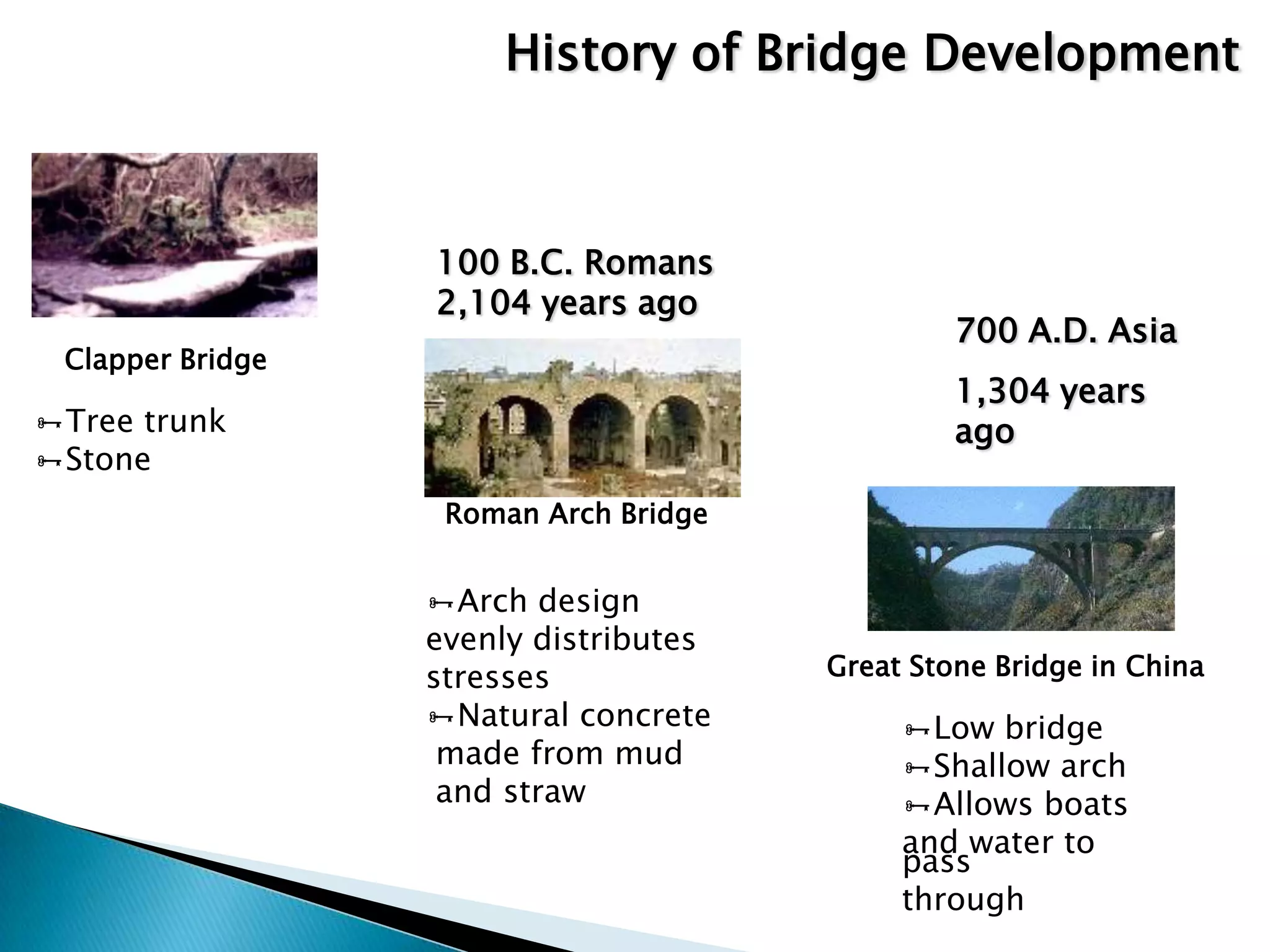
700 A.D. Asia
1,304 years
ago
100 B.C. Romans
2,104 years ago
Clapper Bridge
Tree trunk
Stone
Arch design
evenly distributes
stresses
Natural concrete
made from mud
and straw
Roman Arch Bridge
History of Bridge Development
Great Stone Bridge in China
Low bridge
Shallow arch
Allows boats
and water to
pass
through
History of Bridge Development
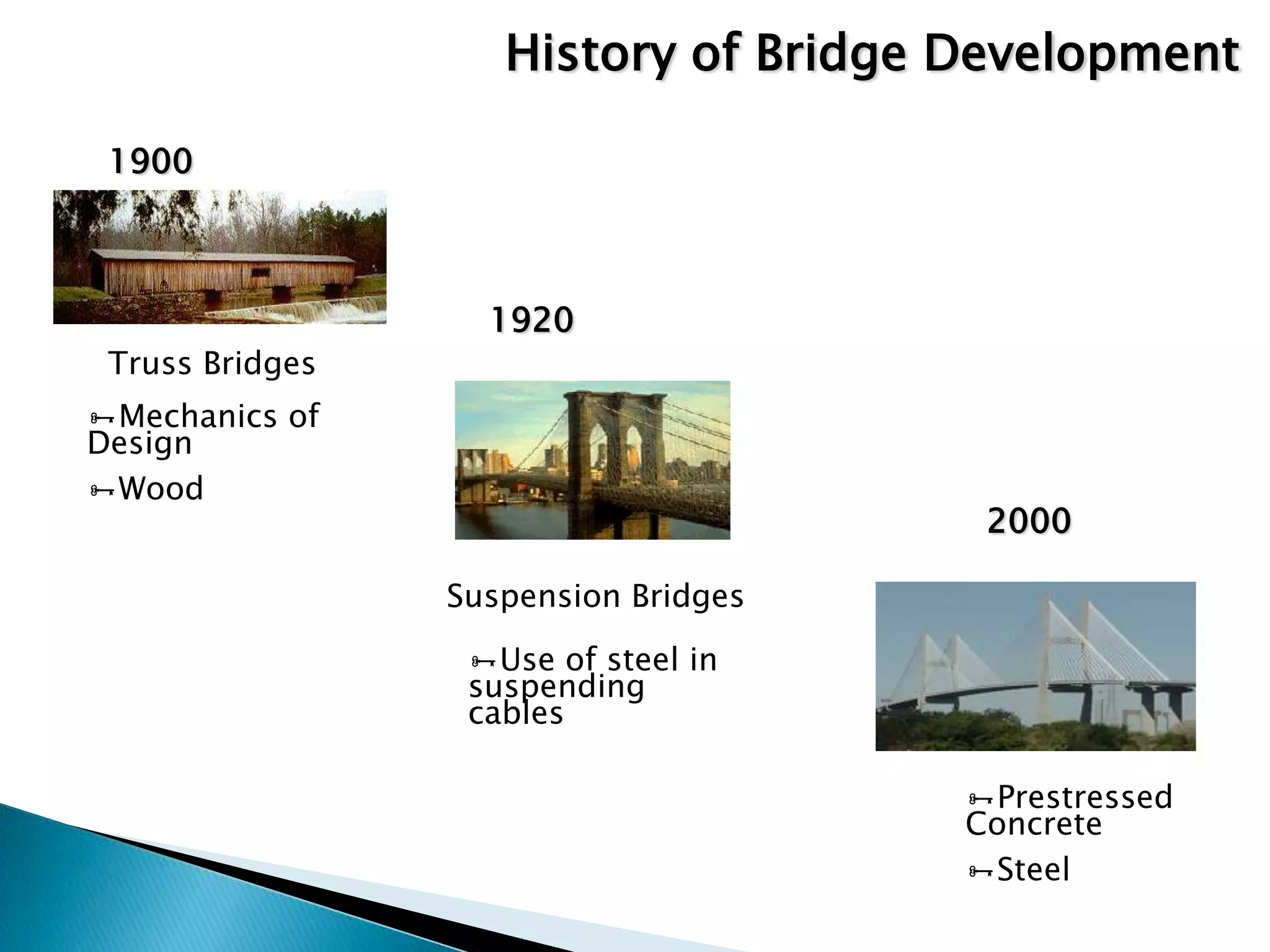
Truss Bridges
Mechanics of
Design
Wood
Suspension Bridges
Use of steel in
suspending
cables
1900
1920
Prestressed
Concrete
Steel
2000
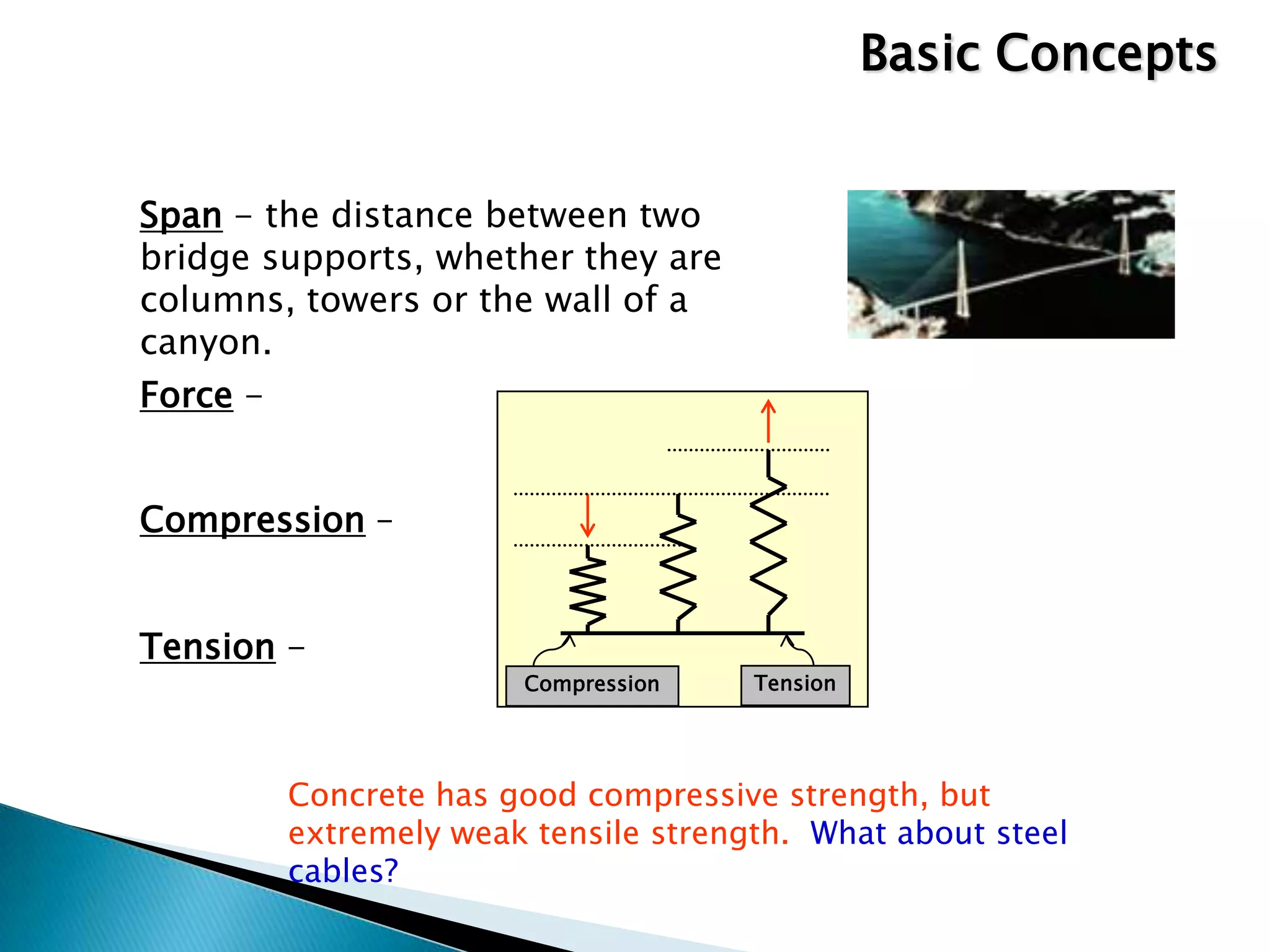
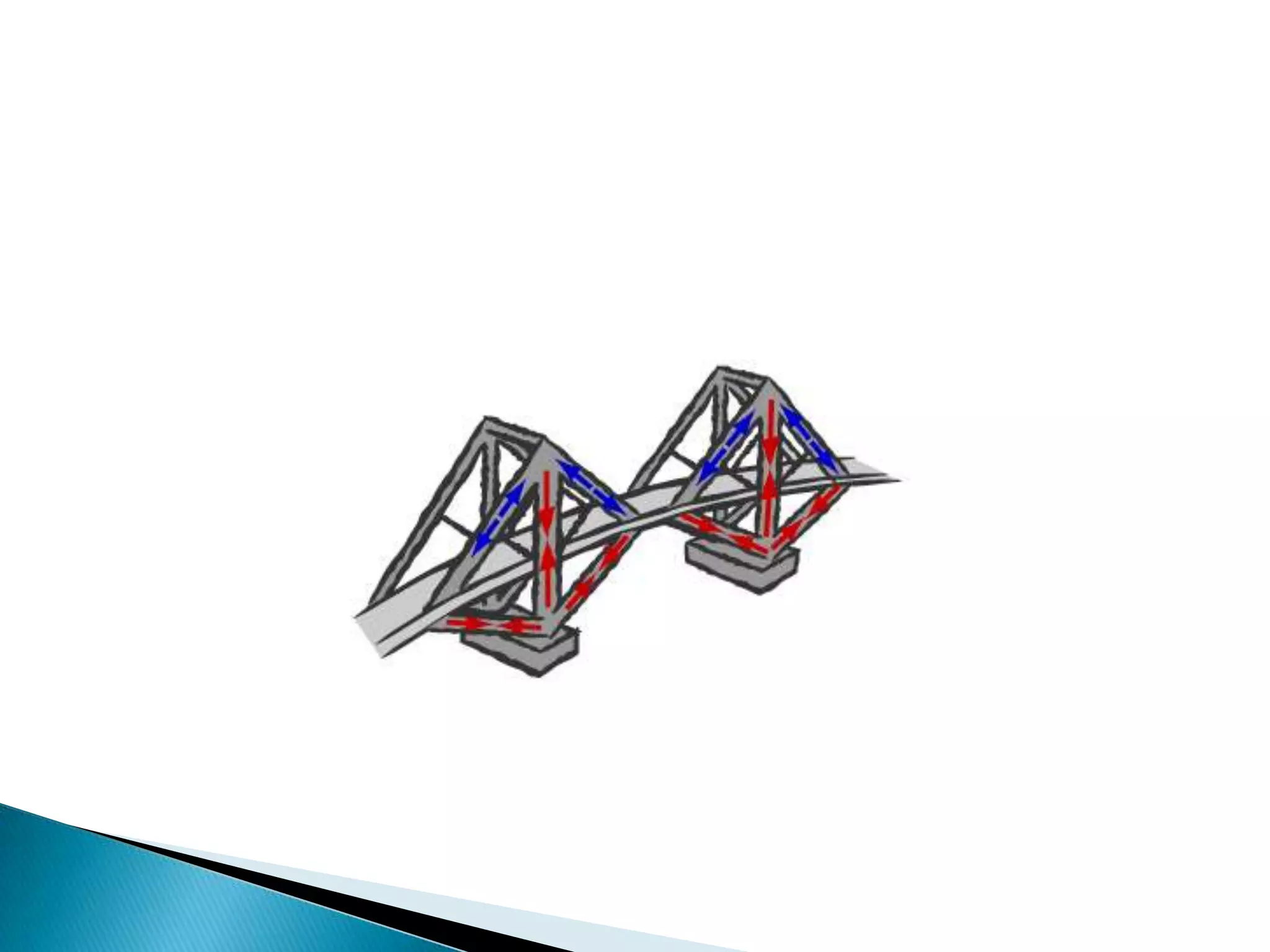
Compression Tension
Basic Concepts
Span - the distance between two
bridge supports, whether they are
columns, towers or the wall of a
canyon.
Compression –
Tension -
Force -
Concrete has good compressive strength, but
extremely weak tensile strength. What about steel
cables?
Basic Concepts
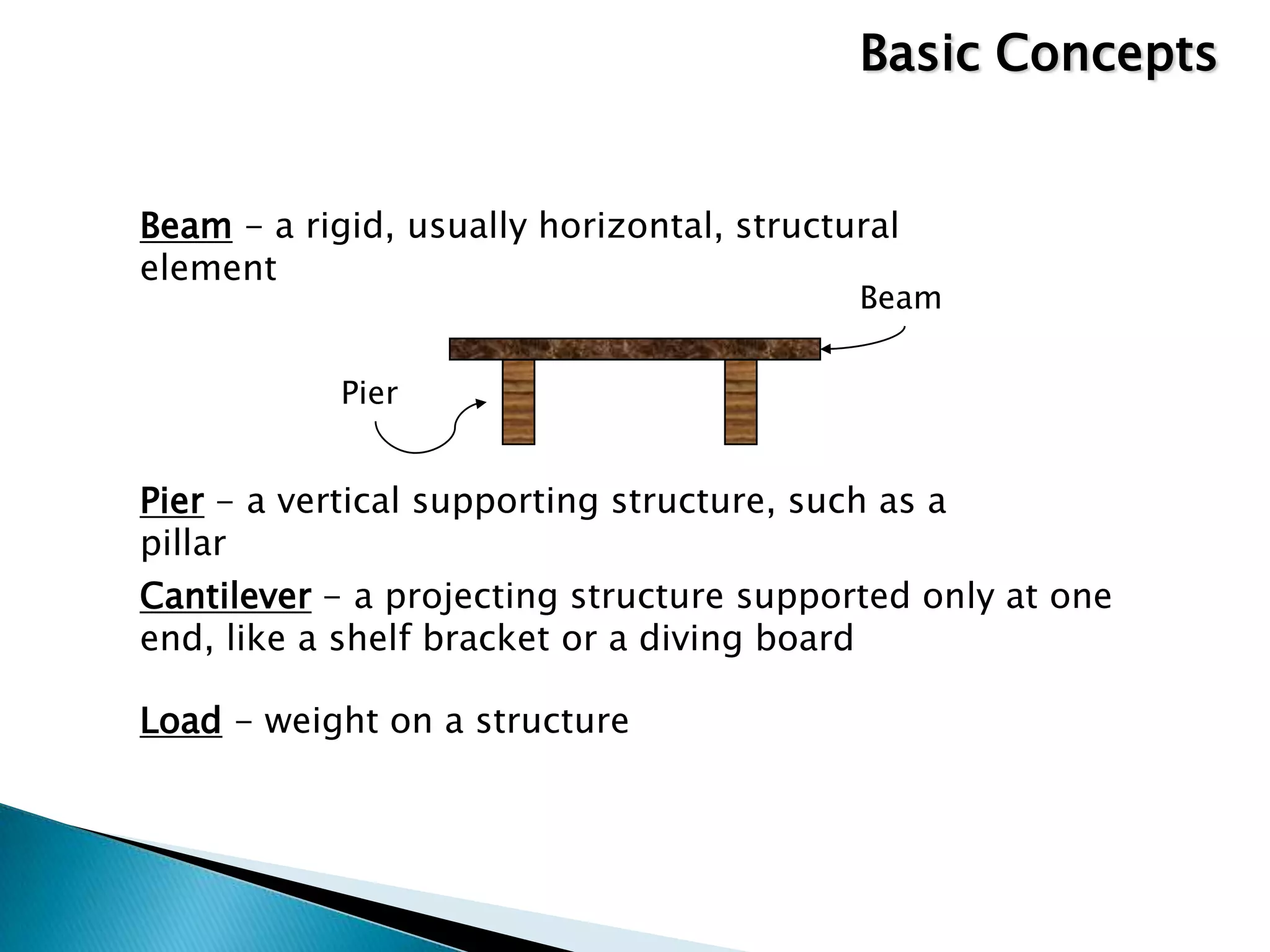
Beam - a rigid, usually horizontal, structural
element
Pier - a vertical supporting structure, such as a
pillar
Cantilever - a projecting structure supported only at one
end, like a shelf bracket or a diving board
Beam
Pier
Load - weight on a structure
There are six main types of bridges:
1. beam bridges
2. cantilever bridges
3. arch bridges
4. suspension bridges
5. cable-stayed bridges and
6. truss bridges
Consists of a horizontal beam supported at
each end by piers. The weight of the beam
pushes straight down on the piers. The farther
apart its piers, the weaker the beam becomes.
This is why beam bridges rarely span more than
250 feet.
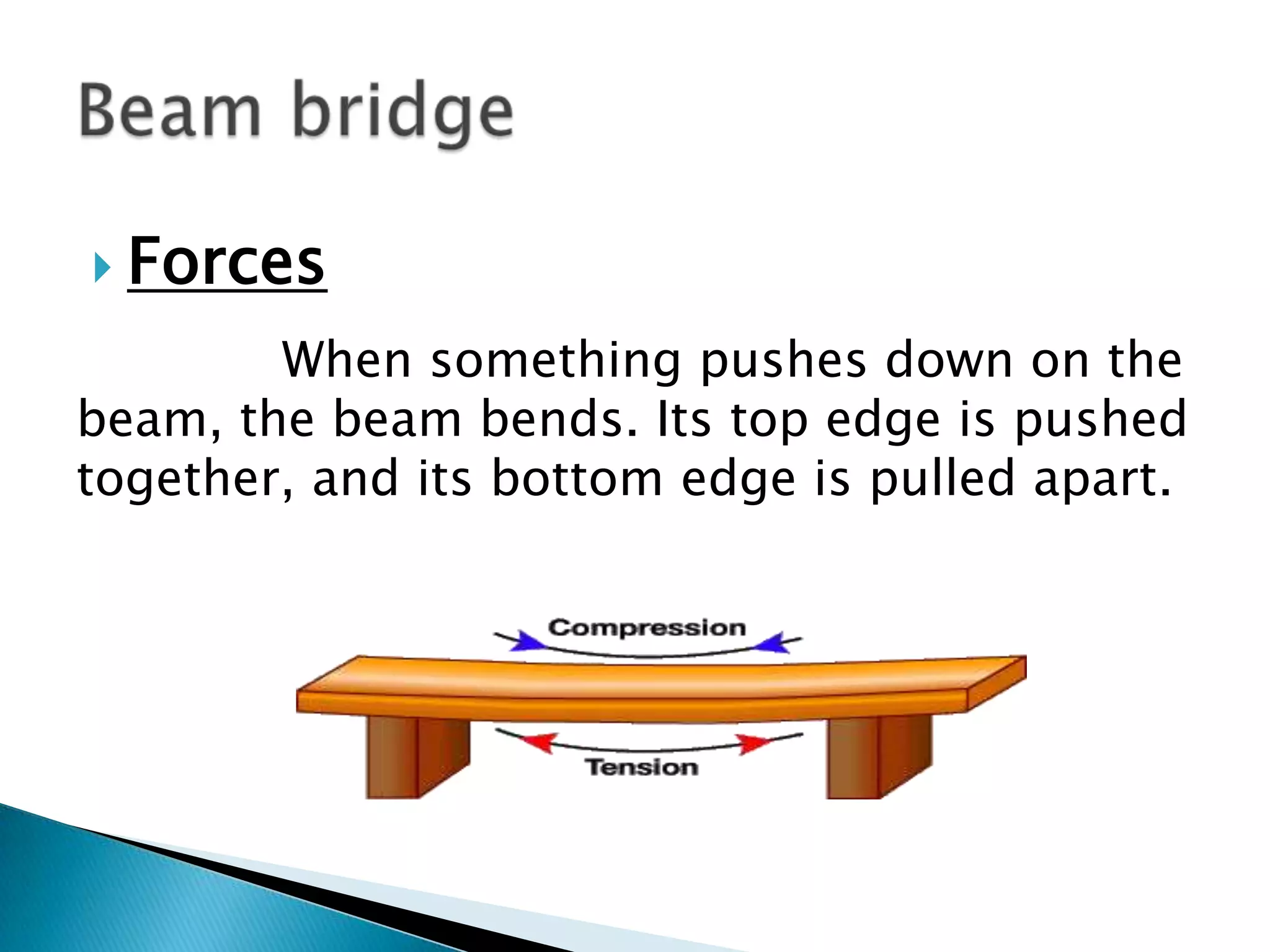
 Forces
When something pushes down on the
beam, the beam bends. Its top edge is pushed
together, and its bottom edge is pulled apart.
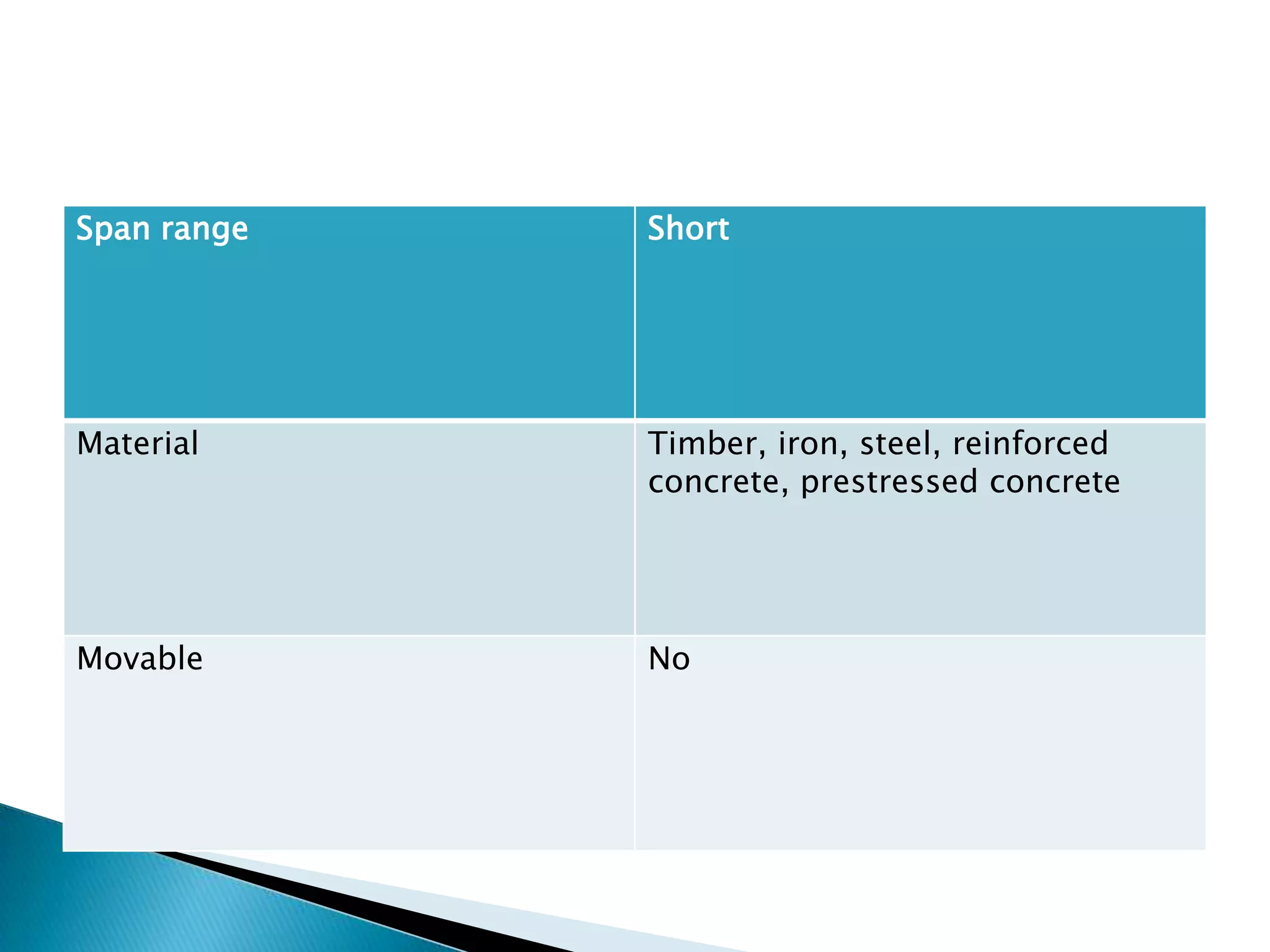
Span range Short
Material Timber, iron, steel, reinforced
concrete, prestressed concrete
Movable No
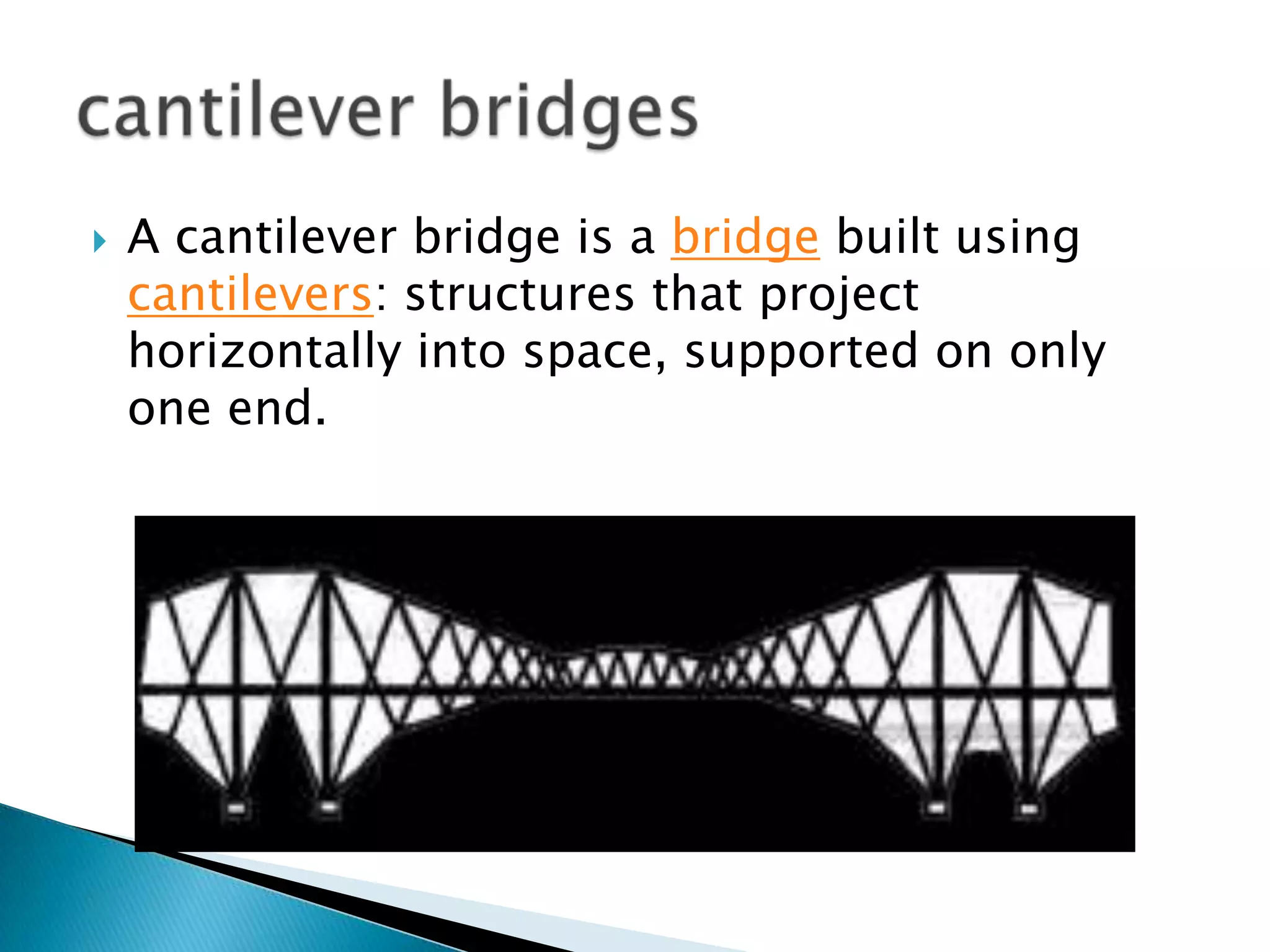
 A cantilever bridge is a bridge built using
cantilevers: structures that project
horizontally into space, supported on only
one end.
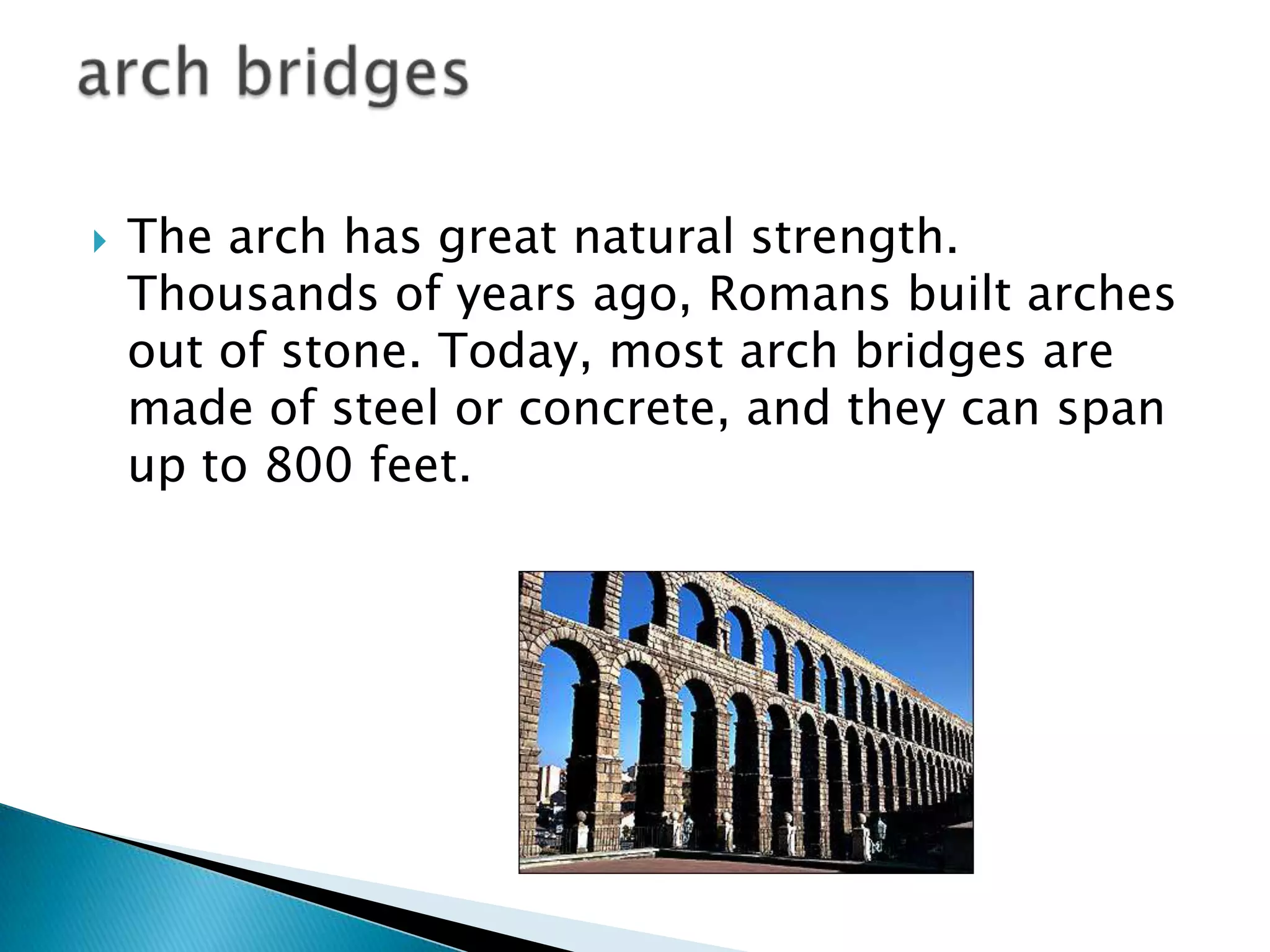
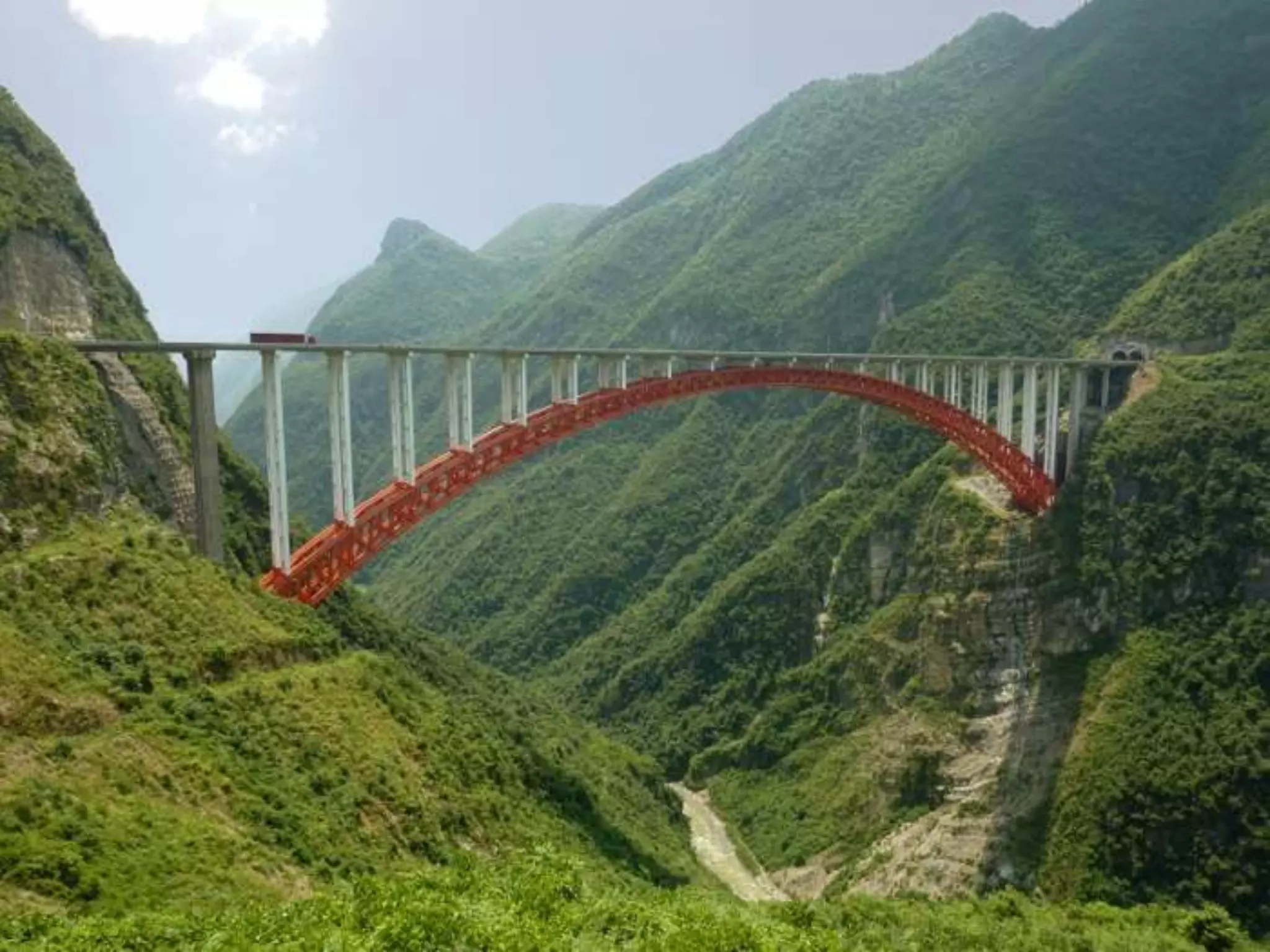
 The arch has great natural strength.
Thousands of years ago, Romans built arches
out of stone. Today, most arch bridges are
made of steel or concrete, and they can span
up to 800 feet.
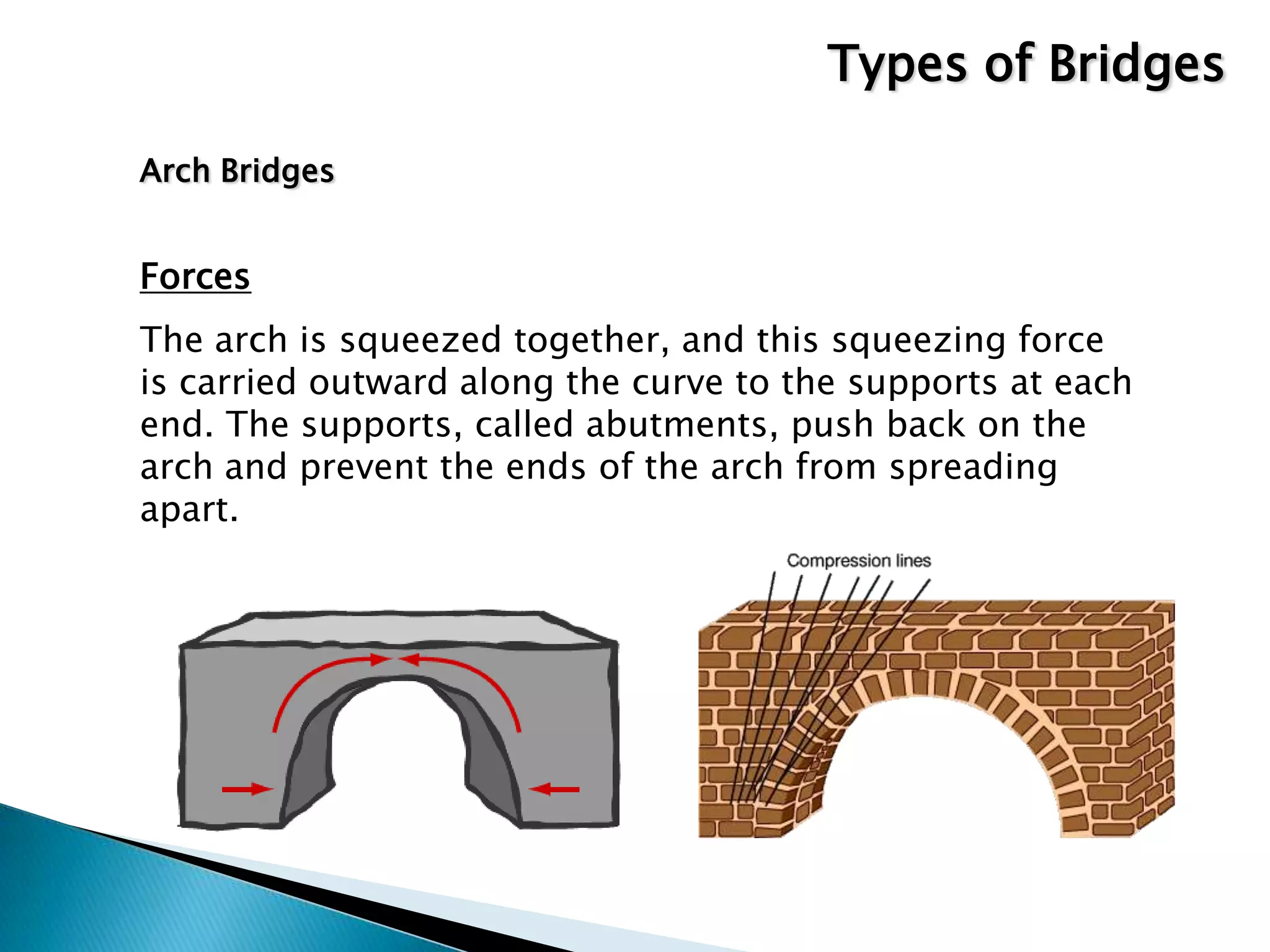
Forces
The arch is squeezed together, and this squeezing force
is carried outward along the curve to the supports at each
end. The supports, called abutments, push back on the
arch and prevent the ends of the arch from spreading
apart.
Types of Bridges
Arch Bridges
Suspension Bridges
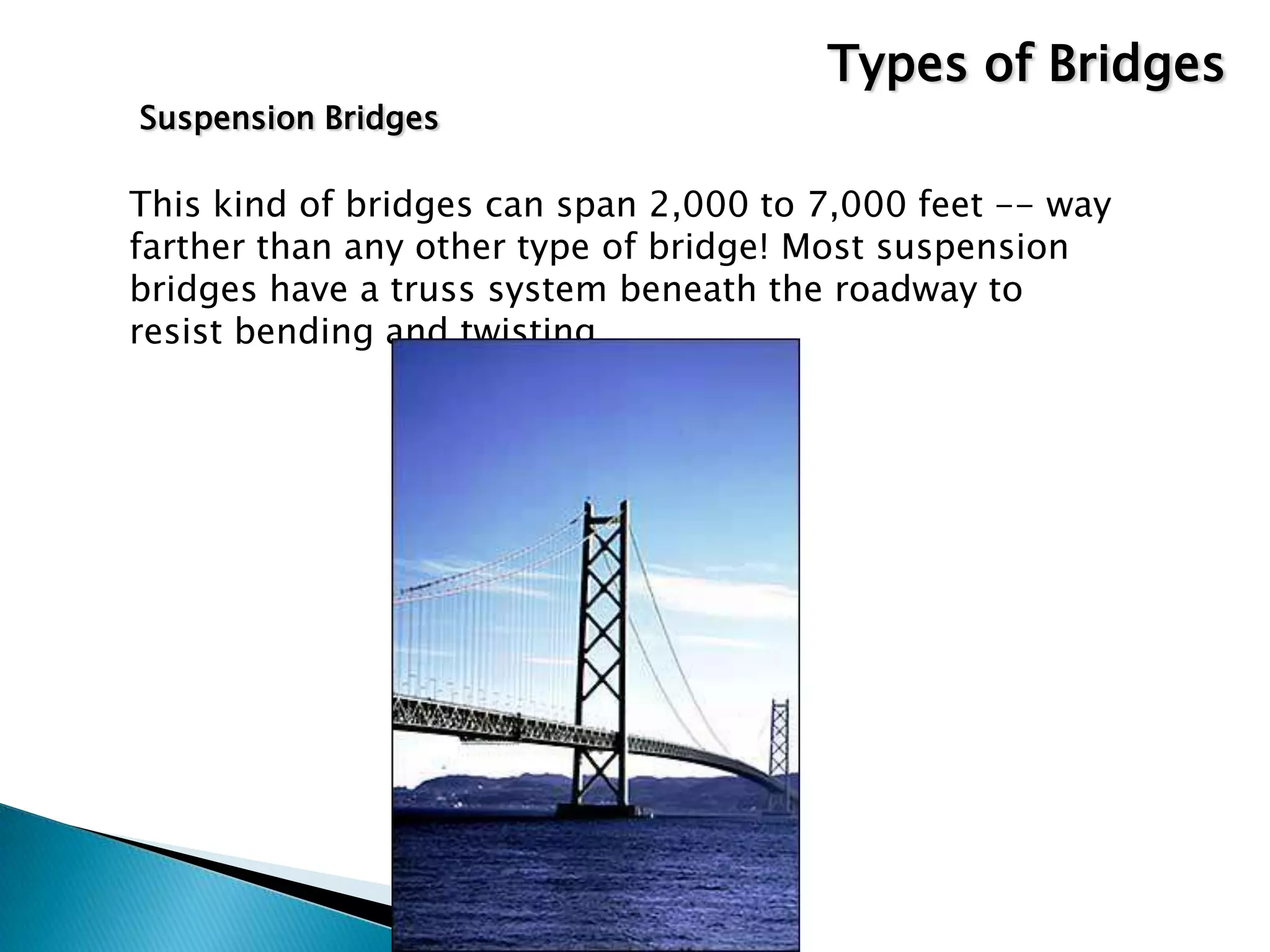
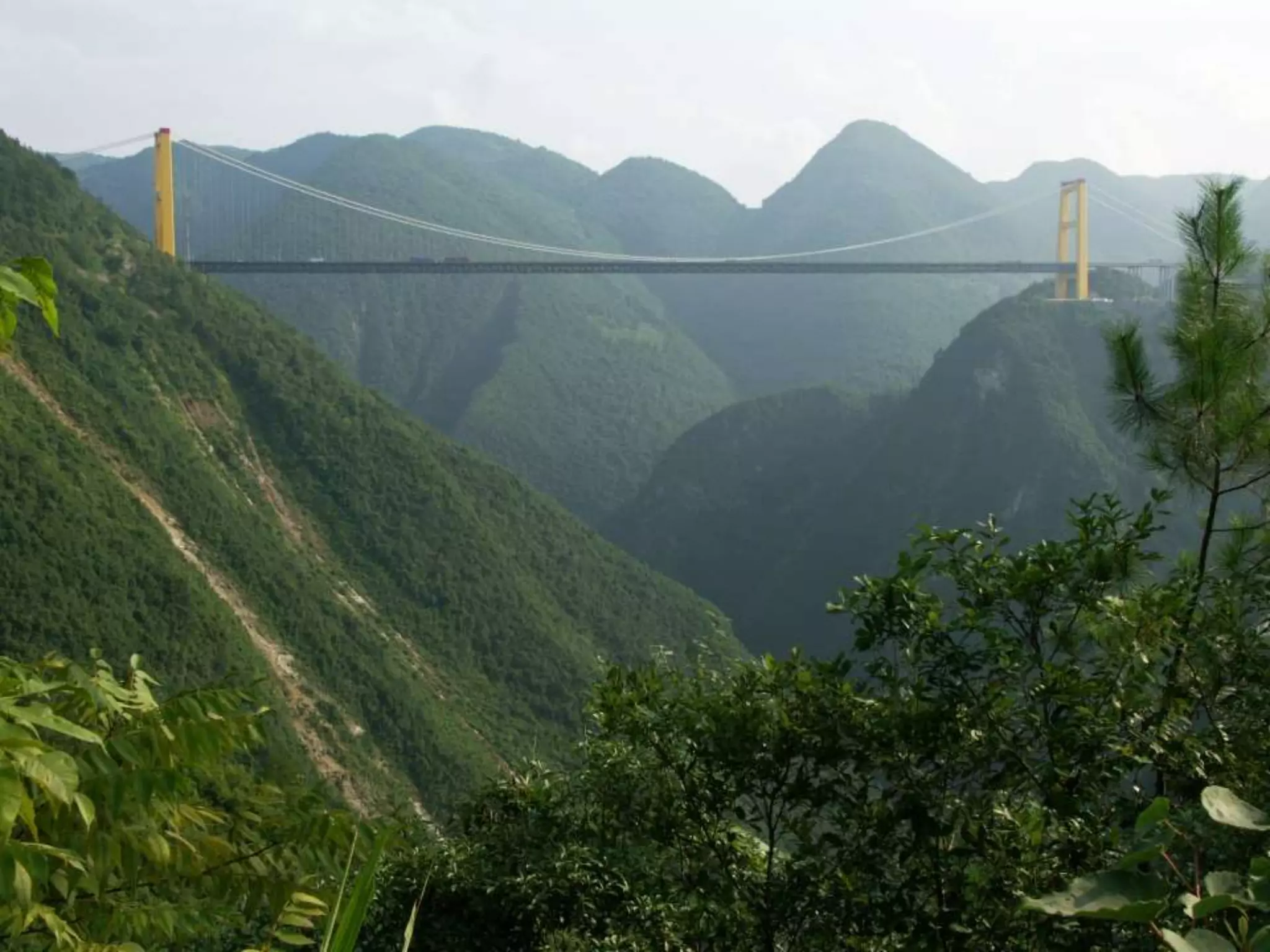
This kind of bridges can span 2,000 to 7,000 feet -- way
farther than any other type of bridge! Most suspension
bridges have a truss system beneath the roadway to
resist bending and twisting.
Types of Bridges
Forces
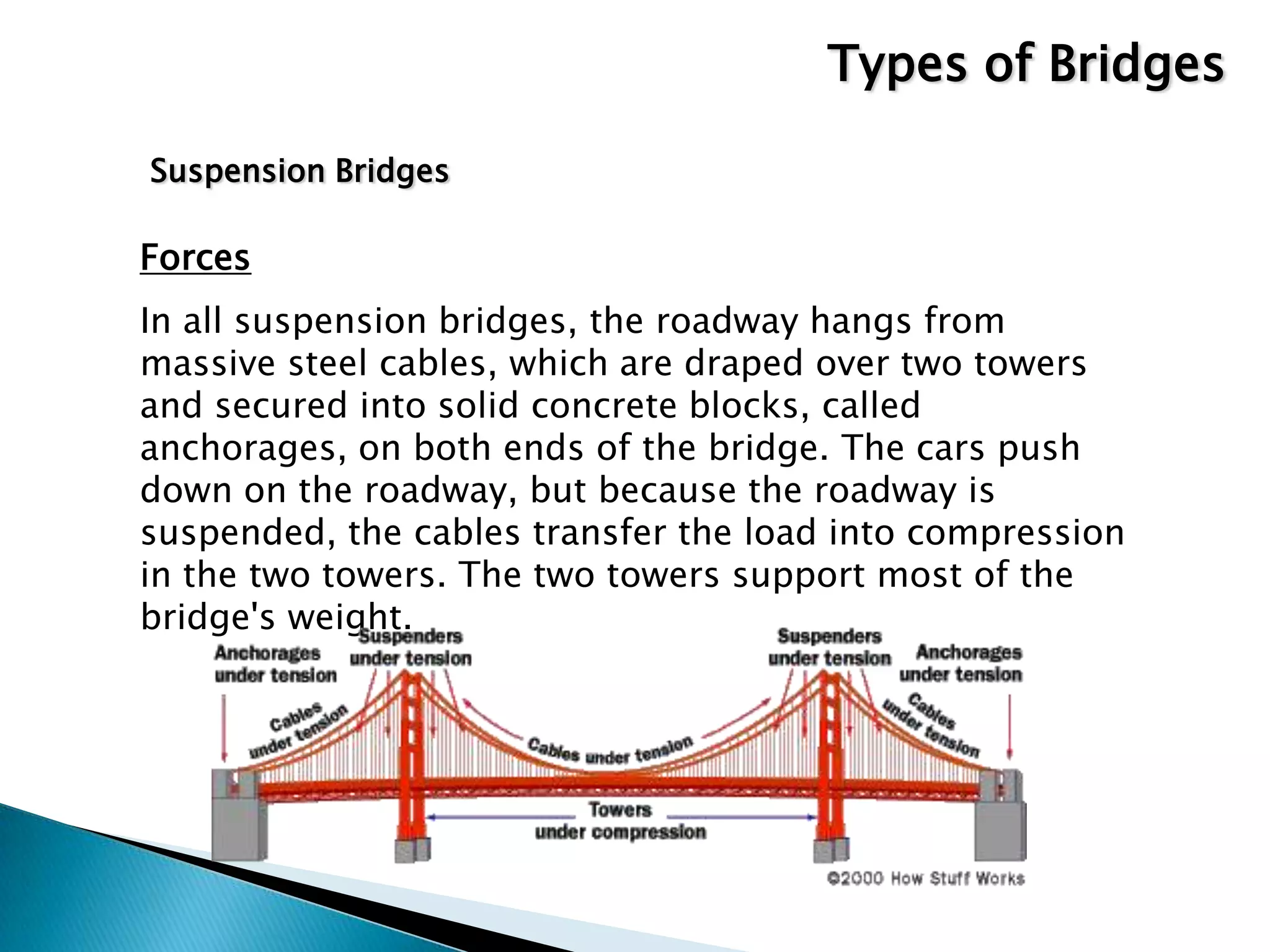
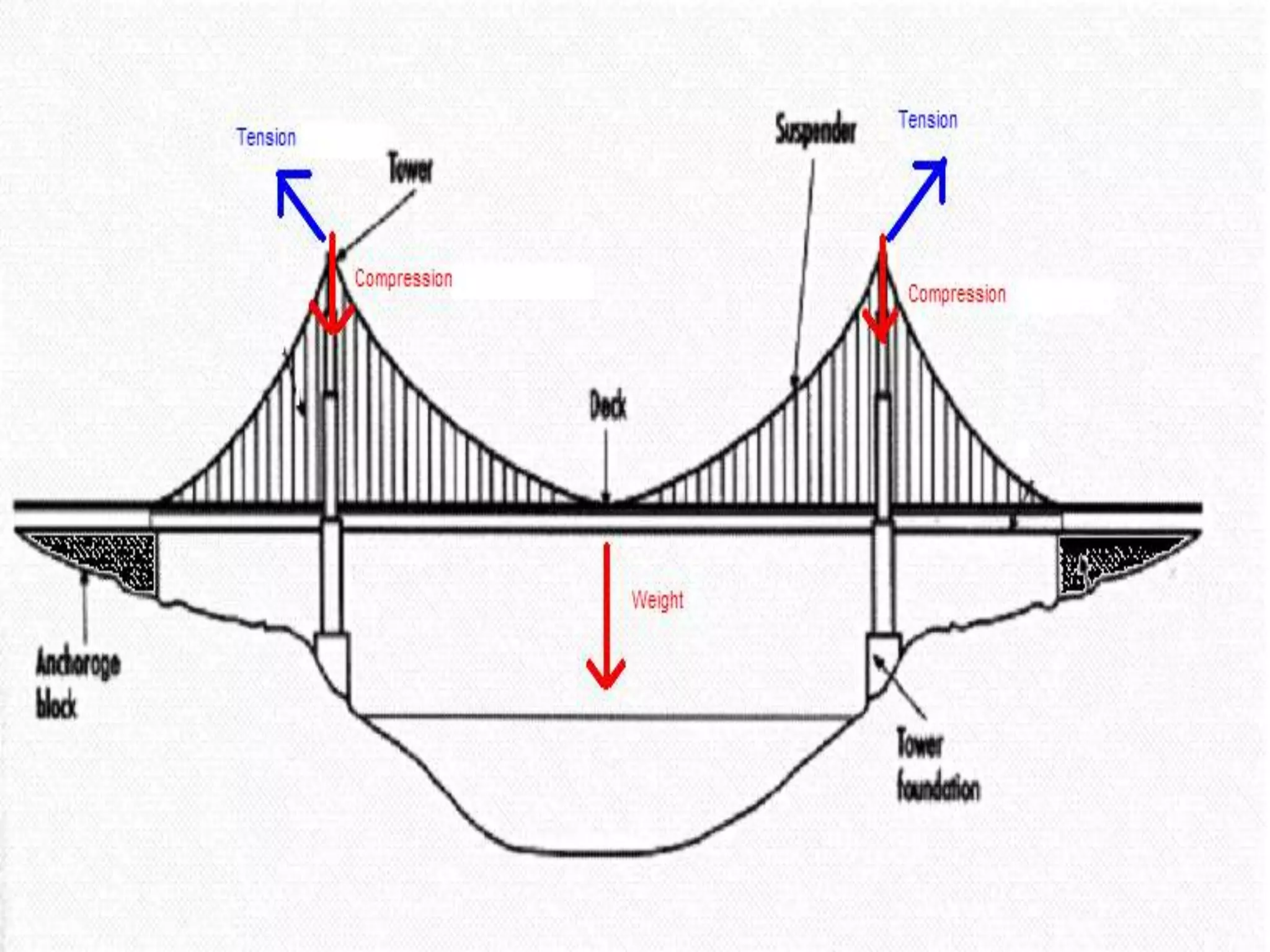
In all suspension bridges, the roadway hangs from
massive steel cables, which are draped over two towers
and secured into solid concrete blocks, called
anchorages, on both ends of the bridge. The cars push
down on the roadway, but because the roadway is
suspended, the cables transfer the load into compression
in the two towers. The two towers support most of the
bridge's weight.
Types of Bridges
Suspension Bridges
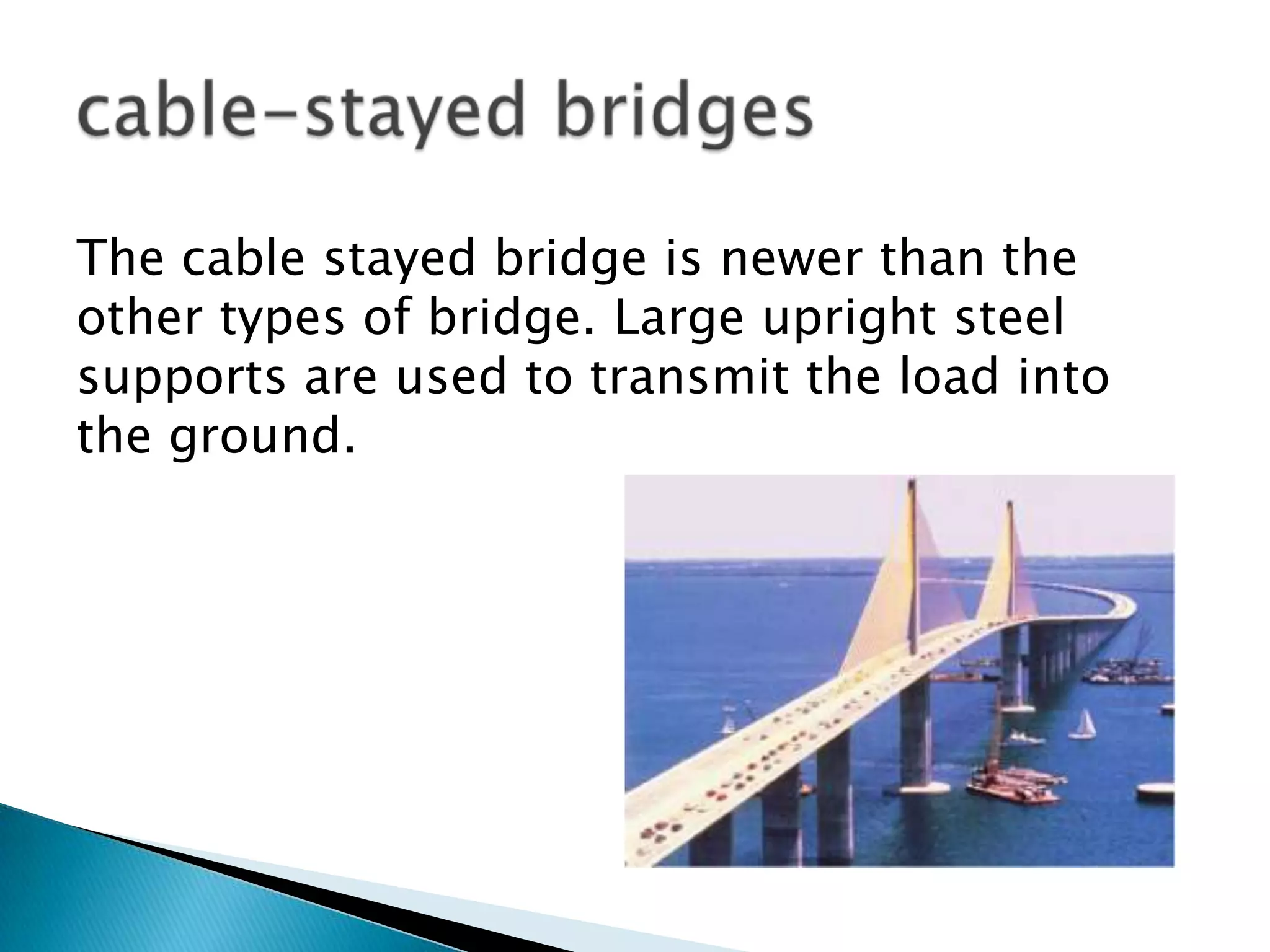
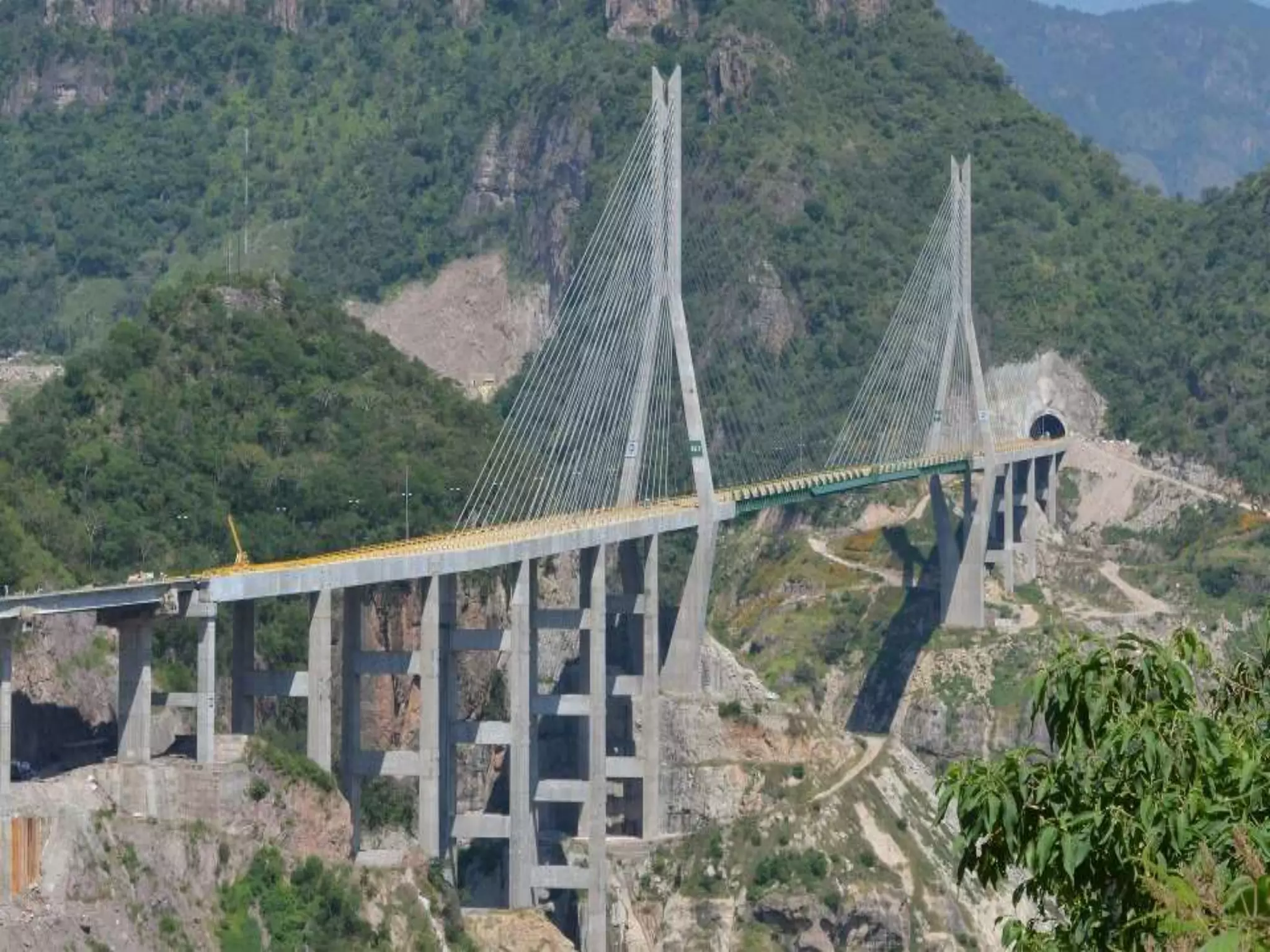
The cable stayed bridge is newer than the
other types of bridge. Large upright steel
supports are used to transmit the load into
the ground.
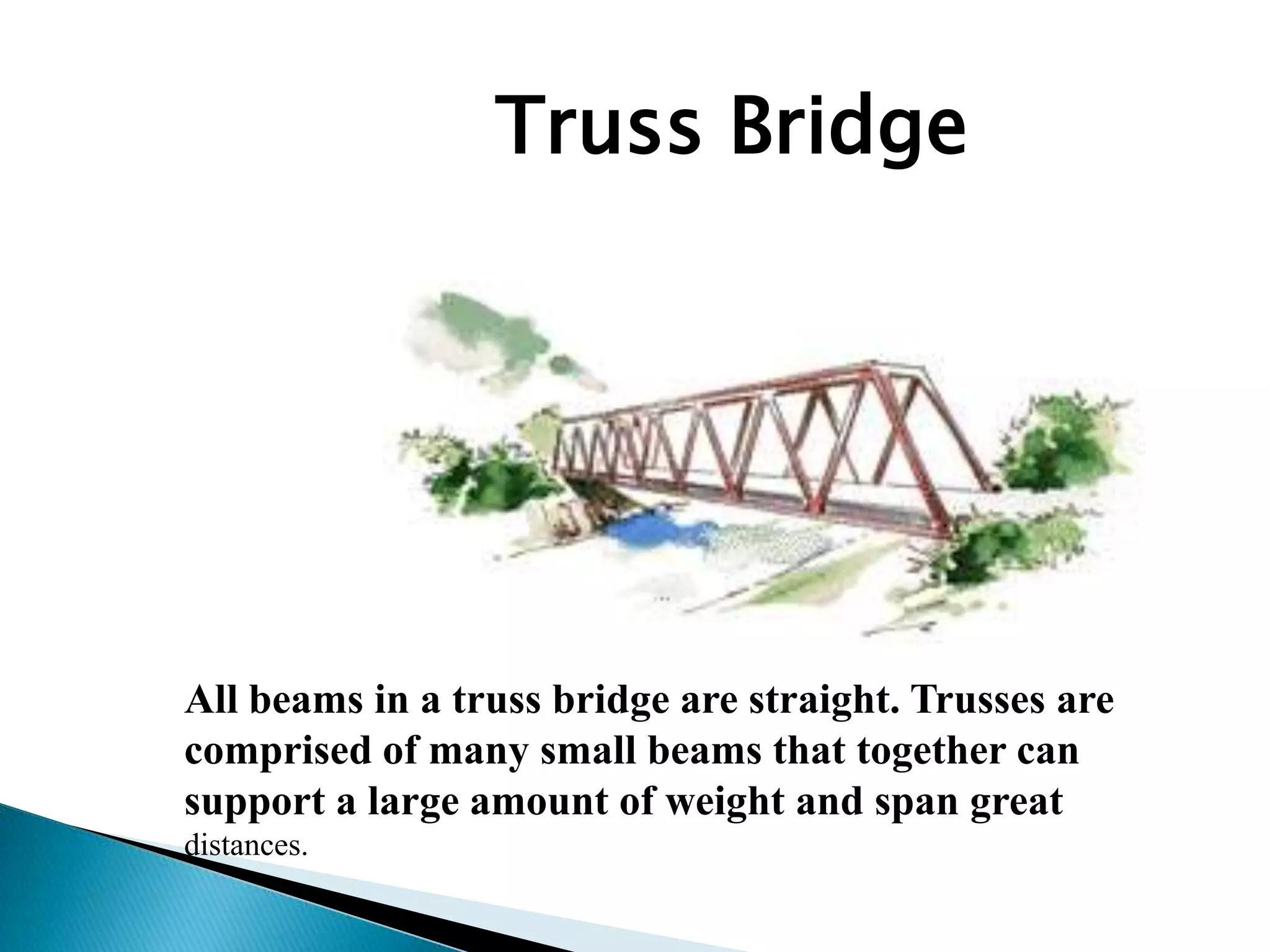
Truss Bridge
All beams in a truss bridge are straight. Trusses are
comprised of many small beams that together can
support a large amount of weight and span great
distances.
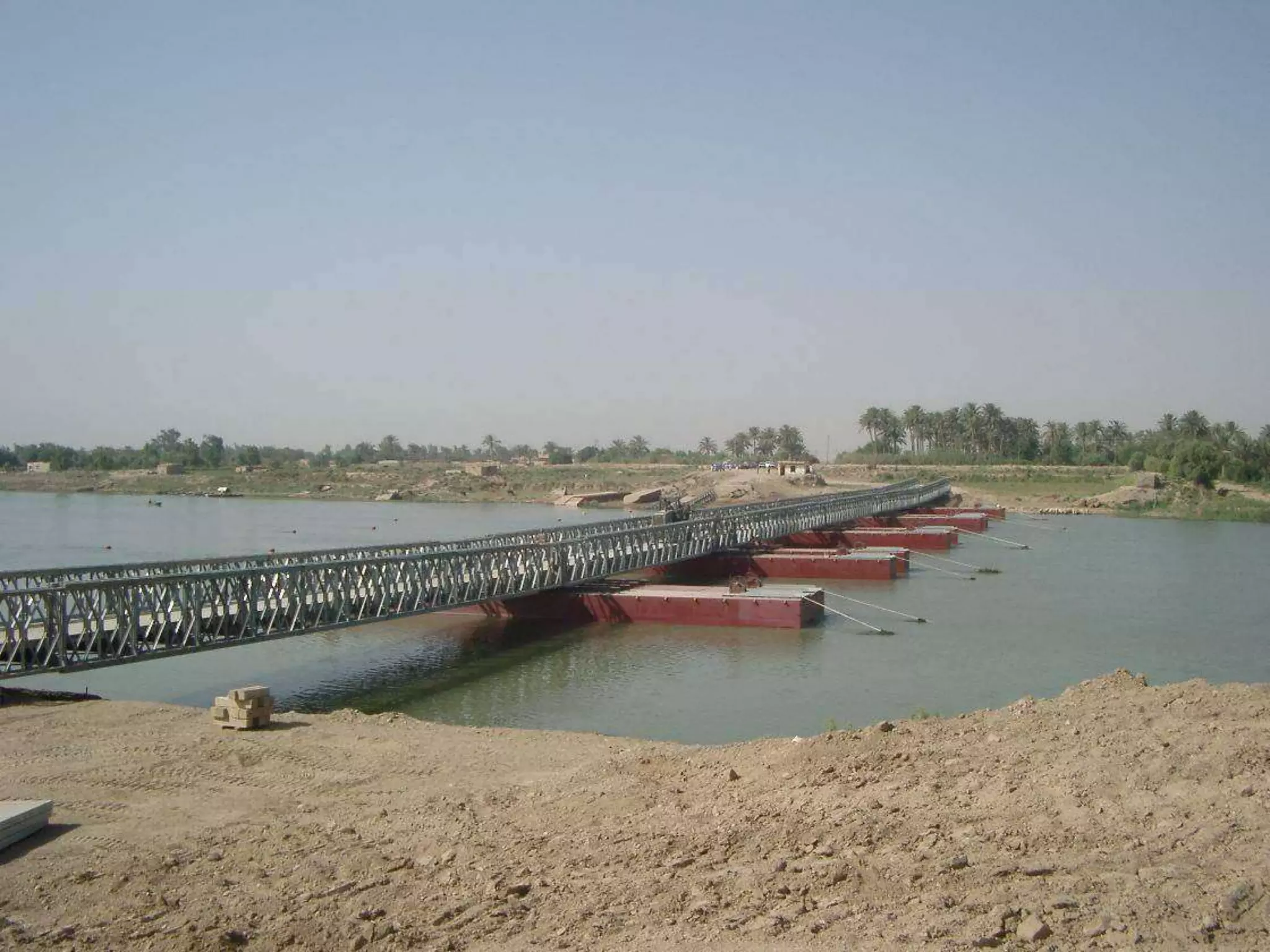
•Pontoon bridges are supported by floating
pontoons with sufficient buoyancy to support
the bridge and dynamic loads.
•While pontoon bridges are usually temporary
structures, some are used for long periods of
time.
•Permanent floating bridges are useful for
traversing features lacking strong bedrock for
traditional piers.
•Such bridges can require a section that is
elevated, or can be raised or removed, to allow
ships to pass.
Types of
Bridges
Floating Bridge
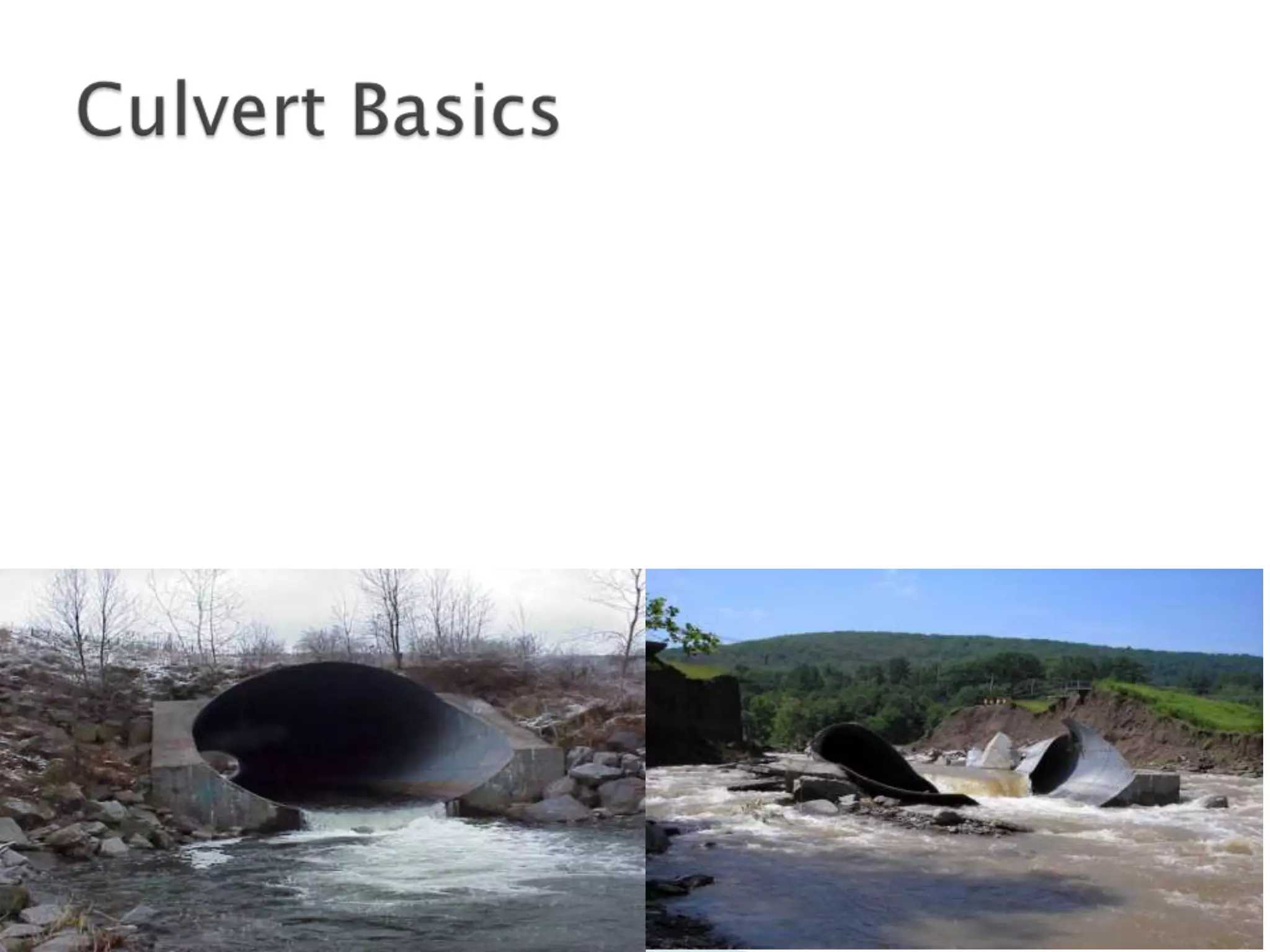
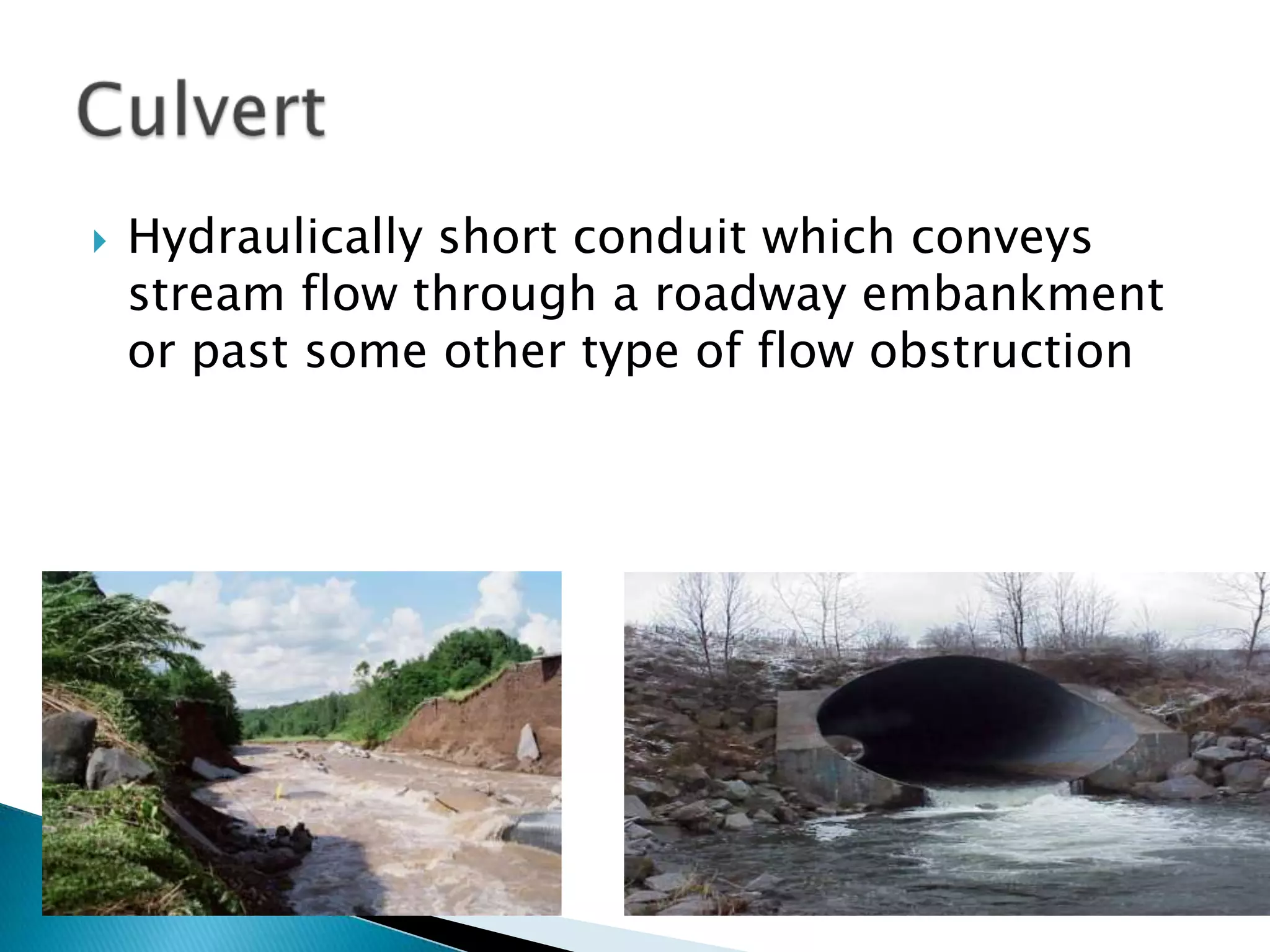
 Hydraulically short conduit which conveys
stream flow through a roadway embankment
or past some other type of flow obstruction
types of bridges

types of bridges

  • 1.
     What isa bridge.?  Different types of bridges.  Descriptions.  History Working.  Culverts  Type of culverts  Depiction  References.
  • 2.
     Bridge isa structure built to span a valley, road, river, body of water, or any other physical obstacle.  Designs of bridges will vary depending on the function of the bridge and the nature of the area where the bridge is to be constructed.
  • 3.
    700 A.D. Asia 1,304years ago 100 B.C. Romans 2,104 years ago Clapper Bridge Tree trunk Stone Arch design evenly distributes stresses Natural concrete made from mud and straw Roman Arch Bridge History of Bridge Development Great Stone Bridge in China Low bridge Shallow arch Allows boats and water to pass through
  • 4.
    History of BridgeDevelopment Truss Bridges Mechanics of Design Wood Suspension Bridges Use of steel in suspending cables 1900 1920 Prestressed Concrete Steel 2000
  • 5.
    Compression Tension Basic Concepts Span- the distance between two bridge supports, whether they are columns, towers or the wall of a canyon. Compression – Tension - Force - Concrete has good compressive strength, but extremely weak tensile strength. What about steel cables?
  • 6.
    Basic Concepts Beam -a rigid, usually horizontal, structural element Pier - a vertical supporting structure, such as a pillar Cantilever - a projecting structure supported only at one end, like a shelf bracket or a diving board Beam Pier Load - weight on a structure
  • 7.
    There are sixmain types of bridges: 1. beam bridges 2. cantilever bridges 3. arch bridges 4. suspension bridges 5. cable-stayed bridges and 6. truss bridges
  • 8.
    Consists of ahorizontal beam supported at each end by piers. The weight of the beam pushes straight down on the piers. The farther apart its piers, the weaker the beam becomes. This is why beam bridges rarely span more than 250 feet.
  • 9.
     Forces When somethingpushes down on the beam, the beam bends. Its top edge is pushed together, and its bottom edge is pulled apart.
  • 10.
    Span range Short MaterialTimber, iron, steel, reinforced concrete, prestressed concrete Movable No
  • 12.
     A cantileverbridge is a bridge built using cantilevers: structures that project horizontally into space, supported on only one end.
  • 13.
     The archhas great natural strength. Thousands of years ago, Romans built arches out of stone. Today, most arch bridges are made of steel or concrete, and they can span up to 800 feet.
  • 14.
    Forces The arch issqueezed together, and this squeezing force is carried outward along the curve to the supports at each end. The supports, called abutments, push back on the arch and prevent the ends of the arch from spreading apart. Types of Bridges Arch Bridges
  • 16.
    Suspension Bridges This kindof bridges can span 2,000 to 7,000 feet -- way farther than any other type of bridge! Most suspension bridges have a truss system beneath the roadway to resist bending and twisting. Types of Bridges
  • 17.
    Forces In all suspensionbridges, the roadway hangs from massive steel cables, which are draped over two towers and secured into solid concrete blocks, called anchorages, on both ends of the bridge. The cars push down on the roadway, but because the roadway is suspended, the cables transfer the load into compression in the two towers. The two towers support most of the bridge's weight. Types of Bridges Suspension Bridges
  • 20.
    The cable stayedbridge is newer than the other types of bridge. Large upright steel supports are used to transmit the load into the ground.
  • 22.
    Truss Bridge All beamsin a truss bridge are straight. Trusses are comprised of many small beams that together can support a large amount of weight and span great distances.
  • 24.
    •Pontoon bridges aresupported by floating pontoons with sufficient buoyancy to support the bridge and dynamic loads. •While pontoon bridges are usually temporary structures, some are used for long periods of time. •Permanent floating bridges are useful for traversing features lacking strong bedrock for traditional piers. •Such bridges can require a section that is elevated, or can be raised or removed, to allow ships to pass. Types of Bridges Floating Bridge
  • 27.
     Hydraulically shortconduit which conveys stream flow through a roadway embankment or past some other type of flow obstruction