General 
Anesthetics By Abril Santos 
Universidad Popular Autónoma del Estado de Puebla 
International Intership Program
introduction 
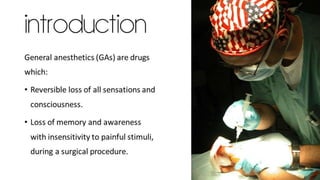
General anesthetics (GAs) are drugs 
which: 
• Reversible loss of all sensations and 
consciousness. 
• Loss of memory and awareness 
with insensitivity to painful stimuli, 
during a surgical procedure.
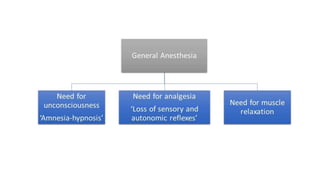
General Anesthesia 
Need for 
unconsciousness 
‘Amnesia-hypnosis’ 
Need for analgesia 
‘Loss of sensory and 
autonomic reflexes’ 
Need for muscle 
relaxation
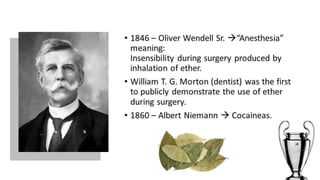
• 1846 – Oliver Wendell Sr. “Anesthesia” 
meaning: 
Insensibility during surgery produced by 
inhalation of ether. 
• William T. G. Morton (dentist) was the first 
to publicly demonstrate the use of ether 
during surgery. 
• 1860 – Albert Niemann  Cocaineas.
Types of Anesthesia 
• General anesthesia 
• Local and regional anesthesia 
• Local Infiltration 
• Topical block 
• Surface anesthesia 
• Nerve Block 
• Spinal or subarachnoid anesthesia 
• Peridural anesthesia
Balanced Anesthesia 
Describes the multidrug approach to managing the patient needs. 
Beneficial effects Adverse Qualities
Intraoperative, an ideal anaesthetic drug: 
1. Would induce anesthesia smoothly, rapidly 
2. Permit rapid recovery as soon as administration ceased. 
*So a ‘balanced anesthesia’ is achieved by a combination of I.V and inhaled anesthesia and Pre-anaesthetic medications
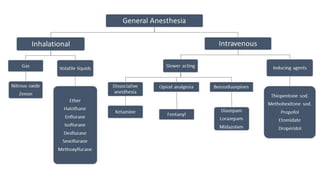
General Anesthesia 
Inhalational 
Gas 
Nitrous oxide 
Zenon 
Volatile liquids 
Ether 
Halothane 
Enflurane 
Isoflurane 
Desflurane 
Sevoflurane 
Methoxyflurane 
Intravenous 
Slower acting 
Dissociative 
anesthesia 
Ketamine 
Opiod analgesia 
Fentanyl 
Benzodiazepines 
Diazepam 
Lorazepam 
Midazolam 
Inducing agents 
Thiopentone sod. 
Methohexitone sod. 
Propofol 
Etomidate 
Droperidol
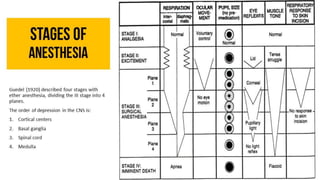
Stages of 
anesthesia 
Guedel (1920) described four stages with 
ether anesthesia, dividing the III stage into 4 
planes. 
The order of depression in the CNS is: 
1. Cortical centers 
2. Basal ganglia 
3. Spinal cord 
4. Medulla
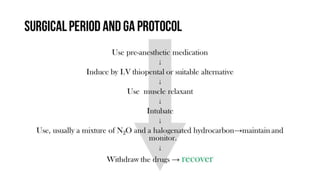
Surgical Period and GA protocol 
Use pre-anesthetic medication 
↓ 
Induce by I.V thiopental or suitable alternative 
↓ 
Use muscle relaxant 
↓ 
Intubate 
↓ 
Use, usually a mixture of N2O and a halogenated hydrocarbon→maintain and 
monitor. 
↓ 
Withdraw the drugs → recover
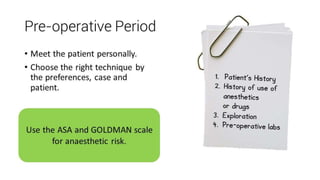
Pre-operative Period 
• Meet the patient personally. 
• Choose the right technique by 
the preferences, case and 
patient. 
Use the ASA and GOLDMAN scale 
for anaesthetic risk.
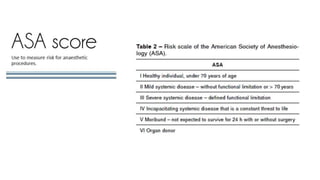
ASA 
score 
Use to measure risk for anaesthetic 
procedures.
Pre-anaesthetic 
Medications
Pre-anaesthetic Medications 
Serve to 
• Calm the patient, relieve pain 
• Protect against undesirable effects of the subsequently administered anesthetics or the 
surgical procedure. 
• Facilitate smooth induction of anesthesia 
• Lowered the dose of anaesthetic required
PreanestheticMedicine: 
• Benzodiazepines; midazolam or diazepam: Anxiolysis & Amnesia. 
• Barbiturates; pentobarbital: sedation 
• Diphenhydramine: prevention of allergic reactions: antihistamines 
• H2 receptor blocker- ranitidine: reduce gastric acidity.
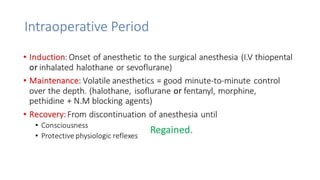
Intraoperative Period 
• Induction: Onset of anesthetic to the surgical anesthesia (I.V thiopental 
or inhalated halothane or sevoflurane) 
• Maintenance: Volatile anesthetics = good minute-to-minute control 
over the depth. (halothane, isoflurane or fentanyl, morphine, 
pethidine + N.M blocking agents) 
• Recovery: From discontinuation of anesthesia until 
• Consciousness 
• Protective physiologic reflexes 
Regained.
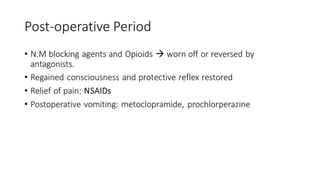
Post-operative Period 
• N.M blocking agents and Opioids  worn off or reversed by 
antagonists. 
• Regained consciousness and protective reflex restored 
• Relief of pain: NSAIDs 
• Postoperative vomiting: metoclopramide, prochlorperazine
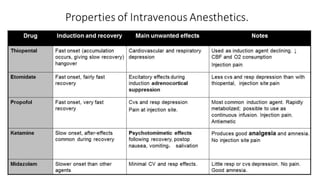
Properties of Intravenous Anesthetics. 
Drug Induction and recovery Main unwanted effects Notes 
Thiopental Fast onset (accumulation 
occurs, giving slow recovery) 
hangover 
Cardiovascular and respiratory 
depression 
Used as induction agent declining. ↓ 
CBF and O2 consumption 
Injection pain 
Etomidate Fast onset, fairly fast 
recovery 
Excitatory effects during 
induction adrenocortical 
suppression 
Less cvs and resp depression than with 
thiopental, injection site pain 
Propofol Fast onset, very fast 
recovery 
Cvs and resp depression 
Pain at injection site. 
Most common induction agent. Rapidly 
metabolized; possible to use as 
continuous infusion. Injection pain. 
Antiemetic 
Ketamine Slow onset, after-effects 
common during recovery 
Psychotomimetic effects 
following recovery, postop 
nausea, vomiting, salivation 
Produces good analgesia and amnesia. 
No injection site pain 
Midazolam Slower onset than other 
agents 
Minimal CV and resp effects. Little resp or cvs depression. No pain. 
Good amnesia.
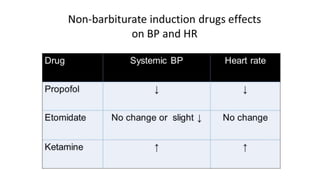
Non-barbiturate induction drugs effects 
on BP and HR 
Drug Systemic BP Heart rate 
Propofol ↓ ↓ 
Etomidate No change or slight ↓ No change 
Ketamine ↑ ↑
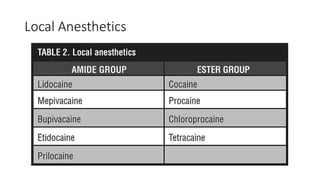
Local Anesthetics
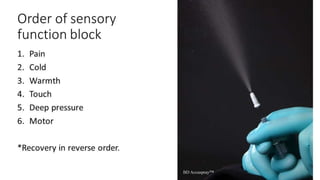
Order of sensory 
function block 
1. Pain 
2. Cold 
3. Warmth 
4. Touch 
5. Deep pressure 
6. Motor 
*Recovery in reverse order.
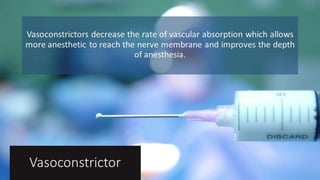
Vasoconstrictors decrease the rate of vascular absorption which allows 
more anesthetic to reach the nerve membrane and improves the depth 
Vasoconstrictor 
of anesthesia.
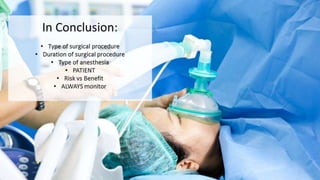
In Conclusion: 
• Type of surgical procedure 
• Duration of surgical procedure 
• Type of anesthesia 
• PATIENT 
• Risk vs Benefit 
• ALWAYS monitor
References 
• American Society of Anesthesiologists (2011). Guidelines for patient care in 
anesthesiology. Available online: http://www.asahq.org/For- 
Members/Standards-Guidelines-and-Statements.aspx. 
• Dorian RS (2010). Anesthesia of the surgical patient. In FC Brunicardi et al., eds., 
Schwartz’s Principles of Surgery, 9th ed., pp. 1731–1752. New York: McGraw-Hill. 
• Brown DL (2010). Spinal, epidural and caudal anesthesia. In RD Miller et al., eds., 
Miller's Anesthesia, 7th ed., pp. 1611–1638. Philadelphia: Churchill Livingstone. 
• Handbook of Local Anesthesia 6th ed. Stanley F. Malamed, DDS iii Handbook of 
Local Anesthesia, 6th Edition
Thank You!

General Anesthetics

  • 1.
    General Anesthetics ByAbril Santos Universidad Popular Autónoma del Estado de Puebla International Intership Program
  • 2.
    introduction General anesthetics(GAs) are drugs which: • Reversible loss of all sensations and consciousness. • Loss of memory and awareness with insensitivity to painful stimuli, during a surgical procedure.
  • 3.
    General Anesthesia Needfor unconsciousness ‘Amnesia-hypnosis’ Need for analgesia ‘Loss of sensory and autonomic reflexes’ Need for muscle relaxation
  • 4.
    • 1846 –Oliver Wendell Sr. “Anesthesia” meaning: Insensibility during surgery produced by inhalation of ether. • William T. G. Morton (dentist) was the first to publicly demonstrate the use of ether during surgery. • 1860 – Albert Niemann  Cocaineas.
  • 5.
    Types of Anesthesia • General anesthesia • Local and regional anesthesia • Local Infiltration • Topical block • Surface anesthesia • Nerve Block • Spinal or subarachnoid anesthesia • Peridural anesthesia
  • 6.
    Balanced Anesthesia Describesthe multidrug approach to managing the patient needs. Beneficial effects Adverse Qualities
  • 7.
    Intraoperative, an idealanaesthetic drug: 1. Would induce anesthesia smoothly, rapidly 2. Permit rapid recovery as soon as administration ceased. *So a ‘balanced anesthesia’ is achieved by a combination of I.V and inhaled anesthesia and Pre-anaesthetic medications
  • 8.
    General Anesthesia Inhalational Gas Nitrous oxide Zenon Volatile liquids Ether Halothane Enflurane Isoflurane Desflurane Sevoflurane Methoxyflurane Intravenous Slower acting Dissociative anesthesia Ketamine Opiod analgesia Fentanyl Benzodiazepines Diazepam Lorazepam Midazolam Inducing agents Thiopentone sod. Methohexitone sod. Propofol Etomidate Droperidol
  • 9.
    Stages of anesthesia Guedel (1920) described four stages with ether anesthesia, dividing the III stage into 4 planes. The order of depression in the CNS is: 1. Cortical centers 2. Basal ganglia 3. Spinal cord 4. Medulla
  • 10.
    Surgical Period andGA protocol Use pre-anesthetic medication ↓ Induce by I.V thiopental or suitable alternative ↓ Use muscle relaxant ↓ Intubate ↓ Use, usually a mixture of N2O and a halogenated hydrocarbon→maintain and monitor. ↓ Withdraw the drugs → recover
  • 11.
    Pre-operative Period •Meet the patient personally. • Choose the right technique by the preferences, case and patient. Use the ASA and GOLDMAN scale for anaesthetic risk.
  • 12.
    ASA score Useto measure risk for anaesthetic procedures.
  • 13.
  • 14.
    Pre-anaesthetic Medications Serveto • Calm the patient, relieve pain • Protect against undesirable effects of the subsequently administered anesthetics or the surgical procedure. • Facilitate smooth induction of anesthesia • Lowered the dose of anaesthetic required
  • 15.
    PreanestheticMedicine: • Benzodiazepines;midazolam or diazepam: Anxiolysis & Amnesia. • Barbiturates; pentobarbital: sedation • Diphenhydramine: prevention of allergic reactions: antihistamines • H2 receptor blocker- ranitidine: reduce gastric acidity.
  • 16.
    Intraoperative Period •Induction: Onset of anesthetic to the surgical anesthesia (I.V thiopental or inhalated halothane or sevoflurane) • Maintenance: Volatile anesthetics = good minute-to-minute control over the depth. (halothane, isoflurane or fentanyl, morphine, pethidine + N.M blocking agents) • Recovery: From discontinuation of anesthesia until • Consciousness • Protective physiologic reflexes Regained.
  • 17.
    Post-operative Period •N.M blocking agents and Opioids  worn off or reversed by antagonists. • Regained consciousness and protective reflex restored • Relief of pain: NSAIDs • Postoperative vomiting: metoclopramide, prochlorperazine
  • 18.
    Properties of IntravenousAnesthetics. Drug Induction and recovery Main unwanted effects Notes Thiopental Fast onset (accumulation occurs, giving slow recovery) hangover Cardiovascular and respiratory depression Used as induction agent declining. ↓ CBF and O2 consumption Injection pain Etomidate Fast onset, fairly fast recovery Excitatory effects during induction adrenocortical suppression Less cvs and resp depression than with thiopental, injection site pain Propofol Fast onset, very fast recovery Cvs and resp depression Pain at injection site. Most common induction agent. Rapidly metabolized; possible to use as continuous infusion. Injection pain. Antiemetic Ketamine Slow onset, after-effects common during recovery Psychotomimetic effects following recovery, postop nausea, vomiting, salivation Produces good analgesia and amnesia. No injection site pain Midazolam Slower onset than other agents Minimal CV and resp effects. Little resp or cvs depression. No pain. Good amnesia.
  • 19.
    Non-barbiturate induction drugseffects on BP and HR Drug Systemic BP Heart rate Propofol ↓ ↓ Etomidate No change or slight ↓ No change Ketamine ↑ ↑
  • 21.
  • 24.
    Order of sensory function block 1. Pain 2. Cold 3. Warmth 4. Touch 5. Deep pressure 6. Motor *Recovery in reverse order.
  • 25.
    Vasoconstrictors decrease therate of vascular absorption which allows more anesthetic to reach the nerve membrane and improves the depth Vasoconstrictor of anesthesia.
  • 26.
    In Conclusion: •Type of surgical procedure • Duration of surgical procedure • Type of anesthesia • PATIENT • Risk vs Benefit • ALWAYS monitor
  • 27.
    References • AmericanSociety of Anesthesiologists (2011). Guidelines for patient care in anesthesiology. Available online: http://www.asahq.org/For- Members/Standards-Guidelines-and-Statements.aspx. • Dorian RS (2010). Anesthesia of the surgical patient. In FC Brunicardi et al., eds., Schwartz’s Principles of Surgery, 9th ed., pp. 1731–1752. New York: McGraw-Hill. • Brown DL (2010). Spinal, epidural and caudal anesthesia. In RD Miller et al., eds., Miller's Anesthesia, 7th ed., pp. 1611–1638. Philadelphia: Churchill Livingstone. • Handbook of Local Anesthesia 6th ed. Stanley F. Malamed, DDS iii Handbook of Local Anesthesia, 6th Edition
  • 28.

Editor's Notes

  • #5 used Cocaineas the first local anaesthetic which was isolated from coca leaves.
  • #17 Induction: Period of time from the onset of administration of the anesthetic to the development of effective surgical anesthesia in the patient. Maintenance: Administration of volatile anesthetics, because these agents offer good minute-to-minute control over the depth of anesthesia. Recovery: The time from discontinuation of administration of the anesthesia until consciousness and protective physiologic reflexes are regained.
  • #18 N.M blocking agents and Opioids induced respiratory depression have either worn off or have been adequately reversed by antagonists.
  • #21 Interrupts pain impulses in a specific region of the body without a loss of patient consciousness.