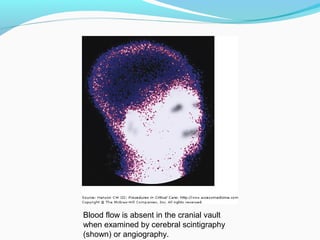
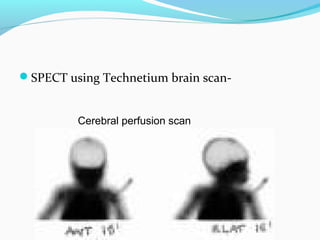
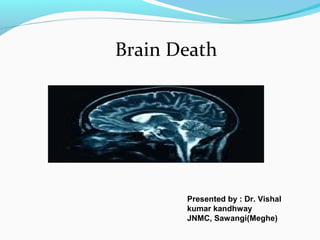
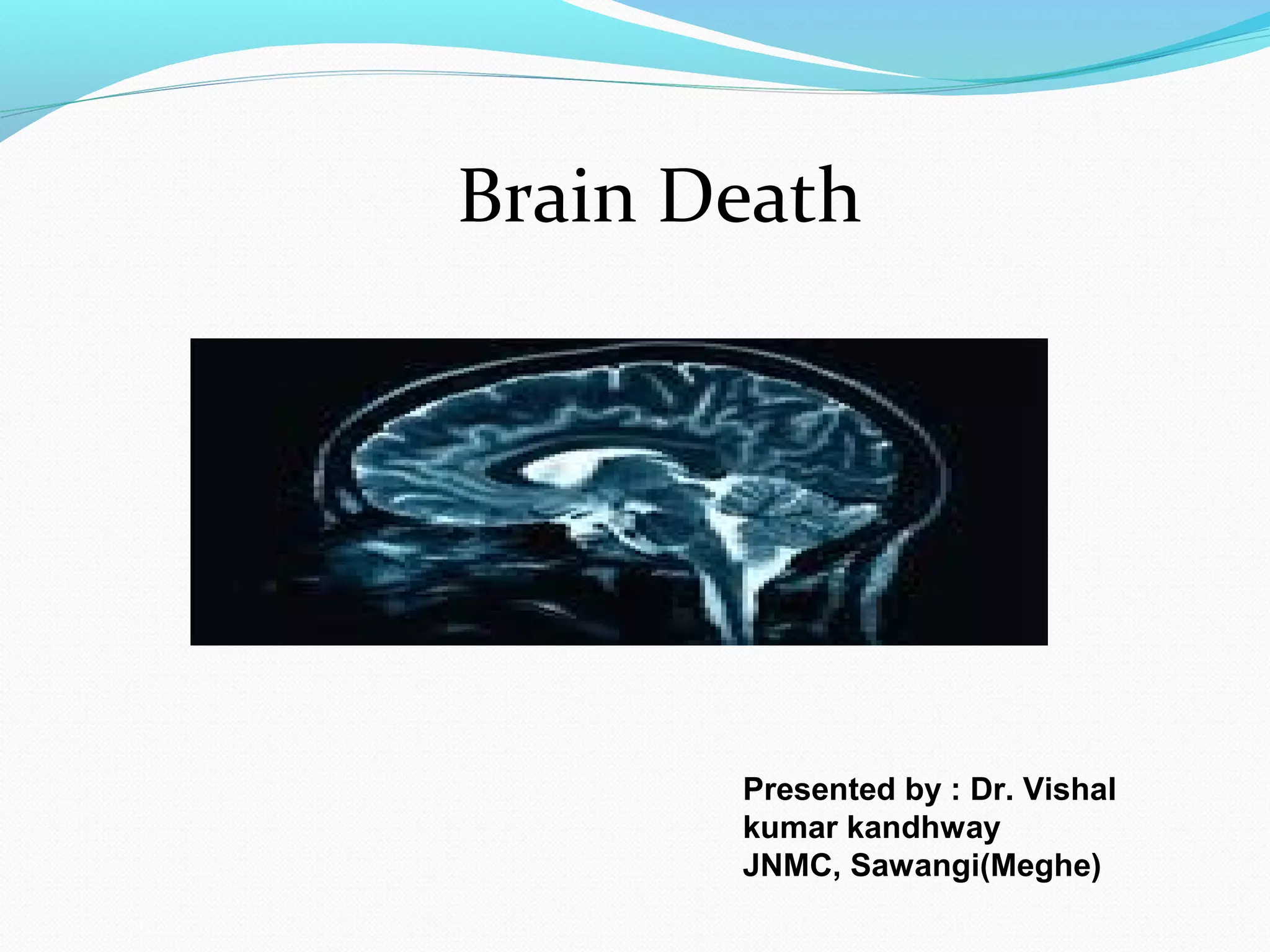
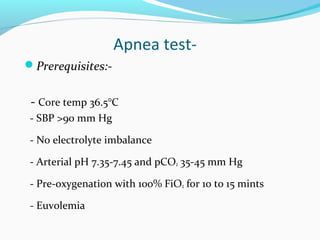
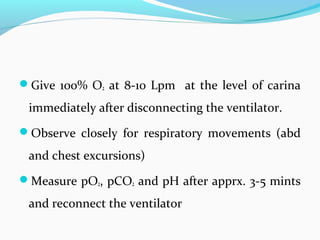
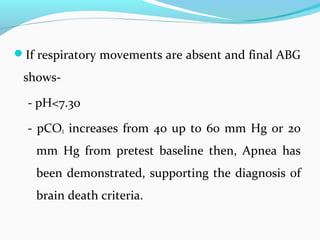
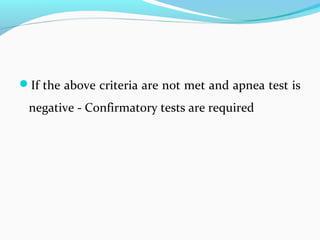
This document discusses brain death and the criteria used to diagnose it. It begins by describing different states of consciousness including coma, persistent vegetative state, and locked-in syndrome. It then defines brain death as the total and irreversible loss of brain and brainstem function. The key criteria for determining brain death are the absence of cortical function, absence of brainstem reflexes, and apnea during a specific oxygen challenge. Confirmatory tests like angiography, EEG, transcranial Doppler, and nuclear medicine scans can also support the diagnosis. Precise clinical evaluations and testing are required to distinguish brain death from other severe neurological conditions.
![Coma - A state of unconsciousness from which
the patient cannot be aroused even with
stimulation such as pressure on the supraorbital
nerve, temporo-mandibular angle of the
mandible, sternum, or nail bed
Locked-in state - State of paralysis without loss of
consciousness. Patient completely paralysed
except for muslces served by midbrain
structure[e.g. vertical eye movement and
blinking]](https://image.slidesharecdn.com/braindeath-161227141731/85/Brain-death-3-320.jpg)


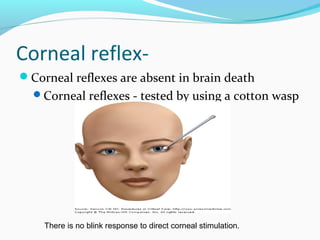
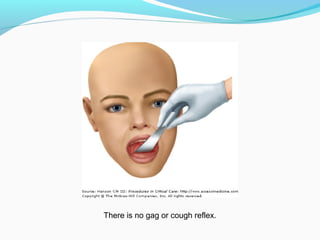
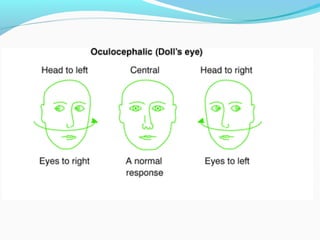
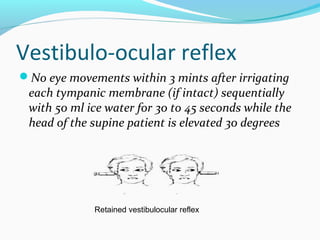
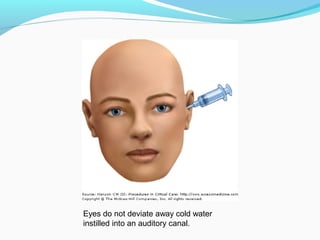
![Oculovestibular reflexes diminished after prior use
of ototoxic drugs (e.g., aminoglycosides, loop
diuretics, vancomycin) or agents with suppressive
side effects on the vestibular system (e.g., TCADs,
anticonvulsants and barbiturates) or due to
preexisting disease or any foreign body [e.g blood,
wax]
Obtain careful medication history](https://image.slidesharecdn.com/braindeath-161227141731/85/Brain-death-32-320.jpg)