TUBERCULOSIS
PRESENTED BY
ABHAY RAJPOOT
DEFINITION
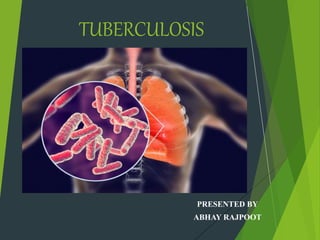
It is infectious disease caused by Mycobacterium tuberculosis and
characterized by the formation of tubercles (round nodules) or
granulomas in lungs.
It may be transmitted to other body parts such as meningitis, bones,
kidneys, lymph nodes.
Latent TB - the bacteria
remain in the body in an
inactive state. They cause
no symptoms and are not
contagious, but they can
become active.
Active TB - the bacteria
do cause symptoms and
can be transmitted to
others.
Global India
Incidence 1,04,00,000
(140/lakh)
27,90,000
(211/lakh)
Deaths 16,74,000
(22/lakh)
4,35,000
(33/lakh)
HIV TB
cases
10,30,000
(14/lakh)
87,000
(6.6/lakh)
HIV TB
deaths
3,74,000
(5.0/lakh)
12,000
(0.9/lakh)
Estimated
MDR/RR
cases
6,01,000
(8.1/lakh
population)
1,47,000
(11/ lakh
population)
Global TB Burden -2017
INCIDENCE
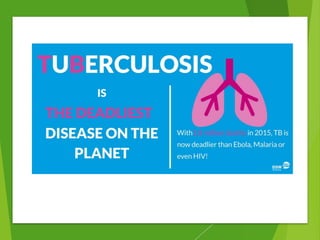
Tuberculosis (TB) remains the world's deadliest infectious disease
although global efforts have averted an estimated 54 million
tuberculosis (TB) deaths since 2000, the World Health
Organization (WHO) warned on Tuesday. WHO, in its latest 2018
Global TB Report, says countries are still not doing enough to end
TB by 2030 and calls for an unprecedented mobilization of
national and international commitments.
TRANSMISSION
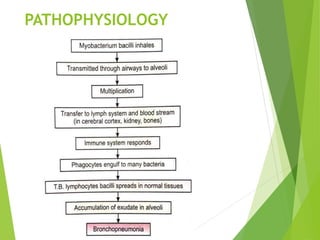
PATHOPHYSIOLOGY
DIAGNOSTIC EVALUATION
 History collection
 Physical examination
 Sputum test
 Blood test
Mantoux test
CHEST X-RAY
COMPLICATIONS
• Meningitis
• Spinal pain.
• Joint damage.
• Damage to the liver or
kidneys
• Heart disorders
MANAGEMENT
Directly Observation Treatment
Short-course
ANTI
TUBERCULAR
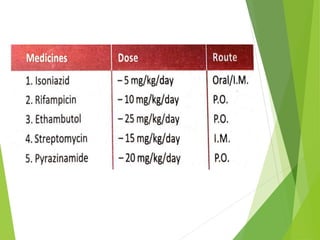
DRUGS
FIRST LINE DRUGS
 Isoniazid (H)
 Rifampicin(R)
 Pyrazinamide(Z)
 Ethambutol(E)
 Streptomycin(S)
SECOND LINE
DRUGS
 Thioacetazone
 PASA
 Ethionamide
 Cycloserine
 Kanamycin
 Capreomycin
 Amikacin
`
Category Type of patient Regimen Duration in
months
Test at month
Category I
COLOR OF
BOX: RED
New sputum
smear positive
New sputum
smear negative
New extra
pulmonary
New others
2(HRZE)3
4(HR)3
6 2
Category II
COLOR OF
BOX:BLUE
Sputum positive
relapse
Sputum positive
failure
After default
2(HRZES)3
1(HRZE)3
5(HRE)3
8 3
Category III
COLOR OF
BOX:GREEN
Sputum negative,
Extra pulmonary
not seriously ill
2(HRZ)3
4(HR)3
6
Adverse reactions to anti-T.B
drugsDrugs Adverse effects
•Isoniazid Peripheral neuropathy
Hepatitis
•Rifampicin Vomiting, abdominal pain
hepatitis
•Pyrazinamide Joint pain, hepatitis
•Ethambutol Optic neuritis
•Streptomycin Renal damage
Auditory & vestibular nerve
damage
OTHER
MANAGEMENT
STRATEGIES
Nutritional therapy
Lifestyle modification
Cough hygiene
Regular follow up
Prevention of complications
ROLE OF NURSE
 NURSES ARE THE BACKBONE OF TB CONTROL
 NURSES EXIST GLOBALLY AND SHARE COMMON IDEAS AND
VALUES
KEY
ACTIVITIES
OF NURSES
PATIENT CARE
HEALTH EDUCATION
TREATMENT OBSERVATION
SPUTUM COLLECTION
MANAGEMENT/ COORDINATION
CONTACT TRACING/ SCREENING
RESEARCH
TEACHING
NURSING
DIAGNOSIS
 Ineffective airway clearance related to
copious tracheobronchial secretions
 Deficient knowledge about treatment regimen
and preventive health measures and related
ineffective individual management of the
therapeutic regimen (noncompliance)
 Activity intolerance related to fatigue, altered
nutritional status, and fever
PREVENTION
 Wash your hands after sneezing, coughing or holding your hands near
your mouth or nose.
 Cover your mouth with a tissue when you cough, sneeze or laugh.
Discard used tissues in a plastic bag, then seal and throw it away.
 Do not attend work or school.
 Avoid close contact with others.
 Sleep in a room away from other family members.
 Ventilate your room regularly. TB spreads in small closed spaces. Put a
fan in your window to blow out air that may contain bacteria
 Vaccination (BCG)
BIBLIOGRAPHY
 https://doi.org/10.1016/j.tube.2018.04.006
 www.nsgmed.com/respiratory/pulmonary-tuberculosis-drugs-medical
 www.health24.com/Medical/Tuberculosis/About-
tuberculosis/Tuberculosis-TB-20120721
 https://emedicine.medscape.com/article/230802-treatment
 https://www.health.gov.au/.../Content/cdna-song-tuberculosis
 icmr.nic.in/ijmr/2008/september/0913.pdf?origin=publication_detail ·
PDF file
Tuberculosis

Tuberculosis

  • 1.
  • 2.
    DEFINITION It is infectiousdisease caused by Mycobacterium tuberculosis and characterized by the formation of tubercles (round nodules) or granulomas in lungs. It may be transmitted to other body parts such as meningitis, bones, kidneys, lymph nodes.
  • 3.
    Latent TB -the bacteria remain in the body in an inactive state. They cause no symptoms and are not contagious, but they can become active. Active TB - the bacteria do cause symptoms and can be transmitted to others.
  • 5.
    Global India Incidence 1,04,00,000 (140/lakh) 27,90,000 (211/lakh) Deaths16,74,000 (22/lakh) 4,35,000 (33/lakh) HIV TB cases 10,30,000 (14/lakh) 87,000 (6.6/lakh) HIV TB deaths 3,74,000 (5.0/lakh) 12,000 (0.9/lakh) Estimated MDR/RR cases 6,01,000 (8.1/lakh population) 1,47,000 (11/ lakh population) Global TB Burden -2017
  • 6.
    INCIDENCE Tuberculosis (TB) remainsthe world's deadliest infectious disease although global efforts have averted an estimated 54 million tuberculosis (TB) deaths since 2000, the World Health Organization (WHO) warned on Tuesday. WHO, in its latest 2018 Global TB Report, says countries are still not doing enough to end TB by 2030 and calls for an unprecedented mobilization of national and international commitments.
  • 9.
  • 10.
  • 12.
    DIAGNOSTIC EVALUATION  Historycollection  Physical examination  Sputum test  Blood test
  • 13.
  • 14.
  • 15.
    COMPLICATIONS • Meningitis • Spinalpain. • Joint damage. • Damage to the liver or kidneys • Heart disorders
  • 16.
  • 17.
  • 18.
    ANTI TUBERCULAR DRUGS FIRST LINE DRUGS Isoniazid (H)  Rifampicin(R)  Pyrazinamide(Z)  Ethambutol(E)  Streptomycin(S)
  • 20.
    SECOND LINE DRUGS  Thioacetazone PASA  Ethionamide  Cycloserine  Kanamycin  Capreomycin  Amikacin
  • 22.
    ` Category Type ofpatient Regimen Duration in months Test at month Category I COLOR OF BOX: RED New sputum smear positive New sputum smear negative New extra pulmonary New others 2(HRZE)3 4(HR)3 6 2 Category II COLOR OF BOX:BLUE Sputum positive relapse Sputum positive failure After default 2(HRZES)3 1(HRZE)3 5(HRE)3 8 3 Category III COLOR OF BOX:GREEN Sputum negative, Extra pulmonary not seriously ill 2(HRZ)3 4(HR)3 6
  • 24.
    Adverse reactions toanti-T.B drugsDrugs Adverse effects •Isoniazid Peripheral neuropathy Hepatitis •Rifampicin Vomiting, abdominal pain hepatitis •Pyrazinamide Joint pain, hepatitis •Ethambutol Optic neuritis •Streptomycin Renal damage Auditory & vestibular nerve damage
  • 25.
    OTHER MANAGEMENT STRATEGIES Nutritional therapy Lifestyle modification Coughhygiene Regular follow up Prevention of complications
  • 26.
    ROLE OF NURSE NURSES ARE THE BACKBONE OF TB CONTROL  NURSES EXIST GLOBALLY AND SHARE COMMON IDEAS AND VALUES
  • 27.
    KEY ACTIVITIES OF NURSES PATIENT CARE HEALTHEDUCATION TREATMENT OBSERVATION SPUTUM COLLECTION MANAGEMENT/ COORDINATION CONTACT TRACING/ SCREENING RESEARCH TEACHING
  • 28.
    NURSING DIAGNOSIS  Ineffective airwayclearance related to copious tracheobronchial secretions  Deficient knowledge about treatment regimen and preventive health measures and related ineffective individual management of the therapeutic regimen (noncompliance)  Activity intolerance related to fatigue, altered nutritional status, and fever
  • 29.
    PREVENTION  Wash yourhands after sneezing, coughing or holding your hands near your mouth or nose.  Cover your mouth with a tissue when you cough, sneeze or laugh. Discard used tissues in a plastic bag, then seal and throw it away.  Do not attend work or school.  Avoid close contact with others.  Sleep in a room away from other family members.  Ventilate your room regularly. TB spreads in small closed spaces. Put a fan in your window to blow out air that may contain bacteria  Vaccination (BCG)
  • 31.
    BIBLIOGRAPHY  https://doi.org/10.1016/j.tube.2018.04.006  www.nsgmed.com/respiratory/pulmonary-tuberculosis-drugs-medical www.health24.com/Medical/Tuberculosis/About- tuberculosis/Tuberculosis-TB-20120721  https://emedicine.medscape.com/article/230802-treatment  https://www.health.gov.au/.../Content/cdna-song-tuberculosis  icmr.nic.in/ijmr/2008/september/0913.pdf?origin=publication_detail · PDF file