Downloaded 1,314 times

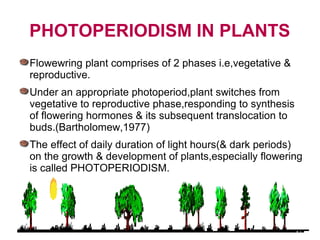


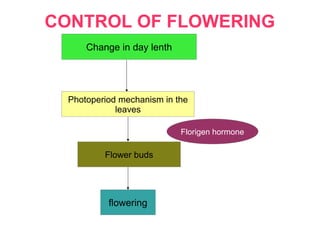

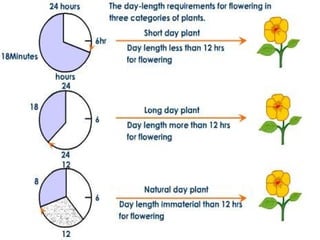
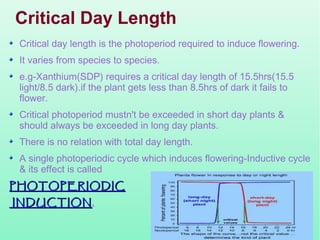

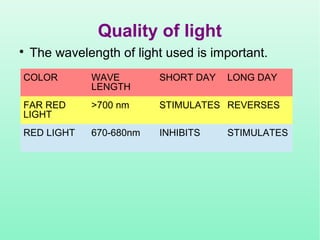
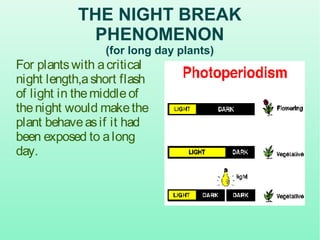





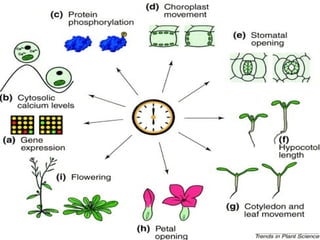


Photoperiodism is the response of organisms, primarily plants, to the length of day and night, influencing growth and reproductive functions. The phenomenon involves various mechanisms, including the synthesis of flowering hormones triggered by light duration, which can be classified into short day, long day, and other groups based on their flowering responses. Key findings include the discovery of critical day lengths for flowering and the role of pigments like phytochrome in perceiving light stimuli.


