Vernalization 
Promoting flowering with cold
• Vernalization is the process whereby flowering is promoted by a cold 
treatment given to a fully hydrated seed or to a growing plant. 
• Dry seeds do not respond to the cold treatment. 
• Due to vernalization the vegetative period of the plant is cut short resulting in 
an early flowering. 
• Also called as yarovization. 
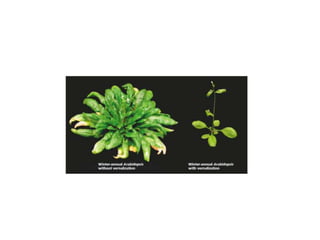
• Without the cold treatment, plants that require vernalization show delayed 
flowering or remain vegetative. 
• In many cases these plants grow as rosettes with no elongation of the stem.
History 
• Klippart,1857- first noticed the low temperature requirement for 
flowering while working with winter wheat and spring wheat. 
• Lysenko,1938-used the term vernalization for a low temperature 
promotion of flowering in plants. 
• Chourad ,1960- defined vernaliation as “acquisition or acceleration of the 
ability to flower by a chilling treatment”.
Vernalization 
• For vernalization the seeds are allowed to germinate for some time and 
then are given cold treatment 0̊C to 5̊C. 
• The period of cold treatment varies from few days to many weeks. 
• After the cold treatment the seedlings are allowed to dry for sometime 
and then sown. 
• Vernalization prepares the plant for flowering. 
• The cold stimulus usually perceived by the apical meistems.but in some 
species all dividing cells of roots and leaves may be the potential sites of 
vernalization eg.Leennario biennis.
• Vernaliztion induces the plant to produce a hormone called vernalin.It was 
discovered by Melcher(1936). 
• The vernalization stimulus can be transmitted from one plant to another 
through graphting. 
• The age of the plant is an important factor in determining the responsiveness 
of the plant to the cold stimulus and it differs in different species. 
• The suitable temperature for vernalization ranges between 1 to 6̊c. 
• At higher temperature from 7̊c onwards response of the plant is decreased. 
• A temperature of about 12 to 14̊c is most ineffective in vernalizing th plant.
• The vernalization is an aerobic process and requires metabolic energy. 
• In the absence of oxygen cold treatment becomes completely inefficient. 
• Sufficient amount of water is also essential. 
• Vernalization of dry seeds is not possible.
Mechanism of vernalization 
Two theories.. 
• 1. Phasic development theory 
• 2. Hormonal theories.
Phasic development theory 
• Proposed by Lysenko in 1934. 
• According to this theory there is a series of phases in the development of 
a plant. 
• Each phase is stimulated by an environmental factor such as 
temperature,light,etc. 
• Commencement of one phase will take place only after the completion of 
the proceeding phase. 
• There are two phases 
• 1.Thermophase 
• 2.Photophase 
• Thermophase depends on temperature.vernalization accelerates 
thermophase. 
• Thermophase should be followed by photophase which requires light.
Hormonal theories 
• Melcher (1939) 
• He proposed that chlling treatment induces the formation of a new floral 
hormone called vernalin. 
• This hormone is transmitted to other parts of the plant. 
• He graphted a vernalized plant with an unvernalized plant. 
• The unvernalized plant also initiates flowering. 
• The hormone,vrnalin diffuses from the vernalized plant to the 
unvernalized plant and induces flowering.
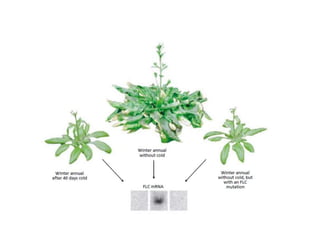
Epigenetic Changes in Gene Expression 
• Vernalization May Involve Epigenetic Changes in Gene Expression. 
• Changes in gene expression that are stable even after the signal that induced the 
change (in this case cold) is removed are known as epigenetic regulation. 
• One model for how vernalization affects flowering is that there are stable 
changes in the pattern of gene expression in the meristem after cold treatment. 
• The involvement of epigenetic regulation in the vernalization process has been 
confirmed in the LDP Arabidopsis. 
• A gene that acts as a repressor of flowering has been identified: FLOWERING 
LOCUS C (FLC). FLC is highly expressed in nonvernalized shoot apical meristems 
(Michaels and Amasino 2000). 
• After vernalization, this gene is epigenetically switched off by an unknown 
mechanism for the remainder of the plant’s life cycle.
Devernalization 
• The reversion of vernalization by high temperature treatment is called 
devernalization. 
• Devernalization is effected by treating the vernalized seeds or buds with 
high temperature. 
• Lang et al (1957) demonstrated that application of gibberlins can replace 
the cold treatment for vernalization in certain biennial plants.
Practical applications 
• Due to vernalization the vegetative period of the plant is cut short resulting in 
an early flowering. 
• Vernalization increases the resistance of plants to fungal diseases. 
• It increases the cold resistance of plants. 
• In the biennials,vernalization induces early flowering and early fruit setting. 
• Flowering can be induced by graphting and this feature is used in horticulture. 
• It also helps in crop improvement.
Thank you

Vernalization

  • 1.
  • 2.
    • Vernalization isthe process whereby flowering is promoted by a cold treatment given to a fully hydrated seed or to a growing plant. • Dry seeds do not respond to the cold treatment. • Due to vernalization the vegetative period of the plant is cut short resulting in an early flowering. • Also called as yarovization. • Without the cold treatment, plants that require vernalization show delayed flowering or remain vegetative. • In many cases these plants grow as rosettes with no elongation of the stem.
  • 4.
    History • Klippart,1857-first noticed the low temperature requirement for flowering while working with winter wheat and spring wheat. • Lysenko,1938-used the term vernalization for a low temperature promotion of flowering in plants. • Chourad ,1960- defined vernaliation as “acquisition or acceleration of the ability to flower by a chilling treatment”.
  • 5.
    Vernalization • Forvernalization the seeds are allowed to germinate for some time and then are given cold treatment 0̊C to 5̊C. • The period of cold treatment varies from few days to many weeks. • After the cold treatment the seedlings are allowed to dry for sometime and then sown. • Vernalization prepares the plant for flowering. • The cold stimulus usually perceived by the apical meistems.but in some species all dividing cells of roots and leaves may be the potential sites of vernalization eg.Leennario biennis.
  • 6.
    • Vernaliztion inducesthe plant to produce a hormone called vernalin.It was discovered by Melcher(1936). • The vernalization stimulus can be transmitted from one plant to another through graphting. • The age of the plant is an important factor in determining the responsiveness of the plant to the cold stimulus and it differs in different species. • The suitable temperature for vernalization ranges between 1 to 6̊c. • At higher temperature from 7̊c onwards response of the plant is decreased. • A temperature of about 12 to 14̊c is most ineffective in vernalizing th plant.
  • 7.
    • The vernalizationis an aerobic process and requires metabolic energy. • In the absence of oxygen cold treatment becomes completely inefficient. • Sufficient amount of water is also essential. • Vernalization of dry seeds is not possible.
  • 8.
    Mechanism of vernalization Two theories.. • 1. Phasic development theory • 2. Hormonal theories.
  • 9.
    Phasic development theory • Proposed by Lysenko in 1934. • According to this theory there is a series of phases in the development of a plant. • Each phase is stimulated by an environmental factor such as temperature,light,etc. • Commencement of one phase will take place only after the completion of the proceeding phase. • There are two phases • 1.Thermophase • 2.Photophase • Thermophase depends on temperature.vernalization accelerates thermophase. • Thermophase should be followed by photophase which requires light.
  • 10.
    Hormonal theories •Melcher (1939) • He proposed that chlling treatment induces the formation of a new floral hormone called vernalin. • This hormone is transmitted to other parts of the plant. • He graphted a vernalized plant with an unvernalized plant. • The unvernalized plant also initiates flowering. • The hormone,vrnalin diffuses from the vernalized plant to the unvernalized plant and induces flowering.
  • 11.
    Epigenetic Changes inGene Expression • Vernalization May Involve Epigenetic Changes in Gene Expression. • Changes in gene expression that are stable even after the signal that induced the change (in this case cold) is removed are known as epigenetic regulation. • One model for how vernalization affects flowering is that there are stable changes in the pattern of gene expression in the meristem after cold treatment. • The involvement of epigenetic regulation in the vernalization process has been confirmed in the LDP Arabidopsis. • A gene that acts as a repressor of flowering has been identified: FLOWERING LOCUS C (FLC). FLC is highly expressed in nonvernalized shoot apical meristems (Michaels and Amasino 2000). • After vernalization, this gene is epigenetically switched off by an unknown mechanism for the remainder of the plant’s life cycle.
  • 13.
    Devernalization • Thereversion of vernalization by high temperature treatment is called devernalization. • Devernalization is effected by treating the vernalized seeds or buds with high temperature. • Lang et al (1957) demonstrated that application of gibberlins can replace the cold treatment for vernalization in certain biennial plants.
  • 14.
    Practical applications •Due to vernalization the vegetative period of the plant is cut short resulting in an early flowering. • Vernalization increases the resistance of plants to fungal diseases. • It increases the cold resistance of plants. • In the biennials,vernalization induces early flowering and early fruit setting. • Flowering can be induced by graphting and this feature is used in horticulture. • It also helps in crop improvement.
  • 15.