TRANSDUCER
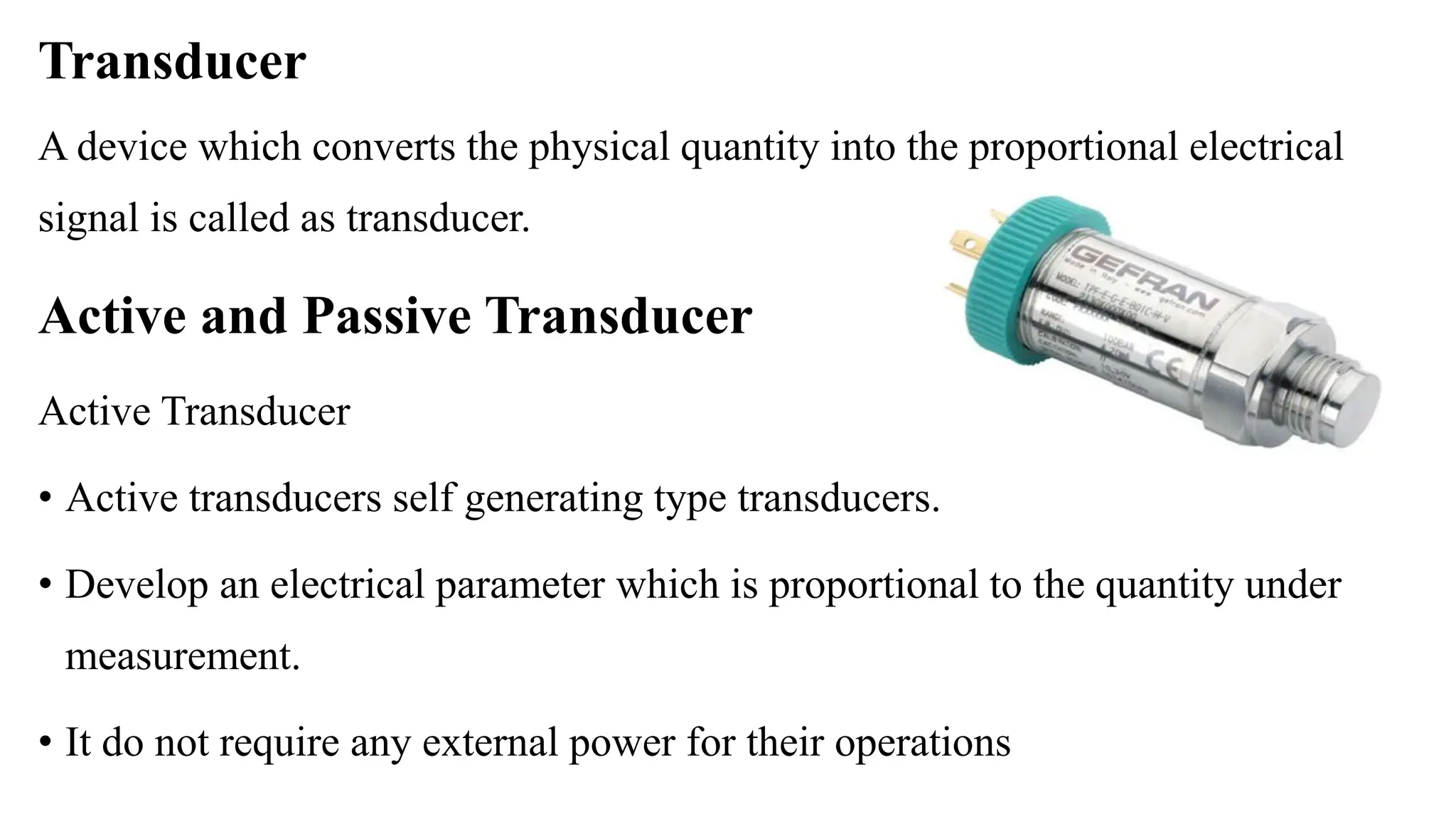
Transducer
A device which converts the physical quantity into the proportional electrical
signal is called as transducer.
Active and Passive Transducer
Active Transducer
• Active transducers self generating type transducers.
• Develop an electrical parameter which is proportional to the quantity under
measurement.
• It do not require any external power for their operations
Types
• Photovoltaic Transducer
• Thermo electric transducer
• Piezoelectric transducer
• Electromagnetic transducer
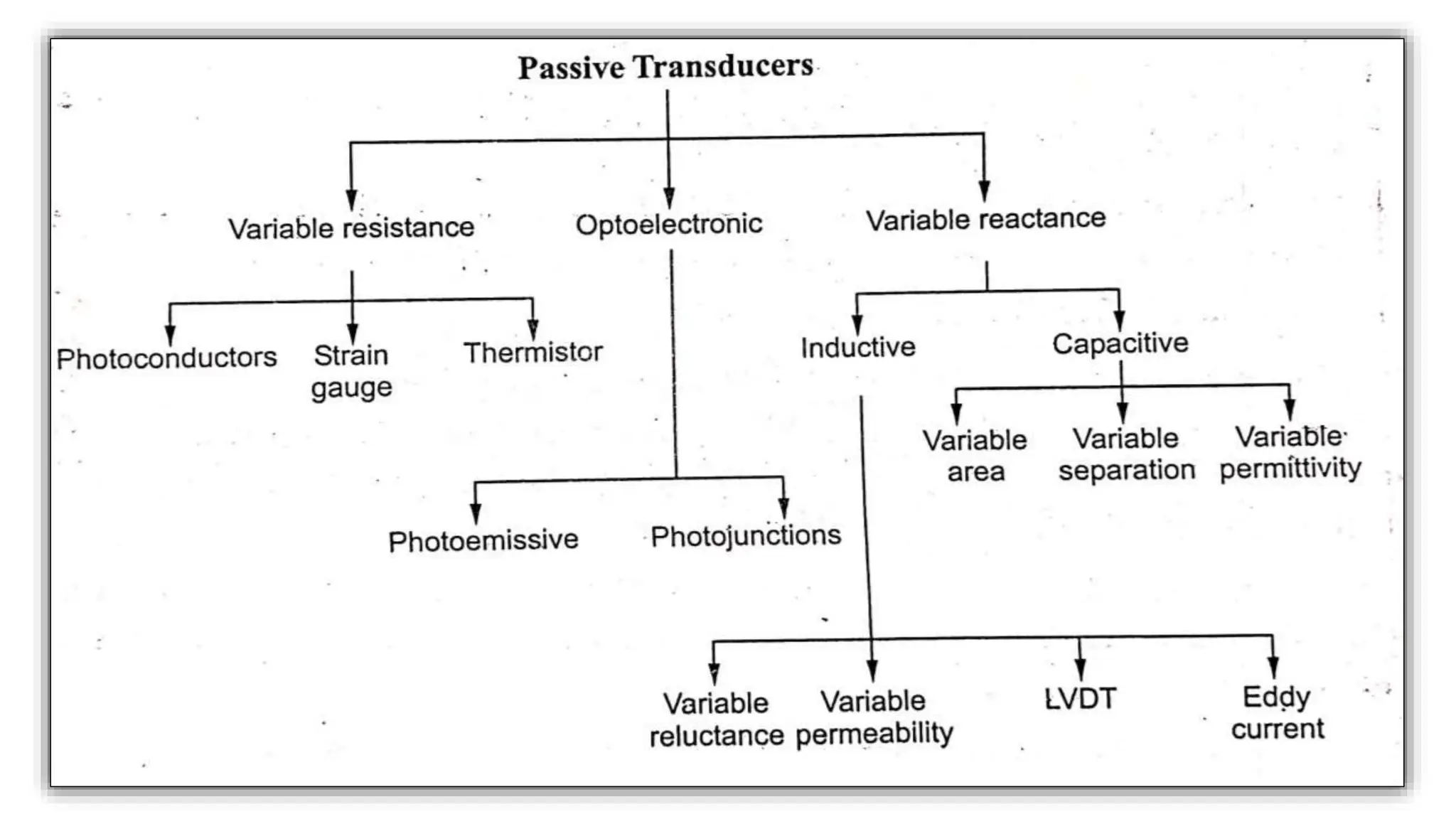
Passive transducer
• Passive transducers do not generate any electrical signal by themselves.
• An external power source is required.
• It depends upon the change in electrical parameters
• They are known as externally power driven transducers.
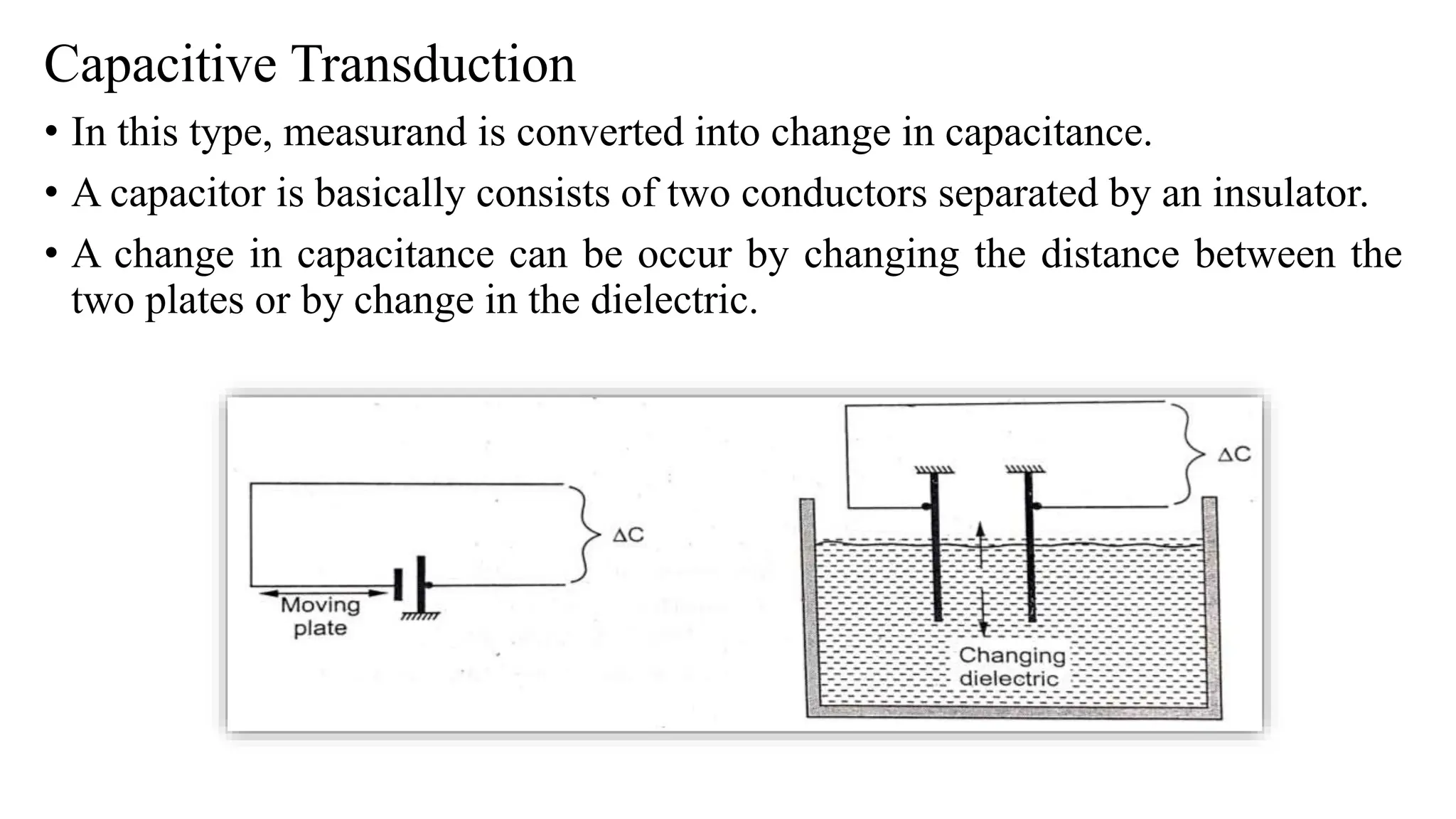
Capacitive Transduction
• In this type, measurand is converted into change in capacitance.
• A capacitor is basically consists of two conductors separated by an insulator.
• A change in capacitance can be occur by changing the distance between the
two plates or by change in the dielectric.
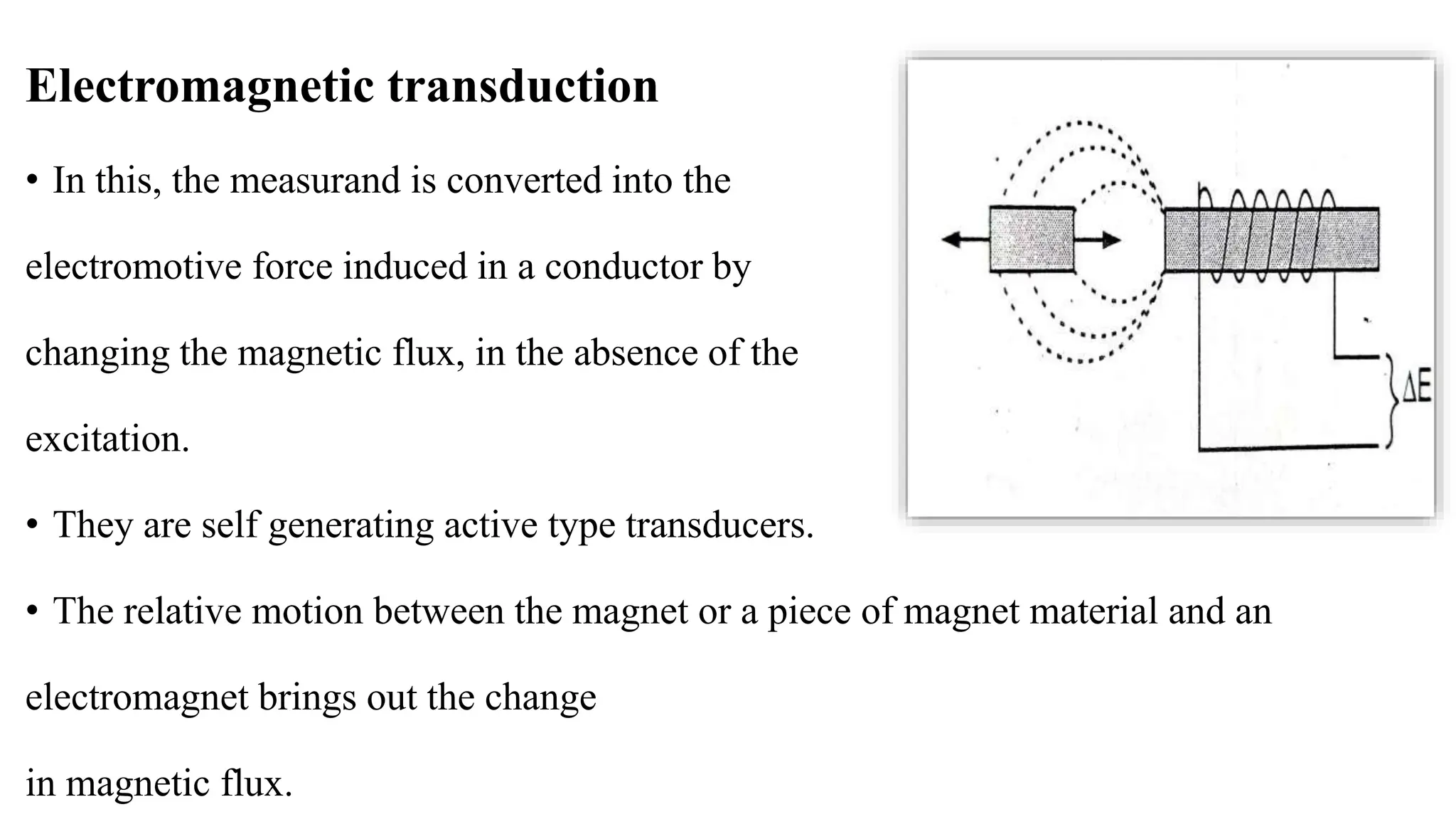
Electromagnetic transduction
• In this, the measurand is converted into the
electromotive force induced in a conductor by
changing the magnetic flux, in the absence of the
excitation.
• They are self generating active type transducers.
• The relative motion between the magnet or a piece of magnet material and an
electromagnet brings out the change
in magnetic flux.
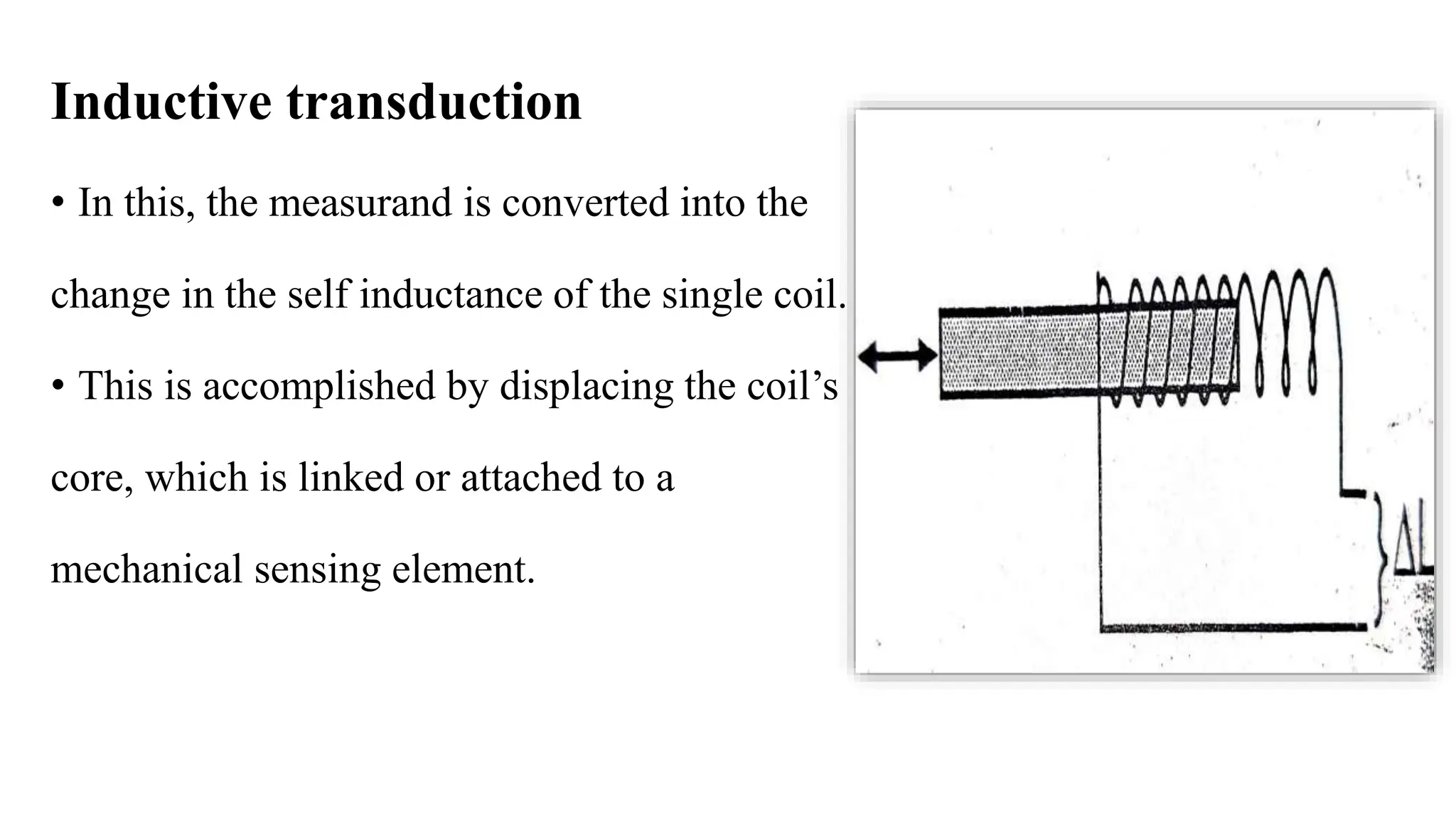
Inductive transduction
• In this, the measurand is converted into the
change in the self inductance of the single coil.
• This is accomplished by displacing the coil’s
core, which is linked or attached to a
mechanical sensing element.
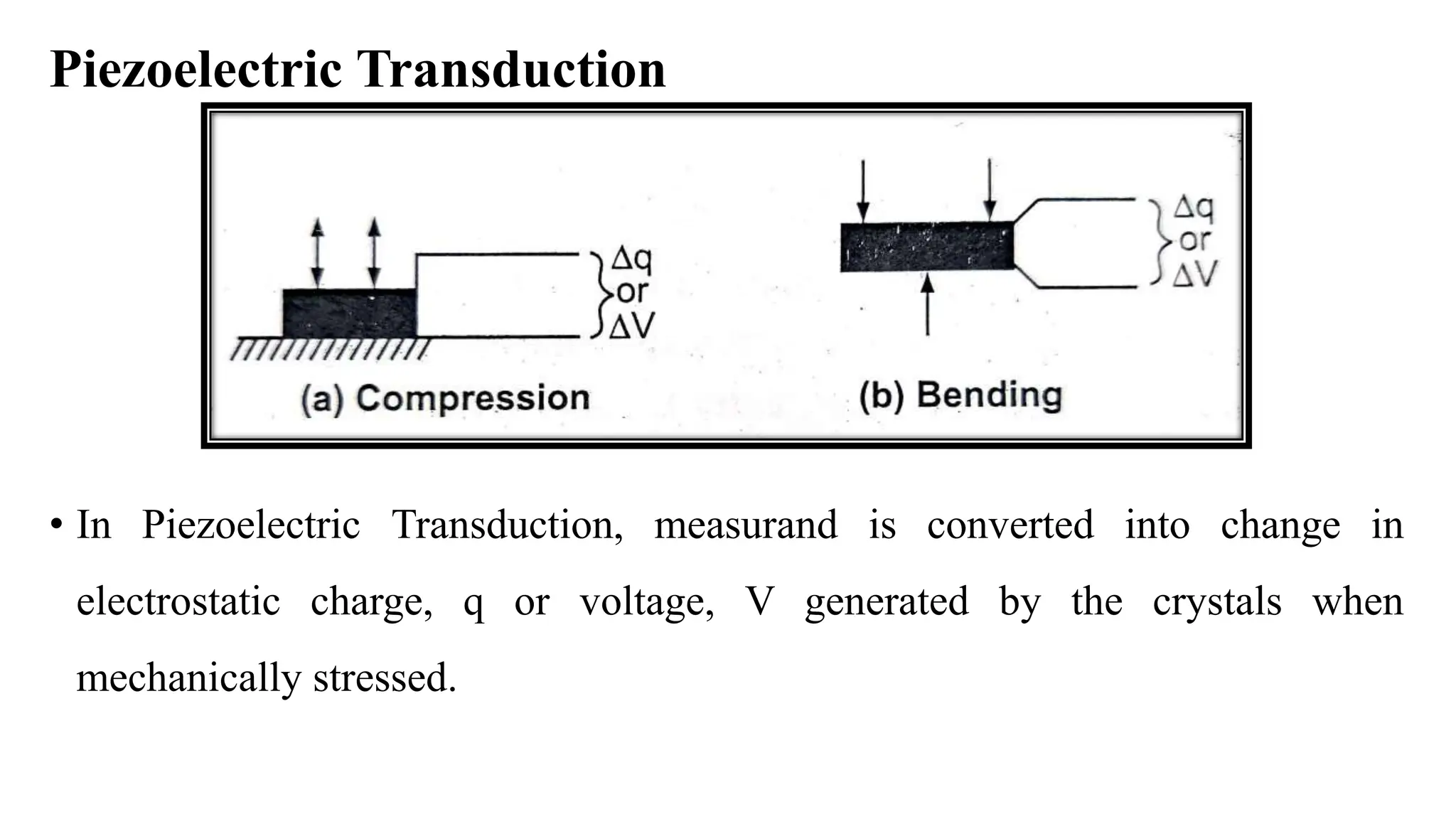
Piezoelectric Transduction
• In Piezoelectric Transduction, measurand is converted into change in
electrostatic charge, q or voltage, V generated by the crystals when
mechanically stressed.
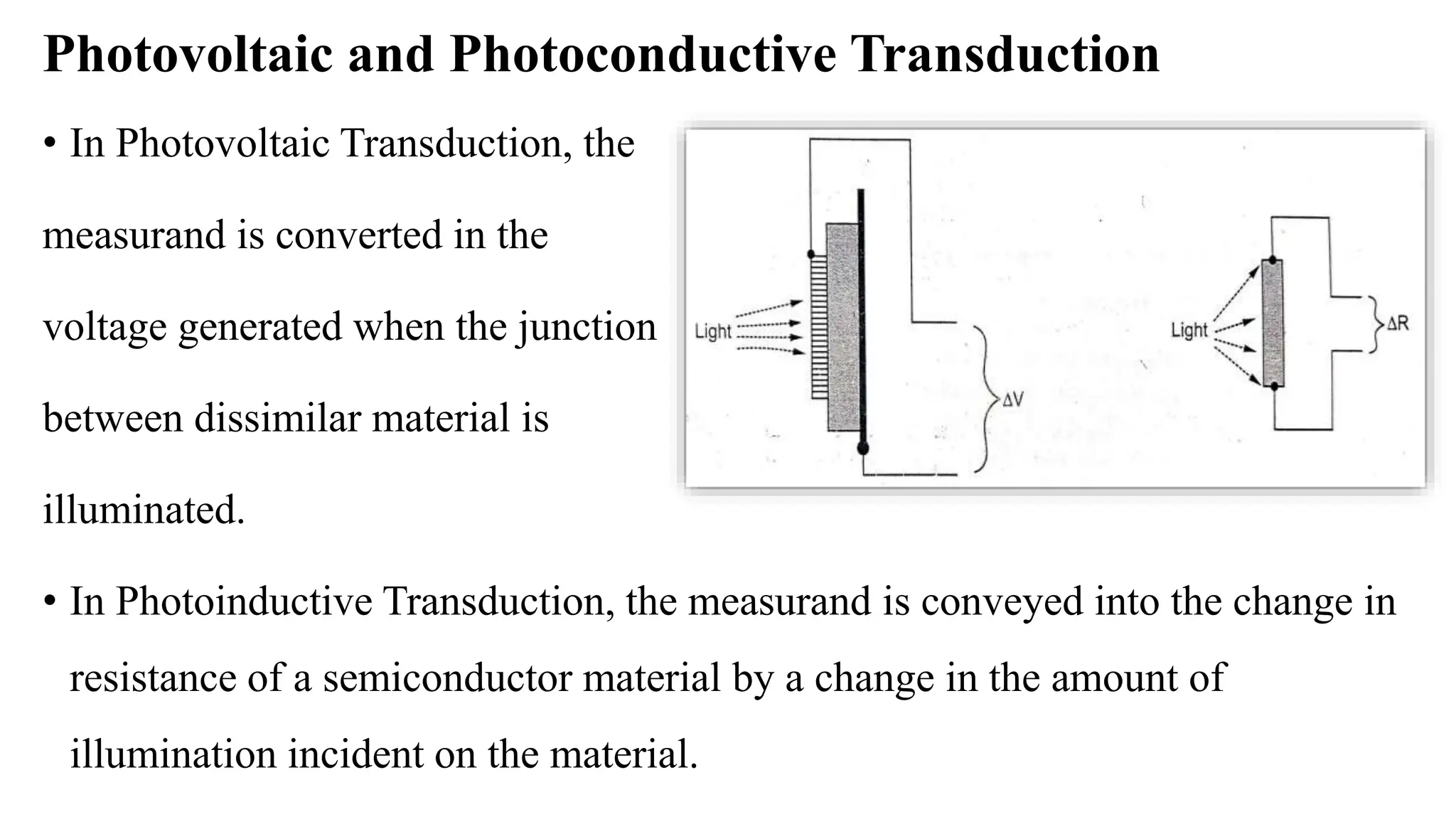
Photovoltaic and Photoconductive Transduction
• In Photovoltaic Transduction, the
measurand is converted in the
voltage generated when the junction
between dissimilar material is
illuminated.
• In Photoinductive Transduction, the measurand is conveyed into the change in
resistance of a semiconductor material by a change in the amount of
illumination incident on the material.
Analog and Digital transducers
• The transducers can be classified on the basis of the output which may be a
continuous function of time or the output may be in discrete steps.
Analog Transducer
• These transducers convert the input quantity into an analog output which is
a continuous function of time. A strain gauge, LVDT, thermocouples or
thermistors are called analog transducers as they produce an output which
is a continuous function of time.
Digital Transducers
• Digital transducers produce an electrical output in the form of pulses which
forms an unique code. Unique code is generated for each discrete value
sensed.
Primary or Secondary
• Some transducers consist of mechanical device along with the electrical device.
• In such transducers mechanical device acts as a primary transducer and converts
physical quantity into mechanical signal.
• The electrical device then converts mechanical signal produced by primary transducer
into an electrical signal.
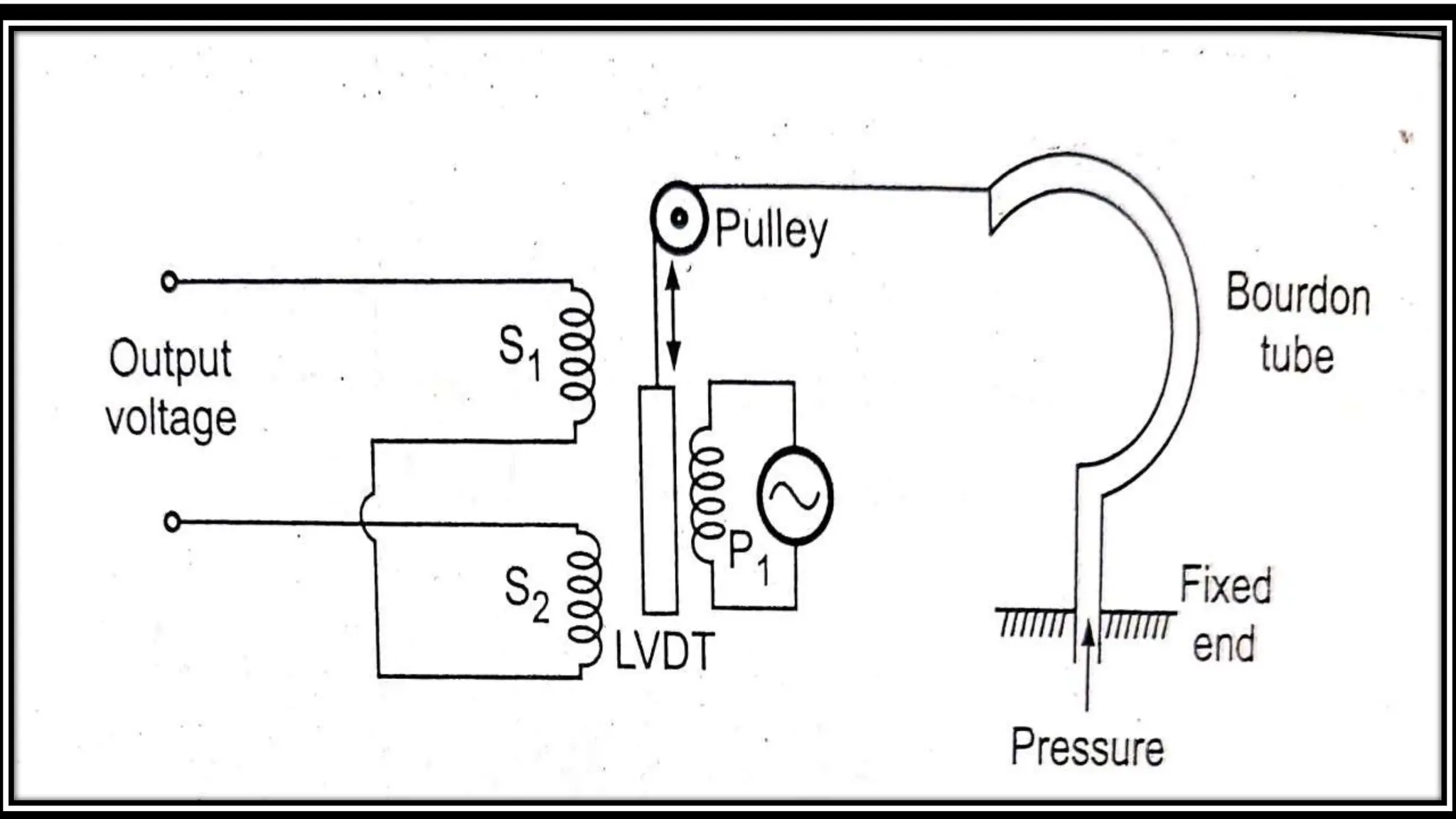
• Therefore, electrical device acts as a secondary transducer. For an example, in
pressure measurement Bourdon's tube acts as a primary transducer which converts a
pressure into displacement and LVDT acts as a secondary transducer which converts
this displacement into an equivalent electrical signal.
Transducer and Inverse Transducer
• Transducer convert non-electrical quantity into the electrical quantity
whereas inverse transducer electrical quantity into non-electrical quantity.
• For example, microphone is a transducer which converts sound signal to
electrical signal whereas loud speaker is an inverse transducer which
converts electrical signal into sound signal.
THANK YOU

TRANSDUCER INTRODUCTION AND TYPES OF TRANSDUCERS.pptx

  • 1.
  • 2.
    Transducer A device whichconverts the physical quantity into the proportional electrical signal is called as transducer. Active and Passive Transducer Active Transducer • Active transducers self generating type transducers. • Develop an electrical parameter which is proportional to the quantity under measurement. • It do not require any external power for their operations
  • 3.
    Types • Photovoltaic Transducer •Thermo electric transducer • Piezoelectric transducer • Electromagnetic transducer Passive transducer • Passive transducers do not generate any electrical signal by themselves. • An external power source is required. • It depends upon the change in electrical parameters • They are known as externally power driven transducers.
  • 5.
    Capacitive Transduction • Inthis type, measurand is converted into change in capacitance. • A capacitor is basically consists of two conductors separated by an insulator. • A change in capacitance can be occur by changing the distance between the two plates or by change in the dielectric.
  • 6.
    Electromagnetic transduction • Inthis, the measurand is converted into the electromotive force induced in a conductor by changing the magnetic flux, in the absence of the excitation. • They are self generating active type transducers. • The relative motion between the magnet or a piece of magnet material and an electromagnet brings out the change in magnetic flux.
  • 7.
    Inductive transduction • Inthis, the measurand is converted into the change in the self inductance of the single coil. • This is accomplished by displacing the coil’s core, which is linked or attached to a mechanical sensing element.
  • 8.
    Piezoelectric Transduction • InPiezoelectric Transduction, measurand is converted into change in electrostatic charge, q or voltage, V generated by the crystals when mechanically stressed.
  • 9.
    Photovoltaic and PhotoconductiveTransduction • In Photovoltaic Transduction, the measurand is converted in the voltage generated when the junction between dissimilar material is illuminated. • In Photoinductive Transduction, the measurand is conveyed into the change in resistance of a semiconductor material by a change in the amount of illumination incident on the material.
  • 10.
    Analog and Digitaltransducers • The transducers can be classified on the basis of the output which may be a continuous function of time or the output may be in discrete steps. Analog Transducer • These transducers convert the input quantity into an analog output which is a continuous function of time. A strain gauge, LVDT, thermocouples or thermistors are called analog transducers as they produce an output which is a continuous function of time. Digital Transducers • Digital transducers produce an electrical output in the form of pulses which forms an unique code. Unique code is generated for each discrete value sensed.
  • 11.
    Primary or Secondary •Some transducers consist of mechanical device along with the electrical device. • In such transducers mechanical device acts as a primary transducer and converts physical quantity into mechanical signal. • The electrical device then converts mechanical signal produced by primary transducer into an electrical signal. • Therefore, electrical device acts as a secondary transducer. For an example, in pressure measurement Bourdon's tube acts as a primary transducer which converts a pressure into displacement and LVDT acts as a secondary transducer which converts this displacement into an equivalent electrical signal.
  • 13.
    Transducer and InverseTransducer • Transducer convert non-electrical quantity into the electrical quantity whereas inverse transducer electrical quantity into non-electrical quantity. • For example, microphone is a transducer which converts sound signal to electrical signal whereas loud speaker is an inverse transducer which converts electrical signal into sound signal.
  • 14.