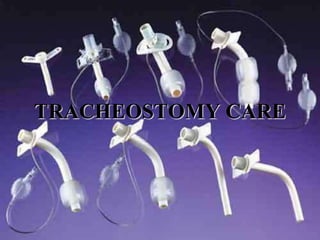
TRACHEOSTOMY CARE
 making an incision through the front of neck
and the wall of the trachea to permit the tube's
insertion.
 The opening to the trachea is known medically
as a stoma or a trach . The tube, referred to as a
cannula, is held in place with stitches
RISKS
 Infection
 Internal bleeding.
 Permanent loss of your ability to speak.
PRE-OP CARE
 Sedative
 NPO since 2200hrs
 taking insulin, diabetes pills, blood pressure
medicine, heart pills, or any other medication
on the day of surgery??
 PAC
 Vital signs
 Blood tests
 ECG
 Chest x ray
 Pulse oximeter
 Written informed consent
 IV access
 Communication:
 Once tube is in place - won't be able to talk
 Before surgery, patient and nursing officer will need to
work out a way of telling what patient need.
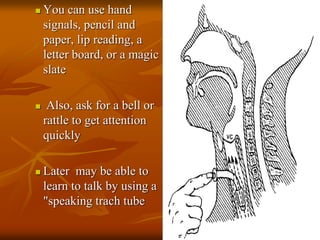
 You can use hand
signals, pencil and
paper, lip reading, a
letter board, or a magic
slate
 Also, ask for a bell or
rattle to get attention
quickly
 Later may be able to
learn to talk by using a
"speaking trach tube
 Pre-Op Preparations
 Make patient lie on his/her back with a rolled
towel under his/her shoulders.
 Anesthesia
 GA/LA
POST-OP CARE
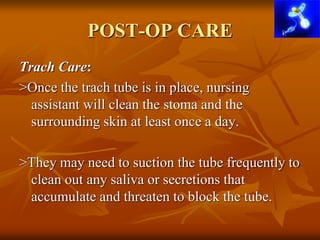
Trach Care:
>Once the trach tube is in place, nursing
assistant will clean the stoma and the
surrounding skin at least once a day.
>They may need to suction the tube frequently to
clean out any saliva or secretions that
accumulate and threaten to block the tube.
Oxygen:
>may need oxygen.
Arterial Blood Gases
Activity
Foley Catheter
Strict Intake/Output
POST-OP CARE-Contd
 Medicines:
 Antibiotics
 Analgesics
 Anti-emetics
 Stool Softeners
 Cleaning the Trach
 clean inner cannula once in a day
 Unlock inner cannula & remove it by pulling it
gently out and down
 Put a clean wet inner cannula inside outer cannula
 Lock inner cannula in place
 Clean dirty cannula by soaking it in liquid soap
and water
 Rinse inner cannula under running water
 Make sure that all the soap and hydrogen peroxide
have been rinsed off well
 Using a Trach Bib
 is used to catch any secretions that come from your
stoma and could make your skin sore
 Suctioning the Trach Tube
 Aseptic technique
 Suction catheters should be less than half size of
trachea tube insitu
 During suctioning procedure catheter should only
occluded for 5 second intervals
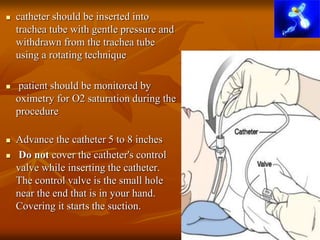
 catheter should be inserted into
trachea tube with gentle pressure and
withdrawn from the trachea tube
using a rotating technique
 patient should be monitored by
oximetry for O2 saturation during the
procedure
 Advance the catheter 5 to 8 inches
 Do not cover the catheter's control
valve while inserting the catheter.
The control valve is the small hole
near the end that is in your hand.
Covering it starts the suction.
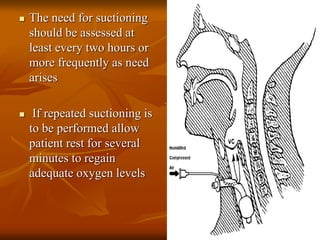
 The need for suctioning
should be assessed at
least every two hours or
more frequently as need
arises
 If repeated suctioning is
to be performed allow
patient rest for several
minutes to regain
adequate oxygen levels
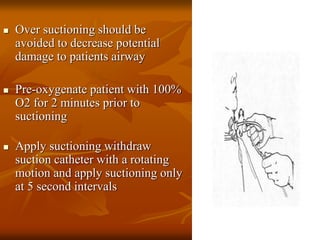
 Over suctioning should be
avoided to decrease potential
damage to patients airway
 Pre-oxygenate patient with 100%
O2 for 2 minutes prior to
suctioning
 Apply suctioning withdraw
suction catheter with a rotating
motion and apply suctioning only
at 5 second intervals
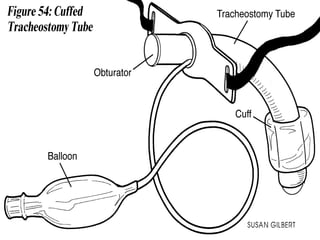
 If patient cough out the trach tube:
 First use a syringe to take air out of cuff on inner
cannula, then remove it from the outer cannula.
 Put obturator into outer cannula
 Insert obturator and outer cannula through stoma
 Pull out obturator while pressing trach plate firmly
 Put inner cannula down outer cannula and turn it
clockwise until it locks in place
 Inserting inner cannula can make patient cough or gag,
so hold the trach plate firmly
 Now inflate the cuff so the trach won't fall out again.
 Tie the trach ties and put a trach bib under the trach plate.
DRESSING-TRACHEOSTOMY
STANDARDS:
* Tracheal tube will be secured in midline position
* Aseptic technique to be used when changing
tracheostomy dressing
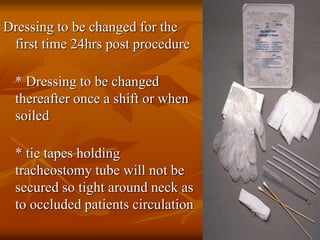
Dressing to be changed for the
first time 24hrs post procedure
* Dressing to be changed
thereafter once a shift or when
soiled
* tie tapes holding
tracheostomy tube will not be
secured so tight around neck as
to occluded patients circulation
 OUTCOMES:
* Complication of tracheal stenosis and
erosion are minimised by securing tracheal
tube in midline position
* The patient tracheostomy site will remain
infection free
PROCEDURE:
* Explain procedure to patient
* Aseptic preparation
* Prepare dressing pack
* Suction patient
* Remove old dressing and ties
* Swab around tracheal stoma with normal saline
* Fold sterile gauze squares in half and place on
under each flange of the tracheostomy tube.
* Attach cotton tape to tracheostomy tube flange by
passing doubled cotton tape up through opening in
flange then threading loose ends up through loop.
End result should have two tails extending out from
flange
The long cotton tape are then to be tied leaving at least a
two finger space between patient and tie tapes.
* Ensure patients comfort with new dressing
* Test cuff press with cuffed tracheostomy tubes
THANK YOU

TRACHEOSTOMY care.ppt

  • 1.
  • 2.
     making anincision through the front of neck and the wall of the trachea to permit the tube's insertion.  The opening to the trachea is known medically as a stoma or a trach . The tube, referred to as a cannula, is held in place with stitches
  • 4.
    RISKS  Infection  Internalbleeding.  Permanent loss of your ability to speak.
  • 5.
    PRE-OP CARE  Sedative NPO since 2200hrs  taking insulin, diabetes pills, blood pressure medicine, heart pills, or any other medication on the day of surgery??
  • 6.
     PAC  Vitalsigns  Blood tests  ECG  Chest x ray  Pulse oximeter
  • 7.
     Written informedconsent  IV access  Communication:  Once tube is in place - won't be able to talk  Before surgery, patient and nursing officer will need to work out a way of telling what patient need.
  • 8.
     You canuse hand signals, pencil and paper, lip reading, a letter board, or a magic slate  Also, ask for a bell or rattle to get attention quickly  Later may be able to learn to talk by using a "speaking trach tube
  • 9.
     Pre-Op Preparations Make patient lie on his/her back with a rolled towel under his/her shoulders.  Anesthesia  GA/LA
  • 10.
    POST-OP CARE Trach Care: >Oncethe trach tube is in place, nursing assistant will clean the stoma and the surrounding skin at least once a day. >They may need to suction the tube frequently to clean out any saliva or secretions that accumulate and threaten to block the tube.
  • 11.
    Oxygen: >may need oxygen. ArterialBlood Gases Activity Foley Catheter Strict Intake/Output
  • 12.
    POST-OP CARE-Contd  Medicines: Antibiotics  Analgesics  Anti-emetics  Stool Softeners
  • 13.
     Cleaning theTrach  clean inner cannula once in a day  Unlock inner cannula & remove it by pulling it gently out and down  Put a clean wet inner cannula inside outer cannula
  • 14.
     Lock innercannula in place  Clean dirty cannula by soaking it in liquid soap and water  Rinse inner cannula under running water  Make sure that all the soap and hydrogen peroxide have been rinsed off well
  • 15.
     Using aTrach Bib  is used to catch any secretions that come from your stoma and could make your skin sore  Suctioning the Trach Tube  Aseptic technique  Suction catheters should be less than half size of trachea tube insitu  During suctioning procedure catheter should only occluded for 5 second intervals
  • 16.
     catheter shouldbe inserted into trachea tube with gentle pressure and withdrawn from the trachea tube using a rotating technique  patient should be monitored by oximetry for O2 saturation during the procedure  Advance the catheter 5 to 8 inches  Do not cover the catheter's control valve while inserting the catheter. The control valve is the small hole near the end that is in your hand. Covering it starts the suction.
  • 17.
     The needfor suctioning should be assessed at least every two hours or more frequently as need arises  If repeated suctioning is to be performed allow patient rest for several minutes to regain adequate oxygen levels
  • 18.
     Over suctioningshould be avoided to decrease potential damage to patients airway  Pre-oxygenate patient with 100% O2 for 2 minutes prior to suctioning  Apply suctioning withdraw suction catheter with a rotating motion and apply suctioning only at 5 second intervals
  • 19.
     If patientcough out the trach tube:  First use a syringe to take air out of cuff on inner cannula, then remove it from the outer cannula.  Put obturator into outer cannula  Insert obturator and outer cannula through stoma
  • 21.
     Pull outobturator while pressing trach plate firmly  Put inner cannula down outer cannula and turn it clockwise until it locks in place  Inserting inner cannula can make patient cough or gag, so hold the trach plate firmly  Now inflate the cuff so the trach won't fall out again.  Tie the trach ties and put a trach bib under the trach plate.
  • 22.
    DRESSING-TRACHEOSTOMY STANDARDS: * Tracheal tubewill be secured in midline position * Aseptic technique to be used when changing tracheostomy dressing
  • 23.
    Dressing to bechanged for the first time 24hrs post procedure * Dressing to be changed thereafter once a shift or when soiled * tie tapes holding tracheostomy tube will not be secured so tight around neck as to occluded patients circulation
  • 24.
     OUTCOMES: * Complicationof tracheal stenosis and erosion are minimised by securing tracheal tube in midline position * The patient tracheostomy site will remain infection free
  • 25.
    PROCEDURE: * Explain procedureto patient * Aseptic preparation * Prepare dressing pack * Suction patient
  • 26.
    * Remove olddressing and ties * Swab around tracheal stoma with normal saline * Fold sterile gauze squares in half and place on under each flange of the tracheostomy tube. * Attach cotton tape to tracheostomy tube flange by passing doubled cotton tape up through opening in flange then threading loose ends up through loop. End result should have two tails extending out from flange
  • 27.
    The long cottontape are then to be tied leaving at least a two finger space between patient and tie tapes. * Ensure patients comfort with new dressing * Test cuff press with cuffed tracheostomy tubes
  • 28.