Natural Project.
By Irene and Paula.
Living things.
Living things: There are three vital functions:
1º: Nutriction means to get nutrients from the
food. 2º: Reproduction means making new
living things.3º: Interaction means to react to
changes of the enviroment.Types of living
things: Animals, plants, bacteria, fungi and
algae.
Non-living things.
Non-living things: They are not
born, they do not grow, they do not
reproduce and they do not die.
1º part of Nutrition.
What is nutrition? Nutrition is to obtain
nutrients from the enviroment and transform
them into energy.
How do plants do it? Plants produce their own
food through photosynthesis and they need:
water and minerals, sunlight and carbon
dioxide.
2º part of Nutrition.
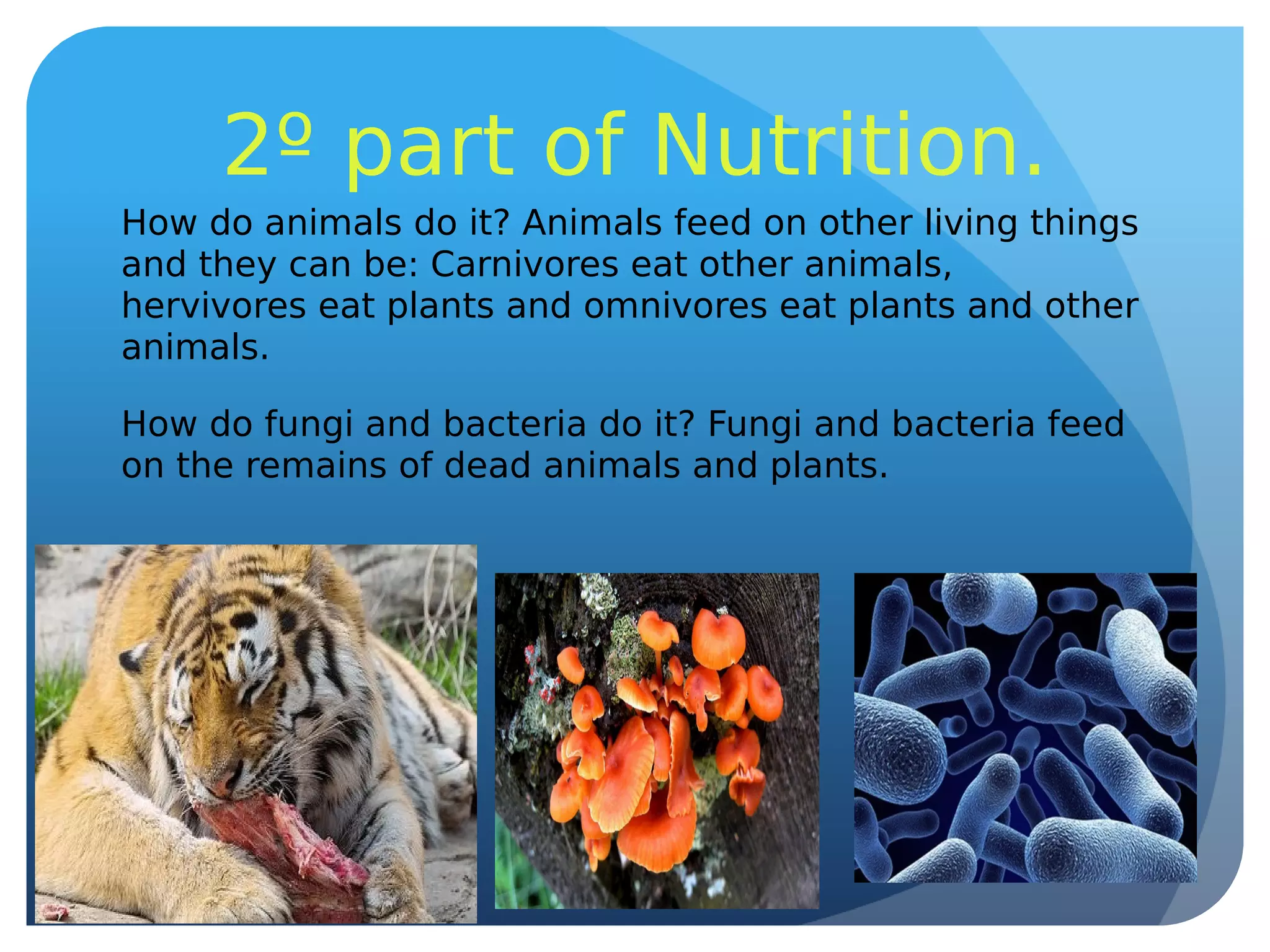
How do animals do it? Animals feed on other living things
and they can be: Carnivores eat other animals,
hervivores eat plants and omnivores eat plants and other
animals.
How do fungi and bacteria do it? Fungi and bacteria feed
on the remains of dead animals and plants.
Reproduction.
What is it? Reproduction means making new living things.
Types: Asexual and sexual. In asexual reproduction one
individual is needed, for example: sea start, bacteria,
pine apple, etc…
In sexual reproduction two individuals are needed: male
and female.
Interaction.
What is it? In interaction there is a change and
there is a reaction.
Elements: Stimulus is the change and response
is the reaction.
Cell.
What is it? It is the smallest part in which living
things are divided.
Structure: Many cells make tissues, many
tissues make organs, many organs make
systems and many systems make organisms.
Nucleous.
It is a part of the cell that controls the
functions of the cell. It is like a Town Hall
in a city.
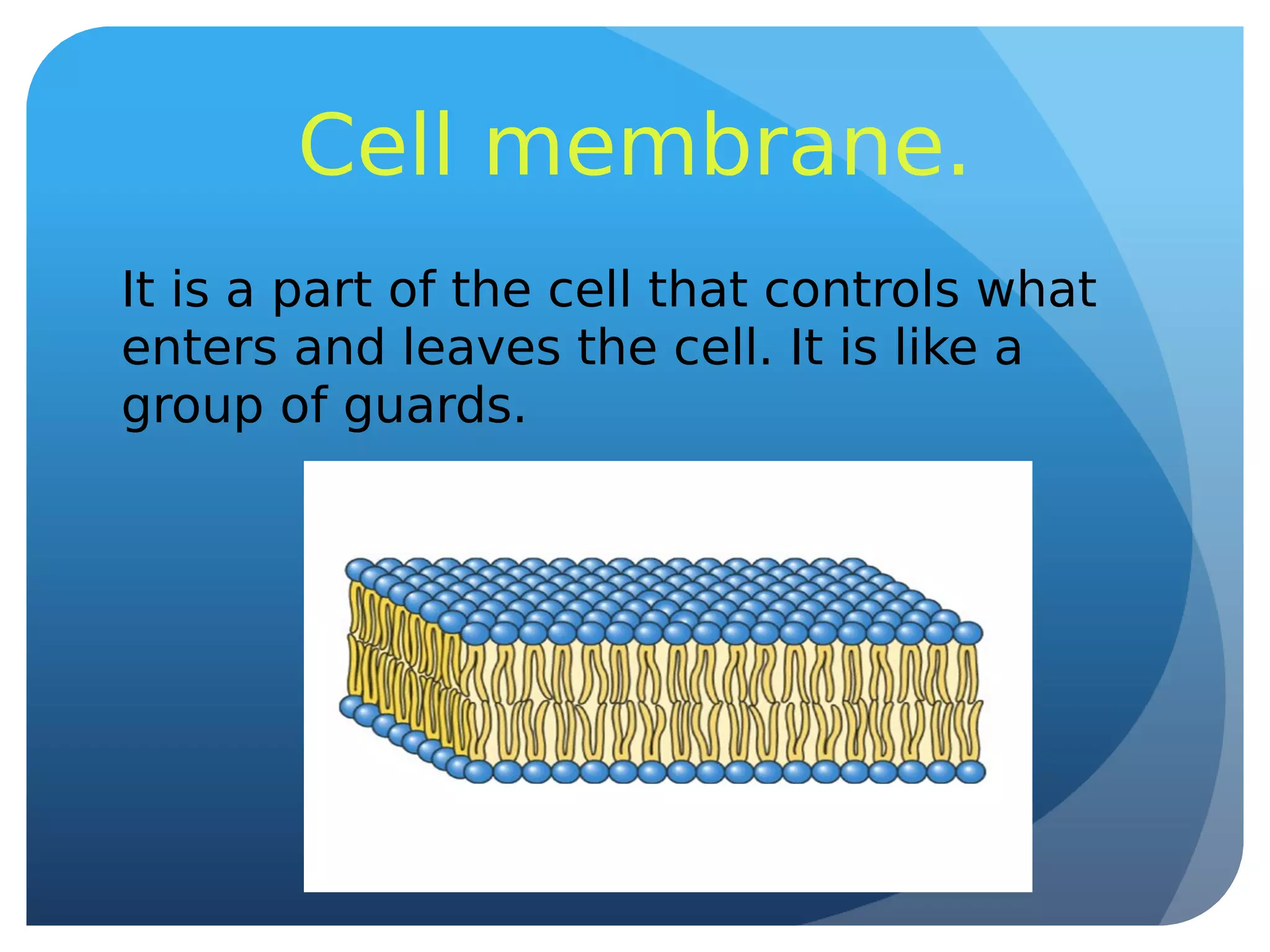
Cell membrane.
It is a part of the cell that controls what
enters and leaves the cell. It is like a
group of guards.
Cytoplasm.
It is a subtance where all parts of the cell
float around. It is like the atmosphere of
a city.
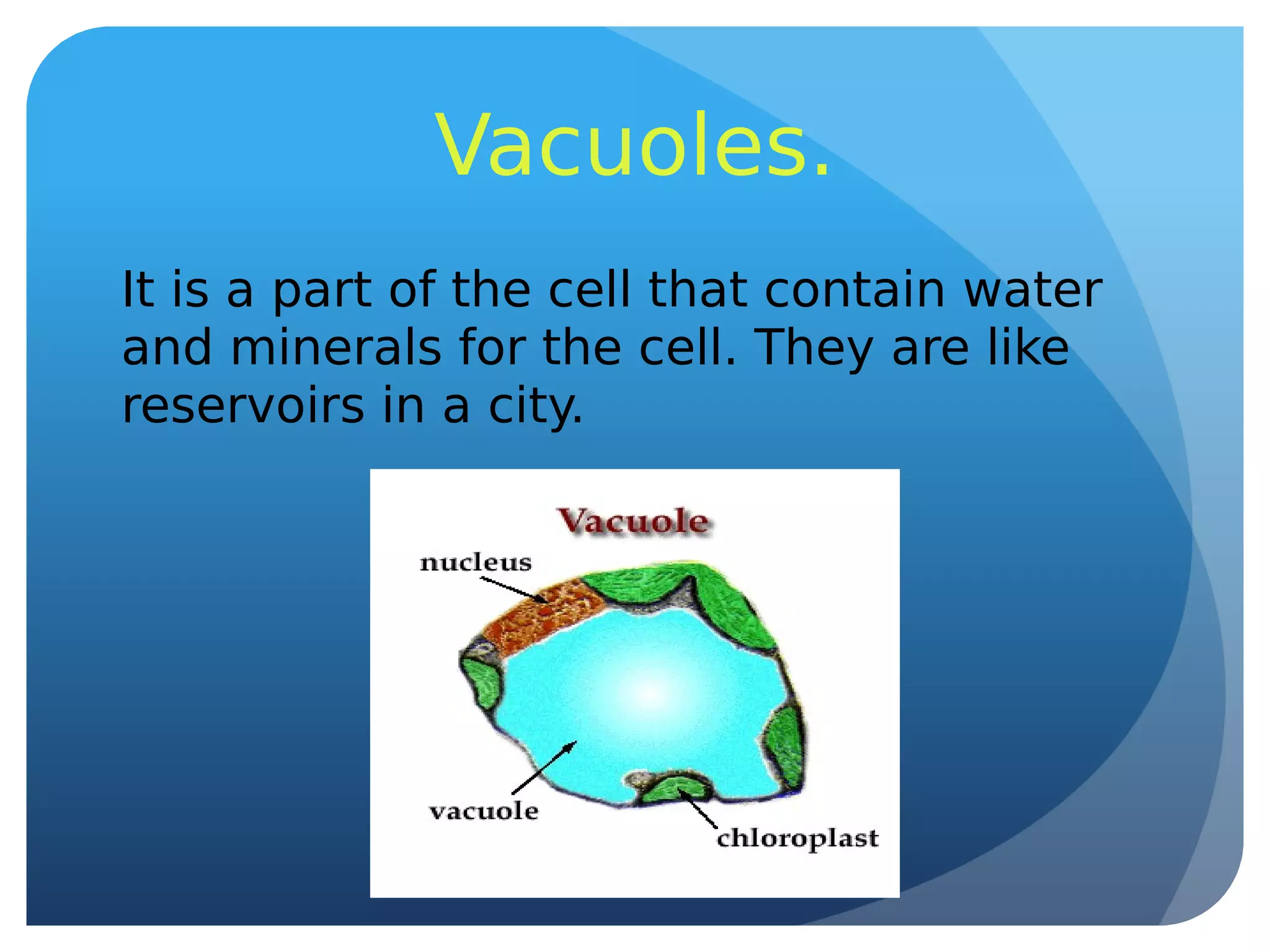
Vacuoles.
It is a part of the cell that contain water
and minerals for the cell. They are like
reservoirs in a city.
Cell wall.
It is a part of the cell that protecs the
cell. It is like the city wall.
Chloroplast.
It is a part of the cell that contain
chlorophyll which plants need for
photosynthesis. They are like parks in a
city.
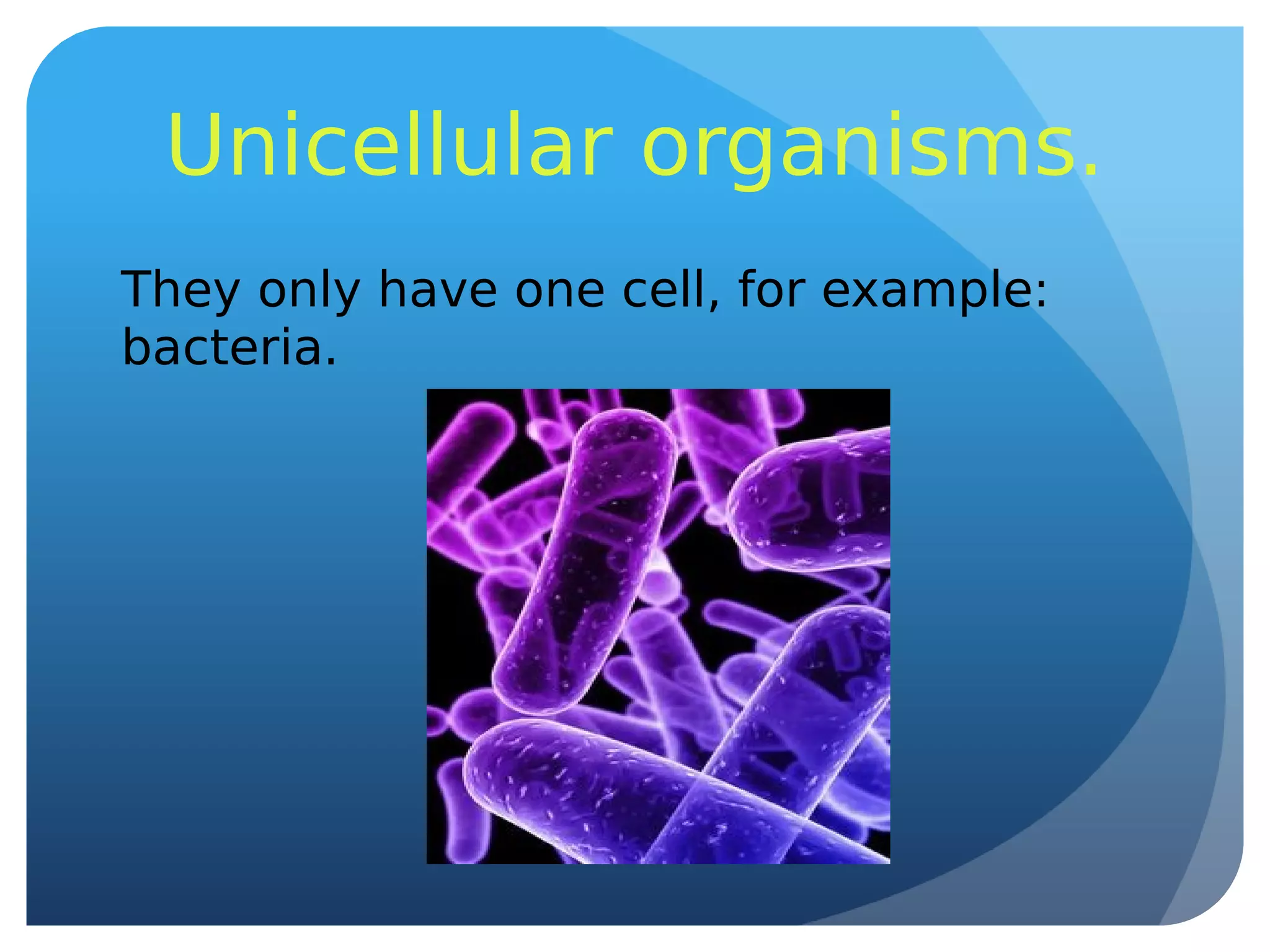
Unicellular organisms.
They only have one cell, for example:
bacteria.
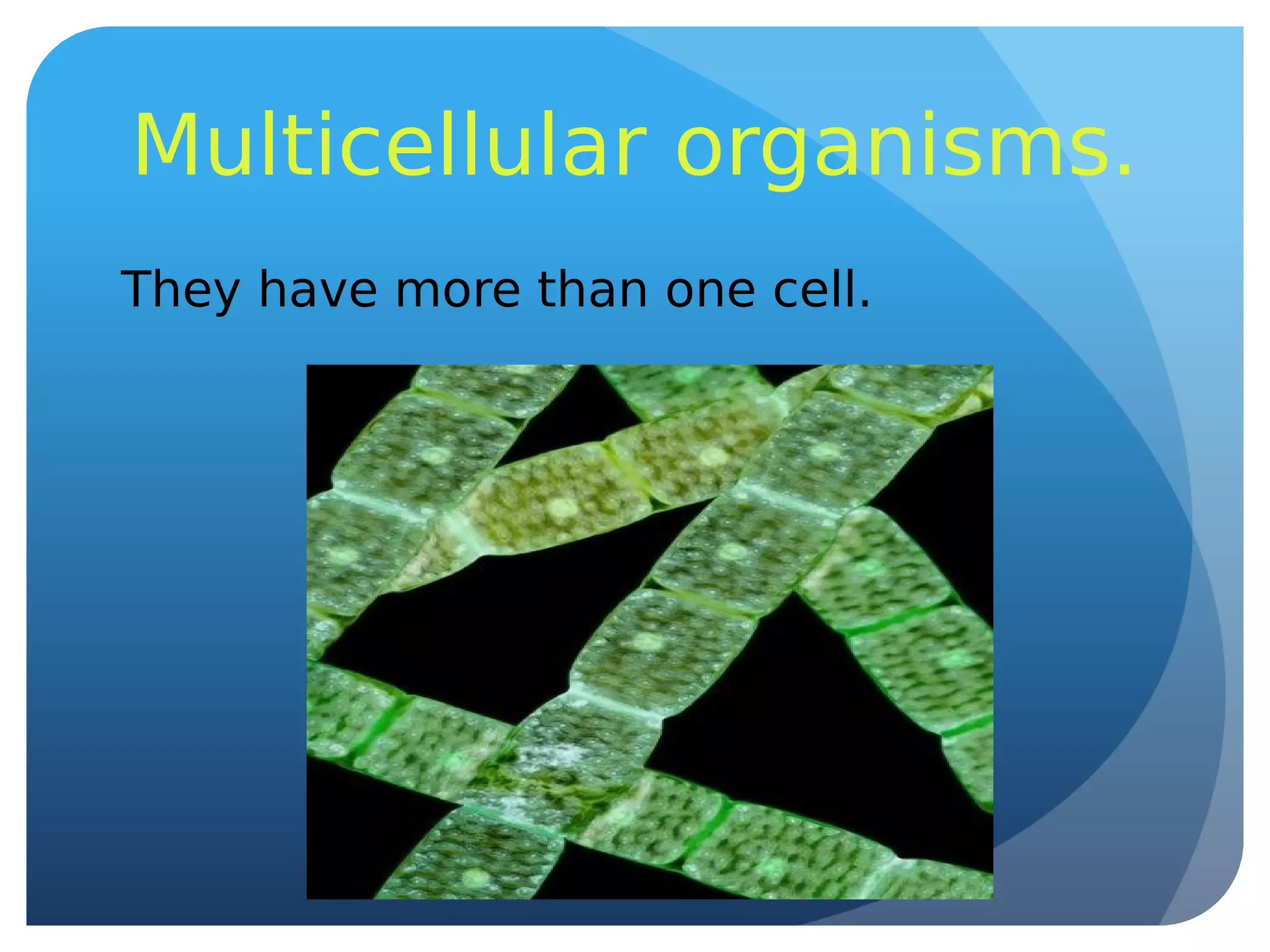
Multicellular organisms.
They have more than one cell.
Microscope.
It is a instrument that we need to see
things bigger.
From Cell To Organisms.
Some cells: Red Blood
Cells, White blood cells,
Nerve Cells, Root hair
Cell, Leaf Cells and
Plateletes.
Red Blood Cells.
They carry oxygen to all parts of
the body.
White Blood Cells.
They carry information and connections
between cells grow as we learn things.
Root Hair Cells.
They absorb water and minerals from the
soil.
Leaf Cells.
They collect sunlight for phtosyntesis.
Plateletes.
When there is an injury in a blood vessel,
they close that injury.
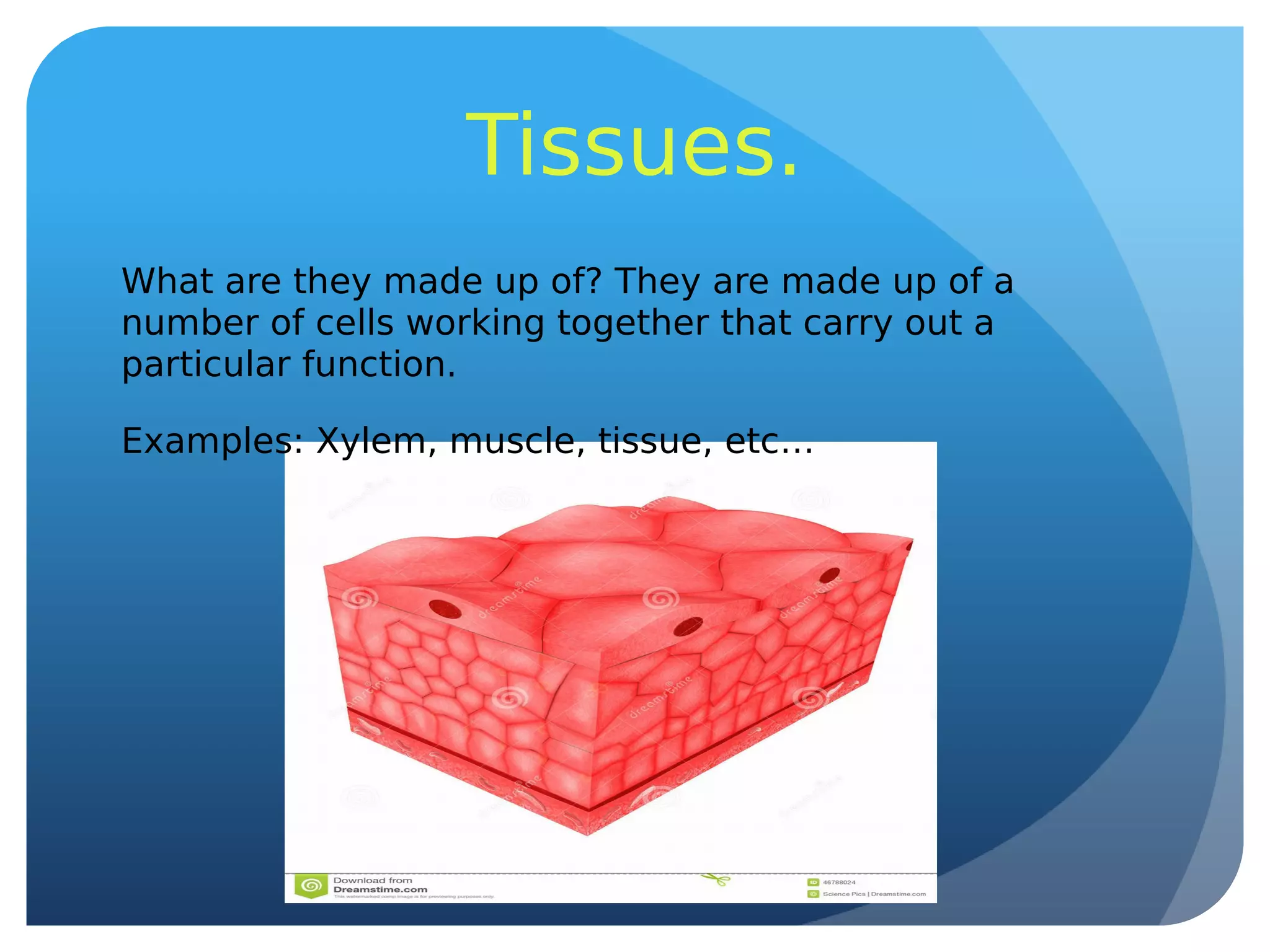
Tissues.
What are they made up of? They are made up of a
number of cells working together that carry out a
particular function.
Examples: Xylem, muscle, tissue, etc…
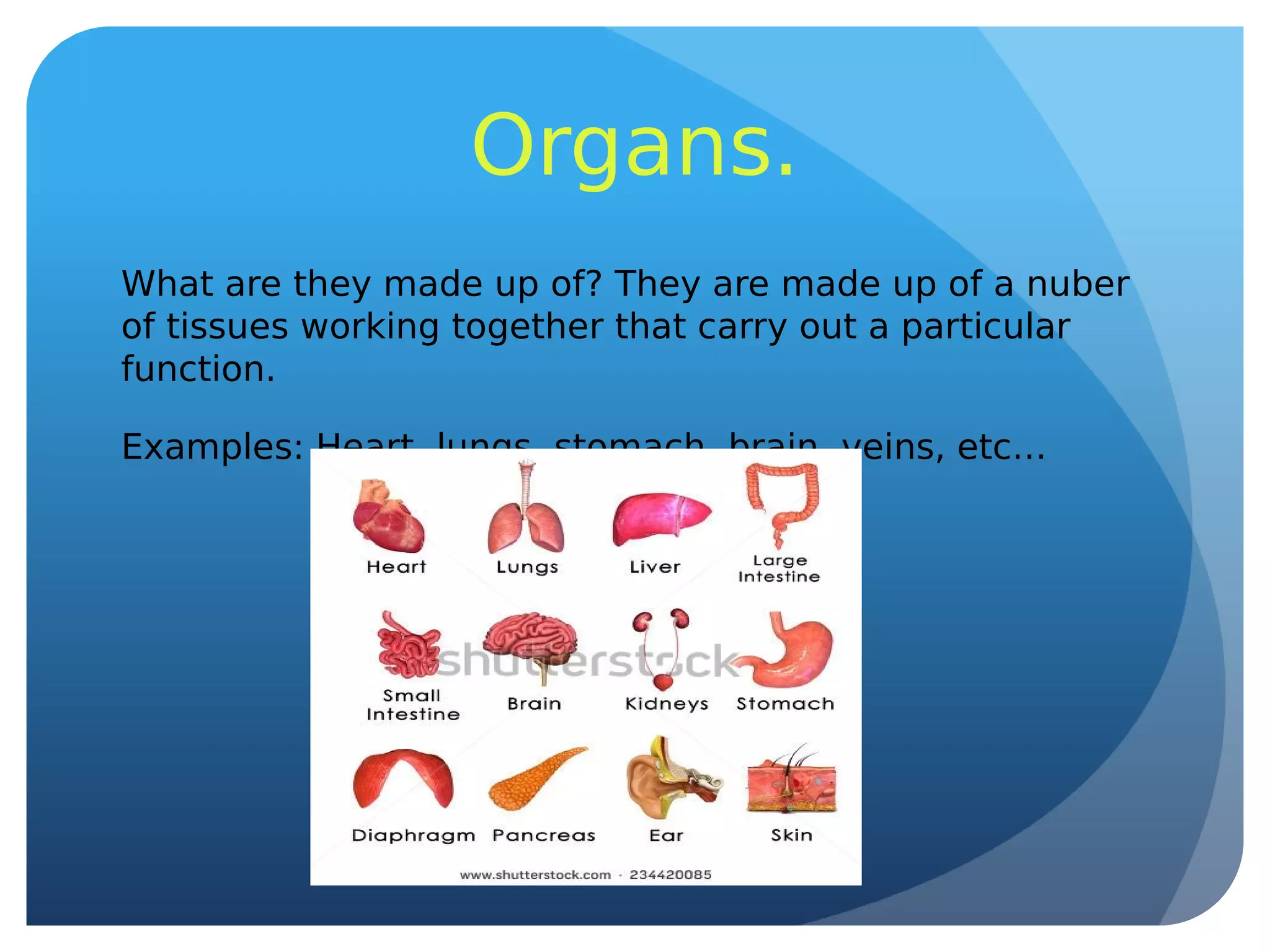
Organs.
What are they made up of? They are made up of a nuber
of tissues working together that carry out a particular
function.
Examples: Heart, lungs, stomach, brain, veins, etc…
Systems.
What are they made up of? They are made up of a
number of organs working together that carry out a
particular function.
Examples: Circulatory, digestive, excretory, respiratory,
reproductive, etc…
Organisms.
What are they made up of? They are made up of a
number of systems working together that carry out a
particular function.
Examples: Animals, plants, fungi, bacteria, algae, etc…
Thanks for watching.

Trabjo irene y paula

  • 1.
  • 2.
    Living things. Living things:There are three vital functions: 1º: Nutriction means to get nutrients from the food. 2º: Reproduction means making new living things.3º: Interaction means to react to changes of the enviroment.Types of living things: Animals, plants, bacteria, fungi and algae.
  • 3.
    Non-living things. Non-living things:They are not born, they do not grow, they do not reproduce and they do not die.
  • 4.
    1º part ofNutrition. What is nutrition? Nutrition is to obtain nutrients from the enviroment and transform them into energy. How do plants do it? Plants produce their own food through photosynthesis and they need: water and minerals, sunlight and carbon dioxide.
  • 5.
    2º part ofNutrition. How do animals do it? Animals feed on other living things and they can be: Carnivores eat other animals, hervivores eat plants and omnivores eat plants and other animals. How do fungi and bacteria do it? Fungi and bacteria feed on the remains of dead animals and plants.
  • 6.
    Reproduction. What is it?Reproduction means making new living things. Types: Asexual and sexual. In asexual reproduction one individual is needed, for example: sea start, bacteria, pine apple, etc… In sexual reproduction two individuals are needed: male and female.
  • 7.
    Interaction. What is it?In interaction there is a change and there is a reaction. Elements: Stimulus is the change and response is the reaction.
  • 8.
    Cell. What is it?It is the smallest part in which living things are divided. Structure: Many cells make tissues, many tissues make organs, many organs make systems and many systems make organisms.
  • 9.
    Nucleous. It is apart of the cell that controls the functions of the cell. It is like a Town Hall in a city.
  • 10.
    Cell membrane. It isa part of the cell that controls what enters and leaves the cell. It is like a group of guards.
  • 11.
    Cytoplasm. It is asubtance where all parts of the cell float around. It is like the atmosphere of a city.
  • 12.
    Vacuoles. It is apart of the cell that contain water and minerals for the cell. They are like reservoirs in a city.
  • 13.
    Cell wall. It isa part of the cell that protecs the cell. It is like the city wall.
  • 14.
    Chloroplast. It is apart of the cell that contain chlorophyll which plants need for photosynthesis. They are like parks in a city.
  • 15.
    Unicellular organisms. They onlyhave one cell, for example: bacteria.
  • 16.
  • 17.
    Microscope. It is ainstrument that we need to see things bigger.
  • 18.
    From Cell ToOrganisms. Some cells: Red Blood Cells, White blood cells, Nerve Cells, Root hair Cell, Leaf Cells and Plateletes.
  • 19.
    Red Blood Cells. Theycarry oxygen to all parts of the body.
  • 20.
    White Blood Cells. Theycarry information and connections between cells grow as we learn things.
  • 21.
    Root Hair Cells. Theyabsorb water and minerals from the soil.
  • 22.
    Leaf Cells. They collectsunlight for phtosyntesis.
  • 23.
    Plateletes. When there isan injury in a blood vessel, they close that injury.
  • 24.
    Tissues. What are theymade up of? They are made up of a number of cells working together that carry out a particular function. Examples: Xylem, muscle, tissue, etc…
  • 25.
    Organs. What are theymade up of? They are made up of a nuber of tissues working together that carry out a particular function. Examples: Heart, lungs, stomach, brain, veins, etc…
  • 26.
    Systems. What are theymade up of? They are made up of a number of organs working together that carry out a particular function. Examples: Circulatory, digestive, excretory, respiratory, reproductive, etc…
  • 27.
    Organisms. What are theymade up of? They are made up of a number of systems working together that carry out a particular function. Examples: Animals, plants, fungi, bacteria, algae, etc…
  • 28.