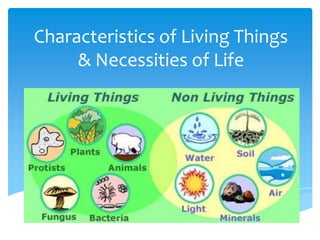
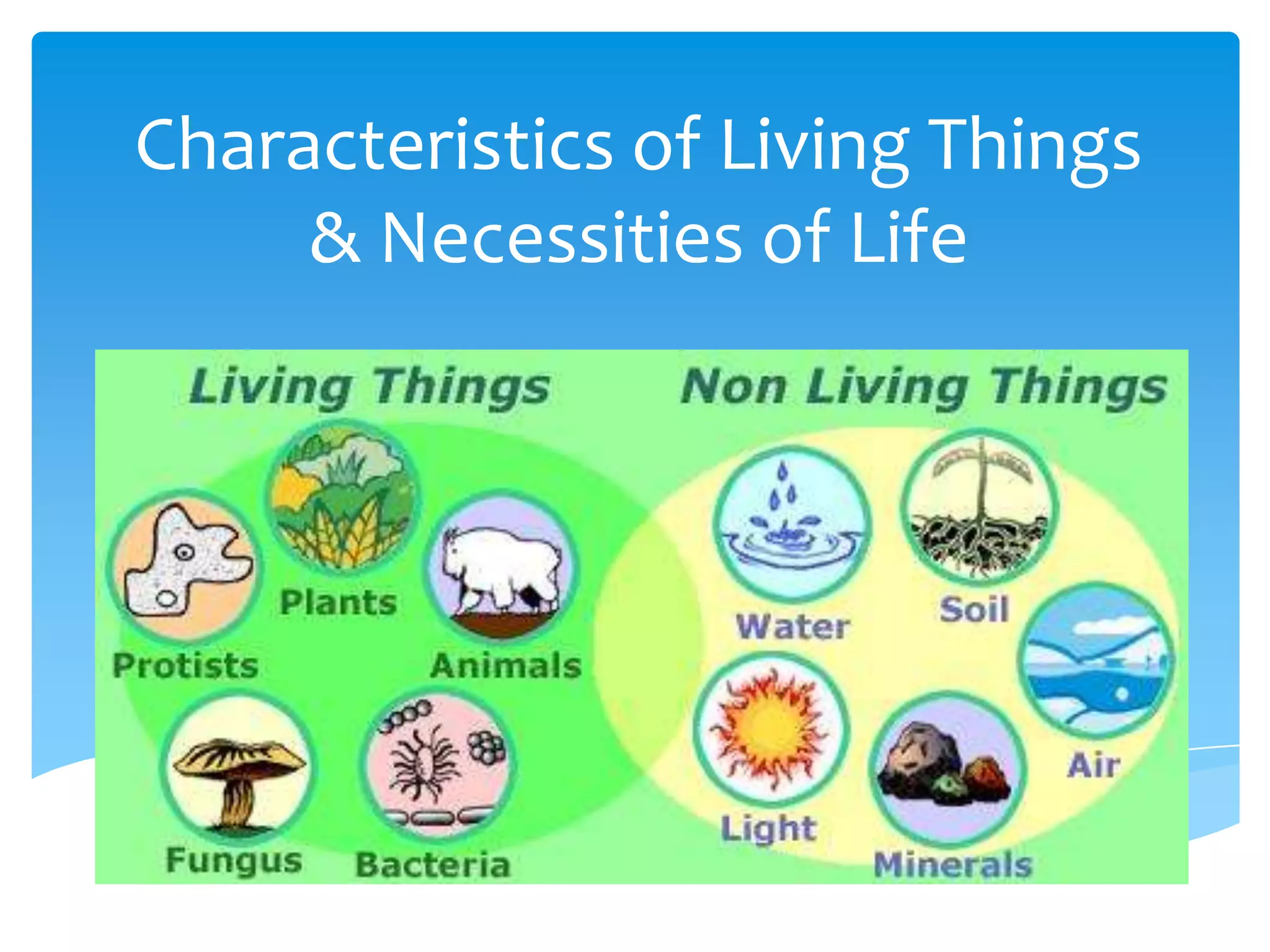
Characteristics of Living Things
& Necessities of Life
There are 6 characteristics of
living things
What makes something living or
nonliving?
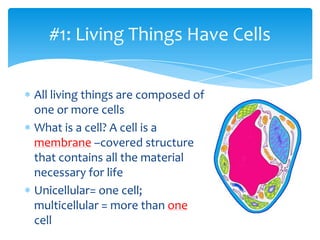
All living things are composed of
one or more cells
What is a cell? A cell is a
membrane –covered structure
that contains all the material
necessary for life
Unicellular= one cell;
multicellular = more than one
cell
#1: Living Things Have Cells
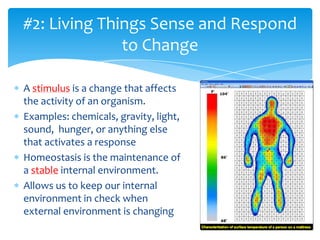
A stimulus is a change that affects
the activity of an organism.
Examples: chemicals, gravity, light,
sound, hunger, or anything else
that activates a response
Homeostasis is the maintenance of
a stable internal environment.
Allows us to keep our internal
environment in check when
external environment is changing
#2: Living Things Sense and Respond
to Change
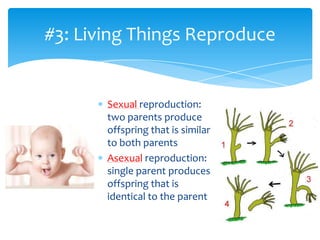
Sexual reproduction:
two parents produce
offspring that is similar
to both parents
Asexual reproduction:
single parent produces
offspring that is
identical to the parent
#3: Living Things Reproduce
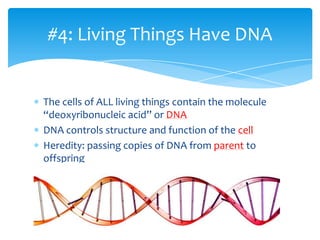
The cells of ALL living things contain the molecule
“deoxyribonucleic acid” or DNA
DNA controls structure and function of the cell
Heredity: passing copies of DNA from parent to
offspring
#4: Living Things Have DNA
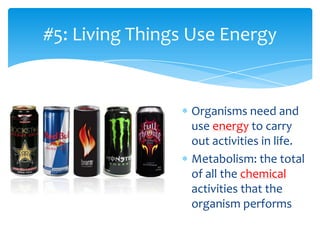
Organisms need and
use energy to carry
out activities in life.
Metabolism: the total
of all the chemical
activities that the
organism performs
#5: Living Things Use Energy
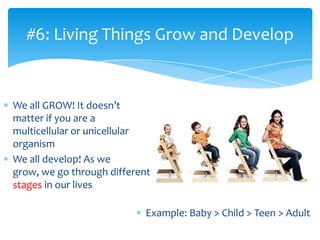
We all GROW! It doesn’t
matter if you are a
multicellular or unicellular
organism
We all develop! As we
grow, we go through different
stages in our lives
#6: Living Things Grow and Develop
Example: Baby > Child > Teen > Adult
Organisms need 4 things to live
Necessities of Life
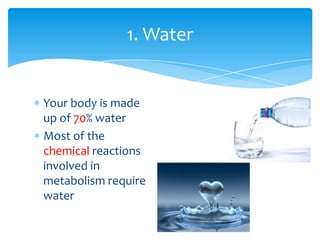
Your body is made
up of 70% water
Most of the
chemical reactions
involved in
metabolism require
water
1. Water
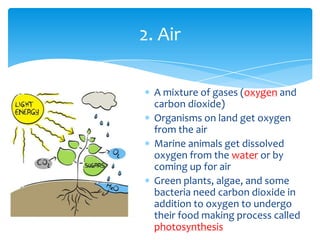
A mixture of gases (oxygen and
carbon dioxide)
Organisms on land get oxygen
from the air
Marine animals get dissolved
oxygen from the water or by
coming up for air
Green plants, algae, and some
bacteria need carbon dioxide in
addition to oxygen to undergo
their food making process called
photosynthesis
2. Air
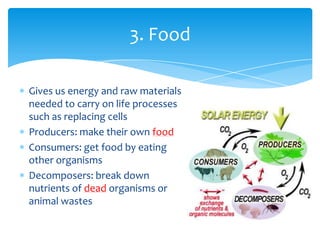
Gives us energy and raw materials
needed to carry on life processes
such as replacing cells
Producers: make their own food
Consumers: get food by eating
other organisms
Decomposers: break down
nutrients of dead organisms or
animal wastes
3. Food
1. Proteins
2. Carbohydrates
3. Lipids
4. ATP
5. Nucleic Acids
5 Building Blocks of Cells
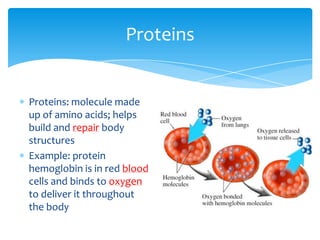
Proteins: molecule made
up of amino acids; helps
build and repair body
structures
Example: protein
hemoglobin is in red blood
cells and binds to oxygen
to deliver it throughout
the body
Proteins
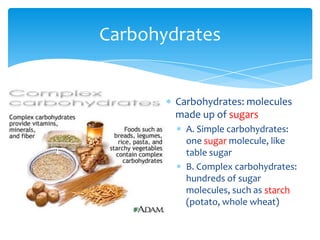
Carbohydrates: molecules
made up of sugars
A. Simple carbohydrates:
one sugar molecule, like
table sugar
B. Complex carbohydrates:
hundreds of sugar
molecules, such as starch
(potato, whole wheat)
Carbohydrates
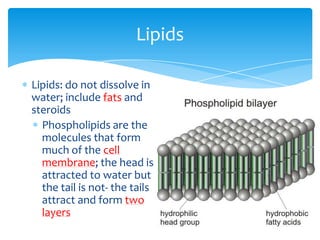
Lipids: do not dissolve in
water; include fats and
steroids
Phospholipids are the
molecules that form
much of the cell
membrane; the head is
attracted to water but
the tail is not- the tails
attract and form two
layers
Lipids
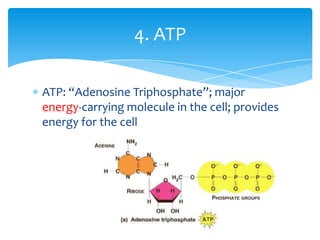
ATP: “Adenosine Triphosphate”; major
energy-carrying molecule in the cell; provides
energy for the cell
4. ATP
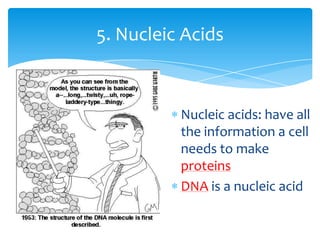
Nucleic acids: have all
the information a cell
needs to make
proteins
DNA is a nucleic acid
5. Nucleic Acids
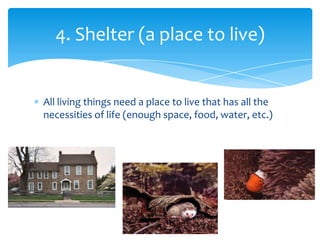
All living things need a place to live that has all the
necessities of life (enough space, food, water, etc.)
4. Shelter (a place to live)

Characteristics of Living Things Notes

  • 1.
    Characteristics of LivingThings & Necessities of Life
  • 2.
    There are 6characteristics of living things What makes something living or nonliving?
  • 3.
    All living thingsare composed of one or more cells What is a cell? A cell is a membrane –covered structure that contains all the material necessary for life Unicellular= one cell; multicellular = more than one cell #1: Living Things Have Cells
  • 4.
    A stimulus isa change that affects the activity of an organism. Examples: chemicals, gravity, light, sound, hunger, or anything else that activates a response Homeostasis is the maintenance of a stable internal environment. Allows us to keep our internal environment in check when external environment is changing #2: Living Things Sense and Respond to Change
  • 5.
    Sexual reproduction: two parentsproduce offspring that is similar to both parents Asexual reproduction: single parent produces offspring that is identical to the parent #3: Living Things Reproduce
  • 6.
    The cells ofALL living things contain the molecule “deoxyribonucleic acid” or DNA DNA controls structure and function of the cell Heredity: passing copies of DNA from parent to offspring #4: Living Things Have DNA
  • 7.
    Organisms need and useenergy to carry out activities in life. Metabolism: the total of all the chemical activities that the organism performs #5: Living Things Use Energy
  • 8.
    We all GROW!It doesn’t matter if you are a multicellular or unicellular organism We all develop! As we grow, we go through different stages in our lives #6: Living Things Grow and Develop Example: Baby > Child > Teen > Adult
  • 9.
    Organisms need 4things to live Necessities of Life
  • 10.
    Your body ismade up of 70% water Most of the chemical reactions involved in metabolism require water 1. Water
  • 11.
    A mixture ofgases (oxygen and carbon dioxide) Organisms on land get oxygen from the air Marine animals get dissolved oxygen from the water or by coming up for air Green plants, algae, and some bacteria need carbon dioxide in addition to oxygen to undergo their food making process called photosynthesis 2. Air
  • 12.
    Gives us energyand raw materials needed to carry on life processes such as replacing cells Producers: make their own food Consumers: get food by eating other organisms Decomposers: break down nutrients of dead organisms or animal wastes 3. Food
  • 13.
    1. Proteins 2. Carbohydrates 3.Lipids 4. ATP 5. Nucleic Acids 5 Building Blocks of Cells
  • 14.
    Proteins: molecule made upof amino acids; helps build and repair body structures Example: protein hemoglobin is in red blood cells and binds to oxygen to deliver it throughout the body Proteins
  • 15.
    Carbohydrates: molecules made upof sugars A. Simple carbohydrates: one sugar molecule, like table sugar B. Complex carbohydrates: hundreds of sugar molecules, such as starch (potato, whole wheat) Carbohydrates
  • 16.
    Lipids: do notdissolve in water; include fats and steroids Phospholipids are the molecules that form much of the cell membrane; the head is attracted to water but the tail is not- the tails attract and form two layers Lipids
  • 17.
    ATP: “Adenosine Triphosphate”;major energy-carrying molecule in the cell; provides energy for the cell 4. ATP
  • 18.
    Nucleic acids: haveall the information a cell needs to make proteins DNA is a nucleic acid 5. Nucleic Acids
  • 19.
    All living thingsneed a place to live that has all the necessities of life (enough space, food, water, etc.) 4. Shelter (a place to live)