Equipment Maintenance
Aims of Equipment Maintenance
Equipment ready whenever it is needed for productive
operation
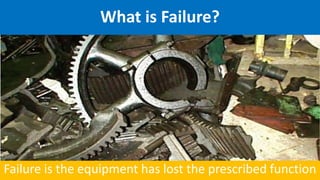
What is Failure?
Failure is the equipment has lost the prescribed function
The Common Symptoms of a Failure/Defect-
prone Workplace
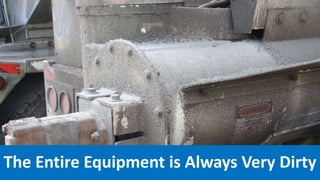
The Entire Equipment is Always Very Dirty
Hydraulic & Lubricating Oils are Leaking and
Oilers are Left Empty
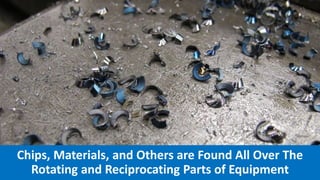
Chips, Materials, and Others are Found All Over The
Rotating and Reciprocating Parts of Equipment
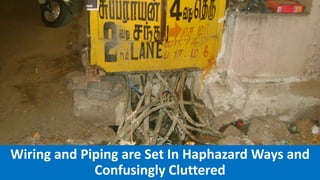
Wiring and Piping are Set In Haphazard Ways and
Confusingly Cluttered
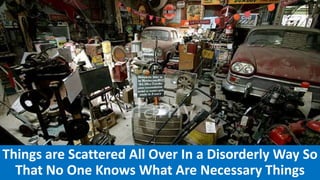
Things are Scattered All Over In a Disorderly Way So
That No One Knows What Are Necessary Things
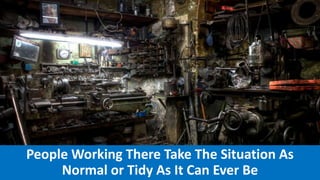
People Working There Take The Situation As
Normal or Tidy As It Can Ever Be
How to Prevent Failures in Equipment?
1. Conducting Preventive Maintenance
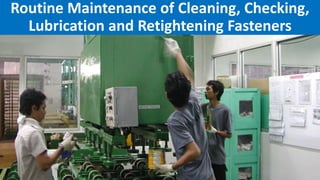
Routine Maintenance of Cleaning, Checking,
Lubrication and Retightening Fasteners
Regular Inspection and Equipment Condition
Diagnosis
Maintenance from Deterioration
Preventive
Maintenance
(Preventing deterioration)
Routine maintenance
(Lubrication, cleaning,
adjustment & checking)
(Measure deterioration)
Inspection
(Diagnosis)
(Recover from deterioration)
Preventive repair
(Advance replacement)
Preventive
Medicine
Daily preventive
measures =
Check ups =
Early treatment =
Preventive Maintenance
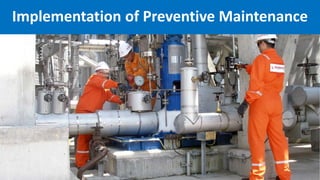
Implementation of Preventive Maintenance
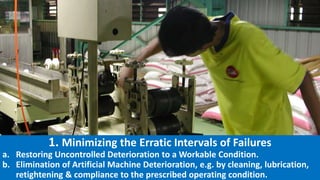
1. Minimizing the Erratic Intervals of Failures
a. Restoring Uncontrolled Deterioration to a Workable Condition.
b. Elimination of Artificial Machine Deterioration, e.g. by cleaning, lubrication,
retightening & compliance to the prescribed operating condition.
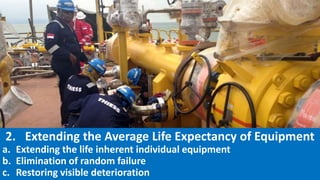
2. Extending the Average Life Expectancy of Equipment
a. Extending the life inherent individual equipment
b. Elimination of random failure
c. Restoring visible deterioration
3. Periodic Restoration of Deterioration
Estimating life expectancy of equipment and restoring periodically
deterioration by improving the maintainability & standardizing and
implementing periodic maintenance.
4. Predicting a Failure
Predicting a failure by the equipment condition diagnostic techniques.
2. Deploying Total Productive Maintenance (TPM)
Why TPM?
Now that machines and equipment are increasingly automated and
technologically advanced, it is no exaggeration to say that products are
now being made by equipment. We are, therefore, not to allow
equipment to fail in performance or to produce defects.
It is man’s duty to properly maintain equipment to keep working without
failure or generating defects.
To enable such operation, we are not to leave the maintenance service
only to activities centered around the maintenance section, but also
require the participation of all the section in charge of operation and the
related to the development of equipment and products is indispensable.
Operating personnel in particular, are required to be aware of their
responsibilities to “protect their equipment by themselves” in order to
eliminate defects and failure from their operation.
Aims of TPM
Twelve Steps of TPM Deployment Program
That’s a Wrap!
Feel free to contact:
 Antonius P. Bramono e: pbramono@gmail.com
Total Productive Maintenance

Total Productive Maintenance

  • 1.
  • 2.
    Aims of EquipmentMaintenance Equipment ready whenever it is needed for productive operation
  • 3.
    What is Failure? Failureis the equipment has lost the prescribed function
  • 4.
    The Common Symptomsof a Failure/Defect- prone Workplace
  • 5.
    The Entire Equipmentis Always Very Dirty
  • 6.
    Hydraulic & LubricatingOils are Leaking and Oilers are Left Empty
  • 7.
    Chips, Materials, andOthers are Found All Over The Rotating and Reciprocating Parts of Equipment
  • 8.
    Wiring and Pipingare Set In Haphazard Ways and Confusingly Cluttered
  • 9.
    Things are ScatteredAll Over In a Disorderly Way So That No One Knows What Are Necessary Things
  • 10.
    People Working ThereTake The Situation As Normal or Tidy As It Can Ever Be
  • 11.
    How to PreventFailures in Equipment?
  • 12.
  • 13.
    Routine Maintenance ofCleaning, Checking, Lubrication and Retightening Fasteners
  • 14.
    Regular Inspection andEquipment Condition Diagnosis
  • 15.
  • 16.
    Preventive Maintenance (Preventing deterioration) Routine maintenance (Lubrication,cleaning, adjustment & checking) (Measure deterioration) Inspection (Diagnosis) (Recover from deterioration) Preventive repair (Advance replacement) Preventive Medicine Daily preventive measures = Check ups = Early treatment = Preventive Maintenance
  • 17.
  • 18.
    1. Minimizing theErratic Intervals of Failures a. Restoring Uncontrolled Deterioration to a Workable Condition. b. Elimination of Artificial Machine Deterioration, e.g. by cleaning, lubrication, retightening & compliance to the prescribed operating condition.
  • 19.
    2. Extending theAverage Life Expectancy of Equipment a. Extending the life inherent individual equipment b. Elimination of random failure c. Restoring visible deterioration
  • 20.
    3. Periodic Restorationof Deterioration Estimating life expectancy of equipment and restoring periodically deterioration by improving the maintainability & standardizing and implementing periodic maintenance.
  • 21.
    4. Predicting aFailure Predicting a failure by the equipment condition diagnostic techniques.
  • 22.
    2. Deploying TotalProductive Maintenance (TPM)
  • 23.
    Why TPM? Now thatmachines and equipment are increasingly automated and technologically advanced, it is no exaggeration to say that products are now being made by equipment. We are, therefore, not to allow equipment to fail in performance or to produce defects. It is man’s duty to properly maintain equipment to keep working without failure or generating defects. To enable such operation, we are not to leave the maintenance service only to activities centered around the maintenance section, but also require the participation of all the section in charge of operation and the related to the development of equipment and products is indispensable. Operating personnel in particular, are required to be aware of their responsibilities to “protect their equipment by themselves” in order to eliminate defects and failure from their operation.
  • 24.
  • 25.
    Twelve Steps ofTPM Deployment Program
  • 26.
  • 28.
    Feel free tocontact:  Antonius P. Bramono e: pbramono@gmail.com