Cutting tool’s knowledge

Basic Drill’s

For detail visit :!
www.frannoto.com
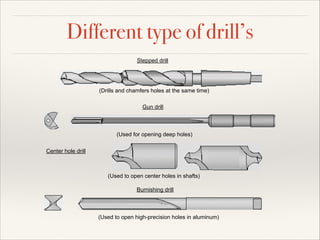
Different type of drill’s
Stepped drill

(Drills and chamfers holes at the same time)
Gun drill

(Used for opening deep holes)
Center hole drill

(Used to open center holes in shafts)
Burnishing drill

(Used to open high-precision holes in aluminum)
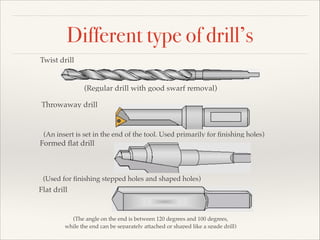
Different type of drill’s
Twist drill

(Regular drill with good swarf removal)
Throwaway drill

(An insert is set in the end of the tool. Used primarily for finishing holes)

Formed flat drill

(Used for finishing stepped holes and shaped holes)

Flat drill

(The angle on the end is between 120 degrees and 100 degrees, !
while the end can be separately attached or shaped like a spade drill)
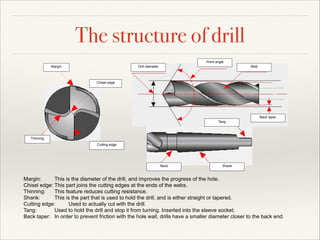
The structure of drill
Point angle
Margin

Drill diameter

Web

Chisel edge

Back taper
Tang

Thinning
Cutting edge

Neck

Shank

Margin:
This is the diameter of the drill, and improves the progress of the hole.
Chisel edge: This part joins the cutting edges at the ends of the webs.
Thinning:
This feature reduces cutting resistance.
Shank:
This is the part that is used to hold the drill, and is either straight or tapered.
Cutting edge:
Used to actually cut with the drill.
Tang:
Used to hold the drill and stop it from turning. Inserted into the sleeve socket.
Back taper: In order to prevent friction with the hole wall, drills have a smaller diameter closer to the back end.
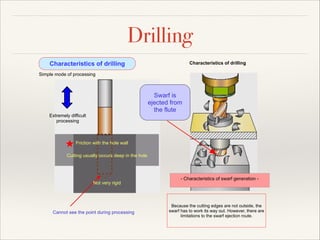
Drilling
Characteristics of drilling

Characteristics of drilling

Simple mode of processing

Swarf is
ejected from
the flute

Extremely difficult
processing

Friction with the hole wall
Cutting usually occurs deep in the hole

Not very rigid

Cannot see the point during processing

- Characteristics of swarf generation -

Because the cutting edges are not outside, the
swarf has to work its way out. However, there are
limitations to the swarf ejection route.
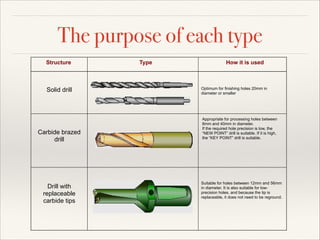
The purpose of each type
Structure

Solid drill

Carbide brazed
drill

Drill with
replaceable
carbide tips

Type

How it is used

Optimum for finishing holes 20mm in
diameter or smaller

Appropriate for processing holes between
8mm and 40mm in diameter.
If the required hole precision is low, the
“NEW POINT” drill is suitable. If it is high,
the “KEY POINT” drill is suitable.

Suitable for holes between 12mm and 56mm
in diameter. It is also suitable for lowprecision holes, and because the tip is
replaceable, it does not need to be reground.
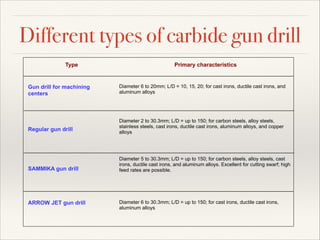
Different types of carbide gun drill
Type

Gun drill for machining
centers

Regular gun drill

SAMMIKA gun drill

ARROW JET gun drill

Primary characteristics

Diameter 6 to 20mm; L/D = 10, 15, 20; for cast irons, ductile cast irons, and
aluminum alloys

Diameter 2 to 30.3mm; L/D = up to 150; for carbon steels, alloy steels,
stainless steels, cast irons, ductile cast irons, aluminum alloys, and copper
alloys

Diameter 5 to 30.3mm; L/D = up to 150; for carbon steels, alloy steels, cast
irons, ductile cast irons, and aluminum alloys. Excellent for cutting swarf; high
feed rates are possible.

Diameter 6 to 30.3mm; L/D = up to 150; for cast irons, ductile cast irons,
aluminum alloys
Carbide drill: components & operation
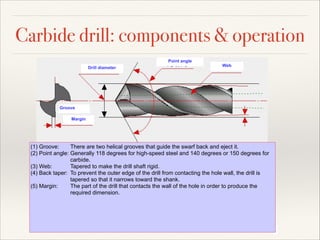
Point angle
Drill diameter

Web

Groove
Margin

(1) Groove:
There are two helical grooves that guide the swarf back and eject it.
(2) Point angle: Generally 118 degrees for high-speed steel and 140 degrees or 150 degrees for
carbide.
(3) Web:
Tapered to make the drill shaft rigid.
(4) Back taper: To prevent the outer edge of the drill from contacting the hole wall, the drill is
tapered so that it narrows toward the shank.
(5) Margin:
The part of the drill that contacts the wall of the hole in order to produce the
required dimension.
How to lock at cutting edge
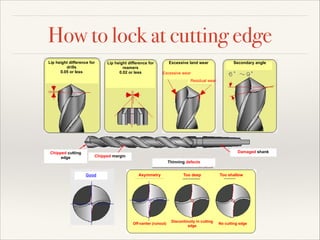
Lip height difference for
drills
0.05 or less

Lip height difference for
reamers
0.02 or less

Excessive land wear

Secondary angle

Excessive wear
Residual wear

Chipped cutting
切れ刃の欠け
edge

Chipped margin
マージンの欠け

Good

Thinning defects
シンニング不良
Asymmetry

Too deep

Off-center (runout)

Discontinuity in cutting
edge

Damaged shank
シャンクの傷

Too shallow

No cutting edge
Troubleshooting of drill’s
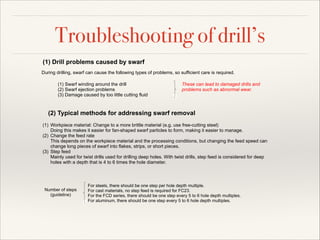
(1) Drill problems caused by swarf
During drilling, swarf can cause the following types of problems, so sufficient care is required.
(1) Swarf winding around the drill
(2) Swarf ejection problems
(3) Damage caused by too little cutting fluid

These can lead to damaged drills and
problems such as abnormal wear.

(2) Typical methods for addressing swarf removal
(1) Workpiece material: Change to a more brittle material (e.g. use free-cutting steel)

Doing this makes it easier for fan-shaped swarf particles to form, making it easier to manage.
(2) Change the feed rate

This depends on the workpiece material and the processing conditions, but changing the feed speed can
change long pieces of swarf into flakes, strips, or short pieces.
(3) Step feed

Mainly used for twist drills used for drilling deep holes. With twist drills, step feed is considered for deep
holes with a depth that is 4 to 6 times the hole diameter.

Number of steps
(guideline)

For steels, there should be one step per hole depth multiple.
For cast materials, no step feed is required for FC23.
For the FCD series, there should be one step every 5 to 6 hole depth multiples.
For aluminum, there should be one step every 5 to 6 hole depth multiples.
Troubleshooting of drill’s
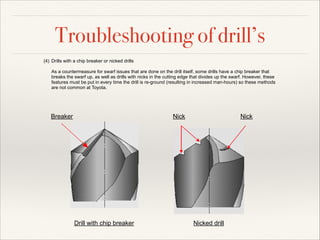
(4) Drills with a chip breaker or nicked drills


As a countermeasure for swarf issues that are done on the drill itself, some drills have a chip breaker that
breaks the swarf up, as well as drills with nicks in the cutting edge that divides up the swarf. However, these
features must be put in every time the drill is re-ground (resulting in increased man-hours) so these methods
are not common at Toyota.

Breaker

Nick

Drill with chip breaker

Nick

Nicked drill
“Thanks for looking this presentation, !
for detail please visit www.frannoto.com”
–Fran Noto

Cutting Tools knowledge-Drill

  • 1.
    Cutting tool’s knowledge BasicDrill’s For detail visit :! www.frannoto.com
  • 2.
    Different type ofdrill’s Stepped drill (Drills and chamfers holes at the same time) Gun drill (Used for opening deep holes) Center hole drill (Used to open center holes in shafts) Burnishing drill (Used to open high-precision holes in aluminum)
  • 3.
    Different type ofdrill’s Twist drill (Regular drill with good swarf removal) Throwaway drill (An insert is set in the end of the tool. Used primarily for finishing holes) Formed flat drill (Used for finishing stepped holes and shaped holes) Flat drill (The angle on the end is between 120 degrees and 100 degrees, ! while the end can be separately attached or shaped like a spade drill)
  • 4.
    The structure ofdrill Point angle Margin Drill diameter Web Chisel edge Back taper Tang Thinning Cutting edge Neck Shank Margin: This is the diameter of the drill, and improves the progress of the hole. Chisel edge: This part joins the cutting edges at the ends of the webs. Thinning: This feature reduces cutting resistance. Shank: This is the part that is used to hold the drill, and is either straight or tapered. Cutting edge: Used to actually cut with the drill. Tang: Used to hold the drill and stop it from turning. Inserted into the sleeve socket. Back taper: In order to prevent friction with the hole wall, drills have a smaller diameter closer to the back end.
  • 5.
    Drilling Characteristics of drilling Characteristicsof drilling Simple mode of processing Swarf is ejected from the flute Extremely difficult processing Friction with the hole wall Cutting usually occurs deep in the hole Not very rigid Cannot see the point during processing - Characteristics of swarf generation - Because the cutting edges are not outside, the swarf has to work its way out. However, there are limitations to the swarf ejection route.
  • 6.
    The purpose ofeach type Structure Solid drill Carbide brazed drill Drill with replaceable carbide tips Type How it is used Optimum for finishing holes 20mm in diameter or smaller Appropriate for processing holes between 8mm and 40mm in diameter. If the required hole precision is low, the “NEW POINT” drill is suitable. If it is high, the “KEY POINT” drill is suitable. Suitable for holes between 12mm and 56mm in diameter. It is also suitable for lowprecision holes, and because the tip is replaceable, it does not need to be reground.
  • 7.
    Different types ofcarbide gun drill Type Gun drill for machining centers Regular gun drill SAMMIKA gun drill ARROW JET gun drill Primary characteristics Diameter 6 to 20mm; L/D = 10, 15, 20; for cast irons, ductile cast irons, and aluminum alloys Diameter 2 to 30.3mm; L/D = up to 150; for carbon steels, alloy steels, stainless steels, cast irons, ductile cast irons, aluminum alloys, and copper alloys Diameter 5 to 30.3mm; L/D = up to 150; for carbon steels, alloy steels, cast irons, ductile cast irons, and aluminum alloys. Excellent for cutting swarf; high feed rates are possible. Diameter 6 to 30.3mm; L/D = up to 150; for cast irons, ductile cast irons, aluminum alloys
  • 8.
    Carbide drill: components& operation Point angle Drill diameter Web Groove Margin (1) Groove: There are two helical grooves that guide the swarf back and eject it. (2) Point angle: Generally 118 degrees for high-speed steel and 140 degrees or 150 degrees for carbide. (3) Web: Tapered to make the drill shaft rigid. (4) Back taper: To prevent the outer edge of the drill from contacting the hole wall, the drill is tapered so that it narrows toward the shank. (5) Margin: The part of the drill that contacts the wall of the hole in order to produce the required dimension.
  • 9.
    How to lockat cutting edge Lip height difference for drills 0.05 or less Lip height difference for reamers 0.02 or less Excessive land wear Secondary angle Excessive wear Residual wear Chipped cutting 切れ刃の欠け edge Chipped margin マージンの欠け Good Thinning defects シンニング不良 Asymmetry Too deep Off-center (runout) Discontinuity in cutting edge Damaged shank シャンクの傷 Too shallow No cutting edge
  • 10.
    Troubleshooting of drill’s (1)Drill problems caused by swarf During drilling, swarf can cause the following types of problems, so sufficient care is required. (1) Swarf winding around the drill (2) Swarf ejection problems (3) Damage caused by too little cutting fluid These can lead to damaged drills and problems such as abnormal wear. (2) Typical methods for addressing swarf removal (1) Workpiece material: Change to a more brittle material (e.g. use free-cutting steel)
 Doing this makes it easier for fan-shaped swarf particles to form, making it easier to manage. (2) Change the feed rate
 This depends on the workpiece material and the processing conditions, but changing the feed speed can change long pieces of swarf into flakes, strips, or short pieces. (3) Step feed
 Mainly used for twist drills used for drilling deep holes. With twist drills, step feed is considered for deep holes with a depth that is 4 to 6 times the hole diameter. Number of steps (guideline) For steels, there should be one step per hole depth multiple. For cast materials, no step feed is required for FC23. For the FCD series, there should be one step every 5 to 6 hole depth multiples. For aluminum, there should be one step every 5 to 6 hole depth multiples.
  • 11.
    Troubleshooting of drill’s (4)Drills with a chip breaker or nicked drills
 
 As a countermeasure for swarf issues that are done on the drill itself, some drills have a chip breaker that breaks the swarf up, as well as drills with nicks in the cutting edge that divides up the swarf. However, these features must be put in every time the drill is re-ground (resulting in increased man-hours) so these methods are not common at Toyota. Breaker Nick Drill with chip breaker Nick Nicked drill
  • 12.
    “Thanks for lookingthis presentation, ! for detail please visit www.frannoto.com” –Fran Noto