PRESENTATION ON
TIGHT SHALE
UNDERSTANDING TIGHT OIL
TIGHT OIL
Also called oil bearing shale which is “oil locked in
rock”. Most commonly found in shale or siltstone
Limestone a mile below the earths surface.
Horizontal Drilling & Hydraulic Fracturing are the two
basic methods of extracting the oil.
Tight oil is also commonly known as light tight oil as
to differ from shale oil
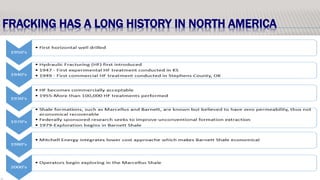
FRACKING HAS A LONG HISTORY IN NORTH AMERICA
RESERVOIR DETAILS
 These formation are heterogenous and vary widely over
short distance
 Production from tight oil reservoir requires atleast 15-20% of
natural gas
 These are highly compacted with very low porosity 4-12%
 Permeability of these shale is less than .1 md.
 example- Barnett shale (U.S), Eagle ,Bekken
TYPE OF OIL
 Shale oil has resulted in production growth of light sweet crude in
North America
-Shale oil’s are characterized by low resid yields & low sulfur
content
 Light sweet crudes tend to produce resids with poor quality
CONVENTIONAL LTO RECOVERY
 Before it was only vertical drilling application
executed on LTO fields which was further on
transform to advance drilling
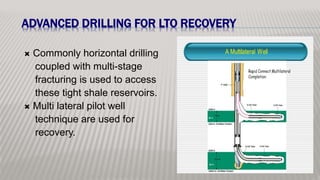
ADVANCED DRILLING FOR LTO RECOVERY
 Commonly horizontal drilling
coupled with multi-stage
fracturing is used to access
these tight shale reservoirs.
 Multi lateral pilot well
technique are used for
recovery.
TECHNOLOGIES EMPLOYED FOR RECOVERY
HORIZONTAL DRILLING
 The purpose of horizontal drilling is to
increase the contact between the reservoir
and the wellbore.
HYDRAULIC FACTURING
This process applies pressure by pumping fluids into the
wellbore
which opens existing, or creates new fracture or pathway in the
reservoir.
TIGHT OIL CHALLENGES
 Multiple-stage fracking can require
millions of gallons of water.
 The frack fluids may contain
chemicals that have become the
subject of public concern.
 Flaring has been a source of
environmental criticism.
TIGHT OIL CHALLENGES
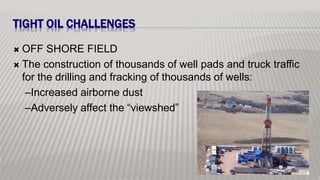
 OFF SHORE FIELD
 The construction of thousands of well pads and truck traffic
for the drilling and fracking of thousands of wells:
–Increased airborne dust
–Adversely affect the “viewshed”
TIGHT OIL SOLUTIONS
 Increased use of technologies to drill multiple wells from a
single pad:
– Reduces the overall footprint of drilling operations.
 Development and application of environmentally friendly dust
control materials.
TIGHT OIL SOLUTIONS
 Development and application of frack fluid recycling.
 Reformulation of frack fluids to be more environmentally
friendly.
 Utilization of flare gas.
•Infrastructure is catching up.
•On-site and off-site uses for gas are developing.
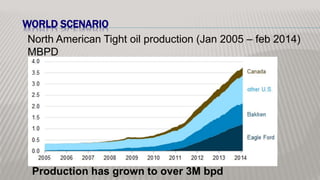
WORLD SCENARIO
Production has grown to over 3M bpd
North American Tight oil production (Jan 2005 – feb 2014)
MBPD
WORLD ESTIMATE
Shale Oil reserves found throughout the world
7 KEY SHALE PRODUCING REGIONS
Since 2007 – Shale Oil
production
from these regions responsible
for:
95% of domestic oil production
growth
100% of the domestic natural
gas
production growth
COUNTRIES
Russia: 75 billion barrels
United State: 48 to 58 billion barrels
China: 32 billion barrels
Argentina: 27 billion barrels
Libya: 26 billion barrels
Venezuela: 13 billion barrels
Mexico: 13 billion barrels
Pakistan: 9 billion barrels
Canada: 9 billion barrels
Indonesia: 8 billion barrels
INDIAN SCENARIO
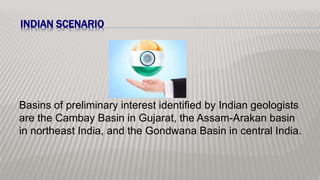
Basins of preliminary interest identified by Indian geologists
are the Cambay Basin in Gujarat, the Assam-Arakan basin
in northeast India, and the Gondwana Basin in central India.
INDIAN SCENARIO
A production of 70-90MMTOE of oil and gas is
envisage from this tight reservoir by 2030
In Mizoram ONGC has discovered non commercial
gas in a tough and geologically challenging field
A comprehensive study is required for all explored and
unexplored basins to bring on compression track
FUTURE FULLFILLMENT
2020 North
American
tight oil production
could be over --
2,000,000 bpd.
2050 North
American tight oil
production
could still be over
2,000,000 bpd.
Shale
Oil
Oil
Sands
EPIC CLASS
CHEVRON
GEV GROUP
RANGE RESOURCES
ENCANE
QUICK SLIVER
CONCLUSION
Shale oil development has driven large
growth in North American crude oil production
New production is light sweet crude
This has displaced historic imports of similar
crude grades
This has changed the way crude goes to
market
REFERENCESNATURAL GAS ENGINEERING: ARPIT
VERMA
IEA (INTERNATIONAL ENERGY AGENCY)
WORLD ENERGY OUTLOOK
SCIENTIFIC TECHINICAL JOURNAL :
ESTONIAN ACADEMY PUBLISHER
WORLD ENERGY RESOURCES SURVEY
2013
FUEL FIX
TIGHT RESERVOIR: AN OVER VIEW IN
INDIAN CONTEXT BY TARUN KUMAR AND
ASHUTOSH
“Future lies with in the tightness of shale
source”

Tight shale

  • 1.
  • 2.
    TIGHT OIL Also calledoil bearing shale which is “oil locked in rock”. Most commonly found in shale or siltstone Limestone a mile below the earths surface. Horizontal Drilling & Hydraulic Fracturing are the two basic methods of extracting the oil. Tight oil is also commonly known as light tight oil as to differ from shale oil
  • 3.
    FRACKING HAS ALONG HISTORY IN NORTH AMERICA
  • 4.
    RESERVOIR DETAILS  Theseformation are heterogenous and vary widely over short distance  Production from tight oil reservoir requires atleast 15-20% of natural gas  These are highly compacted with very low porosity 4-12%  Permeability of these shale is less than .1 md.  example- Barnett shale (U.S), Eagle ,Bekken
  • 5.
    TYPE OF OIL Shale oil has resulted in production growth of light sweet crude in North America -Shale oil’s are characterized by low resid yields & low sulfur content  Light sweet crudes tend to produce resids with poor quality
  • 6.
    CONVENTIONAL LTO RECOVERY Before it was only vertical drilling application executed on LTO fields which was further on transform to advance drilling
  • 7.
    ADVANCED DRILLING FORLTO RECOVERY  Commonly horizontal drilling coupled with multi-stage fracturing is used to access these tight shale reservoirs.  Multi lateral pilot well technique are used for recovery.
  • 8.
    TECHNOLOGIES EMPLOYED FORRECOVERY HORIZONTAL DRILLING  The purpose of horizontal drilling is to increase the contact between the reservoir and the wellbore.
  • 9.
    HYDRAULIC FACTURING This processapplies pressure by pumping fluids into the wellbore which opens existing, or creates new fracture or pathway in the reservoir.
  • 10.
    TIGHT OIL CHALLENGES Multiple-stage fracking can require millions of gallons of water.  The frack fluids may contain chemicals that have become the subject of public concern.  Flaring has been a source of environmental criticism.
  • 11.
    TIGHT OIL CHALLENGES OFF SHORE FIELD  The construction of thousands of well pads and truck traffic for the drilling and fracking of thousands of wells: –Increased airborne dust –Adversely affect the “viewshed”
  • 12.
    TIGHT OIL SOLUTIONS Increased use of technologies to drill multiple wells from a single pad: – Reduces the overall footprint of drilling operations.  Development and application of environmentally friendly dust control materials.
  • 13.
    TIGHT OIL SOLUTIONS Development and application of frack fluid recycling.  Reformulation of frack fluids to be more environmentally friendly.  Utilization of flare gas. •Infrastructure is catching up. •On-site and off-site uses for gas are developing.
  • 14.
    WORLD SCENARIO Production hasgrown to over 3M bpd North American Tight oil production (Jan 2005 – feb 2014) MBPD
  • 15.
    WORLD ESTIMATE Shale Oilreserves found throughout the world
  • 16.
    7 KEY SHALEPRODUCING REGIONS Since 2007 – Shale Oil production from these regions responsible for: 95% of domestic oil production growth 100% of the domestic natural gas production growth
  • 17.
    COUNTRIES Russia: 75 billionbarrels United State: 48 to 58 billion barrels China: 32 billion barrels Argentina: 27 billion barrels Libya: 26 billion barrels Venezuela: 13 billion barrels Mexico: 13 billion barrels Pakistan: 9 billion barrels Canada: 9 billion barrels Indonesia: 8 billion barrels
  • 18.
    INDIAN SCENARIO Basins ofpreliminary interest identified by Indian geologists are the Cambay Basin in Gujarat, the Assam-Arakan basin in northeast India, and the Gondwana Basin in central India.
  • 19.
    INDIAN SCENARIO A productionof 70-90MMTOE of oil and gas is envisage from this tight reservoir by 2030 In Mizoram ONGC has discovered non commercial gas in a tough and geologically challenging field A comprehensive study is required for all explored and unexplored basins to bring on compression track
  • 20.
    FUTURE FULLFILLMENT 2020 North American tightoil production could be over -- 2,000,000 bpd. 2050 North American tight oil production could still be over 2,000,000 bpd.
  • 21.
  • 22.
    EPIC CLASS CHEVRON GEV GROUP RANGERESOURCES ENCANE QUICK SLIVER
  • 23.
    CONCLUSION Shale oil developmenthas driven large growth in North American crude oil production New production is light sweet crude This has displaced historic imports of similar crude grades This has changed the way crude goes to market
  • 24.
    REFERENCESNATURAL GAS ENGINEERING:ARPIT VERMA IEA (INTERNATIONAL ENERGY AGENCY) WORLD ENERGY OUTLOOK SCIENTIFIC TECHINICAL JOURNAL : ESTONIAN ACADEMY PUBLISHER WORLD ENERGY RESOURCES SURVEY 2013 FUEL FIX TIGHT RESERVOIR: AN OVER VIEW IN INDIAN CONTEXT BY TARUN KUMAR AND ASHUTOSH
  • 25.
    “Future lies within the tightness of shale source”