PRESENTATION BY
RAJSHEKAR REDDY
Graves disease
 Graves' disease is an immune system
disorder that results in the
overproduction of thyroid hormones
(hyperthyroidism). Although a number of
disorders may result in hyperthyroidism,
Graves' disease is a common cause.
 Because thyroid hormones affect a
number of different body systems, signs
and symptoms associated with Graves'
disease can be wide ranging and
significantly influence your overall well-
 Although Graves' disease may
affect anyone, it's more
common among women and
before the age of 40.
The primary treatment goals
are to inhibit the
overproduction of thyroid
hormones and lessen the
Causes
 Graves' disease is caused by a malfunction in the body's
disease-fighting immune system, although the exact
reason why this happens is still unknown.
 One normal immune system response is the production
of antibodies designed to target a specific virus,
bacterium or other foreign substance. In Graves' disease
— for reasons that aren't well understood — the body
produces an antibody to one part of the cells in the
thyroid gland, a hormone-producing gland in the neck.
 Normally, thyroid function is regulated by a hormone
released by a tiny gland at the base of the brain (pituitary
gland). The antibody associated with Graves' disease —
thyrotropin receptor antibody (TRAb) — acts like the
regulatory pituitary hormone. That means that TRAb
overrides the normal regulation of the thyroid, causing an
Symptoms
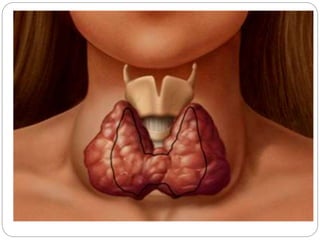
 Enlarged thyroid
 Common signs and symptoms of Graves'
disease include:
 Anxiety and irritability
 A fine tremor of your hands or fingers
 Heat sensitivity and an increase in perspiration
or warm, moist skin
 Weight loss, despite normal eating habits
 Enlargement of your thyroid gland (goiter)
 Change in menstrual cycles
 Erectile dysfunction
 Frequent bowel movements
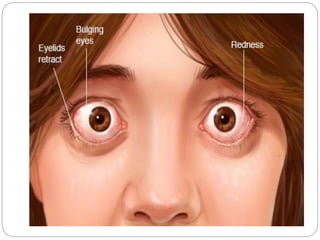
 Bulging eyes (Graves' ophthalmopathy)
 Fatigue
 Thick, red skin usually on the shins or tops of the
feet (Graves' dermopathy)
 Rapid or irregular heartbeat (palpitations)
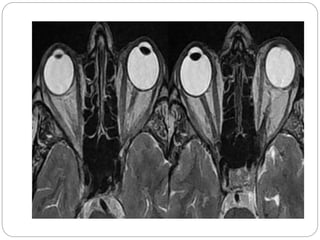
 Graves' ophthalmopathy
 About 30 percent of people with Graves' disease show
some signs and symptoms of a condition known as
Graves' ophthalmopathy. In Graves' ophthalmopathy,
inflammation and other immune system events affect
muscles and other tissues around your eyes. The
resulting signs and symptoms may include:
 Bulging eyes (exophthalmos)
 Gritty sensation in the eyes
 Pressure or pain in the eyes
 Puffy or retracted eyelids
 Reddened or inflamed eyes
 Light sensitivity
 Double vision
 Vision loss
The diagnosis of Graves' disease
may include :
 Physical exam.
 Blood sample.
 Radioactive iodine uptake.
 Ultrasound.
 Imaging tests.
THANK YOU

Graves disease ppt

  • 1.
  • 2.
    Graves disease  Graves'disease is an immune system disorder that results in the overproduction of thyroid hormones (hyperthyroidism). Although a number of disorders may result in hyperthyroidism, Graves' disease is a common cause.  Because thyroid hormones affect a number of different body systems, signs and symptoms associated with Graves' disease can be wide ranging and significantly influence your overall well-
  • 3.
     Although Graves'disease may affect anyone, it's more common among women and before the age of 40. The primary treatment goals are to inhibit the overproduction of thyroid hormones and lessen the
  • 4.
    Causes  Graves' diseaseis caused by a malfunction in the body's disease-fighting immune system, although the exact reason why this happens is still unknown.  One normal immune system response is the production of antibodies designed to target a specific virus, bacterium or other foreign substance. In Graves' disease — for reasons that aren't well understood — the body produces an antibody to one part of the cells in the thyroid gland, a hormone-producing gland in the neck.  Normally, thyroid function is regulated by a hormone released by a tiny gland at the base of the brain (pituitary gland). The antibody associated with Graves' disease — thyrotropin receptor antibody (TRAb) — acts like the regulatory pituitary hormone. That means that TRAb overrides the normal regulation of the thyroid, causing an
  • 5.
    Symptoms  Enlarged thyroid Common signs and symptoms of Graves' disease include:  Anxiety and irritability  A fine tremor of your hands or fingers  Heat sensitivity and an increase in perspiration or warm, moist skin  Weight loss, despite normal eating habits  Enlargement of your thyroid gland (goiter)  Change in menstrual cycles
  • 6.
     Erectile dysfunction Frequent bowel movements  Bulging eyes (Graves' ophthalmopathy)  Fatigue  Thick, red skin usually on the shins or tops of the feet (Graves' dermopathy)  Rapid or irregular heartbeat (palpitations)
  • 8.
     Graves' ophthalmopathy About 30 percent of people with Graves' disease show some signs and symptoms of a condition known as Graves' ophthalmopathy. In Graves' ophthalmopathy, inflammation and other immune system events affect muscles and other tissues around your eyes. The resulting signs and symptoms may include:  Bulging eyes (exophthalmos)  Gritty sensation in the eyes  Pressure or pain in the eyes  Puffy or retracted eyelids  Reddened or inflamed eyes  Light sensitivity  Double vision  Vision loss
  • 11.
    The diagnosis ofGraves' disease may include :  Physical exam.  Blood sample.  Radioactive iodine uptake.  Ultrasound.  Imaging tests.
  • 12.