Thyroid
Physiological changes
Thyroid hormone imbalance
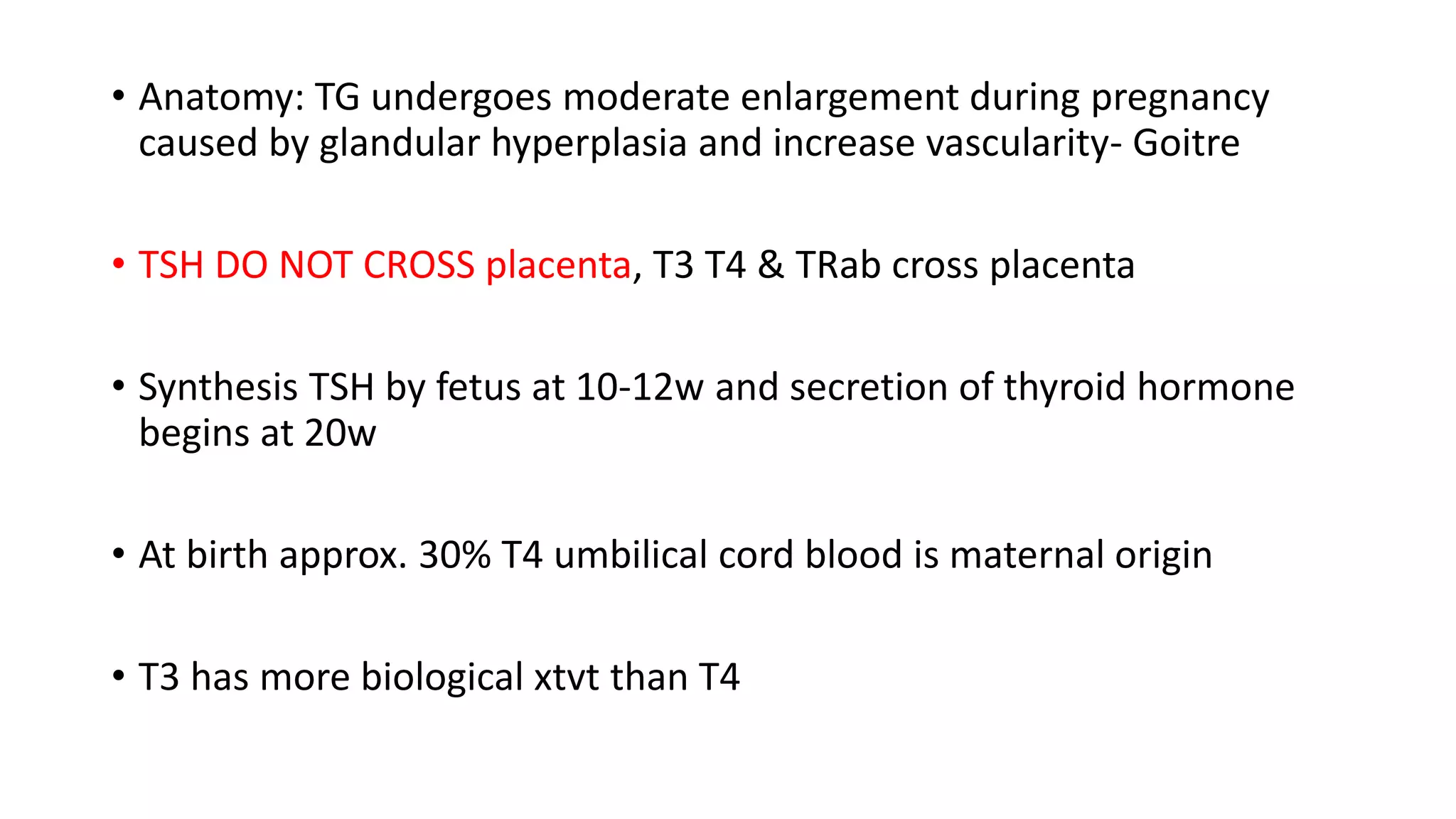
• Anatomy: TG undergoes moderate enlargement during pregnancy
caused by glandular hyperplasia and increase vascularity- Goitre
• TSH DO NOT CROSS placenta, T3 T4 & TRab cross placenta
• Synthesis TSH by fetus at 10-12w and secretion of thyroid hormone
begins at 20w
• At birth approx. 30% T4 umbilical cord blood is maternal origin
• T3 has more biological xtvt than T4
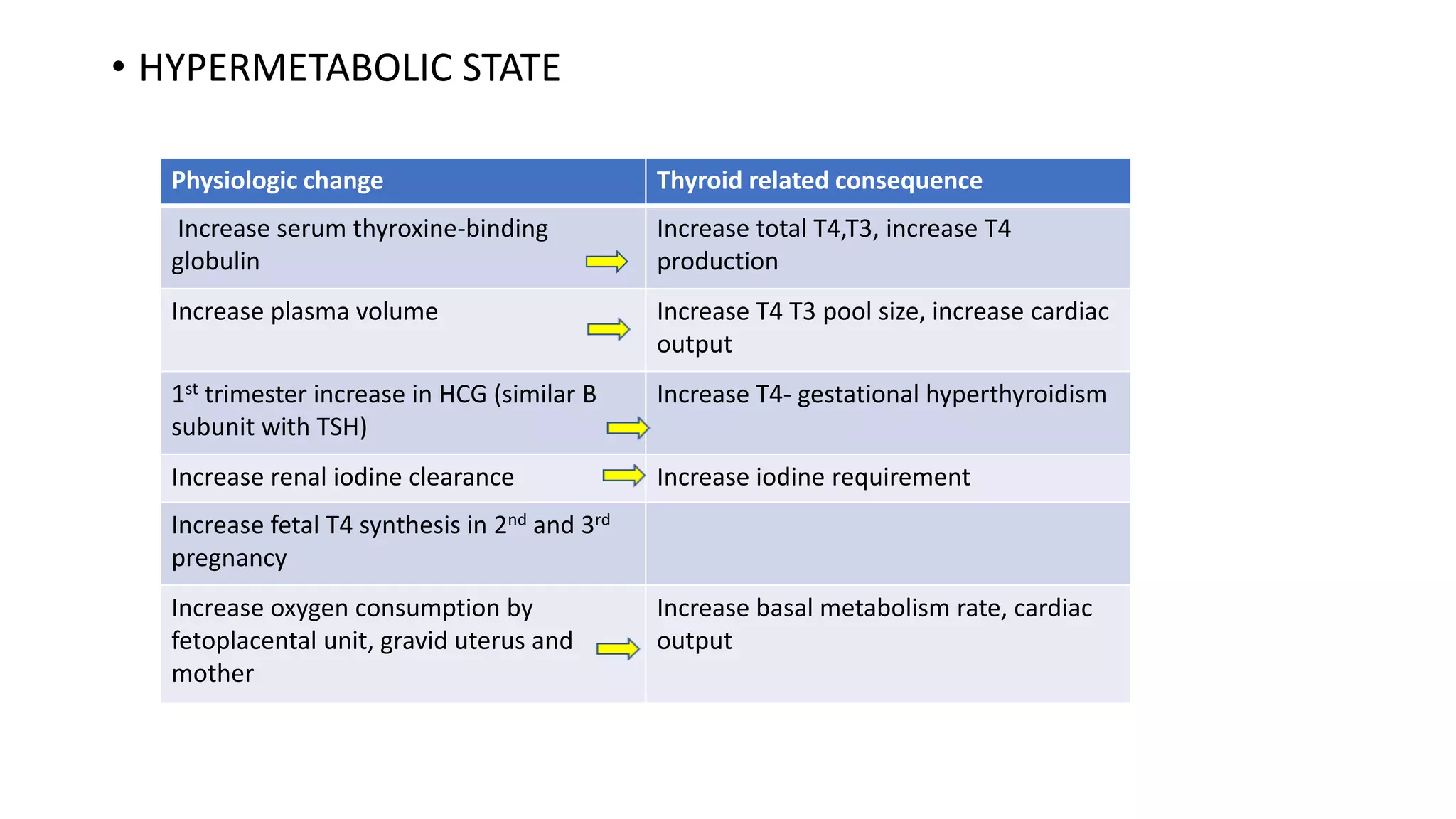
• HYPERMETABOLIC STATE
Physiologic change Thyroid related consequence
Increase serum thyroxine-binding
globulin
Increase total T4,T3, increase T4
production
Increase plasma volume Increase T4 T3 pool size, increase cardiac
output
1st trimester increase in HCG (similar B
subunit with TSH)
Increase T4- gestational hyperthyroidism
Increase renal iodine clearance Increase iodine requirement
Increase fetal T4 synthesis in 2nd and 3rd
pregnancy
Increase oxygen consumption by
fetoplacental unit, gravid uterus and
mother
Increase basal metabolism rate, cardiac
output
Gestational Transient Thyrotoxicosis
• Seen in 10-20% of pregnant women in early pregnancy
• Mildly increased free T4, suppressed TSH – due to elevation of HCG in
early pregnancy 8-14w)
• Asymptomatic, assd with HYPEREMESIS GRAVIDARUM,
HYDATIDIFORM MOLE
• Resolved spontaneously in 2nd trimester
• No evidence of thyroid autoimmunity
Hypothyroidism
• Primary, secondary and tertiary
• Subclinical hypothyroidism
• - increase TSH, normal T4
• Isolated hypothyroxenemia
- Normal TSH/low T4
• Primary Hypothyroidism
- Hashimoto;s thyroiditis-
antiperoxidase autoantibody- TG
glandular destruction
- Iodine def
- Ablative radioiodine therapy
- Thyroidectomy
• Secondary causes
- Lymphocytic hypophysitis
- Hypophysectomy
• Tertiary cause (hypoT)
-rare
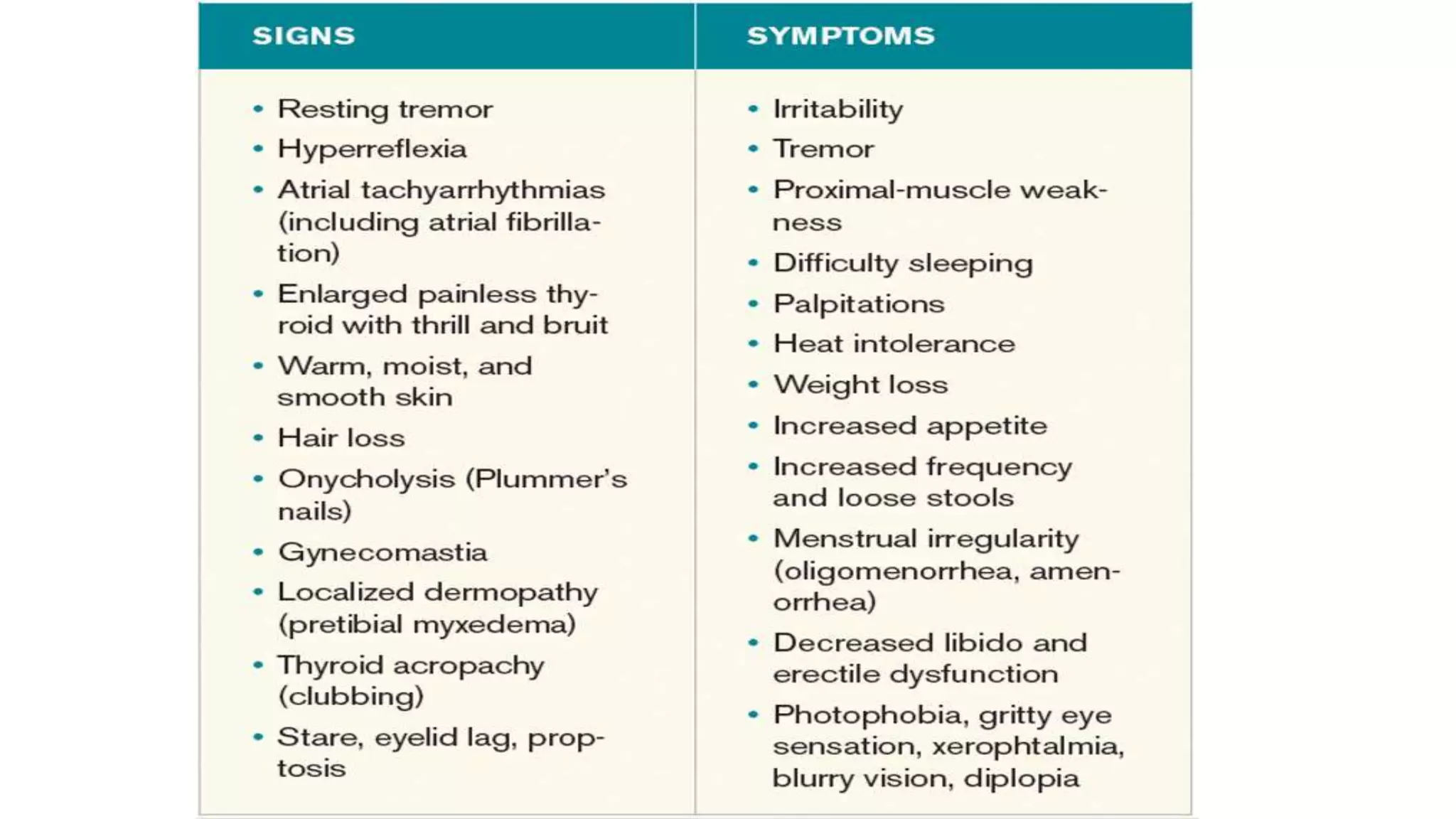
Signs and symptoms
Pregnancy complications in
hypothyroid
• Spontaneous abortion
• Pre eclampsia
• Placental abruption
• LBW
• Prematurity
• Stillbirth
Congenital hypothyroidism
Management
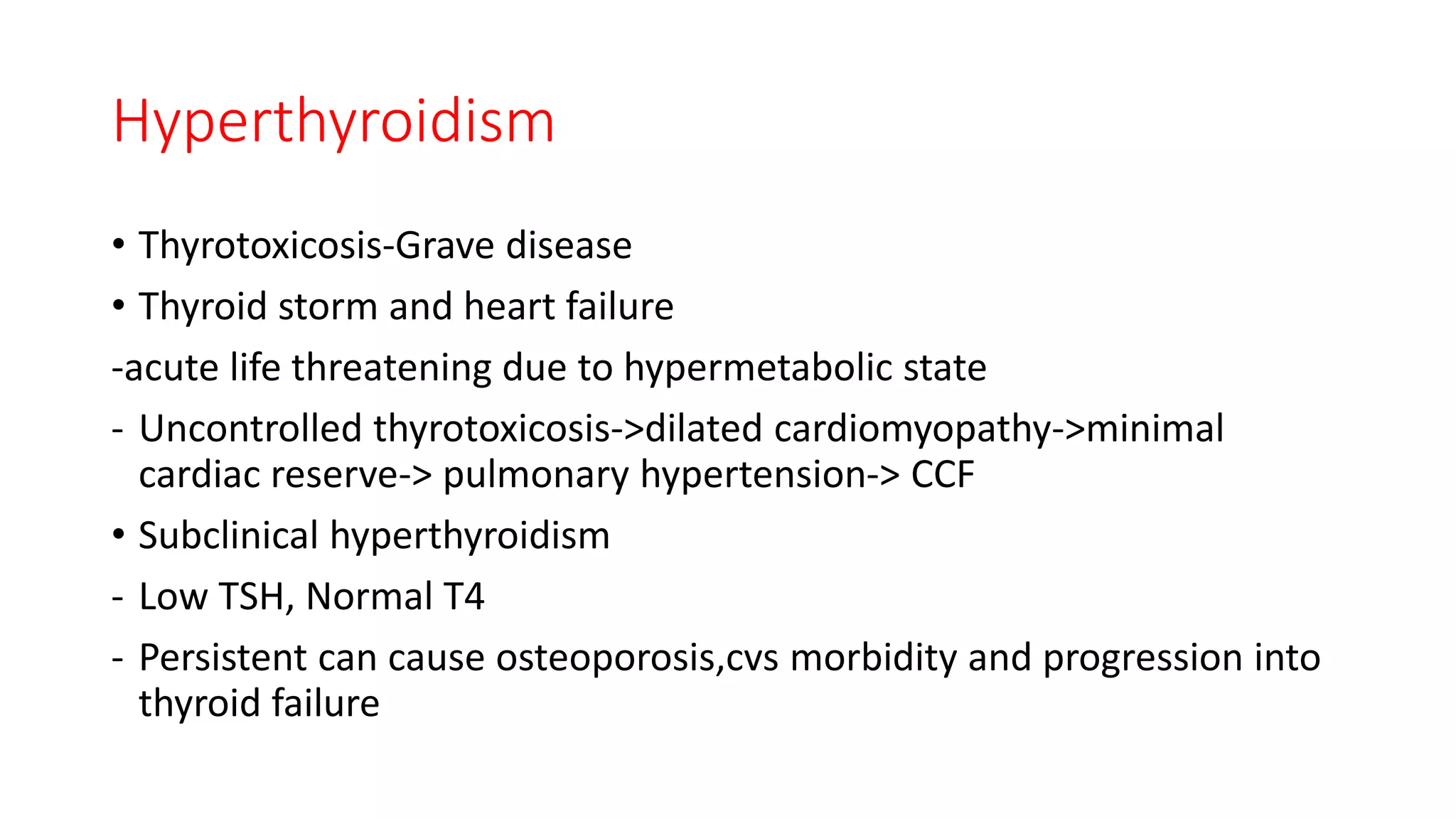
Hyperthyroidism
• Thyrotoxicosis-Grave disease
• Thyroid storm and heart failure
-acute life threatening due to hypermetabolic state
- Uncontrolled thyrotoxicosis->dilated cardiomyopathy->minimal
cardiac reserve-> pulmonary hypertension-> CCF
• Subclinical hyperthyroidism
- Low TSH, Normal T4
- Persistent can cause osteoporosis,cvs morbidity and progression into
thyroid failure
Pathophysiology of Grave’s disease
• Production of TSIs (thyroid
stimulating Ig) bind to Thyroid
receptor and activate it, causing
thyroid hyperfunction and
growth
• Other: TPO Ab
Pregnancy outcomes in thyrotoxicosis
• Maternal
- Spontaneous abortion
- Preterm birth
- pre eclampsia
- Abruption
- Thyroid storm
- Congestive Heart failure
- Maternal death
• Fetus
- Congenital malformation of heart,
kidney
- PRETERM DELIVERY
- IUGR
- Stillbirth
- Fetal tachycardia
- Fetal Grave’s disease- Ab crosses
placenta barrier- stimulate thyroid
gland
- Thyrotoxicosis
- Hypothyroidism- due to medication
Antithyroid
Propylthiouracil PTU Carbimazole
Thiourea derivative Imidazole derivative
Less potent More potent
Highly plama protein bound No
Cross placenta and milk barrier but safer as bound to
plasma protein
Cross placenta and milk barrier- teratogenic effect esp
in 1st trimester
Rapid acting, short acting
Given in multiple dose
T PTU 25-100mg bd/tds
Slow acting, long lasting
OD dose
Useful in emergency Long term management
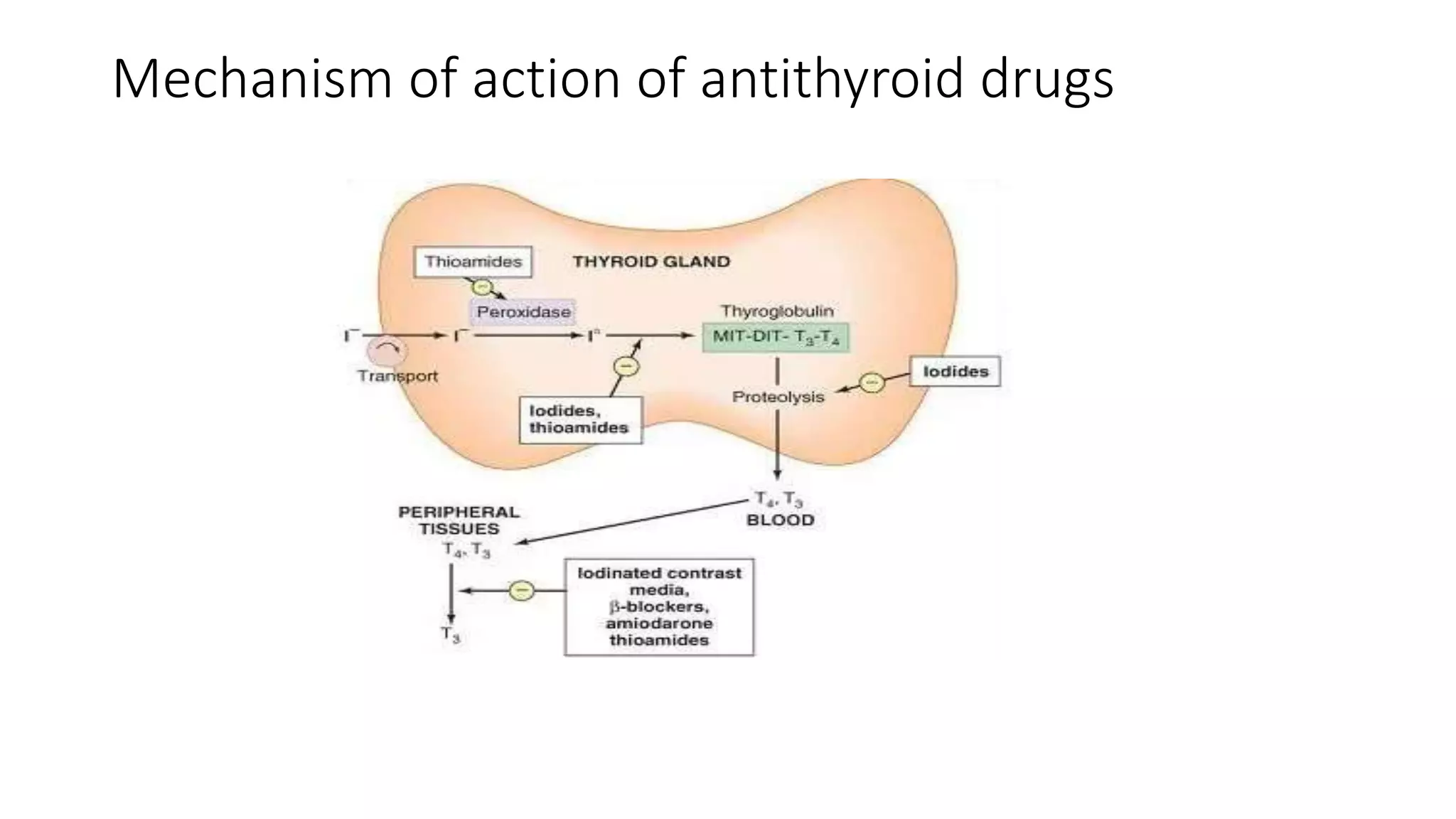
inhibits iodine and peroxidase from their normal
interactions with thyroglobulin to form T4 and T3.
Do not inhibit peripheral conversion
Active metabolite: Methimazole inhibit conversion of
T4-T3
Mechanism of action of antithyroid drugs
Congenital anomalies with Carbimazole
• Carbimazole crosses the placental barrier and increases risk of
congenital malformations, especially when administered in the
first trimester of pregnancy and at high doses (15 mg or more of
carbimazole daily).
• Reported malformations include aplasia cutis congenita
(absence of a portion of skin, often localised on the head),
craniofacial malformations (choanal atresia; facial
dysmorphism), defects of the abdominal wall and
gastrointestinal tract (exomphalos, oesophageal atresia,
omphalo-mesenteric duct anomaly), and ventricular septal
defect.

Thyroid

  • 1.
  • 2.
    • Anatomy: TGundergoes moderate enlargement during pregnancy caused by glandular hyperplasia and increase vascularity- Goitre • TSH DO NOT CROSS placenta, T3 T4 & TRab cross placenta • Synthesis TSH by fetus at 10-12w and secretion of thyroid hormone begins at 20w • At birth approx. 30% T4 umbilical cord blood is maternal origin • T3 has more biological xtvt than T4
  • 4.
    • HYPERMETABOLIC STATE Physiologicchange Thyroid related consequence Increase serum thyroxine-binding globulin Increase total T4,T3, increase T4 production Increase plasma volume Increase T4 T3 pool size, increase cardiac output 1st trimester increase in HCG (similar B subunit with TSH) Increase T4- gestational hyperthyroidism Increase renal iodine clearance Increase iodine requirement Increase fetal T4 synthesis in 2nd and 3rd pregnancy Increase oxygen consumption by fetoplacental unit, gravid uterus and mother Increase basal metabolism rate, cardiac output
  • 6.
    Gestational Transient Thyrotoxicosis •Seen in 10-20% of pregnant women in early pregnancy • Mildly increased free T4, suppressed TSH – due to elevation of HCG in early pregnancy 8-14w) • Asymptomatic, assd with HYPEREMESIS GRAVIDARUM, HYDATIDIFORM MOLE • Resolved spontaneously in 2nd trimester • No evidence of thyroid autoimmunity
  • 7.
    Hypothyroidism • Primary, secondaryand tertiary • Subclinical hypothyroidism • - increase TSH, normal T4 • Isolated hypothyroxenemia - Normal TSH/low T4
  • 8.
    • Primary Hypothyroidism -Hashimoto;s thyroiditis- antiperoxidase autoantibody- TG glandular destruction - Iodine def - Ablative radioiodine therapy - Thyroidectomy • Secondary causes - Lymphocytic hypophysitis - Hypophysectomy • Tertiary cause (hypoT) -rare
  • 9.
    Signs and symptoms Pregnancycomplications in hypothyroid • Spontaneous abortion • Pre eclampsia • Placental abruption • LBW • Prematurity • Stillbirth
  • 10.
  • 11.
  • 12.
    Hyperthyroidism • Thyrotoxicosis-Grave disease •Thyroid storm and heart failure -acute life threatening due to hypermetabolic state - Uncontrolled thyrotoxicosis->dilated cardiomyopathy->minimal cardiac reserve-> pulmonary hypertension-> CCF • Subclinical hyperthyroidism - Low TSH, Normal T4 - Persistent can cause osteoporosis,cvs morbidity and progression into thyroid failure
  • 13.
    Pathophysiology of Grave’sdisease • Production of TSIs (thyroid stimulating Ig) bind to Thyroid receptor and activate it, causing thyroid hyperfunction and growth • Other: TPO Ab
  • 15.
    Pregnancy outcomes inthyrotoxicosis • Maternal - Spontaneous abortion - Preterm birth - pre eclampsia - Abruption - Thyroid storm - Congestive Heart failure - Maternal death • Fetus - Congenital malformation of heart, kidney - PRETERM DELIVERY - IUGR - Stillbirth - Fetal tachycardia - Fetal Grave’s disease- Ab crosses placenta barrier- stimulate thyroid gland - Thyrotoxicosis - Hypothyroidism- due to medication
  • 16.
    Antithyroid Propylthiouracil PTU Carbimazole Thioureaderivative Imidazole derivative Less potent More potent Highly plama protein bound No Cross placenta and milk barrier but safer as bound to plasma protein Cross placenta and milk barrier- teratogenic effect esp in 1st trimester Rapid acting, short acting Given in multiple dose T PTU 25-100mg bd/tds Slow acting, long lasting OD dose Useful in emergency Long term management inhibits iodine and peroxidase from their normal interactions with thyroglobulin to form T4 and T3. Do not inhibit peripheral conversion Active metabolite: Methimazole inhibit conversion of T4-T3
  • 17.
    Mechanism of actionof antithyroid drugs
  • 18.
    Congenital anomalies withCarbimazole • Carbimazole crosses the placental barrier and increases risk of congenital malformations, especially when administered in the first trimester of pregnancy and at high doses (15 mg or more of carbimazole daily). • Reported malformations include aplasia cutis congenita (absence of a portion of skin, often localised on the head), craniofacial malformations (choanal atresia; facial dysmorphism), defects of the abdominal wall and gastrointestinal tract (exomphalos, oesophageal atresia, omphalo-mesenteric duct anomaly), and ventricular septal defect.