THYROID DISORDERS
AND ANAESTHESIA
PRESENTOR : Dr. SWARNA SHREE P
MODERATOR : Dr. AHMEDI FATHIMA
Assocciate professor
Department of Anaesthesia
Introduction
• Disease of the thyroid gland is common. For example, in endemic areas, the
incidence of goitre is 15–30% of the adult population.
• Thyroid diseases that have anaesthetic implications include hypothyroidism,
hyperthyroidism and conditions requiring thyroidectomy.
• Those presenting with well controlled hypo and hyperthyroidism do not
‐ ‐
present much difficulty for the anaesthetist.
• However, patients with uncontrolled myxoedema, or those with
uncontrolled hyperthyroidism presenting as an emergency, are at
considerable risk.
• Anesthesia for thyroidectomy may be complicated by airway problems such
as retrosternal extension of the gland.
• Therefore, paying particular attention to preoperative assessment of the
airway and should be able to deal with acute airway complications in the
perioperative phase.
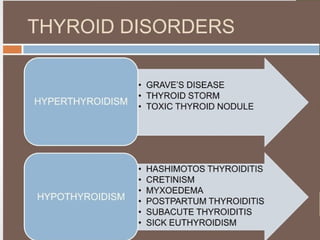
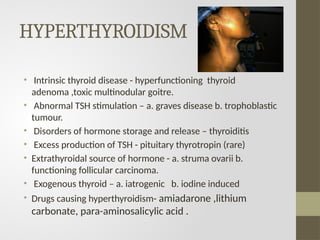
HYPERTHYROIDISM
• Intrinsic thyroid disease - hyperfunctioning thyroid
adenoma ,toxic multinodular goitre.
• Abnormal TSH stimulation – a. graves disease b. trophoblastic
tumour.
• Disorders of hormone storage and release – thyroiditis
• Excess production of TSH - pituitary thyrotropin (rare)
• Extrathyroidal source of hormone - a. struma ovarii b.
functioning follicular carcinoma.
• Exogenous thyroid – a. iatrogenic b. iodine induced
• Drugs causing hyperthyroidism- amiadarone ,lithium
carbonate, para-aminosalicylic acid .
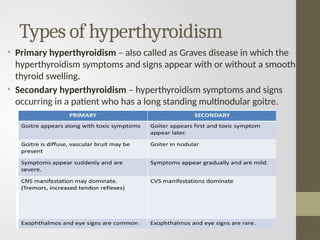
Types of hyperthyroidism
• Primary hyperthyroidism – also called as Graves disease in which the
hyperthyroidism symptoms and signs appear with or without a smooth
thyroid swelling.
• Secondary hyperthyroidism – hyperthyroidism symptoms and signs
occurring in a patient who has a long standing multinodular goitre.
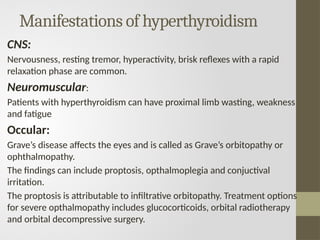
Manifestations of hyperthyroidism
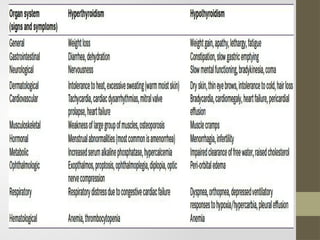
CNS:
Nervousness, resting tremor, hyperactivity, brisk reflexes with a rapid
relaxation phase are common.
Neuromuscular:
Patients with hyperthyroidism can have proximal limb wasting, weakness
and fatigue
Occular:
Grave’s disease affects the eyes and is called as Grave’s orbitopathy or
ophthalmopathy.
The findings can include proptosis, opthalmoplegia and conjuctival
irritation.
The proptosis is attributable to infiltrative orbitopathy. Treatment options
for severe opthalmopathy includes glucocorticoids, orbital radiotherapy
and orbital decompressive surgery.
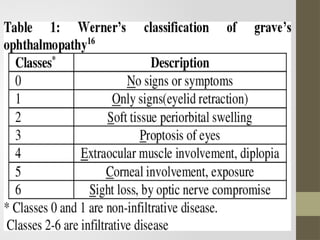
Common eye signs in exophthalmos:
• Von Graefe’s sign – lagging behind of the upper eyelid when
the patient looks downward.
• Stellwag’s sign - retraction of the upper eyelid with infrequent
blinking .
• Joffroy’s sign – absence of wrinkling of the forehead on
looking upwards with the face inclined downwards.
• Moebius sign - absence of convergence of the eyes.
• Dalrymple’s sign - sclera visible above cornea
Cardiovascular system
• The cardiovascular system is most threatened with hypermetabolism of
peripheral tissues, increased cardiac work with tachycardia, arrhythmias
(commonly atrial) and palpitations, a hyperdynamic circulation,
increased myocardial contractility and cardiac output, and cardiomegaly.
• The etiology of cardiac responses is due to the direct effects of T3 on the
myocardium and the peripheral vasculature.
• Other than tachycardia, there may be irregularly irregular pulse if there
is assosciated atrial fibrillation (10%) which is a common dysrhythmia in
thyrotoxicosis.
• Hyperthyroidism is one of the secondary causes for systolic
hypertension,caused due to increased stroke volume as a result of
increased beta receptor activity as well as due to a reduction in the
systemic vascular resistance.
• There will be a wide pulse pressure due to low diastolic pressure due to
peripheral arteriolar dilatation. Usually the pulse pressure will be more
than 60mmhg
Gynaecological:
• Hyperthyroidism – amenorrhea or oligomennorrhoea
Skin:
• Skin feels warm, smooth, velvety similar to an infant. Scalp hair can be fine but
brittle.
• Diffuse alopecia can occur.
Plummer’s sign - separation of the nail from the nailbed.
Respiratory:
• The increase in basal metabolic rate leads to an increase in oxygen
requirement and consequently an increase in CO2 production.
• The respiratory system accommodates by increasing the respiratory rate.
• A reduction in vital capacity and decreased lung compliance can occur.
• Airway reactivity can worsen in patients with asthma, may improve after
treatment of thyrotoxicosis. An increase in airway resistance can occur with
the presence of narrowing of the trachea.
INVESTIGATIONS
1. Total thyroxine (T4 ) is a measurement of protein bound and unbound T4
normal – 5-12µg/dl It is elevated in hyperthyroidism and also in conditions where
there is increase in TBG levels – e.g. acute liver disease, pregnancy, or drugs – oral
contraceptive, exogenous oestrogens, clofibrate, opioids.
2. Serum T3 - are often determined to detect disease in patients with clinical
evidence of hyperthyroidism in the absence of elevations of T4 .
 concentrations may be depressed by factors that impair the peripheral
conversion of T4 to T3 – sick euthyroid syndrome
Normal T3 – 70 to 195ng/dl
T4 is entirely synthesized by thyroid gland.
T3 – 80% is produced by extrathyroidal deiodination of T4, and 20% is produced
by direct thyroid secretion.
Half life of T4 – 6-7days ,T3 – 24-30 hrs
T4 - less potent, T3 – highly potent, T4 is metabolized to either T3 or reverse T3
( r T3), T3 is biologically active, whereas r T3 is inactive.
Major fraction of circulating T3 & T4 are bound to thyroxine-binding globulin
(TBG: 80%), with a smaller fraction bound to albumin and pre-albumin (10-
15%).
• T3 resin uptake test – ( RT3U) – also called as thyroid hormone
binding ratio - ( THBR) – is an in -vitro test.
• In hyperthyroidism where all the sites over the TBG are already
occupied because of increased T4, radiolabelled T3 will not find any
un-occupied sites over the TBG and hence more quantity will be
available freely, so that the uptake of resin by this T3 will be high. So
THBR will be high.
• Normal THBR is 24%-39% The resin uptake of radioactive T3 (THBR) is
directly proportional to the fraction of Free T4, and inversely
proportional to the TBG binding sites.
• Free thyroxin index or free T4 estimate - total thyroxine x THBR
Normal is 1.2 to 4.9 - elevated in hyperthyroidism & decreased in
hypothyroidism
• Thyroid stimulating hormone (TSH)
Normal level – 0.4 to 5µIU/ml
TSH of 0.1 to 0.4 with normal levels of T3 & T4 is diagnostic of
subclinical hyperthyroidism .
TSH of less than 0.03µIU/ml with elevated T3 & T4 is diagnostic of
overt hyperthyroidism.
TSH level of 5 to 10µIU/ml with normal levels of T3 & T4 - subclinical
hypothyroidism
TSH level of >20µIU/ml with decreased T3 & T4 – overt
hypothryroidism .
Radioactive iodine uptake test – I123, I131 or technetium-99 are used.
The percentage of tracer taken up by the thyroid in 24hrs is measured.
Normal range – 10-25%
The test is done to confirm hyperthyroidism where the uptake is high.
Thyroid scans using I123 or technetium 99
 Warm –normal,Hot - hyperfunctioning ( hyperthyroid ), Cold -
hypofunctioning ( hypothyroid and malignancy)
Ultrasonography – to determine whether a lesion is cystic,
solid or mixed.
 Spirometry – to rule out intra thoracic or extrathoracic
obstruction in case of retrosternal goitre.
Other tests – detection of serum antimicrosomal antibodies,
anti thyroglobulin antibodies, long acting thyroid stimulator,
thyroid stimulating thyroglobulins.
CT scanning & MRI are used for retrosternal goiters
Hb% - many of these patients may be having nutritional anemias.
Total count & differential count - especially when patients are on
anti arrythmic drugs to rule out agranulocytosis.
ECG – to rule out arrhythmias .
X-ray neck – A-P view to know the lateral deviation or compression
of trachea .
Lateral view – to rule out anterio posterior compression of the
trachea.
 Indirect laryngoscopy – to rule out any vocal cord palsies for medico
legal use. Also if on indirect laryngoscopy vocal cords are not
visualized, then one should anticipate difficult airway and keep
ready fibre optic bronchoscope.
 Serum Calcium estimation
FNAC
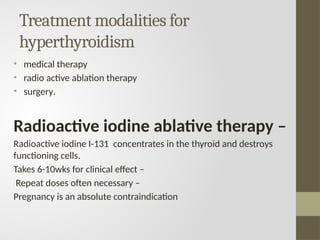
Treatment modalities for
hyperthyroidism
• medical therapy
• radio active ablation therapy
• surgery.
Radioactive iodine ablative therapy –
Radioactive iodine I-131 concentrates in the thyroid and destroys
functioning cells.
Takes 6-10wks for clinical effect –
Repeat doses often necessary –
Pregnancy is an absolute contraindication
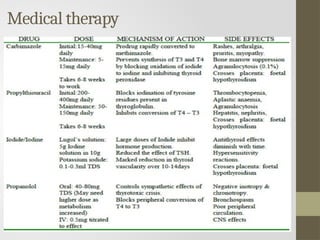
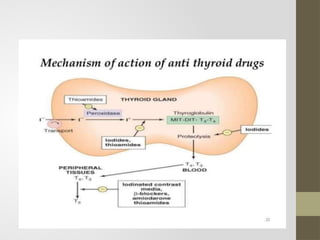
Medical therapy
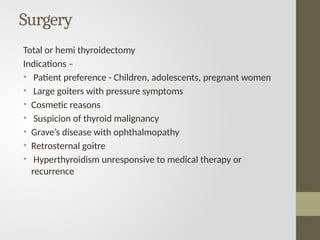
Surgery
Total or hemi thyroidectomy
Indications –
• Patient preference - Children, adolescents, pregnant women
• Large goiters with pressure symptoms
• Cosmetic reasons
• Suspicion of thyroid malignancy
• Grave’s disease with ophthalmopathy
• Retrosternal goitre
• Hyperthyroidism unresponsive to medical therapy or
recurrence
Pre operative preparation of
hyperthyroid patient
 All patients are first treated with anti thyroid drugs for 6-8wks
till made euthyroid.
Beta blockers to be continued –
 Lugol’s iodine – 5% iodine in 10% potassium iodide – 8mg
iodide/drop [ Dose – 3-5 drops thrice a day ]
 Saturated solution of potassium iodide (SSKI) - 50mg iodide per
drop [Dose – one drop thrice a day].
Iodide decreases T3 & T4 synthesis by inhibiting iodide oxidation
and organification – Wolff –Chai koff effect or thyroid constipation.
 Pre-op iodine administration upto 14 days helps in - Reducing the
size of the swelling - Decreases the vascularity - Makes the gland
more firm.
Iodine to be given for not more than 14 days before the surgery. If
given for more days , can produce a recurrence of hyperthyroidism
– Jod Basedow effect or thyroid escape.
Pre operative management of hyperthyroidism
• Patients with hyperthyroidism will be more anxious. Hence a
good anxiolytic to be given day before surgery .
• beta blockers and antithyroid drugs are continued on the day of
surgery
• Sedation to be used carefully in patients with symptoms of
obstructive sleep apnea.
• Inj fentanyl 1-2µg/kg and inj midazolam 0.01- 0.02 mg/kg given
intravenously before induction.
Preparation of Operating room
• A thorough cockpit drill check of the anaesthesia work station to be
done.
• A difficult airway cart containing LMA, ILMA, I-GEL, fibreoptic
bronchoscope, optical stylet , gum elastic bougies to be kept ready.
• 2 working laryngoscopes and the endotracheal tubes 1-2 sizes
smaller than required to be kept.
• Induction agents and muscle relaxants to be loaded and kept ready.
• In anticipating thyroid strom 4 units of cold saline for I.V infusion
and ice cubes to be kept ready in the refrigerator.
• Esmolol, propranolol, hydrocortisone, propylthiouracil/
carbimazole, ryle’s tube to be kept on the work station.
• One unit of crossmatched packed cells also to be arranged
• SPO2, NIBP, ECG , temperature monitoring, ETCO2, peripheral nerve
stimulator.
Anaesthesia for hyperthyroid patient
• Glycopyrrolate as a part of premedication during thyroid surgery can be
immensely helpful .
• Pre-oxygenation with 100% oxygen enhances the functional residual volume
and thus can provide enough time for securing the access to difficult airway.
• Shorter acting opioids such as fentanyl, remi fentanyl, sufentanyl should
preferably be used but the limited availability of these drugs except fentanyl
is a major drawback.
• I.V. induction is the first choice. –
[If difficult intubation is anticipated then inhalational induction is preferred.]
• If patient gives history of obstructive symptoms and snoring, then awake
intubation is preferred.
• Thiopentone is the induction agent of choice because of thio group
producing anti thyroid effect.
• Propofol also can be used. The advantages are - decreased sympathetic
response to laryngoscopy and intubation, antiarrhythmic effect and
decreased incidence of post op nausea and vomiting.
• Ketamine is contraindicated as it increases the HR and BP.
• When the patient is awake the tone of the neck muscles will
prevent the weight of the tumour to fall on to the trachea and
collapsing it.
• Once the patient looses consciousness there may be total
respiratory obstruction as the muscles relax and there will be
difficulty to mask ventilate.
• Assistant is told to lift the tumour upwards away from the trachea
till successful intubation of the trachea is done whenever there is
large thyroid swelling .
• If you except any difficulty in intubation succinylcholine is the agent
of choice, otherwise non depolarizing muscle relaxants can be used
i.e veccuronium.
• Suppression of intubation response: Laryngoscopy & intubation can
provoke tachycardia, hypertension and dysrrythmias and hence
needs suppression.
• Hence gentle laryngoscopy of short duration under deeper plane of
anaesthesia using volatile anaesthetics, opioids, lignocaine is a
must.
• A bolus dose of intravenous esmolol 1mg/kg body weight can also
be used.
Airway management
• As such, there are chances that a simple ET tube can get kinked under the
drapes. Therefore, either an armored endotracheal tube (ETT) or Ring,
Adair and Elwyn (RAE) tube -(North Pole) is the preferred device for
securing the airway as they have minimal chances of kinking and causing
respiratory obstruction.
• The relaxation caused by the anesthetic agents and muscle relaxants may
lead to obstruction of the airway which can present with marked stridor
initially during induction of anesthesia and inability to ventilate partially or
completely with face mask after administration of general anesthesia.
• Such difficult scenarios can be encountered in malignancy of thyroid gland
as it causes a lot of fibrosis and tethering of soft tissue structures, thereby
making laryngoscopic view extremely difficult which emphasizes the role of
fibreoptic bronchoscopy.
• In difficult situations, laryngeal mask airway (LMA) can be used for
ventilation, but for thyroid surgery, its utility is doubtful as there can be
compression or deviation of trachea, retrosternal extension of goiter,
abnormal vocal cord movement and suspected malignancy which can pose
difficulties in securing airway access.
EYE PROTECTION
• Protection of the eyes is very crucial especially in patients with
exophthalmos, since there is always a chance that the eyes may be
injured by instruments and surgeons’ hand as the face would be
covered.
• Lubricating ointment should be placed and eyes to be taped. Layers of
gauze have to be placed over each eye and fixed using plaster.
PATIENT POSITIONING
• Patient is positioned with a sandbag between the shoulder blades and
the head resting on a padded horseshoe, so that the neck is extended.
• Head end of the table is elevated by 25° , Head end elevation of the
table is mainly done to assist venous drainage away from the site of
surgery.
• Head end elevation to be done carefully monitoring the arterial blood
pressure particularly in patients taking beta blockers.
• Head extension will produce increase in the length of trachea for nearly
2.5cms and this can produce auto extubation. Hence again the tube
position has to be confirmed
MAINTAINANCEOFANAESTHESIA
• Patient should be maintained with sufficient depth of
anaesthesia as any lighter planes can produce complications like
dysrhythmias and thyroid storm.
• Patient should be ventilated with O2, N2O and volatile
anaesthetics preferably isoflurane or sevoflurane.
• Halothane to be avoided as it can produce sensitization of
myocardicum and cause dysrhythmias.
• Continuous monitoring of ETCO2 is necessary to avoid hypo or
hypercarbia as both can induce dysrhythmias. Patient should be
normoventilated.
PERI OPERATIVE CONCERNS
1. during positioning - auto-extubation
2. during maintainance –
 kinking of the tube if re-inforced tube is not used.
haemorrhage - when the gland is very large
dysrrhythmias – sinus tachycardia, SVT & atrial fibrillation
air embolism
thyroid storm
3. delayed recovery from muscle relaxants
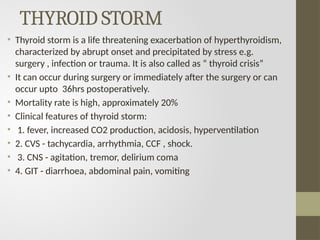
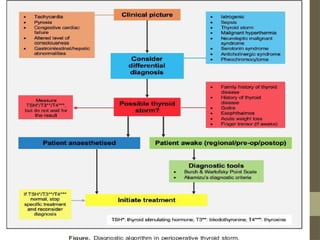
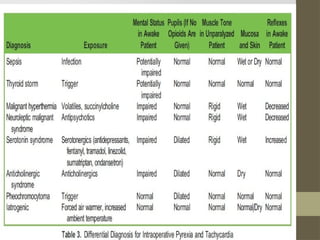
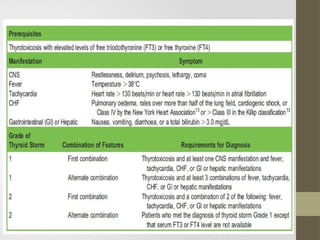
THYROID STORM
• Thyroid storm is a life threatening exacerbation of hyperthyroidism,
characterized by abrupt onset and precipitated by stress e.g.
surgery , infection or trauma. It is also called as “ thyroid crisis”
• It can occur during surgery or immediately after the surgery or can
occur upto 36hrs postoperatively.
• Mortality rate is high, approximately 20%
• Clinical features of thyroid storm:
• 1. fever, increased CO2 production, acidosis, hyperventilation
• 2. CVS - tachycardia, arrhythmia, CCF , shock.
• 3. CNS - agitation, tremor, delirium coma
• 4. GIT - diarrhoea, abdominal pain, vomiting
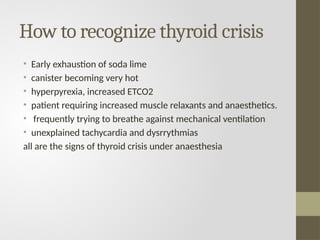
How to recognize thyroid crisis
• Early exhaustion of soda lime
• canister becoming very hot
• hyperpyrexia, increased ETCO2
• patient requiring increased muscle relaxants and anaesthetics.
• frequently trying to breathe against mechanical ventilation
• unexplained tachycardia and dysrrythmias
all are the signs of thyroid crisis under anaesthesia
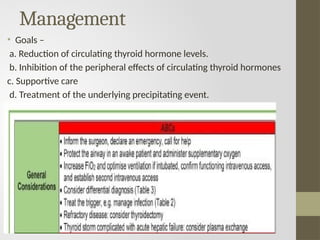
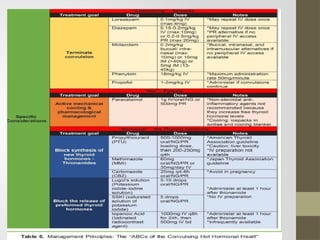
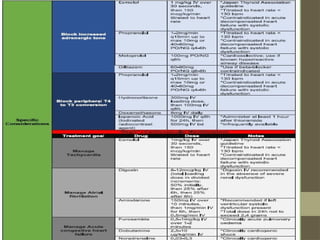
Management
• Goals –
a. Reduction of circulating thyroid hormone levels.
b. Inhibition of the peripheral effects of circulating thyroid hormones
c. Supportive care
d. Treatment of the underlying precipitating event.
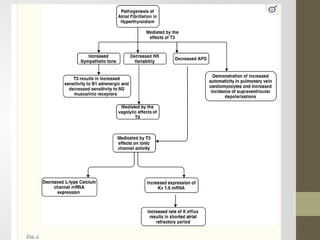
Atrial fibrillation
• Atrial fibrillation is the most common cardiac complication of
hyperthyroidism. It occurs in up to 15% of hyperthyroid patients compared
with 4% in the general population, and is more common in men and in
patients with triiodothyronine (T3) toxicosis, and its incidence increases
with advancing age.
PATHOPHYSIOLOGY
1]Autoantibody formation against β1-adrenergic and M2-muscarinic
receptors has been known to occur in hyperthyroidism and may trigger Atrial
fibrillation prior to thyroid dysfunction.
2]A genetic susceptibility to atrial fibrillation may be linked to
hyperthyroidism.
• Rate control -The first step in the management of atrial fibrillation, despite
the cause, is to control the ventricular response.
• The choice of an agent for rate control depends on the coexisting medical
conditions. Beta-adrenergic blockers, calcium channel blockers, and digoxin
are effective agents that can be used for rate control.
• In patient’s where B-blocker therapy is contraindicated, other management
choices include calcium channel blockers such as diltiazem or verapamil.
• These agents should however be avoided in those with a reduced ejection
fraction or hemodynamic instability due to a strong negative inotropic effect.
• Digoxin may also be considered in those with a tenuous hemodynamic
status.
• However, due to a few factors; increased renal clearance, increased
sympathetic tone in atrial fibrillation with reduced vagal tone and a large
volume of distribution of digoxin, a larger than usual dose of digoxin is
required, thus caution must be used to avoid digoxin toxicity
• Amiodarone may be used in the acute setting due to the benefit of
converting the patient to normal sinus rhythm when combined with anti-
thyroid medications such as PTU to reduce the chance of worsening
thyrotoxicosis.
• Thyrotoxic atrial fibrillation is a more potent risk factor for stroke.
• The decision to treat these patients with short- or long-term
anticoagulation should be made on an individual basis, taking into
consideration age, associated heart disease, and risks of such therapy
• Attempts at cardioversion should not be made before restoration of the
euthyroid state because maintenance of sinus rhythm is unlikely as long as the
patient remains hyperthyroid.
• Once the euthyroid state is achieved with treatment of hyperthyroidism,
spontaneous reversion to sinus rhythm occurs in nearly two thirds of patients
within 8–10 weeks.
• In the absence of spontaneous reversion to sinus rhythm within this time
period, electrical or pharmacologic cardioversion should be attempted only
after the patient has been rendered euthyroid and has been optimally
anticoagulated for at least 3 weeks, and the anticoagulation should be
continued for at least 4 weeks after successful cardioversion.
• Antiarrhythmic agents of class I (IA – qunidine and procainamide; IC – flecanide
and propafenone) or class III (amiodarone, dofetilide, or ibutilide) may be
considered for pharmacologic cardioversion, and continuous
electrocardiographic monitoring for the first 48–72 hours after initiating
therapy should be considered.
Post operative complications
• Immediate - respiratory distress due to tracheomalacia,
recurrent laryngeal nerve palsies, hypocalcemic tetany,
laryngospasm
• In the post operative period - laryngeal edema and
haematoma producing respiratory distress and hypocalcemic
tetany
• Delayed – hypothyroidism
Nerve palsies following thyroid surgery
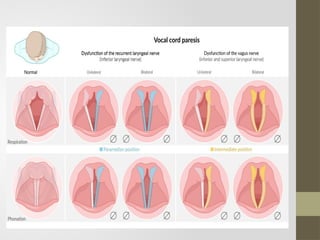
• Unilateral or bilateral Recurrent Laryngeal Nerve Injury can occur
following thyroidectomy.
• In bilateral abductor palsy both the vocal cords will be in the midline
with a chink of opening and the patient will be in respiratory distress.
• Unilateral palsy will produce hoarseness of voice. Permanent
unilateral vocal cord paralysis occurs in <1% of patients and bilateral
palsies are extremely rare .
• If there is bilateral abductor palsy, then patient should be reintubated
with a smaller tube using thiopentone and smaller dose (10mg) of
succinylcholine as the effect of neostigmine on psuedocholinesterase
will last for 90mins.
• Once the patient starts breathing and awake, he should be reassured
and trial of extubation is done after 48 hrs. (usually it takes about
48hrs for neuropraxia to get settled)
Superior laryngeal nerve damage
• Superior laryngeal nerve can get damaged in 3-5% of the
thyroidectomy procedures and the commonest injury occurs
to external branch of superior laryngeal nerve, resulting in the
paralysis of cricothyroid muscle which causes alteration in the
quality of voice as the vocal folds fail to tense during sound
production.
• The injury can also occur to the internal branch of superior
laryngeal nerve which provides sensory supply to mucosa of
supraglottic region of larynx and superior surface of vocal
folds. As a result, patient can develop dysphagia due to
deranged swallowing reflex.
Trial extubation
• Trial extubation is always done in the operation theatre after
48hrs, as anaesthetist can easily reintubate if required and
also will be fully equipped with monitoring and other facilities
to tackle any emergencies.
• Patient is told about the procedure .
• Pre-oxygenation is done for 3 minutes.
• Monitors - pulse oximeters, NIBP and ECG connected.
• Keeping ready laryngoscope , ETT, stylet for re-intubation if
required, patient is extubated and is observed for 30 min in
the O.T for any stridor.
Tracheomalasia
• presence of large long standing thyroid swelling , presence of the
impression of tracheal cartilages over the undersurface of the tumour.
• Cuff-leak test can be done before extubation. Absence of an audible
leak around the tube when patient is ventilated with cuff deflated
should alert the anaesthesiologist.
• Measure the volume of air required to inflate the cuff of the tube so
that an airtight seal is produced before removing the tumour. .
• A similar test is performed at the end of the procedure and
tracheomalacia can be detected if there is any decrease in the volume
required to inflate the cuff to an airtight seal at the end of the
procedure.
• Whenever tracheomalacia is suspected extubation is not done.
• Tube can be kept for about 48hrs and trial extubation is done.
• If there is stridor again, tracheostomy can be considered.
• Tracheal stenting can be done to maintain tracheal patency in patients
who do not show an improvement
Hemorrhage
• It is a common post-op complication and can cause compression
over the neck structures, leading to acute airway obstruction.
• This is an acute emergency, and if it is not immediately possible
to shift the patient to Operation Theater, then the sutures
should be removed on the bedside to relieve the airway
obstruction.
• In such difficult situations, the airway can be secured by easy-to-
use devices such as LMA.
• Patient should be shifted immediately and general endotracheal
intubation should be instituted and the surgeon is asked to
explore the wound and secure hemostasis.
Pneumothorax
• Though this complication is rare, it can occur during the
surgical resection of retrosternal goiter.
• On the operation table, any unwarranted episode of
hypoxemia, fall of pulse oxygen saturation, hypotension,
tachycardia, increased airway pressure, difficult ventilation
and absence of breath sounds on ventilation should raise the
suspicion of pneumothorax and should be timely diagnosed
and managed accordingly.
• The best treatment at the earliest detection of this
complication is either to relieve the pneumothorax by placing
a wide-bored needle into second anterior intercostal space or
to use a definite method, i.e. to go for insertion of chest tube
if tension pneumothorax develops.
Hypoparathyroidism
• One of the operative complications of thyroidectomy is injury to
parathyroid glands or its accidental removal which can manifest in the
form of acute hypocalcemia in approximately 20% of the patients.
• Features of hypocalcemia include peri-oral tingling, mental confusion,
muscular twitching, seizures and tetany.
• Hypocalcemia can be elicited clinically by the presence of Chvostek's
and/or Trousseau's sign.
• Cardiorespiratory manifestations of hypocalcemia can occur in the
form of laryngospasm, cardiac irritability, prolongation of QT interval
and varied arrhythmias.
• Hypocalcemia can be treated with oral supplements if the Ca+ levels
are >2 mmol/l, but has to be treated with intravenous injection of
either calcium gluconate or calcium chloride if the levels fall below 2
mmol/l. Calcium chloride is more effective as it contains three times
more elemental calcium in a similar volume of injection.
Regional anaesthesia for
thyroidectomy
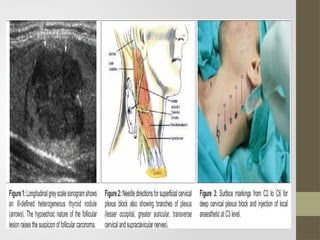
• Thyroidectomy can be done by giving bilateral superficial cervical plexus block
with one sided deep cervical plexus block.
• Ideally suited for small tumours and co-operative patients.
• Cervical epidural anaesthesia is another technique particularly useful if there are
severe respiratory problems.
• CEA is found to be a suitable alternative to GA in preventing the following
problems:
• • Difficult and traumatic intubation in cases of tracheal deviation and compression
• • Arrhythmias with the use of anaesthetic gases like halothane
• • Intubation stress response in associated co-morbid conditions
• • Polypharmacy
• • Post-operative nausea and vomiting •
• Post-operative pain requires more rescue analgesia.
• CEA is not practiced routinely, commonly due to operator inexperience and risk of
potential complications such as a dural puncture, neurovascular injury, epidural
bleed/hematoma, or abscess formation .
Hyperthyroid patient for emergency
surgeries
• When surgery is emergency, measures should be taken to prevent thyroid storm.
• Reduction of the hyperadrenergic state along with decreased conversion of T4-
T3 can be attempted with propranolol.
• Esmolol, as an alternative, may offer some advantages because of its β1
specificity and short duration of half-life. However esmolol has not been shown
to decrease peripheral conversion.
• Anti thyroid drugs should be given to prevent further thyroid hormone
synthesis. Either propylthiouracil 200-400 mg orally every 6hrs or methimazole
20-40mg orally every 6hrs should be administered as soon as possible.
• Methimazole in an aqueous solution, but propylthiouracil can be administered
rectally.
• Intravenous dexamethasone 2mg every 6hrs or hydrocortisone 40mg every 6hrs
can be administered to prevent peripheral conversion.
• Saturated solution of potassium iodide 5 drops orally every 6hrs can be given to
acutely inhibit release of T4 &T3.
• Regional anaesthesia especially central neuraxial blocks are preferred as they
decrease the sympathetic activity .
Hyperthyroidism and pregnancy
• Antithyroid medications and beta blocking drugs are the mainstay
of treatment in pregnant patients with hyperthyroidism .
• The use of radioactive iodine is contraindicated.
• Surgery can be performed safely in the second trimester , if
patients prefer surgical treatment as the definitive treatment for
their hyperthyroidism.
• Propylthiouracil is the preferred antithyroid drug as it is higly
protein bound and is secreted in the breast milk to a lesser extent.
• Beta blocking agents can be used for the symptomatic treatment of
palpitations in pregnancy.
• They cross the placenta and can produce intrauterine growth
retardation, prolonged labour, neonatal bradycardia and
hypotension; they are used based on the risk to benefit ratio
analysis.
Hypothyroidism
• Hypothyroidism may be caused by intrinsic thyroid disease or failure of
the hypothalamo-pituitary axis.
• Those associated with goitre include:
1. Hashimoto’s thyroiditis. This is the commonest cause of
hypothyroidism and although initially may cause gland enlargement
will later lead to thyroid atrophy due to autoantibody destruction of
the follicles.
2. Iodine deficiency. A lack of iodine leads to thyroid hormone depletion,
Thyroid Stimulating Hormone (TSH) stimulation and gland hypertrophy.
Dietary iodine deficiency can be found in mountainous areas.
Other examples:
Primary : pathology in the thyroid gland. Eg : post thyroidectomy,
antithyroid drugs, after radioactive iodine therapy. Ingestion of drugs
producing hypothyroidism.
Secondary : decreased production of TSH, TRH. Eg. : Sheehan’s
syndrome, puerperal bleeding .
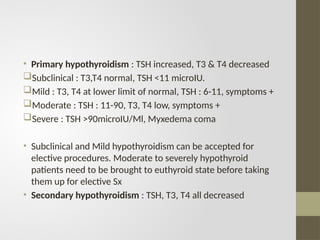
• Primary hypothyroidism : TSH increased, T3 & T4 decreased
Subclinical : T3,T4 normal, TSH <11 microIU.
Mild : T3, T4 at lower limit of normal, TSH : 6-11, symptoms +
Moderate : TSH : 11-90, T3, T4 low, symptoms +
Severe : TSH >90microIU/Ml, Myxedema coma
• Subclinical and Mild hypothyroidism can be accepted for
elective procedures. Moderate to severely hypothyroid
patients need to be brought to euthyroid state before taking
them up for elective Sx
• Secondary hypothyroidism : TSH, T3, T4 all decreased
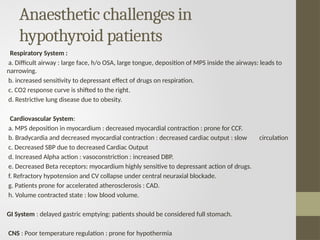
Anaesthetic challenges in
hypothyroid patients
Respiratory System :
a. Difficult airway : large face, h/o OSA, large tongue, deposition of MPS inside the airways: leads to
narrowing.
b. increased sensitivity to depressant effect of drugs on respiration.
c. CO2 response curve is shifted to the right.
d. Restrictive lung disease due to obesity.
Cardiovascular System:
a. MPS deposition in myocardium : decreased myocardial contraction : prone for CCF.
b. Bradycardia and decreased myocardial contraction : decreased cardiac output : slow circulation
c. Decreased SBP due to decreased Cardiac Output
d. Increased Alpha action : vasoconstriction : increased DBP.
e. Decreased Beta receptors: myocardium highly sensitive to depressant action of drugs.
f. Refractory hypotension and CV collapse under central neuraxial blockade.
g. Patients prone for accelerated atherosclerosis : CAD.
h. Volume contracted state : low blood volume.
GI System : delayed gastric emptying: patients should be considered full stomach.
CNS : Poor temperature regulation : prone for hypothermia
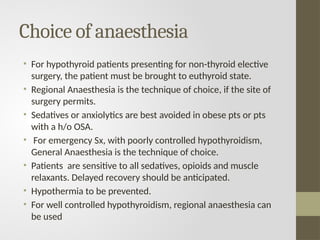
Choice of anaesthesia
• For hypothyroid patients presenting for non-thyroid elective
surgery, the patient must be brought to euthyroid state.
• Regional Anaesthesia is the technique of choice, if the site of
surgery permits.
• Sedatives or anxiolytics are best avoided in obese pts or pts
with a h/o OSA.
• For emergency Sx, with poorly controlled hypothyroidism,
General Anaesthesia is the technique of choice.
• Patients are sensitive to all sedatives, opioids and muscle
relaxants. Delayed recovery should be anticipated.
• Hypothermia to be prevented.
• For well controlled hypothyroidism, regional anaesthesia can
be used
MYXEDEMA COMA
• Myxedema coma is a rare and extreme complication of
hypothyroidism with multiple organ abnormalities associated with
altered sensorium, it can be fatal.
• Hypothyroid patients exhibit multiple physiologic alterations to
compensate for the deficiency of thyroid hormone.
• Factors like infection can overwhelm these homeostatic mechanisms
and can lead to myxedema coma.
• Myxedema coma can be an initial presentation of any form of
hypothyroidism, irrespective of the cause.
• Even with early diagnosis and treatment of myxedema coma, the
mortality rate is variable, with some reports as high as 60% and others
as low as 20 to 25% even with intensive care.
• Myxedema coma is a misnomer. Neither the patients have classic
nonpitting edema, nor are they in a coma. The most salient feature of
myxedema coma is deteriorating mentation.
• Thyroid hormone increases Na-K-ATPase activity, increased
carbohydrate metabolism, increased free fatty acids
(decreased cholesterol, phospholipids, and triglycerides),
increased vitamin requirements as a consequence of increased
enzymes that use vitamins as cofactors, and overall increased
metabolism.
• In light of thyroid hormone being responsible for a vast
majority of bodily functions at the genetic and cellular level, it
is easy to see how the extreme absence of this hormone, as
seen in myxedema coma, is associated with a high mortality
rate and has a broad spectrum of presenting symptoms.
There are many Precipitating factors. The most important are:
• Infections: urinary tract infection, pneumonia, viral infections,
influenza, etc.
• Burns, carbon dioxide retention, and trauma
• Hypothermia and hypoglycemia
• Hypoxemia and cerebrovascular accidents
• Drugs: amiodarone, lithium, sedatives, tranquilizers, anesthetics,
opioids, phenytoin, rifampin, diuretics, beta-blockers (given the
slow drug metabolism in patients with hypothyroidism, these
patients have a risk of an overdose of anesthetics and tranquilizers
• Congestive heart failure
• Gastrointestinal bleeding
• Surgery (given the effect on pituitary-thyroid axis with decrease
thyroid hormones secretion after surgery in response to stress)
• A case report in 2019 showed that diabetic ketoacidosis precipitated
myxedema coma in a patient after total thyroidectomy.
Cardiac Manifestations
• Common cardiovascular symptoms include hypotension, shock,
arrhythmia, and heart block. Myxedema causes decreased
myocardial contractility and reduced cardiac output, which leads to
hypotension.
• Bradycardia, flattened T waves, bundle branch blocks, and
complete heart blocks are common EKG findings.
• Fatal arrhythmias are important to recognize in Myxedema and
chronic hypothyroidism.
Neurological Manifestations
• Myxedema coma course is commonly a slow progression to coma.
• Typically patients do not present with coma, especially in the early
phase, but they present with lethargy.
• Hence the name of myxedema coma itself can be misleading. Other
findings may include depression, disorientation, decrease deep
tendon reflexes, psychosis, slow mentation, paranoia, and poor
recall.
Respiratory Manifestations
• Hypoventilation in myxedema coma is due to impaired hypoxic
and hypercapnic ventilatory response and the associated
diaphragmatic muscle weakness.
• The primary cause of coma in myxedema appears to be due to
respiratory depression due to decreased response to
hypercapnia.
• Also, swelling of the tongue and vocal cords leads to
obstructive sleep apnea contributing to respiratory failure.
Gastrointestinal Manifestations
• Myxedema coma commonly causes abdominal pain, nausea,
vomiting, ileus, anorexia, constipation, and ascites.
• Renal and Electrolyte Manifestations
• Typical findings in myxedema coma are hyponatremia and
decreased glomerular filtration rate.
• Hyponatremia occurs mainly due to decreased water transport
to the distal nephron.
• Other causes can be an increase in antidiuretic hormone (ADH).
• Hyponatremia is also a key factor in the patient’s altered mental
status and development of a coma.
• Urinary sodium excretion is increased or normal. Urinary
osmolality elevates relative to plasma osmolality.
• Patients may also have bladder atony causing urinary retention.
• Hematologic Manifestations
• Patients with myxedema coma have an increased risk of bleeding
due to an acquired von Willebrand syndrome type 1 and a
decrease in factors V, VII, VIII, IX, and X.
• This is unlike those with only mild hypothyroidism, which causes
a hypercoagulable state.
The salient features in the examination are as follows.
• Altered mentation - can be very subtle, like depressed affect, apathy,
decreased intellectual capacity, confusion, short attention span, and
disorientation. Rarely psychosis and coma. All patients with decreased
alertness need to be screened for depression.
• Hypoventilation and sleep apnea
• Hypothermia - hypoglycemia and cold weather may present as
severe hypothermia. Not every patient is hypothermic, and some patients
may be normothermic.
• Dry, cool, and doughy skin (nonpitting edema, puffiness)
• Alopecia
• Decreased mobility
• Delayed reflex relaxation
• Diastolic hypertension followed by hypotension
• Bradycardia
• Bladder dystonia and distention
• Abdominal distention, paralytic ileus causing megacolon
• Fecal impaction (always perform rectal examination)
• Laboratory Abnormalities in Myxedema Coma
• Anemia (either normocytic or macrocytic anemia) and leukopenia
• Elevated creatinine phosphokinase can lead to misdiagnosis of myocardial
infarction
• Elevated transaminases
• Hyperlipidemia due to inhibition of lipoprotein lipase enzyme
• Hypoglycemia due to downregulation of metabolism)
• Hyponatremia with low serum osmolarity and elevated creatinine (increase
ADH with a decreased ability of kidneys to excrete water
• Other Required Investigations
• Septic workup to rule out infection, including cultures and chest X-ray, etc.
• EKG can show bradycardia with non-specific changes, decrease voltage,
variable block, or prolong QT interval
• Arterial blood gases can show hypoxia, hypercapnia, and respiratory acidosis.
• If cardiomegaly is present on imaging studies, further investigations to rule
out pericardial effusion are necessary (echocardiogram)
• Neurological investigations like lumbar puncture usually show elevated
protein with non-specific EEG changes.
Management
• Myxedema Coma is an emergency condition requiring immediate aggressive
management. If inadequately treated, it has a mortality rate of >50%.
1. Inj Atropine 0.02mg/kg for bradycardia .
2. Invasive ventilation : with ET Tube, since these patients are prone for aspiration.
Controlled ventilation is required to counteract the hypercarbia.
3. Pt to be warmed gradually, with warm IV Fluids, warming blankets.
4. Hyponatremia and Metabolic Acidosis to be corrected. If hyponatremia is severe
(below 120 mmol/L), careful administration of 3% sodium chloride along with
intravenous bolus furosemide to allow for proper diuresis. A 4 to 6 mmol/L increase in
serum sodium concentration is shown to correct many neurological symptoms. Slow
correction is vital as overcorrection increases the risk for osmotic demyelination
syndrome.
5. Specific Therapy : Parenteral T4 : According to the most recent American Thyroid
Association (ATA) guidelines, the recommended initial dose is 200 to 400 mcg IV once
(lower dose for elderly, or underlying cardiac disease or arrhythmia with some reports
up to 500 mcg).
Subsequently, dosing is 1.6 mcg/kg/day, reduced to 75% when given IV as a preferred
route, for patients may not be able to tolerate PO, and the absorption could be impaired
secondary to intestinal impaired motility and edema.
• Inj Hydrocortisone 100mg IV stat, followed by 25mg IV Q6h
• If the pt has coronary artery disease, we should start with low dose of T4.
CONCLUSION
• The perioperative morbidity in patients with thyroid disease can be
greatly reduced by proper preoperative preparation and optimization
of physiological status of thyroid.
• Airway management in such patients poses unique challenges and
one should be thoroughly prepared for any anticipated or
unpredictable airway difficulty.
• Postoperatively, any incidence of hemorrhage leading to formation
of hematoma can cause respiratory obstruction.
• Extreme vigilance has to be exercised both by the surgeons and
anesthesiologist for a possible incidence of any nerve injuries and
palsies, hypothermia, tracheal collapse and tracheomalacia as well as
hypocalcemia and should be managed accordingly.
• Both during elective and emergency surgery, the cardiovascular
system have to be meticulously examined as it bears the maximum
brunt of deranged thyroid functional status.
REFERENCES
• Miller’s Anaesthesia, 9th edition
• Barash, Paul G, Clinical Anaesthesia, 6th edition
• Stoelting RK, Dierdorf SF., Anaesthesia and Co-
Existing Disease, 3rd edition
• Harrison’s Textbook of Internal Medicine, 18th
edition
• Elshimy G, Chippa V, Correa R. Myxedema. [Updated
2023 Aug 14].
• Bajwa SJ, Sehgal V. Anesthesia and thyroid surgery:
The never ending challenges. Indian J Endocrinol
Metab. 2013 Mar;17(2):228-34. doi: 10.4103/2230-
8210.109671. PMID: 23776893
THANK YOU

THYROID DISORDERS AND ANAESTHESIA.ppt[1].pptx

  • 1.
    THYROID DISORDERS AND ANAESTHESIA PRESENTOR: Dr. SWARNA SHREE P MODERATOR : Dr. AHMEDI FATHIMA Assocciate professor Department of Anaesthesia
  • 2.
    Introduction • Disease ofthe thyroid gland is common. For example, in endemic areas, the incidence of goitre is 15–30% of the adult population. • Thyroid diseases that have anaesthetic implications include hypothyroidism, hyperthyroidism and conditions requiring thyroidectomy. • Those presenting with well controlled hypo and hyperthyroidism do not ‐ ‐ present much difficulty for the anaesthetist. • However, patients with uncontrolled myxoedema, or those with uncontrolled hyperthyroidism presenting as an emergency, are at considerable risk. • Anesthesia for thyroidectomy may be complicated by airway problems such as retrosternal extension of the gland. • Therefore, paying particular attention to preoperative assessment of the airway and should be able to deal with acute airway complications in the perioperative phase.
  • 5.
    HYPERTHYROIDISM • Intrinsic thyroiddisease - hyperfunctioning thyroid adenoma ,toxic multinodular goitre. • Abnormal TSH stimulation – a. graves disease b. trophoblastic tumour. • Disorders of hormone storage and release – thyroiditis • Excess production of TSH - pituitary thyrotropin (rare) • Extrathyroidal source of hormone - a. struma ovarii b. functioning follicular carcinoma. • Exogenous thyroid – a. iatrogenic b. iodine induced • Drugs causing hyperthyroidism- amiadarone ,lithium carbonate, para-aminosalicylic acid .
  • 6.
    Types of hyperthyroidism •Primary hyperthyroidism – also called as Graves disease in which the hyperthyroidism symptoms and signs appear with or without a smooth thyroid swelling. • Secondary hyperthyroidism – hyperthyroidism symptoms and signs occurring in a patient who has a long standing multinodular goitre.
  • 7.
    Manifestations of hyperthyroidism CNS: Nervousness,resting tremor, hyperactivity, brisk reflexes with a rapid relaxation phase are common. Neuromuscular: Patients with hyperthyroidism can have proximal limb wasting, weakness and fatigue Occular: Grave’s disease affects the eyes and is called as Grave’s orbitopathy or ophthalmopathy. The findings can include proptosis, opthalmoplegia and conjuctival irritation. The proptosis is attributable to infiltrative orbitopathy. Treatment options for severe opthalmopathy includes glucocorticoids, orbital radiotherapy and orbital decompressive surgery.
  • 9.
    Common eye signsin exophthalmos: • Von Graefe’s sign – lagging behind of the upper eyelid when the patient looks downward. • Stellwag’s sign - retraction of the upper eyelid with infrequent blinking . • Joffroy’s sign – absence of wrinkling of the forehead on looking upwards with the face inclined downwards. • Moebius sign - absence of convergence of the eyes. • Dalrymple’s sign - sclera visible above cornea
  • 10.
    Cardiovascular system • Thecardiovascular system is most threatened with hypermetabolism of peripheral tissues, increased cardiac work with tachycardia, arrhythmias (commonly atrial) and palpitations, a hyperdynamic circulation, increased myocardial contractility and cardiac output, and cardiomegaly. • The etiology of cardiac responses is due to the direct effects of T3 on the myocardium and the peripheral vasculature. • Other than tachycardia, there may be irregularly irregular pulse if there is assosciated atrial fibrillation (10%) which is a common dysrhythmia in thyrotoxicosis. • Hyperthyroidism is one of the secondary causes for systolic hypertension,caused due to increased stroke volume as a result of increased beta receptor activity as well as due to a reduction in the systemic vascular resistance. • There will be a wide pulse pressure due to low diastolic pressure due to peripheral arteriolar dilatation. Usually the pulse pressure will be more than 60mmhg
  • 11.
    Gynaecological: • Hyperthyroidism –amenorrhea or oligomennorrhoea Skin: • Skin feels warm, smooth, velvety similar to an infant. Scalp hair can be fine but brittle. • Diffuse alopecia can occur. Plummer’s sign - separation of the nail from the nailbed. Respiratory: • The increase in basal metabolic rate leads to an increase in oxygen requirement and consequently an increase in CO2 production. • The respiratory system accommodates by increasing the respiratory rate. • A reduction in vital capacity and decreased lung compliance can occur. • Airway reactivity can worsen in patients with asthma, may improve after treatment of thyrotoxicosis. An increase in airway resistance can occur with the presence of narrowing of the trachea.
  • 12.
    INVESTIGATIONS 1. Total thyroxine(T4 ) is a measurement of protein bound and unbound T4 normal – 5-12µg/dl It is elevated in hyperthyroidism and also in conditions where there is increase in TBG levels – e.g. acute liver disease, pregnancy, or drugs – oral contraceptive, exogenous oestrogens, clofibrate, opioids. 2. Serum T3 - are often determined to detect disease in patients with clinical evidence of hyperthyroidism in the absence of elevations of T4 .  concentrations may be depressed by factors that impair the peripheral conversion of T4 to T3 – sick euthyroid syndrome Normal T3 – 70 to 195ng/dl T4 is entirely synthesized by thyroid gland. T3 – 80% is produced by extrathyroidal deiodination of T4, and 20% is produced by direct thyroid secretion. Half life of T4 – 6-7days ,T3 – 24-30 hrs T4 - less potent, T3 – highly potent, T4 is metabolized to either T3 or reverse T3 ( r T3), T3 is biologically active, whereas r T3 is inactive. Major fraction of circulating T3 & T4 are bound to thyroxine-binding globulin (TBG: 80%), with a smaller fraction bound to albumin and pre-albumin (10- 15%).
  • 13.
    • T3 resinuptake test – ( RT3U) – also called as thyroid hormone binding ratio - ( THBR) – is an in -vitro test. • In hyperthyroidism where all the sites over the TBG are already occupied because of increased T4, radiolabelled T3 will not find any un-occupied sites over the TBG and hence more quantity will be available freely, so that the uptake of resin by this T3 will be high. So THBR will be high. • Normal THBR is 24%-39% The resin uptake of radioactive T3 (THBR) is directly proportional to the fraction of Free T4, and inversely proportional to the TBG binding sites. • Free thyroxin index or free T4 estimate - total thyroxine x THBR Normal is 1.2 to 4.9 - elevated in hyperthyroidism & decreased in hypothyroidism
  • 14.
    • Thyroid stimulatinghormone (TSH) Normal level – 0.4 to 5µIU/ml TSH of 0.1 to 0.4 with normal levels of T3 & T4 is diagnostic of subclinical hyperthyroidism . TSH of less than 0.03µIU/ml with elevated T3 & T4 is diagnostic of overt hyperthyroidism. TSH level of 5 to 10µIU/ml with normal levels of T3 & T4 - subclinical hypothyroidism TSH level of >20µIU/ml with decreased T3 & T4 – overt hypothryroidism . Radioactive iodine uptake test – I123, I131 or technetium-99 are used. The percentage of tracer taken up by the thyroid in 24hrs is measured. Normal range – 10-25% The test is done to confirm hyperthyroidism where the uptake is high. Thyroid scans using I123 or technetium 99  Warm –normal,Hot - hyperfunctioning ( hyperthyroid ), Cold - hypofunctioning ( hypothyroid and malignancy)
  • 15.
    Ultrasonography – todetermine whether a lesion is cystic, solid or mixed.  Spirometry – to rule out intra thoracic or extrathoracic obstruction in case of retrosternal goitre. Other tests – detection of serum antimicrosomal antibodies, anti thyroglobulin antibodies, long acting thyroid stimulator, thyroid stimulating thyroglobulins. CT scanning & MRI are used for retrosternal goiters
  • 16.
    Hb% - manyof these patients may be having nutritional anemias. Total count & differential count - especially when patients are on anti arrythmic drugs to rule out agranulocytosis. ECG – to rule out arrhythmias . X-ray neck – A-P view to know the lateral deviation or compression of trachea . Lateral view – to rule out anterio posterior compression of the trachea.  Indirect laryngoscopy – to rule out any vocal cord palsies for medico legal use. Also if on indirect laryngoscopy vocal cords are not visualized, then one should anticipate difficult airway and keep ready fibre optic bronchoscope.  Serum Calcium estimation FNAC
  • 17.
    Treatment modalities for hyperthyroidism •medical therapy • radio active ablation therapy • surgery. Radioactive iodine ablative therapy – Radioactive iodine I-131 concentrates in the thyroid and destroys functioning cells. Takes 6-10wks for clinical effect – Repeat doses often necessary – Pregnancy is an absolute contraindication
  • 18.
  • 20.
    Surgery Total or hemithyroidectomy Indications – • Patient preference - Children, adolescents, pregnant women • Large goiters with pressure symptoms • Cosmetic reasons • Suspicion of thyroid malignancy • Grave’s disease with ophthalmopathy • Retrosternal goitre • Hyperthyroidism unresponsive to medical therapy or recurrence
  • 21.
    Pre operative preparationof hyperthyroid patient  All patients are first treated with anti thyroid drugs for 6-8wks till made euthyroid. Beta blockers to be continued –  Lugol’s iodine – 5% iodine in 10% potassium iodide – 8mg iodide/drop [ Dose – 3-5 drops thrice a day ]  Saturated solution of potassium iodide (SSKI) - 50mg iodide per drop [Dose – one drop thrice a day]. Iodide decreases T3 & T4 synthesis by inhibiting iodide oxidation and organification – Wolff –Chai koff effect or thyroid constipation.  Pre-op iodine administration upto 14 days helps in - Reducing the size of the swelling - Decreases the vascularity - Makes the gland more firm. Iodine to be given for not more than 14 days before the surgery. If given for more days , can produce a recurrence of hyperthyroidism – Jod Basedow effect or thyroid escape.
  • 22.
    Pre operative managementof hyperthyroidism • Patients with hyperthyroidism will be more anxious. Hence a good anxiolytic to be given day before surgery . • beta blockers and antithyroid drugs are continued on the day of surgery • Sedation to be used carefully in patients with symptoms of obstructive sleep apnea. • Inj fentanyl 1-2µg/kg and inj midazolam 0.01- 0.02 mg/kg given intravenously before induction.
  • 23.
    Preparation of Operatingroom • A thorough cockpit drill check of the anaesthesia work station to be done. • A difficult airway cart containing LMA, ILMA, I-GEL, fibreoptic bronchoscope, optical stylet , gum elastic bougies to be kept ready. • 2 working laryngoscopes and the endotracheal tubes 1-2 sizes smaller than required to be kept. • Induction agents and muscle relaxants to be loaded and kept ready. • In anticipating thyroid strom 4 units of cold saline for I.V infusion and ice cubes to be kept ready in the refrigerator. • Esmolol, propranolol, hydrocortisone, propylthiouracil/ carbimazole, ryle’s tube to be kept on the work station. • One unit of crossmatched packed cells also to be arranged • SPO2, NIBP, ECG , temperature monitoring, ETCO2, peripheral nerve stimulator.
  • 24.
    Anaesthesia for hyperthyroidpatient • Glycopyrrolate as a part of premedication during thyroid surgery can be immensely helpful . • Pre-oxygenation with 100% oxygen enhances the functional residual volume and thus can provide enough time for securing the access to difficult airway. • Shorter acting opioids such as fentanyl, remi fentanyl, sufentanyl should preferably be used but the limited availability of these drugs except fentanyl is a major drawback. • I.V. induction is the first choice. – [If difficult intubation is anticipated then inhalational induction is preferred.] • If patient gives history of obstructive symptoms and snoring, then awake intubation is preferred. • Thiopentone is the induction agent of choice because of thio group producing anti thyroid effect. • Propofol also can be used. The advantages are - decreased sympathetic response to laryngoscopy and intubation, antiarrhythmic effect and decreased incidence of post op nausea and vomiting. • Ketamine is contraindicated as it increases the HR and BP.
  • 25.
    • When thepatient is awake the tone of the neck muscles will prevent the weight of the tumour to fall on to the trachea and collapsing it. • Once the patient looses consciousness there may be total respiratory obstruction as the muscles relax and there will be difficulty to mask ventilate. • Assistant is told to lift the tumour upwards away from the trachea till successful intubation of the trachea is done whenever there is large thyroid swelling . • If you except any difficulty in intubation succinylcholine is the agent of choice, otherwise non depolarizing muscle relaxants can be used i.e veccuronium.
  • 26.
    • Suppression ofintubation response: Laryngoscopy & intubation can provoke tachycardia, hypertension and dysrrythmias and hence needs suppression. • Hence gentle laryngoscopy of short duration under deeper plane of anaesthesia using volatile anaesthetics, opioids, lignocaine is a must. • A bolus dose of intravenous esmolol 1mg/kg body weight can also be used.
  • 27.
    Airway management • Assuch, there are chances that a simple ET tube can get kinked under the drapes. Therefore, either an armored endotracheal tube (ETT) or Ring, Adair and Elwyn (RAE) tube -(North Pole) is the preferred device for securing the airway as they have minimal chances of kinking and causing respiratory obstruction. • The relaxation caused by the anesthetic agents and muscle relaxants may lead to obstruction of the airway which can present with marked stridor initially during induction of anesthesia and inability to ventilate partially or completely with face mask after administration of general anesthesia. • Such difficult scenarios can be encountered in malignancy of thyroid gland as it causes a lot of fibrosis and tethering of soft tissue structures, thereby making laryngoscopic view extremely difficult which emphasizes the role of fibreoptic bronchoscopy. • In difficult situations, laryngeal mask airway (LMA) can be used for ventilation, but for thyroid surgery, its utility is doubtful as there can be compression or deviation of trachea, retrosternal extension of goiter, abnormal vocal cord movement and suspected malignancy which can pose difficulties in securing airway access.
  • 28.
    EYE PROTECTION • Protectionof the eyes is very crucial especially in patients with exophthalmos, since there is always a chance that the eyes may be injured by instruments and surgeons’ hand as the face would be covered. • Lubricating ointment should be placed and eyes to be taped. Layers of gauze have to be placed over each eye and fixed using plaster. PATIENT POSITIONING • Patient is positioned with a sandbag between the shoulder blades and the head resting on a padded horseshoe, so that the neck is extended. • Head end of the table is elevated by 25° , Head end elevation of the table is mainly done to assist venous drainage away from the site of surgery. • Head end elevation to be done carefully monitoring the arterial blood pressure particularly in patients taking beta blockers. • Head extension will produce increase in the length of trachea for nearly 2.5cms and this can produce auto extubation. Hence again the tube position has to be confirmed
  • 29.
    MAINTAINANCEOFANAESTHESIA • Patient shouldbe maintained with sufficient depth of anaesthesia as any lighter planes can produce complications like dysrhythmias and thyroid storm. • Patient should be ventilated with O2, N2O and volatile anaesthetics preferably isoflurane or sevoflurane. • Halothane to be avoided as it can produce sensitization of myocardicum and cause dysrhythmias. • Continuous monitoring of ETCO2 is necessary to avoid hypo or hypercarbia as both can induce dysrhythmias. Patient should be normoventilated.
  • 30.
    PERI OPERATIVE CONCERNS 1.during positioning - auto-extubation 2. during maintainance –  kinking of the tube if re-inforced tube is not used. haemorrhage - when the gland is very large dysrrhythmias – sinus tachycardia, SVT & atrial fibrillation air embolism thyroid storm 3. delayed recovery from muscle relaxants
  • 31.
    THYROID STORM • Thyroidstorm is a life threatening exacerbation of hyperthyroidism, characterized by abrupt onset and precipitated by stress e.g. surgery , infection or trauma. It is also called as “ thyroid crisis” • It can occur during surgery or immediately after the surgery or can occur upto 36hrs postoperatively. • Mortality rate is high, approximately 20% • Clinical features of thyroid storm: • 1. fever, increased CO2 production, acidosis, hyperventilation • 2. CVS - tachycardia, arrhythmia, CCF , shock. • 3. CNS - agitation, tremor, delirium coma • 4. GIT - diarrhoea, abdominal pain, vomiting
  • 32.
    How to recognizethyroid crisis • Early exhaustion of soda lime • canister becoming very hot • hyperpyrexia, increased ETCO2 • patient requiring increased muscle relaxants and anaesthetics. • frequently trying to breathe against mechanical ventilation • unexplained tachycardia and dysrrythmias all are the signs of thyroid crisis under anaesthesia
  • 36.
    Management • Goals – a.Reduction of circulating thyroid hormone levels. b. Inhibition of the peripheral effects of circulating thyroid hormones c. Supportive care d. Treatment of the underlying precipitating event.
  • 39.
    Atrial fibrillation • Atrialfibrillation is the most common cardiac complication of hyperthyroidism. It occurs in up to 15% of hyperthyroid patients compared with 4% in the general population, and is more common in men and in patients with triiodothyronine (T3) toxicosis, and its incidence increases with advancing age. PATHOPHYSIOLOGY 1]Autoantibody formation against β1-adrenergic and M2-muscarinic receptors has been known to occur in hyperthyroidism and may trigger Atrial fibrillation prior to thyroid dysfunction. 2]A genetic susceptibility to atrial fibrillation may be linked to hyperthyroidism.
  • 41.
    • Rate control-The first step in the management of atrial fibrillation, despite the cause, is to control the ventricular response. • The choice of an agent for rate control depends on the coexisting medical conditions. Beta-adrenergic blockers, calcium channel blockers, and digoxin are effective agents that can be used for rate control. • In patient’s where B-blocker therapy is contraindicated, other management choices include calcium channel blockers such as diltiazem or verapamil. • These agents should however be avoided in those with a reduced ejection fraction or hemodynamic instability due to a strong negative inotropic effect. • Digoxin may also be considered in those with a tenuous hemodynamic status. • However, due to a few factors; increased renal clearance, increased sympathetic tone in atrial fibrillation with reduced vagal tone and a large volume of distribution of digoxin, a larger than usual dose of digoxin is required, thus caution must be used to avoid digoxin toxicity • Amiodarone may be used in the acute setting due to the benefit of converting the patient to normal sinus rhythm when combined with anti- thyroid medications such as PTU to reduce the chance of worsening thyrotoxicosis.
  • 42.
    • Thyrotoxic atrialfibrillation is a more potent risk factor for stroke. • The decision to treat these patients with short- or long-term anticoagulation should be made on an individual basis, taking into consideration age, associated heart disease, and risks of such therapy • Attempts at cardioversion should not be made before restoration of the euthyroid state because maintenance of sinus rhythm is unlikely as long as the patient remains hyperthyroid. • Once the euthyroid state is achieved with treatment of hyperthyroidism, spontaneous reversion to sinus rhythm occurs in nearly two thirds of patients within 8–10 weeks. • In the absence of spontaneous reversion to sinus rhythm within this time period, electrical or pharmacologic cardioversion should be attempted only after the patient has been rendered euthyroid and has been optimally anticoagulated for at least 3 weeks, and the anticoagulation should be continued for at least 4 weeks after successful cardioversion. • Antiarrhythmic agents of class I (IA – qunidine and procainamide; IC – flecanide and propafenone) or class III (amiodarone, dofetilide, or ibutilide) may be considered for pharmacologic cardioversion, and continuous electrocardiographic monitoring for the first 48–72 hours after initiating therapy should be considered.
  • 43.
    Post operative complications •Immediate - respiratory distress due to tracheomalacia, recurrent laryngeal nerve palsies, hypocalcemic tetany, laryngospasm • In the post operative period - laryngeal edema and haematoma producing respiratory distress and hypocalcemic tetany • Delayed – hypothyroidism
  • 44.
    Nerve palsies followingthyroid surgery • Unilateral or bilateral Recurrent Laryngeal Nerve Injury can occur following thyroidectomy. • In bilateral abductor palsy both the vocal cords will be in the midline with a chink of opening and the patient will be in respiratory distress. • Unilateral palsy will produce hoarseness of voice. Permanent unilateral vocal cord paralysis occurs in <1% of patients and bilateral palsies are extremely rare . • If there is bilateral abductor palsy, then patient should be reintubated with a smaller tube using thiopentone and smaller dose (10mg) of succinylcholine as the effect of neostigmine on psuedocholinesterase will last for 90mins. • Once the patient starts breathing and awake, he should be reassured and trial of extubation is done after 48 hrs. (usually it takes about 48hrs for neuropraxia to get settled)
  • 46.
    Superior laryngeal nervedamage • Superior laryngeal nerve can get damaged in 3-5% of the thyroidectomy procedures and the commonest injury occurs to external branch of superior laryngeal nerve, resulting in the paralysis of cricothyroid muscle which causes alteration in the quality of voice as the vocal folds fail to tense during sound production. • The injury can also occur to the internal branch of superior laryngeal nerve which provides sensory supply to mucosa of supraglottic region of larynx and superior surface of vocal folds. As a result, patient can develop dysphagia due to deranged swallowing reflex.
  • 47.
    Trial extubation • Trialextubation is always done in the operation theatre after 48hrs, as anaesthetist can easily reintubate if required and also will be fully equipped with monitoring and other facilities to tackle any emergencies. • Patient is told about the procedure . • Pre-oxygenation is done for 3 minutes. • Monitors - pulse oximeters, NIBP and ECG connected. • Keeping ready laryngoscope , ETT, stylet for re-intubation if required, patient is extubated and is observed for 30 min in the O.T for any stridor.
  • 48.
    Tracheomalasia • presence oflarge long standing thyroid swelling , presence of the impression of tracheal cartilages over the undersurface of the tumour. • Cuff-leak test can be done before extubation. Absence of an audible leak around the tube when patient is ventilated with cuff deflated should alert the anaesthesiologist. • Measure the volume of air required to inflate the cuff of the tube so that an airtight seal is produced before removing the tumour. . • A similar test is performed at the end of the procedure and tracheomalacia can be detected if there is any decrease in the volume required to inflate the cuff to an airtight seal at the end of the procedure. • Whenever tracheomalacia is suspected extubation is not done. • Tube can be kept for about 48hrs and trial extubation is done. • If there is stridor again, tracheostomy can be considered. • Tracheal stenting can be done to maintain tracheal patency in patients who do not show an improvement
  • 49.
    Hemorrhage • It isa common post-op complication and can cause compression over the neck structures, leading to acute airway obstruction. • This is an acute emergency, and if it is not immediately possible to shift the patient to Operation Theater, then the sutures should be removed on the bedside to relieve the airway obstruction. • In such difficult situations, the airway can be secured by easy-to- use devices such as LMA. • Patient should be shifted immediately and general endotracheal intubation should be instituted and the surgeon is asked to explore the wound and secure hemostasis.
  • 50.
    Pneumothorax • Though thiscomplication is rare, it can occur during the surgical resection of retrosternal goiter. • On the operation table, any unwarranted episode of hypoxemia, fall of pulse oxygen saturation, hypotension, tachycardia, increased airway pressure, difficult ventilation and absence of breath sounds on ventilation should raise the suspicion of pneumothorax and should be timely diagnosed and managed accordingly. • The best treatment at the earliest detection of this complication is either to relieve the pneumothorax by placing a wide-bored needle into second anterior intercostal space or to use a definite method, i.e. to go for insertion of chest tube if tension pneumothorax develops.
  • 51.
    Hypoparathyroidism • One ofthe operative complications of thyroidectomy is injury to parathyroid glands or its accidental removal which can manifest in the form of acute hypocalcemia in approximately 20% of the patients. • Features of hypocalcemia include peri-oral tingling, mental confusion, muscular twitching, seizures and tetany. • Hypocalcemia can be elicited clinically by the presence of Chvostek's and/or Trousseau's sign. • Cardiorespiratory manifestations of hypocalcemia can occur in the form of laryngospasm, cardiac irritability, prolongation of QT interval and varied arrhythmias. • Hypocalcemia can be treated with oral supplements if the Ca+ levels are >2 mmol/l, but has to be treated with intravenous injection of either calcium gluconate or calcium chloride if the levels fall below 2 mmol/l. Calcium chloride is more effective as it contains three times more elemental calcium in a similar volume of injection.
  • 52.
    Regional anaesthesia for thyroidectomy •Thyroidectomy can be done by giving bilateral superficial cervical plexus block with one sided deep cervical plexus block. • Ideally suited for small tumours and co-operative patients. • Cervical epidural anaesthesia is another technique particularly useful if there are severe respiratory problems. • CEA is found to be a suitable alternative to GA in preventing the following problems: • • Difficult and traumatic intubation in cases of tracheal deviation and compression • • Arrhythmias with the use of anaesthetic gases like halothane • • Intubation stress response in associated co-morbid conditions • • Polypharmacy • • Post-operative nausea and vomiting • • Post-operative pain requires more rescue analgesia. • CEA is not practiced routinely, commonly due to operator inexperience and risk of potential complications such as a dural puncture, neurovascular injury, epidural bleed/hematoma, or abscess formation .
  • 54.
    Hyperthyroid patient foremergency surgeries • When surgery is emergency, measures should be taken to prevent thyroid storm. • Reduction of the hyperadrenergic state along with decreased conversion of T4- T3 can be attempted with propranolol. • Esmolol, as an alternative, may offer some advantages because of its β1 specificity and short duration of half-life. However esmolol has not been shown to decrease peripheral conversion. • Anti thyroid drugs should be given to prevent further thyroid hormone synthesis. Either propylthiouracil 200-400 mg orally every 6hrs or methimazole 20-40mg orally every 6hrs should be administered as soon as possible. • Methimazole in an aqueous solution, but propylthiouracil can be administered rectally. • Intravenous dexamethasone 2mg every 6hrs or hydrocortisone 40mg every 6hrs can be administered to prevent peripheral conversion. • Saturated solution of potassium iodide 5 drops orally every 6hrs can be given to acutely inhibit release of T4 &T3. • Regional anaesthesia especially central neuraxial blocks are preferred as they decrease the sympathetic activity .
  • 55.
    Hyperthyroidism and pregnancy •Antithyroid medications and beta blocking drugs are the mainstay of treatment in pregnant patients with hyperthyroidism . • The use of radioactive iodine is contraindicated. • Surgery can be performed safely in the second trimester , if patients prefer surgical treatment as the definitive treatment for their hyperthyroidism. • Propylthiouracil is the preferred antithyroid drug as it is higly protein bound and is secreted in the breast milk to a lesser extent. • Beta blocking agents can be used for the symptomatic treatment of palpitations in pregnancy. • They cross the placenta and can produce intrauterine growth retardation, prolonged labour, neonatal bradycardia and hypotension; they are used based on the risk to benefit ratio analysis.
  • 56.
    Hypothyroidism • Hypothyroidism maybe caused by intrinsic thyroid disease or failure of the hypothalamo-pituitary axis. • Those associated with goitre include: 1. Hashimoto’s thyroiditis. This is the commonest cause of hypothyroidism and although initially may cause gland enlargement will later lead to thyroid atrophy due to autoantibody destruction of the follicles. 2. Iodine deficiency. A lack of iodine leads to thyroid hormone depletion, Thyroid Stimulating Hormone (TSH) stimulation and gland hypertrophy. Dietary iodine deficiency can be found in mountainous areas. Other examples: Primary : pathology in the thyroid gland. Eg : post thyroidectomy, antithyroid drugs, after radioactive iodine therapy. Ingestion of drugs producing hypothyroidism. Secondary : decreased production of TSH, TRH. Eg. : Sheehan’s syndrome, puerperal bleeding .
  • 57.
    • Primary hypothyroidism: TSH increased, T3 & T4 decreased Subclinical : T3,T4 normal, TSH <11 microIU. Mild : T3, T4 at lower limit of normal, TSH : 6-11, symptoms + Moderate : TSH : 11-90, T3, T4 low, symptoms + Severe : TSH >90microIU/Ml, Myxedema coma • Subclinical and Mild hypothyroidism can be accepted for elective procedures. Moderate to severely hypothyroid patients need to be brought to euthyroid state before taking them up for elective Sx • Secondary hypothyroidism : TSH, T3, T4 all decreased
  • 58.
    Anaesthetic challenges in hypothyroidpatients Respiratory System : a. Difficult airway : large face, h/o OSA, large tongue, deposition of MPS inside the airways: leads to narrowing. b. increased sensitivity to depressant effect of drugs on respiration. c. CO2 response curve is shifted to the right. d. Restrictive lung disease due to obesity. Cardiovascular System: a. MPS deposition in myocardium : decreased myocardial contraction : prone for CCF. b. Bradycardia and decreased myocardial contraction : decreased cardiac output : slow circulation c. Decreased SBP due to decreased Cardiac Output d. Increased Alpha action : vasoconstriction : increased DBP. e. Decreased Beta receptors: myocardium highly sensitive to depressant action of drugs. f. Refractory hypotension and CV collapse under central neuraxial blockade. g. Patients prone for accelerated atherosclerosis : CAD. h. Volume contracted state : low blood volume. GI System : delayed gastric emptying: patients should be considered full stomach. CNS : Poor temperature regulation : prone for hypothermia
  • 59.
    Choice of anaesthesia •For hypothyroid patients presenting for non-thyroid elective surgery, the patient must be brought to euthyroid state. • Regional Anaesthesia is the technique of choice, if the site of surgery permits. • Sedatives or anxiolytics are best avoided in obese pts or pts with a h/o OSA. • For emergency Sx, with poorly controlled hypothyroidism, General Anaesthesia is the technique of choice. • Patients are sensitive to all sedatives, opioids and muscle relaxants. Delayed recovery should be anticipated. • Hypothermia to be prevented. • For well controlled hypothyroidism, regional anaesthesia can be used
  • 60.
    MYXEDEMA COMA • Myxedemacoma is a rare and extreme complication of hypothyroidism with multiple organ abnormalities associated with altered sensorium, it can be fatal. • Hypothyroid patients exhibit multiple physiologic alterations to compensate for the deficiency of thyroid hormone. • Factors like infection can overwhelm these homeostatic mechanisms and can lead to myxedema coma. • Myxedema coma can be an initial presentation of any form of hypothyroidism, irrespective of the cause. • Even with early diagnosis and treatment of myxedema coma, the mortality rate is variable, with some reports as high as 60% and others as low as 20 to 25% even with intensive care. • Myxedema coma is a misnomer. Neither the patients have classic nonpitting edema, nor are they in a coma. The most salient feature of myxedema coma is deteriorating mentation.
  • 61.
    • Thyroid hormoneincreases Na-K-ATPase activity, increased carbohydrate metabolism, increased free fatty acids (decreased cholesterol, phospholipids, and triglycerides), increased vitamin requirements as a consequence of increased enzymes that use vitamins as cofactors, and overall increased metabolism. • In light of thyroid hormone being responsible for a vast majority of bodily functions at the genetic and cellular level, it is easy to see how the extreme absence of this hormone, as seen in myxedema coma, is associated with a high mortality rate and has a broad spectrum of presenting symptoms.
  • 62.
    There are manyPrecipitating factors. The most important are: • Infections: urinary tract infection, pneumonia, viral infections, influenza, etc. • Burns, carbon dioxide retention, and trauma • Hypothermia and hypoglycemia • Hypoxemia and cerebrovascular accidents • Drugs: amiodarone, lithium, sedatives, tranquilizers, anesthetics, opioids, phenytoin, rifampin, diuretics, beta-blockers (given the slow drug metabolism in patients with hypothyroidism, these patients have a risk of an overdose of anesthetics and tranquilizers • Congestive heart failure • Gastrointestinal bleeding • Surgery (given the effect on pituitary-thyroid axis with decrease thyroid hormones secretion after surgery in response to stress) • A case report in 2019 showed that diabetic ketoacidosis precipitated myxedema coma in a patient after total thyroidectomy.
  • 63.
    Cardiac Manifestations • Commoncardiovascular symptoms include hypotension, shock, arrhythmia, and heart block. Myxedema causes decreased myocardial contractility and reduced cardiac output, which leads to hypotension. • Bradycardia, flattened T waves, bundle branch blocks, and complete heart blocks are common EKG findings. • Fatal arrhythmias are important to recognize in Myxedema and chronic hypothyroidism. Neurological Manifestations • Myxedema coma course is commonly a slow progression to coma. • Typically patients do not present with coma, especially in the early phase, but they present with lethargy. • Hence the name of myxedema coma itself can be misleading. Other findings may include depression, disorientation, decrease deep tendon reflexes, psychosis, slow mentation, paranoia, and poor recall.
  • 64.
    Respiratory Manifestations • Hypoventilationin myxedema coma is due to impaired hypoxic and hypercapnic ventilatory response and the associated diaphragmatic muscle weakness. • The primary cause of coma in myxedema appears to be due to respiratory depression due to decreased response to hypercapnia. • Also, swelling of the tongue and vocal cords leads to obstructive sleep apnea contributing to respiratory failure. Gastrointestinal Manifestations • Myxedema coma commonly causes abdominal pain, nausea, vomiting, ileus, anorexia, constipation, and ascites.
  • 65.
    • Renal andElectrolyte Manifestations • Typical findings in myxedema coma are hyponatremia and decreased glomerular filtration rate. • Hyponatremia occurs mainly due to decreased water transport to the distal nephron. • Other causes can be an increase in antidiuretic hormone (ADH). • Hyponatremia is also a key factor in the patient’s altered mental status and development of a coma. • Urinary sodium excretion is increased or normal. Urinary osmolality elevates relative to plasma osmolality. • Patients may also have bladder atony causing urinary retention. • Hematologic Manifestations • Patients with myxedema coma have an increased risk of bleeding due to an acquired von Willebrand syndrome type 1 and a decrease in factors V, VII, VIII, IX, and X. • This is unlike those with only mild hypothyroidism, which causes a hypercoagulable state.
  • 66.
    The salient featuresin the examination are as follows. • Altered mentation - can be very subtle, like depressed affect, apathy, decreased intellectual capacity, confusion, short attention span, and disorientation. Rarely psychosis and coma. All patients with decreased alertness need to be screened for depression. • Hypoventilation and sleep apnea • Hypothermia - hypoglycemia and cold weather may present as severe hypothermia. Not every patient is hypothermic, and some patients may be normothermic. • Dry, cool, and doughy skin (nonpitting edema, puffiness) • Alopecia • Decreased mobility • Delayed reflex relaxation • Diastolic hypertension followed by hypotension • Bradycardia • Bladder dystonia and distention • Abdominal distention, paralytic ileus causing megacolon • Fecal impaction (always perform rectal examination)
  • 67.
    • Laboratory Abnormalitiesin Myxedema Coma • Anemia (either normocytic or macrocytic anemia) and leukopenia • Elevated creatinine phosphokinase can lead to misdiagnosis of myocardial infarction • Elevated transaminases • Hyperlipidemia due to inhibition of lipoprotein lipase enzyme • Hypoglycemia due to downregulation of metabolism) • Hyponatremia with low serum osmolarity and elevated creatinine (increase ADH with a decreased ability of kidneys to excrete water • Other Required Investigations • Septic workup to rule out infection, including cultures and chest X-ray, etc. • EKG can show bradycardia with non-specific changes, decrease voltage, variable block, or prolong QT interval • Arterial blood gases can show hypoxia, hypercapnia, and respiratory acidosis. • If cardiomegaly is present on imaging studies, further investigations to rule out pericardial effusion are necessary (echocardiogram) • Neurological investigations like lumbar puncture usually show elevated protein with non-specific EEG changes.
  • 68.
    Management • Myxedema Comais an emergency condition requiring immediate aggressive management. If inadequately treated, it has a mortality rate of >50%. 1. Inj Atropine 0.02mg/kg for bradycardia . 2. Invasive ventilation : with ET Tube, since these patients are prone for aspiration. Controlled ventilation is required to counteract the hypercarbia. 3. Pt to be warmed gradually, with warm IV Fluids, warming blankets. 4. Hyponatremia and Metabolic Acidosis to be corrected. If hyponatremia is severe (below 120 mmol/L), careful administration of 3% sodium chloride along with intravenous bolus furosemide to allow for proper diuresis. A 4 to 6 mmol/L increase in serum sodium concentration is shown to correct many neurological symptoms. Slow correction is vital as overcorrection increases the risk for osmotic demyelination syndrome. 5. Specific Therapy : Parenteral T4 : According to the most recent American Thyroid Association (ATA) guidelines, the recommended initial dose is 200 to 400 mcg IV once (lower dose for elderly, or underlying cardiac disease or arrhythmia with some reports up to 500 mcg). Subsequently, dosing is 1.6 mcg/kg/day, reduced to 75% when given IV as a preferred route, for patients may not be able to tolerate PO, and the absorption could be impaired secondary to intestinal impaired motility and edema. • Inj Hydrocortisone 100mg IV stat, followed by 25mg IV Q6h • If the pt has coronary artery disease, we should start with low dose of T4.
  • 69.
    CONCLUSION • The perioperativemorbidity in patients with thyroid disease can be greatly reduced by proper preoperative preparation and optimization of physiological status of thyroid. • Airway management in such patients poses unique challenges and one should be thoroughly prepared for any anticipated or unpredictable airway difficulty. • Postoperatively, any incidence of hemorrhage leading to formation of hematoma can cause respiratory obstruction. • Extreme vigilance has to be exercised both by the surgeons and anesthesiologist for a possible incidence of any nerve injuries and palsies, hypothermia, tracheal collapse and tracheomalacia as well as hypocalcemia and should be managed accordingly. • Both during elective and emergency surgery, the cardiovascular system have to be meticulously examined as it bears the maximum brunt of deranged thyroid functional status.
  • 70.
    REFERENCES • Miller’s Anaesthesia,9th edition • Barash, Paul G, Clinical Anaesthesia, 6th edition • Stoelting RK, Dierdorf SF., Anaesthesia and Co- Existing Disease, 3rd edition • Harrison’s Textbook of Internal Medicine, 18th edition • Elshimy G, Chippa V, Correa R. Myxedema. [Updated 2023 Aug 14]. • Bajwa SJ, Sehgal V. Anesthesia and thyroid surgery: The never ending challenges. Indian J Endocrinol Metab. 2013 Mar;17(2):228-34. doi: 10.4103/2230- 8210.109671. PMID: 23776893
  • 71.