SPEAKER – DR. SMITA
GOGIA
MODERATOR – DR. RADHA
GUPTA
ANESTHESIA AND
HYPERTHYROIDISM
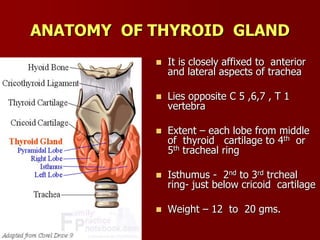
ANATOMY OF THYROID GLAND
 It is closely affixed to anterior
and lateral aspects of trachea
 Lies opposite C 5 ,6,7 , T 1
vertebra
 Extent – each lobe from middle
of thyroid cartilage to 4th or
5th tracheal ring
 Isthumus - 2nd to 3rd trcheal
ring- just below cricoid cartilage
 Weight – 12 to 20 gms.
 A pair of Parathyroid glands –
on posterior aspect of each
lobe
 The Recurrent laryngeal nerve
and External motor branch of
the superior laryngeal nerve
are in close proximity to the
thyroid gland .
 HISTOLOGY –
- Follicles - proteinaceous
colloid – thyroglobulin – an
iodinated glycoprotein –
substrate for thyroid hormone
synthesis .
THYROID HORMONE SYNTHESIS
METABOLISM AND ACTION
 The thyroid hormones T3 & T4 are synthesized and
stored in the thyroid follicles as part of thyroglobulin
molecule
 The thyroid contains approx. 90 % (8000µg ) of the
total iodine content in the body
 Blood – 0.2 – 0.4µg /dl
 1) Iodide trapping – Na+/ I symporter(NIS).
- stimulated by TSH
low Iodine + NIS expression while high levels - NIS
 2) Oxidation – iodide to iodine – peroxidase
and Hydrogen peroxide, stimulated by TSH
 3) Organification – binding of of iodine to
tyrosine residues of thyroglobulin –
iodinase.inactive monoiodotyrosine(MIT) &
diiodotyrosine (DIT)
 4) Coupling – Approx. 25 % of MIT & DIT
undergo coupling i.e. , MIT + DIT = T3 , DIT
+DIT = T4 , via thyroid peroxidase . The
remaining 75 % never becomes hormones ,
iodine is cleaved & recycled. Stimulated by
TSH.
 Storage & release – T3 & T4 remain
attached to the thyroglobulin & stored as colloid.
- Released from thyroglobulin by hydrolysis by
thyroid proteases & peptidases
- active hormones released into circulation
- unused iodotyrosines in the colloid undergo
deiodination to free iodide for reuse .
* Large store , low turnover rate – protection
against depletion if synthesis is impaired .
 The T4/T3 ratio of secreted hormones is 10/1
 Daily secretion of T4 – 80 to 100 µg.
 T4 & T3 bind reversibly to –
- thyroxine binding globulin (80% of binding)
- prealbumin ( 10% - 15% )
- albumin ( 5 % – 10%)
 only a small amount of free fraction of hormone is
biologically active – remainder , metabolically inert
reservoir
-T ½ of T4 – 7 to 8 days
-T ½ of T3 – 3 days
 Reverse T3 is formed in peripheral tissues by
monodeiodination , but is metabolically inactive
THYROID HORMONE ACTION
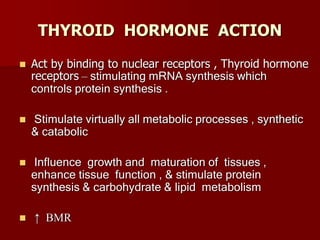
 Act by binding to nuclear receptors , Thyroid hormone
receptors – stimulating mRNA synthesis which
controls protein synthesis .
 Stimulate virtually all metabolic processes , synthetic
& catabolic
 Influence growth and maturation of tissues ,
enhance tissue function , & stimulate protein
synthesis & carbohydrate & lipid metabolism
 ↑ BMR
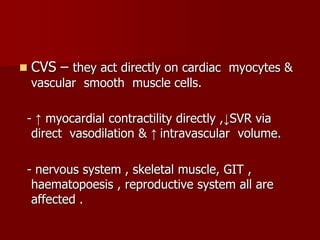
 CVS – they act directly on cardiac myocytes &
vascular smooth muscle cells.
- ↑ myocardial contractility directly ,↓SVR via
direct vasodilation & ↑ intravascular volume.
- nervous system , skeletal muscle, GIT ,
haematopoesis , reproductive system all are
affected .
Regulation of thyroid hormone
synthesis
DIAGNOSIS
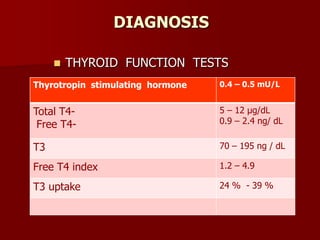
 THYROID FUNCTION TESTS
Thyrotropin stimulating hormone 0.4 – 0.5 mU/L
Total T4-
Free T4-
5 – 12 µg/dL
0.9 – 2.4 ng/ dL
T3 70 – 195 ng / dL
Free T4 index 1.2 – 4.9
T3 uptake 24 % - 39 %
 TSH levels change dramatically in response to
alterations in Free T3 & Free T 4 levels .
 First determine TSH levels ↑ / N / ↓
 With rare exceptions a normal TSH level excludes a
primary abnormality of thyroid gland.
 Abnormal TSH – then measure circulating thyroid
hormones
 Total T3 & total T4 are highly protein bound.
 Total thyroid hormone levels are elevated when TBG is
increased due to estrogens (pregnancy, oral
contraceptives, hormone replacement therapy,
tamoxifen), and decreased when TBG binding is
reduced (androgens, the nephrotic syndrome).
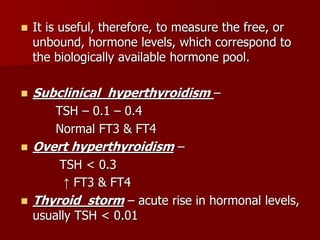
 It is useful, therefore, to measure the free, or
unbound, hormone levels, which correspond to
the biologically available hormone pool.
 Subclinical hyperthyroidism –
TSH – 0.1 – 0.4
Normal FT3 & FT4
 Overt hyperthyroidism –
TSH < 0.3
↑ FT3 & FT4
 Thyroid storm – acute rise in hormonal levels,
usually TSH < 0.01
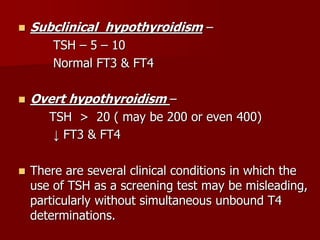
 Subclinical hypothyroidism –
TSH – 5 – 10
Normal FT3 & FT4
 Overt hypothyroidism –
TSH > 20 ( may be 200 or even 400)
↓ FT3 & FT4
 There are several clinical conditions in which the
use of TSH as a screening test may be misleading,
particularly without simultaneous unbound T4
determinations.
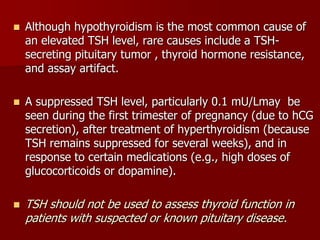
 Although hypothyroidism is the most common cause of
an elevated TSH level, rare causes include a TSH-
secreting pituitary tumor , thyroid hormone resistance,
and assay artifact.
 A suppressed TSH level, particularly 0.1 mU/Lmay be
seen during the first trimester of pregnancy (due to hCG
secretion), after treatment of hyperthyroidism (because
TSH remains suppressed for several weeks), and in
response to certain medications (e.g., high doses of
glucocorticoids or dopamine).
 TSH should not be used to assess thyroid function in
patients with suspected or known pituitary disease.
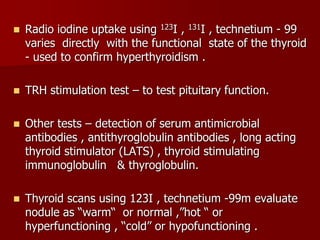
 Radio iodine uptake using 123I , 131I , technetium - 99
varies directly with the functional state of the thyroid
- used to confirm hyperthyroidism .
 TRH stimulation test – to test pituitary function.
 Other tests – detection of serum antimicrobial
antibodies , antithyroglobulin antibodies , long acting
thyroid stimulator (LATS) , thyroid stimulating
immunoglobulin & thyroglobulin.
 Thyroid scans using 123I , technetium -99m evaluate
nodule as “warm“ or normal ,”hot “ or
hyperfunctioning , “cold” or hypofunctioning .
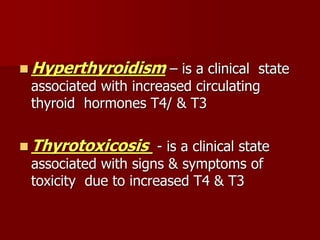
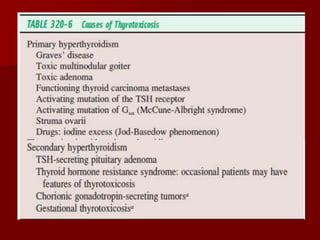
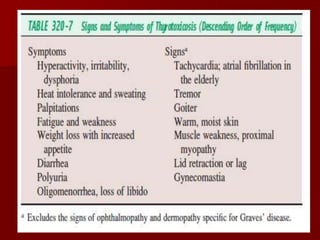
 Hyperthyroidism – is a clinical state
associated with increased circulating
thyroid hormones T4/ & T3
 Thyrotoxicosis - is a clinical state
associated with signs & symptoms of
toxicity due to increased T4 & T3
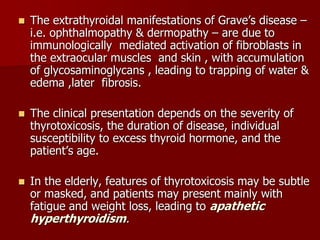
 The extrathyroidal manifestations of Grave’s disease –
i.e. ophthalmopathy & dermopathy – are due to
immunologically mediated activation of fibroblasts in
the extraocular muscles and skin , with accumulation
of glycosaminoglycans , leading to trapping of water &
edema ,later fibrosis.
 The clinical presentation depends on the severity of
thyrotoxicosis, the duration of disease, individual
susceptibility to excess thyroid hormone, and the
patient’s age.
 In the elderly, features of thyrotoxicosis may be subtle
or masked, and patients may present mainly with
fatigue and weight loss, leading to apathetic
hyperthyroidism.
 Fine tremor is a frequent finding, best elicited by having
patients stretch out their fingers and keeping a paper
over them or asking the patient to protrude her tongue.
 The earliest manifestations of ophthalmopathy are
usually a sensation of grittiness, eye discomfort, and
excess tearing.
 About a third of patients have proptosis, best detected
by visualization of the sclera between the lower border
of the iris and the lower eyelid, with the eyes in the
primary position.
 Proptosis may cause corneal exposure and damage,
especially if the lids fail to close during sleep.
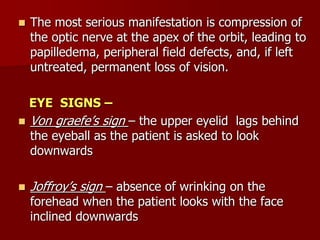
 The most serious manifestation is compression of
the optic nerve at the apex of the orbit, leading to
papilledema, peripheral field defects, and, if left
untreated, permanent loss of vision.
EYE SIGNS –
 Von graefe’s sign – the upper eyelid lags behind
the eyeball as the patient is asked to look
downwards
 Joffroy’s sign – absence of wrinking on the
forehead when the patient looks with the face
inclined downwards
 Stellwag’s sign – is staring look & infrequent blinking of
eyes with widening of palpebral fissure .
 Moebius’ sign – inability or failure to converge the
eyeballs
 Dalrymple’s sign – upper sclera is visible due to
retraction of upper eyelid
 Large retrosternal goiters can cause venous distention
over the neck and difficulty breathing, especially when
the arms are raised (Pemberton’s sign).
The commonest symptoms are due to compression of
mediastinal structures including airway compression,
hoarseness, dysphagia and superior vena cava
syndrome.
TREATMENT
 Reducing thyroid hormone synthesis using
1) Antithyroid drugs
2) Reducing the amount of thyroid tissue –
- Radioiodine (131I) treatment,
- Subtotal thyroidectomy .
ANTITHYROID DRUGS –
1) Propylthiouracil (PTU) – 200mg -300 mg orally every 8
to 12 hrs.
-Half-life – 90 min.
2) Methimazole - 10 – 20 mg orally every 12 hrs.
- Half-life – 6 hrs.
 Methimazole is more popular because of its
faster response time & its ability to be
administered as a single daily dose .
 Mechanism – inhibit the function of TPO,
reducing oxidation and organification
of iodide.
- Also reduce thyroid antibody levels by
mechanisms that remain unclear, and they
appear to enhance rates of remission.
Propylthiouracil inhibits deiodination of T4 to
T3.
 Thyroid function tests and clinical manifestations are
reviewed 3 to 4 weeks after starting treatment, and
the dose is titrated based on unbound T4 levels.
 A euthyroid state can be almost always be achieved
in 6 to 8 weeks with either drug if sufficient dose is
given
 Once euthyroidism is achieved , the dose is reduced
& and continued for 6 – 12 months , ( 24 months in
some cases )
 Side effects – rash , urticaria , fever , & arthralgia
- hepatitis , an SLE like syndrome ,
agranulocytosis
 IODIDE – high conc. decrease all phases of
thyroid synthesis and release .
- reduce gland size
- decrease vascularity
Wolff – Chaikoff effect – inorganic iodide inhibits
iodide organification and thyroid hormone release
1)Saturated solution of potassium iodide (SSKI ) –
30gm . of iodine in 21ml of water
- 3 drops orally every 8 hrs. for 10 to 14 days
2) Lugols iodine – 5 gm of iodine in 100ml. Of 10%
KI(150mg of iodine /ml )
- 5 – 8 drops every 6 hrs.
 Its effects occur immediately but lasts for only
several weeks .
 Reserved for preparing hyperthyroid pts. for
surgery , managing pts. with impending or
actual thyroid storm .
 Antithyroid drug therapy should precede the
initiation of iodide because iodide alone will
increase thyroid hormone stores and exacerbate
the thyrotoxic state .
 Radiographic contrast dye ipodate or iopanoic
acid (0.5 – 3.0 gm / day )-
- beneficial effects similar to inorganic iodide
- inhibits conversion of T4 -T3
- may also antagonize thyroid hormone
binding to receptors
 Lithium carbonate – 300mg orally every 6 hrs
, if the pt. is allergic to iodide .
β adrenergic antagonists –
- relieve signs & symptoms of increased adrenergic
activity – anxiety , sweating , heat intolerance ,
tremors & tachycardia.
 Propranolol – 40 – 80 mg orally every 6 to 8 hrs.
- added advantage – impairing the peripheral
conversion of T4 to T3 , reducing the metabolic rate
Esmolol , Metoprolol, Atenolol
For emergency –
- iv propranolol 0.2 – 1.0 mg boluses followed by
and infusion
- iv esmolol 0.5mg / kg bolus followed by an
infusion in titrated to restore a normal heart rate
Ablative therapy with radioactive iodine 131I
or surgery is recommended for –
 Pts. with Graves’ disease in whom antithyroid
drugs were ineffective or toxic or in whom a
relapse occurred after 1 – 2 yrs. of drug
treatment
 Pts. with toxic multinodular goiter or a toxic
adenoma
 Pts. who fail to follow medical regimen
or fail to return for periodic examinations
Radioactive iodine 131I -
 Standard doses deliver approx. 8500 rad to the thyroid
gland & destroy the follicular cells
remission rate – 80 – 98 %
disadvantage – 40 – 70 % of treated pts.
become hypothyroid within 10 yrs.
 To avoid possible thyrotoxicosis from radiation
induced thyroiditis –pts. are made euthyroid by
antithyroid drugs prior to this therapy.
 Pregnancy and breast feeding are absolute
contraindications to radioiodine treatment, but patients
can conceive safely 6 months after treatment.
 Ophthalmopathy requires no active treatment
when it is mild or moderate, as there is usually
spontaneous improvement.
 Thyroid dermopathy does not usually require
treatment but can cause cosmetic problems or
interfere with the fit of shoes.
Management of anaesthesia
 Signs/Symptoms of hyperthyroidism
 General history taking & examination – look for
evidence of other medical conditions , particularly
cardiorespiratory disease , & associated endocrine
disease , eg . Medullary CA pt. may have associated
pheochromocytoma .
 Airway management – main concern in a pt. with a
goitre .
 Obstructive signs/symptoms-Pt. may give h/o positional
dyspnoea, dysphagia ,hoarseness of voice
 Investigations –
- Haemogram
- Coagulation profile
- S. electrolytes
- BUN, Sr. Creatinine
- Thyroid function tests
- ECG,
- Chest x - ray PA lateral view
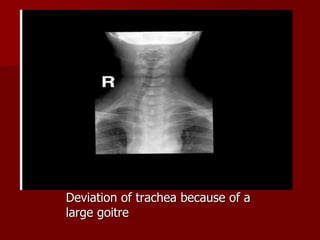
- X – ray neck AP & lateral view – to look for
tracheal deviation & compression.
- CT scan & MRI – in certain cases eg.
Retrosternal goitre
Deviation of trachea because of a
large goitre
Management of anaesthesia
Preoperative -
Elective surgery
- all pts. should be made euthyroid
- propylthiouracil or methimazole for 6 to 8 weeks
preoperatively
- a low TSH value should not be a contraindication for
surgery
- SSKI solution should be given for 7 – 14 days prior to
surgery to reduce the glands vascularity and hormone
release
-β adrenergic antagonists to control heart rate
(85 / min. has been recommended )
-Indirect laryngoscopy should be done to assess
and document vocal cord function
- Cross matched blood
Emergency surgery –
- an antithyroid drug ( PTU or methimazole ) – orally ,
NGT , rectally. It should precede iodide by 2 – 3 hrs .
- sodium iopanoate 500mg orally , BD
- IV β adrenergic antagonists , propranolol
- glucocorticoids ( dexamethasone 2 mg IV every 6 hrs. –
to decrease hormone release & reduce peripheral
conversion of T4 to T3
 Premedication –
- benzodiazepines
- anticholinergic drugs avoided – may
precipitate tachycardia
 all antithyroid drugs are continued through the
morning of surgery
 Intraoperatively–
- the goal is to achieve a depth of anesthesia that
prevents an exaggerated sympathetic response to
surgical stimulus , while avoiding the
administration of medication that stimulates
sympathetic nervous system
 Monitoring -
- NIBP
- Pulse oximetry
-ECG,PNS
- Capnography
-Temperature
Anaesthetic technique
 GA with tracheal intubation and muscle
relaxation is the recommended anaesthetic
technique
 Things to be kept ready for emergency use-
-Difficult intubation trolly
-Cold intravenous fluids
-Antithyroid drugs
-Beta blockers
-Steroids
-SSKI
 Options for airway management –
- IV induction with tracheal intubation
- Inhalational induction
- Fibreoptic intubation – in expected difficult
intubation cases
- Reinforced ETT / ‘north polar’ ETT,
- Select a small reinforced ETT if there is any
degree of tracheal compression
- Difficult intubation trolly should always be
kept ready while intubation
 Induction –
- Thiopentone , secondary to its thiourylene nucleus ,
decreases the peripheral conversion of T4 to T3
- Adequate depth must be attained before laryngoscopy
- Supress the pressor response to intubation
- Hyperthyroid pts. can be chronically hypovolemic &
vasodilated & are prone to an exaggerated hypotensive
response during induction of anaesthesia.
- SCh & NDMR with limited haemodynamic effects can
be used for intubation
Positioning
 The pt. is positioned with a sand bag b/t shoulder
blades , & the head resting on a padded head rest ,so
that the head is extended to make the thyroid gland
more prominent
 Both the arms are placed by the side of the pt.
 A long connection tubing for iv infusion allows access
 Head end of the operating table can be raised 15 – 20
degree to aid venous drainage & decrease blood loss ,
but it increases the risk of venous air embolism .
 After positioning the position of the ETT should be
recheked
 Pts. eyes should be well protected , as
exophthalmos increases the risk of corneal
abrsion or ulceration.
- Care while mask ventilation as eyes may
remain open even after induction
- Eye ointment and proper padding
- Avoid undue pressure
 MAINTENANCE –
- N2O +O2 +isoflurane +opiods+ NDMR (titrated
using PNS , as hyperthyroid pts. may have
coexisting muscle disease eg. Myasthenia gravis
with reduced requirements for NDMR )
- there is no change in MAC
 Treatment of intraoperative hypotension – direct acting
vasopressor (phenylephrine )
 Epinephrine containing LA solutions should be avoided
 Reversal – Neostigmine (0.05 mg/kg ) + glycopyrrolate
(0.02mg / kg )
 Extubation - difficult intubation trolly should always be
kept ready.
- it should be smooth
- in cases of huge retrosternal thyroid , extubation should
be done over ventilating bougie
- assess b/l vocal cord movement – muscle relaxants are
discontinued and anesthesia is maintained with
inhalational or intravenous agents to avoid any sympathetic
stimulation
 Regional anaesthesia – b/l deep or
superficial cervical plexus block for small size
thyroid & solitary nodules
 Removal of the thyrotoxic gland does not mean
immediate resolution of thyrotoxicosis
 The half life of T4 is 7 to 8 days , therefore ,
beta blocker therapy may need to be
continued in the post operative period
 Antithyroid drug therapy can be discontinued
Complications
 Intraoperative –
- bleeding
- bradycardia & hypotension because of
carotid sinus stimulation
- accidental extubation
- tracheal injury , pneumothorax ,
pneumomediastinum, phrenic nerve injury
recurrent laryngeal nerve injury
Thyrotoxic crisis
 Onset 6 – 24 hrs. post – op , can occur
intraoperatively
 Precipitating factors – trauma , infection medical
illness ,parturition, emotional stress , surgery
 It is a clinical diagnosis
 Thyroid hormone levels may not be significantly
higher than uncomplicated hyperthyroidism .
 It may be the acute rapid rise in the plasma
level that triggers the event .
 Life threatening exacerbation of hyperthyroidism,
accompanied by fever,anxiety, tachycardia ,
cardiovascular instability, delirium, seizures, coma,
vomiting, diarrhea, and jaundice.
 It is probably a shift from protein bound thyroid
hormone to free hormone secondary to circulating
inhibitors to binding.
 The mortality rate due to cardiac failure,
arrhythmia, or hyperthermia is as high as 30%,
even with treatment.
Treatment
 Requires intensive monitoring and supportive care,
identification and treatment of the precipitating cause,
and measures that reduce thyroid hormone synthesis.
 Hydration with iv glucose containing cystalloid
solutions
 Cooling measures – cooling blanket , ice packs , cool
humidified oxygen
 Propylthiouracil (600-mg loading dose and 200 to 300
mg every 6 h) should be given orally or by nasogastric
tube or per rectum
 One hour after the first dose of propylthiouracil ,a
saturated solution of potassium iodide (5 drops
SSKI every 6 h), or ipodate or iopanoic acid (0.5
mg every 12 h), may be given orally. (Sodium
iodide, 0.25 g intravenously every 6 h is an
alternative but is not available.)
 Propranolol (40 to 60 mg orally every 4 h;or 2 mg
intravenously every 4 h), labetalol, or esmolol
titrated to decrease heart rate to < 90 /min
 Glucocorticoids (e.g., dexamethasone, 2 mg every
6 h or hydrocortisone 100 – 200mg every 8 hrs. )
 Antibiotics if infection is present
 In circulatory shock – IV phenylephrine
 Atrial fibrillation – digoxin
 Serum thyroid hormone levels generally return to
normal within 24 to 48 hrs. and recovery occurs
within 1 week
 D/D - Malignant hyperthermia
- muscle rigidity
- elevated creatine kinase
- metabolic ( lactic )& respiratory
acidosis
Complications
 Postoperative –
 Extubation problems - the incidence of
respiratory complications at tracheal extubation &
in the recovery room is greater than at intubation
- coughing , desaturation , laryngospasm ,
respiratory obstruction
- Preventive measures – extubation in relatively
deep plane of anesthesia , iv lignocaine
 Haematoma – recovery staff should be
experienced at observing the early signs of
haematoma formation
- may cause airway compromise
- immediate treatment – opening the neck wound &
evacuating the clot , & then reassesing the need
for reintubation .
- respiratory obstruction may be caused by laryngeal
& pharyngeal edema as a result of venous &
lymphatic obstruction by the haematoma , rather
than direct tracheal compression .
 Recurrent laryngeal nerve damage
-Risk factors – surgery for malignancy ,
secondary operations , anatomical variations ,
-Mechanism of injury – ischaemia , contusion ,
traction , entrapment , & actual transection
-Temporary U/L – 3 – 4 %
-Permanent U/L - < 1%
-B/L very rare
-A fibreoptic bronchoscope can be used to
observe the vocal cords
-B/L palsy – stridor at tracheal extubation
-Reintubation will be required & tracheostomy
should be considered
-U/L – glottic incompetence , hoarseness ,
ineffective cough & aspiration
-Treatment – intracordal injection , laryngeal
framework surgery , thyroplasty, laryngeal
reinnervation .
 Motor branch of superior laryngeal
nerve , which innervates the inferior pharyngeal
constrictor & cricothyroid muscles can also be
injured .
 Tracheomalacia
-Tracheal collapse following thyroidectomy results
from prolonged compression of trachea by a large
goitre
-It is a life – threatening complication
-Should be considered before extubation
-The absence of a leak around the deflated cuff of
the ETT – possibility of tracheomalacia
-Any decrease in the volume required toinflate the
cuff to an airtight seal
-Management – if detected before extubation – leave
the ETT in situ, urgent reintubation , tracheostomy
tracheal stenting.
 Laryngeal edema
-Complication of intubation
-Associated with large haematoma
-A rare cause of post thyroidectomy respiratory obst.
 Hypoparathyroidism –most common d/t is
the damage to the blood supply of parathyroid
gland & not inadvertent removal
- one parathyroid gland with adequate blood supply
is all that is necessary to avoid hypoparathyroidism
-S/S of hypocalcaemia occur in the first 24 to 48 hrs .
post- operatively
-Anxiety , circumoral numbness , tingling of fingertips ,
muscle cramping , +ve Chvostek’s sign , &
Trousseau’s sign
-Stridor – laryngospasm
-Treatment – IV calcium gluconate ( 1 gm , 10 ml of a
10 % solution ) or calcium chloride ( 1 gm , 10 ml of
a 10 % solution )
- a continuos infusion of calcium is also
recommended,
- for long term – oral calcium & vit D3
- auto-transplantation of parathyroid tissue
 Wound complications
-Infection
-Damage to anterior cutaneous nerve of neck –
produces numbness
 Post operative nausea & vomitting –
high incidence
 References:
1-Stoelting’s Anesthesia & Co-existing
Disease-5th edition
2-Harrison’s principles of internal medicine-
16th edition
3-Barash clinical anesthesia-5th edition
4-S.Das-Manual on clinical surgery-7th
edition
5-Thyroid disease-British Journal of
Anaesthesia 85 (1): 15-28 (2000)
Thank you

3.anaesthesia and hyperthyroidism.pptx

  • 1.
    SPEAKER – DR.SMITA GOGIA MODERATOR – DR. RADHA GUPTA ANESTHESIA AND HYPERTHYROIDISM
  • 2.
    ANATOMY OF THYROIDGLAND  It is closely affixed to anterior and lateral aspects of trachea  Lies opposite C 5 ,6,7 , T 1 vertebra  Extent – each lobe from middle of thyroid cartilage to 4th or 5th tracheal ring  Isthumus - 2nd to 3rd trcheal ring- just below cricoid cartilage  Weight – 12 to 20 gms.
  • 3.
     A pairof Parathyroid glands – on posterior aspect of each lobe  The Recurrent laryngeal nerve and External motor branch of the superior laryngeal nerve are in close proximity to the thyroid gland .  HISTOLOGY – - Follicles - proteinaceous colloid – thyroglobulin – an iodinated glycoprotein – substrate for thyroid hormone synthesis .
  • 4.
    THYROID HORMONE SYNTHESIS METABOLISMAND ACTION  The thyroid hormones T3 & T4 are synthesized and stored in the thyroid follicles as part of thyroglobulin molecule  The thyroid contains approx. 90 % (8000µg ) of the total iodine content in the body  Blood – 0.2 – 0.4µg /dl  1) Iodide trapping – Na+/ I symporter(NIS). - stimulated by TSH low Iodine + NIS expression while high levels - NIS
  • 5.
     2) Oxidation– iodide to iodine – peroxidase and Hydrogen peroxide, stimulated by TSH  3) Organification – binding of of iodine to tyrosine residues of thyroglobulin – iodinase.inactive monoiodotyrosine(MIT) & diiodotyrosine (DIT)  4) Coupling – Approx. 25 % of MIT & DIT undergo coupling i.e. , MIT + DIT = T3 , DIT +DIT = T4 , via thyroid peroxidase . The remaining 75 % never becomes hormones , iodine is cleaved & recycled. Stimulated by TSH.
  • 6.
     Storage &release – T3 & T4 remain attached to the thyroglobulin & stored as colloid. - Released from thyroglobulin by hydrolysis by thyroid proteases & peptidases - active hormones released into circulation - unused iodotyrosines in the colloid undergo deiodination to free iodide for reuse . * Large store , low turnover rate – protection against depletion if synthesis is impaired .
  • 7.
     The T4/T3ratio of secreted hormones is 10/1  Daily secretion of T4 – 80 to 100 µg.  T4 & T3 bind reversibly to – - thyroxine binding globulin (80% of binding) - prealbumin ( 10% - 15% ) - albumin ( 5 % – 10%)  only a small amount of free fraction of hormone is biologically active – remainder , metabolically inert reservoir -T ½ of T4 – 7 to 8 days -T ½ of T3 – 3 days  Reverse T3 is formed in peripheral tissues by monodeiodination , but is metabolically inactive
  • 8.
    THYROID HORMONE ACTION Act by binding to nuclear receptors , Thyroid hormone receptors – stimulating mRNA synthesis which controls protein synthesis .  Stimulate virtually all metabolic processes , synthetic & catabolic  Influence growth and maturation of tissues , enhance tissue function , & stimulate protein synthesis & carbohydrate & lipid metabolism  ↑ BMR
  • 9.
     CVS –they act directly on cardiac myocytes & vascular smooth muscle cells. - ↑ myocardial contractility directly ,↓SVR via direct vasodilation & ↑ intravascular volume. - nervous system , skeletal muscle, GIT , haematopoesis , reproductive system all are affected .
  • 10.
    Regulation of thyroidhormone synthesis
  • 11.
    DIAGNOSIS  THYROID FUNCTIONTESTS Thyrotropin stimulating hormone 0.4 – 0.5 mU/L Total T4- Free T4- 5 – 12 µg/dL 0.9 – 2.4 ng/ dL T3 70 – 195 ng / dL Free T4 index 1.2 – 4.9 T3 uptake 24 % - 39 %
  • 12.
     TSH levelschange dramatically in response to alterations in Free T3 & Free T 4 levels .  First determine TSH levels ↑ / N / ↓  With rare exceptions a normal TSH level excludes a primary abnormality of thyroid gland.  Abnormal TSH – then measure circulating thyroid hormones  Total T3 & total T4 are highly protein bound.  Total thyroid hormone levels are elevated when TBG is increased due to estrogens (pregnancy, oral contraceptives, hormone replacement therapy, tamoxifen), and decreased when TBG binding is reduced (androgens, the nephrotic syndrome).
  • 13.
     It isuseful, therefore, to measure the free, or unbound, hormone levels, which correspond to the biologically available hormone pool.  Subclinical hyperthyroidism – TSH – 0.1 – 0.4 Normal FT3 & FT4  Overt hyperthyroidism – TSH < 0.3 ↑ FT3 & FT4  Thyroid storm – acute rise in hormonal levels, usually TSH < 0.01
  • 14.
     Subclinical hypothyroidism– TSH – 5 – 10 Normal FT3 & FT4  Overt hypothyroidism – TSH > 20 ( may be 200 or even 400) ↓ FT3 & FT4  There are several clinical conditions in which the use of TSH as a screening test may be misleading, particularly without simultaneous unbound T4 determinations.
  • 15.
     Although hypothyroidismis the most common cause of an elevated TSH level, rare causes include a TSH- secreting pituitary tumor , thyroid hormone resistance, and assay artifact.  A suppressed TSH level, particularly 0.1 mU/Lmay be seen during the first trimester of pregnancy (due to hCG secretion), after treatment of hyperthyroidism (because TSH remains suppressed for several weeks), and in response to certain medications (e.g., high doses of glucocorticoids or dopamine).  TSH should not be used to assess thyroid function in patients with suspected or known pituitary disease.
  • 16.
     Radio iodineuptake using 123I , 131I , technetium - 99 varies directly with the functional state of the thyroid - used to confirm hyperthyroidism .  TRH stimulation test – to test pituitary function.  Other tests – detection of serum antimicrobial antibodies , antithyroglobulin antibodies , long acting thyroid stimulator (LATS) , thyroid stimulating immunoglobulin & thyroglobulin.  Thyroid scans using 123I , technetium -99m evaluate nodule as “warm“ or normal ,”hot “ or hyperfunctioning , “cold” or hypofunctioning .
  • 18.
     Hyperthyroidism –is a clinical state associated with increased circulating thyroid hormones T4/ & T3  Thyrotoxicosis - is a clinical state associated with signs & symptoms of toxicity due to increased T4 & T3
  • 21.
     The extrathyroidalmanifestations of Grave’s disease – i.e. ophthalmopathy & dermopathy – are due to immunologically mediated activation of fibroblasts in the extraocular muscles and skin , with accumulation of glycosaminoglycans , leading to trapping of water & edema ,later fibrosis.  The clinical presentation depends on the severity of thyrotoxicosis, the duration of disease, individual susceptibility to excess thyroid hormone, and the patient’s age.  In the elderly, features of thyrotoxicosis may be subtle or masked, and patients may present mainly with fatigue and weight loss, leading to apathetic hyperthyroidism.
  • 23.
     Fine tremoris a frequent finding, best elicited by having patients stretch out their fingers and keeping a paper over them or asking the patient to protrude her tongue.  The earliest manifestations of ophthalmopathy are usually a sensation of grittiness, eye discomfort, and excess tearing.  About a third of patients have proptosis, best detected by visualization of the sclera between the lower border of the iris and the lower eyelid, with the eyes in the primary position.  Proptosis may cause corneal exposure and damage, especially if the lids fail to close during sleep.
  • 24.
     The mostserious manifestation is compression of the optic nerve at the apex of the orbit, leading to papilledema, peripheral field defects, and, if left untreated, permanent loss of vision. EYE SIGNS –  Von graefe’s sign – the upper eyelid lags behind the eyeball as the patient is asked to look downwards  Joffroy’s sign – absence of wrinking on the forehead when the patient looks with the face inclined downwards
  • 25.
     Stellwag’s sign– is staring look & infrequent blinking of eyes with widening of palpebral fissure .  Moebius’ sign – inability or failure to converge the eyeballs  Dalrymple’s sign – upper sclera is visible due to retraction of upper eyelid  Large retrosternal goiters can cause venous distention over the neck and difficulty breathing, especially when the arms are raised (Pemberton’s sign). The commonest symptoms are due to compression of mediastinal structures including airway compression, hoarseness, dysphagia and superior vena cava syndrome.
  • 26.
    TREATMENT  Reducing thyroidhormone synthesis using 1) Antithyroid drugs 2) Reducing the amount of thyroid tissue – - Radioiodine (131I) treatment, - Subtotal thyroidectomy . ANTITHYROID DRUGS – 1) Propylthiouracil (PTU) – 200mg -300 mg orally every 8 to 12 hrs. -Half-life – 90 min. 2) Methimazole - 10 – 20 mg orally every 12 hrs. - Half-life – 6 hrs.
  • 27.
     Methimazole ismore popular because of its faster response time & its ability to be administered as a single daily dose .  Mechanism – inhibit the function of TPO, reducing oxidation and organification of iodide. - Also reduce thyroid antibody levels by mechanisms that remain unclear, and they appear to enhance rates of remission. Propylthiouracil inhibits deiodination of T4 to T3.
  • 28.
     Thyroid functiontests and clinical manifestations are reviewed 3 to 4 weeks after starting treatment, and the dose is titrated based on unbound T4 levels.  A euthyroid state can be almost always be achieved in 6 to 8 weeks with either drug if sufficient dose is given  Once euthyroidism is achieved , the dose is reduced & and continued for 6 – 12 months , ( 24 months in some cases )  Side effects – rash , urticaria , fever , & arthralgia - hepatitis , an SLE like syndrome , agranulocytosis
  • 29.
     IODIDE –high conc. decrease all phases of thyroid synthesis and release . - reduce gland size - decrease vascularity Wolff – Chaikoff effect – inorganic iodide inhibits iodide organification and thyroid hormone release 1)Saturated solution of potassium iodide (SSKI ) – 30gm . of iodine in 21ml of water - 3 drops orally every 8 hrs. for 10 to 14 days 2) Lugols iodine – 5 gm of iodine in 100ml. Of 10% KI(150mg of iodine /ml ) - 5 – 8 drops every 6 hrs.
  • 30.
     Its effectsoccur immediately but lasts for only several weeks .  Reserved for preparing hyperthyroid pts. for surgery , managing pts. with impending or actual thyroid storm .  Antithyroid drug therapy should precede the initiation of iodide because iodide alone will increase thyroid hormone stores and exacerbate the thyrotoxic state .
  • 31.
     Radiographic contrastdye ipodate or iopanoic acid (0.5 – 3.0 gm / day )- - beneficial effects similar to inorganic iodide - inhibits conversion of T4 -T3 - may also antagonize thyroid hormone binding to receptors  Lithium carbonate – 300mg orally every 6 hrs , if the pt. is allergic to iodide .
  • 32.
    β adrenergic antagonists– - relieve signs & symptoms of increased adrenergic activity – anxiety , sweating , heat intolerance , tremors & tachycardia.  Propranolol – 40 – 80 mg orally every 6 to 8 hrs. - added advantage – impairing the peripheral conversion of T4 to T3 , reducing the metabolic rate Esmolol , Metoprolol, Atenolol For emergency – - iv propranolol 0.2 – 1.0 mg boluses followed by and infusion - iv esmolol 0.5mg / kg bolus followed by an infusion in titrated to restore a normal heart rate
  • 33.
    Ablative therapy withradioactive iodine 131I or surgery is recommended for –  Pts. with Graves’ disease in whom antithyroid drugs were ineffective or toxic or in whom a relapse occurred after 1 – 2 yrs. of drug treatment  Pts. with toxic multinodular goiter or a toxic adenoma  Pts. who fail to follow medical regimen or fail to return for periodic examinations
  • 34.
    Radioactive iodine 131I-  Standard doses deliver approx. 8500 rad to the thyroid gland & destroy the follicular cells remission rate – 80 – 98 % disadvantage – 40 – 70 % of treated pts. become hypothyroid within 10 yrs.  To avoid possible thyrotoxicosis from radiation induced thyroiditis –pts. are made euthyroid by antithyroid drugs prior to this therapy.  Pregnancy and breast feeding are absolute contraindications to radioiodine treatment, but patients can conceive safely 6 months after treatment.
  • 35.
     Ophthalmopathy requiresno active treatment when it is mild or moderate, as there is usually spontaneous improvement.  Thyroid dermopathy does not usually require treatment but can cause cosmetic problems or interfere with the fit of shoes.
  • 36.
    Management of anaesthesia Signs/Symptoms of hyperthyroidism  General history taking & examination – look for evidence of other medical conditions , particularly cardiorespiratory disease , & associated endocrine disease , eg . Medullary CA pt. may have associated pheochromocytoma .  Airway management – main concern in a pt. with a goitre .  Obstructive signs/symptoms-Pt. may give h/o positional dyspnoea, dysphagia ,hoarseness of voice
  • 37.
     Investigations – -Haemogram - Coagulation profile - S. electrolytes - BUN, Sr. Creatinine - Thyroid function tests - ECG, - Chest x - ray PA lateral view - X – ray neck AP & lateral view – to look for tracheal deviation & compression. - CT scan & MRI – in certain cases eg. Retrosternal goitre
  • 38.
    Deviation of tracheabecause of a large goitre
  • 39.
    Management of anaesthesia Preoperative- Elective surgery - all pts. should be made euthyroid - propylthiouracil or methimazole for 6 to 8 weeks preoperatively - a low TSH value should not be a contraindication for surgery - SSKI solution should be given for 7 – 14 days prior to surgery to reduce the glands vascularity and hormone release
  • 40.
    -β adrenergic antagoniststo control heart rate (85 / min. has been recommended ) -Indirect laryngoscopy should be done to assess and document vocal cord function - Cross matched blood
  • 41.
    Emergency surgery – -an antithyroid drug ( PTU or methimazole ) – orally , NGT , rectally. It should precede iodide by 2 – 3 hrs . - sodium iopanoate 500mg orally , BD - IV β adrenergic antagonists , propranolol - glucocorticoids ( dexamethasone 2 mg IV every 6 hrs. – to decrease hormone release & reduce peripheral conversion of T4 to T3
  • 42.
     Premedication – -benzodiazepines - anticholinergic drugs avoided – may precipitate tachycardia  all antithyroid drugs are continued through the morning of surgery
  • 43.
     Intraoperatively– - thegoal is to achieve a depth of anesthesia that prevents an exaggerated sympathetic response to surgical stimulus , while avoiding the administration of medication that stimulates sympathetic nervous system  Monitoring - - NIBP - Pulse oximetry -ECG,PNS - Capnography -Temperature
  • 44.
    Anaesthetic technique  GAwith tracheal intubation and muscle relaxation is the recommended anaesthetic technique  Things to be kept ready for emergency use- -Difficult intubation trolly -Cold intravenous fluids -Antithyroid drugs -Beta blockers -Steroids -SSKI
  • 45.
     Options forairway management – - IV induction with tracheal intubation - Inhalational induction - Fibreoptic intubation – in expected difficult intubation cases - Reinforced ETT / ‘north polar’ ETT, - Select a small reinforced ETT if there is any degree of tracheal compression - Difficult intubation trolly should always be kept ready while intubation
  • 46.
     Induction – -Thiopentone , secondary to its thiourylene nucleus , decreases the peripheral conversion of T4 to T3 - Adequate depth must be attained before laryngoscopy - Supress the pressor response to intubation - Hyperthyroid pts. can be chronically hypovolemic & vasodilated & are prone to an exaggerated hypotensive response during induction of anaesthesia. - SCh & NDMR with limited haemodynamic effects can be used for intubation
  • 47.
    Positioning  The pt.is positioned with a sand bag b/t shoulder blades , & the head resting on a padded head rest ,so that the head is extended to make the thyroid gland more prominent  Both the arms are placed by the side of the pt.  A long connection tubing for iv infusion allows access  Head end of the operating table can be raised 15 – 20 degree to aid venous drainage & decrease blood loss , but it increases the risk of venous air embolism .  After positioning the position of the ETT should be recheked
  • 48.
     Pts. eyesshould be well protected , as exophthalmos increases the risk of corneal abrsion or ulceration. - Care while mask ventilation as eyes may remain open even after induction - Eye ointment and proper padding - Avoid undue pressure  MAINTENANCE – - N2O +O2 +isoflurane +opiods+ NDMR (titrated using PNS , as hyperthyroid pts. may have coexisting muscle disease eg. Myasthenia gravis with reduced requirements for NDMR ) - there is no change in MAC
  • 49.
     Treatment ofintraoperative hypotension – direct acting vasopressor (phenylephrine )  Epinephrine containing LA solutions should be avoided  Reversal – Neostigmine (0.05 mg/kg ) + glycopyrrolate (0.02mg / kg )  Extubation - difficult intubation trolly should always be kept ready. - it should be smooth - in cases of huge retrosternal thyroid , extubation should be done over ventilating bougie - assess b/l vocal cord movement – muscle relaxants are discontinued and anesthesia is maintained with inhalational or intravenous agents to avoid any sympathetic stimulation
  • 50.
     Regional anaesthesia– b/l deep or superficial cervical plexus block for small size thyroid & solitary nodules  Removal of the thyrotoxic gland does not mean immediate resolution of thyrotoxicosis  The half life of T4 is 7 to 8 days , therefore , beta blocker therapy may need to be continued in the post operative period  Antithyroid drug therapy can be discontinued
  • 51.
    Complications  Intraoperative – -bleeding - bradycardia & hypotension because of carotid sinus stimulation - accidental extubation - tracheal injury , pneumothorax , pneumomediastinum, phrenic nerve injury recurrent laryngeal nerve injury
  • 52.
    Thyrotoxic crisis  Onset6 – 24 hrs. post – op , can occur intraoperatively  Precipitating factors – trauma , infection medical illness ,parturition, emotional stress , surgery  It is a clinical diagnosis  Thyroid hormone levels may not be significantly higher than uncomplicated hyperthyroidism .  It may be the acute rapid rise in the plasma level that triggers the event .
  • 53.
     Life threateningexacerbation of hyperthyroidism, accompanied by fever,anxiety, tachycardia , cardiovascular instability, delirium, seizures, coma, vomiting, diarrhea, and jaundice.  It is probably a shift from protein bound thyroid hormone to free hormone secondary to circulating inhibitors to binding.  The mortality rate due to cardiac failure, arrhythmia, or hyperthermia is as high as 30%, even with treatment.
  • 54.
    Treatment  Requires intensivemonitoring and supportive care, identification and treatment of the precipitating cause, and measures that reduce thyroid hormone synthesis.  Hydration with iv glucose containing cystalloid solutions  Cooling measures – cooling blanket , ice packs , cool humidified oxygen  Propylthiouracil (600-mg loading dose and 200 to 300 mg every 6 h) should be given orally or by nasogastric tube or per rectum
  • 55.
     One hourafter the first dose of propylthiouracil ,a saturated solution of potassium iodide (5 drops SSKI every 6 h), or ipodate or iopanoic acid (0.5 mg every 12 h), may be given orally. (Sodium iodide, 0.25 g intravenously every 6 h is an alternative but is not available.)  Propranolol (40 to 60 mg orally every 4 h;or 2 mg intravenously every 4 h), labetalol, or esmolol titrated to decrease heart rate to < 90 /min  Glucocorticoids (e.g., dexamethasone, 2 mg every 6 h or hydrocortisone 100 – 200mg every 8 hrs. )
  • 56.
     Antibiotics ifinfection is present  In circulatory shock – IV phenylephrine  Atrial fibrillation – digoxin  Serum thyroid hormone levels generally return to normal within 24 to 48 hrs. and recovery occurs within 1 week  D/D - Malignant hyperthermia - muscle rigidity - elevated creatine kinase - metabolic ( lactic )& respiratory acidosis
  • 57.
    Complications  Postoperative – Extubation problems - the incidence of respiratory complications at tracheal extubation & in the recovery room is greater than at intubation - coughing , desaturation , laryngospasm , respiratory obstruction - Preventive measures – extubation in relatively deep plane of anesthesia , iv lignocaine
  • 58.
     Haematoma –recovery staff should be experienced at observing the early signs of haematoma formation - may cause airway compromise - immediate treatment – opening the neck wound & evacuating the clot , & then reassesing the need for reintubation . - respiratory obstruction may be caused by laryngeal & pharyngeal edema as a result of venous & lymphatic obstruction by the haematoma , rather than direct tracheal compression .
  • 59.
     Recurrent laryngealnerve damage -Risk factors – surgery for malignancy , secondary operations , anatomical variations , -Mechanism of injury – ischaemia , contusion , traction , entrapment , & actual transection -Temporary U/L – 3 – 4 % -Permanent U/L - < 1% -B/L very rare -A fibreoptic bronchoscope can be used to observe the vocal cords
  • 60.
    -B/L palsy –stridor at tracheal extubation -Reintubation will be required & tracheostomy should be considered -U/L – glottic incompetence , hoarseness , ineffective cough & aspiration -Treatment – intracordal injection , laryngeal framework surgery , thyroplasty, laryngeal reinnervation .  Motor branch of superior laryngeal nerve , which innervates the inferior pharyngeal constrictor & cricothyroid muscles can also be injured .
  • 61.
     Tracheomalacia -Tracheal collapsefollowing thyroidectomy results from prolonged compression of trachea by a large goitre -It is a life – threatening complication -Should be considered before extubation -The absence of a leak around the deflated cuff of the ETT – possibility of tracheomalacia -Any decrease in the volume required toinflate the cuff to an airtight seal -Management – if detected before extubation – leave the ETT in situ, urgent reintubation , tracheostomy tracheal stenting.
  • 62.
     Laryngeal edema -Complicationof intubation -Associated with large haematoma -A rare cause of post thyroidectomy respiratory obst.  Hypoparathyroidism –most common d/t is the damage to the blood supply of parathyroid gland & not inadvertent removal - one parathyroid gland with adequate blood supply is all that is necessary to avoid hypoparathyroidism
  • 63.
    -S/S of hypocalcaemiaoccur in the first 24 to 48 hrs . post- operatively -Anxiety , circumoral numbness , tingling of fingertips , muscle cramping , +ve Chvostek’s sign , & Trousseau’s sign -Stridor – laryngospasm -Treatment – IV calcium gluconate ( 1 gm , 10 ml of a 10 % solution ) or calcium chloride ( 1 gm , 10 ml of a 10 % solution ) - a continuos infusion of calcium is also recommended, - for long term – oral calcium & vit D3 - auto-transplantation of parathyroid tissue
  • 64.
     Wound complications -Infection -Damageto anterior cutaneous nerve of neck – produces numbness  Post operative nausea & vomitting – high incidence
  • 65.
     References: 1-Stoelting’s Anesthesia& Co-existing Disease-5th edition 2-Harrison’s principles of internal medicine- 16th edition 3-Barash clinical anesthesia-5th edition 4-S.Das-Manual on clinical surgery-7th edition 5-Thyroid disease-British Journal of Anaesthesia 85 (1): 15-28 (2000)
  • 66.