THYROID
GLAND
By : Iman Qasem Kteo
THE THYROID GLAND
The thyroid gland is a butterfly-shaped organ located in the Lower neck,
anterior to the trachea .
***It consists of Two lateral lobes connected by an isthmus. 5 cm long
and 3 cm wide and weighs about 30 g.
***The blood Flow to the thyroid is very high approximately five times
the blood flow to the Liver.
***This reflects the high metabolic activity of the thyroid Gland
Functions
*** Stimulates & maintains metabolic processes
* Produces thyroid hormones T3-triiodothyronine and T4-thyroxine
* These hormones regulate metabolism & affect the growth and
function of other systems in the body
*** Secretes calcitonin to lower serum calcium levels
*** Parathyroid gland secretes PTH to raise serum calcium
levels
HYPOTHYROIDISM - TESTS
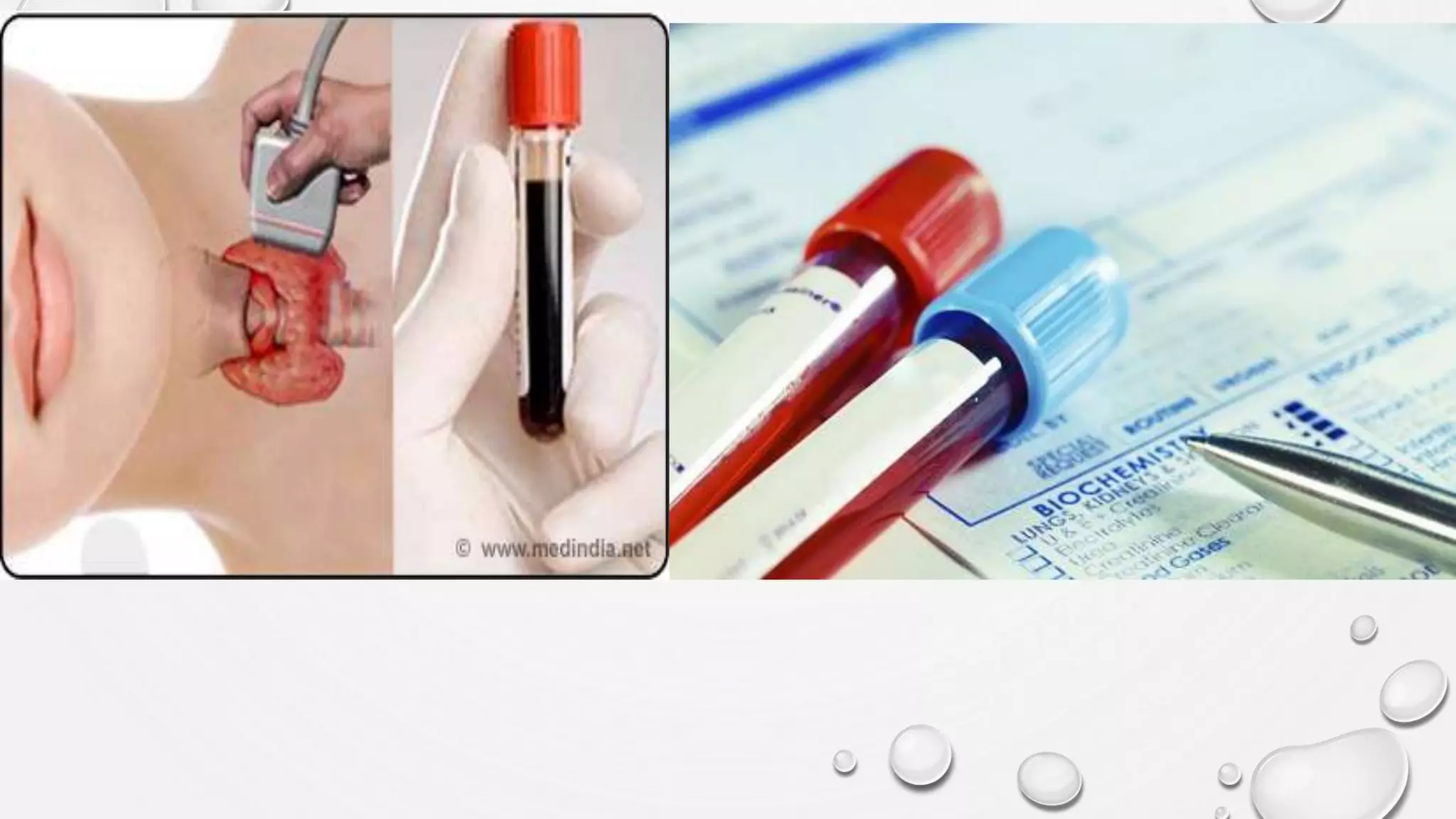
•SERUM THYROID-STIMULATING HORMONE
the best way to initially test thyroid function is to measure the TSH level in a
blood sample.
**A high TSH level indicates that the thyroid gland is failing (primary
hypothyroidism).
**the TSH level is low, usually indicates that the person has an overactive
thyroid that is producing too much thyroid hormone (hyperthyroidism
T4 TESTS
T4 circulates in the blood in two forms:
1) T4 bound to proteins that prevent the T4 from entering the various tissues
that need thyroid hormone.
2) free t4, which does enter the various target tissues to exert its effects.
T3 TESTS
Patients who are hyperthyroid will have an elevated T3 level. In some
individuals with a low TSH, only the T3 is elevated and the FT4 is
normal. T3 testing rarely is helpful in the hypothyroid patient, since it is
the last test to become abnormal.
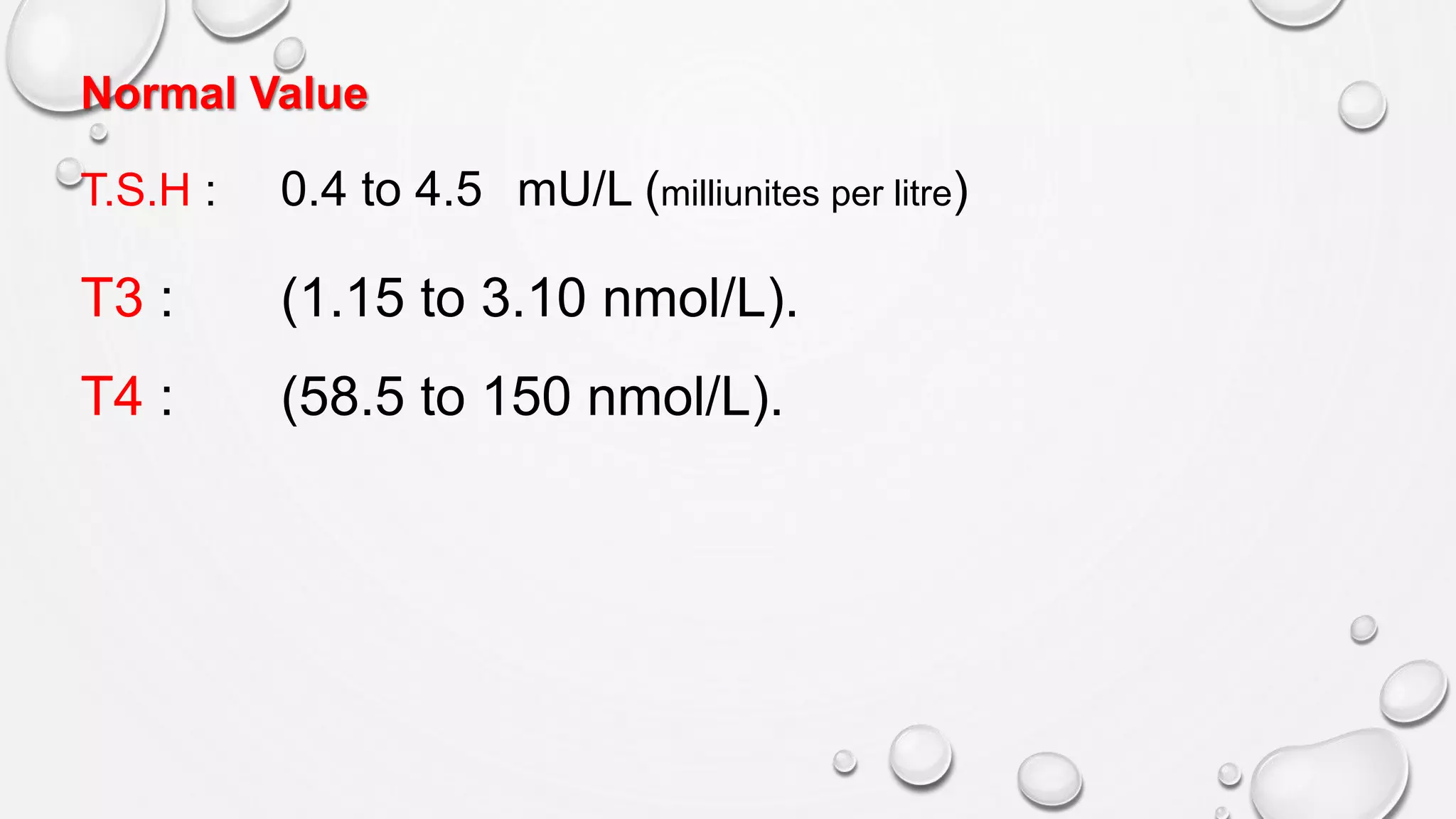
Normal Value
T.S.H : 0.4 to 4.5 mU/L (milliunites per litre)
T3 : (1.15 to 3.10 nmol/L).
T4 : (58.5 to 150 nmol/L).
•THYROID ANTIBODIES
In many patients with hypothyroidism or hyperthyroidism, lymphocytes make
antibodies against their thyroid that either stimulate or damage the gland.. also
in diagnose the thyroid problems.
**positive anti-thyroid peroxidase and/or anti-thyroglobulin antibodies in a
patient with hypothyroidism make a diagnosis of hashimoto’s thyroiditis.
**+ev antibodies in a hyperthyroid patient,
the most likely diagnosis is autoimmune
thyroid disease
•RADIOACTIVE IODINE UPTAKE
The patient is Administered a tracer dose of iodine 123 (123I) or another
Radionuclide, With a scintillation counter, detects the Gamma rays
released from the breakdown of 123I in the thyroid.
**Patients with hyperthyroidism
exhibit a high uptake Of the 123I
** Patients with hypothyroidism
exhibit a very low uptake.
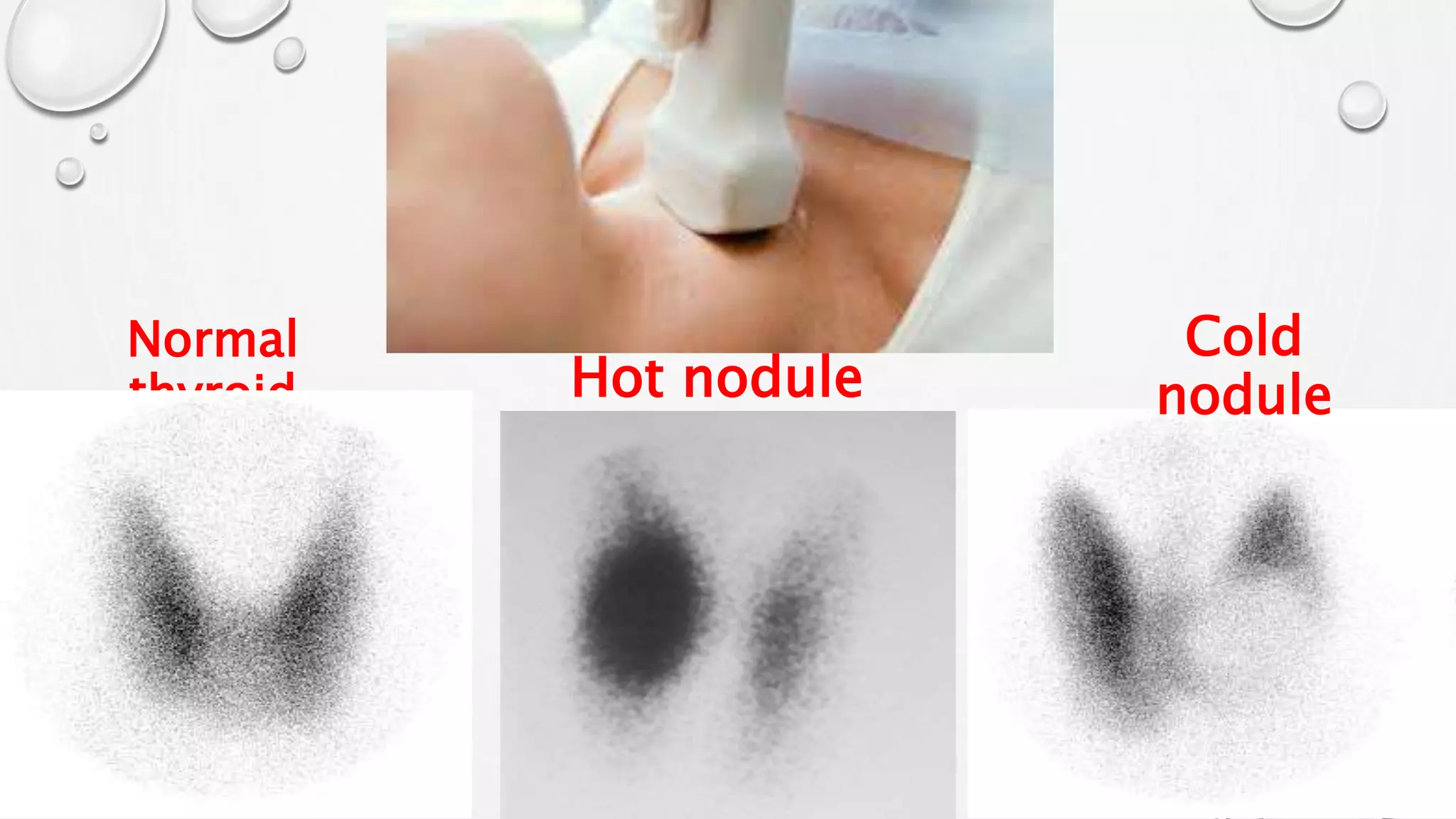
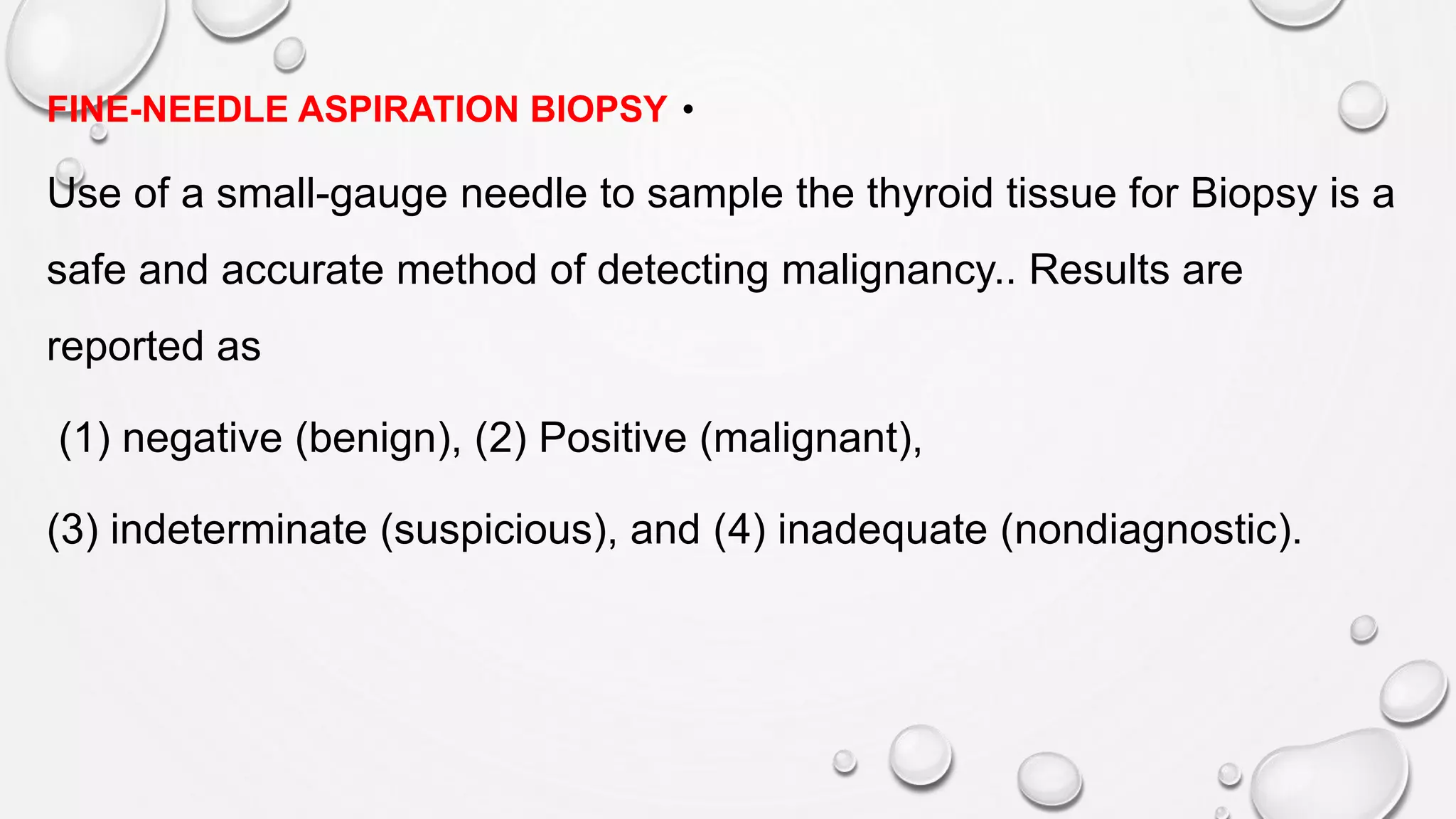
•THYROID SCAN, RADIOSCAN, OR SCINTISCAN
**determining the location, size, Shape, and anatomic function of the
thyroid gland
**Identifying Areas of increased function (“hot” areas) or decreased
function (“Cold” areas) can assist in diagnosis.
Normal
thyroid Hot nodule
Cold
nodule
•FINE-NEEDLE ASPIRATION BIOPSY
Use of a small-gauge needle to sample the thyroid tissue for Biopsy is a
safe and accurate method of detecting malignancy.. Results are
reported as
(1) negative (benign), (2) Positive (malignant),
(3) indeterminate (suspicious), and (4) inadequate (nondiagnostic).
FINE-NEEDLE ASPIRATION BIOPSY
•SERUM THYROGLOBULIN
Thyroglobulin (tg) can be measured reliably in the serum By
radioimmunoassay. Clinically, it is used to detect persistence Or
recurrence of thyroid carcinoma.
HYPERTHYROIDISM
◊ Hyperthyroidism is the second most prevalent endocrine Disorder, after diabetes
mellitus.
◊ Graves’ disease, the most Common type of hyperthyroidism, results from an
excessive Output of thyroid hormones
◊ It affects women eight times more frequently Than men
◊ The disorder may Appear after an
emotional shock,
stress,
infection,
◊ but The exact significance of these relationships is not understood.
◊ Other common causes of hyperthyroidism include Thyroiditis and excessive
ingestion of thyroid hormone
Signs and Symptoms
– Exophthalmos
– Weight loss despite excellent appetite – hypermetabolic state
– Insomnia
– Fatigue
– Palpitations
– Heat intolerance
– Sweating
– Diarrhea
– Deterioration in handwriting
– Menstrual irregularities
– Muscle weakness/
– Nervousness
– Tachycardia
– Goiter
– Elevated plasma levels of thyroxin and/or triiodothyronine
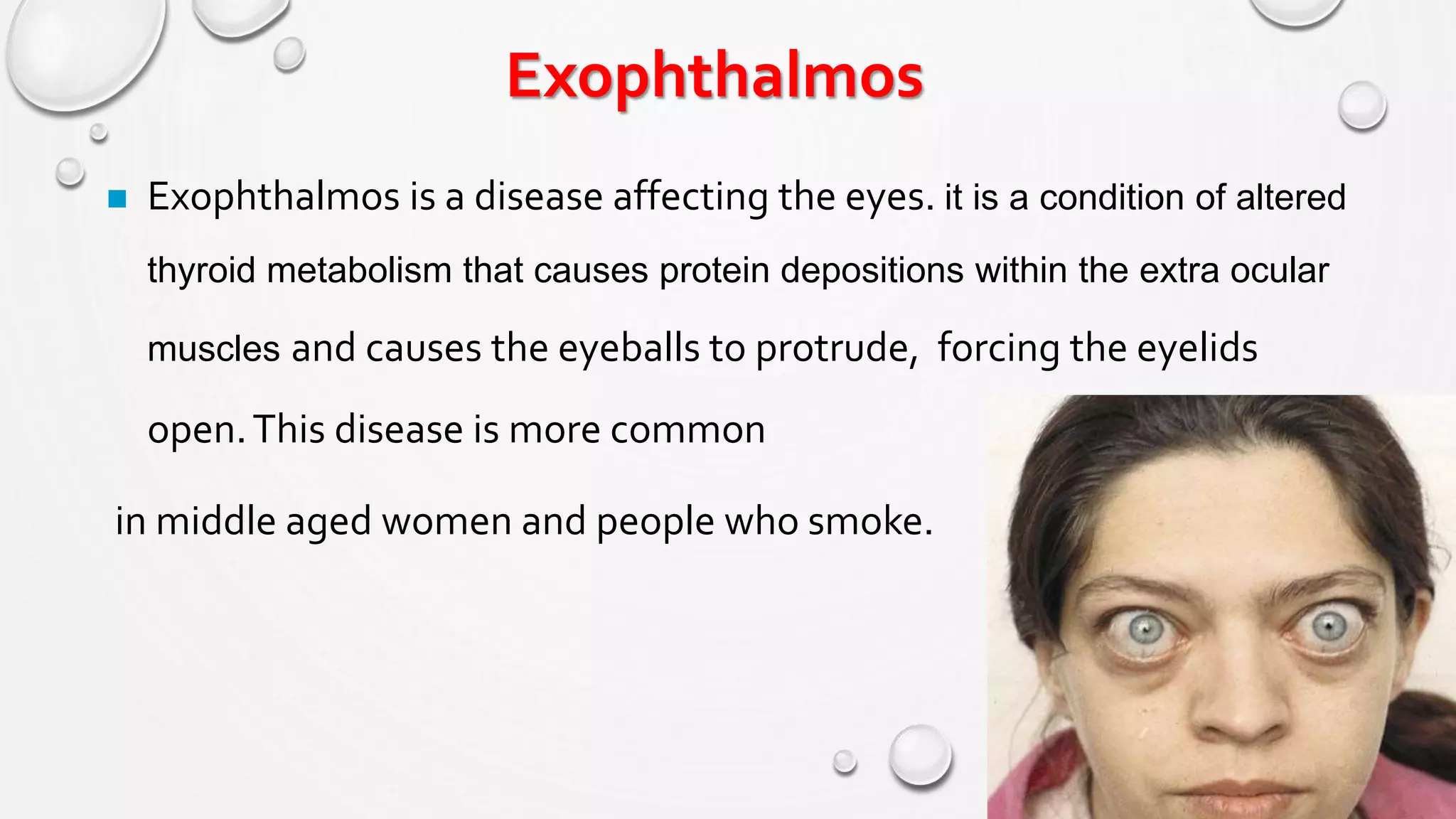
Exophthalmos
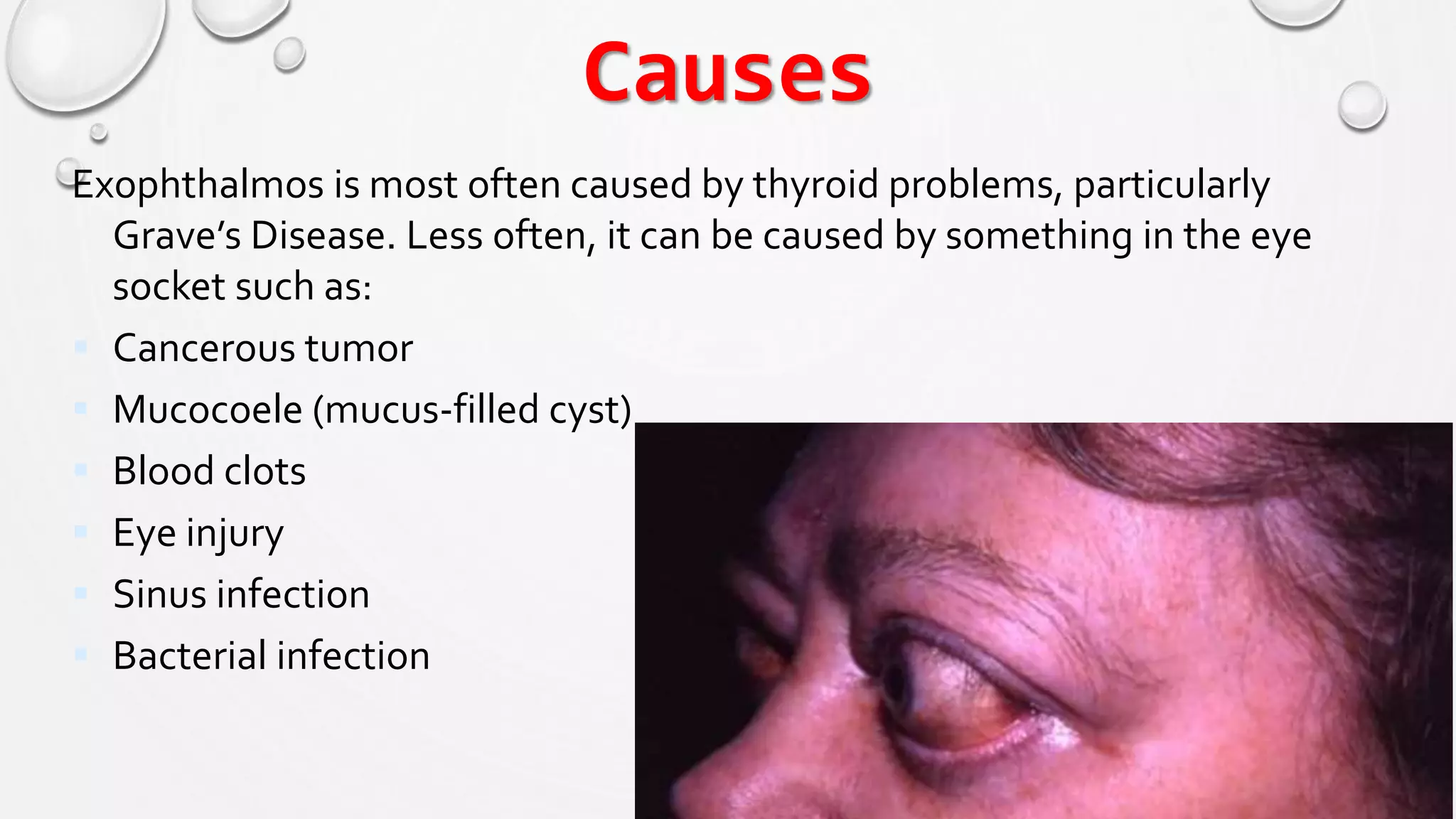
 Exophthalmos is a disease affecting the eyes. it is a condition of altered
thyroid metabolism that causes protein depositions within the extra ocular
muscles and causes the eyeballs to protrude, forcing the eyelids
open.This disease is more common
in middle aged women and people who smoke.
Causes
Exophthalmos is most often caused by thyroid problems, particularly
Grave’s Disease. Less often, it can be caused by something in the eye
socket such as:
 Cancerous tumor
 Mucocoele (mucus-filled cyst)
 Blood clots
 Eye injury
 Sinus infection
 Bacterial infection
Symptoms include
 One or both eyes bulging out of the socket (more commonly both eyes)
 Dry, red, & itchy eyes
 Puffy or swollen eyes
 Irritation
 Photophobia (sensitivity to light)
 Limited eye movement
 Blurred/double vision
Symptoms will continue to worsen if not treated and can lead to
blindness.
THYROID STORM
Thyroid storm (thyrotoxic crisis) is a form of severe hyperthyroidism,
Usually of abrupt onset. Untreated, it is almost always Fatal, but with
proper treatment the mortality rate is reduced Substantially. The patient
with thyroid storm or crisis is critically Ill and requires astute observation
and supportive Nursing care during.
CLINICAL MANIFESTATIONS
Thyroid storm is characterized by:
• High fever
• Extreme tachycardia
• Exaggerated symptoms of hyperthyroidism
, gastrointestinal (Weight loss, diarrhea, abdominal pain) or cardiovascular (Edema, chest pain,
dyspnea, palpitations)
• Altered neurologic or mental state, which frequently Appears as delirium psychosis, somnolence, or
coma
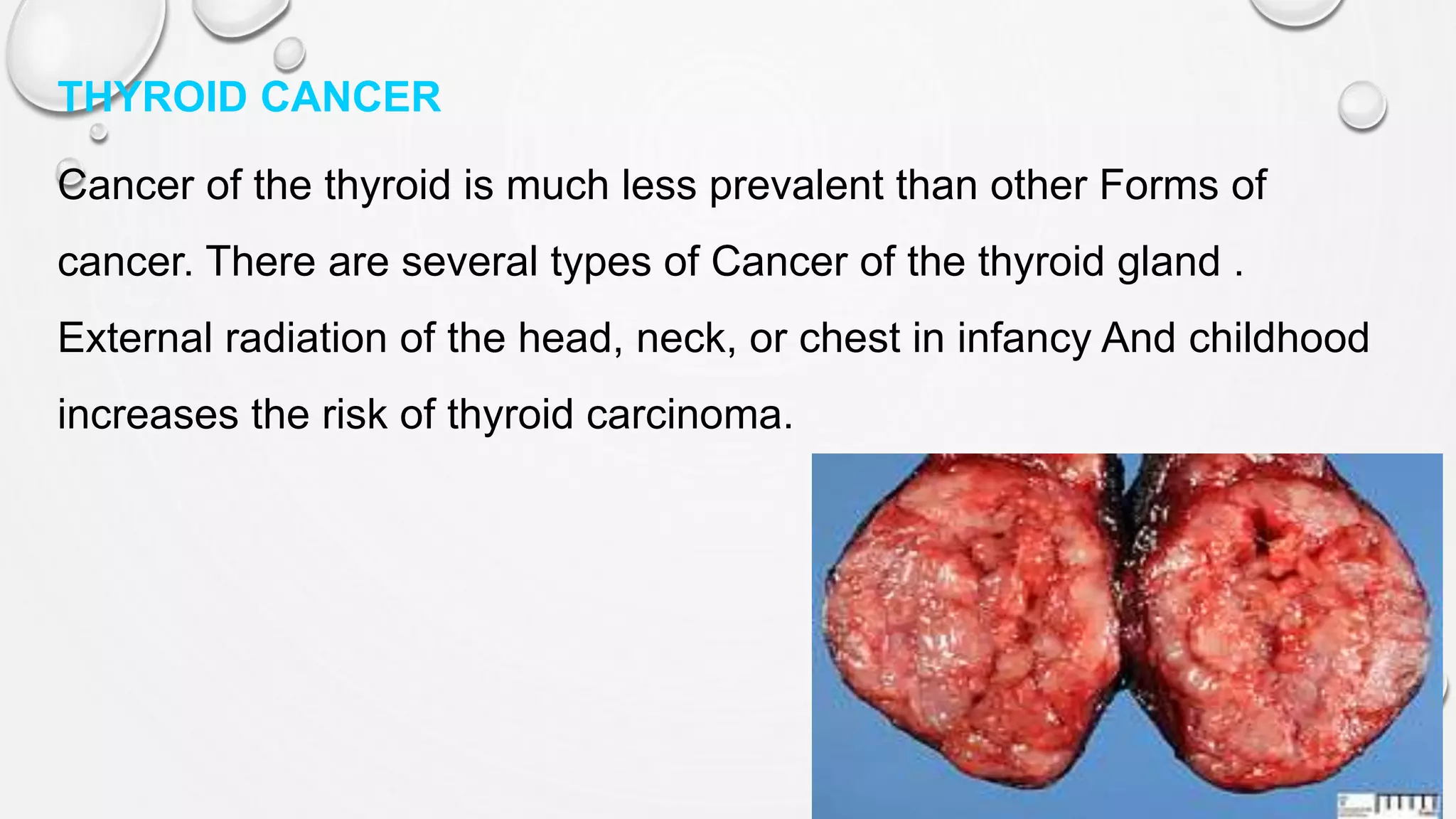
THYROID CANCER
Cancer of the thyroid is much less prevalent than other Forms of
cancer. There are several types of Cancer of the thyroid gland .
External radiation of the head, neck, or chest in infancy And childhood
increases the risk of thyroid carcinoma.
SIGNS AND SYMPTOMS
• Common
– Asymptomatic
mass
– Cough
– Dyspnea
– Dysphagia
• Rare
– Pain
– Stridor
– Vocal cord paralysis
– Rapid enlargement
CAUSES AND RISK FACTORS
 Genetics:
 Family History:
 Radiation Exposure:
 Radiation therapy to Head or Neck.
 Exposure to Radioactive Iodine during childhood, or other radioactive substances
 Chronic Iodine deficiency ↑ risk for Follicular carcinoma.
 Gender:
 Female > Males.
 Age:
 More common at young adults.
 Race:
 White race > Black race.
TYPE OF THYROID CANCER
•Papillary adenocarcinoma
• Incidence 50%
Most common and least aggressive
Asymptomatic nodule in a normal gland
Starts in childhood or early adult life, remains localized
Metastasizes along the lymphatics if untreated
More aggressive in the elderly
•Follicular adenocarcinoma
• Incidence 15%
• Appears after 40 y of age
• Encapsulated; feels elastic or rubbery on palpation
• Spreads through the bloodstream to bone, liver, and
lung
• Prognosis is not as favorable as for papillary
adenocarcinoma
•Medullary
• Incidence 5%
Appears after 50 y of age
Occurs as part of multiple endocrine neoplasia (MEN)
Hormone-producing tumor causing endocrine dysfunction symptoms
Metastasizes by lymphatics and bloodstream
Moderate survival rate
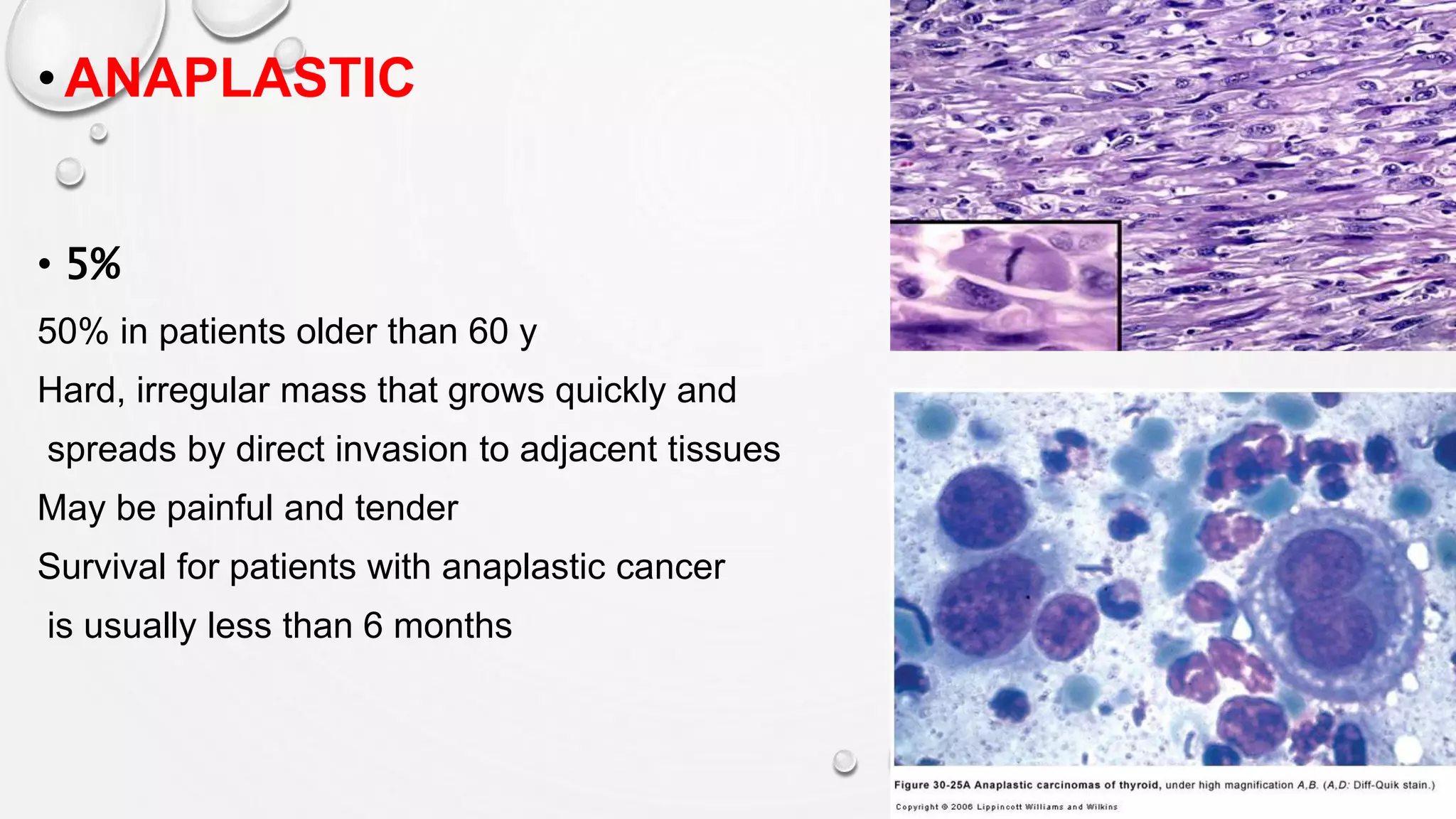
• ANAPLASTIC
• 5%
50% in patients older than 60 y
Hard, irregular mass that grows quickly and
spreads by direct invasion to adjacent tissues
May be painful and tender
Survival for patients with anaplastic cancer
is usually less than 6 months
THYROIDECTOMY
Thyroidectomy
• Thyroidectomy, although rare, may be performed for
patients with:
• thyroid cancer
• hyperthyroidism
• pregnant women
• patients who do not want radiation therapy
• patients with large goiters who do not respond to anti-
thyroid drugs.
Thyroidectomy
• Types
• The two types of thyroidectomy include:
1.Total thyroidectomy:
2.Subtotal thyroidectomy: up to five-sixths of the gland is
removed
 Post-operative Thyroid hormone.
Replacement therapy.
Suppression of TSH release.
NURSING CARE PLANS
• Nursing priorities
1.Reverse/manage hyperthyroid state preoperatively.
2.Prevent complications.
3.Relieve pain.
4.Provide information about surgical procedure, prognosis, and
treatment needs.
NURSING DIAGNOSIS
• acute Pain, May be related to Surgical
interruption/manipulation of tissues/muscles
• Possibly evidenced by guarding behavior; restlessness
•Planning
• Report pain is relieved/controlled
Nursing Interventions
 Assess verbal and nonverbal reports of pain
 Place in semi-Fowler’s position and support head and neck
with sandbags or small pillows.
 Maintain head and neck in neutral position and support during
position changes. Instruct patient to use hands to support neck
during movement and to avoid hyperextension of neck.
 Give cool liquids or soft foods, such as ice cream or popsicles.
 Encourage patient to use relaxation techniques: guided
imagery, soft music, progressive relaxation.
 Administer analgesics and/or analgesic throat sprays and
lozenges as necessary.
• 2. Ineffective airway clearance
• Nursing diagnosis
• Risk for ineffective airway clearance Risk factors may
include Tracheal obstruction; swelling, bleeding,
laryngeal spasms
•Planning
• Maintain patent airway, with aspiration prevented.
Nursing Interventions
 Monitor respiratory rate, depth, and work of breathing.
 Auscultate breath sounds
 . Assess for dyspnea, and cyanosis. Note quality of voice.
 Caution patient to avoid bending neck; support head with pillows
 Assist with repositioning, deep breathing exercises, and/or coughing
as indicated.
 Suction mouth and trachea as indicated, noting color and
characteristics of sputum
 Investigate reports of difficulty swallowing.
 Provide steam inhalation; humidify room air.
• Nursing diagnosis
• Knowledge, deficient [learning need] regarding condition, prognosis,
treatment, self-care, and discharge needs, May be related to recall,
misinterpretation ,Unfamiliarity with information resources
• Possibly evidenced by development of preventable complications
• Planning.
• Participate in treatment regimen.
• Initiate necessary lifestyle changes.
Nursing Interventions
 Review surgical procedure and future expectations.
 Discuss need for well-balanced, nutritious diet
 Recommend avoidance of goitrogenic foods, e.G., Excessive
ingestion of seafood, soybeans, turnips.
 Identify foods high in calcium and vitamin d.
 Review importance of rest and relaxation, avoiding stressful
situations and emotional outbursts.
 Instruct in incisional care: cleansing, dressing application.
 Recommend the use of loose-fitting scarves to cover scar,
avoiding the use of jewelry.
 Apply cold cream after sutures have been removed.
 Discuss possibility of change in voice.
 Identify signs and symptoms requiring medical evaluation.
• Nursing diagnosis
• impaired verbal Communication, May be related to ,
• Vocal cord injury/laryngeal nerve damage ,Tissue edema;
pain/discomfort
• Possibly evidenced by
• Impaired articulation, does not/cannot speak
•Planning
• Establish method of communication in which needs can be
understood
• Nursing interventions
 Assess speech periodically. Encourage voice rest.
 Keep communication simple. Ask yes or no questions.
 Provide alternative methods of communication as appropriate:
slate board, picture board.
 Anticipate needs as possible. Visit patient frequently.
 Maintain quiet environment
Thyroid Gland . Iman Alhussein

Thyroid Gland . Iman Alhussein

  • 1.
  • 2.
    THE THYROID GLAND Thethyroid gland is a butterfly-shaped organ located in the Lower neck, anterior to the trachea . ***It consists of Two lateral lobes connected by an isthmus. 5 cm long and 3 cm wide and weighs about 30 g. ***The blood Flow to the thyroid is very high approximately five times the blood flow to the Liver. ***This reflects the high metabolic activity of the thyroid Gland
  • 3.
    Functions *** Stimulates &maintains metabolic processes * Produces thyroid hormones T3-triiodothyronine and T4-thyroxine * These hormones regulate metabolism & affect the growth and function of other systems in the body *** Secretes calcitonin to lower serum calcium levels *** Parathyroid gland secretes PTH to raise serum calcium levels
  • 4.
  • 5.
    •SERUM THYROID-STIMULATING HORMONE thebest way to initially test thyroid function is to measure the TSH level in a blood sample. **A high TSH level indicates that the thyroid gland is failing (primary hypothyroidism). **the TSH level is low, usually indicates that the person has an overactive thyroid that is producing too much thyroid hormone (hyperthyroidism
  • 7.
    T4 TESTS T4 circulatesin the blood in two forms: 1) T4 bound to proteins that prevent the T4 from entering the various tissues that need thyroid hormone. 2) free t4, which does enter the various target tissues to exert its effects.
  • 8.
    T3 TESTS Patients whoare hyperthyroid will have an elevated T3 level. In some individuals with a low TSH, only the T3 is elevated and the FT4 is normal. T3 testing rarely is helpful in the hypothyroid patient, since it is the last test to become abnormal.
  • 9.
    Normal Value T.S.H :0.4 to 4.5 mU/L (milliunites per litre) T3 : (1.15 to 3.10 nmol/L). T4 : (58.5 to 150 nmol/L).
  • 10.
    •THYROID ANTIBODIES In manypatients with hypothyroidism or hyperthyroidism, lymphocytes make antibodies against their thyroid that either stimulate or damage the gland.. also in diagnose the thyroid problems. **positive anti-thyroid peroxidase and/or anti-thyroglobulin antibodies in a patient with hypothyroidism make a diagnosis of hashimoto’s thyroiditis. **+ev antibodies in a hyperthyroid patient, the most likely diagnosis is autoimmune thyroid disease
  • 11.
    •RADIOACTIVE IODINE UPTAKE Thepatient is Administered a tracer dose of iodine 123 (123I) or another Radionuclide, With a scintillation counter, detects the Gamma rays released from the breakdown of 123I in the thyroid. **Patients with hyperthyroidism exhibit a high uptake Of the 123I ** Patients with hypothyroidism exhibit a very low uptake.
  • 12.
    •THYROID SCAN, RADIOSCAN,OR SCINTISCAN **determining the location, size, Shape, and anatomic function of the thyroid gland **Identifying Areas of increased function (“hot” areas) or decreased function (“Cold” areas) can assist in diagnosis.
  • 13.
  • 14.
    •FINE-NEEDLE ASPIRATION BIOPSY Useof a small-gauge needle to sample the thyroid tissue for Biopsy is a safe and accurate method of detecting malignancy.. Results are reported as (1) negative (benign), (2) Positive (malignant), (3) indeterminate (suspicious), and (4) inadequate (nondiagnostic).
  • 15.
  • 16.
    •SERUM THYROGLOBULIN Thyroglobulin (tg)can be measured reliably in the serum By radioimmunoassay. Clinically, it is used to detect persistence Or recurrence of thyroid carcinoma.
  • 17.
    HYPERTHYROIDISM ◊ Hyperthyroidism isthe second most prevalent endocrine Disorder, after diabetes mellitus. ◊ Graves’ disease, the most Common type of hyperthyroidism, results from an excessive Output of thyroid hormones ◊ It affects women eight times more frequently Than men
  • 18.
    ◊ The disordermay Appear after an emotional shock, stress, infection, ◊ but The exact significance of these relationships is not understood. ◊ Other common causes of hyperthyroidism include Thyroiditis and excessive ingestion of thyroid hormone
  • 19.
    Signs and Symptoms –Exophthalmos – Weight loss despite excellent appetite – hypermetabolic state – Insomnia – Fatigue – Palpitations – Heat intolerance – Sweating – Diarrhea – Deterioration in handwriting – Menstrual irregularities – Muscle weakness/ – Nervousness – Tachycardia – Goiter – Elevated plasma levels of thyroxin and/or triiodothyronine
  • 20.
    Exophthalmos  Exophthalmos isa disease affecting the eyes. it is a condition of altered thyroid metabolism that causes protein depositions within the extra ocular muscles and causes the eyeballs to protrude, forcing the eyelids open.This disease is more common in middle aged women and people who smoke.
  • 21.
    Causes Exophthalmos is mostoften caused by thyroid problems, particularly Grave’s Disease. Less often, it can be caused by something in the eye socket such as:  Cancerous tumor  Mucocoele (mucus-filled cyst)  Blood clots  Eye injury  Sinus infection  Bacterial infection
  • 22.
    Symptoms include  Oneor both eyes bulging out of the socket (more commonly both eyes)  Dry, red, & itchy eyes  Puffy or swollen eyes  Irritation  Photophobia (sensitivity to light)  Limited eye movement  Blurred/double vision Symptoms will continue to worsen if not treated and can lead to blindness.
  • 24.
    THYROID STORM Thyroid storm(thyrotoxic crisis) is a form of severe hyperthyroidism, Usually of abrupt onset. Untreated, it is almost always Fatal, but with proper treatment the mortality rate is reduced Substantially. The patient with thyroid storm or crisis is critically Ill and requires astute observation and supportive Nursing care during.
  • 25.
    CLINICAL MANIFESTATIONS Thyroid stormis characterized by: • High fever • Extreme tachycardia • Exaggerated symptoms of hyperthyroidism , gastrointestinal (Weight loss, diarrhea, abdominal pain) or cardiovascular (Edema, chest pain, dyspnea, palpitations) • Altered neurologic or mental state, which frequently Appears as delirium psychosis, somnolence, or coma
  • 26.
    THYROID CANCER Cancer ofthe thyroid is much less prevalent than other Forms of cancer. There are several types of Cancer of the thyroid gland . External radiation of the head, neck, or chest in infancy And childhood increases the risk of thyroid carcinoma.
  • 27.
    SIGNS AND SYMPTOMS •Common – Asymptomatic mass – Cough – Dyspnea – Dysphagia • Rare – Pain – Stridor – Vocal cord paralysis – Rapid enlargement
  • 28.
    CAUSES AND RISKFACTORS  Genetics:  Family History:  Radiation Exposure:  Radiation therapy to Head or Neck.  Exposure to Radioactive Iodine during childhood, or other radioactive substances  Chronic Iodine deficiency ↑ risk for Follicular carcinoma.  Gender:  Female > Males.  Age:  More common at young adults.  Race:  White race > Black race.
  • 29.
    TYPE OF THYROIDCANCER •Papillary adenocarcinoma • Incidence 50% Most common and least aggressive Asymptomatic nodule in a normal gland Starts in childhood or early adult life, remains localized Metastasizes along the lymphatics if untreated More aggressive in the elderly
  • 30.
    •Follicular adenocarcinoma • Incidence15% • Appears after 40 y of age • Encapsulated; feels elastic or rubbery on palpation • Spreads through the bloodstream to bone, liver, and lung • Prognosis is not as favorable as for papillary adenocarcinoma
  • 31.
    •Medullary • Incidence 5% Appearsafter 50 y of age Occurs as part of multiple endocrine neoplasia (MEN) Hormone-producing tumor causing endocrine dysfunction symptoms Metastasizes by lymphatics and bloodstream Moderate survival rate
  • 32.
    • ANAPLASTIC • 5% 50%in patients older than 60 y Hard, irregular mass that grows quickly and spreads by direct invasion to adjacent tissues May be painful and tender Survival for patients with anaplastic cancer is usually less than 6 months
  • 33.
  • 34.
    Thyroidectomy • Thyroidectomy, althoughrare, may be performed for patients with: • thyroid cancer • hyperthyroidism • pregnant women • patients who do not want radiation therapy • patients with large goiters who do not respond to anti- thyroid drugs.
  • 35.
    Thyroidectomy • Types • Thetwo types of thyroidectomy include: 1.Total thyroidectomy: 2.Subtotal thyroidectomy: up to five-sixths of the gland is removed
  • 36.
     Post-operative Thyroidhormone. Replacement therapy. Suppression of TSH release.
  • 37.
    NURSING CARE PLANS •Nursing priorities 1.Reverse/manage hyperthyroid state preoperatively. 2.Prevent complications. 3.Relieve pain. 4.Provide information about surgical procedure, prognosis, and treatment needs.
  • 38.
    NURSING DIAGNOSIS • acutePain, May be related to Surgical interruption/manipulation of tissues/muscles • Possibly evidenced by guarding behavior; restlessness •Planning • Report pain is relieved/controlled
  • 39.
    Nursing Interventions  Assessverbal and nonverbal reports of pain  Place in semi-Fowler’s position and support head and neck with sandbags or small pillows.  Maintain head and neck in neutral position and support during position changes. Instruct patient to use hands to support neck during movement and to avoid hyperextension of neck.  Give cool liquids or soft foods, such as ice cream or popsicles.  Encourage patient to use relaxation techniques: guided imagery, soft music, progressive relaxation.  Administer analgesics and/or analgesic throat sprays and lozenges as necessary.
  • 40.
    • 2. Ineffectiveairway clearance • Nursing diagnosis • Risk for ineffective airway clearance Risk factors may include Tracheal obstruction; swelling, bleeding, laryngeal spasms •Planning • Maintain patent airway, with aspiration prevented.
  • 41.
    Nursing Interventions  Monitorrespiratory rate, depth, and work of breathing.  Auscultate breath sounds  . Assess for dyspnea, and cyanosis. Note quality of voice.  Caution patient to avoid bending neck; support head with pillows  Assist with repositioning, deep breathing exercises, and/or coughing as indicated.  Suction mouth and trachea as indicated, noting color and characteristics of sputum  Investigate reports of difficulty swallowing.  Provide steam inhalation; humidify room air.
  • 42.
    • Nursing diagnosis •Knowledge, deficient [learning need] regarding condition, prognosis, treatment, self-care, and discharge needs, May be related to recall, misinterpretation ,Unfamiliarity with information resources • Possibly evidenced by development of preventable complications • Planning. • Participate in treatment regimen. • Initiate necessary lifestyle changes.
  • 43.
    Nursing Interventions  Reviewsurgical procedure and future expectations.  Discuss need for well-balanced, nutritious diet  Recommend avoidance of goitrogenic foods, e.G., Excessive ingestion of seafood, soybeans, turnips.  Identify foods high in calcium and vitamin d.  Review importance of rest and relaxation, avoiding stressful situations and emotional outbursts.
  • 44.
     Instruct inincisional care: cleansing, dressing application.  Recommend the use of loose-fitting scarves to cover scar, avoiding the use of jewelry.  Apply cold cream after sutures have been removed.  Discuss possibility of change in voice.  Identify signs and symptoms requiring medical evaluation.
  • 45.
    • Nursing diagnosis •impaired verbal Communication, May be related to , • Vocal cord injury/laryngeal nerve damage ,Tissue edema; pain/discomfort • Possibly evidenced by • Impaired articulation, does not/cannot speak •Planning • Establish method of communication in which needs can be understood
  • 46.
    • Nursing interventions Assess speech periodically. Encourage voice rest.  Keep communication simple. Ask yes or no questions.  Provide alternative methods of communication as appropriate: slate board, picture board.  Anticipate needs as possible. Visit patient frequently.  Maintain quiet environment