THYROID DISEASES AND ITS
MANAGEMENT
By - Dr.navyasree
moderator-Dr.ramesh babu
HYPERTHYROIDISM
• Hyperfunction of the thyroid gland and is defined by reduced levels of
thyroid stimulating hormone (TSH) and raised free T4 (fT4) and free T3 (fT3)
concentrations.
• It is approximately ten times more common in women than in men within
iodine-replete communities, affecting between 0.5% and 2% of the female
population.
• Sweating
• Increased appetite
• Menstrual irregularity
• Hair loss
• Brittle nails
• Weight loss
• Anxiety
• Agitation
• Irritability
• Palpitation
• Fatigue and weakness
• Breathlessness
• Heat intolerance
symptoms
signs
• Sinus tachycardia
• Atrial fibrillation
• Fine tremor
• Warm moist skin
• Palmar erythema
• Onycholysis
• Hair loss
• Proximal myopathy
• Muscle wasting
• High output heart failure
• Thyroid bruit
Thyrotoxicosis with hyperthyroidism
• Graves’ disease
• Toxic multinodular goitre
• Solitary toxic adenoma
Thyrotoxicosis without hyperthyroidism
• Silent (painless) thyroiditis
• Postpartum thyroiditis
• Subacute thyroiditis
• Exogenous thyroid hormone
• A history and thorough examination suggestive of thyroid overactivity
requires further investigation
Laboratory
investigations in
thyrotoxicosis
• In cases in which the aetiology of
thyrotoxicosis remains unclear
despite history, examination and
laboratory investigations, thyroid
scintigraphy may be utilized.
• This technique analyses radioactive
iodine uptake by the thyroidgland
and can be used to differentiate
between ‘hot’ and ‘cold’ areas of
increased and decreased function
respectively.
Specific disorders of thyroid hormone excess
1.GRAVES’ DISEASE
• It is a syndrome consisting of hyperthyroidism, moderate diffuse goitre,
ophthalmopathy and dermopathy.
• It is an autoimmune condition characterized by the presence of circulating
IgG oligoclonal autoantibodies directed against the TSH receptor within
thyroid tissue (TSHR-Ab).
• Cross-reactivity between these
thyroidal antigens and antigens
in orbital and extra-orbital
tissues may explain the close
relationship between Graves’
disease and both
ophthalmopathy and
dermopathy.
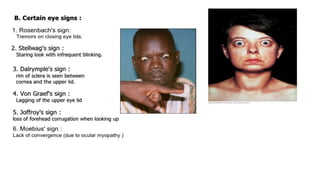
Thyroid eye disease
• The lesions develop due to an accumulation of
glycosaminoglycans and a lymphocytic
infiltration of the orbital and retro-orbital
tissues.
• Patients who smoke are more likely to suffer
eye disease of greater severity than non-
smokers and hypothyroidism is an additional
potentially exacerbating factor.
Acropachy
• This very rare condition occurs in
less than 1 per 1000 patients.
• It presents as clubbing of the
fingers with subperiosteal new
bone formation seen on plain X-
ray films.
• Acropachy arises from
glycosaminoglycan accumulation
2.TOXIC MULTINODULAR GOITRE
• A toxic multinodular goitre (MNG) occurs when two or more autonomously
functioning thyroid nodules secrete excess thyroid hormone.
• It is most commonly seen in iron depleted areas
• Cardiovascular symptoms predominate.
• Compressive symptoms are a possible consequence of the presence of a
MNG and include dysphagia to solids and dyspnoea that worsen at night
3.SOLITARY TOXIC ADENOMAS
• A single toxic adenoma is a
benign tumour autonomously
secreting sufficient thyroid
hormone to suppress pituitary
TSH secretion.
• a.k.a. plummers disease
management of hyperthyroidism
1. beta-adrenergic blocking drugs - atenolol
2. Thionamides -PTU, methimazole
3. Radioiodine -Thyroid tissue damage results from emission of beta rays
• Pre-treatment with thionamides and symptomatic relief usually required
• Side effects include radiation thyroiditis and exacerbation of ophthalmolopathy
• Long-term safety is proven but hypothyroidism is common
• Contraindicated in pregnancy, women who are breastfeeding and children
4. Surgical resection
Thyroid storm
It is a rare but life threatening complication
Develops in hyperthyroid patients with acute infection
• who are postpartum
• undergone thyroid or non-thyroid surgery
• reactive iodine containing contrast agents
• withdraw antithyroid medication
• Severe signs of hyperthyroidism
• Fever/hyperpyrexia
• Alteration in mental state
• Tachycardia/tachyarrhythmia
• Vomiting and diarrhoea
• Multi-organ failure – cardiac failure, hepatic congestion with
hyperbilirubinaemia and jaundice, dehydration and renal failure
management
• PTU 300mg 6-hourly via NG tube (PTU blocks T4 to T3 conversion)
• Potassium iodide 60mg 6-hourly via NG tube (inhibits thyroid hormone release; start
6 hours after PTU.
• Propanolol 160–180mg in divided doses or by infusion to block adrenergic
manifestations
• Prednisolone 60mg o.d. may also stop T4 to T3 conversion
• Plasmapheresis may be necessary in refractory cases
HYPOTHYROIDISM
• Hypothyroidism refers to the insufficient production and secretion of
thyroid hormones from the thyroid gland.
• It may occur due to a disturbance
• within the thyroid gland itself (primary hypothyroidism) or
• within the hypothalamic–pituitary–thyroid axis (secondary
hypothyroidism)
• myxoedema is not synonymous with hypothyroidism and refers to the
accumulation of glycosaminoglycans occurring in severe hypothyroidism
CAUSES OF HYPOTHYROIDISM
CLINICAL MANIFESTATIONS
Diagnostic evaluation
• Low serum fT4 concentration is the hallmark of reduced thyroid function.
• raised TSH concentration, though this may be normal or low in secondary
hypothyroidism
• Positive thyroid microsomal autoantibodies
• Raised serum cholesterol, triglycerides, LDL Lowered HDL
• Raised serum prolactin
• Normochromic normocytic anaemia
MANAGEMENT
• Hypothyroidism is mainly treated with levothyroxine monotherapy.
• dose is 1.6 mcg/kg per day
• Medications such as sucralfate, calcium preparations, and bile acid
sequestrants can interfere with the absorption of levothyroxine
Differential Diagnosis
• Euthyroid sick syndrome
• Goiter
• Myxedema coma
• Anemia
• Riedel thyroiditis
• Subacute thyroiditis
• Thyroid lymphoma
• Iodine deficiency
• Addison disease
• Chronic fatigue syndrome
• Depression
• Dysmenorrhea
• Erectile dysfunction
• Familial hypercholesterolemia
• Infertility
THYROIDECTOMY
THYROIDECTOMY
Definition: it is removal of all or part of thyroid gland
Indications :
• as therapy for patient with thyrotoxicosis.
• to treat benign or malignant thyroid tumor.
• To treat pressure symptoms such as respiratory distress or dyspnea
or dysphagia.
• To establish definitive treatment of thyroid mass specially when
cytological results are indeterminate.
TYPES
Hemithyroidectomy
Subtotal thyroidectomy
Near total thyroidectomy
Total thyroidectomy
HEMITHYROIDECTOMY
• It involves removal of one lobe along with entire isthmus
• It is done in benign disease involving only one lobe as in solitary
nodule thyroid either toxic or nontoxic
example: adenoma , colloid goitre of one lobe ,colloid cyst
Hemithyroidectomy:
Entire one lateral lobe and entire isthmus are removed retaining entire
opposite lateral lobe.
SUBTOTAL THYROIDECTOMY
• It is removal of most of both lateral lobes including isthmus except 8
gm of tissue or tissue of the size of pulp of little finger is retained in
the lower pole of thyroid on both sides
Indications:
• Toxic thyroid (primary or secondary)
• Non toxic multinodular goitre.
NEAR TOTAL THYROIDECTOMY
• Here both lobes are removed except less than 2gm of thyroid tissue in
the lower pole,near to the recurrent laryngeal nerve and parathyroid
are preserved to retain blood supply to parathyroid glands
• Indication : papillary thyroid carcinoma in young individuals
TOTAL THYROIDECTOMY
• Here entire gland is removed without retaining any tissue
• It is done at present in
nontoxic multinodular goitre toxic goitre,
carcinoma thyroid
(follicular/medullary/papillary/operable/anaplastic)
HARTLEY DUNHILL PROCEDURE
• Removal of one entire lobe ,
isthmus and subtotal removal of
opposite lateral lobe.
• It is used in nontoxic MNG.
Pre op preperation
• Blood group and cross matching
• Indirect laryngoscope: check for abduction of vocal cord.
• Serum calcium estimation because hyperparathyroidism may coexist.
• T3 ,T4, TSH. thyroid antibodies.
• ECG & cardiac fitness specially in cases of toxic goitre.
• Lugol's iodine is given 10days prior to surgery to make the gland firm
and less vascular.
Pre op consent
•Hemorrhage
•Airway obstruction
•Voice change
•Hypothyroidism
•Hypoparathyroidism
general anesthesia is given ,occasionally local anesthesia given when
PROCEDURE
• patient is put in supine position,with
neck hyperextended with sandbag
under shoulder
• Ring should be kept under the occiput
• Head end of the table is elevated to 15°
to improve venous return so as to reduce
venous congestion in the neck and so
oozing
• Painting with betadine from chin
till nipples
• Site of incision is marked with
suture.
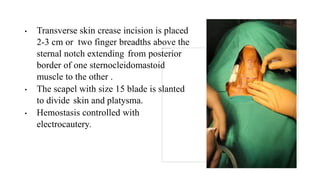
• Transverse skin crease incision is placed
2-3 cm or two finger breadths above the
sternal notch extending from posterior
border of one sternocleidomastoid
muscle to the other .
• The scapel with size 15 blade is slanted
to divide skin and platysma.
• Hemostasis controlled with
electrocautery.
sub platysmal plane entered upper and lower flaps raised
superior pole dissected superior thyroid vessels identified
middle thyroid vein ligated and middle
lobe dissected
inferior thyroid artery ligated and
inferior pole dissected
RLN IDENTIFIED AND PRESERVED SLN IDENTIFIED AND PRESERVED
CLOSURE
Absolute hemostasis using bipolar cautery
Suction drain to thyroid bed deep to the
deep fascia
Close loosely in layer with
absorbable sutures.
Close skin with non absorbable suture or
clips
Check vocal cord on extubation by
direct laryngoscope.
POST OP MANAGEMENT
• check for respiratory distress or voice change
• in case of compressive symptoms sutures should be removed to drain
clots due to reactionary hemorrhage
•calcium gluconate in case of acute hypocalcemia.
•remove Drain : when the collection is minimal 50ML within 24-
48hours post operatively
•Sutures removed 3-5days post operatively
•Monitoring of se calcium , se albumin , thyroid and parathyroid profile
THYROID MALIGNANCY
Types of thyroid neoplasms
malignant neoplasms
• PAPILLARY
• FOLLICULAR
• ANAPLASTIC
• MEDULLARY
• Others - lymphoma, hurthle cell
carcinoma, secondaries in
thyroid
beningn neoplasm
• follicular adenoma
Follicular adenoma :
• present as clinically solitary nodules
• Distinction between follicular adenoma and carcinoma can be made
only by histological examination.
• No invasion of capsular or pericapsular blood vessels(can’t be
differentiate by fnac)
Types
• Colloid : most common type
Donot have potential for microinvasion
• Fetal : microfollicular
Has potential for microinvasion
• Embryonal: atypical
Has potential for microaneurysm
PAPILLARY CARCINOMA
•PTC is the most common thyroid malignancy accounting for 70% to
80% of all thyroid malignancies
•PTC occurs in a 2 : 1 female-to-male ratio.
•Peak incidence occurs between ages 30 to 40 years
RISK FACTORS
•most important risk factor for PTC is childhood radiation exposure
•Hashimotos thyroiditis
•History of thyroid carcinoma in a first-degree relative and the presence
of a familial syndromes that includes thyroid carcinoma
CLINICAL FEATURES
•Slow growing painless thryoid swelling
•Lymph node metastasis is common
•within the gland by intra thyroidal lymphatics
•Compression features are uncommon in papillary carcinoma thyroid
and indicate a locally advanced invasive disease
• Occasionally, a metastatic PTC manifests as a painless lateral neck
mass that is clinically detected before detecting the primary thyroid
lesion – LATERAL ABERRANT THYROID
•Distant mets are seen at the time of presentation most commonly
•involving lungs followed by bone, liver and brain
PATHOLOGY
• Cuboidal cells with pale abundant cytoplasm with intranuclear
inclusion bodies and nuclear grooving – ORPHAN ANNIE EYE
NUCLEI.
• Microscopic calcifications known as PSAMMOMA bodies, which are
calcified clumps slough papillary projections, is diagnostic of PTC.
• The neoplasm may form well-defined follicles with only minimal
papillary architecture □ follicular variant of papillary carcinoma
• Other subtypes include columnar, hobnail, and tall cell carcinomas,
which are more aggressive in their biologic behaviour
MANAGEMENT
INVESTIGATIONS
•Functional status of the gland – TSH is usually elevated
•Xray neck
•USG neck
•CT neck
•FNAC of thyroid swelling and associated lymph nodes
SURGERY
•Near total or total thyroidectomy with prophylactic/therapeutic central
neck node dissection
•Image or FNAC proven lateral neck nodes – modified radical or
functional neck dissection
•Micro carcinoma with intrathyroidal node negative unifocal disease –
hemi thyroidectomy
FOLLICULAR THYROID CARCINOMA
•10% of all thyroid malignancies
•40 to 60 years of age
•3:1 female:male ratio
•Increased incidence of FTC in geographic distributions associated with
iodine deficiency.
•Occurs in multinodular goitre
CLINICAL FEATURES
•FTC typically manifests as a painless thyroid mass
•Compressive symptoms and hoarseness is seen in locally invasive diseas
•Hematogenous metastasis to bones, lung liver
•Vascular ,Pulsatile secondaries seen in skull and long bones
PATHOLOGY
• Histologic diagnosis of FTC
depends on the demonstration of
follicular cells devoid of colloid
with capsular or vascular
invasion.
TREATMENT
•Total thyroidectomy
•Central neck node dissection in T4 disease
HURTHLE CELL CARCINOMA
• A subtype of FTC, known as HURTHLE cell carcinoma, consists of
oxyphilic cells and tends to occur in older patients, usually 60 to
75years old
• Hurthle cell ( Increased number of mitochondria causing an
appearance of an enlarged, granular, and eosinophilic cytoplasm)
• Have capsular and vascular invasion
DIFFERS FROM FTC
•Multifocal and bilateral
•Do not take up RAI
•Lymph node metastasis
•Poorer prognosis
•Technicium 99m sestamibi scan is useful (high mitochondria)
TREATMENT
• Total thyroidectomy with prophylactic central neck node dissection
MEDULLARY THYROID CARCINOMA
•Accounts for 2.5% of thyroid carcinomas
•50-60 years with F:M 1.5:1
•Familial MTC present at young age
•MTC occurs most commonly in a sporadic form (80%), less
commonly as an autosomal dominant inherited disorder such as
MEN2A, MEN2B and familial thyroid carcinoma (FMTC)
•RET proto oncogene mutation
•Orginates in the parafollicular cells, or C cells, which reside in the
upper poles of thyroid lobes and are of neural crest origin.
CLINICAL FEATURES
•Neck mass with cervical lymphadenopathy
•compressive symptoms present
•Hematogenous mets to liver, lung and osteoblastic bone mets
•Apart from CALCITONIN , it also secretes CEA, PGE2 ,PGF2alpha,
seratonin
• Sometimes presents with diarrhoea and flushing
PATHOLOGY
•Unilateral in sporadic cases and multifocal in familial cases
•Presence of amyloid with IHC for calcitonin is diagnostic
•workup of MTC should include serum calcitonin>100pg/ml,
carcinoembryonic antigen >30mg/ml
•ultrasound scanning of the lateral neck including lateral compartment,
genetic testing for germline RET mutation, and biochemical evaluation
for pheochromocytoma
TREATMENT
• Total thyroidectomy with prophylactic bilateral central neck node
dissection
•MEN2B RET mutation are advised to undergo prophylactic total
thyroidectomy within the first year of life or at the time of diagnosis.
• MEN2A – before 5 years of age
•good prognosis is predicted for patients with smaller masses and in
whom calcitonin levels are undetectable after surgery.
• Because MTC is not of follicular cell origin, TSH suppression and
RAI scanning and therapy have no role in MTC, unless there is a
concomitant PTC or FTC.
• Follow up by serum calcitonin and CEA levels
ANAPLASTIC THYROID CARCINOMA
• Accounts for approximately 5% of all thyroid malignancies
• ATC is the most aggressive form of thyroid carcinoma with a disease
– specific mortality approaching 100%
• Manifests with dysphagia, cervical tenderness,, and a painful , rapidly
enlarging neck mass.
• Positive Berry’s sign
PATHOLOGY
•Grossly tumor is locally invasive with firm white appearance
•Microscopic- giant cells with intranuclear cytoplasmic invasion
•Three types of cells – spindle cells, giant cells , squamous with poor
prognosis for all three types
TREATMENT
• results of any surgical treatment of ATC are tempered by its rapidly
progressive clinical course.
• Distant spread is present in 90% of patients at the time of diagnosis
most commonly to the lungs, and most reports of resection are not
optimistic.
• FNA is accurate in 90% of cases, making open biopsy an uncommon
surgical indication
• Finding of distant metastasis or invasion into locally unresectable
structures, such as the trachea or vasculature of the anterior
mediastinum, leads to a more conservative surgical approach, such as
tracheostomy.
thankyou

thyroid diseases navya.pptx

  • 1.
    THYROID DISEASES ANDITS MANAGEMENT By - Dr.navyasree moderator-Dr.ramesh babu
  • 2.
    HYPERTHYROIDISM • Hyperfunction ofthe thyroid gland and is defined by reduced levels of thyroid stimulating hormone (TSH) and raised free T4 (fT4) and free T3 (fT3) concentrations. • It is approximately ten times more common in women than in men within iodine-replete communities, affecting between 0.5% and 2% of the female population.
  • 3.
    • Sweating • Increasedappetite • Menstrual irregularity • Hair loss • Brittle nails • Weight loss • Anxiety • Agitation • Irritability • Palpitation • Fatigue and weakness • Breathlessness • Heat intolerance symptoms
  • 4.
    signs • Sinus tachycardia •Atrial fibrillation • Fine tremor • Warm moist skin • Palmar erythema • Onycholysis • Hair loss • Proximal myopathy • Muscle wasting • High output heart failure • Thyroid bruit
  • 5.
    Thyrotoxicosis with hyperthyroidism •Graves’ disease • Toxic multinodular goitre • Solitary toxic adenoma
  • 6.
    Thyrotoxicosis without hyperthyroidism •Silent (painless) thyroiditis • Postpartum thyroiditis • Subacute thyroiditis • Exogenous thyroid hormone
  • 7.
    • A historyand thorough examination suggestive of thyroid overactivity requires further investigation Laboratory investigations in thyrotoxicosis
  • 8.
    • In casesin which the aetiology of thyrotoxicosis remains unclear despite history, examination and laboratory investigations, thyroid scintigraphy may be utilized. • This technique analyses radioactive iodine uptake by the thyroidgland and can be used to differentiate between ‘hot’ and ‘cold’ areas of increased and decreased function respectively.
  • 9.
    Specific disorders ofthyroid hormone excess 1.GRAVES’ DISEASE • It is a syndrome consisting of hyperthyroidism, moderate diffuse goitre, ophthalmopathy and dermopathy. • It is an autoimmune condition characterized by the presence of circulating IgG oligoclonal autoantibodies directed against the TSH receptor within thyroid tissue (TSHR-Ab).
  • 10.
    • Cross-reactivity betweenthese thyroidal antigens and antigens in orbital and extra-orbital tissues may explain the close relationship between Graves’ disease and both ophthalmopathy and dermopathy.
  • 11.
    Thyroid eye disease •The lesions develop due to an accumulation of glycosaminoglycans and a lymphocytic infiltration of the orbital and retro-orbital tissues. • Patients who smoke are more likely to suffer eye disease of greater severity than non- smokers and hypothyroidism is an additional potentially exacerbating factor.
  • 13.
    Acropachy • This veryrare condition occurs in less than 1 per 1000 patients. • It presents as clubbing of the fingers with subperiosteal new bone formation seen on plain X- ray films. • Acropachy arises from glycosaminoglycan accumulation
  • 14.
  • 15.
    • A toxicmultinodular goitre (MNG) occurs when two or more autonomously functioning thyroid nodules secrete excess thyroid hormone. • It is most commonly seen in iron depleted areas • Cardiovascular symptoms predominate. • Compressive symptoms are a possible consequence of the presence of a MNG and include dysphagia to solids and dyspnoea that worsen at night
  • 16.
    3.SOLITARY TOXIC ADENOMAS •A single toxic adenoma is a benign tumour autonomously secreting sufficient thyroid hormone to suppress pituitary TSH secretion. • a.k.a. plummers disease
  • 17.
    management of hyperthyroidism 1.beta-adrenergic blocking drugs - atenolol 2. Thionamides -PTU, methimazole 3. Radioiodine -Thyroid tissue damage results from emission of beta rays • Pre-treatment with thionamides and symptomatic relief usually required • Side effects include radiation thyroiditis and exacerbation of ophthalmolopathy • Long-term safety is proven but hypothyroidism is common • Contraindicated in pregnancy, women who are breastfeeding and children 4. Surgical resection
  • 18.
    Thyroid storm It isa rare but life threatening complication Develops in hyperthyroid patients with acute infection • who are postpartum • undergone thyroid or non-thyroid surgery • reactive iodine containing contrast agents • withdraw antithyroid medication
  • 19.
    • Severe signsof hyperthyroidism • Fever/hyperpyrexia • Alteration in mental state • Tachycardia/tachyarrhythmia • Vomiting and diarrhoea • Multi-organ failure – cardiac failure, hepatic congestion with hyperbilirubinaemia and jaundice, dehydration and renal failure
  • 20.
    management • PTU 300mg6-hourly via NG tube (PTU blocks T4 to T3 conversion) • Potassium iodide 60mg 6-hourly via NG tube (inhibits thyroid hormone release; start 6 hours after PTU. • Propanolol 160–180mg in divided doses or by infusion to block adrenergic manifestations • Prednisolone 60mg o.d. may also stop T4 to T3 conversion • Plasmapheresis may be necessary in refractory cases
  • 21.
    HYPOTHYROIDISM • Hypothyroidism refersto the insufficient production and secretion of thyroid hormones from the thyroid gland. • It may occur due to a disturbance • within the thyroid gland itself (primary hypothyroidism) or • within the hypothalamic–pituitary–thyroid axis (secondary hypothyroidism) • myxoedema is not synonymous with hypothyroidism and refers to the accumulation of glycosaminoglycans occurring in severe hypothyroidism
  • 22.
  • 23.
  • 24.
    Diagnostic evaluation • Lowserum fT4 concentration is the hallmark of reduced thyroid function. • raised TSH concentration, though this may be normal or low in secondary hypothyroidism • Positive thyroid microsomal autoantibodies • Raised serum cholesterol, triglycerides, LDL Lowered HDL • Raised serum prolactin • Normochromic normocytic anaemia
  • 25.
    MANAGEMENT • Hypothyroidism ismainly treated with levothyroxine monotherapy. • dose is 1.6 mcg/kg per day • Medications such as sucralfate, calcium preparations, and bile acid sequestrants can interfere with the absorption of levothyroxine
  • 26.
    Differential Diagnosis • Euthyroidsick syndrome • Goiter • Myxedema coma • Anemia • Riedel thyroiditis • Subacute thyroiditis • Thyroid lymphoma • Iodine deficiency • Addison disease • Chronic fatigue syndrome • Depression • Dysmenorrhea • Erectile dysfunction • Familial hypercholesterolemia • Infertility
  • 27.
  • 28.
    THYROIDECTOMY Definition: it isremoval of all or part of thyroid gland Indications : • as therapy for patient with thyrotoxicosis. • to treat benign or malignant thyroid tumor. • To treat pressure symptoms such as respiratory distress or dyspnea or dysphagia. • To establish definitive treatment of thyroid mass specially when cytological results are indeterminate.
  • 29.
  • 30.
    HEMITHYROIDECTOMY • It involvesremoval of one lobe along with entire isthmus • It is done in benign disease involving only one lobe as in solitary nodule thyroid either toxic or nontoxic example: adenoma , colloid goitre of one lobe ,colloid cyst
  • 31.
    Hemithyroidectomy: Entire one laterallobe and entire isthmus are removed retaining entire opposite lateral lobe.
  • 32.
    SUBTOTAL THYROIDECTOMY • Itis removal of most of both lateral lobes including isthmus except 8 gm of tissue or tissue of the size of pulp of little finger is retained in the lower pole of thyroid on both sides Indications: • Toxic thyroid (primary or secondary) • Non toxic multinodular goitre.
  • 34.
    NEAR TOTAL THYROIDECTOMY •Here both lobes are removed except less than 2gm of thyroid tissue in the lower pole,near to the recurrent laryngeal nerve and parathyroid are preserved to retain blood supply to parathyroid glands • Indication : papillary thyroid carcinoma in young individuals
  • 36.
    TOTAL THYROIDECTOMY • Hereentire gland is removed without retaining any tissue • It is done at present in nontoxic multinodular goitre toxic goitre, carcinoma thyroid (follicular/medullary/papillary/operable/anaplastic)
  • 37.
    HARTLEY DUNHILL PROCEDURE •Removal of one entire lobe , isthmus and subtotal removal of opposite lateral lobe. • It is used in nontoxic MNG.
  • 38.
    Pre op preperation •Blood group and cross matching • Indirect laryngoscope: check for abduction of vocal cord. • Serum calcium estimation because hyperparathyroidism may coexist. • T3 ,T4, TSH. thyroid antibodies. • ECG & cardiac fitness specially in cases of toxic goitre. • Lugol's iodine is given 10days prior to surgery to make the gland firm and less vascular.
  • 39.
    Pre op consent •Hemorrhage •Airwayobstruction •Voice change •Hypothyroidism •Hypoparathyroidism general anesthesia is given ,occasionally local anesthesia given when
  • 40.
    PROCEDURE • patient isput in supine position,with neck hyperextended with sandbag under shoulder • Ring should be kept under the occiput • Head end of the table is elevated to 15° to improve venous return so as to reduce venous congestion in the neck and so oozing
  • 41.
    • Painting withbetadine from chin till nipples • Site of incision is marked with suture.
  • 42.
    • Transverse skincrease incision is placed 2-3 cm or two finger breadths above the sternal notch extending from posterior border of one sternocleidomastoid muscle to the other . • The scapel with size 15 blade is slanted to divide skin and platysma. • Hemostasis controlled with electrocautery.
  • 43.
    sub platysmal planeentered upper and lower flaps raised
  • 44.
    superior pole dissectedsuperior thyroid vessels identified
  • 45.
    middle thyroid veinligated and middle lobe dissected inferior thyroid artery ligated and inferior pole dissected
  • 46.
    RLN IDENTIFIED ANDPRESERVED SLN IDENTIFIED AND PRESERVED
  • 47.
    CLOSURE Absolute hemostasis usingbipolar cautery Suction drain to thyroid bed deep to the deep fascia Close loosely in layer with absorbable sutures. Close skin with non absorbable suture or clips Check vocal cord on extubation by direct laryngoscope.
  • 48.
    POST OP MANAGEMENT •check for respiratory distress or voice change • in case of compressive symptoms sutures should be removed to drain clots due to reactionary hemorrhage •calcium gluconate in case of acute hypocalcemia. •remove Drain : when the collection is minimal 50ML within 24- 48hours post operatively •Sutures removed 3-5days post operatively •Monitoring of se calcium , se albumin , thyroid and parathyroid profile
  • 49.
  • 50.
    Types of thyroidneoplasms malignant neoplasms • PAPILLARY • FOLLICULAR • ANAPLASTIC • MEDULLARY • Others - lymphoma, hurthle cell carcinoma, secondaries in thyroid beningn neoplasm • follicular adenoma
  • 51.
    Follicular adenoma : •present as clinically solitary nodules • Distinction between follicular adenoma and carcinoma can be made only by histological examination. • No invasion of capsular or pericapsular blood vessels(can’t be differentiate by fnac)
  • 52.
    Types • Colloid :most common type Donot have potential for microinvasion • Fetal : microfollicular Has potential for microinvasion • Embryonal: atypical Has potential for microaneurysm
  • 53.
    PAPILLARY CARCINOMA •PTC isthe most common thyroid malignancy accounting for 70% to 80% of all thyroid malignancies •PTC occurs in a 2 : 1 female-to-male ratio. •Peak incidence occurs between ages 30 to 40 years
  • 54.
    RISK FACTORS •most importantrisk factor for PTC is childhood radiation exposure •Hashimotos thyroiditis •History of thyroid carcinoma in a first-degree relative and the presence of a familial syndromes that includes thyroid carcinoma
  • 55.
    CLINICAL FEATURES •Slow growingpainless thryoid swelling •Lymph node metastasis is common •within the gland by intra thyroidal lymphatics •Compression features are uncommon in papillary carcinoma thyroid and indicate a locally advanced invasive disease
  • 56.
    • Occasionally, ametastatic PTC manifests as a painless lateral neck mass that is clinically detected before detecting the primary thyroid lesion – LATERAL ABERRANT THYROID •Distant mets are seen at the time of presentation most commonly •involving lungs followed by bone, liver and brain
  • 57.
    PATHOLOGY • Cuboidal cellswith pale abundant cytoplasm with intranuclear inclusion bodies and nuclear grooving – ORPHAN ANNIE EYE NUCLEI. • Microscopic calcifications known as PSAMMOMA bodies, which are calcified clumps slough papillary projections, is diagnostic of PTC. • The neoplasm may form well-defined follicles with only minimal papillary architecture □ follicular variant of papillary carcinoma • Other subtypes include columnar, hobnail, and tall cell carcinomas, which are more aggressive in their biologic behaviour
  • 60.
    MANAGEMENT INVESTIGATIONS •Functional status ofthe gland – TSH is usually elevated •Xray neck •USG neck •CT neck •FNAC of thyroid swelling and associated lymph nodes
  • 61.
    SURGERY •Near total ortotal thyroidectomy with prophylactic/therapeutic central neck node dissection •Image or FNAC proven lateral neck nodes – modified radical or functional neck dissection •Micro carcinoma with intrathyroidal node negative unifocal disease – hemi thyroidectomy
  • 62.
    FOLLICULAR THYROID CARCINOMA •10%of all thyroid malignancies •40 to 60 years of age •3:1 female:male ratio •Increased incidence of FTC in geographic distributions associated with iodine deficiency. •Occurs in multinodular goitre
  • 64.
    CLINICAL FEATURES •FTC typicallymanifests as a painless thyroid mass •Compressive symptoms and hoarseness is seen in locally invasive diseas •Hematogenous metastasis to bones, lung liver •Vascular ,Pulsatile secondaries seen in skull and long bones
  • 65.
    PATHOLOGY • Histologic diagnosisof FTC depends on the demonstration of follicular cells devoid of colloid with capsular or vascular invasion.
  • 66.
  • 67.
    HURTHLE CELL CARCINOMA •A subtype of FTC, known as HURTHLE cell carcinoma, consists of oxyphilic cells and tends to occur in older patients, usually 60 to 75years old • Hurthle cell ( Increased number of mitochondria causing an appearance of an enlarged, granular, and eosinophilic cytoplasm) • Have capsular and vascular invasion
  • 68.
    DIFFERS FROM FTC •Multifocaland bilateral •Do not take up RAI •Lymph node metastasis •Poorer prognosis •Technicium 99m sestamibi scan is useful (high mitochondria) TREATMENT • Total thyroidectomy with prophylactic central neck node dissection
  • 69.
    MEDULLARY THYROID CARCINOMA •Accountsfor 2.5% of thyroid carcinomas •50-60 years with F:M 1.5:1 •Familial MTC present at young age •MTC occurs most commonly in a sporadic form (80%), less commonly as an autosomal dominant inherited disorder such as MEN2A, MEN2B and familial thyroid carcinoma (FMTC) •RET proto oncogene mutation •Orginates in the parafollicular cells, or C cells, which reside in the upper poles of thyroid lobes and are of neural crest origin.
  • 70.
    CLINICAL FEATURES •Neck masswith cervical lymphadenopathy •compressive symptoms present •Hematogenous mets to liver, lung and osteoblastic bone mets •Apart from CALCITONIN , it also secretes CEA, PGE2 ,PGF2alpha, seratonin • Sometimes presents with diarrhoea and flushing
  • 71.
    PATHOLOGY •Unilateral in sporadiccases and multifocal in familial cases •Presence of amyloid with IHC for calcitonin is diagnostic •workup of MTC should include serum calcitonin>100pg/ml, carcinoembryonic antigen >30mg/ml •ultrasound scanning of the lateral neck including lateral compartment, genetic testing for germline RET mutation, and biochemical evaluation for pheochromocytoma
  • 72.
    TREATMENT • Total thyroidectomywith prophylactic bilateral central neck node dissection •MEN2B RET mutation are advised to undergo prophylactic total thyroidectomy within the first year of life or at the time of diagnosis. • MEN2A – before 5 years of age
  • 73.
    •good prognosis ispredicted for patients with smaller masses and in whom calcitonin levels are undetectable after surgery. • Because MTC is not of follicular cell origin, TSH suppression and RAI scanning and therapy have no role in MTC, unless there is a concomitant PTC or FTC. • Follow up by serum calcitonin and CEA levels
  • 74.
    ANAPLASTIC THYROID CARCINOMA •Accounts for approximately 5% of all thyroid malignancies • ATC is the most aggressive form of thyroid carcinoma with a disease – specific mortality approaching 100% • Manifests with dysphagia, cervical tenderness,, and a painful , rapidly enlarging neck mass. • Positive Berry’s sign
  • 75.
    PATHOLOGY •Grossly tumor islocally invasive with firm white appearance •Microscopic- giant cells with intranuclear cytoplasmic invasion •Three types of cells – spindle cells, giant cells , squamous with poor prognosis for all three types
  • 76.
    TREATMENT • results ofany surgical treatment of ATC are tempered by its rapidly progressive clinical course. • Distant spread is present in 90% of patients at the time of diagnosis most commonly to the lungs, and most reports of resection are not optimistic. • FNA is accurate in 90% of cases, making open biopsy an uncommon surgical indication • Finding of distant metastasis or invasion into locally unresectable structures, such as the trachea or vasculature of the anterior mediastinum, leads to a more conservative surgical approach, such as tracheostomy.
  • 77.