THROMBOCYTOPENIA
Mónica Delgado C.
 The terms thrombocytopenia refer to a relative
decrease of platelets in blood.
CAUSES
 Vitamin B12 or folic acid deficiency
 Idiopathic thrombocytopenic purpura
 Thrombocytopenia-inducing medications
 Increased destruction
 Decreased production of thrombopoietin by the liver
in liver failure
 Leukemia or myelodysplastic syndrome
SIGNS AND SYMPTOMS
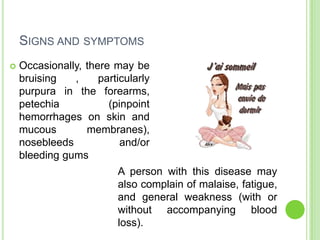
 Occasionally, there may be
bruising , particularly
purpura in the forearms,
petechia (pinpoint
hemorrhages on skin and
mucous membranes),
nosebleeds and/or
bleeding gums
A person with this disease may
also complain of malaise, fatigue,
and general weakness (with or
without accompanying blood
loss).
DIAGNOSIS
 Laboratory tests might include:
 full blood count
 liver enzymes
 renal function
 vitamin B12 levels
 folic acid levels
 erythrocyte sedimentation rate
 peripheral blood smear
TREATMENT
 The main concept in treating thrombocytopenia is to
eliminate the underlying problem, whether that
means discontinuing suspected drugs that cause
thrombocytopenia, or treating underlying sepsis.
 Thrombocytopenia affects a few percent of
newborns, and its prevalence in neonatal intensive
care units is high.
 Most of the cases of thrombocytopenia affect
preterm birth infants and are results of placental
insufficiency and/or fetal hypoxia.
Thrombocytopenia
Thrombocytopenia

Thrombocytopenia

  • 1.
  • 2.
     The termsthrombocytopenia refer to a relative decrease of platelets in blood.
  • 3.
    CAUSES  Vitamin B12or folic acid deficiency  Idiopathic thrombocytopenic purpura  Thrombocytopenia-inducing medications  Increased destruction  Decreased production of thrombopoietin by the liver in liver failure  Leukemia or myelodysplastic syndrome
  • 4.
    SIGNS AND SYMPTOMS Occasionally, there may be bruising , particularly purpura in the forearms, petechia (pinpoint hemorrhages on skin and mucous membranes), nosebleeds and/or bleeding gums A person with this disease may also complain of malaise, fatigue, and general weakness (with or without accompanying blood loss).
  • 5.
    DIAGNOSIS  Laboratory testsmight include:  full blood count  liver enzymes  renal function  vitamin B12 levels  folic acid levels  erythrocyte sedimentation rate  peripheral blood smear
  • 6.
    TREATMENT  The mainconcept in treating thrombocytopenia is to eliminate the underlying problem, whether that means discontinuing suspected drugs that cause thrombocytopenia, or treating underlying sepsis.
  • 7.
     Thrombocytopenia affectsa few percent of newborns, and its prevalence in neonatal intensive care units is high.  Most of the cases of thrombocytopenia affect preterm birth infants and are results of placental insufficiency and/or fetal hypoxia.