ECS Year 1 Learning &Thinking The Sociocultural Perspective 16 November 2009
In this session What is a sociocultural perspective and how does it differ from other theories of learning? Who was Vygotsky and what are the key principles of his theory of learning?
All, theorists agree we need to have explanations of how the mind works and how we learn. How do the following explain learning? Skinner’s behaviourist approach Piaget’s theory of mental development Gestalt theory The mind as a computer
What is a sociocultural perspective? Focuses on the social context as central to learning Stresses the importance of social interaction, communication and instruction in learning The social environment is not just a place  where learning happens, it is integral to it Explains individual differences in learning
Learning is a cultural activity Young children are seen as apprentices or novices in a culture They learn from more experienced members of that culture Learning takes place in formal or informal social contexts with siblings, parents, friends, acquaintances, teachers etc Children learn about the values, beliefs and practices of their community
While children gain knowledge and skills that are important to that community or group, they are also learning to become members of that community or group. Shobie talks about helping her children to recite the Qur’an S  Everything  we  read in Arabic has a meaning, an Islamic meaning. It is important C  And the children learn word for word? S:  Word for word. That’s right. And you have to say it in an  accurate way. I  can’t  make up a word. I  can’t  add anything or take out  anything. It has  to be said exactly the way we have been   taught for many, many hundred years.
‘ He makes up his own story   and I leave it. I don’t try to correct him because it’s nice. It’s nice that my son can use his imagination, make up words. So I let him read what he wants to read and then I sit back and read it to him and then I sort of say the words and get him to point.’
LS  Vygotsky 1896-1934 Russian Psychologist who transformed developmental psychology Work was banned under Stalin Inspired much original resrearch Translated into English in the 1960s and became very influential in Education in the 1980 and to this day. Learning through instruction is an important part of human intelligence
Vygotsky believed Education is not about learning knowledge and skills but for children to develop the capacity to think clearly and creatively, to plan and be able to communicate their understanding  The key to human intelligence is the ability to use different types of tools Just as we use  material tools  to extend our physical capacities (eg forks, levers, screwdrivers)  we use  psychological tools  to extend our mental capacities.
 
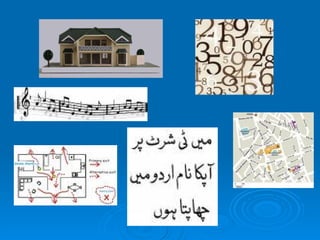
Cultural tools Symbolic systems that have been developed in the culture and passed on Vygotsky believed that the purpose of education was to introduce children to the full range of cultural tools and show them how to use them When children know how to use these cultural tools they can begin to plan and organise their own activities, express their own points of view, solve problems, interact freely with other people. Members of the culture can then use cultural tools dynamically to develop them  Eg writing - - - txt msgs.
Language Vygotsky believed language was the most important cultural tool because it: helps us to  make sense of  and act on the world  is the medium for  sharing knowledge is the basis of  thought
The interrelationship of language and thought External monologue Young children often keep a running commentary on what they are doing As they develop this becomes internalised as thought Speech structures mastered by children become the basic structures of their thinking.
Development takes place on two planes On a  social plane  through interaction On a  psychological level  as the learner internalises meanings For example : doing a jigsaw puzzle learning to read a picture book
The zone of proximal development (ZPD) The gap between what a child can do alone and what s/he can do with the help of a knowledgeable other Tasks and or actions that are just beyond their current capability A comfortable but challenging level Allows for joint construction between the child and the adult, internalised by the child, practised alone and generalised to new situations Means the child can achieve jointly what s/he could not achieve alone
Scaffolding  ( Wood, Bruner & Ross 1976) Not directly referred to by Vygotsky but central to socio-cultural perspective The scaffolder structures the activity so the novice can participate in a manageable part of the task and over time gradually reduces support Retains the complexity  of the task while simplifying the learner’s role. Outcome is the successful achievement of an activity

The socio cultural-perspective

  • 1.
    ECS Year 1Learning &Thinking The Sociocultural Perspective 16 November 2009
  • 2.
    In this sessionWhat is a sociocultural perspective and how does it differ from other theories of learning? Who was Vygotsky and what are the key principles of his theory of learning?
  • 3.
    All, theorists agreewe need to have explanations of how the mind works and how we learn. How do the following explain learning? Skinner’s behaviourist approach Piaget’s theory of mental development Gestalt theory The mind as a computer
  • 4.
    What is asociocultural perspective? Focuses on the social context as central to learning Stresses the importance of social interaction, communication and instruction in learning The social environment is not just a place where learning happens, it is integral to it Explains individual differences in learning
  • 5.
    Learning is acultural activity Young children are seen as apprentices or novices in a culture They learn from more experienced members of that culture Learning takes place in formal or informal social contexts with siblings, parents, friends, acquaintances, teachers etc Children learn about the values, beliefs and practices of their community
  • 6.
    While children gainknowledge and skills that are important to that community or group, they are also learning to become members of that community or group. Shobie talks about helping her children to recite the Qur’an S Everything we read in Arabic has a meaning, an Islamic meaning. It is important C And the children learn word for word? S: Word for word. That’s right. And you have to say it in an accurate way. I can’t make up a word. I can’t add anything or take out anything. It has to be said exactly the way we have been taught for many, many hundred years.
  • 7.
    ‘ He makesup his own story and I leave it. I don’t try to correct him because it’s nice. It’s nice that my son can use his imagination, make up words. So I let him read what he wants to read and then I sit back and read it to him and then I sort of say the words and get him to point.’
  • 8.
    LS Vygotsky1896-1934 Russian Psychologist who transformed developmental psychology Work was banned under Stalin Inspired much original resrearch Translated into English in the 1960s and became very influential in Education in the 1980 and to this day. Learning through instruction is an important part of human intelligence
  • 9.
    Vygotsky believed Educationis not about learning knowledge and skills but for children to develop the capacity to think clearly and creatively, to plan and be able to communicate their understanding The key to human intelligence is the ability to use different types of tools Just as we use material tools to extend our physical capacities (eg forks, levers, screwdrivers) we use psychological tools to extend our mental capacities.
  • 10.
  • 11.
    Cultural tools Symbolicsystems that have been developed in the culture and passed on Vygotsky believed that the purpose of education was to introduce children to the full range of cultural tools and show them how to use them When children know how to use these cultural tools they can begin to plan and organise their own activities, express their own points of view, solve problems, interact freely with other people. Members of the culture can then use cultural tools dynamically to develop them Eg writing - - - txt msgs.
  • 12.
    Language Vygotsky believedlanguage was the most important cultural tool because it: helps us to make sense of and act on the world is the medium for sharing knowledge is the basis of thought
  • 13.
    The interrelationship oflanguage and thought External monologue Young children often keep a running commentary on what they are doing As they develop this becomes internalised as thought Speech structures mastered by children become the basic structures of their thinking.
  • 14.
    Development takes placeon two planes On a social plane through interaction On a psychological level as the learner internalises meanings For example : doing a jigsaw puzzle learning to read a picture book
  • 15.
    The zone ofproximal development (ZPD) The gap between what a child can do alone and what s/he can do with the help of a knowledgeable other Tasks and or actions that are just beyond their current capability A comfortable but challenging level Allows for joint construction between the child and the adult, internalised by the child, practised alone and generalised to new situations Means the child can achieve jointly what s/he could not achieve alone
  • 16.
    Scaffolding (Wood, Bruner & Ross 1976) Not directly referred to by Vygotsky but central to socio-cultural perspective The scaffolder structures the activity so the novice can participate in a manageable part of the task and over time gradually reduces support Retains the complexity of the task while simplifying the learner’s role. Outcome is the successful achievement of an activity