EDUCATION FOR PEACE, 
HUMAN RIGHTS AND 
DEMOCRACY
Imagine a world where all children learn at 
school more than the traditional subjects, 
how to communicate in ways that contribute 
to harmonious relationships. They learn the 
skills to listen, to deal with frustrations and 
conflicts, to share empathy, develop 
compassion and respect differences. 
WHAT IS EDUCATION FOR PEACE? 
Education for peace is about creating a culture for 
peace. The UN Culture of Peace resolution of 1999 declared 
that now is the time to create a culture of peace between 
all of the UNs member countries, and declared the years 
2001 to 2010 to be the UN's decade for a culture for peace 
and nonviolence for all the children of the world. All 
countries that have signed this resolution have committed 
themselves to carry out active peace education.
In many schools today there is a great deal 
of good work aimed at nonviolence, peaceful 
resolution of conflicts, human rights, environment 
and development, democratic participation etc. 
Peace education should run like a silver thread 
through a the entire development of every pupil; all 
these themes should be included and put in the 
greater context of peace education.
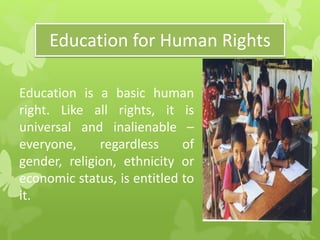
Education for Human Rights 
Education is a basic human 
right. Like all rights, it is 
universal and inalienable – 
everyone, regardless of 
gender, religion, ethnicity or 
economic status, is entitled to 
it.
Article 26 of the 1948 Universal 
Declaration of Human Rights states 
that “EVERYONE HAS THE RIGHT 
TO EDUCATION”. 
Education is not only a right but a passport to 
human development.
 The United Nations Convention on 
the Rights of the Child (1989) further 
strengthens and broadens the concept of 
the right to education, in particular 
through the obligation to consider in its 
implementation the Convention’s four 
core principles: nondiscrimination; the 
best interests of the child; the right to 
life, survival and development of the 
child to the maximum extent possible; 
and the right of children to express their 
views in all matters affecting them and 
for their views to be given due weight in 
accordance with their age and maturity.
These underlying principles make clear a 
strong commitment to ensuring that children are 
recognized as active agents in their own learning 
and that education is designed to promote and 
respect their rights and needs. 
The 1987 Constitution likewise guarantees the right 
to education of every Filipino. It provided that, “The 
State shall protect and promote the right of all 
citizens to quality education at all levels and shall 
take appropriate steps to make education accessible 
to all.”
Democracy in Education 
It is sometimes argued 
that the larger purpose of all 
educators is to foster 
democracy. But what do we 
mean by democracy and 
what is involved in a 
democratic education?
Democratic Education 
Democratic education aims to develop 
real democracy through active 
participation by all those involved in 
classrooms and educational institutions. 
In democratic education students have 
the power to make decisions about their 
learning, because power is shared rather 
than appropriated in advance by a 
minority of people.
Democratic Education 
Democratic education is likely 
to develop a sense of community 
amongst a group of students and 
a partnership between teachers 
and learners based on mutual 
trust in the capability and creative 
ability of all those involved in a 
particular learning process.
THANK YOU!!!

6. education for peace (emily)

  • 1.
    EDUCATION FOR PEACE, HUMAN RIGHTS AND DEMOCRACY
  • 3.
    Imagine a worldwhere all children learn at school more than the traditional subjects, how to communicate in ways that contribute to harmonious relationships. They learn the skills to listen, to deal with frustrations and conflicts, to share empathy, develop compassion and respect differences. WHAT IS EDUCATION FOR PEACE? Education for peace is about creating a culture for peace. The UN Culture of Peace resolution of 1999 declared that now is the time to create a culture of peace between all of the UNs member countries, and declared the years 2001 to 2010 to be the UN's decade for a culture for peace and nonviolence for all the children of the world. All countries that have signed this resolution have committed themselves to carry out active peace education.
  • 4.
    In many schoolstoday there is a great deal of good work aimed at nonviolence, peaceful resolution of conflicts, human rights, environment and development, democratic participation etc. Peace education should run like a silver thread through a the entire development of every pupil; all these themes should be included and put in the greater context of peace education.
  • 5.
    Education for HumanRights Education is a basic human right. Like all rights, it is universal and inalienable – everyone, regardless of gender, religion, ethnicity or economic status, is entitled to it.
  • 6.
    Article 26 ofthe 1948 Universal Declaration of Human Rights states that “EVERYONE HAS THE RIGHT TO EDUCATION”. Education is not only a right but a passport to human development.
  • 7.
     The UnitedNations Convention on the Rights of the Child (1989) further strengthens and broadens the concept of the right to education, in particular through the obligation to consider in its implementation the Convention’s four core principles: nondiscrimination; the best interests of the child; the right to life, survival and development of the child to the maximum extent possible; and the right of children to express their views in all matters affecting them and for their views to be given due weight in accordance with their age and maturity.
  • 8.
    These underlying principlesmake clear a strong commitment to ensuring that children are recognized as active agents in their own learning and that education is designed to promote and respect their rights and needs. The 1987 Constitution likewise guarantees the right to education of every Filipino. It provided that, “The State shall protect and promote the right of all citizens to quality education at all levels and shall take appropriate steps to make education accessible to all.”
  • 9.
    Democracy in Education It is sometimes argued that the larger purpose of all educators is to foster democracy. But what do we mean by democracy and what is involved in a democratic education?
  • 10.
    Democratic Education Democraticeducation aims to develop real democracy through active participation by all those involved in classrooms and educational institutions. In democratic education students have the power to make decisions about their learning, because power is shared rather than appropriated in advance by a minority of people.
  • 11.
    Democratic Education Democraticeducation is likely to develop a sense of community amongst a group of students and a partnership between teachers and learners based on mutual trust in the capability and creative ability of all those involved in a particular learning process.
  • 12.