The Middle Passage
Today’s lesson
We are developing our knowledge of the experience of
enslaved Africans on the middle passage.
Today will be able to:
1) Describe the living conditions aboard slave ships on the middle
passage.
2) Describe slave-resistance onboard these ships.
Today’s lesson will involve:
1) Note taking
2) Video Task
3) National 5 level question
The Middle Passage
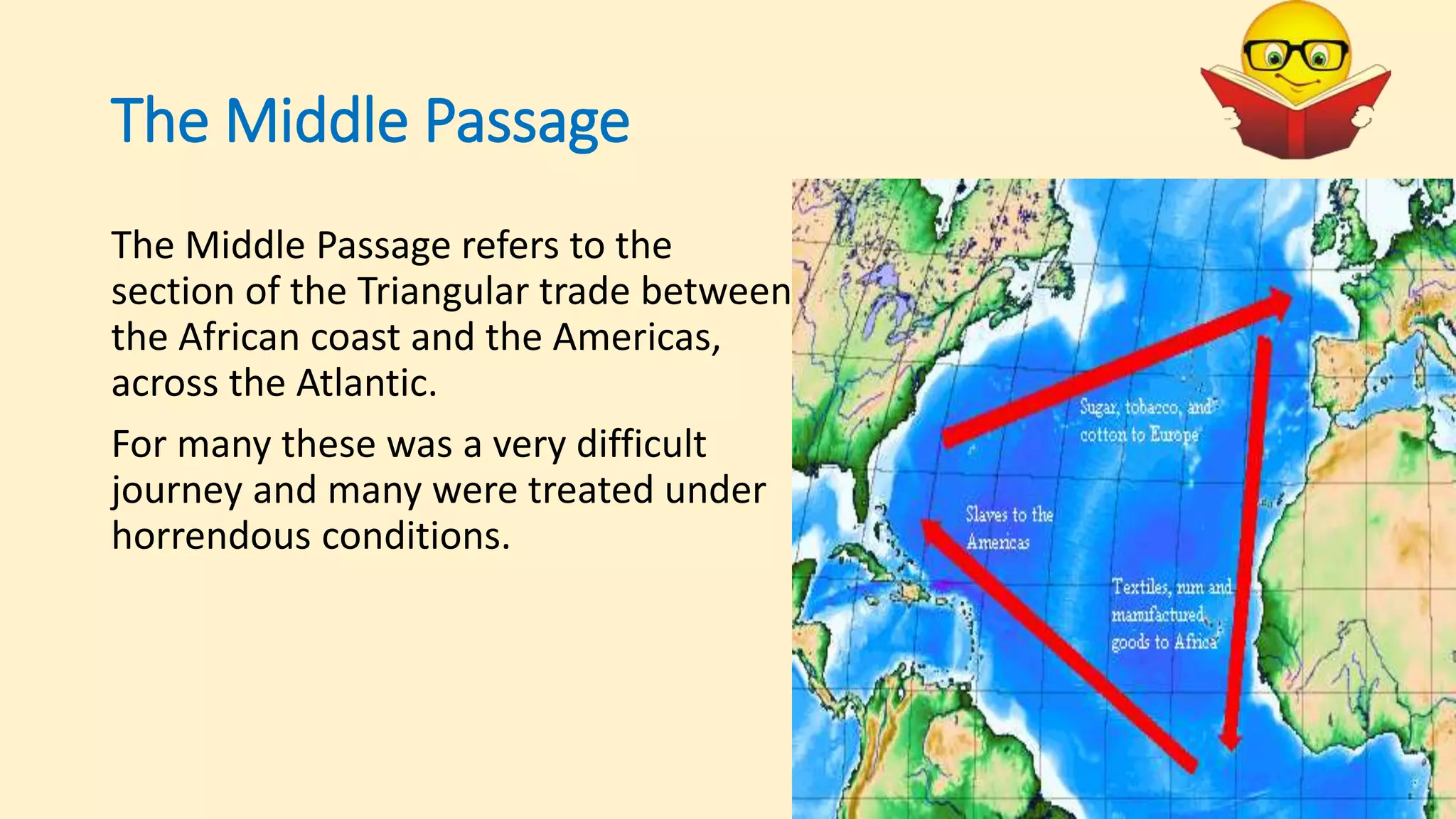
The Middle Passage refers to the
section of the Triangular trade between
the African coast and the Americas,
across the Atlantic.
For many these was a very difficult
journey and many were treated under
horrendous conditions.
Living Conditions in the Middle Passage
Life on the middle passage was very difficult due to
the living conditions.
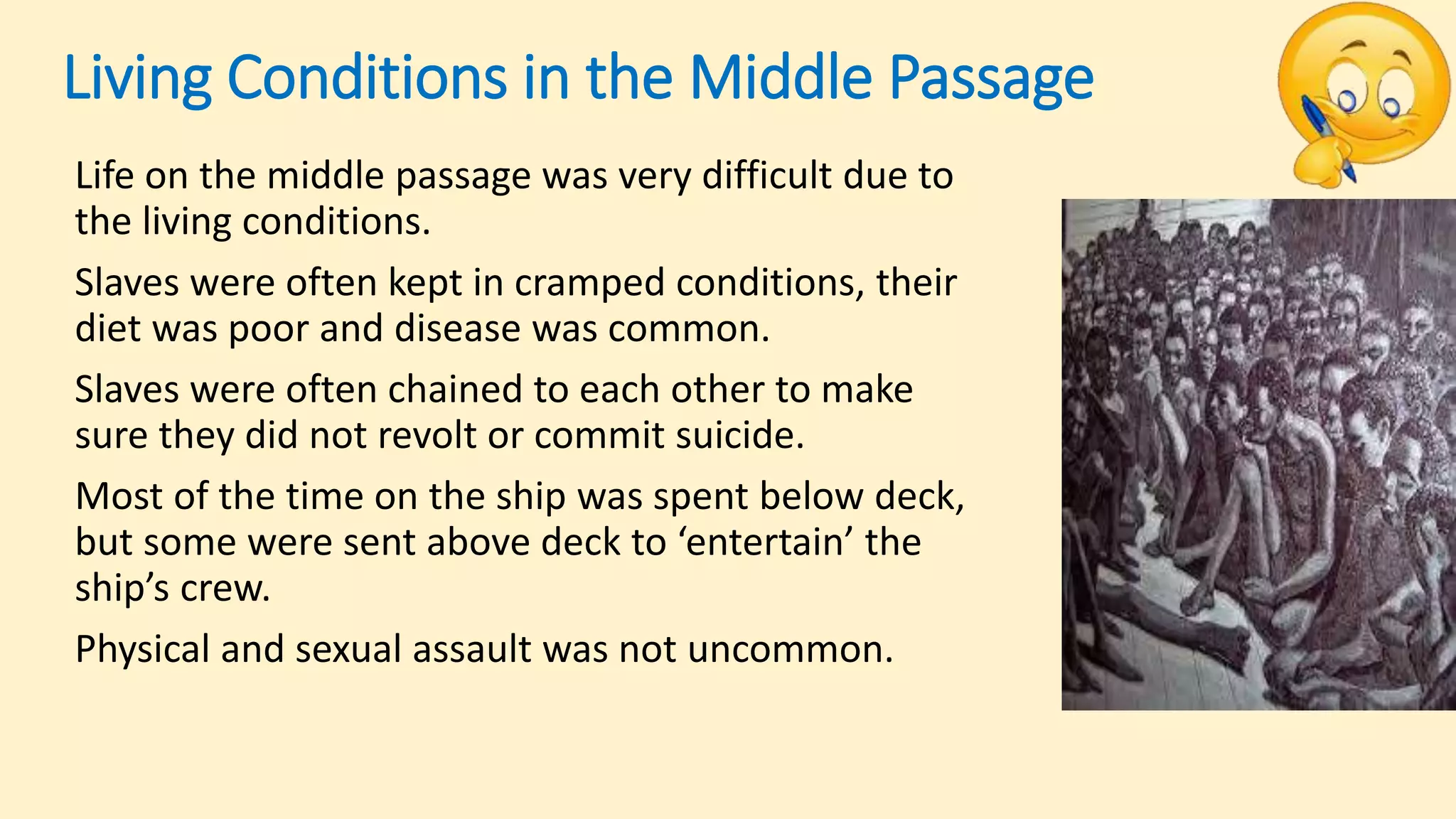
Slaves were often kept in cramped conditions, their
diet was poor and disease was common.
Slaves were often chained to each other to make
sure they did not revolt or commit suicide.
Most of the time on the ship was spent below deck,
but some were sent above deck to ‘entertain’ the
ship’s crew.
Physical and sexual assault was not uncommon.
On the ships slaves were often packed in as tight as
possible so the crew can transport as many slaves as
possible.
However, some ships did not pack their slaves so
tightly as they believed more would survive that way.
Life on the ship
On the ship, slaves often performed tasks such as cleaning the deck.
Some even were forced to sing and dance for the crew.
Their diet on-board was very poor consisting only of food such as
boiled rice and porridge.
Disease on the ship
Due to the poor diet and tight living conditions, disease was very
common.
Dysentery and yellow fever were common conditions. A real problem in
the spread of disease was that because slaves were so cramped they
were often covered in each others bodily fluids such as vomit and
urine.
Video task
Watch the following video on conditions on the middle passage and
add 2 points to your notes.
Also write down an additional 2 points about the Zong.
https://www.youtube.com/watch?v=PmQvofAiZGA
Slave revolts
Slave revolts often occurred on the ship. Slaves often tried to take
control of the ship. These were often unsuccessful as slaves did not
know how to pilot the ship.
There are many examples of slave rebellion including:
1) The Amistad rebellion of 1839 where slaves took control of the ship,
killing most of the crew. The slaves were put on trial but were
released as they were victims of kidnapping.
Not all slave revolts involved killing the crew, slaves often committed
suicide by going on hunger strike or jumping overboard.
Slave punishments
Slave ship crews used various punishments to
stop rebellions. Like on land the most common
punishment was whipping.
Other methods included withholding food or
thumbscrews.
Slaves who rebelled could even be thrown
overboard.
Sharks which terrified the crew, often followed
slave ships due to the dead bodies that were
thrown overboard.
National 5 Question
1) Describe the conditions for slaves during the middle passage – 4
marks.

The Middle Passage

  • 1.
  • 2.
    Today’s lesson We aredeveloping our knowledge of the experience of enslaved Africans on the middle passage. Today will be able to: 1) Describe the living conditions aboard slave ships on the middle passage. 2) Describe slave-resistance onboard these ships. Today’s lesson will involve: 1) Note taking 2) Video Task 3) National 5 level question
  • 3.
    The Middle Passage TheMiddle Passage refers to the section of the Triangular trade between the African coast and the Americas, across the Atlantic. For many these was a very difficult journey and many were treated under horrendous conditions.
  • 4.
    Living Conditions inthe Middle Passage Life on the middle passage was very difficult due to the living conditions. Slaves were often kept in cramped conditions, their diet was poor and disease was common. Slaves were often chained to each other to make sure they did not revolt or commit suicide. Most of the time on the ship was spent below deck, but some were sent above deck to ‘entertain’ the ship’s crew. Physical and sexual assault was not uncommon.
  • 5.
    On the shipsslaves were often packed in as tight as possible so the crew can transport as many slaves as possible. However, some ships did not pack their slaves so tightly as they believed more would survive that way.
  • 6.
    Life on theship On the ship, slaves often performed tasks such as cleaning the deck. Some even were forced to sing and dance for the crew. Their diet on-board was very poor consisting only of food such as boiled rice and porridge.
  • 7.
    Disease on theship Due to the poor diet and tight living conditions, disease was very common. Dysentery and yellow fever were common conditions. A real problem in the spread of disease was that because slaves were so cramped they were often covered in each others bodily fluids such as vomit and urine.
  • 8.
    Video task Watch thefollowing video on conditions on the middle passage and add 2 points to your notes. Also write down an additional 2 points about the Zong. https://www.youtube.com/watch?v=PmQvofAiZGA
  • 9.
    Slave revolts Slave revoltsoften occurred on the ship. Slaves often tried to take control of the ship. These were often unsuccessful as slaves did not know how to pilot the ship. There are many examples of slave rebellion including: 1) The Amistad rebellion of 1839 where slaves took control of the ship, killing most of the crew. The slaves were put on trial but were released as they were victims of kidnapping. Not all slave revolts involved killing the crew, slaves often committed suicide by going on hunger strike or jumping overboard.
  • 10.
    Slave punishments Slave shipcrews used various punishments to stop rebellions. Like on land the most common punishment was whipping. Other methods included withholding food or thumbscrews. Slaves who rebelled could even be thrown overboard. Sharks which terrified the crew, often followed slave ships due to the dead bodies that were thrown overboard.
  • 11.
    National 5 Question 1)Describe the conditions for slaves during the middle passage – 4 marks.