
The Kyoto Protocol
Reaching Global Agreements 1997
What is the Kyoto Protocol?
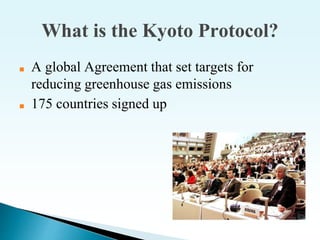
■ A global Agreement that set targets for
reducing greenhouse gas emissions
■ 175 countries signed up
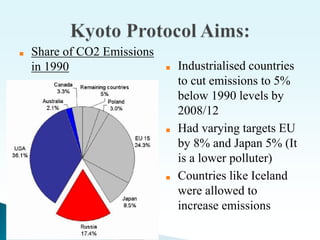
■ Share of CO2 Emissions
in 1990 ■ Industrialised countries
to cut emissions to 5%
below 1990 levels by
2008/12
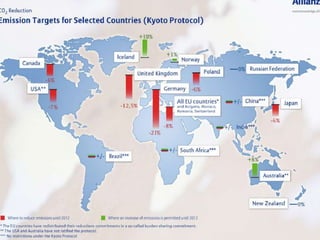
■ Had varying targets EU
by 8% and Japan 5% (It
is a lower polluter)
■ Countries like Iceland
were allowed to
increase emissions
Problems
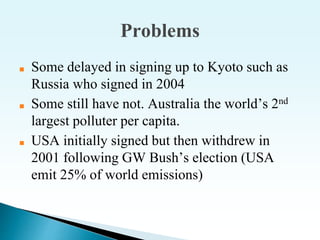
■ Some delayed in signing up to Kyoto such as
Russia who signed in 2004
■ Some still have not. Australia the world’s 2nd
largest polluter per capita.
■ USA initially signed but then withdrew in
2001 following GW Bush’s election (USA
emit 25% of world emissions)
■ Overall most Industrialised
countries such as UK cut
emissions to 3% below 1990
by 2000
■ Collapse of former USSR
mainly the reason
■ Emissions from other high
emitters actually rose 8%
■ UN reckons it will emit 10%
ABOVE 1990 levels by
2010
■ Many developing countries signed up but
didn’t commit to actual figures.
■ The EU will meet its target France, Sweden
and UK did
■ Spain, Portugal and Ireland have made no
progress.
■ Many scientists believe Kyoto targets are far to
low and believe not 5% but 60% is necessary.
Implications for the UK
■ A change from coal to cleaner gas fired power
stations has helped reduce emissions
■ Renewable energy policy of 10% of electricity is
near to target yet unlikely to reach it as a whole
■ Government has taxed petrol to help curb
demand. Protests have followed and are likely to
continue.
■ Big reductions can only be met by moving to
nuclear however this brings it’s own set of issues
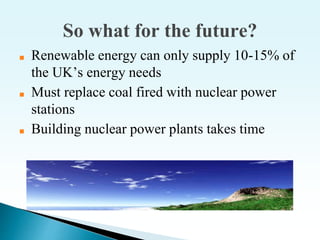
So what for the future?
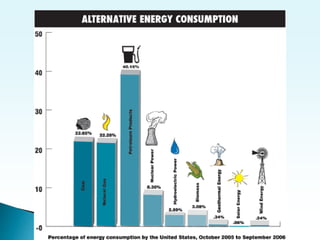
■ Renewable energy can only supply 10-15% of
the UK’s energy needs
■ Must replace coal fired with nuclear power
stations
■ Building nuclear power plants takes time
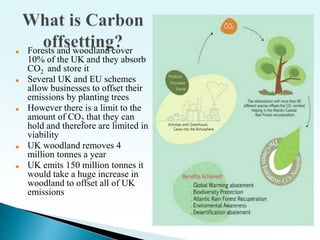
■ Forests and woodland cover
10% of the UK and they absorb
CO2 and store it
■ Several UK and EU schemes
allow businesses to offset their
emissions by planting trees
■ However there is a limit to the
amount of CO2 that they can
hold and therefore are limited in
viability
■ UK woodland removes 4
million tonnes a year
■ UK emits 150 million tonnes it
would take a huge increase in
woodland to offset all of UK
emissions
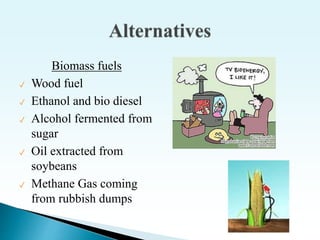
Biomass fuels
✓ Wood fuel
✓ Ethanol and bio diesel
✓ Alcohol fermented from
sugar
✓ Oil extracted from
soybeans
✓ Methane Gas coming
from rubbish dumps
Problems
■ Unfortunately these rely on removing plants
from the planet thus removing a carbon sink
and need to be followed by mass replanting
schemes
■ Growing biofuels reduces the land available to
grow food
Reducing Our Carbon footprint
■ Individuals can make a difference
■ Turn lights out
■ Don’t leave on ‘Stand-by’
■ Walk or ride rather than drive
■ Take the bus or public transport
■ Get eco friendly washing machines, fridges etc
■ Together it can make a difference.
■ 2006 UK Govt reviewed
global warming
■ Focused on impacts and
the actions needed
■ Argued it could be
reduced if emissions
were stabilised by 2025
and fell 1-3% annually
thereafter
■ Costs would be 1% of
GDP to invest.
Key Features
■ Increased global flood risk
■ Fall in crop yields especially Africa due to
climate shifts
■ Rising sea levels effecting 200m people
■ Extinction of 40% of earth’s species due to
destruction of coral reefs
Economic Impacts
■ More extreme weather leads to increased costs
equal to 1% of GDP
■ 2-3oC rise in temps reducing global economic
output by 3%
■ Poor countries ability to cope would be
reduced with lack of basics like water
Options
■ Reduce demand for heavily polluting goods
and services
■ Improve efficiency of global energy supply
■ Prevent global deforestation
■ Promote cleaner energy technology
UK Government Response
■ Set targets to reduce emissions by 30% by
2020 and 60% by 2050
■ Pass laws on carbon reduction targets
■ Invest in green technology creating 100,00
new jobs
■ Create a $20 billion World Bank Fund to help
poorer countries
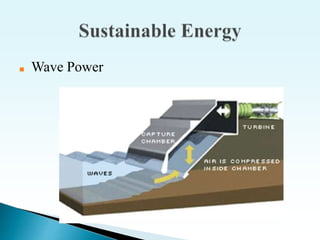
■ Wave Power
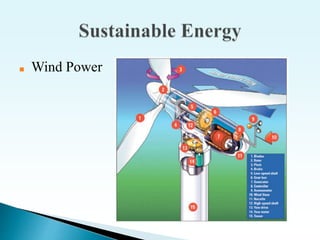
■ Wind Power
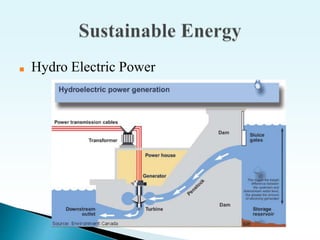
■ Hydro Electric Power
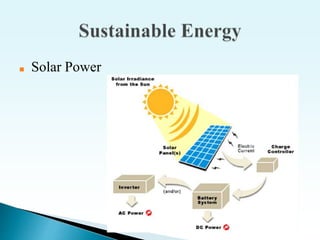
■ Solar Power
Sustainable Energy
■ Wind
■ Wave
■ Water
■ Solar
■ These account for only 2% of world electricity
production
■ What are there criticisms?
Costs
■ It would be very expensive to shift to these
power sources
■ Governments do not like to reduce national
income
■ Growth that is fossil fuel driven needs to end

The Kyoto protocol

  • 1.
    The Kyoto Protocol ReachingGlobal Agreements 1997
  • 2.
    What is theKyoto Protocol? ■ A global Agreement that set targets for reducing greenhouse gas emissions ■ 175 countries signed up
  • 3.
    ■ Share ofCO2 Emissions in 1990 ■ Industrialised countries to cut emissions to 5% below 1990 levels by 2008/12 ■ Had varying targets EU by 8% and Japan 5% (It is a lower polluter) ■ Countries like Iceland were allowed to increase emissions
  • 5.
    Problems ■ Some delayedin signing up to Kyoto such as Russia who signed in 2004 ■ Some still have not. Australia the world’s 2nd largest polluter per capita. ■ USA initially signed but then withdrew in 2001 following GW Bush’s election (USA emit 25% of world emissions)
  • 7.
    ■ Overall mostIndustrialised countries such as UK cut emissions to 3% below 1990 by 2000 ■ Collapse of former USSR mainly the reason ■ Emissions from other high emitters actually rose 8% ■ UN reckons it will emit 10% ABOVE 1990 levels by 2010
  • 8.
    ■ Many developingcountries signed up but didn’t commit to actual figures. ■ The EU will meet its target France, Sweden and UK did ■ Spain, Portugal and Ireland have made no progress. ■ Many scientists believe Kyoto targets are far to low and believe not 5% but 60% is necessary.
  • 9.
    Implications for theUK ■ A change from coal to cleaner gas fired power stations has helped reduce emissions ■ Renewable energy policy of 10% of electricity is near to target yet unlikely to reach it as a whole ■ Government has taxed petrol to help curb demand. Protests have followed and are likely to continue. ■ Big reductions can only be met by moving to nuclear however this brings it’s own set of issues
  • 10.
    So what forthe future? ■ Renewable energy can only supply 10-15% of the UK’s energy needs ■ Must replace coal fired with nuclear power stations ■ Building nuclear power plants takes time
  • 11.
    ■ Forests andwoodland cover 10% of the UK and they absorb CO2 and store it ■ Several UK and EU schemes allow businesses to offset their emissions by planting trees ■ However there is a limit to the amount of CO2 that they can hold and therefore are limited in viability ■ UK woodland removes 4 million tonnes a year ■ UK emits 150 million tonnes it would take a huge increase in woodland to offset all of UK emissions
  • 12.
    Biomass fuels ✓ Woodfuel ✓ Ethanol and bio diesel ✓ Alcohol fermented from sugar ✓ Oil extracted from soybeans ✓ Methane Gas coming from rubbish dumps
  • 13.
    Problems ■ Unfortunately theserely on removing plants from the planet thus removing a carbon sink and need to be followed by mass replanting schemes ■ Growing biofuels reduces the land available to grow food
  • 15.
    Reducing Our Carbonfootprint ■ Individuals can make a difference ■ Turn lights out ■ Don’t leave on ‘Stand-by’ ■ Walk or ride rather than drive ■ Take the bus or public transport ■ Get eco friendly washing machines, fridges etc ■ Together it can make a difference.
  • 16.
    ■ 2006 UKGovt reviewed global warming ■ Focused on impacts and the actions needed ■ Argued it could be reduced if emissions were stabilised by 2025 and fell 1-3% annually thereafter ■ Costs would be 1% of GDP to invest.
  • 17.
    Key Features ■ Increasedglobal flood risk ■ Fall in crop yields especially Africa due to climate shifts ■ Rising sea levels effecting 200m people ■ Extinction of 40% of earth’s species due to destruction of coral reefs
  • 18.
    Economic Impacts ■ Moreextreme weather leads to increased costs equal to 1% of GDP ■ 2-3oC rise in temps reducing global economic output by 3% ■ Poor countries ability to cope would be reduced with lack of basics like water
  • 20.
    Options ■ Reduce demandfor heavily polluting goods and services ■ Improve efficiency of global energy supply ■ Prevent global deforestation ■ Promote cleaner energy technology
  • 21.
    UK Government Response ■Set targets to reduce emissions by 30% by 2020 and 60% by 2050 ■ Pass laws on carbon reduction targets ■ Invest in green technology creating 100,00 new jobs ■ Create a $20 billion World Bank Fund to help poorer countries
  • 22.
  • 23.
  • 24.
  • 25.
  • 26.
    Sustainable Energy ■ Wind ■Wave ■ Water ■ Solar ■ These account for only 2% of world electricity production ■ What are there criticisms?
  • 27.
    Costs ■ It wouldbe very expensive to shift to these power sources ■ Governments do not like to reduce national income ■ Growth that is fossil fuel driven needs to end