The Impact of 5th Generation WiFi (802.11ac)
                         Dr. Mazlan Abbas
                          MIMOS Berhad

 mazlan.abbas@mimos.my       @mazlan_abbas   Dr. Mazlan Abbas
Wi-Fi ac is
inevitable...
But questions remain


                          What will
         What is ac?      drive
                         adoption?


       When can we     What will the
        expect it?      impact be?
Wi-Fi ac a quick primer


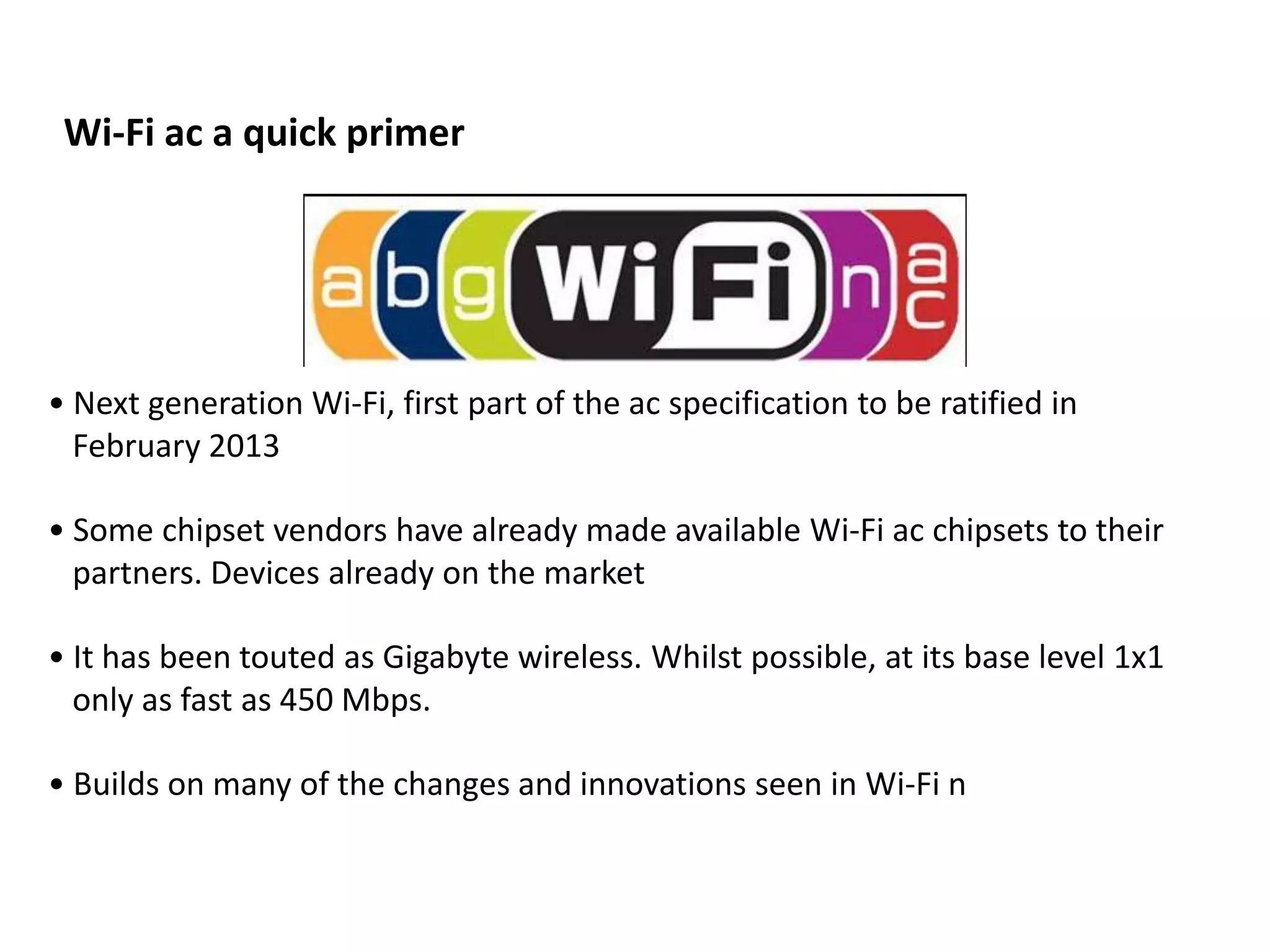
• Next generation Wi-Fi, first part of the ac specification to be ratified in
  February 2013

• Some chipset vendors have already made available Wi-Fi ac chipsets to their
  partners. Devices already on the market

• It has been touted as Gigabyte wireless. Whilst possible, at its base level 1x1
  only as fast as 450 Mbps.

• Builds on many of the changes and innovations seen in Wi-Fi n
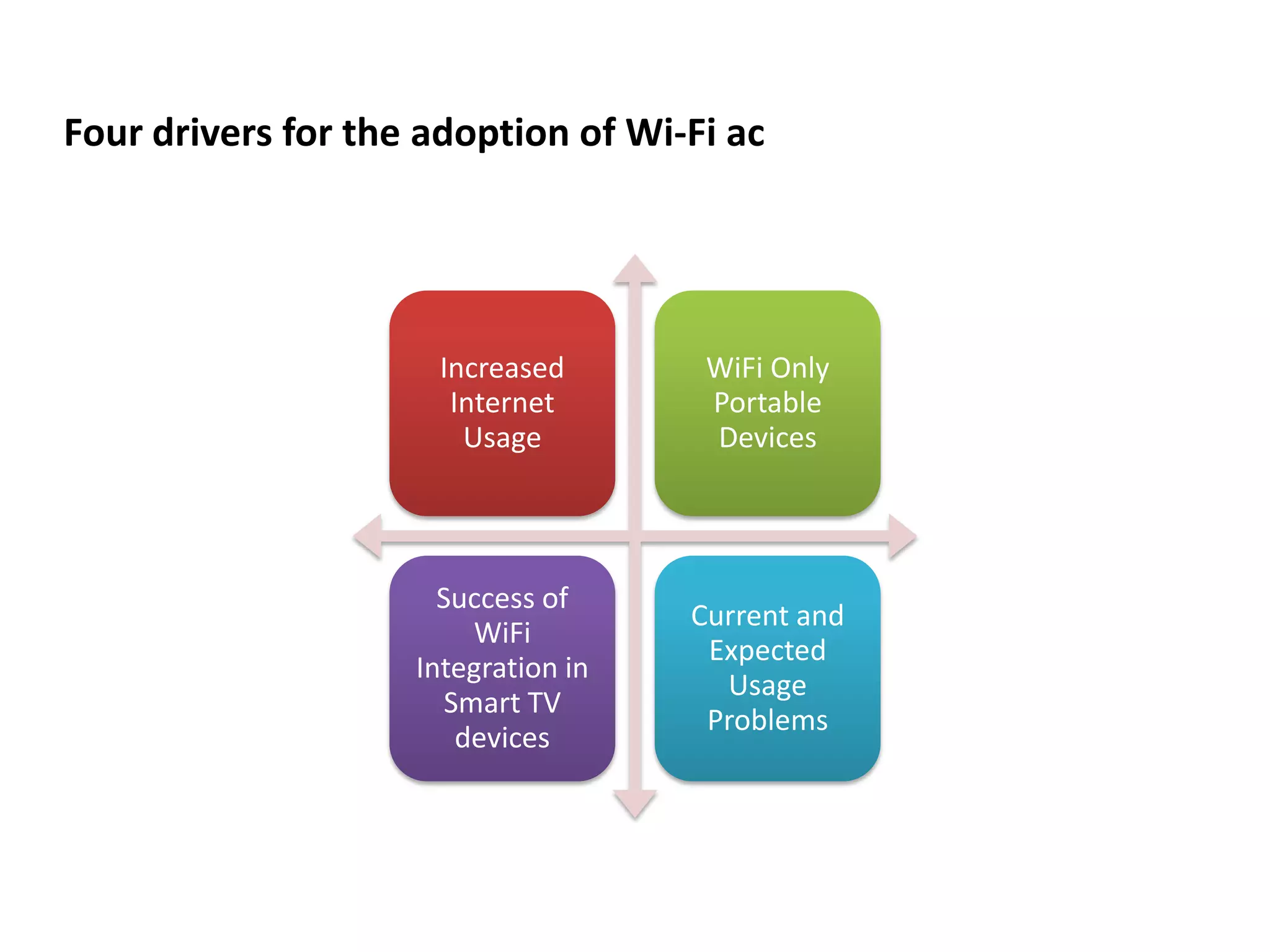
Four drivers for the adoption of Wi-Fi ac


                    Increased         Wi-Fi only
                      Increased      WiFi Only
                     internet
                       Internet       portable
                                     Portable
                       usage
                        Usage          devices
                                     Devices


                    Success of
                      Success of
                                    Current andand
                                     Current
                         WiFi
                        Wi-Fi in     Expected
                    Integration       expected
                                      Usage
                  integration in
                       Smart TV          usage
                                     Problems
                    Smart TV
                        devices
                                      problems
                      devices
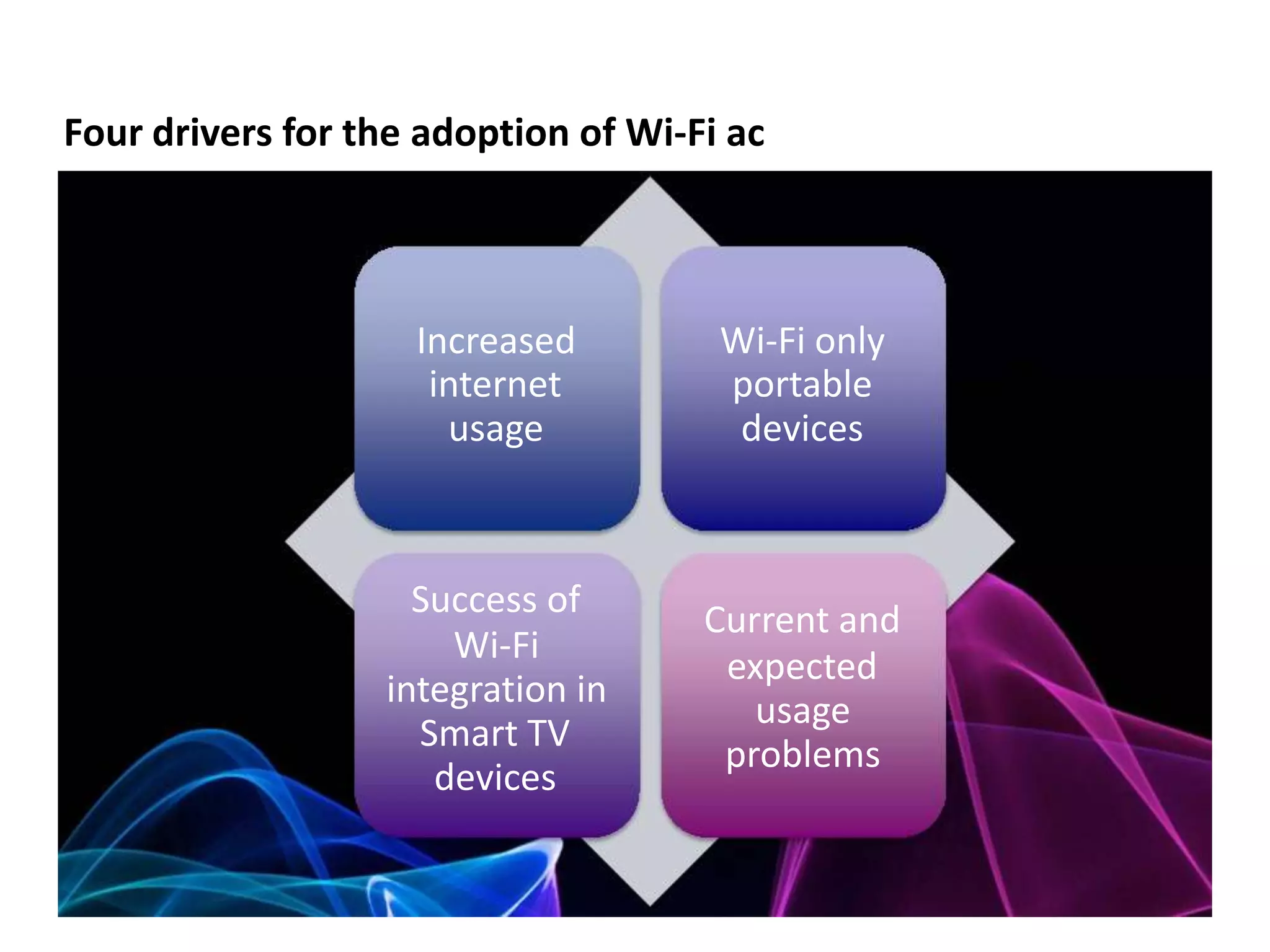
Four drivers for the adoption of Wi-Fi ac


                    Increased         Wi-Fi only
                     internet         portable
                      usage            devices


                    Success of       Current and
                      Wi-Fi
                                      expected
                  integration in
                                        usage
                    Smart TV
                                      problems
                     devices
1. Increased internet usage
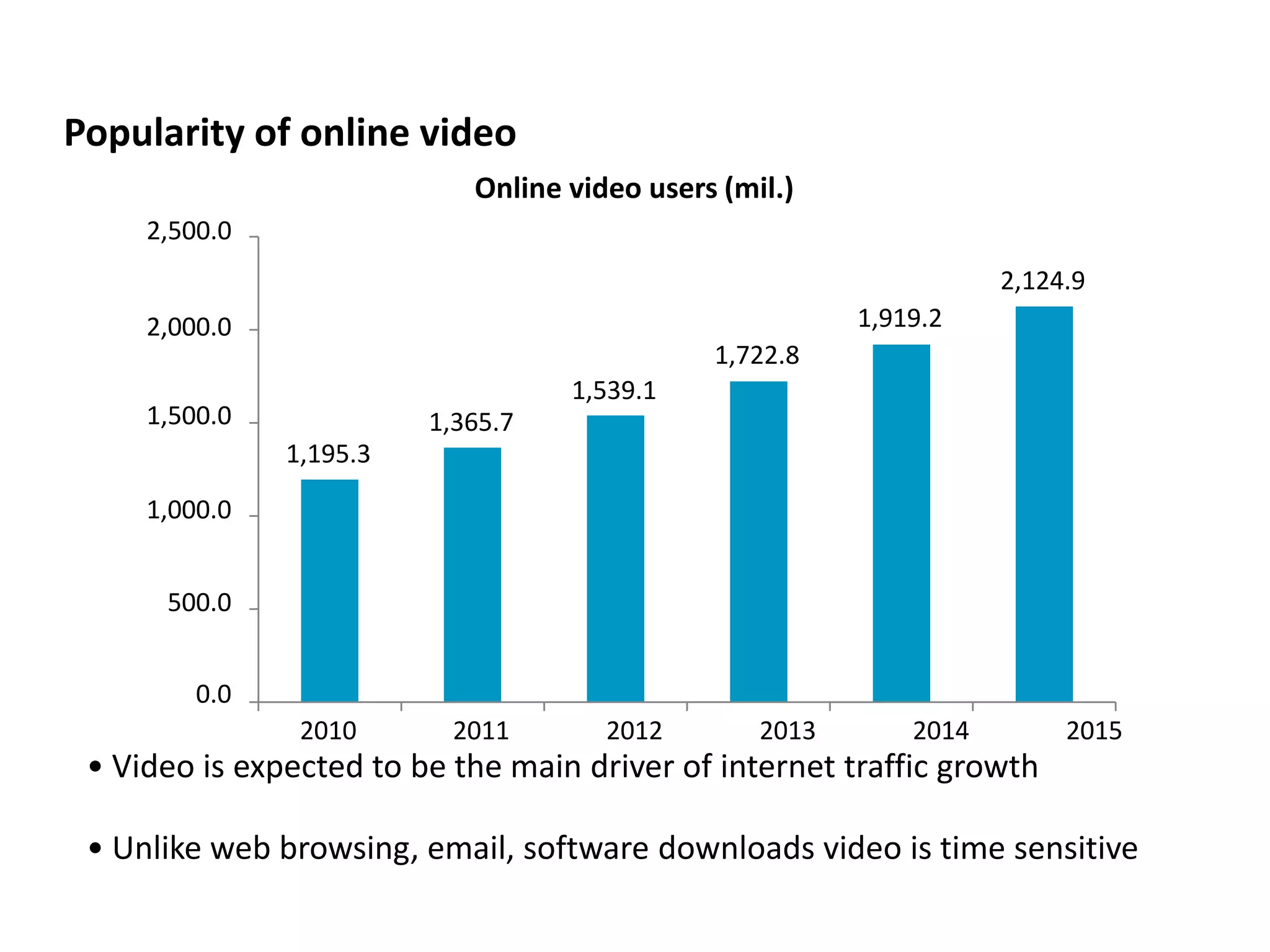
Popularity of online video
                            Online video users (mil.)
     2,500.0
                                                                    2,124.9
     2,000.0                                             1,919.2
                                              1,722.8
                                   1,539.1
     1,500.0             1,365.7
               1,195.3
     1,000.0


      500.0


         0.0
                2010       2011       2012        2013       2014        2015
 • Video is expected to be the main driver of internet traffic growth

 • Unlike web browsing, email, software downloads video is time sensitive
2. Portable devices
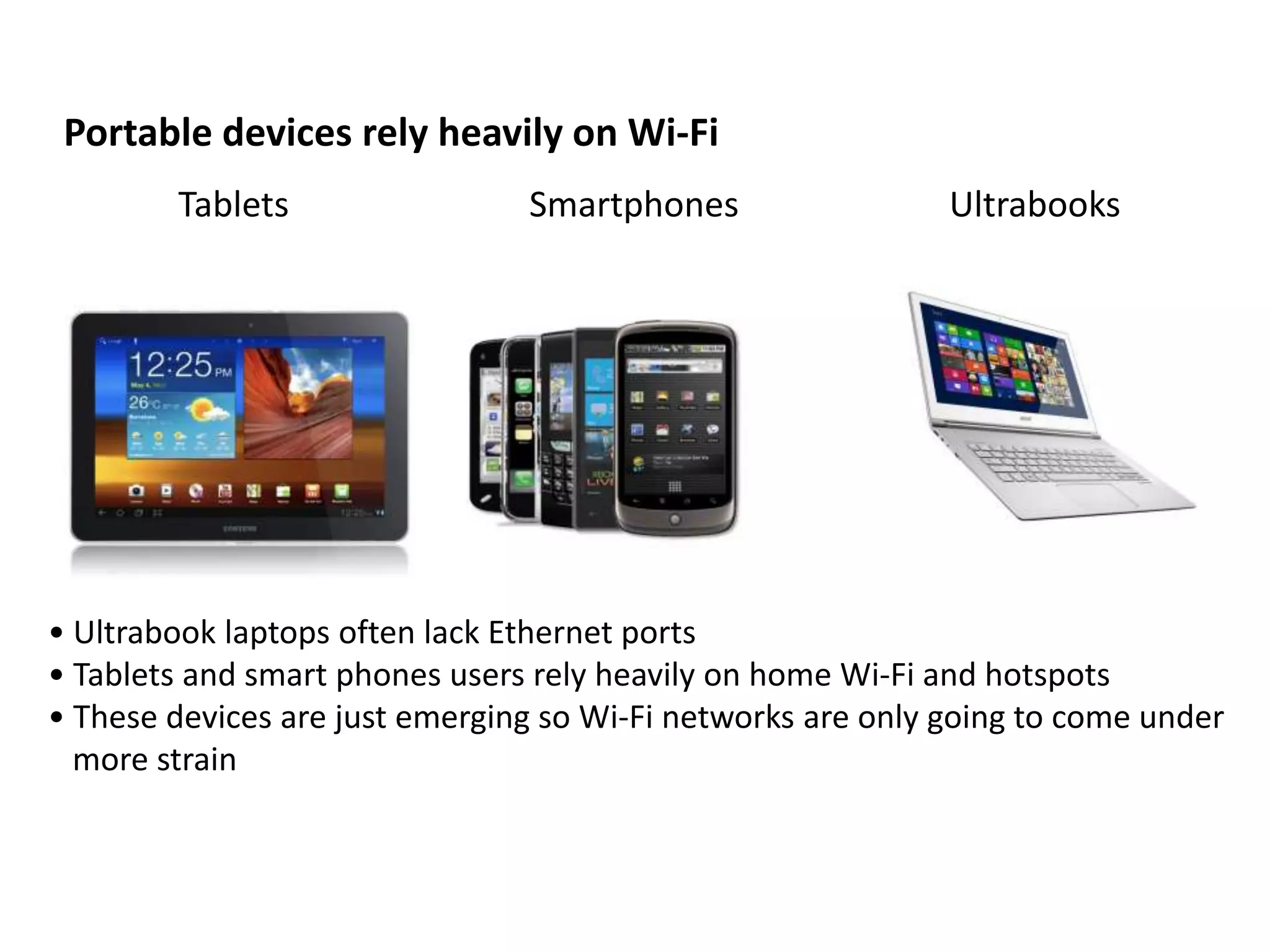
Portable devices rely heavily on Wi-Fi
        Tablets                 Smartphones                  Ultrabooks


• Ultrabook laptops often lack Ethernet ports
• Tablets and smart phones users rely heavily on home Wi-Fi and hotspots
• These devices are just emerging so Wi-Fi networks are only going to come under
  more strain
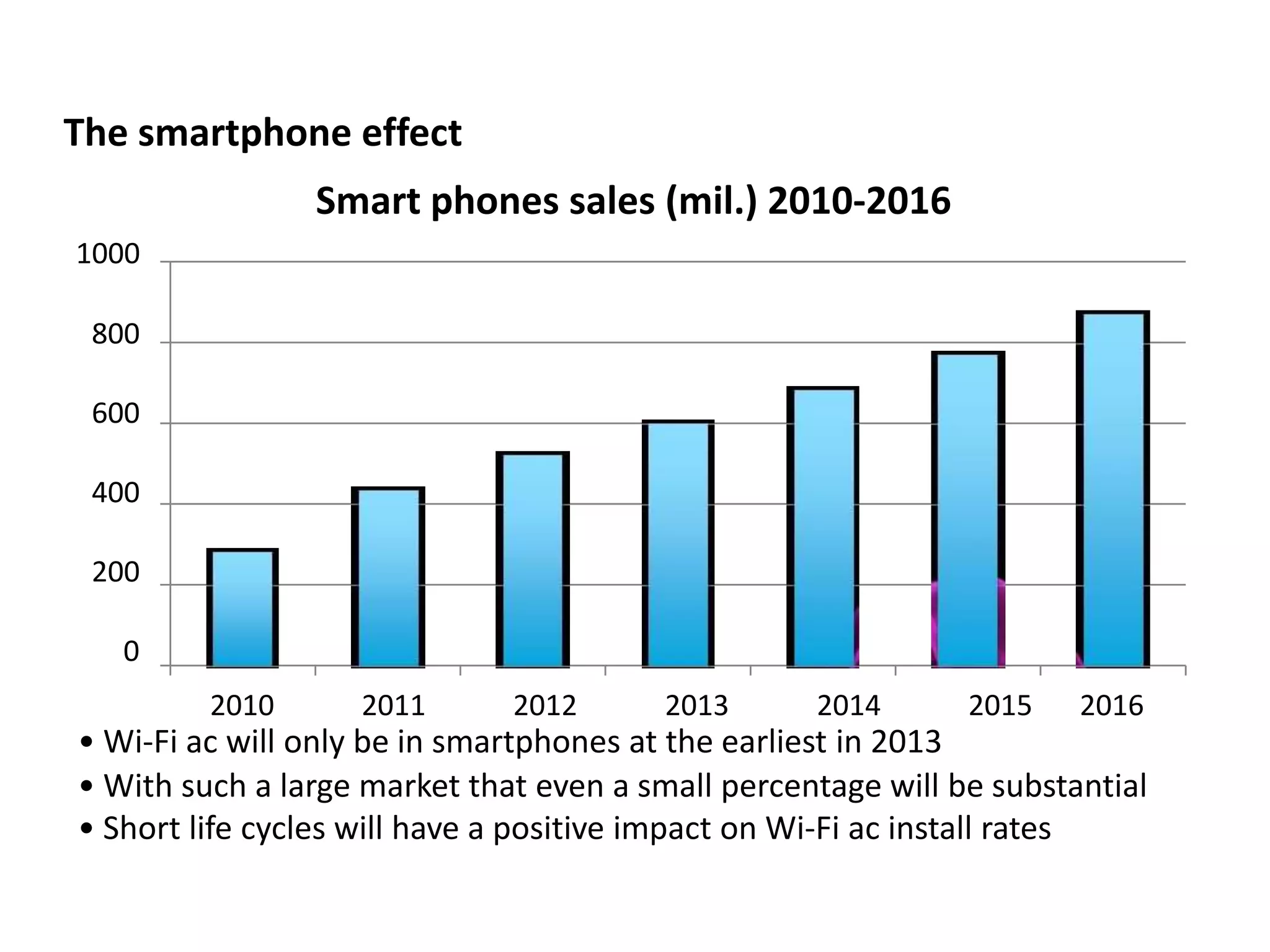
The smartphone effect
                Smart phones sales (mil.) 2010-2016
1000

 800

 600

 400

 200

   0
         2010      2011       2012       2013      2014       2015    2016
• Wi-Fi ac will only be in smartphones at the earliest in 2013
• With such a large market that even a small percentage will be substantial
• Short life cycles will have a positive impact on Wi-Fi ac install rates
3. Smart TV devices
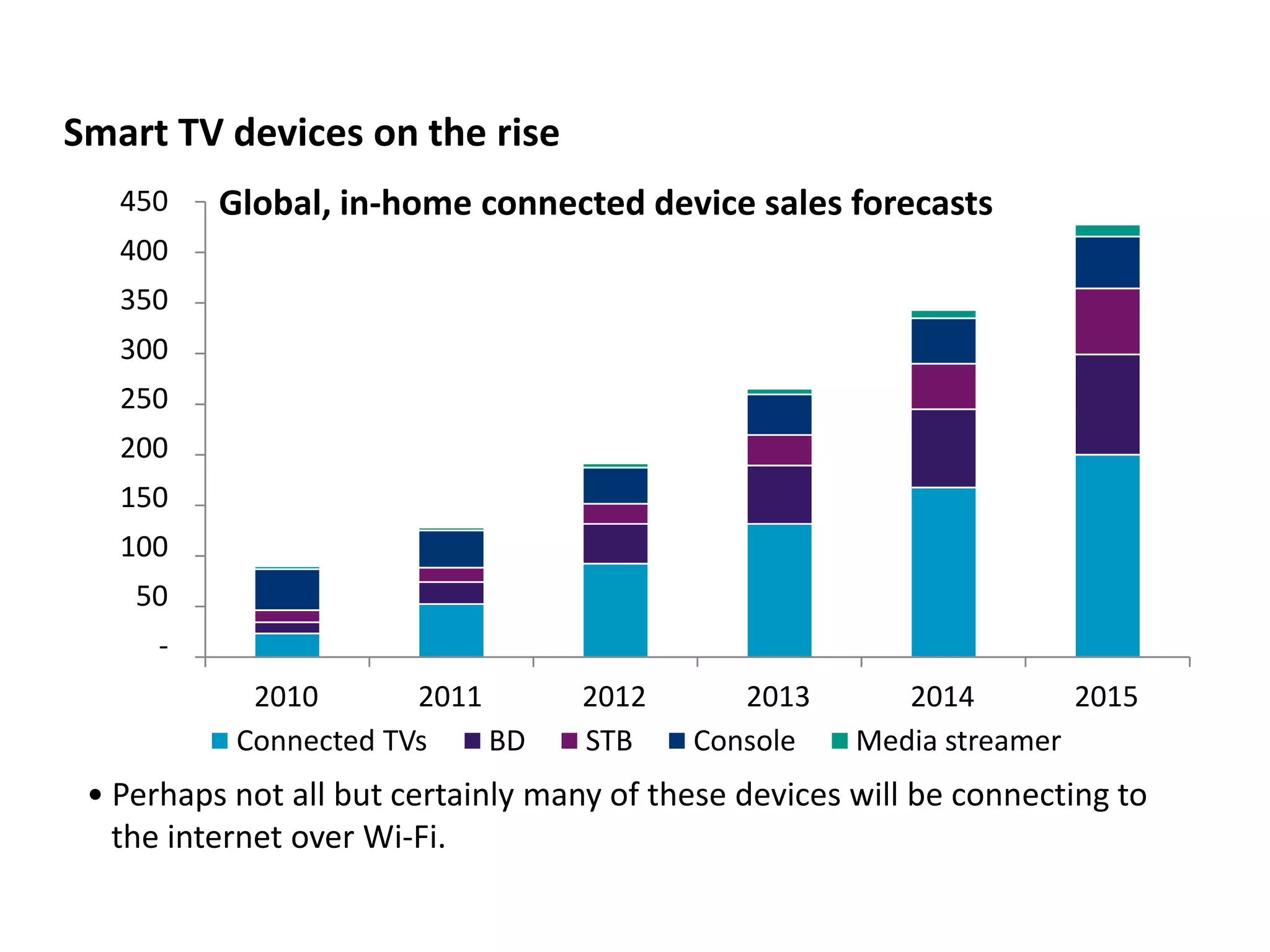
Smart TV devices on the rise
   450    Global, in-home connected device sales forecasts
   400
   350
   300
   250
   200
   150
   100
    50
      -
            2010       2011         2012      2013        2014        2015
           Connected TVs    BD      STB    Console     Media streamer
 • Perhaps not all but certainly many of these devices will be connecting to
   the internet over Wi-Fi.
Stationary devices are opting for Wi-Fi

• Those that Smart TVs and games consoles that use Wi-Fi have higher
  connection rates

• Suggesting users are not only reluctant to use Ethernet, but are comfortable
  with Wi-Fi

• HD Video is a key service and improving performance will be essential going
  forward.
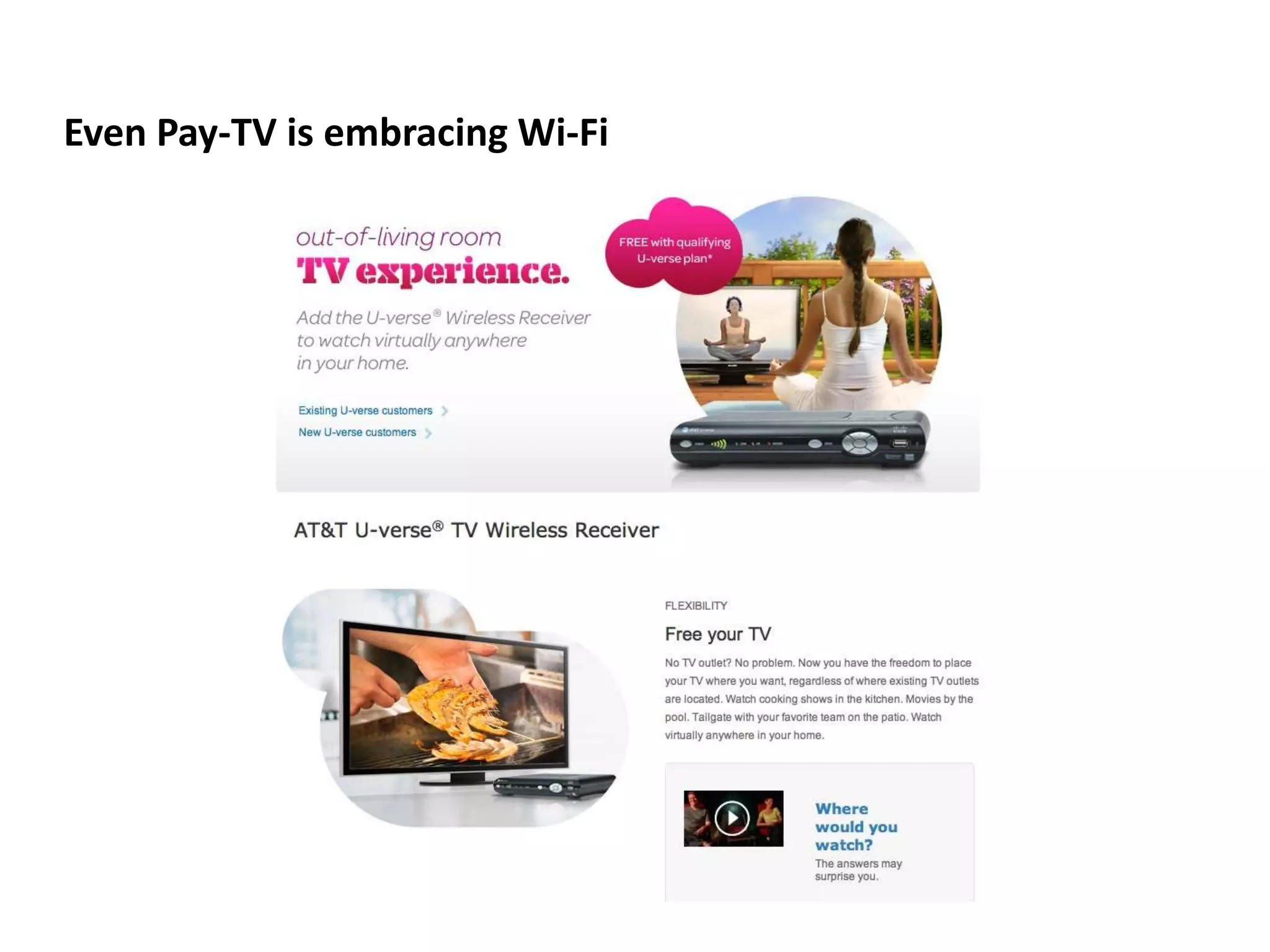
Even Pay-TV is embracing Wi-Fi
4. Current and future congestion problems
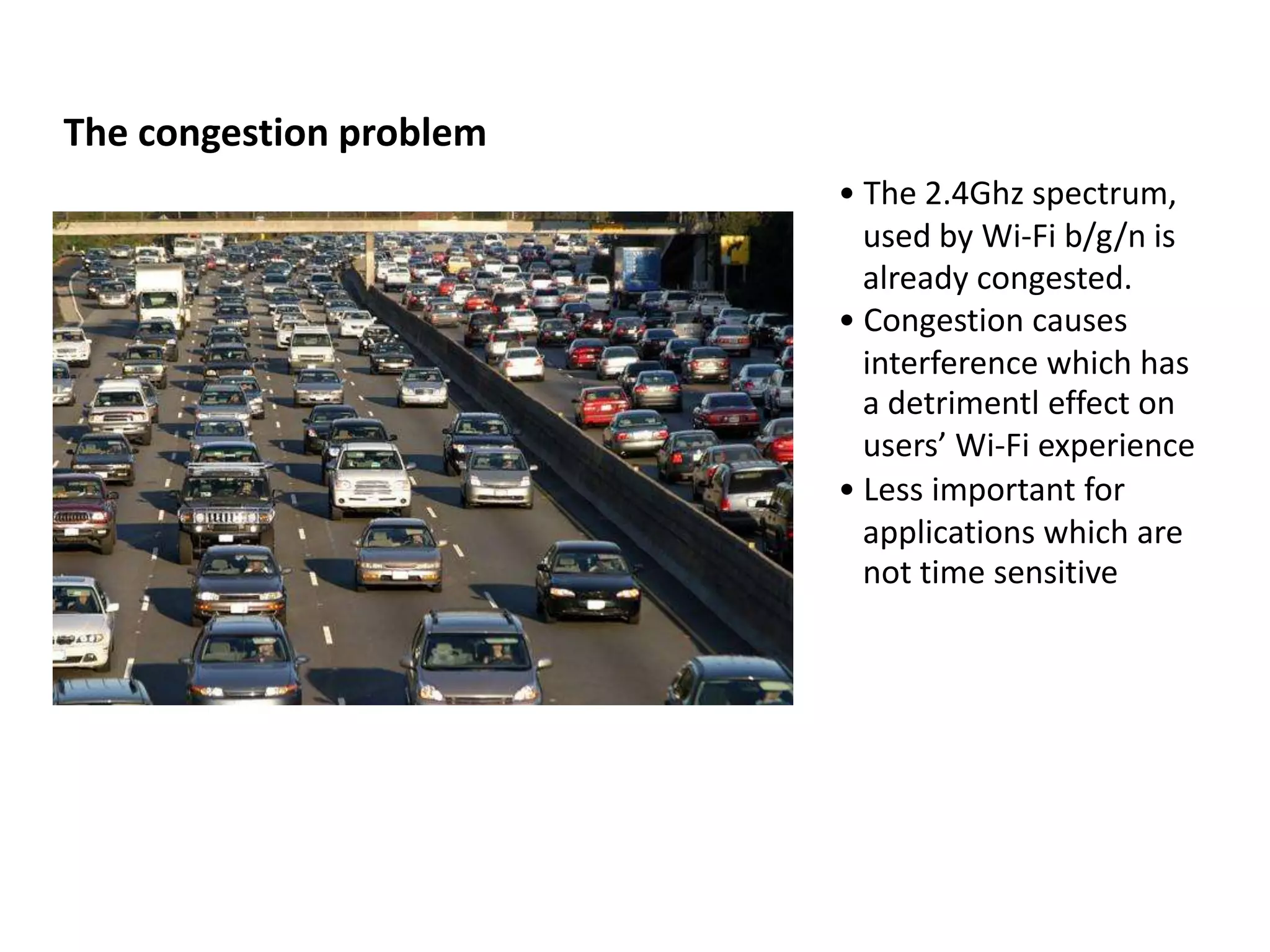
The congestion problem
                         • The 2.4Ghz spectrum,
                           used by Wi-Fi b/g/n is
                           already congested.
                         • Congestion causes
                           interference which has
                           a detrimentl effect on
                           users’ Wi-Fi experience
                         • Less important for
                           applications which are
                           not time sensitive
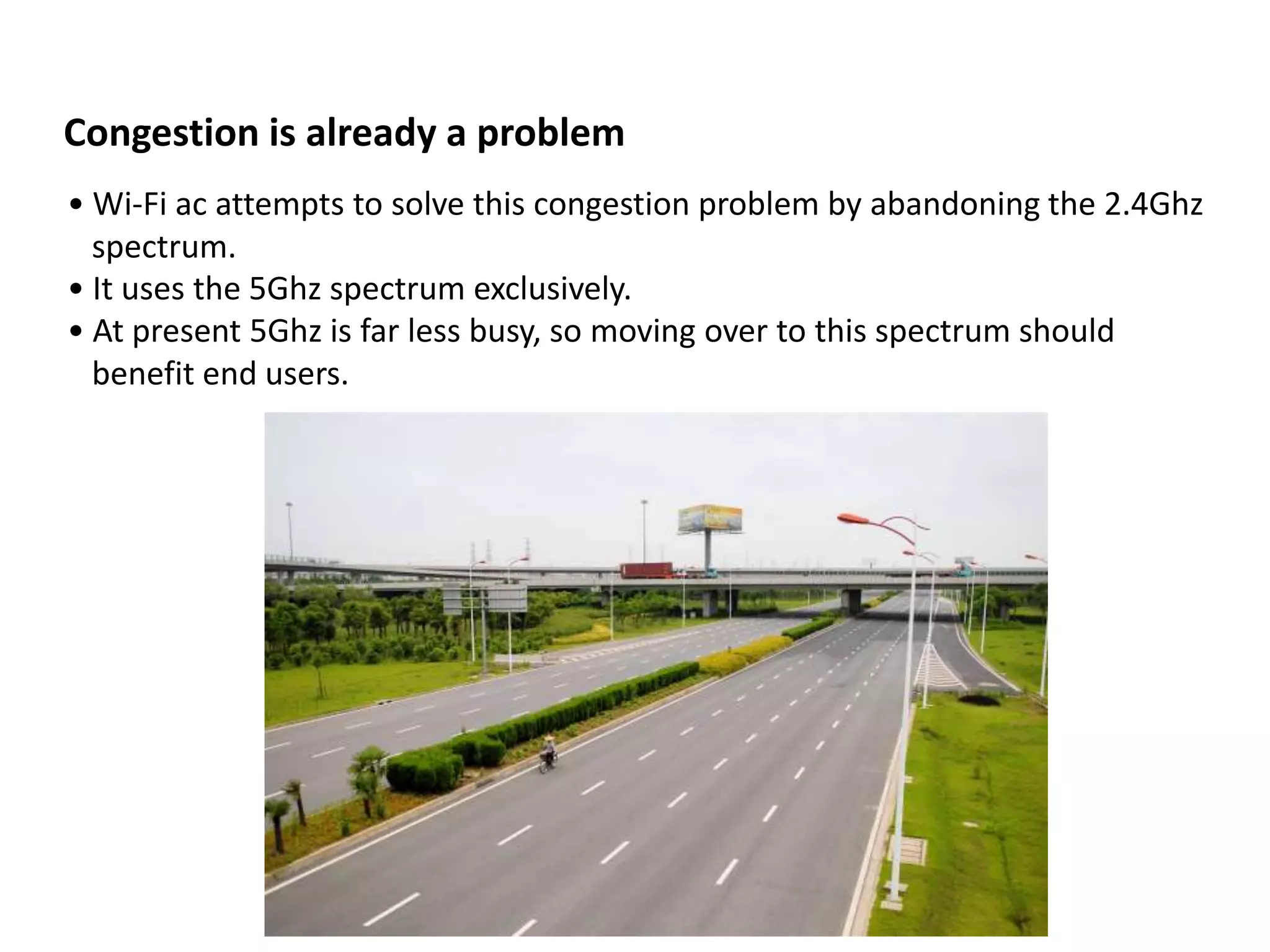
Congestion is already a problem
• Wi-Fi ac attempts to solve this congestion problem by abandoning the 2.4Ghz
  spectrum.
• It uses the 5Ghz spectrum exclusively.
• At present 5Ghz is far less busy, so moving over to this spectrum should
  benefit end users.
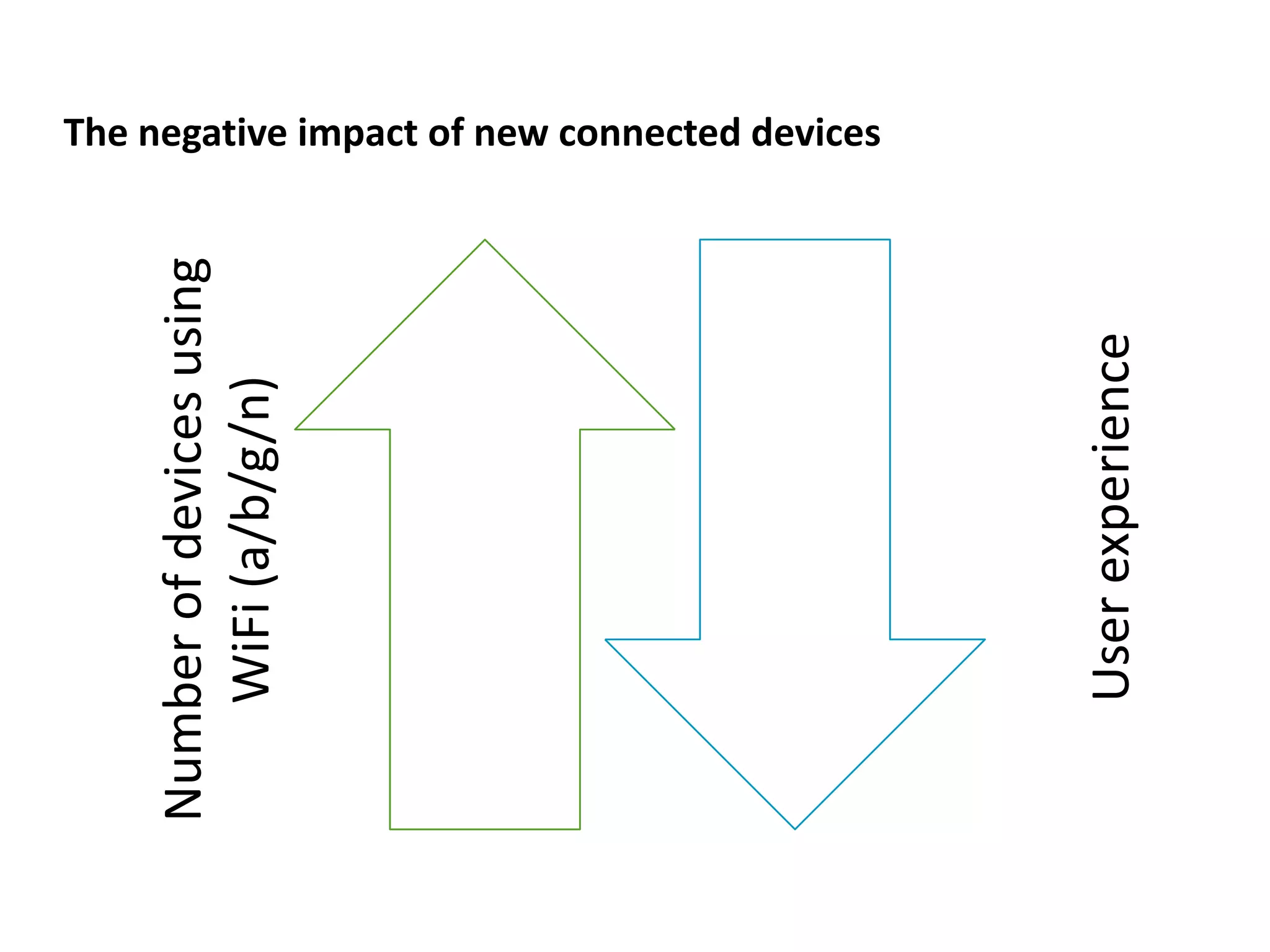
Number of devices using
   WiFi (a/b/g/n)
                          The negative impact of new connected devices


    User experience
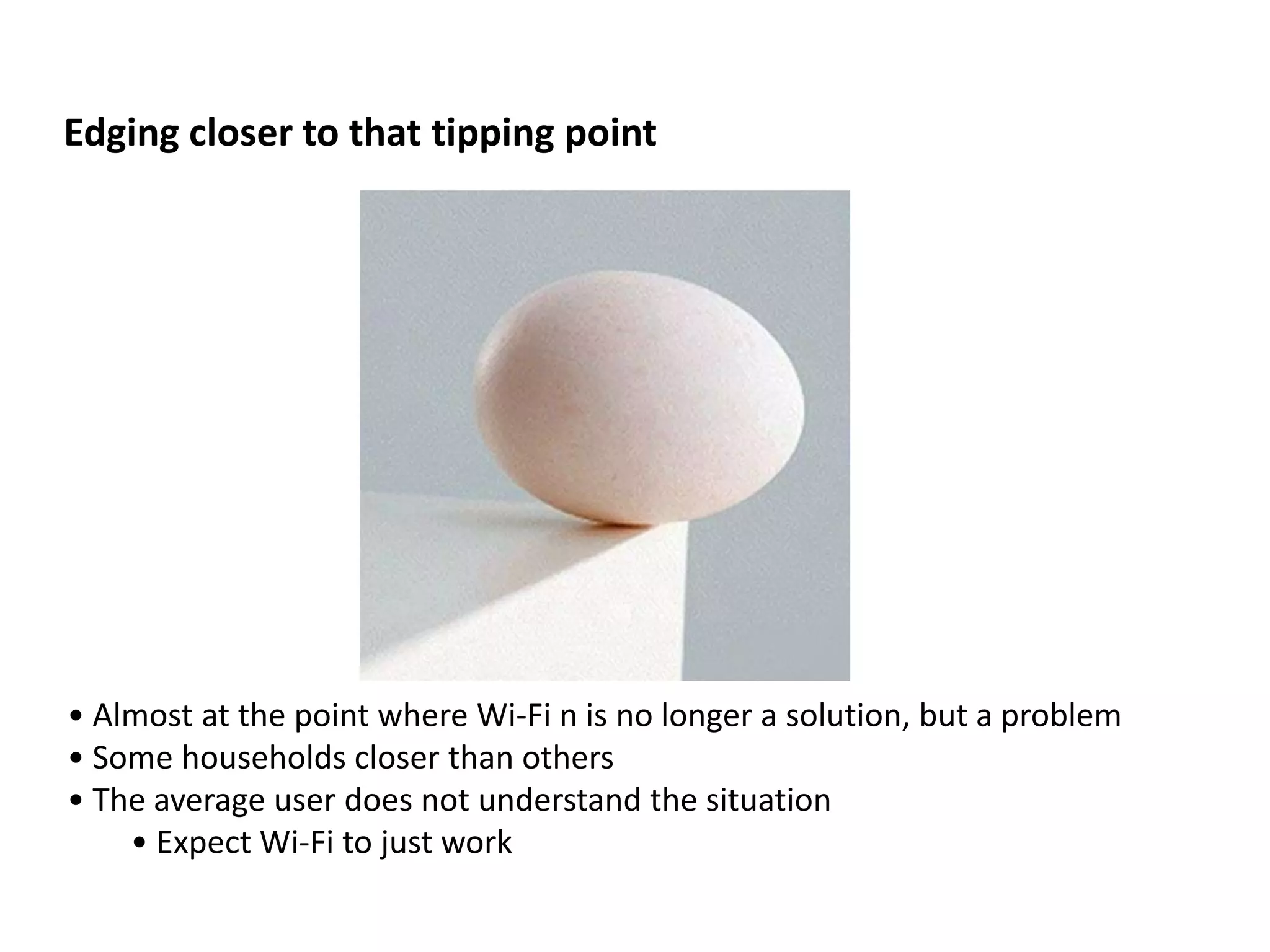
Edging closer to that tipping point


• Almost at the point where Wi-Fi n is no longer a solution, but a problem
• Some households closer than others
• The average user does not understand the situation
    • Expect Wi-Fi to just work
Impact of Wi-Fi ac
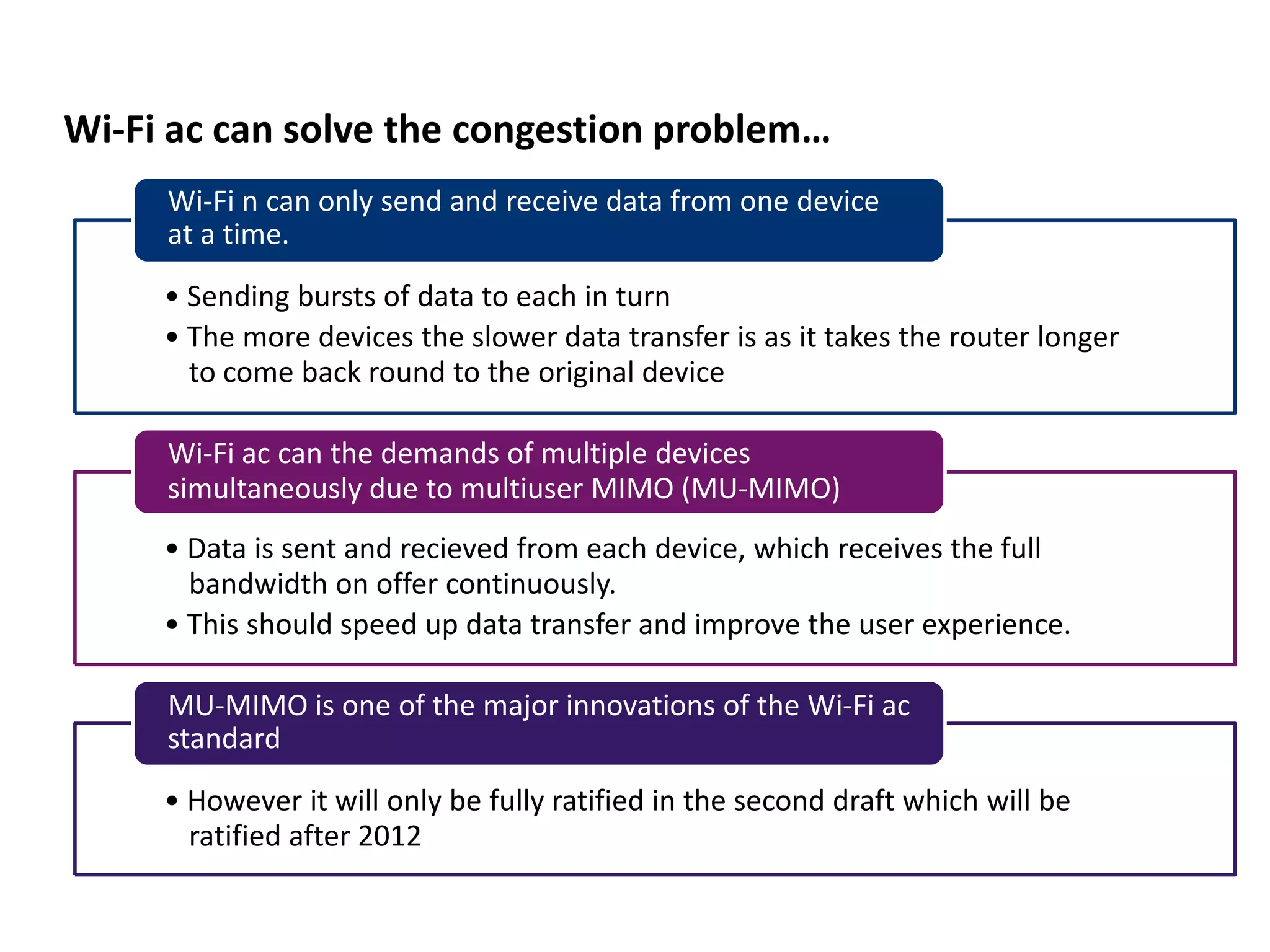
Wi-Fi ac can solve the congestion problem…
     Wi-Fi n can only send and receive data from one device
     at a time.
     • Sending bursts of data to each in turn
     • The more devices the slower data transfer is as it takes the router longer
       to come back round to the original device

     Wi-Fi ac can the demands of multiple devices
     simultaneously due to multiuser MIMO (MU-MIMO)
     • Data is sent and recieved from each device, which receives the full
       bandwidth on offer continuously.
     • This should speed up data transfer and improve the user experience.

     MU-MIMO is one of the major innovations of the Wi-Fi ac
     standard
     • However it will only be fully ratified in the second draft which will be
       ratified after 2012
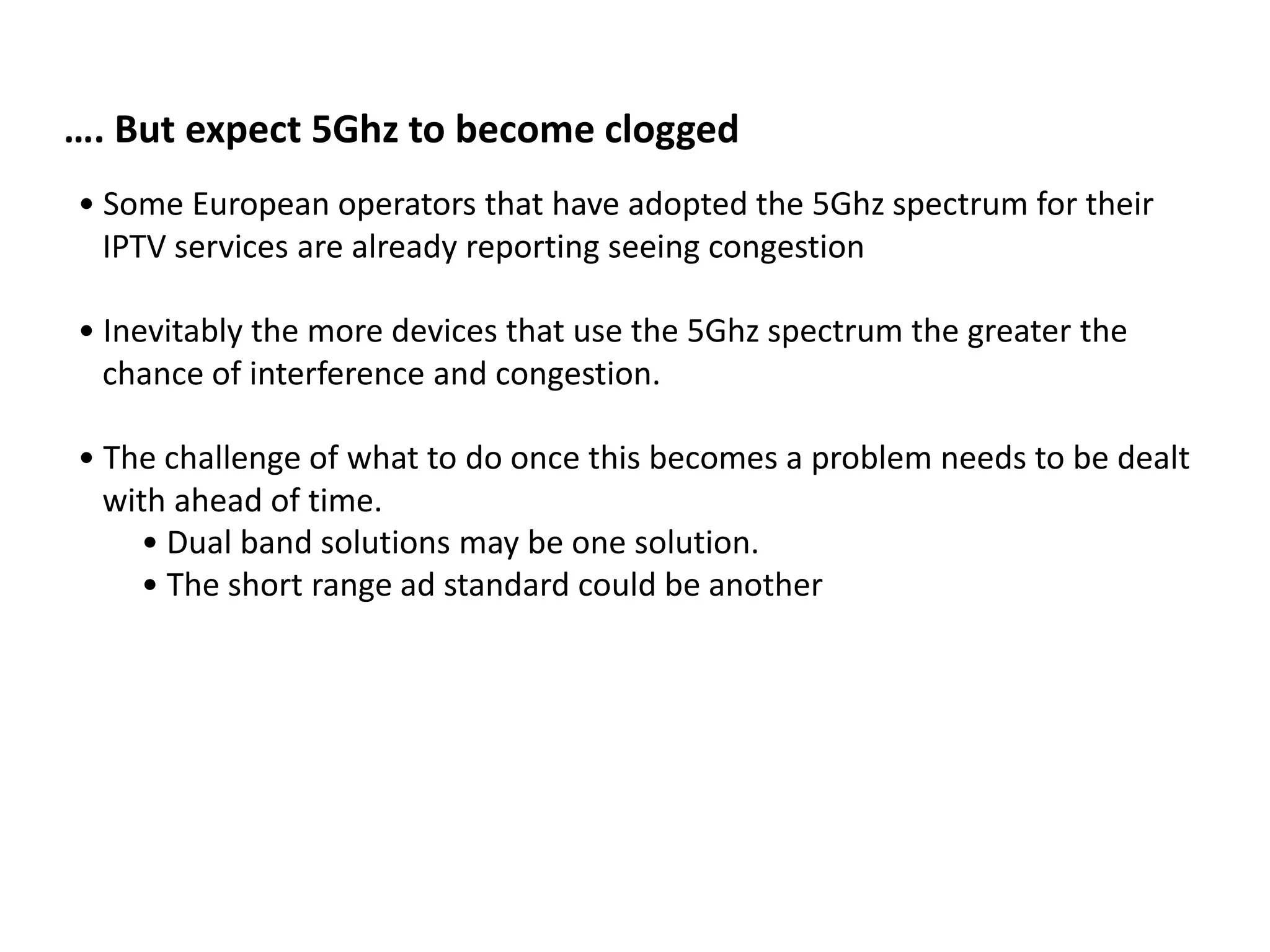
…. But expect 5Ghz to become clogged
• Some European operators that have adopted the 5Ghz spectrum for their
  IPTV services are already reporting seeing congestion

• Inevitably the more devices that use the 5Ghz spectrum the greater the
  chance of interference and congestion.

• The challenge of what to do once this becomes a problem needs to be dealt
  with ahead of time.
    • Dual band solutions may be one solution.
    • The short range ad standard could be another
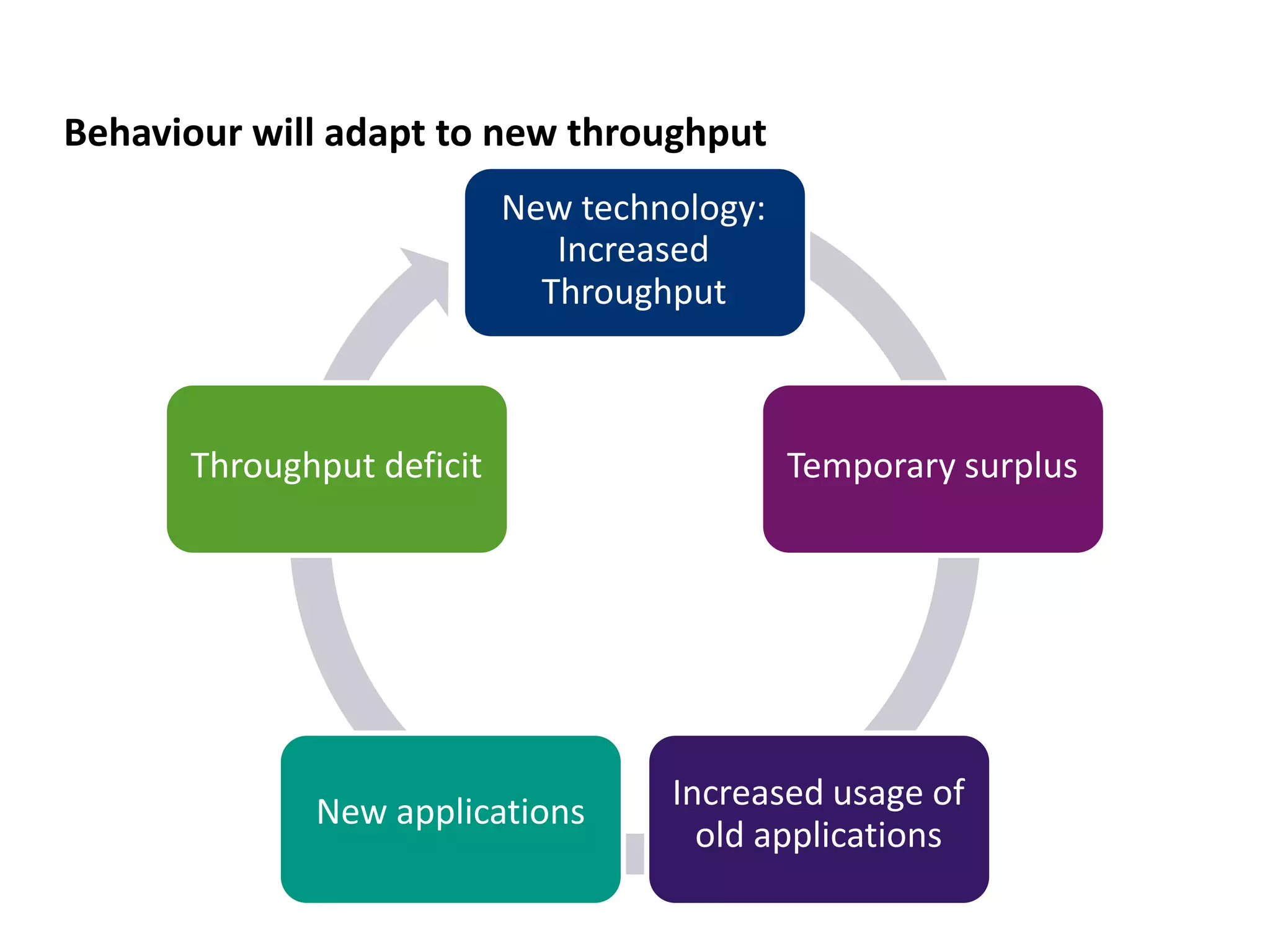
Behaviour will adapt to new throughput
                           New technology:
                              Increased
                             Throughput


      Throughput deficit                     Temporary surplus


             New applications       Increased usage of
                                      old applications
Video will be accessible from everywhere
• Potent cocktail of:

    • More devices, used in multiple rooms

    • New lighter form factors will increase portability

    • More reliable connections

    • Greater throughput

    • Plethora of services
Conclusions
    Wi-Fi ac is a major step forward and can support multiple
    devices much better than n.
    • However, to avoid congestion down the line use of wireline technologies
      should be deployed where they can.

    Smartphones will drive adoption of Wi-Fi ac

    • They will benefit most as they tend not to have room for multiple antenna

    Inside the home the major hindrance to take-up of Wi-Fi
    ac will be broadband operators.
    • These operators should seriously consider rolling out this technology as it
      should significantly impact subscriber experience.
References
• “Examining the drivers for the adoption and
  potential impact of Wi-Fi ac”, Andrew
  Landbrooke, WiFi World Summit, Sept.
  2012, Barcelona
Thank You
Contact

 Dr. Mazlan Abbas


 @mazlan_abbas


  mazlan.abbas@mimos.my

The Impact of 5th Generation WiFi (802.11ac)

  • 1.
    The Impact of5th Generation WiFi (802.11ac) Dr. Mazlan Abbas MIMOS Berhad mazlan.abbas@mimos.my @mazlan_abbas Dr. Mazlan Abbas
  • 2.
  • 3.
    But questions remain What will What is ac? drive adoption? When can we What will the expect it? impact be?
  • 4.
    Wi-Fi ac aquick primer • Next generation Wi-Fi, first part of the ac specification to be ratified in February 2013 • Some chipset vendors have already made available Wi-Fi ac chipsets to their partners. Devices already on the market • It has been touted as Gigabyte wireless. Whilst possible, at its base level 1x1 only as fast as 450 Mbps. • Builds on many of the changes and innovations seen in Wi-Fi n
  • 5.
    Four drivers forthe adoption of Wi-Fi ac Increased Wi-Fi only Increased WiFi Only internet Internet portable Portable usage Usage devices Devices Success of Success of Current andand Current WiFi Wi-Fi in Expected Integration expected Usage integration in Smart TV usage Problems Smart TV devices problems devices
  • 6.
    Four drivers forthe adoption of Wi-Fi ac Increased Wi-Fi only internet portable usage devices Success of Current and Wi-Fi expected integration in usage Smart TV problems devices
  • 7.
  • 8.
    Popularity of onlinevideo Online video users (mil.) 2,500.0 2,124.9 2,000.0 1,919.2 1,722.8 1,539.1 1,500.0 1,365.7 1,195.3 1,000.0 500.0 0.0 2010 2011 2012 2013 2014 2015 • Video is expected to be the main driver of internet traffic growth • Unlike web browsing, email, software downloads video is time sensitive
  • 9.
  • 10.
    Portable devices relyheavily on Wi-Fi Tablets Smartphones Ultrabooks • Ultrabook laptops often lack Ethernet ports • Tablets and smart phones users rely heavily on home Wi-Fi and hotspots • These devices are just emerging so Wi-Fi networks are only going to come under more strain
  • 11.
    The smartphone effect Smart phones sales (mil.) 2010-2016 1000 800 600 400 200 0 2010 2011 2012 2013 2014 2015 2016 • Wi-Fi ac will only be in smartphones at the earliest in 2013 • With such a large market that even a small percentage will be substantial • Short life cycles will have a positive impact on Wi-Fi ac install rates
  • 12.
    3. Smart TVdevices
  • 13.
    Smart TV deviceson the rise 450 Global, in-home connected device sales forecasts 400 350 300 250 200 150 100 50 - 2010 2011 2012 2013 2014 2015 Connected TVs BD STB Console Media streamer • Perhaps not all but certainly many of these devices will be connecting to the internet over Wi-Fi.
  • 14.
    Stationary devices areopting for Wi-Fi • Those that Smart TVs and games consoles that use Wi-Fi have higher connection rates • Suggesting users are not only reluctant to use Ethernet, but are comfortable with Wi-Fi • HD Video is a key service and improving performance will be essential going forward.
  • 15.
    Even Pay-TV isembracing Wi-Fi
  • 16.
    4. Current andfuture congestion problems
  • 17.
    The congestion problem • The 2.4Ghz spectrum, used by Wi-Fi b/g/n is already congested. • Congestion causes interference which has a detrimentl effect on users’ Wi-Fi experience • Less important for applications which are not time sensitive
  • 18.
    Congestion is alreadya problem • Wi-Fi ac attempts to solve this congestion problem by abandoning the 2.4Ghz spectrum. • It uses the 5Ghz spectrum exclusively. • At present 5Ghz is far less busy, so moving over to this spectrum should benefit end users.
  • 19.
    Number of devicesusing WiFi (a/b/g/n) The negative impact of new connected devices User experience
  • 20.
    Edging closer tothat tipping point • Almost at the point where Wi-Fi n is no longer a solution, but a problem • Some households closer than others • The average user does not understand the situation • Expect Wi-Fi to just work
  • 21.
  • 22.
    Wi-Fi ac cansolve the congestion problem… Wi-Fi n can only send and receive data from one device at a time. • Sending bursts of data to each in turn • The more devices the slower data transfer is as it takes the router longer to come back round to the original device Wi-Fi ac can the demands of multiple devices simultaneously due to multiuser MIMO (MU-MIMO) • Data is sent and recieved from each device, which receives the full bandwidth on offer continuously. • This should speed up data transfer and improve the user experience. MU-MIMO is one of the major innovations of the Wi-Fi ac standard • However it will only be fully ratified in the second draft which will be ratified after 2012
  • 23.
    …. But expect5Ghz to become clogged • Some European operators that have adopted the 5Ghz spectrum for their IPTV services are already reporting seeing congestion • Inevitably the more devices that use the 5Ghz spectrum the greater the chance of interference and congestion. • The challenge of what to do once this becomes a problem needs to be dealt with ahead of time. • Dual band solutions may be one solution. • The short range ad standard could be another
  • 24.
    Behaviour will adaptto new throughput New technology: Increased Throughput Throughput deficit Temporary surplus New applications Increased usage of old applications
  • 25.
    Video will beaccessible from everywhere • Potent cocktail of: • More devices, used in multiple rooms • New lighter form factors will increase portability • More reliable connections • Greater throughput • Plethora of services
  • 26.
    Conclusions Wi-Fi ac is a major step forward and can support multiple devices much better than n. • However, to avoid congestion down the line use of wireline technologies should be deployed where they can. Smartphones will drive adoption of Wi-Fi ac • They will benefit most as they tend not to have room for multiple antenna Inside the home the major hindrance to take-up of Wi-Fi ac will be broadband operators. • These operators should seriously consider rolling out this technology as it should significantly impact subscriber experience.
  • 27.
    References • “Examining thedrivers for the adoption and potential impact of Wi-Fi ac”, Andrew Landbrooke, WiFi World Summit, Sept. 2012, Barcelona
  • 28.
  • 29.
    Contact Dr. MazlanAbbas @mazlan_abbas mazlan.abbas@mimos.my