The Early Middle Ages “The Dark Ages”
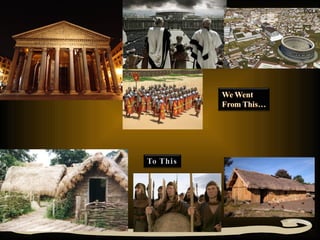
A World Without Rome German invasions destroy the Roman Empire Money no longer used  Decline in Trade  Most people remained in the village of their birth No more cities Decline of learning Loss of common language No central government So who protects the people?
 
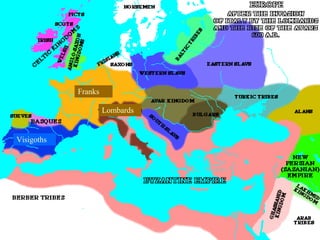
Germanic Kingdoms Emerge Upheaval from about 400 to 600 A.D. Small Germanic Kingdoms replace Roman Provinces. Borders constantly change due to warfare. Christian Church survives Only central institution that provides order and security.
Franks Visigoths Lombards
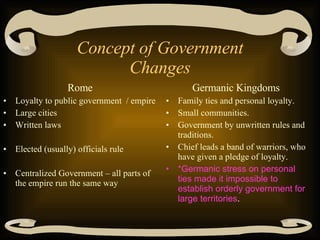
Concept of Government Changes Rome Loyalty to public government  / empire Large cities Written laws Elected (usually) officials rule Centralized Government – all parts of the empire run the same way Germanic Kingdoms Family ties and personal loyalty. Small communities. Government by unwritten rules and traditions. Chief leads a band of warriors, who have given a pledge of loyalty. *Germanic stress on personal ties made it impossible to establish orderly government for large territories .
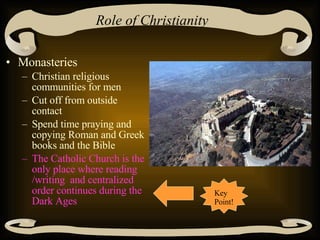
Role of Christianity Monasteries Christian religious communities for men  Cut off from outside contact Spend time praying and copying Roman and Greek books and the Bible The Catholic Church is the only place where reading /writing  and centralized order continues during the Dark Ages Key  Point!
Three Important People Clovis Charles “The Hammer” Martel Charlemagne (“Charles the Great”)
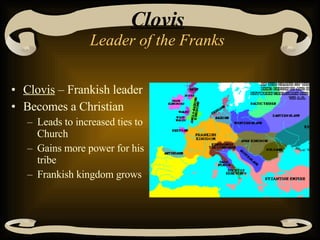
Clovis Leader of the Franks Clovis  – Frankish leader Becomes a Christian Leads to increased ties to Church Gains more power for his tribe Frankish kingdom grows
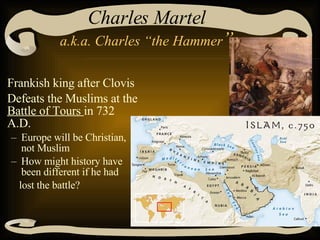
Charles Martel a.k.a. Charles “the Hammer ” Frankish king after Clovis Defeats the Muslims at the  Battle of Tours  in 732 A.D. Europe will be Christian, not Muslim How might history have been different if he had  lost the battle?
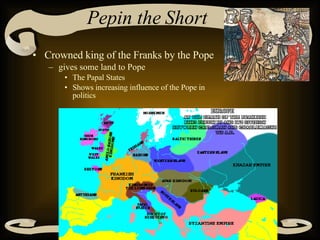
Pepin the Short Crowned king of the Franks by the Pope gives some land to Pope The Papal States Shows increasing influence of the Pope in politics
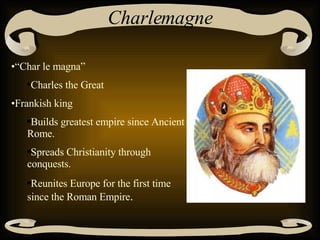
Charlemagne “ Char le magna” Charles the Great Frankish king Builds greatest empire since Ancient Rome. Spreads Christianity through conquests. Reunites Europe for the first time since the Roman Empire .
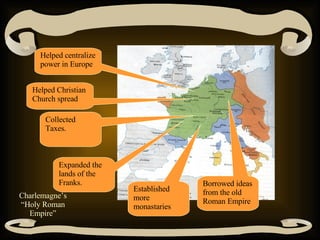
Charlemagne’s “Holy Roman Empire” Expanded the lands of the Franks.  Helped centralize power in Europe Helped Christian Church spread Established more monastaries Collected Taxes.  Borrowed ideas from the old Roman Empire
Charlemagne’s Government Expanded the lands of the Franks.  Helped centralize power in Europe.  Helped Christian Church spread.  Collected taxes (tithes.)  Helped Church establish schools and monasteries Borrowed ideas from old Roman empire.
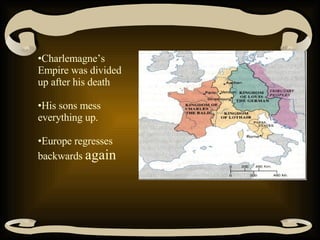
Charlemagne’s Empire was divided up after his death His sons mess everything up. Europe regresses backwards  again
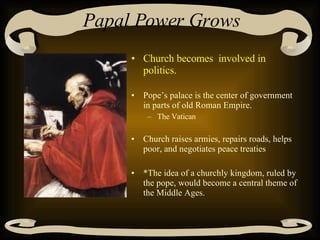
Papal Power Grows Church becomes  involved in politics. Pope’s palace is the center of government in parts of old Roman Empire. The Vatican Church raises armies, repairs roads, helps poor, and negotiates peace treaties  *The idea of a churchly kingdom, ruled by the pope, would become a central theme of the Middle Ages.

Dark Ages 08

  • 1.
    The Early MiddleAges “The Dark Ages”
  • 2.
    A World WithoutRome German invasions destroy the Roman Empire Money no longer used Decline in Trade Most people remained in the village of their birth No more cities Decline of learning Loss of common language No central government So who protects the people?
  • 3.
  • 4.
    Germanic Kingdoms EmergeUpheaval from about 400 to 600 A.D. Small Germanic Kingdoms replace Roman Provinces. Borders constantly change due to warfare. Christian Church survives Only central institution that provides order and security.
  • 5.
  • 6.
    Concept of GovernmentChanges Rome Loyalty to public government / empire Large cities Written laws Elected (usually) officials rule Centralized Government – all parts of the empire run the same way Germanic Kingdoms Family ties and personal loyalty. Small communities. Government by unwritten rules and traditions. Chief leads a band of warriors, who have given a pledge of loyalty. *Germanic stress on personal ties made it impossible to establish orderly government for large territories .
  • 7.
    Role of ChristianityMonasteries Christian religious communities for men Cut off from outside contact Spend time praying and copying Roman and Greek books and the Bible The Catholic Church is the only place where reading /writing and centralized order continues during the Dark Ages Key Point!
  • 8.
    Three Important PeopleClovis Charles “The Hammer” Martel Charlemagne (“Charles the Great”)
  • 9.
    Clovis Leader ofthe Franks Clovis – Frankish leader Becomes a Christian Leads to increased ties to Church Gains more power for his tribe Frankish kingdom grows
  • 10.
    Charles Martel a.k.a.Charles “the Hammer ” Frankish king after Clovis Defeats the Muslims at the Battle of Tours in 732 A.D. Europe will be Christian, not Muslim How might history have been different if he had lost the battle?
  • 11.
    Pepin the ShortCrowned king of the Franks by the Pope gives some land to Pope The Papal States Shows increasing influence of the Pope in politics
  • 12.
    Charlemagne “ Charle magna” Charles the Great Frankish king Builds greatest empire since Ancient Rome. Spreads Christianity through conquests. Reunites Europe for the first time since the Roman Empire .
  • 13.
    Charlemagne’s “Holy RomanEmpire” Expanded the lands of the Franks. Helped centralize power in Europe Helped Christian Church spread Established more monastaries Collected Taxes. Borrowed ideas from the old Roman Empire
  • 14.
    Charlemagne’s Government Expandedthe lands of the Franks. Helped centralize power in Europe. Helped Christian Church spread. Collected taxes (tithes.) Helped Church establish schools and monasteries Borrowed ideas from old Roman empire.
  • 15.
    Charlemagne’s Empire wasdivided up after his death His sons mess everything up. Europe regresses backwards again
  • 16.
    Papal Power GrowsChurch becomes involved in politics. Pope’s palace is the center of government in parts of old Roman Empire. The Vatican Church raises armies, repairs roads, helps poor, and negotiates peace treaties *The idea of a churchly kingdom, ruled by the pope, would become a central theme of the Middle Ages.