1
The
Dynamics
of
Decision-Making
Styles
Decision Dynamics Europe
2
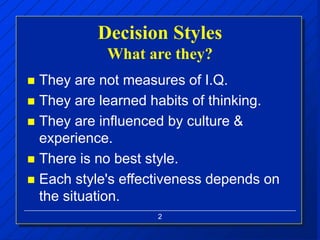
Decision Styles
What are they?
 They are not measures of I.Q.
 They are learned habits of thinking.
 They are influenced by culture &
experience.
 There is no best style.
 Each style's effectiveness depends on
the situation.
3
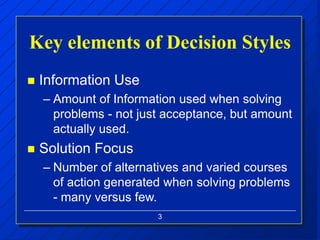
Key elements of Decision Styles
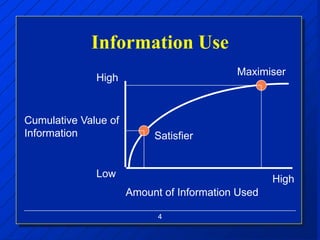
 Information Use
– Amount of Information used when solving
problems - not just acceptance, but amount
actually used.
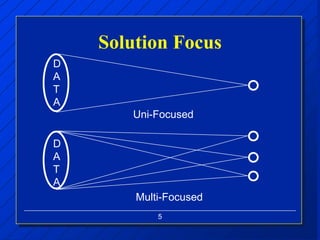
 Solution Focus
– Number of alternatives and varied courses
of action generated when solving problems
- many versus few.
4
Information Use
Cumulative Value of
Information
High
Low
Amount of Information Used
High
Satisfier
Maximiser
5
Solution Focus
D
A
T
A
D
A
T
A
Uni-Focused
Multi-Focused
6
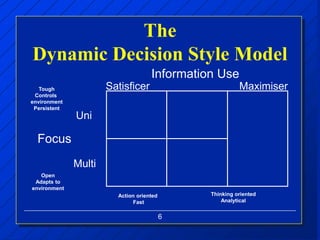
The
Dynamic Decision Style Model
Uni
Multi
Focus
Information Use
Satisficer MaximiserTough
Controls
environment
Persistent
Open
Adapts to
environment
Action oriented
Fast
Thinking oriented
Analytical
7
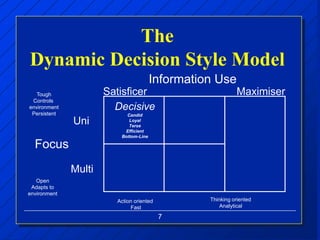
The
Dynamic Decision Style Model
Uni
Multi
Focus
Information Use
Satisficer MaximiserTough
Controls
environment
Persistent
Open
Adapts to
environment
Action oriented
Fast
Thinking oriented
Analytical
Decisive
Candid
Loyal
Terse
Efficient
Bottom-Line
8
The
Dynamic Decision Style Model
Uni
Multi
Focus
Information Use
Satisficer MaximiserTough
Controls
environment
Persistent
Open
Adapts to
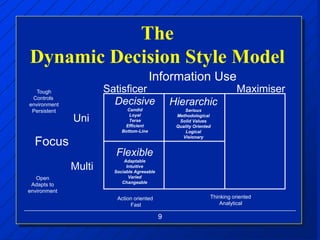
environment
Decisive
Candid
Loyal
Terse
Efficient
Bottom-Line
Flexible
Adaptable
Intuitive
Sociable Agreeable
Varied
Changeable
Action oriented
Fast
Thinking oriented
Analytical
9
The
Dynamic Decision Style Model
Uni
Multi
Focus
Information Use
Satisficer MaximiserTough
Controls
environment
Persistent
Open
Adapts to
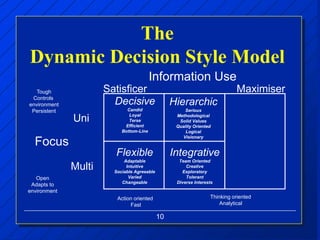
environment
Decisive
Candid
Loyal
Terse
Efficient
Bottom-Line
Flexible
Adaptable
Intuitive
Sociable Agreeable
Varied
Changeable
Action oriented
Fast
Thinking oriented
Analytical
Hierarchic
Serious
Methodological
Solid Values
Quality Oriented
Logical
Visionary
10
The
Dynamic Decision Style Model
Uni
Multi
Focus
Information Use
Satisficer MaximiserTough
Controls
environment
Persistent
Open
Adapts to
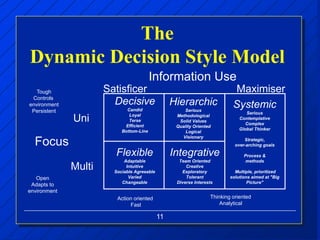
environment
Decisive
Candid
Loyal
Terse
Efficient
Bottom-Line
Flexible
Adaptable
Intuitive
Sociable Agreeable
Varied
Changeable
Action oriented
Fast
Thinking oriented
Analytical
Hierarchic
Serious
Methodological
Solid Values
Quality Oriented
Logical
Visionary
Integrative
Team Oriented
Creative
Exploratory
Tolerant
Diverse Interests
11
The
Dynamic Decision Style Model
Uni
Multi
Focus
Information Use
Satisficer MaximiserTough
Controls
environment
Persistent
Open
Adapts to
environment
Decisive
Candid
Loyal
Terse
Efficient
Bottom-Line
Flexible
Adaptable
Intuitive
Sociable Agreeable
Varied
Changeable
Action oriented
Fast
Thinking oriented
Analytical
Hierarchic
Serious
Methodological
Solid Values
Quality Oriented
Logical
Visionary
Integrative
Team Oriented
Creative
Exploratory
Tolerant
Diverse Interests
Systemic
Serious
Contemplative
Complex
Global Thinker
Strategic,
over-arching goals
Process &
methods
Multiple, prioritized
solutions aimed at "Big
Picture"
12
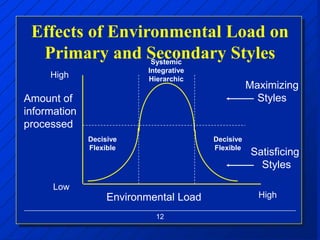
Effects of Environmental Load on
Primary and Secondary StylesSystemic
Integrative
Hierarchic
Decisive
Flexible
Decisive
Flexible
Maximizing
Styles
Satisficing
Styles
Environmental Load
Amount of
information
processed
High
Low
High
13
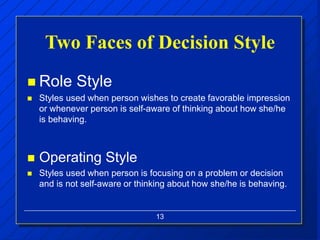
Two Faces of Decision Style
 Role Style
 Styles used when person wishes to create favorable impression
or whenever person is self-aware of thinking about how she/he
is behaving.
 Operating Style
 Styles used when person is focusing on a problem or decision
and is not self-aware or thinking about how she/he is behaving.
14
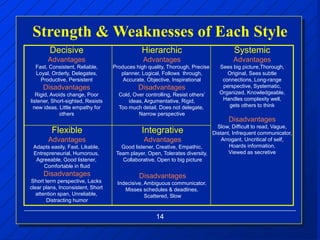
Strength & Weaknesses of Each Style
Decisive
Advantages
Fast, Consistent, Reliable,
Loyal, Orderly, Delegates,
Productive, Persistent
Disadvantages
Rigid, Avoids change, Poor
listener, Short-sighted, Resists
new ideas, Little empathy for
others
Flexible
Advantages
Adapts easily, Fast, Likable,
Entrepreneurial, Humorous,
Agreeable, Good listener,
Comfortable in fluid
Disadvantages
Short term perspective, Lacks
clear plans, Inconsistent, Short
attention span, Unreliable,
Distracting humor
Hierarchic
Advantages
Produces high quality, Thorough, Precise
planner, Logical, Follows through,
Accurate, Objective, Inspirational
Disadvantages
Cold, Over controlling, Resist others’
ideas, Argumentative, Rigid,
Too much detail, Does not delegate,
Narrow perspective
Integrative
Advantages
Good listener, Creative, Empathic,
Team player, Open, Tolerates diversity,
Collaborative, Open to big picture
Disadvantages
Indecisive, Ambiguous communicator,
Misses schedules & deadlines,
Scattered, Slow
Systemic
Advantages
Sees big picture,Thorough,
Original, Sees subtle
connections, Long-range
perspective, Systematic,
Organized, Knowledgeable,
Handles complexity well,
gets others to think
Disadvantages
Slow, Difficult to read, Vague,
Distant, Infrequent communicator,
Arrogant, Uncritical of self,
Hoards information,
Viewed as secretive
15
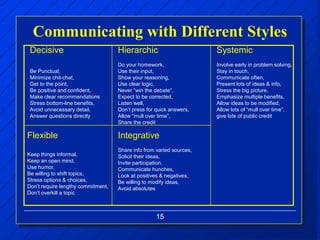
Communicating with Different Styles
Decisive
Be Punctual,
Minimize chit-chat,
Get to the point,
Be positive and confident,
Make clear recommendations
Stress bottom-line benefits,
Avoid unnecessary detail,
Answer questions directly
Flexible
Keep things informal,
Keep an open mind,
Use humor,
Be willing to shift topics,
Stress options & choices,
Don’t require lengthy commitment,
Don’t overkill a topic
Hierarchic
Do your homework,
Use their input,
Show your reasoning,
Use clear logic,
Never “win the debate”,
Expect to be corrected,
Listen well,
Don’t press for quick answers,
Allow “mull over time”,
Share the credit
Integrative
Share info from varied sources,
Solicit their ideas,
Invite participation,
Communicate hunches,
Look at positives & negatives,
Be willing to modify ideas,
Avoid absolutes
Systemic
Involve early in problem solving,
Stay in touch,
Communicate often,
Present lots of ideas & info,
Stress the big picture,
Emphasize multiple benefits,
Allow ideas to be modified,
Allow lots of “mull over time”,
give lots of public credit

The dynamics of decision making styles

  • 1.
  • 2.
    2 Decision Styles What arethey?  They are not measures of I.Q.  They are learned habits of thinking.  They are influenced by culture & experience.  There is no best style.  Each style's effectiveness depends on the situation.
  • 3.
    3 Key elements ofDecision Styles  Information Use – Amount of Information used when solving problems - not just acceptance, but amount actually used.  Solution Focus – Number of alternatives and varied courses of action generated when solving problems - many versus few.
  • 4.
    4 Information Use Cumulative Valueof Information High Low Amount of Information Used High Satisfier Maximiser
  • 5.
  • 6.
    6 The Dynamic Decision StyleModel Uni Multi Focus Information Use Satisficer MaximiserTough Controls environment Persistent Open Adapts to environment Action oriented Fast Thinking oriented Analytical
  • 7.
    7 The Dynamic Decision StyleModel Uni Multi Focus Information Use Satisficer MaximiserTough Controls environment Persistent Open Adapts to environment Action oriented Fast Thinking oriented Analytical Decisive Candid Loyal Terse Efficient Bottom-Line
  • 8.
    8 The Dynamic Decision StyleModel Uni Multi Focus Information Use Satisficer MaximiserTough Controls environment Persistent Open Adapts to environment Decisive Candid Loyal Terse Efficient Bottom-Line Flexible Adaptable Intuitive Sociable Agreeable Varied Changeable Action oriented Fast Thinking oriented Analytical
  • 9.
    9 The Dynamic Decision StyleModel Uni Multi Focus Information Use Satisficer MaximiserTough Controls environment Persistent Open Adapts to environment Decisive Candid Loyal Terse Efficient Bottom-Line Flexible Adaptable Intuitive Sociable Agreeable Varied Changeable Action oriented Fast Thinking oriented Analytical Hierarchic Serious Methodological Solid Values Quality Oriented Logical Visionary
  • 10.
    10 The Dynamic Decision StyleModel Uni Multi Focus Information Use Satisficer MaximiserTough Controls environment Persistent Open Adapts to environment Decisive Candid Loyal Terse Efficient Bottom-Line Flexible Adaptable Intuitive Sociable Agreeable Varied Changeable Action oriented Fast Thinking oriented Analytical Hierarchic Serious Methodological Solid Values Quality Oriented Logical Visionary Integrative Team Oriented Creative Exploratory Tolerant Diverse Interests
  • 11.
    11 The Dynamic Decision StyleModel Uni Multi Focus Information Use Satisficer MaximiserTough Controls environment Persistent Open Adapts to environment Decisive Candid Loyal Terse Efficient Bottom-Line Flexible Adaptable Intuitive Sociable Agreeable Varied Changeable Action oriented Fast Thinking oriented Analytical Hierarchic Serious Methodological Solid Values Quality Oriented Logical Visionary Integrative Team Oriented Creative Exploratory Tolerant Diverse Interests Systemic Serious Contemplative Complex Global Thinker Strategic, over-arching goals Process & methods Multiple, prioritized solutions aimed at "Big Picture"
  • 12.
    12 Effects of EnvironmentalLoad on Primary and Secondary StylesSystemic Integrative Hierarchic Decisive Flexible Decisive Flexible Maximizing Styles Satisficing Styles Environmental Load Amount of information processed High Low High
  • 13.
    13 Two Faces ofDecision Style  Role Style  Styles used when person wishes to create favorable impression or whenever person is self-aware of thinking about how she/he is behaving.  Operating Style  Styles used when person is focusing on a problem or decision and is not self-aware or thinking about how she/he is behaving.
  • 14.
    14 Strength & Weaknessesof Each Style Decisive Advantages Fast, Consistent, Reliable, Loyal, Orderly, Delegates, Productive, Persistent Disadvantages Rigid, Avoids change, Poor listener, Short-sighted, Resists new ideas, Little empathy for others Flexible Advantages Adapts easily, Fast, Likable, Entrepreneurial, Humorous, Agreeable, Good listener, Comfortable in fluid Disadvantages Short term perspective, Lacks clear plans, Inconsistent, Short attention span, Unreliable, Distracting humor Hierarchic Advantages Produces high quality, Thorough, Precise planner, Logical, Follows through, Accurate, Objective, Inspirational Disadvantages Cold, Over controlling, Resist others’ ideas, Argumentative, Rigid, Too much detail, Does not delegate, Narrow perspective Integrative Advantages Good listener, Creative, Empathic, Team player, Open, Tolerates diversity, Collaborative, Open to big picture Disadvantages Indecisive, Ambiguous communicator, Misses schedules & deadlines, Scattered, Slow Systemic Advantages Sees big picture,Thorough, Original, Sees subtle connections, Long-range perspective, Systematic, Organized, Knowledgeable, Handles complexity well, gets others to think Disadvantages Slow, Difficult to read, Vague, Distant, Infrequent communicator, Arrogant, Uncritical of self, Hoards information, Viewed as secretive
  • 15.
    15 Communicating with DifferentStyles Decisive Be Punctual, Minimize chit-chat, Get to the point, Be positive and confident, Make clear recommendations Stress bottom-line benefits, Avoid unnecessary detail, Answer questions directly Flexible Keep things informal, Keep an open mind, Use humor, Be willing to shift topics, Stress options & choices, Don’t require lengthy commitment, Don’t overkill a topic Hierarchic Do your homework, Use their input, Show your reasoning, Use clear logic, Never “win the debate”, Expect to be corrected, Listen well, Don’t press for quick answers, Allow “mull over time”, Share the credit Integrative Share info from varied sources, Solicit their ideas, Invite participation, Communicate hunches, Look at positives & negatives, Be willing to modify ideas, Avoid absolutes Systemic Involve early in problem solving, Stay in touch, Communicate often, Present lots of ideas & info, Stress the big picture, Emphasize multiple benefits, Allow ideas to be modified, Allow lots of “mull over time”, give lots of public credit