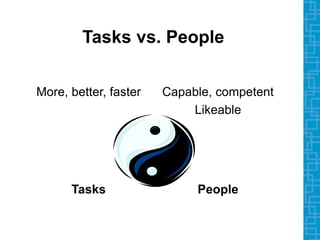
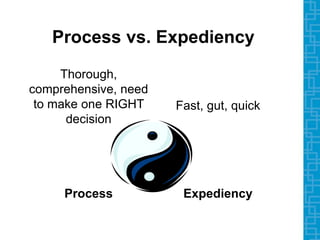
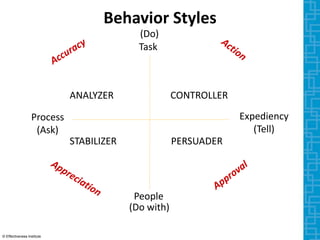
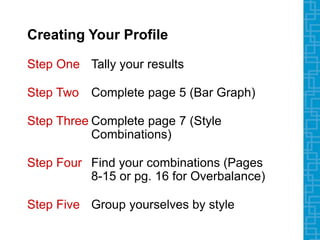
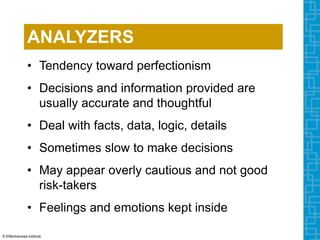
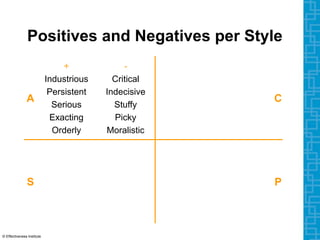
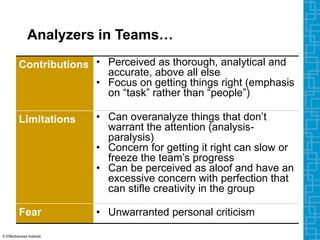
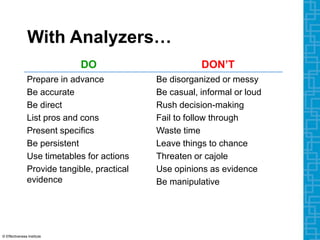
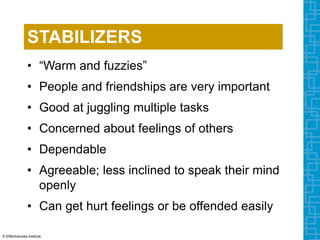
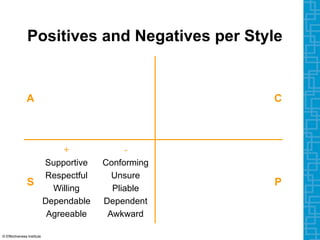
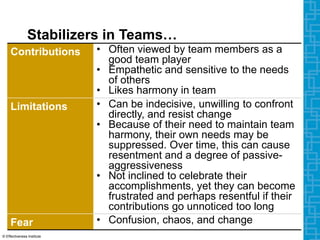
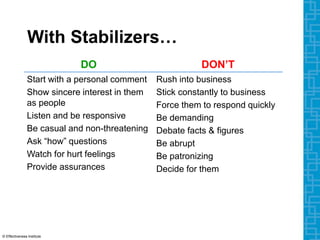
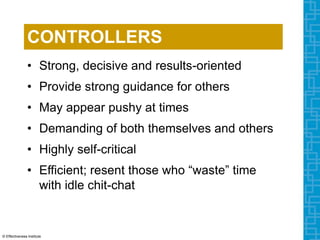
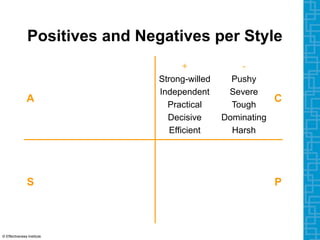
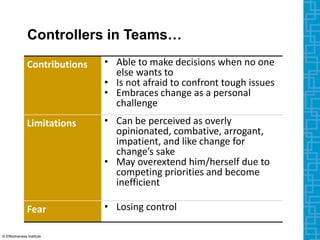
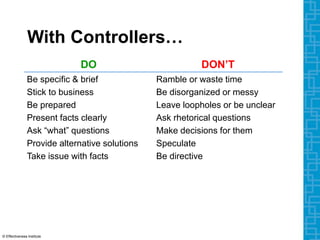
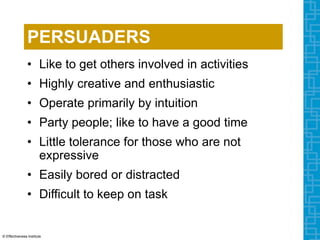
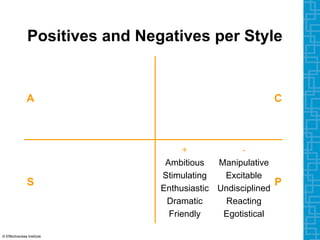
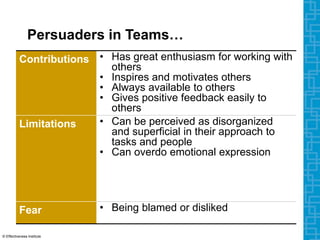
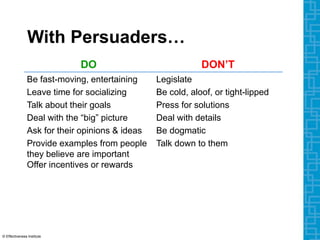
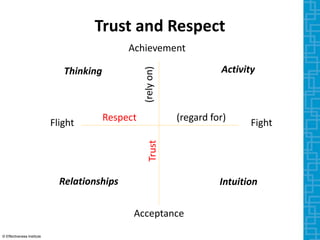
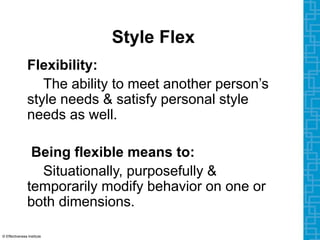
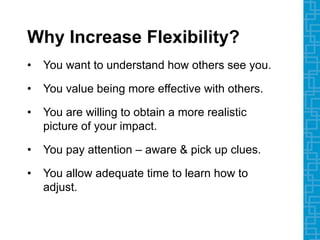
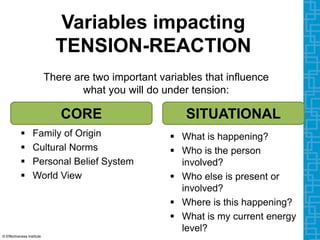
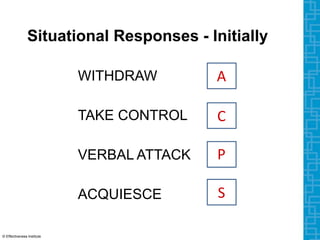
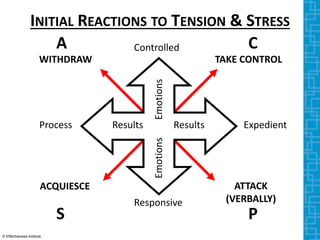
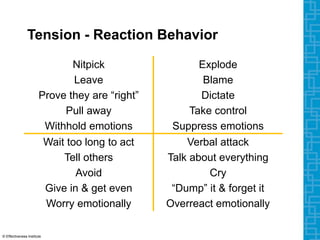
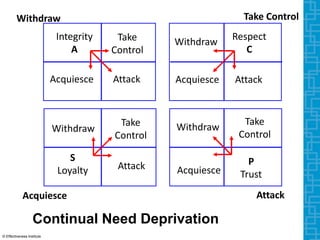
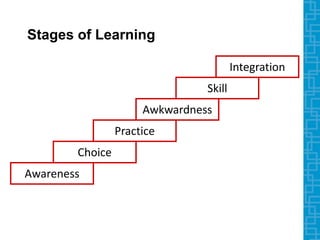
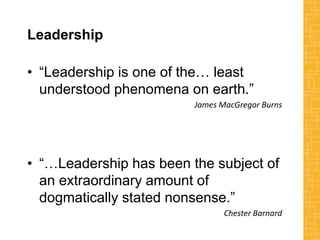
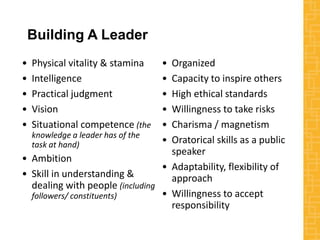
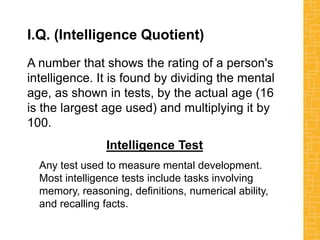
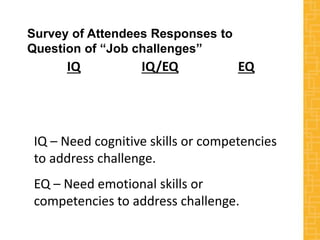
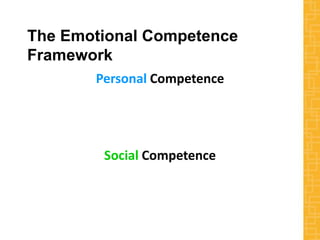
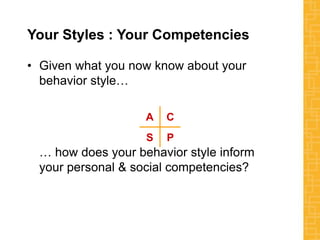
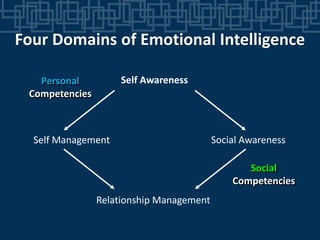
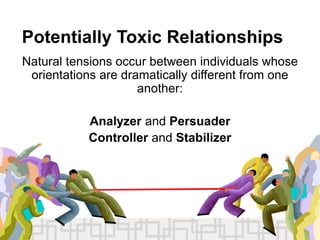
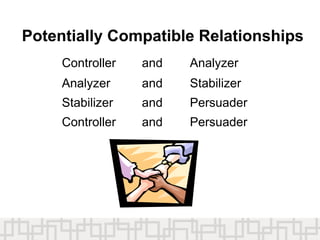
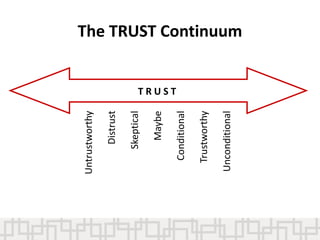
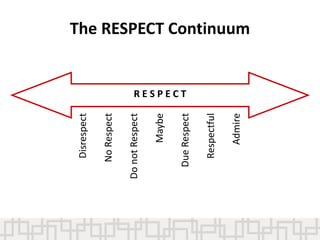
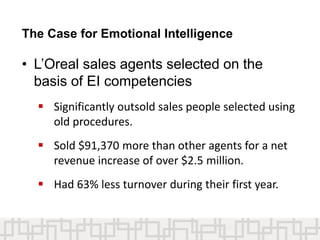
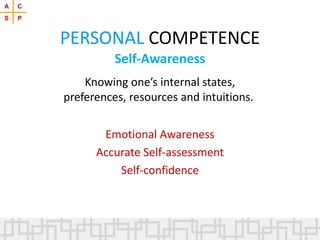
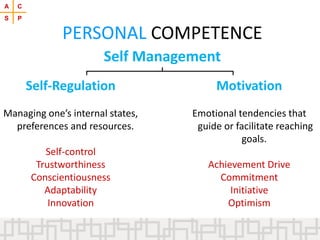
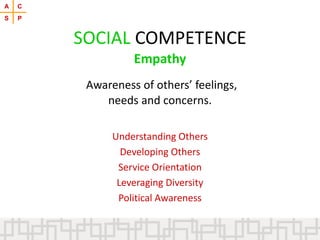
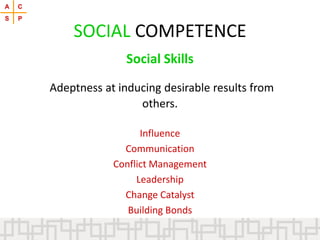
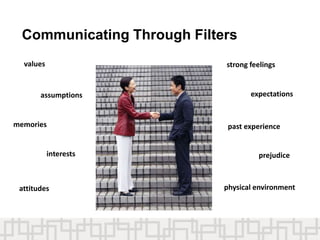
This document discusses balanced leadership and the role of behavior styles and emotional intelligence. It begins with an exercise to determine one's behavior style based on preferences for tasks vs people, and process vs expediency. The four main styles identified are analyzer, stabilizer, controller, and persuader. Each style's contributions and limitations in a team environment are explored. The document emphasizes developing flexibility in one's style to be most effective based on situational needs. It introduces the concept of emotional intelligence and its importance relative to IQ. Key components of emotional intelligence like self-awareness and social skills are defined. The role of emotional intelligence in leadership is discussed.