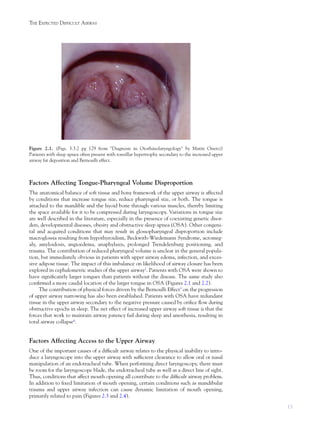
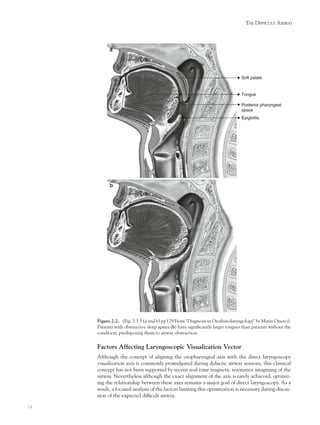
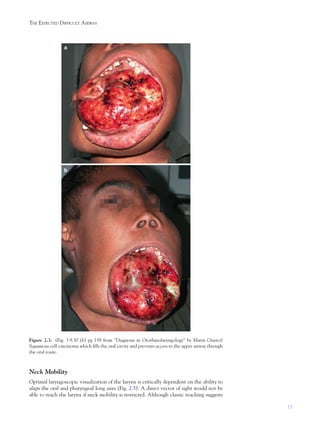
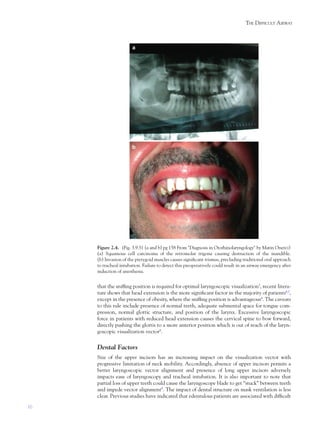
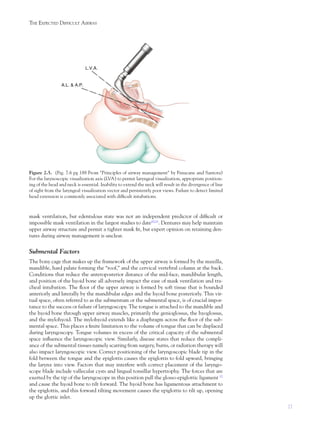
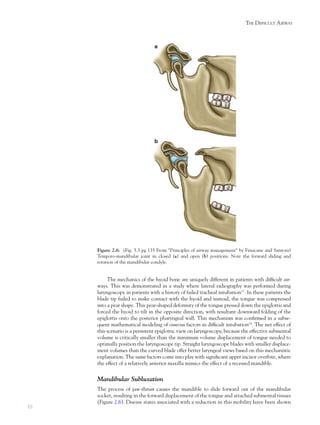
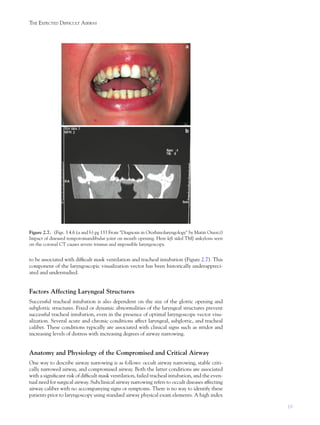
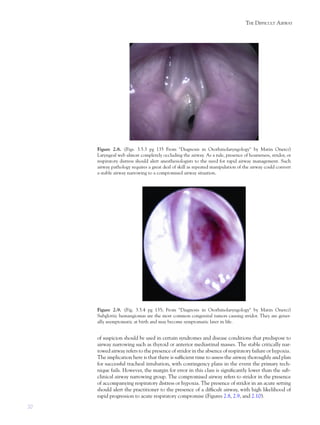
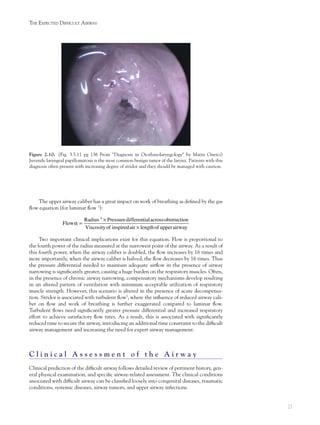
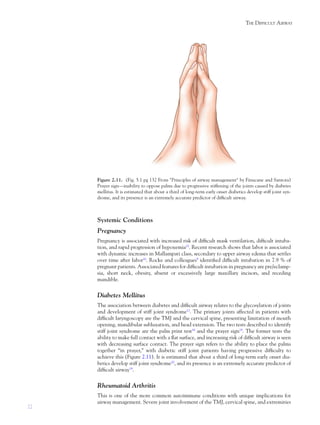
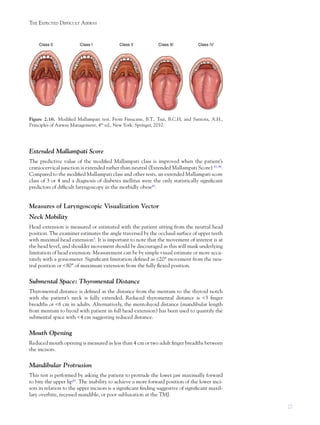


This document discusses factors that can contribute to a difficult airway during intubation or mask ventilation. It describes how an imbalance between tongue size and pharyngeal space can obstruct the airway. Other factors include limited mouth opening, neck mobility restrictions, dental issues, and reduced submental space. Certain anatomical variations or medical conditions can impact the relationship between the oral and pharyngeal axes, hindering laryngoscopic visualization. Overall, a thorough understanding of upper airway anatomy is important for predicting and managing a difficult airway situation.


