MAXILLARY SINUS
 Presenter:
 PRAGYA BINADI
 ROLL NO.: 691
 Submitted to:
 Dr. ASHISH SHRESTHA
 Dr. SASHI KESHWAR
CONTENTS
Introduction
Defination
Anatomy
Development
Microscopic features
Function
Clinical importance
Developmental anomalies
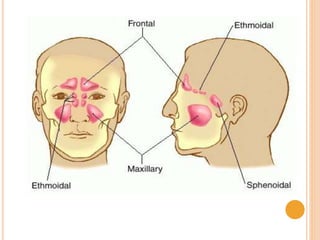
PARANASAL SINUSES
 Paranasal sinuses are air-filled spaces present
within some bones around the nasal cavities.
 There are four pairs of paranasal sinuses:
 Maxillary
 Frontal
 Ethmoidal
 Sphenoidal
 All of the sinuses open into nasal cavity through
its lateral wall.
DEFINATION
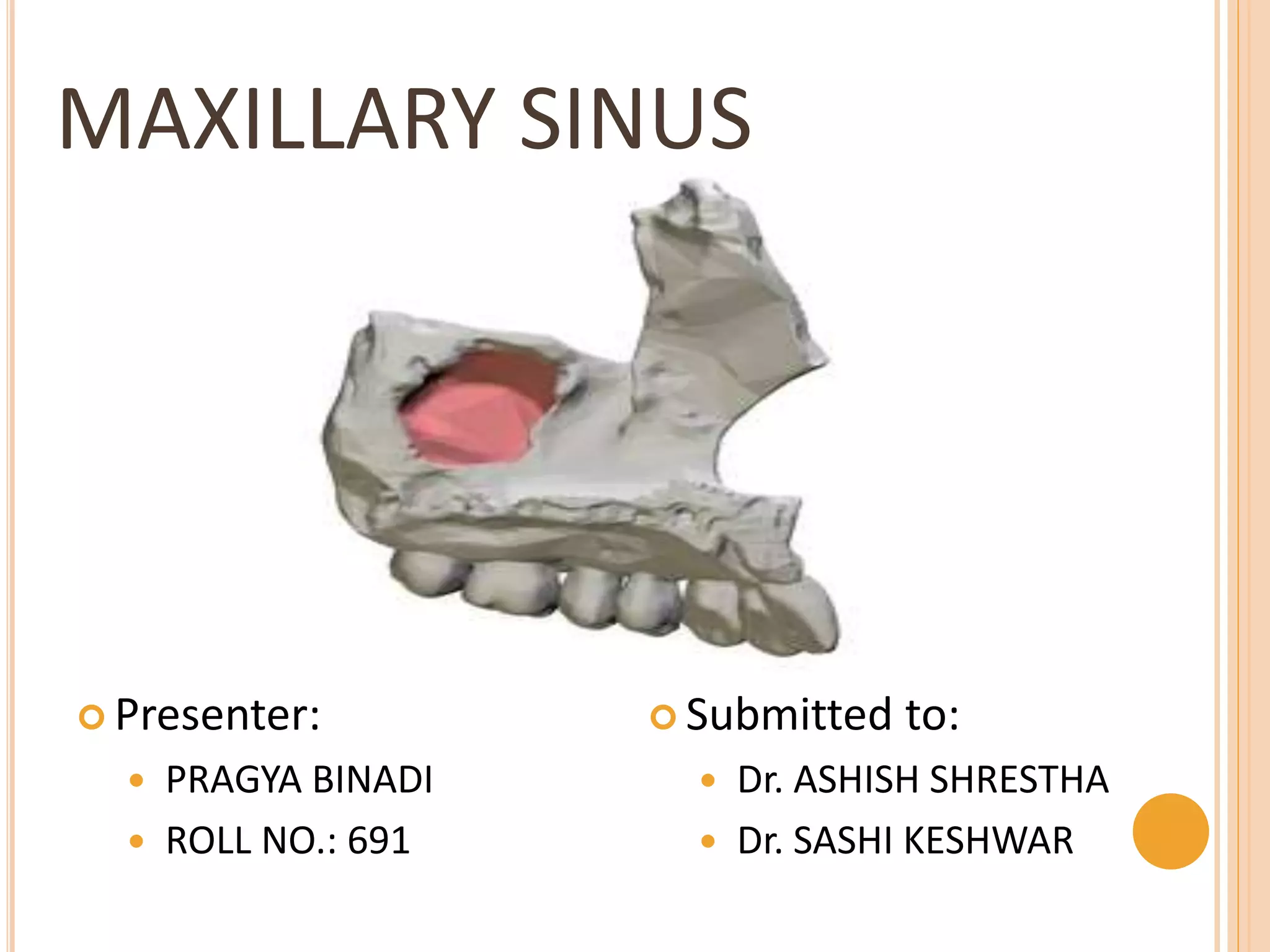
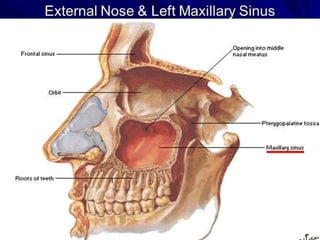
Maxillary sinus is the pneumatic space
that is lodged inside the body of maxilla
and that communicates with the
environment by way of the middle meatus
and the nasal vestibule.
Largest paranasal sinus
Also called as “ANTRUM OF HIGHMORE”
Drains into nose through Ostia.
ANATOMY
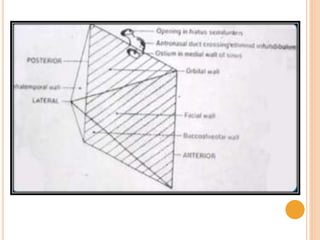
 Shape: Pyramidal
 Size: Variable
 Boundaries
 Apex: Zygomatic process of maxilla
 Base: Nasal surface of maxilla(formed by lateral wall of nose)
 Roof: Orbital surface of maxilla(formed by thin orbital part)
 Floor: Lateral hard palate, Alveolar process of maxilla
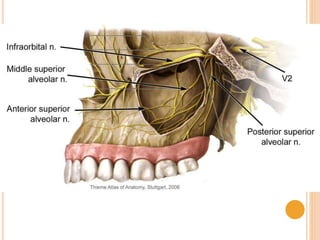
 Anterior wall is related to infra-orbital plexus of nerves
and vessels and origin of muscles of upper lip
 Posterior wall is pierced by posterior superior alveolar
nerve and vessels which travel to molar teeth.
BLOOD SUPPLY
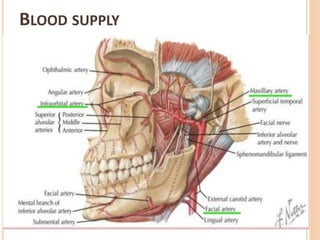
 Arterial supply
 Facial artery
 Maxillary artery
 Infra orbital artery
 Greater palatine artery
 Venous drainage
 Anteriorly: Sphenopalatine vein
 Posteriorly: Pterygoid venous plexus drain into facial vein
 Pterygoid plexus communicates with cavernous sinus by emissary vein.
BLOOD SUPPLY
Nerve supply
 Anterior superior alveolar nerve
 Middle superior alveolar nerve
 Posterior superior alveolar nerve
 Infra orbital nerve
 Greater palatine
Lymphatic drainage
 Submandibular lymph node
 Deep cervical lymph node
 Retropharyngeal lymph node
DEVELOPMENT
 It is the first paranasal sinus to develop.
 Initial development of sinus follows a number of
morphogenic events in the differentiation of the
nasal cavity in early gestation(about 32 mm
crown-rump length [CRL] in an embryo.)
 Horizontal shift of the Palatal Shelves &
subsequent fusion with one another
 Nasal Septum separates the secondary oral cavity from
the two nasal chambers
 Influences further expansion of the lateral nasal wall & 3
walls begin to fold
3 conchae and meatuses arise
 Superior and inferior meatuses remain as shallow
depressions along the lateral nasal wall for the first half
of IUL
 Middle meatus expands immediately into lateral nasal
wall & expands in an inferior direction occupying more
of the future maxillary body
 Development of sinus starts at 12th week as an
evagination of the mucous membrane in the lateral wall
of the middle meatus
 In its development :
 Tubular at birth
 Ovoid at childhood
 Pyramidal in adulthood
MICROSCOPIC FEATURES
Three layers surround the space of the Maxillary sinus:
1. Epithelial Layer
2. Basal Lamina
3. Sub – epithelial layer including periosteum
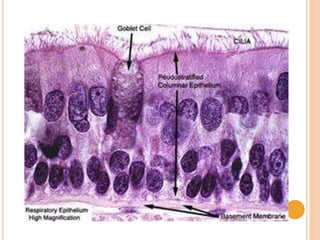
 Lined by pseudostratified columnar epithelium
 Columnar ciliated cells are numerous
 Additional cells: Basal cells, Columnar non ciliated
cells, Goblet cells
 Cilia contains 9+1 pairs of microtubules
 Cilia spreads the mucus
 Goblet cells are flask shaped cells, present in the basal
layer, secrete mucus
 Sub epithelial glands provide serous and mucous
secretion to the sinus
FUNCTION
1. Imparts resonance to the voice
2. Increases the surface area and lightens the
skull
3. Moistens and warms inspired air
4. Filters the debris from the inspired air
5. Mucus production and storage
6. Limit extent of facial injury from trauma
7. Provides thermal insulation to important
tissues
8. Serves as accessory olfactory organs
CLINICAL IMPORTANCE
 Dental infection: Infection from the maxillary premolar and
molars can easily communicate and infect the maxillary
antrum
 Oroantral Communication: Traumatic extraction of
maxillary teeth can cause oroantral communication
 Root Pieces: Root pieces of maxillary teeth may sometimes
be accidentally forced into the maxillary antrum
 Maxillary sinusitis: Because of the thickened and inflamed
sinus lining compresses the nerve supply of the maxillary
posterior teeth causing tenderness of the maxillary teeth
 the infraorbital and superior alveolar vessels are frequently
ruptures in maxillary fracture causing the hematoma
formation in the antrum.
CLINICAL CONSIDERATION
1. Maxillary sinusitis:
 It is the inflammation of the maxillary sinus mucosa.
 Types : Depending upon duration
a. Acute (< 4 weeks)
b. Sub acute (4 – 12 weeks)
c. Chronic (going on for 12 weeks or more)
Can sinusitis cause dental pain?
One of the common symptoms of sinusitis is pain and
the location depends on which sinus is affected.
If pain is in patients upper jaw and teeth ,with tender
cheeks, may mean the patients maxillary sinus is
involved.
1. Oroantral fistula
It is an abnormal condition where the maxillary sinus
is exposed to oral cavity through an epithelialised
fistula.
 Oroantral communication(abnormal
communication between maxillary sinus and oral
cavity) if left untreated can either heal or progress
into OAF.
Causes of OAF
 Extraction of posterior maxillary molars mainly 1st
and 2nd
 Displacement of posterior maxillary molar roots
into antrum(palatal root mainly involved)
DEVELOPMENTAL ANOMALIES
 Crouzon syndrome: Early synostosis(fusion)of
sutures produces hypoplasia of the maxilla and
therefore the maxillary sinus together with the
high arched palate. It is a genetic disorder
charactarized by premature fusion of certain skull
bones.
 Treacher Collins syndrome: Associated with
grossly and symmetrically underdeveloped
maxillary sinuses and malar bones.
 Binder syndrome: Hypoplasia of middle third of
the face with smaller maxillary length and
maxillary sinus hypoplasia.
REFERENCES
B D CHAURASIA’S HUMAN ANATOMY
ORBANS ORAL HISTOLOGY AND
EMBRYOLOGY
JAMES K AVERY
ESSENTIALS OF ORAL HISTOLOGY AND
EMBRYOLOGY
Maxillary sinus

Maxillary sinus

  • 1.
    MAXILLARY SINUS  Presenter: PRAGYA BINADI  ROLL NO.: 691  Submitted to:  Dr. ASHISH SHRESTHA  Dr. SASHI KESHWAR
  • 2.
  • 3.
    PARANASAL SINUSES  Paranasalsinuses are air-filled spaces present within some bones around the nasal cavities.  There are four pairs of paranasal sinuses:  Maxillary  Frontal  Ethmoidal  Sphenoidal  All of the sinuses open into nasal cavity through its lateral wall.
  • 5.
    DEFINATION Maxillary sinus isthe pneumatic space that is lodged inside the body of maxilla and that communicates with the environment by way of the middle meatus and the nasal vestibule. Largest paranasal sinus Also called as “ANTRUM OF HIGHMORE” Drains into nose through Ostia.
  • 7.
    ANATOMY  Shape: Pyramidal Size: Variable  Boundaries  Apex: Zygomatic process of maxilla  Base: Nasal surface of maxilla(formed by lateral wall of nose)  Roof: Orbital surface of maxilla(formed by thin orbital part)  Floor: Lateral hard palate, Alveolar process of maxilla  Anterior wall is related to infra-orbital plexus of nerves and vessels and origin of muscles of upper lip  Posterior wall is pierced by posterior superior alveolar nerve and vessels which travel to molar teeth.
  • 9.
    BLOOD SUPPLY  Arterialsupply  Facial artery  Maxillary artery  Infra orbital artery  Greater palatine artery  Venous drainage  Anteriorly: Sphenopalatine vein  Posteriorly: Pterygoid venous plexus drain into facial vein  Pterygoid plexus communicates with cavernous sinus by emissary vein.
  • 10.
  • 11.
    Nerve supply  Anteriorsuperior alveolar nerve  Middle superior alveolar nerve  Posterior superior alveolar nerve  Infra orbital nerve  Greater palatine Lymphatic drainage  Submandibular lymph node  Deep cervical lymph node  Retropharyngeal lymph node
  • 13.
    DEVELOPMENT  It isthe first paranasal sinus to develop.  Initial development of sinus follows a number of morphogenic events in the differentiation of the nasal cavity in early gestation(about 32 mm crown-rump length [CRL] in an embryo.)  Horizontal shift of the Palatal Shelves & subsequent fusion with one another
  • 14.
     Nasal Septumseparates the secondary oral cavity from the two nasal chambers  Influences further expansion of the lateral nasal wall & 3 walls begin to fold 3 conchae and meatuses arise  Superior and inferior meatuses remain as shallow depressions along the lateral nasal wall for the first half of IUL  Middle meatus expands immediately into lateral nasal wall & expands in an inferior direction occupying more of the future maxillary body
  • 15.
     Development ofsinus starts at 12th week as an evagination of the mucous membrane in the lateral wall of the middle meatus  In its development :  Tubular at birth  Ovoid at childhood  Pyramidal in adulthood
  • 16.
    MICROSCOPIC FEATURES Three layerssurround the space of the Maxillary sinus: 1. Epithelial Layer 2. Basal Lamina 3. Sub – epithelial layer including periosteum  Lined by pseudostratified columnar epithelium  Columnar ciliated cells are numerous  Additional cells: Basal cells, Columnar non ciliated cells, Goblet cells
  • 17.
     Cilia contains9+1 pairs of microtubules  Cilia spreads the mucus  Goblet cells are flask shaped cells, present in the basal layer, secrete mucus  Sub epithelial glands provide serous and mucous secretion to the sinus
  • 19.
    FUNCTION 1. Imparts resonanceto the voice 2. Increases the surface area and lightens the skull 3. Moistens and warms inspired air 4. Filters the debris from the inspired air 5. Mucus production and storage 6. Limit extent of facial injury from trauma 7. Provides thermal insulation to important tissues 8. Serves as accessory olfactory organs
  • 20.
    CLINICAL IMPORTANCE  Dentalinfection: Infection from the maxillary premolar and molars can easily communicate and infect the maxillary antrum  Oroantral Communication: Traumatic extraction of maxillary teeth can cause oroantral communication  Root Pieces: Root pieces of maxillary teeth may sometimes be accidentally forced into the maxillary antrum  Maxillary sinusitis: Because of the thickened and inflamed sinus lining compresses the nerve supply of the maxillary posterior teeth causing tenderness of the maxillary teeth  the infraorbital and superior alveolar vessels are frequently ruptures in maxillary fracture causing the hematoma formation in the antrum.
  • 21.
    CLINICAL CONSIDERATION 1. Maxillarysinusitis:  It is the inflammation of the maxillary sinus mucosa.  Types : Depending upon duration a. Acute (< 4 weeks) b. Sub acute (4 – 12 weeks) c. Chronic (going on for 12 weeks or more) Can sinusitis cause dental pain? One of the common symptoms of sinusitis is pain and the location depends on which sinus is affected. If pain is in patients upper jaw and teeth ,with tender cheeks, may mean the patients maxillary sinus is involved.
  • 22.
    1. Oroantral fistula Itis an abnormal condition where the maxillary sinus is exposed to oral cavity through an epithelialised fistula.  Oroantral communication(abnormal communication between maxillary sinus and oral cavity) if left untreated can either heal or progress into OAF. Causes of OAF  Extraction of posterior maxillary molars mainly 1st and 2nd  Displacement of posterior maxillary molar roots into antrum(palatal root mainly involved)
  • 23.
    DEVELOPMENTAL ANOMALIES  Crouzonsyndrome: Early synostosis(fusion)of sutures produces hypoplasia of the maxilla and therefore the maxillary sinus together with the high arched palate. It is a genetic disorder charactarized by premature fusion of certain skull bones.  Treacher Collins syndrome: Associated with grossly and symmetrically underdeveloped maxillary sinuses and malar bones.  Binder syndrome: Hypoplasia of middle third of the face with smaller maxillary length and maxillary sinus hypoplasia.
  • 24.
    REFERENCES B D CHAURASIA’SHUMAN ANATOMY ORBANS ORAL HISTOLOGY AND EMBRYOLOGY JAMES K AVERY ESSENTIALS OF ORAL HISTOLOGY AND EMBRYOLOGY