The Deaf ChildInner  ear abnormalitiesSheibes dysplasia-dysplasia in cochlea and vestibule.Alexanders dysplasia-affects only the basal turn of membranous cochlea,only high frequencies are affected.Bing-siebmann dysplasia-complete abscence of membranous labyrinth.
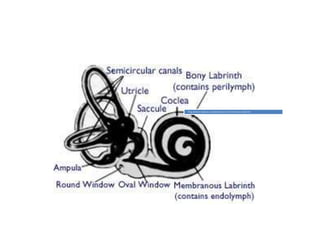
Bing siebman dysplasia-complete abscence of membranous labyrinth
Types of hearing lossConductive hearing lossSensory neuronal hearing lossSyndromic--hearing loss in association with other medical problems e.g pendred syndrome with associated thyroid dysfunction. Nonsyndromic--hearing loss without associated medical problems.
Quantification of hearing lossThe severity of a hearing impairment is ranked according to the loudness (measured in decibels (dB)) a sound must be before being detected by an individual. Hearing impairment may be ranked as mild, moderate, severe or profound as defined below:Mild: for children: between 20 and 40 dBModerate: between 41 and 55 dBModerately severe: between 56 and 70 dBSevere: between 71 and 90 dBProfound: 90 dB or greaterHearing sensitivity varies according to the frequency of sounds. To take this into account, hearing sensitivity can be measured for a range of frequencies and plotted on an audiogram.
Michel aplasia-complete abscence of bony and membranous labyrinthModinis dysplasia-only basal coil is present or cochlea is 1.5 turns.
Enlarged vestibular aqueductthe diameter normally ranges somewhere between 0.5 mm and 1.4 mm and averages 0.8 mm. LVAS is defined as a vestibular aqueduct with a diameter greater than 1.5 mm at the midpoint. In some cases of LVAS, the vestibular aqueducts can be as large as 8 mm, although,The vestibular aqueduct is a narrow bony canal (aqueduct) that runs through the skull, connecting the inner ear (vestibule) to the cranial cavity-hence its name.Running through this bony canal is a membranous "tube" called the endolymphatic duct. Like other parts of the inner ear, the endolymphatic duct is filled with a fluid, appropriately called endolymph.
Semicircular canal malformations
Maternal factorsInfections-TORCHESTo-toxoplasmosisR-rubellaC-cytomegalovirusH-herpes 1 and 2S-syphyllis
Drugs during pregnancyStreptomycin,gentamycin,tobramycin cross placental barrier and damage cochleaRadiationNutriotional deficiencyDiabetesThyroid deficiencyAlcoholism-Foetal alcohol syndrome (FAS
Perinatal causesAnoxiaPrematurity and low birth weightBirth injuriesNeonatal jaundiceNeonatal meningitisSepsisOtotoxic drugs-antibiotics,anti-inflamatory
Post-natal causesGenetic causes.Non-genetic-viral infections(mumps measles,varicella)Secretory otitis media- Secretory otitis media is an accumulation of fluid in the middle ear. Trauma e.g fractures of temporal boneNoise induced deafness
Investigations.AnamnesisScreening procedures-used to test high risk infants.(arousal test)Behaviour observation audiometry-moros reflex,chochlea palpebral reflex,cessation reflex.Distraction techniques.
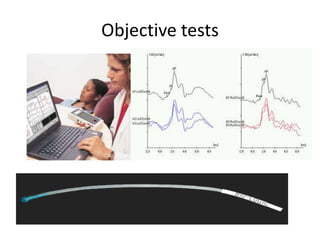
Objective tests
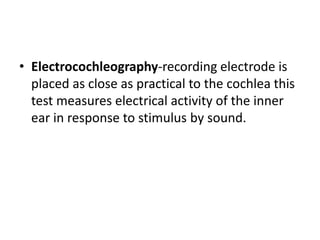
Electrocochleography-recording electrode is placed as close as practical to the cochlea this test measures electrical activity of the inner ear in response to stimulus by sound.
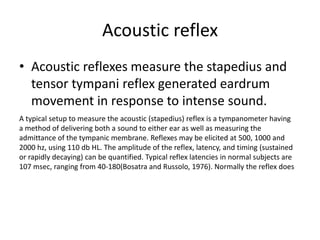
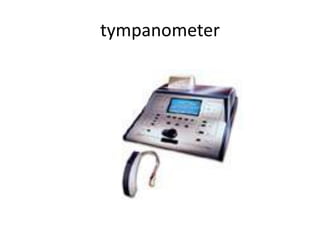
Acoustic reflexAcoustic reflexes measure the stapedius and tensor tympani reflex generated eardrum movement in response to intense sound. A typical setup to measure the acoustic (stapedius) reflex is a tympanometer having a method of delivering both a sound to either ear as well as measuring the admittance of the tympanic membrane. Reflexes may be elicited at 500, 1000 and 2000 hz, using 110 db HL. The amplitude of the reflex, latency, and timing (sustained or rapidly decaying) can be quantified. Typical reflex latencies in normal subjects are 107 msec, ranging from 40-180(Bosatra and Russolo, 1976). Normally the reflex does
tympanometer
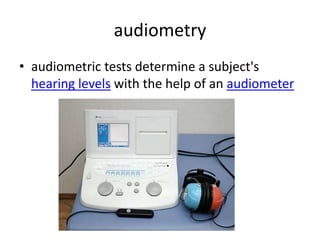
audiometryaudiometric tests determine a subject's hearing levels with the help of an audiometer
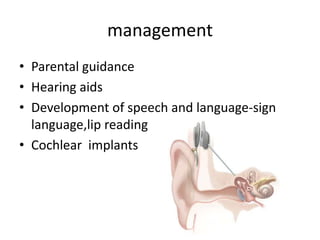
managementParental guidanceHearing aidsDevelopment of speech and language-sign language,lip readingCochlear  implants

The deaf child

  • 1.
    The Deaf ChildInner ear abnormalitiesSheibes dysplasia-dysplasia in cochlea and vestibule.Alexanders dysplasia-affects only the basal turn of membranous cochlea,only high frequencies are affected.Bing-siebmann dysplasia-complete abscence of membranous labyrinth.
  • 2.
    Bing siebman dysplasia-completeabscence of membranous labyrinth
  • 3.
    Types of hearinglossConductive hearing lossSensory neuronal hearing lossSyndromic--hearing loss in association with other medical problems e.g pendred syndrome with associated thyroid dysfunction. Nonsyndromic--hearing loss without associated medical problems.
  • 4.
    Quantification of hearinglossThe severity of a hearing impairment is ranked according to the loudness (measured in decibels (dB)) a sound must be before being detected by an individual. Hearing impairment may be ranked as mild, moderate, severe or profound as defined below:Mild: for children: between 20 and 40 dBModerate: between 41 and 55 dBModerately severe: between 56 and 70 dBSevere: between 71 and 90 dBProfound: 90 dB or greaterHearing sensitivity varies according to the frequency of sounds. To take this into account, hearing sensitivity can be measured for a range of frequencies and plotted on an audiogram.
  • 5.
    Michel aplasia-complete abscenceof bony and membranous labyrinthModinis dysplasia-only basal coil is present or cochlea is 1.5 turns.
  • 6.
    Enlarged vestibular aqueductthediameter normally ranges somewhere between 0.5 mm and 1.4 mm and averages 0.8 mm. LVAS is defined as a vestibular aqueduct with a diameter greater than 1.5 mm at the midpoint. In some cases of LVAS, the vestibular aqueducts can be as large as 8 mm, although,The vestibular aqueduct is a narrow bony canal (aqueduct) that runs through the skull, connecting the inner ear (vestibule) to the cranial cavity-hence its name.Running through this bony canal is a membranous "tube" called the endolymphatic duct. Like other parts of the inner ear, the endolymphatic duct is filled with a fluid, appropriately called endolymph.
  • 7.
  • 8.
  • 9.
    Drugs during pregnancyStreptomycin,gentamycin,tobramycincross placental barrier and damage cochleaRadiationNutriotional deficiencyDiabetesThyroid deficiencyAlcoholism-Foetal alcohol syndrome (FAS
  • 10.
    Perinatal causesAnoxiaPrematurity andlow birth weightBirth injuriesNeonatal jaundiceNeonatal meningitisSepsisOtotoxic drugs-antibiotics,anti-inflamatory
  • 11.
    Post-natal causesGenetic causes.Non-genetic-viralinfections(mumps measles,varicella)Secretory otitis media- Secretory otitis media is an accumulation of fluid in the middle ear. Trauma e.g fractures of temporal boneNoise induced deafness
  • 12.
    Investigations.AnamnesisScreening procedures-used totest high risk infants.(arousal test)Behaviour observation audiometry-moros reflex,chochlea palpebral reflex,cessation reflex.Distraction techniques.
  • 13.
  • 14.
    Electrocochleography-recording electrode isplaced as close as practical to the cochlea this test measures electrical activity of the inner ear in response to stimulus by sound.
  • 15.
    Acoustic reflexAcoustic reflexesmeasure the stapedius and tensor tympani reflex generated eardrum movement in response to intense sound. A typical setup to measure the acoustic (stapedius) reflex is a tympanometer having a method of delivering both a sound to either ear as well as measuring the admittance of the tympanic membrane. Reflexes may be elicited at 500, 1000 and 2000 hz, using 110 db HL. The amplitude of the reflex, latency, and timing (sustained or rapidly decaying) can be quantified. Typical reflex latencies in normal subjects are 107 msec, ranging from 40-180(Bosatra and Russolo, 1976). Normally the reflex does
  • 16.
  • 17.
    audiometryaudiometric tests determinea subject's hearing levels with the help of an audiometer
  • 18.
    managementParental guidanceHearing aidsDevelopmentof speech and language-sign language,lip readingCochlear implants

Editor's Notes

  • #2 1.Sheibes dysplasia-dysplasia in chochle and saccule.2.Alexanders dysplasia-affects only membranous turn of chochlea,only high frequencies are affected,residual hearing is present in low frequencies,hearing aids uite helpfull.3.Bing-shibman dysplasia-complete abscence of membranous labyrinth.4.Michels dysplasia-abscence of bony and membranous labyrinth,no hearing aids and chochlea implantation can be used