The cardiac cycle
Describing the sequence of
events in one heart beat
Definitions
 Systole = period of ventricular contraction.
 Diastole = period of ventricular relaxation.
 NOTE: Normally diastole is longer than
systole.
Cardiac cycle
 General Principles.
 Contraction of the myocardium generates
pressure changes which result in the orderly
movement of blood.
 Blood flows from an area of high pressure to an
area of low pressure, unless flow is blocked by a
valve.
 Events on the right and left sides of the heart are
the same, but pressures are lower on the right.
Atrial systole
 The heart is full of blood
and the ventricles are
relaxed
 Both the atria contract and
blood passes down to the
ventricles
 The atrio-ventricular valves
open due to blood
pressure
 70% of the blood flows
passively down to the
ventricles so the atria do
not have to contract a
great amount.
Ventricular systole
 The atria relax.
 The ventricle walls
contract, forcing the
blood out
 The pressure of the
blood forces the atrioventricular valves to
shut (producing the
heart sound ‘lub’)
Ventricular systole
 The pressure of
blood opens the
semi-lunar valves.
 Blood passes into
the aorta and
pulmonary arteries.
Diastole
 The ventricles relax
 Pressure in the ventricles
falls below that in the
arteries
 Blood under high pressure
in the arteries causes the
semi lunar valves to shut.
This produces the second
heart sound, ‘dub’.
 During diastole, all the
muscle in the heart
relaxes.
 Blood from the vena
cava and pulmonary
veins enter the atria.
 The whole cycle starts
again.
Cardiac cycle
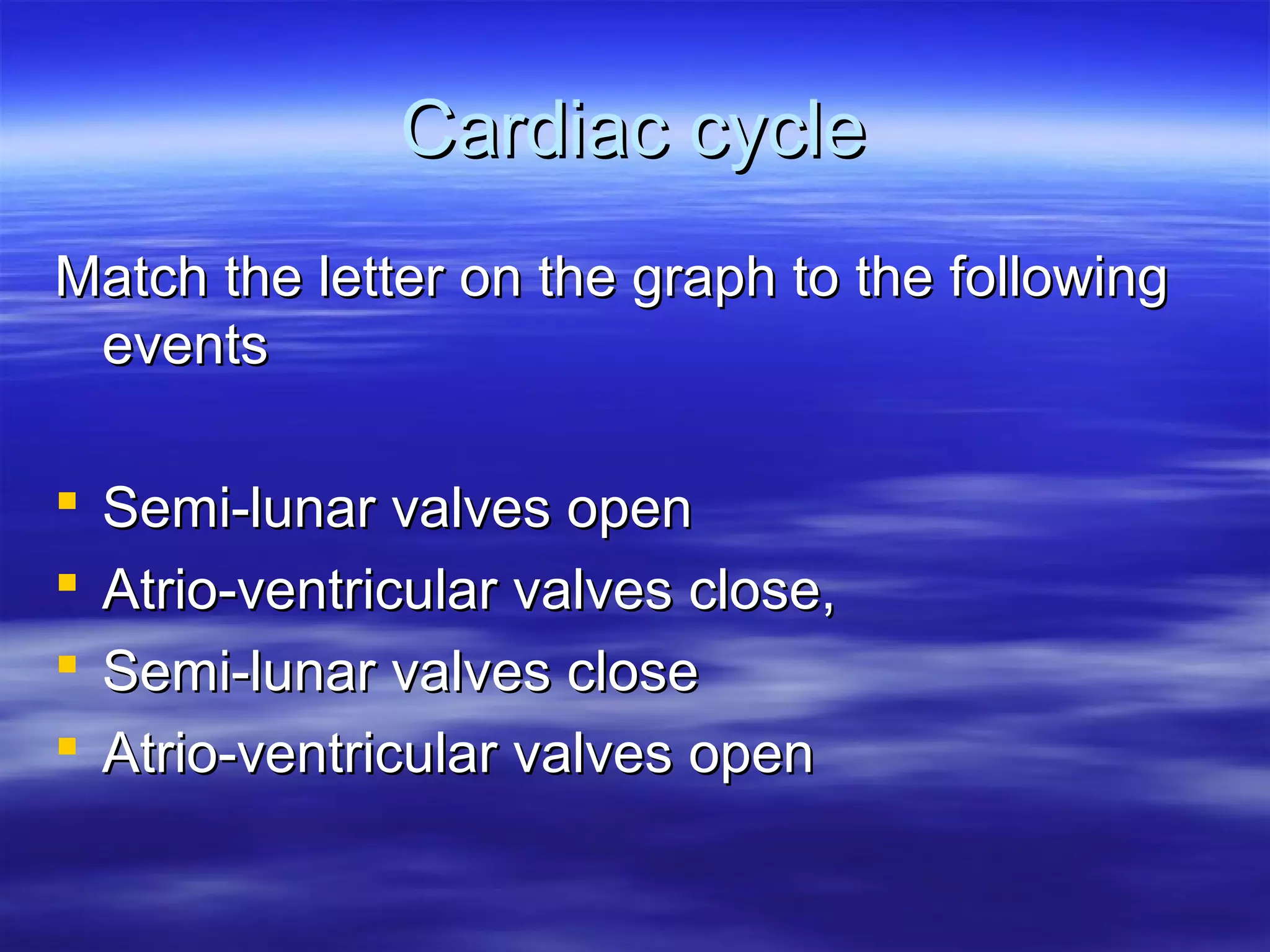
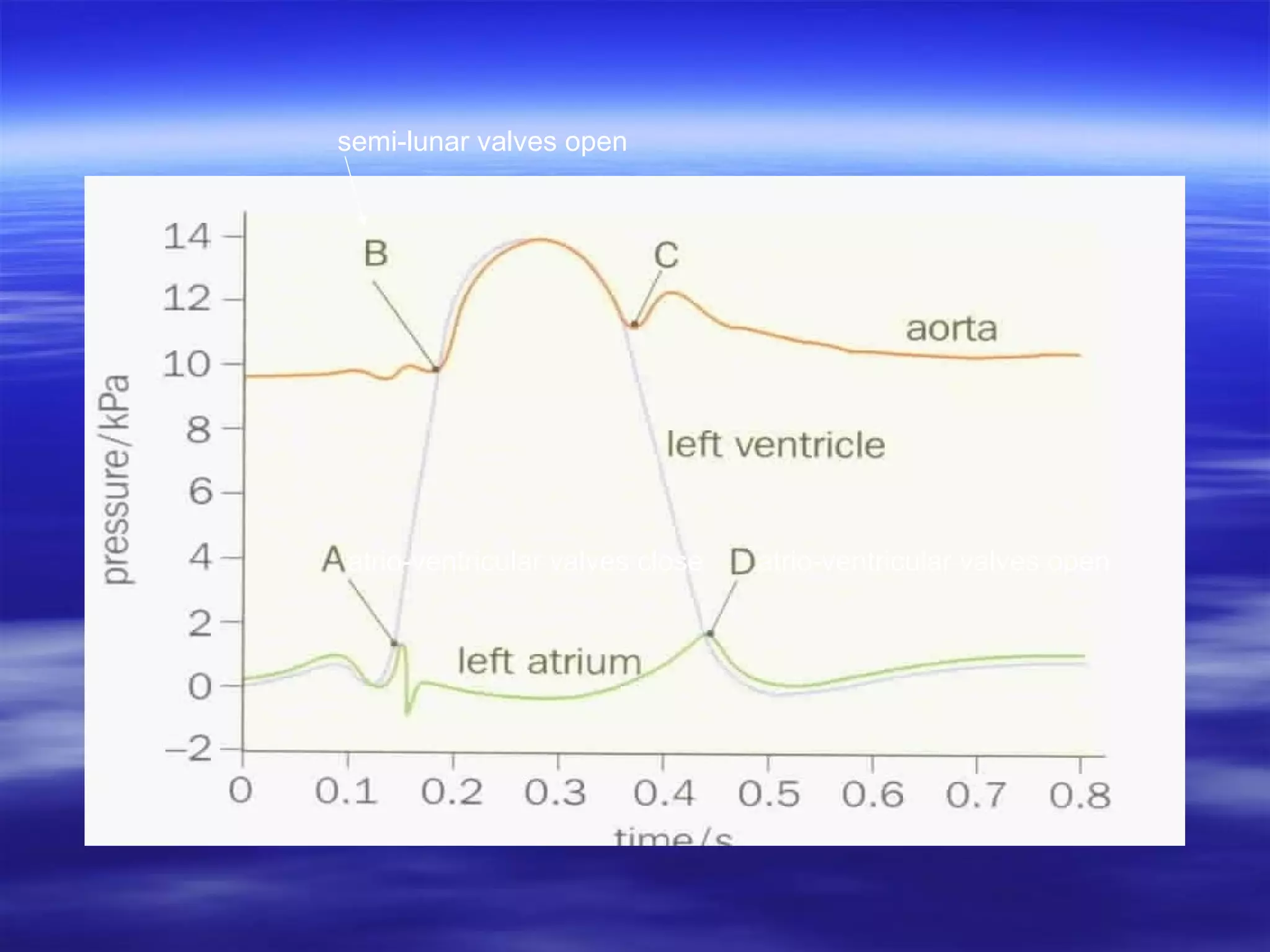
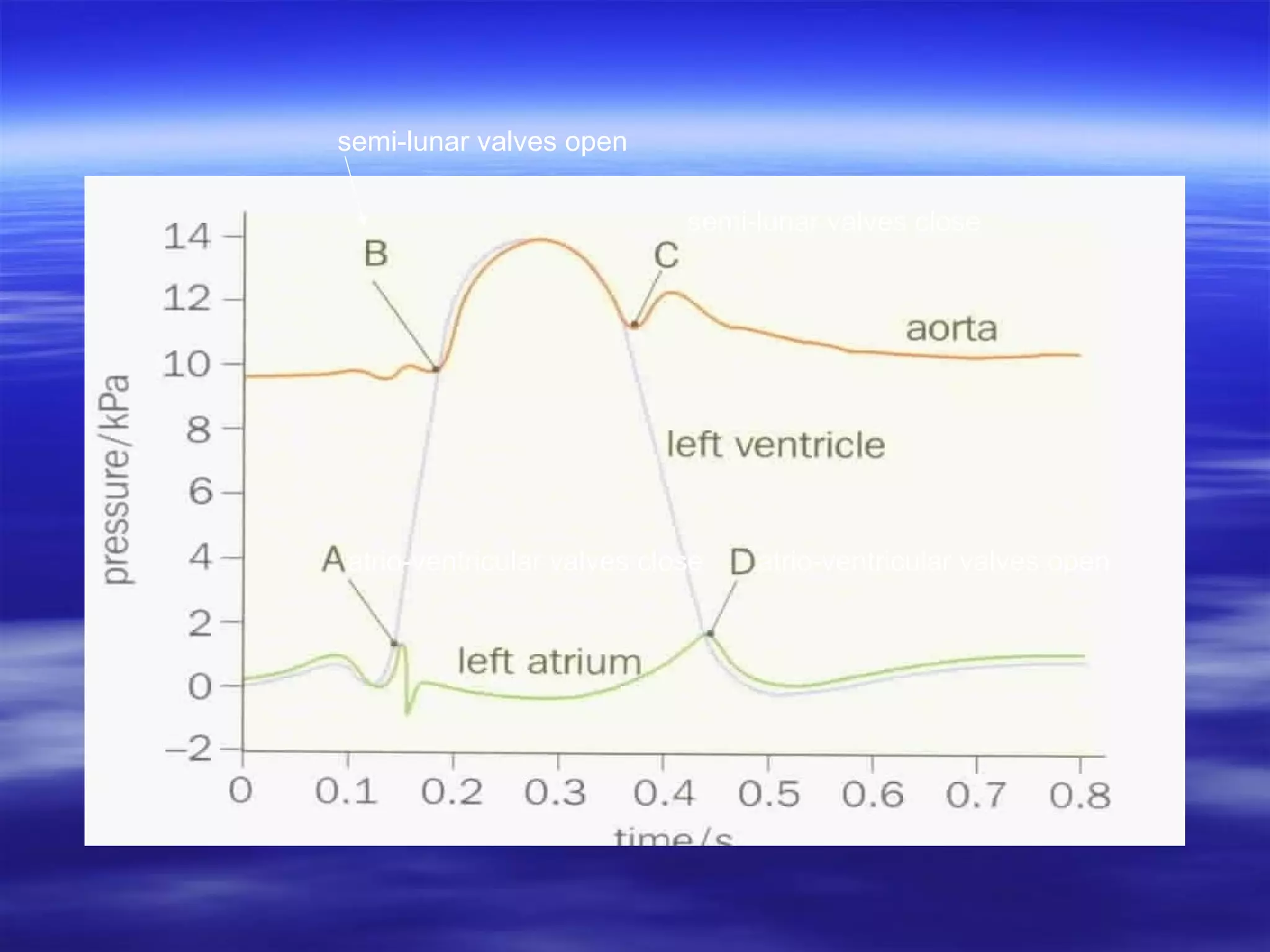
Match the letter on the graph to the following
events





Semi-lunar valves open
Atrio-ventricular valves close,
Semi-lunar valves close
Atrio-ventricular valves open
atrio-ventricular valves open
atrio-ventricular valves close

atrio-ventricular valves open
semi-lunar valves open

atrio-ventricular valves close

atrio-ventricular valves open
semi-lunar valves open
semi-lunar valves close

atrio-ventricular valves close

atrio-ventricular valves open

The cardiac cycle colstons

  • 1.
    The cardiac cycle Describingthe sequence of events in one heart beat
  • 2.
    Definitions  Systole =period of ventricular contraction.  Diastole = period of ventricular relaxation.  NOTE: Normally diastole is longer than systole.
  • 3.
    Cardiac cycle  GeneralPrinciples.  Contraction of the myocardium generates pressure changes which result in the orderly movement of blood.  Blood flows from an area of high pressure to an area of low pressure, unless flow is blocked by a valve.  Events on the right and left sides of the heart are the same, but pressures are lower on the right.
  • 4.
    Atrial systole  Theheart is full of blood and the ventricles are relaxed  Both the atria contract and blood passes down to the ventricles  The atrio-ventricular valves open due to blood pressure  70% of the blood flows passively down to the ventricles so the atria do not have to contract a great amount.
  • 5.
    Ventricular systole  Theatria relax.  The ventricle walls contract, forcing the blood out  The pressure of the blood forces the atrioventricular valves to shut (producing the heart sound ‘lub’)
  • 6.
    Ventricular systole  Thepressure of blood opens the semi-lunar valves.  Blood passes into the aorta and pulmonary arteries.
  • 7.
    Diastole  The ventriclesrelax  Pressure in the ventricles falls below that in the arteries  Blood under high pressure in the arteries causes the semi lunar valves to shut. This produces the second heart sound, ‘dub’.  During diastole, all the muscle in the heart relaxes.
  • 8.
     Blood fromthe vena cava and pulmonary veins enter the atria.  The whole cycle starts again.
  • 10.
    Cardiac cycle Match theletter on the graph to the following events     Semi-lunar valves open Atrio-ventricular valves close, Semi-lunar valves close Atrio-ventricular valves open
  • 11.
  • 12.
  • 13.
    semi-lunar valves open atrio-ventricularvalves close atrio-ventricular valves open
  • 14.
    semi-lunar valves open semi-lunarvalves close atrio-ventricular valves close atrio-ventricular valves open