CARDIAC CYCLE
Introduction
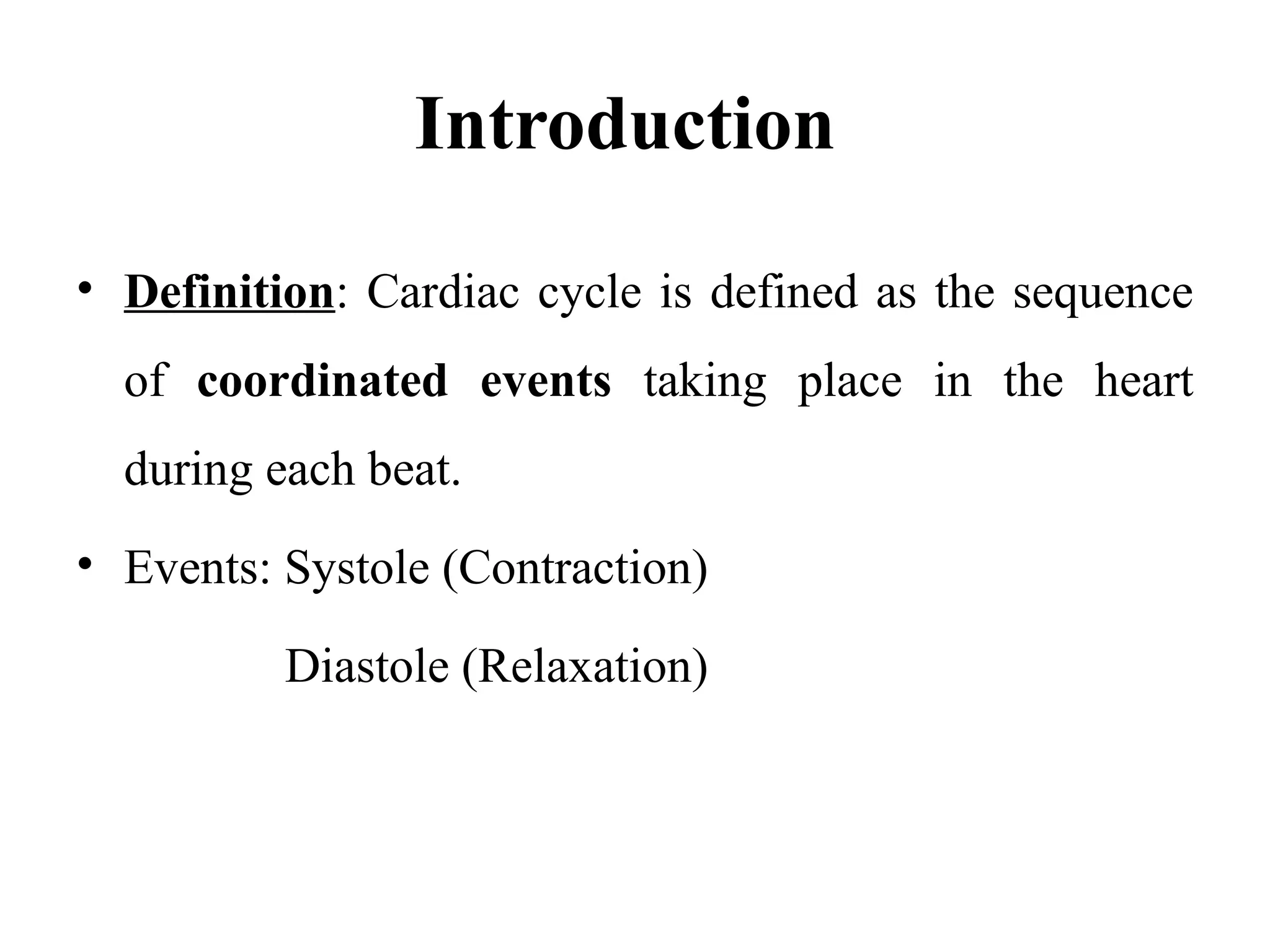
• Definition: Cardiac cycle is defined as the sequence
of coordinated events taking place in the heart
during each beat.
• Events: Systole (Contraction)
Diastole (Relaxation)
Duration
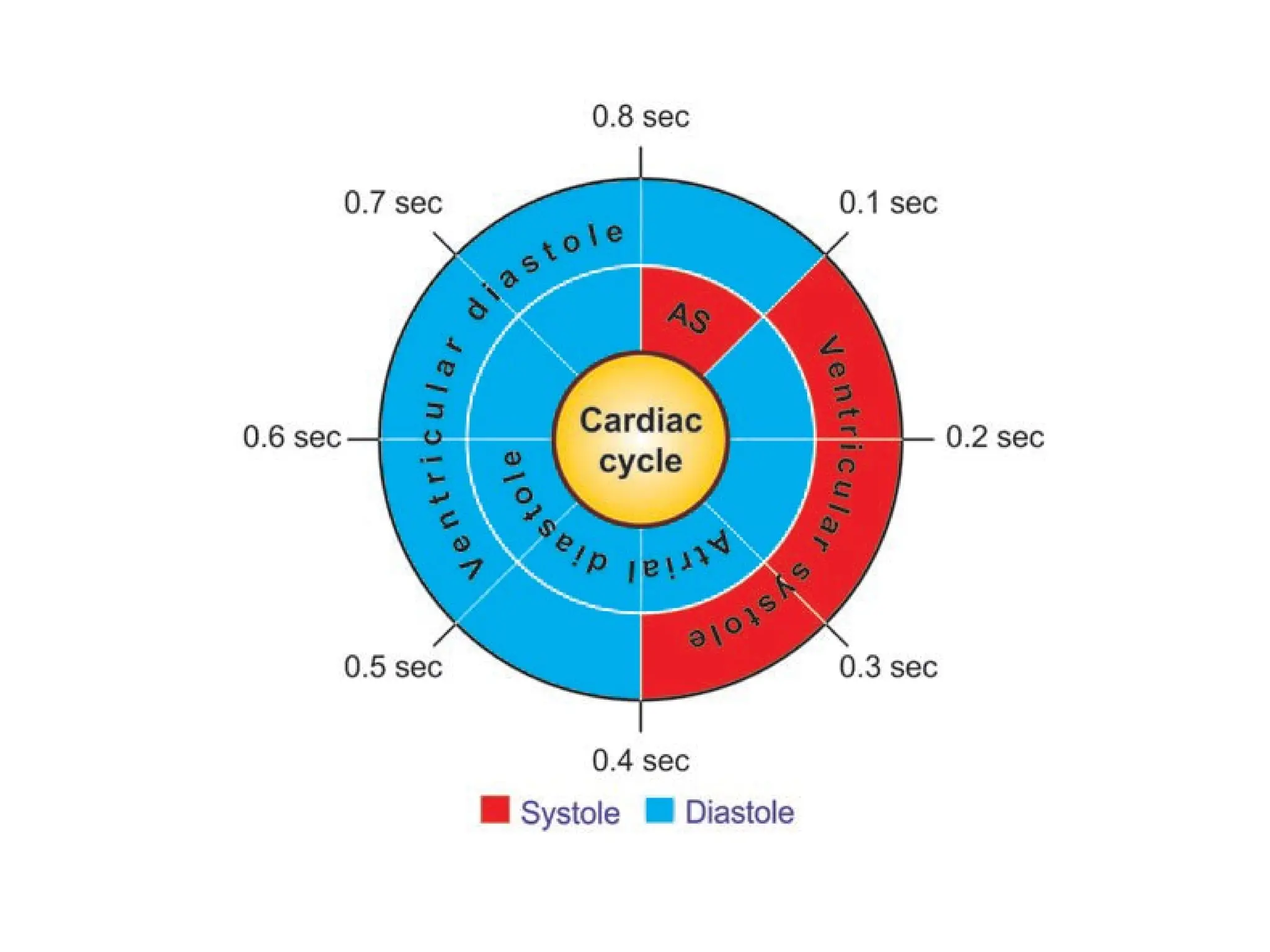
• Heart rate: 72/minute
• Cardiac cycle: 0.8 second
Events of cardiac cycle
1. Atrial events
2. Ventricular events
Atrial events
1. Atrial systole = 0.11 (0.1) sec
2. Atrial diastole = 0.69 (0.7) sec
Ventricular events
1. Ventricular systole = 0.27 (0.3) sec
2. Ventricular diastole = 0.53 (0.5) sec
Ventricular Systole
Time (second)
1. Isometric contraction = 0.05
2. Ejection period = 0.22
0.27
Ventricular Diastole
1. Protodiastole = 0.04
2. Isometric relaxation = 0.08
3. Rapid filling = 0.11
4. Slow filling = 0.19
5. Last rapid filling = 0.11
0.53
Atrial systole
Duration: 0.11 second
Known as last rapid filling phase or
presystole
Intra atrial pressure increases
Contraction of atrial musculature causes the
production of fourth heart sound
Atrial diastole
 Duration: 0.69 sec (0.7sec)
 Atrial filling takes place
 atrial diastole (first 0.3 sec) coincides with ventricular
systole > heart relaxes as a whole for 0.4 sec
Ventricular events
1. ISOMETRIC CONTRACTION PERIOD
 characterized by increase in tension, without any change in the
length of muscle fibers
 Also called isovolumetric contraction
 Closure of atrioventricular valves at the beginning of this
phase produces first heart sound.
 Significance: Pressure rise in ventricle, causes opening of
semilunar valves
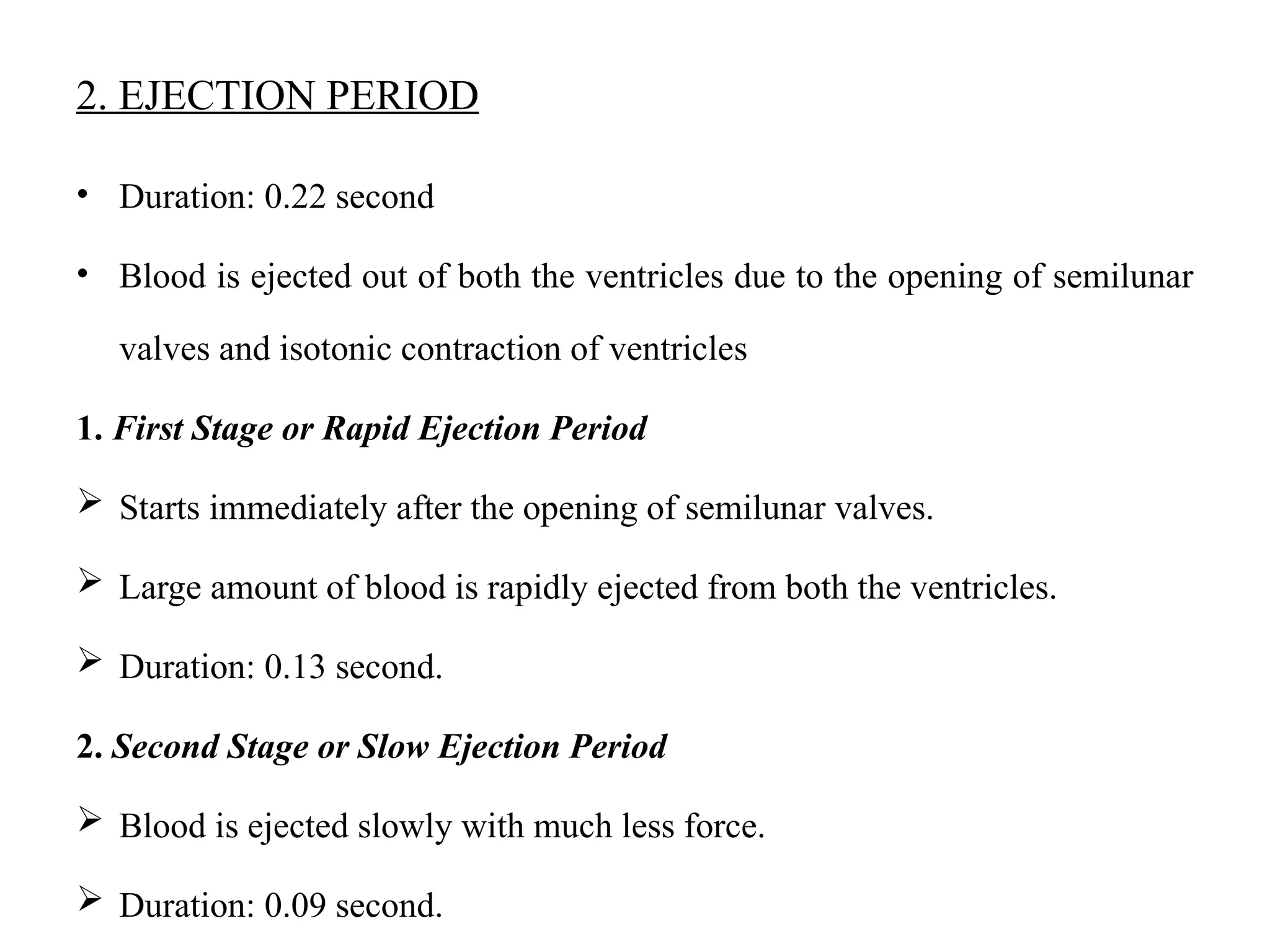
2. EJECTION PERIOD
• Duration: 0.22 second
• Blood is ejected out of both the ventricles due to the opening of semilunar
valves and isotonic contraction of ventricles
1. First Stage or Rapid Ejection Period
 Starts immediately after the opening of semilunar valves.
 Large amount of blood is rapidly ejected from both the ventricles.
 Duration: 0.13 second.
2. Second Stage or Slow Ejection Period
 Blood is ejected slowly with much less force.
 Duration: 0.09 second.
1. PROTODIASTOLE
• Duration: 0.04 second
• first stage of ventricular diastole
Events:
 Due to the ejection of blood, the pressure in aorta
and pulmonary artery increases and pressure in
ventricles drops
 Closure of Semilunar valves produces second
heart sound
2. ISOMETRIC RELAXATION PERIOD
• Duration: 0.08 second
• Characterized by decrease in tension without any
change in the length of muscle
Isometric relaxation
Reduces ventricular pressure
Opening of atrioventricular valves,
Filling of ventricles
3. RAPID FILLING PHASE
• Duration: 0.11 second
• Sudden rush of blood from atria into ventricles
• 70% of ventricular filling takes place
• Significance: Production of third heart sound
4. SLOW FILLING PHASE
• Duration: 0.19 second
• ventricular filling becomes slow
• 20% of ventricular filling takes place
5. LAST RAPID FILLING PHASE
• Occurs because of atrial systole
• After slow filling period, the atria contract and push a
small amount of blood into ventricles (atrial kick)
• 10% of ventricular filling takes place
• End-diastolic Volume: amount of blood remaining in
each ventricle at the end of diastole. It is about 130 to
150 mL per ventricle.
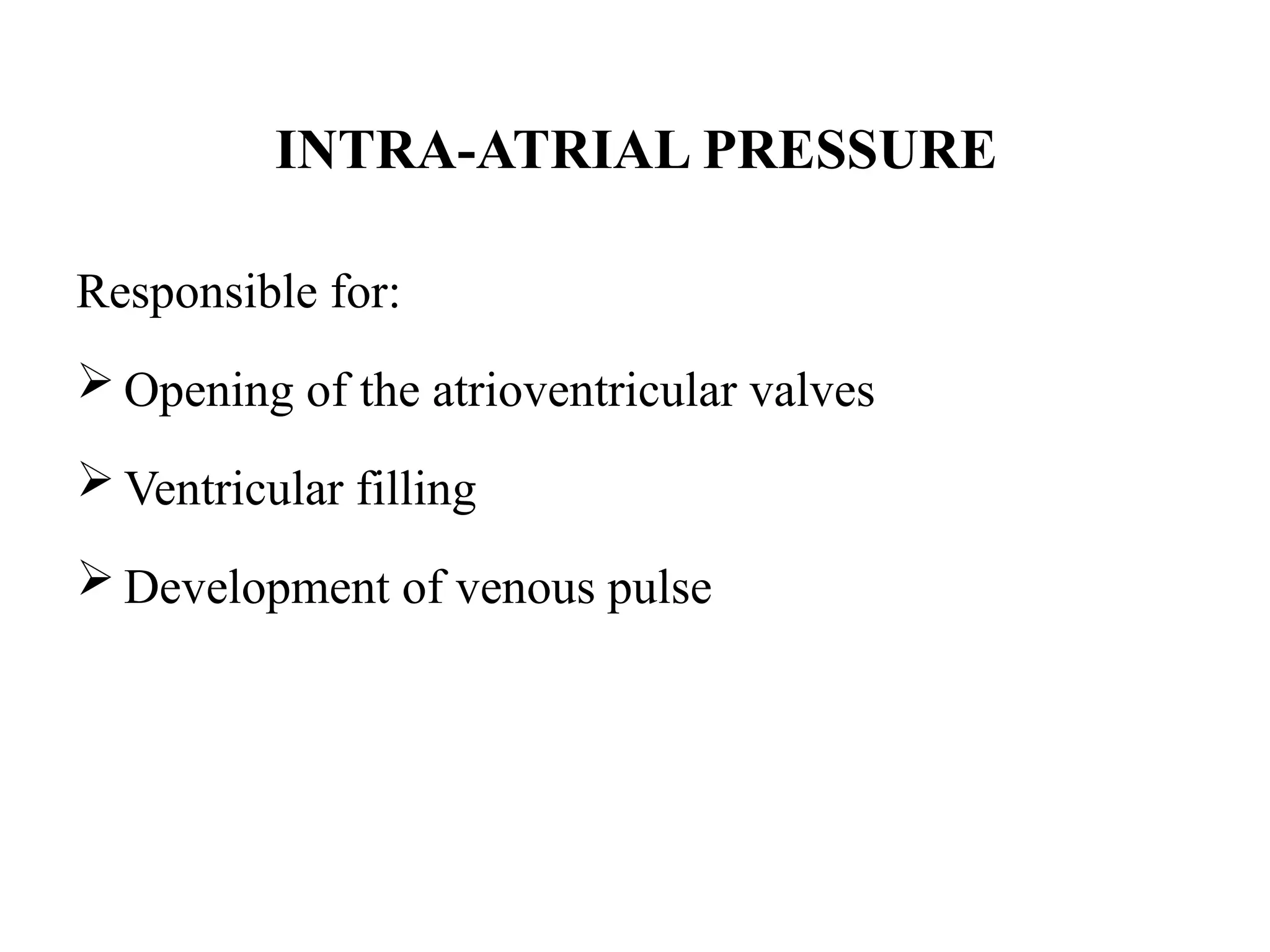
INTRA-ATRIAL PRESSURE
Responsible for:
 Opening of the atrioventricular valves
 Ventricular filling
 Development of venous pulse
Heart sounds
HEART SOUNDS
1st
Heart Sound > Closure AV valves
2nd
Heart Sound > Closure of Semilunar valves
3rd
Heart Sound > Sudden rush blood from Atria to ventricles
4th
Heart Sound > Contraction of Atrial musculature
Thank you

Cardiac Cycle-1.pptx for medical students

  • 1.
  • 2.
    Introduction • Definition: Cardiaccycle is defined as the sequence of coordinated events taking place in the heart during each beat. • Events: Systole (Contraction) Diastole (Relaxation)
  • 3.
    Duration • Heart rate:72/minute • Cardiac cycle: 0.8 second Events of cardiac cycle 1. Atrial events 2. Ventricular events
  • 4.
    Atrial events 1. Atrialsystole = 0.11 (0.1) sec 2. Atrial diastole = 0.69 (0.7) sec Ventricular events 1. Ventricular systole = 0.27 (0.3) sec 2. Ventricular diastole = 0.53 (0.5) sec
  • 5.
    Ventricular Systole Time (second) 1.Isometric contraction = 0.05 2. Ejection period = 0.22 0.27 Ventricular Diastole 1. Protodiastole = 0.04 2. Isometric relaxation = 0.08 3. Rapid filling = 0.11 4. Slow filling = 0.19 5. Last rapid filling = 0.11 0.53
  • 6.
    Atrial systole Duration: 0.11second Known as last rapid filling phase or presystole Intra atrial pressure increases Contraction of atrial musculature causes the production of fourth heart sound
  • 7.
    Atrial diastole  Duration:0.69 sec (0.7sec)  Atrial filling takes place  atrial diastole (first 0.3 sec) coincides with ventricular systole > heart relaxes as a whole for 0.4 sec
  • 9.
    Ventricular events 1. ISOMETRICCONTRACTION PERIOD  characterized by increase in tension, without any change in the length of muscle fibers  Also called isovolumetric contraction  Closure of atrioventricular valves at the beginning of this phase produces first heart sound.  Significance: Pressure rise in ventricle, causes opening of semilunar valves
  • 10.
    2. EJECTION PERIOD •Duration: 0.22 second • Blood is ejected out of both the ventricles due to the opening of semilunar valves and isotonic contraction of ventricles 1. First Stage or Rapid Ejection Period  Starts immediately after the opening of semilunar valves.  Large amount of blood is rapidly ejected from both the ventricles.  Duration: 0.13 second. 2. Second Stage or Slow Ejection Period  Blood is ejected slowly with much less force.  Duration: 0.09 second.
  • 11.
    1. PROTODIASTOLE • Duration:0.04 second • first stage of ventricular diastole Events:  Due to the ejection of blood, the pressure in aorta and pulmonary artery increases and pressure in ventricles drops  Closure of Semilunar valves produces second heart sound
  • 12.
    2. ISOMETRIC RELAXATIONPERIOD • Duration: 0.08 second • Characterized by decrease in tension without any change in the length of muscle Isometric relaxation Reduces ventricular pressure Opening of atrioventricular valves, Filling of ventricles
  • 13.
    3. RAPID FILLINGPHASE • Duration: 0.11 second • Sudden rush of blood from atria into ventricles • 70% of ventricular filling takes place • Significance: Production of third heart sound
  • 14.
    4. SLOW FILLINGPHASE • Duration: 0.19 second • ventricular filling becomes slow • 20% of ventricular filling takes place
  • 15.
    5. LAST RAPIDFILLING PHASE • Occurs because of atrial systole • After slow filling period, the atria contract and push a small amount of blood into ventricles (atrial kick) • 10% of ventricular filling takes place • End-diastolic Volume: amount of blood remaining in each ventricle at the end of diastole. It is about 130 to 150 mL per ventricle.
  • 16.
    INTRA-ATRIAL PRESSURE Responsible for: Opening of the atrioventricular valves  Ventricular filling  Development of venous pulse
  • 17.
    Heart sounds HEART SOUNDS 1st HeartSound > Closure AV valves 2nd Heart Sound > Closure of Semilunar valves 3rd Heart Sound > Sudden rush blood from Atria to ventricles 4th Heart Sound > Contraction of Atrial musculature
  • 18.