
The Balanced Scorecard
A.A. Samitha Jayaweera
At the end of the session, you would
be able to;
• Identify key aspects in Balanced Scorecard
• Identify key measures in key perspectives
• Apply Balanced Scorecard in to your own
organization
Emergence of the concept
• Prior to the 1980s – management accounting
control systems tended to focus mainly on
financial measures of performance
• During 1980s – a greater emphasis was given
to incorporate non-financial performance
measures into management reporting systems
• As a result the Balanced Scorecard was
emerged. It devised by Kaplan and Norton in
1992
Key perspectives
• It creates a strategic focus by translating an
organization’s vision and strategy into
operational objectives and performance
measures for four perspectives:
– Financial perspective
– Customer perspective
– Internal business perspective
– Learning and growth perspective
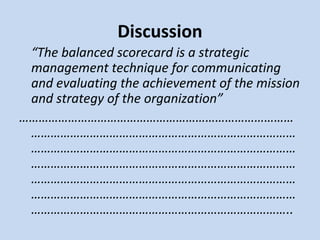
Discussion
“The balanced scorecard is a strategic
management technique for communicating
and evaluating the achievement of the mission
and strategy of the organization”
…………………………………………………………………………
………………………………………………………………………
………………………………………………………………………
………………………………………………………………………
………………………………………………………………………
………………………………………………………………………
……………………………………………………………………..
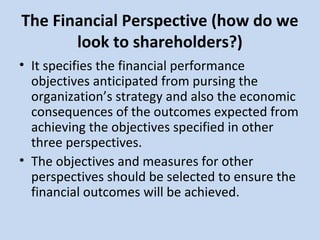
The Financial Perspective (how do we
look to shareholders?)
• It specifies the financial performance
objectives anticipated from pursing the
organization’s strategy and also the economic
consequences of the outcomes expected from
achieving the objectives specified in other
three perspectives.
• The objectives and measures for other
perspectives should be selected to ensure the
financial outcomes will be achieved.
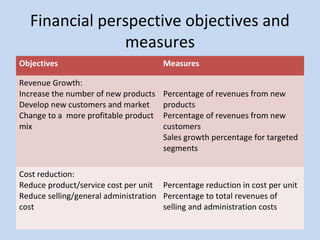
Financial perspective objectives and
measures
Objectives
Revenue Growth:
Increase the number of new products
Develop new customers and market
Change to a more profitable product
mix

Measures
Percentage of revenues from new
products
Percentage of revenues from new
customers
Sales growth percentage for targeted
segments

Cost reduction:
Reduce product/service cost per unit Percentage reduction in cost per unit
Reduce selling/general administration Percentage to total revenues of
cost
selling and administration costs
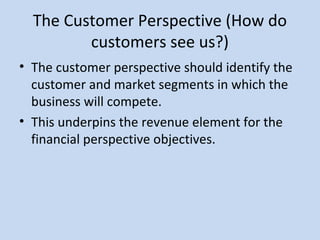
The Customer Perspective (How do
customers see us?)
• The customer perspective should identify the
customer and market segments in which the
business will compete.
• This underpins the revenue element for the
financial perspective objectives.
The Customer Perspective (How do
customers see us?) (contd.)
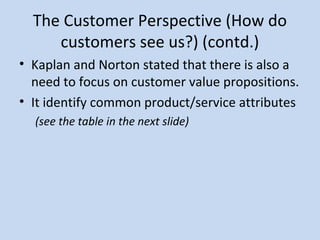
• Kaplan and Norton stated that there is also a
need to focus on customer value propositions.
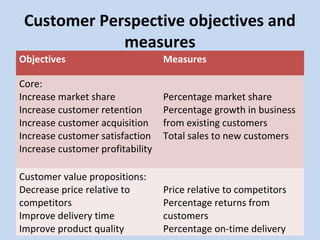
• It identify common product/service attributes
(see the table in the next slide)
Customer Perspective objectives and
measures
Objectives

Measures

Core:
Increase market share
Increase customer retention
Increase customer acquisition
Increase customer satisfaction
Increase customer profitability

Percentage market share
Percentage growth in business
from existing customers
Total sales to new customers

Customer value propositions:
Decrease price relative to
competitors
Improve delivery time
Improve product quality

Price relative to competitors
Percentage returns from
customers
Percentage on-time delivery
The Internal Business Perspective
(what must we excel at?)
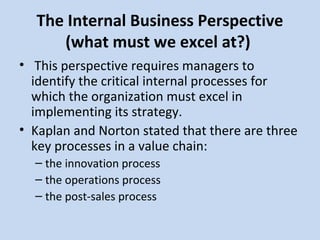
• This perspective requires managers to
identify the critical internal processes for
which the organization must excel in
implementing its strategy.
• Kaplan and Norton stated that there are three
key processes in a value chain:
– the innovation process
– the operations process
– the post-sales process
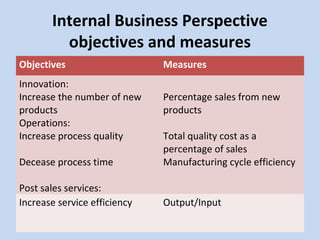
Internal Business Perspective
objectives and measures
Objectives
Innovation:
Increase the number of new
products
Operations:
Increase process quality

Measures
Percentage sales from new
products

Decease process time

Total quality cost as a
percentage of sales
Manufacturing cycle efficiency

Post sales services:
Increase service efficiency

Output/Input
Learning and Growth perspective (can
we continue to improve and create
value?)
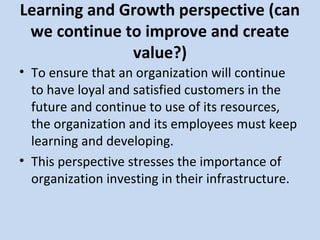
• To ensure that an organization will continue
to have loyal and satisfied customers in the
future and continue to use of its resources,
the organization and its employees must keep
learning and developing.
• This perspective stresses the importance of
organization investing in their infrastructure.
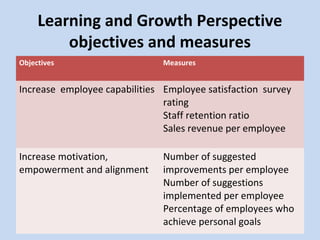
Learning and Growth Perspective
objectives and measures
Objectives

Measures

Increase employee capabilities Employee satisfaction survey
rating
Staff retention ratio
Sales revenue per employee
Increase motivation,
empowerment and alignment

Number of suggested
improvements per employee
Number of suggestions
implemented per employee
Percentage of employees who
achieve personal goals
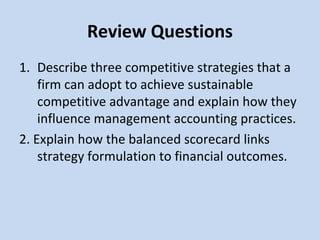
Review Questions
1. Describe three competitive strategies that a
firm can adopt to achieve sustainable
competitive advantage and explain how they
influence management accounting practices.
2. Explain how the balanced scorecard links
strategy formulation to financial outcomes.
Thank You!

The balanced scorecard

  • 1.
    The Balanced Scorecard A.A.Samitha Jayaweera
  • 2.
    At the endof the session, you would be able to; • Identify key aspects in Balanced Scorecard • Identify key measures in key perspectives • Apply Balanced Scorecard in to your own organization
  • 3.
    Emergence of theconcept • Prior to the 1980s – management accounting control systems tended to focus mainly on financial measures of performance • During 1980s – a greater emphasis was given to incorporate non-financial performance measures into management reporting systems • As a result the Balanced Scorecard was emerged. It devised by Kaplan and Norton in 1992
  • 4.
    Key perspectives • Itcreates a strategic focus by translating an organization’s vision and strategy into operational objectives and performance measures for four perspectives: – Financial perspective – Customer perspective – Internal business perspective – Learning and growth perspective
  • 5.
    Discussion “The balanced scorecardis a strategic management technique for communicating and evaluating the achievement of the mission and strategy of the organization” ………………………………………………………………………… ……………………………………………………………………… ……………………………………………………………………… ……………………………………………………………………… ……………………………………………………………………… ……………………………………………………………………… ……………………………………………………………………..
  • 6.
    The Financial Perspective(how do we look to shareholders?) • It specifies the financial performance objectives anticipated from pursing the organization’s strategy and also the economic consequences of the outcomes expected from achieving the objectives specified in other three perspectives. • The objectives and measures for other perspectives should be selected to ensure the financial outcomes will be achieved.
  • 7.
    Financial perspective objectivesand measures Objectives Revenue Growth: Increase the number of new products Develop new customers and market Change to a more profitable product mix Measures Percentage of revenues from new products Percentage of revenues from new customers Sales growth percentage for targeted segments Cost reduction: Reduce product/service cost per unit Percentage reduction in cost per unit Reduce selling/general administration Percentage to total revenues of cost selling and administration costs
  • 8.
    The Customer Perspective(How do customers see us?) • The customer perspective should identify the customer and market segments in which the business will compete. • This underpins the revenue element for the financial perspective objectives.
  • 9.
    The Customer Perspective(How do customers see us?) (contd.) • Kaplan and Norton stated that there is also a need to focus on customer value propositions. • It identify common product/service attributes (see the table in the next slide)
  • 10.
    Customer Perspective objectivesand measures Objectives Measures Core: Increase market share Increase customer retention Increase customer acquisition Increase customer satisfaction Increase customer profitability Percentage market share Percentage growth in business from existing customers Total sales to new customers Customer value propositions: Decrease price relative to competitors Improve delivery time Improve product quality Price relative to competitors Percentage returns from customers Percentage on-time delivery
  • 11.
    The Internal BusinessPerspective (what must we excel at?) • This perspective requires managers to identify the critical internal processes for which the organization must excel in implementing its strategy. • Kaplan and Norton stated that there are three key processes in a value chain: – the innovation process – the operations process – the post-sales process
  • 12.
    Internal Business Perspective objectivesand measures Objectives Innovation: Increase the number of new products Operations: Increase process quality Measures Percentage sales from new products Decease process time Total quality cost as a percentage of sales Manufacturing cycle efficiency Post sales services: Increase service efficiency Output/Input
  • 13.
    Learning and Growthperspective (can we continue to improve and create value?) • To ensure that an organization will continue to have loyal and satisfied customers in the future and continue to use of its resources, the organization and its employees must keep learning and developing. • This perspective stresses the importance of organization investing in their infrastructure.
  • 14.
    Learning and GrowthPerspective objectives and measures Objectives Measures Increase employee capabilities Employee satisfaction survey rating Staff retention ratio Sales revenue per employee Increase motivation, empowerment and alignment Number of suggested improvements per employee Number of suggestions implemented per employee Percentage of employees who achieve personal goals
  • 15.
    Review Questions 1. Describethree competitive strategies that a firm can adopt to achieve sustainable competitive advantage and explain how they influence management accounting practices. 2. Explain how the balanced scorecard links strategy formulation to financial outcomes.
  • 16.