Balanced Score Card
Where it started……..

 Introduced in 1992 by Drs. Robert Kaplan (Harvard Business
  School) and David Norton as a performance measurement
  framework

 The Balanced Scorecard is the most commonly used framework
  for ensuring that companies execute their strategies
What is Balance Scorecard?

 A Balanced Scorecard monitors the performance of all or part of
  an organization, towards strategic goals

 It is used in business, industry, government, and nonprofit
  organizations worldwide to align business activities

 It gives a framework and helps planners identify what should be
  done and measured
Why Implement a Balanced
                     Scorecard ?
 Increase focus on strategy and results


 Align organization strategy with the work people on day-to-day basis


 Improve communication of the organization’s Vision and Strategy


 To provide a more reliable basis for awarding incentive based pay
Why Implement a balanced
                     Scorecard ?
 To give managers a comprehensive view of the performance of an
  employee and business

 Employee Satisfaction


 To survive and prosper in today’s world


 It provides feedback to both the internal business processes and
  external outcomes in order to continuously improve strategic
  performance and results
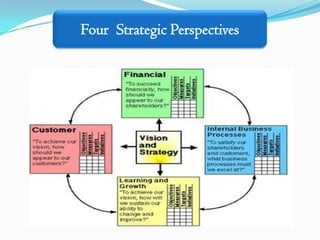
Four Strategic Perspectives
Financial

 Examines company’s implementation and execution
  of its strategy

 Three possible stages as described by Kaplan and Norton
  Rapid Growth
  Sustain
  Harvest
Customer

 Customer Satisfaction


 Retention


 Marketing


 Product/Service in the eyes of the customer
Internal Business Process

 Metrics based on this perspective allow the managers to know how
  well their business is running

 Innovation - Measures how well the company identifies the customer’s
  future needs

 Operations – Measures quality ,costs, technology & plant
  infrastructure
Learning and Growth


 Training


 Forward Focused


 Concerned with -Human capital
                    -Information capital
                    -Organizational capital
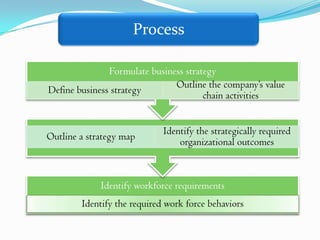
Process

               Formulate business strategy
                               Outline the company’s value
Define business strategy
                                       chain activities


                             Identify the strategically required
Outline a strategy map
                                 organizational outcomes


             Identify workforce requirements
        Identify the required work force behaviors
Balanced Score Card
Philips


 Philips is world leader in healthcare, lifestyle and lighting


 Philips integrates technologies and design into
  people life

 Mission :Improve the quality of people’s lives through timely
  introduction of meaningful innovations
Issues

 During the mid-90s, Netherlands based Royal Philips reported losses


 Due to rapid changes in the external environment and growing
  competition of Asian companies like LG and Samsung

 Led to the Company initiating
    High manufacturing costs
    Initiating job cuts
    Selling unprofitable businesses
Why Balance Scorecard ?


 The initiative to implement the Balanced Scorecard came from the top
  management at its HQ in the Netherlands

 Need to shift focus from high-volume business to high-value business


 They realized they had to make operations
    Flexible
    Innovative
Implementation

 This led the Company to introduce a program called Business
  Excellence through Speed and Teamwork (BEST) in July 1999

 The Balanced Scorecard was one of the tools of the BEST


 There were four perspectives in Philips' Balanced Scorecard:
    Competence
    Processes
    Customers
    Finance
Implementation

 They used Balanced Scorecard strategy across Philips’ divisions with
  more than 1,20,000 employees spread across 150 countries

 They established the Critical Success Factor’s (CSFs)

 Philips used the traffic light system to measure the level of
  achievement of the key indicators:
    Green light – Target that had been met
    Amber – Performance in line with the target
    Red – A problem area
Measuring Results

 The Balanced Scorecard was used as an instrument to
    Evaluate actual performance against targets
    Monitor future plans

 It enabled employees understand the existing policies and plans for the
  future

 Achieving revenue growth, employee satisfaction, customer satisfaction
  were the common indicators in all business units
Balanced Score Card
Unified CallSoft


 It is based in Canada, has been providing Call center and related BPO
  services since the past one and a half decade

 It has operations in over seventeen countries includes United States,
  Eastern Europe, India and Japan
Issues


 Lately it has been confronting difficulties in tracking and monitoring
  the performance of the employee

 Managers were unable to decide the reason for significant dips in
  progress of employees and in revenues volume

 Need to optimize the service delivery processes
Why Balance Scorecard ?

 Amongst the several options for resolving the issue the top
  management used Balanced Scorecard approach as it was most
  feasible

 Implement a rigorous mechanism of checks across several delivery
  centers

 Improving the overall productivity and employee performance
Implementation

 A team was created that had members from all the major divisions to
  pool in their ‘plausible’ causes for the decline being experienced

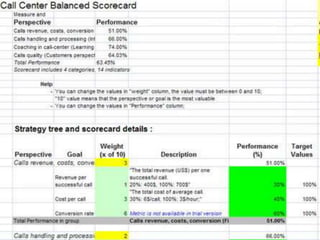
 A criteria was developed for filtering the collected measures and used
  to arrive at the ‘most relevant group’ of KPIs (Key performance
  Indicators)

 The software chosen was such that it permitted arranging the
  scorecards in the form of ‘cascade’
Measuring Results

 Huge cost savings
      Total amount came down by 10%
      Employee contribution rose by a 40%
      Motivation levels too increased by 60%

 Coordination between different delivery centers was achieved


 There was transparency of the system , thus making it easy to spot the
    ‘weakest link’
Measuring Results


 Cleary defined performance metrics supported by an reward system
  helps in motivating the work force in a call center

 The managers no longer required to fight with numbers and values


 By using the values presented on scorecards, they could take quick
  decision
Balanced Score Card
Zenith Systems


 Zenith is a leading independent IT infrastructure services
  provider

 It provides services throughout the UK, Europe and
  internationally to more than 80 countries
Issues


 Lack of board clarity


 Lack of progress


 Some occasional disharmony


 Need to focus on strategic performance
Implementation

 2GC was appointed to assist the Board to create a Corporate Balanced
  Scorecard

 2GC helps in addressing the strategic and performance management
  issues

 They worked for 8 months with Executive Board and Quality manager


 The firm had good financial reporting systems in place
Implementation


 2GC worked with two main divisions – Client Services and
  Business Development

 An analysis of how the three Balanced Scorecards interacted
  with each other was shown
Measuring Results


 The board agreed on a clear set of strategies


 The two divisions established a clear statement


 The managers for the first time developed long-term view of the
  objective ,the organization was trying to achieve

 Reporting on relevant information back to the centre
Conclusion


 Balanced scorecard is a powerful strategic tool


 It represents a fundamental change in how an organization is
  measured and held accountable for results

 It also poses threats to an established corporate culture and has
  potential weaknesses if it isn't executed properly
Balance score card

Balance score card

  • 1.
  • 2.
    Where it started…….. Introduced in 1992 by Drs. Robert Kaplan (Harvard Business School) and David Norton as a performance measurement framework  The Balanced Scorecard is the most commonly used framework for ensuring that companies execute their strategies
  • 3.
    What is BalanceScorecard?  A Balanced Scorecard monitors the performance of all or part of an organization, towards strategic goals  It is used in business, industry, government, and nonprofit organizations worldwide to align business activities  It gives a framework and helps planners identify what should be done and measured
  • 4.
    Why Implement aBalanced Scorecard ?  Increase focus on strategy and results  Align organization strategy with the work people on day-to-day basis  Improve communication of the organization’s Vision and Strategy  To provide a more reliable basis for awarding incentive based pay
  • 5.
    Why Implement abalanced Scorecard ?  To give managers a comprehensive view of the performance of an employee and business  Employee Satisfaction  To survive and prosper in today’s world  It provides feedback to both the internal business processes and external outcomes in order to continuously improve strategic performance and results
  • 6.
  • 7.
    Financial  Examines company’simplementation and execution of its strategy  Three possible stages as described by Kaplan and Norton  Rapid Growth  Sustain  Harvest
  • 8.
    Customer  Customer Satisfaction Retention  Marketing  Product/Service in the eyes of the customer
  • 9.
    Internal Business Process Metrics based on this perspective allow the managers to know how well their business is running  Innovation - Measures how well the company identifies the customer’s future needs  Operations – Measures quality ,costs, technology & plant infrastructure
  • 10.
    Learning and Growth Training  Forward Focused  Concerned with -Human capital -Information capital -Organizational capital
  • 11.
    Process Formulate business strategy Outline the company’s value Define business strategy chain activities Identify the strategically required Outline a strategy map organizational outcomes Identify workforce requirements Identify the required work force behaviors
  • 12.
  • 13.
    Philips  Philips isworld leader in healthcare, lifestyle and lighting  Philips integrates technologies and design into people life  Mission :Improve the quality of people’s lives through timely introduction of meaningful innovations
  • 14.
    Issues  During themid-90s, Netherlands based Royal Philips reported losses  Due to rapid changes in the external environment and growing competition of Asian companies like LG and Samsung  Led to the Company initiating  High manufacturing costs  Initiating job cuts  Selling unprofitable businesses
  • 15.
    Why Balance Scorecard?  The initiative to implement the Balanced Scorecard came from the top management at its HQ in the Netherlands  Need to shift focus from high-volume business to high-value business  They realized they had to make operations  Flexible  Innovative
  • 16.
    Implementation  This ledthe Company to introduce a program called Business Excellence through Speed and Teamwork (BEST) in July 1999  The Balanced Scorecard was one of the tools of the BEST  There were four perspectives in Philips' Balanced Scorecard:  Competence  Processes  Customers  Finance
  • 17.
    Implementation  They usedBalanced Scorecard strategy across Philips’ divisions with more than 1,20,000 employees spread across 150 countries  They established the Critical Success Factor’s (CSFs)  Philips used the traffic light system to measure the level of achievement of the key indicators:  Green light – Target that had been met  Amber – Performance in line with the target  Red – A problem area
  • 18.
    Measuring Results  TheBalanced Scorecard was used as an instrument to  Evaluate actual performance against targets  Monitor future plans  It enabled employees understand the existing policies and plans for the future  Achieving revenue growth, employee satisfaction, customer satisfaction were the common indicators in all business units
  • 19.
  • 20.
    Unified CallSoft  Itis based in Canada, has been providing Call center and related BPO services since the past one and a half decade  It has operations in over seventeen countries includes United States, Eastern Europe, India and Japan
  • 21.
    Issues  Lately ithas been confronting difficulties in tracking and monitoring the performance of the employee  Managers were unable to decide the reason for significant dips in progress of employees and in revenues volume  Need to optimize the service delivery processes
  • 22.
    Why Balance Scorecard?  Amongst the several options for resolving the issue the top management used Balanced Scorecard approach as it was most feasible  Implement a rigorous mechanism of checks across several delivery centers  Improving the overall productivity and employee performance
  • 23.
    Implementation  A teamwas created that had members from all the major divisions to pool in their ‘plausible’ causes for the decline being experienced  A criteria was developed for filtering the collected measures and used to arrive at the ‘most relevant group’ of KPIs (Key performance Indicators)  The software chosen was such that it permitted arranging the scorecards in the form of ‘cascade’
  • 25.
    Measuring Results  Hugecost savings  Total amount came down by 10%  Employee contribution rose by a 40%  Motivation levels too increased by 60%  Coordination between different delivery centers was achieved  There was transparency of the system , thus making it easy to spot the ‘weakest link’
  • 26.
    Measuring Results  Clearydefined performance metrics supported by an reward system helps in motivating the work force in a call center  The managers no longer required to fight with numbers and values  By using the values presented on scorecards, they could take quick decision
  • 27.
  • 28.
    Zenith Systems  Zenithis a leading independent IT infrastructure services provider  It provides services throughout the UK, Europe and internationally to more than 80 countries
  • 29.
    Issues  Lack ofboard clarity  Lack of progress  Some occasional disharmony  Need to focus on strategic performance
  • 30.
    Implementation  2GC wasappointed to assist the Board to create a Corporate Balanced Scorecard  2GC helps in addressing the strategic and performance management issues  They worked for 8 months with Executive Board and Quality manager  The firm had good financial reporting systems in place
  • 31.
    Implementation  2GC workedwith two main divisions – Client Services and Business Development  An analysis of how the three Balanced Scorecards interacted with each other was shown
  • 32.
    Measuring Results  Theboard agreed on a clear set of strategies  The two divisions established a clear statement  The managers for the first time developed long-term view of the objective ,the organization was trying to achieve  Reporting on relevant information back to the centre
  • 33.
    Conclusion  Balanced scorecardis a powerful strategic tool  It represents a fundamental change in how an organization is measured and held accountable for results  It also poses threats to an established corporate culture and has potential weaknesses if it isn't executed properly