CLIL
WHAT IS CLIL?
A DIFFERENT VIEW 
CLIL is a developing, flexible concept where 
content (eg non-language subject/s, cross-curricular 
themes and holistic issues) and 
foreign languages - are integrated in some 
kind of mutually beneficial way so as to provide 
motivating, value-added experiences to 
educational outcomes for a wide range of 
students. 
University of Nottingham
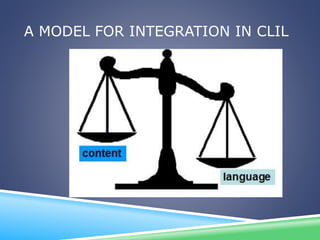
A MODEL FOR INTEGRATION IN CLIL
THE FOUR CS 
CLIL HAS FOUR BASIC COMPONENTS, USUALLY CALLED ‘4CS’ .
THE 4C’S FRAMEWORK 
conditions Aims for the classroom 
Content: learners create their own 
knowledge and developing skills. 
Vocabulary, purpose,diagrams, tables, 
experiential activities, related to the 
child’s previous experiences 
Cognition: learning and thinking in 
terms of learner’s linguistic demands. 
Predicting outcomes, reaching 
conclusions, thinking skills, creating 
knowledge 
Communication: interaction in the 
learning context. 
Sharing, researching and comparing 
cultural contexts, scaffolding tasks, 
student talking time vs. teacher talking 
time 
Culture: intercultural awareness is 
fundamental to CLIL. 
Collaborative activities, cooperation, 
group tasks, respect for others
MAIN ASPECTS 
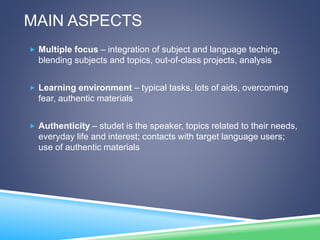
 Multiple focus – integration of subject and language teching, 
blending subjects and topics, out-of-class projects, analysis 
 Learning environment – typical tasks, lots of aids, overcoming 
fear, authentic materials 
 Authenticity – studet is the speaker, topics related to their needs, 
everyday life and interest; contacts with target language users; 
use of authentic materials
 Active learning – students talk more, help to rephrase the 
outcomes, assess progress, co-operate, discuss. Teacher is a 
guide and provider. 
 Support structure – learning is based on prior knowledge, skills, 
attitudes, interests and experience; information is provided in 
student-friendly forms paying attention to different learning styles; 
critical and creative thinking is supported; new challenging tasks
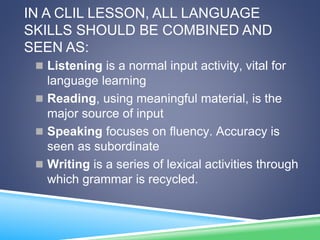
IN A CLIL LESSON, ALL LANGUAGE 
SKILLS SHOULD BE COMBINED AND 
SEEN AS: 
 Listening is a normal input activity, vital for 
language learning 
 Reading, using meaningful material, is the 
major source of input 
 Speaking focuses on fluency. Accuracy is 
seen as subordinate 
 Writing is a series of lexical activities through 
which grammar is recycled.
LESSON FRAMEWORK
LESSON STAGES 
 checking previous knowledge; 
 practicing content language; 
expanding vocabulary; 
consolidating knowledge; 
summarizing skills; 
 applying the new knowledge; 
 checking and correcting errors.
SAMPLE LISTENING TASKS 
 Listen and label a diagram / picture / map / 
graph / chart 
 Listen and fill in a table 
 Listen and make notes on specific information 
(dates, figures, times) 
 Listen and reorder information 
 Listen and identify location / speakers 
 Listen and label the stages of a process / 
instructions / sequences Listen and fill in the 
gaps in a text

Clil

  • 1.
  • 2.
  • 3.
    A DIFFERENT VIEW CLIL is a developing, flexible concept where content (eg non-language subject/s, cross-curricular themes and holistic issues) and foreign languages - are integrated in some kind of mutually beneficial way so as to provide motivating, value-added experiences to educational outcomes for a wide range of students. University of Nottingham
  • 4.
    A MODEL FORINTEGRATION IN CLIL
  • 5.
    THE FOUR CS CLIL HAS FOUR BASIC COMPONENTS, USUALLY CALLED ‘4CS’ .
  • 6.
    THE 4C’S FRAMEWORK conditions Aims for the classroom Content: learners create their own knowledge and developing skills. Vocabulary, purpose,diagrams, tables, experiential activities, related to the child’s previous experiences Cognition: learning and thinking in terms of learner’s linguistic demands. Predicting outcomes, reaching conclusions, thinking skills, creating knowledge Communication: interaction in the learning context. Sharing, researching and comparing cultural contexts, scaffolding tasks, student talking time vs. teacher talking time Culture: intercultural awareness is fundamental to CLIL. Collaborative activities, cooperation, group tasks, respect for others
  • 7.
    MAIN ASPECTS Multiple focus – integration of subject and language teching, blending subjects and topics, out-of-class projects, analysis  Learning environment – typical tasks, lots of aids, overcoming fear, authentic materials  Authenticity – studet is the speaker, topics related to their needs, everyday life and interest; contacts with target language users; use of authentic materials
  • 8.
     Active learning– students talk more, help to rephrase the outcomes, assess progress, co-operate, discuss. Teacher is a guide and provider.  Support structure – learning is based on prior knowledge, skills, attitudes, interests and experience; information is provided in student-friendly forms paying attention to different learning styles; critical and creative thinking is supported; new challenging tasks
  • 9.
    IN A CLILLESSON, ALL LANGUAGE SKILLS SHOULD BE COMBINED AND SEEN AS:  Listening is a normal input activity, vital for language learning  Reading, using meaningful material, is the major source of input  Speaking focuses on fluency. Accuracy is seen as subordinate  Writing is a series of lexical activities through which grammar is recycled.
  • 10.
  • 11.
    LESSON STAGES checking previous knowledge;  practicing content language; expanding vocabulary; consolidating knowledge; summarizing skills;  applying the new knowledge;  checking and correcting errors.
  • 12.
    SAMPLE LISTENING TASKS  Listen and label a diagram / picture / map / graph / chart  Listen and fill in a table  Listen and make notes on specific information (dates, figures, times)  Listen and reorder information  Listen and identify location / speakers  Listen and label the stages of a process / instructions / sequences Listen and fill in the gaps in a text