CLIL Putting CLIL in motion. (Chapter 4)
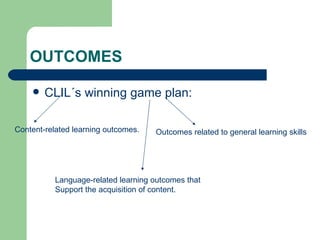
OUTCOMES CLIL´s winning game plan: Content-related learning outcomes. Language-related learning outcomes that Support the acquisition of content. Outcomes related to general learning skills
OUTCOMES What a student knows and can do thanks to what he or she has learnt.
OUTCOMES Provide a focus for instruction Provide guidelines for learning Provide targets for assessment Provide a vehicle for involving students in setting personal targets Facilitate the communication of non-negotiable expectations Convey instructional intent to others Provide a framework for final evaluation of learning Provide a framework for assessment of teaching
Supporting language learning in content classes Language the students must know to master the content: Content Obligatory Language. Technical vocabulary Special expressions Multiple meaning of words Syntactical features Language functions
Create a psychologically and physically safe environment. Consistently use one language In the beginning, it is acceptable for sts to use L1 Speak slowly and articulate clearly Use an appropiate level of language Use facial expressions, gestures and pictures to reinforce meaning. Supporting language learning in content classes: tips.
Repetition is required Make it meaningful Provide a variety of language models Create a wealth of opportunities to use the language Communication is of primary importance Create a wide variety of opportunities to develop all four language skills Supporting language learning in content classes: tips.
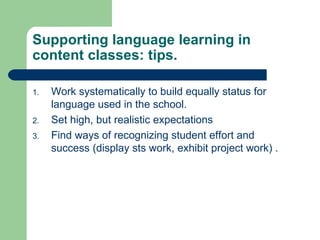
Work systematically to build equally status for language used in the school. Set high, but realistic expectations Find ways of recognizing student effort and success (display sts work, exhibit project work) . Supporting language learning in content classes: tips.
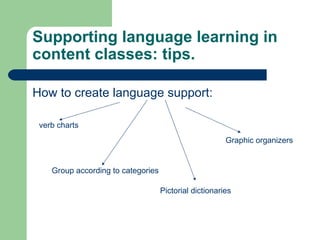
How to create language support: Supporting language learning in content classes: tips. verb charts Group according to categories Graphic organizers Pictorial dictionaries
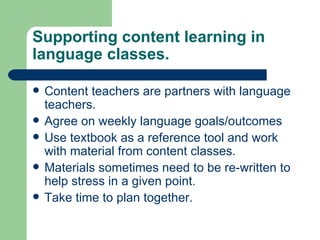
Content teachers are partners with language teachers. Agree on weekly language goals/outcomes Use textbook as a reference tool and work with material from content classes. Materials sometimes need to be re-written to help stress in a given point. Take time to plan together.  Supporting content learning in language classes.
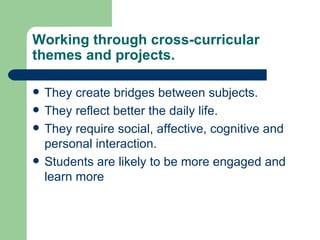
Working through cross-curricular themes and projects. They create bridges between subjects. They reflect better the daily life. They require social, affective, cognitive and personal interaction. Students are likely to be more engaged and learn more
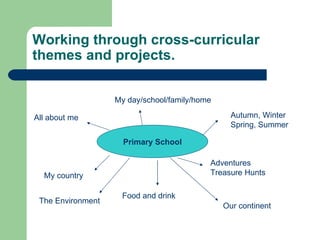
Working through cross-curricular themes and projects. Primary School All about me My day/school/family/home Autumn, Winter Spring, Summer My country Food and drink Adventures Treasure Hunts The Environment Our continent
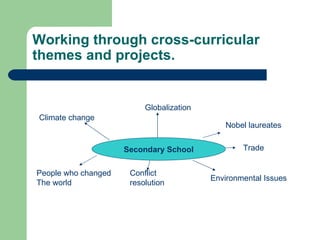
Working through cross-curricular themes and projects. Secondary School Climate change Globalization People who changed The world Trade Nobel laureates Conflict resolution Environmental Issues
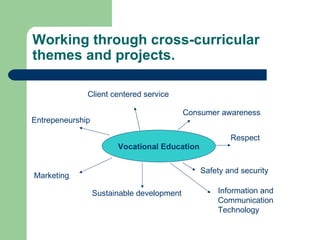
Working through cross-curricular themes and projects. Vocational Education Client centered service Entrepeneurship Marketing Consumer awareness Sustainable development Safety and security Respect Information and  Communication Technology
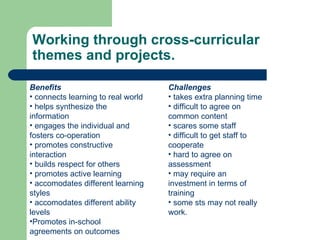
Working through cross-curricular themes and projects. Benefits connects learning to real world helps synthesize the information engages the individual and  fosters co-operation promotes constructive interaction builds respect for others promotes active learning accomodates different learning styles accomodates different ability levels Promotes in-school agreements on outcomes Challenges takes extra planning time difficult to agree on common content scares some staff difficult to get staff to cooperate hard to agree on assessment may require an investment in terms of training some sts may not really work.
Reflecting on learning Feeds cognitive development
Key reasons for organizing assessment: To determine existing student knowledge To determine student achievement levels To understand student interests, attitudes and learning styles To involve students in taking responsibility for their learning To obtain information about how to improve learning
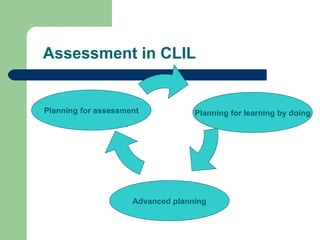
Assessment in CLIL Planning for learning by doing Advanced planning Planning for assessment
Areas assessed in CLIL: Achievement of content and language goals Achievement of learning skills goals Use of language for various purposes Ability to work with authentic materials Feeling safe to experiment with language and content Ongoing growth Effort Level of engagement Preffered learning styles Day-to-day work All four language skills Day-to-day communication Oral presentations Projects Planned and spontaneous assignments Partner and groupwork Social and emotional development Balance between co-operation and self-reliance
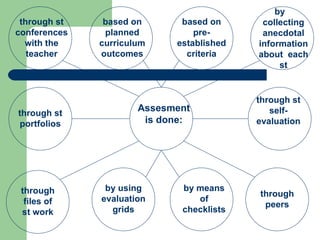
Assesment is done: through st conferences with the teacher based on planned curriculum outcomes based on pre-established criteria by  collecting anecdotal information about  each st through st self-evaluation through peers through st portfolios through files of st work by using evaluation grids by means of checklists
Guided reflection
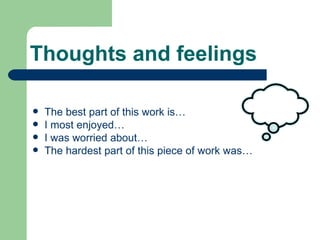
Thoughts and feelings The best part of this work is… I most enjoyed… I was worried about… The hardest part of this piece of work was…
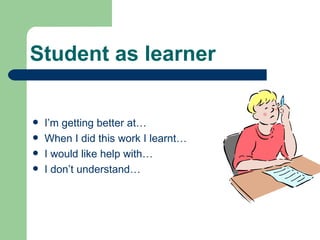
Student as learner I’m getting better at… When I did this work I learnt… I would like help with… I don’t understand…
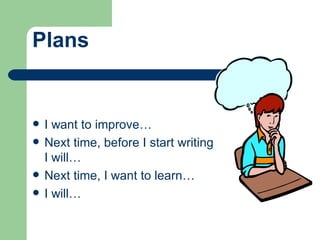
I  want to improve… Next time, before I start writing I will… Next time, I want to learn… I will… Plans
Achievement of learning outcomes My learning goals were… My subject goals were… The attitude I worked to develop was…
Teaming up with fellow teachers Reasons Content and language knowledge find their application in another context. Effective co-operation contributes to improved student achievement
Establishing commonality Recognizing achievement Agreeing on learning skills outcomes Suggestions for what to focus on

Clil Chapter 4

  • 1.
    CLIL Putting CLILin motion. (Chapter 4)
  • 2.
    OUTCOMES CLIL´s winninggame plan: Content-related learning outcomes. Language-related learning outcomes that Support the acquisition of content. Outcomes related to general learning skills
  • 3.
    OUTCOMES What astudent knows and can do thanks to what he or she has learnt.
  • 4.
    OUTCOMES Provide afocus for instruction Provide guidelines for learning Provide targets for assessment Provide a vehicle for involving students in setting personal targets Facilitate the communication of non-negotiable expectations Convey instructional intent to others Provide a framework for final evaluation of learning Provide a framework for assessment of teaching
  • 5.
    Supporting language learningin content classes Language the students must know to master the content: Content Obligatory Language. Technical vocabulary Special expressions Multiple meaning of words Syntactical features Language functions
  • 6.
    Create a psychologicallyand physically safe environment. Consistently use one language In the beginning, it is acceptable for sts to use L1 Speak slowly and articulate clearly Use an appropiate level of language Use facial expressions, gestures and pictures to reinforce meaning. Supporting language learning in content classes: tips.
  • 7.
    Repetition is requiredMake it meaningful Provide a variety of language models Create a wealth of opportunities to use the language Communication is of primary importance Create a wide variety of opportunities to develop all four language skills Supporting language learning in content classes: tips.
  • 8.
    Work systematically tobuild equally status for language used in the school. Set high, but realistic expectations Find ways of recognizing student effort and success (display sts work, exhibit project work) . Supporting language learning in content classes: tips.
  • 9.
    How to createlanguage support: Supporting language learning in content classes: tips. verb charts Group according to categories Graphic organizers Pictorial dictionaries
  • 10.
    Content teachers arepartners with language teachers. Agree on weekly language goals/outcomes Use textbook as a reference tool and work with material from content classes. Materials sometimes need to be re-written to help stress in a given point. Take time to plan together. Supporting content learning in language classes.
  • 11.
    Working through cross-curricularthemes and projects. They create bridges between subjects. They reflect better the daily life. They require social, affective, cognitive and personal interaction. Students are likely to be more engaged and learn more
  • 12.
    Working through cross-curricularthemes and projects. Primary School All about me My day/school/family/home Autumn, Winter Spring, Summer My country Food and drink Adventures Treasure Hunts The Environment Our continent
  • 13.
    Working through cross-curricularthemes and projects. Secondary School Climate change Globalization People who changed The world Trade Nobel laureates Conflict resolution Environmental Issues
  • 14.
    Working through cross-curricularthemes and projects. Vocational Education Client centered service Entrepeneurship Marketing Consumer awareness Sustainable development Safety and security Respect Information and Communication Technology
  • 15.
    Working through cross-curricularthemes and projects. Benefits connects learning to real world helps synthesize the information engages the individual and fosters co-operation promotes constructive interaction builds respect for others promotes active learning accomodates different learning styles accomodates different ability levels Promotes in-school agreements on outcomes Challenges takes extra planning time difficult to agree on common content scares some staff difficult to get staff to cooperate hard to agree on assessment may require an investment in terms of training some sts may not really work.
  • 16.
    Reflecting on learningFeeds cognitive development
  • 17.
    Key reasons fororganizing assessment: To determine existing student knowledge To determine student achievement levels To understand student interests, attitudes and learning styles To involve students in taking responsibility for their learning To obtain information about how to improve learning
  • 18.
    Assessment in CLILPlanning for learning by doing Advanced planning Planning for assessment
  • 19.
    Areas assessed inCLIL: Achievement of content and language goals Achievement of learning skills goals Use of language for various purposes Ability to work with authentic materials Feeling safe to experiment with language and content Ongoing growth Effort Level of engagement Preffered learning styles Day-to-day work All four language skills Day-to-day communication Oral presentations Projects Planned and spontaneous assignments Partner and groupwork Social and emotional development Balance between co-operation and self-reliance
  • 20.
    Assesment is done:through st conferences with the teacher based on planned curriculum outcomes based on pre-established criteria by collecting anecdotal information about each st through st self-evaluation through peers through st portfolios through files of st work by using evaluation grids by means of checklists
  • 21.
  • 22.
    Thoughts and feelingsThe best part of this work is… I most enjoyed… I was worried about… The hardest part of this piece of work was…
  • 23.
    Student as learnerI’m getting better at… When I did this work I learnt… I would like help with… I don’t understand…
  • 24.
    I wantto improve… Next time, before I start writing I will… Next time, I want to learn… I will… Plans
  • 25.
    Achievement of learningoutcomes My learning goals were… My subject goals were… The attitude I worked to develop was…
  • 26.
    Teaming up withfellow teachers Reasons Content and language knowledge find their application in another context. Effective co-operation contributes to improved student achievement
  • 27.
    Establishing commonality Recognizingachievement Agreeing on learning skills outcomes Suggestions for what to focus on