WELCOME TO
SEMINAR
Dr. Aysha Sabiha
Dr. Maimuna Sayeed
Dr. Sharmin Akter Luna
Residents (Phase-A)
 Halima, a 11 years old girl of consanguineous parents
presented with complaints of not growing well, gradual
pallor & abdominal distension for 7 years.
 On examination she was severely pale, facial
dysmorphism & hepatosplenomegaly were present.
She had history of repeated blood transfusion.
Case Scinerio
Hereditary hemolytic anemia
Diagnosis
SEMINAR
ON
THALASSEMIA
Introduction
The term “Thalassemia” refers to a genetic disorder of
hemoglobin synthesis characterized by a lack or
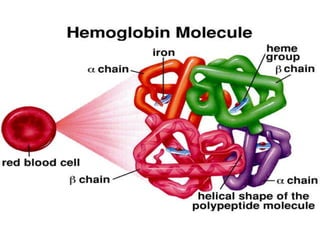
decreased synthesis of one or more of the four Globin
chains causing excessive breakdown of RBC.
"Thalassemia" is a Greek term derived from “Thalassa”,
which means "the sea" and “Emia” means "related to
blood."
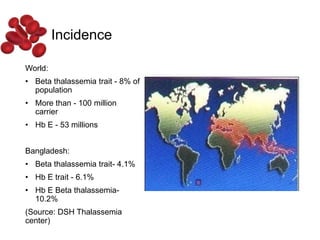
World:
• Beta thalassemia trait - 8% of
population
• More than - 100 million
carrier
• Hb E - 53 millions
Bangladesh:
• Beta thalassemia trait- 4.1%
• Hb E trait - 6.1%
• Hb E Beta thalassemia-
10.2%
(Source: DSH Thalassemia
center)
Incidence
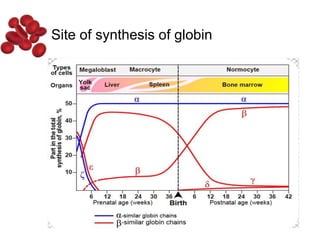
Site of synthesis of globin
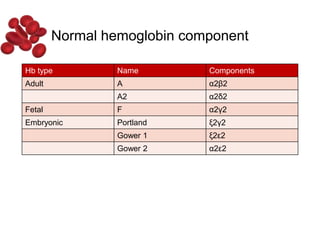
Normal hemoglobin component
Hb type Name Components
Adult A α2β2
A2 α2δ2
Fetal F α2γ2
Embryonic Portland ξ2γ2
Gower 1 ξ2ε2
Gower 2 α2ε2

 

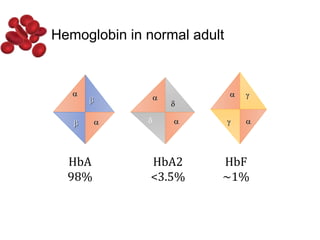
HbA
98%
HbA2
<3.5%
HbF
~1%








Hemoglobin in normal adult
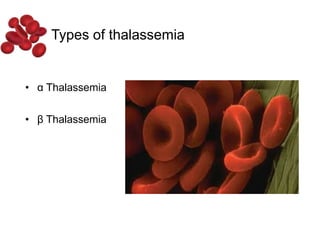
• α Thalassemia
• β Thalassemia
Types of thalassemia
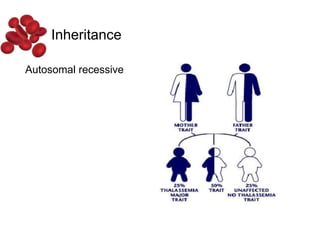
Autosomal recessive
Inheritance
α-THALASSEMIA
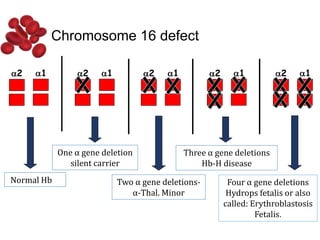
Chromosome 16 defect
2 1 2 1
2
2 1
2 1
2 1
2 1
2 1
2 1
Normal Hb
One α gene deletion
silent carrier
Two α gene deletions-
α-Thal. Minor
Four α gene deletions
Hydrops fetalis or also
called: Erythroblastosis
Fetalis.
Three α gene deletions
Hb-H disease
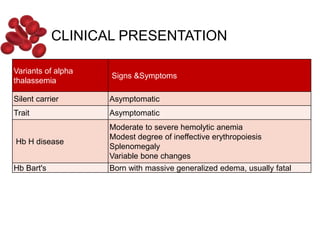
CLINICAL PRESENTATION
Variants of alpha
thalassemia
Signs &Symptoms
Silent carrier Asymptomatic
Trait Asymptomatic
Hb H disease
Moderate to severe hemolytic anemia
Modest degree of ineffective erythropoiesis
Splenomegaly
Variable bone changes
Hb Bart's Born with massive generalized edema, usually fatal
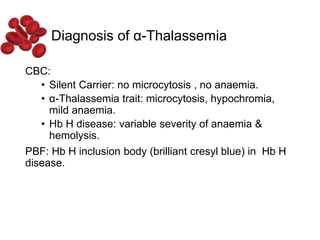
Diagnosis of α-Thalassemia
CBC:
• Silent Carrier: no microcytosis , no anaemia.
• α-Thalassemia trait: microcytosis, hypochromia,
mild anaemia.
• Hb H disease: variable severity of anaemia &
hemolysis.
PBF: Hb H inclusion body (brilliant cresyl blue) in Hb H
disease.
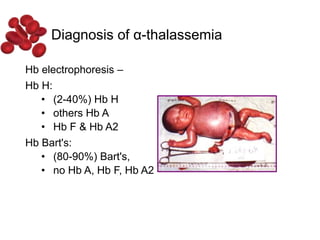
Hb electrophoresis –
Hb H:
• (2-40%) Hb H
• others Hb A
• Hb F & Hb A2
Hb Bart's:
• (80-90%) Bart's,
• no Hb A, Hb F, Hb A2
Diagnosis of α-thalassemia
Treatment of α-thalassemia
• Silent carrier & trait: do not require treatment.
• Hb H disease: usually does not require regular
transfusions. But, with intercurrent illnesses, patient
may require transfusion .
β-Thalassemia
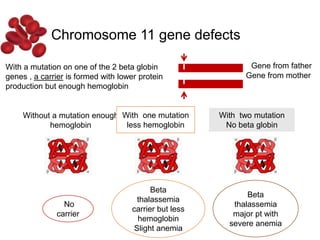
With a mutation on one of the 2 beta globin
genes , a carrier is formed with lower protein
production but enough hemoglobin
Without a mutation enough
hemoglobin
No
carrier
With one mutation
less hemoglobin
Beta
thalassemia
carrier but less
hemoglobin
Slight anemia
With two mutation
No beta globin
Beta
thalassemia
major pt with
severe anemia
Gene from father
Gene from mother
Chromosome 11 gene defects
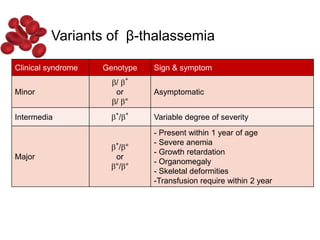
Clinical syndrome Genotype Sign & symptom
Minor
/ 
+
or
/ °
Asymptomatic
Intermedia 
+
/
+
Variable degree of severity
Major

+
/°
or
°/°
- Present within 1 year of age
- Severe anemia
- Growth retardation
- Organomegaly
- Skeletal deformities
-Transfusion require within 2 year
Variants of β-thalassemia
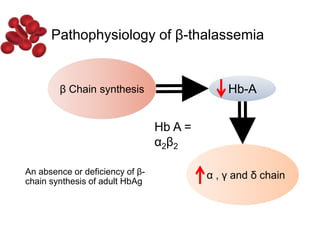
An absence or deficiency of β-
chain synthesis of adult HbAg
Pathophysiology of β-thalassemia
β Chain synthesis Hb-A
α , γ and δ chain
Hb A =
α2β2
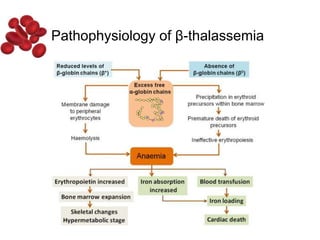
Pathophysiology of β-thalassemia
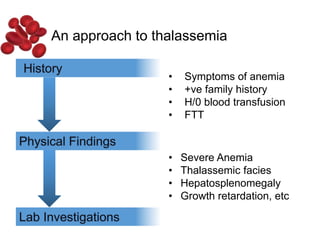
An approach to thalassemia
• Severe Anemia
• Thalassemic facies
• Hepatosplenomegaly
• Growth retardation, etc
• Symptoms of anemia
• +ve family history
• H/0 blood transfusion
• FTT
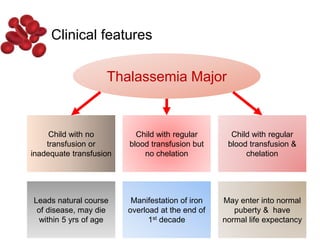
Thalassemia Major
Child with no
transfusion or
inadequate transfusion
Child with regular
blood transfusion but
no chelation
Child with regular
blood transfusion &
chelation
Leads natural course
of disease, may die
within 5 yrs of age
Manifestation of iron
overload at the end of
1st decade
May enter into normal
puberty & have
normal life expectancy
Clinical features
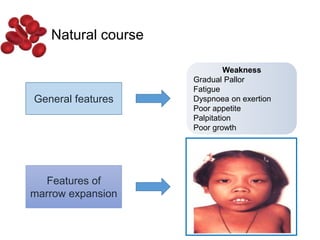
Natural course
General features
Weakness
Gradual Pallor
Fatigue
Dyspnoea on exertion
Poor appetite
Palpitation
Poor growth
Features of
marrow expansion
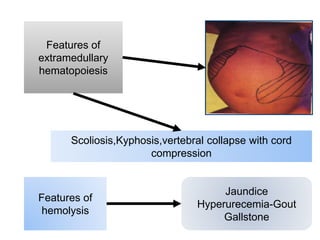
Features of
extramedullary
hematopoiesis
Features of
hemolysis
Jaundice
Hyperurecemia-Gout
Gallstone
Scoliosis,Kyphosis,vertebral collapse with cord
compression
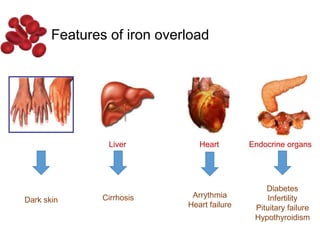
Features of iron overload
Cirrhosis
Diabetes
Infertility
Pituitary failure
Hypothyroidism
Arrythmia
Heart failure
Dark skin
Liver Heart Endocrine organs
Hb E β-Thalassemia
• Most prevalent thalassemia variant in Southeast Asia &
Bangladesh.
• Double heterozygous state.
• Lysine substitutes glutamic acid in 26th position.
• Divided into mild, moderate & severe form with clinical
features varying from thalassemia intermedia to
thalassemia major
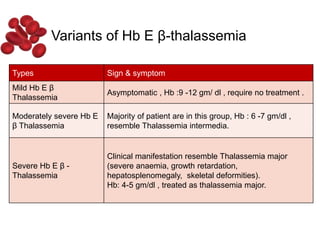
Types Sign & symptom
Mild Hb E β
Thalassemia
Asymptomatic , Hb :9 -12 gm/ dl , require no treatment .
Moderately severe Hb E
β Thalassemia
Majority of patient are in this group, Hb : 6 -7 gm/dl ,
resemble Thalassemia intermedia.
Severe Hb E β -
Thalassemia
Clinical manifestation resemble Thalassemia major
(severe anaemia, growth retardation,
hepatosplenomegaly, skeletal deformities).
Hb: 4-5 gm/dl , treated as thalassemia major.
Variants of Hb E β-thalassemia
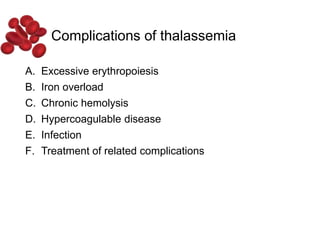
Complications of thalassemia
A. Excessive erythropoiesis
B. Iron overload
C. Chronic hemolysis
D. Hypercoagulable disease
E. Infection
F. Treatment of related complications
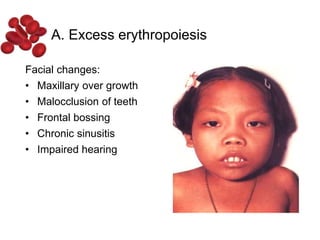
Facial changes:
• Maxillary over growth
• Malocclusion of teeth
• Frontal bossing
• Chronic sinusitis
• Impaired hearing
A. Excess erythropoiesis
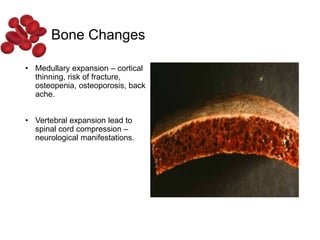
• Medullary expansion – cortical
thinning, risk of fracture,
osteopenia, osteoporosis, back
ache.
• Vertebral expansion lead to
spinal cord compression –
neurological manifestations.
Bone Changes
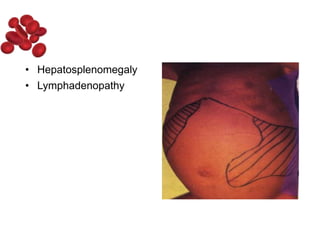
• Hepatosplenomegaly
• Lymphadenopathy
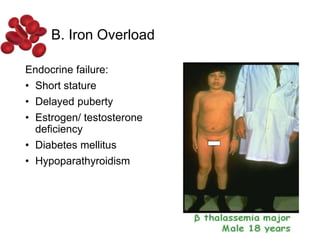
Endocrine failure:
• Short stature
• Delayed puberty
• Estrogen/ testosterone
deficiency
• Diabetes mellitus
• Hypoparathyroidism
B. Iron Overload
B. Iron overload
Cardiac involvement:
• Cardiomyopathy
• Pericarditis
• Arrhythmia
• CCF
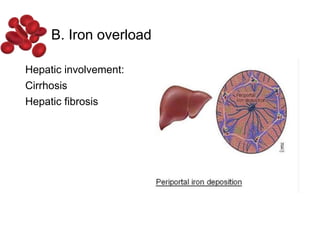
Hepatic involvement:
Cirrhosis
Hepatic fibrosis
B. Iron overload
C. Chronic hemolysis
• Gallstone 50-70% by around 15 years.
D. Hypercoagulable disease
Impaired platelet function Deep venous thrombosis
Elevated endothelial adhesion
protein level
Pulmonary embolism
Activation of coagulation cascade by
damage RBC
Cerebral ischemia
E. Infection
• Anemia
• Iron overload – Yersinia, Klebsiella
• Hypersplenism
• Splenectomy – Pneumococci, Meningococci,
Hemophilus influenzae
• Transfusion related – HBV, HCV, HIV etc.
F. Complications due to blood transfusion
• Acute hemolytic reactions
• Delayed transfusion reaction
• Autoimmune hemolytic anemia
• Febrile transfusion reaction
• Allergic reaction
• Transfusion related acute lung injury (TRALI)
• Graft versus host disease (GVHD)
• Volume overload
• Transfusion of disease – HAV, HBV, HIV
Causes of death in thalassemia
• Congestive heart failure
• Arrhythmia
• Sepsis due to increase susceptibility to infection
• Multiple organ failure due to hemochromatosis
INVESTIGATIONS
Investigations
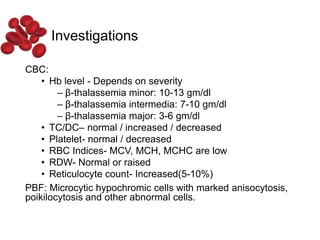
CBC:
• Hb level - Depends on severity
– β-thalassemia minor: 10-13 gm/dl
– β-thalassemia intermedia: 7-10 gm/dl
– β-thalassemia major: 3-6 gm/dl
• TC/DC– normal / increased / decreased
• Platelet- normal / decreased
• RBC Indices- MCV, MCH, MCHC are low
• RDW- Normal or raised
• Reticulocyte count- Increased(5-10%)
PBF: Microcytic hypochromic cells with marked anisocytosis,
poikilocytosis and other abnormal cells.
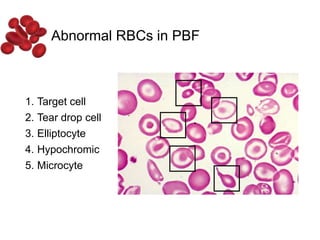
Abnormal RBCs in PBF
1. Target cell
2. Tear drop cell
3. Elliptocyte
4. Hypochromic
5. Microcyte
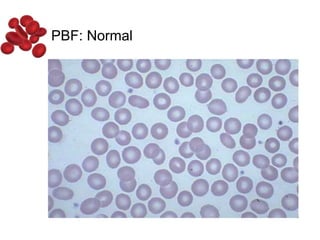
PBF: Normal
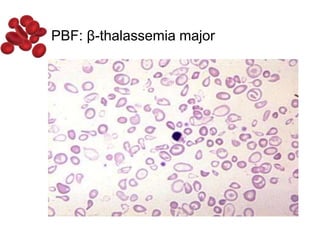
PBF: β-thalassemia major
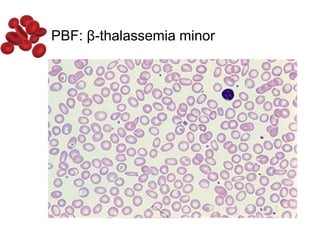
PBF: β-thalassemia minor
Investigations
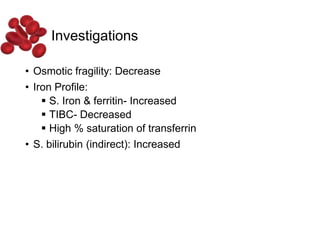
• Osmotic fragility: Decrease
• Iron Profile:
 S. Iron & ferritin- Increased
 TIBC- Decreased
 High % saturation of transferrin
• S. bilirubin (indirect): Increased
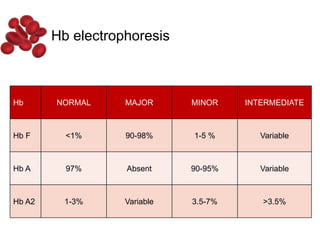
Hb electrophoresis
Hb NORMAL MAJOR MINOR INTERMEDIATE
Hb F <1% 90-98% 1-5 % Variable
Hb A 97% Absent 90-95% Variable
Hb A2 1-3% Variable 3.5-7% >3.5%
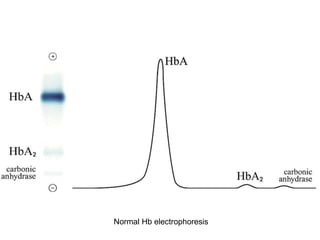
Normal Hb electrophoresis
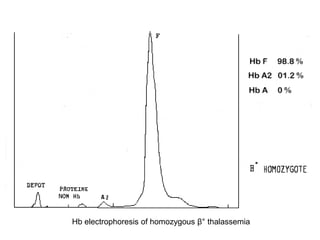
Hb electrophoresis of homozygous β° thalassemia
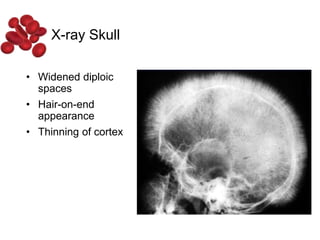
• Widened diploic
spaces
• Hair-on-end
appearance
• Thinning of cortex
X-ray Skull
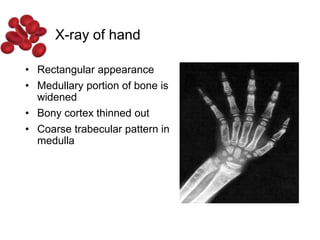
• Rectangular appearance
• Medullary portion of bone is
widened
• Bony cortex thinned out
• Coarse trabecular pattern in
medulla
X-ray of hand
Investigations
• DNA analysis:
Determine specific defect at molecular DNA level.
• HPLC (High Performance Liquid Chromatography):
Identify & quantify large number of abnormal Hb.
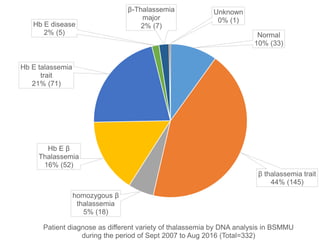
Normal
10% (33)
β thalassemia trait
44% (145)
homozygous β
thalassemia
5% (18)
Hb E β
Thalassemia
16% (52)
Hb E talassemia
trait
21% (71)
Hb E disease
2% (5)
β-Thalassemia
major
2% (7)
Unknown
0% (1)
Patient diagnose as different variety of thalassemia by DNA analysis in BSMMU
during the period of Sept 2007 to Aug 2016 (Total=332)
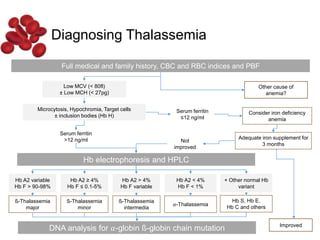
Diagnosing Thalassemia
Full medical and family history, CBC and RBC indices and PBF
Low MCV (< 80fl)
± Low MCH (< 27pg)
Other cause of
anemia?
Serum ferritin
≤12 ng/ml
Consider iron deficiency
anemia
Adequate iron supplement for
3 months
Hb electrophoresis and HPLC
Improved
Not
improved
Hb A2 variable
Hb F > 90-98%
Hb A2 ≥ 4%
Hb F ≤ 0.1-5%
Hb A2 > 4%
Hb F variable
Hb A2 < 4%
Hb F < 1%
+ Other normal Hb
variant
ß-Thalassemia
major
ß-Thalassemia
minor
ß-Thalassemia
intermedia
𝛼-Thalassemia
Hb S, Hb E,
Hb C and others
DNA analysis for 𝛼-globin ß-globin chain mutation
Serum ferritin
>12 ng/ml
Microcytosis, Hypochromia, Target cells
± inclusion bodies (Hb H)
To see complications
• Liver function test
• Thyroid function test
• FSH, LH, Testosterone, Estradiol
• Blood Sugar
• Bone profile
• Ca, Phosphate, PTH
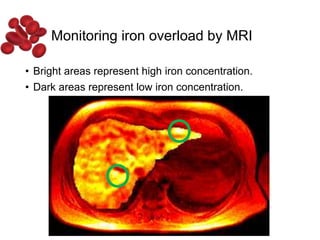
• Liver Iron Concentration (LIC): T2 MRI, Liver Biopsy
• Cardiac Iron Measurement by: T2 MRI
• Bright areas represent high iron concentration.
• Dark areas represent low iron concentration.
Monitoring iron overload by MRI
MANAGEMENT OF
THALASSEMIA
Treatment modalities
A. Supportive
B. Curative
C. Preventive
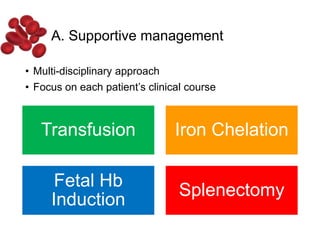
A. Supportive management
• Multi-disciplinary approach
• Focus on each patient’s clinical course
Transfusion Iron Chelation
Fetal Hb
Induction
Splenectomy
Objectives of supportive management
• Maintenance of growth and development
• Correction of anemia
• Prevention of iron overload
• Treatment of complications
• Counseling and Prevention
Blood Transfusion
Whom to transfuse?
Confirmed diagnosis of thalassemia major
• Laboratory criteria:
• Hb < 7gm/dl on 2 occasions > 2 weeks apart
or
• Hb > 7gm/dl with:
• Facial changes
• Poor growth
• Fractures
• Extramedullary hematopoiesis
Important issues before starting
transfusion
• Blood grouping:
– ABO and Rh(D) compatibility checked
– Extended red cell antigen typing at least C, c, E, e
and Kell.
• Screening of donor blood for HBV, HCV, HIV, Syphilis,
Malaria.
• Avoidance of transfusion first-degree relative donors.
• Quality, adequacy and safety of blood
Transfusion protocol
To maintain pre transfusion Hb >9–9.5 gm/dl.
• Typical programs:
• Transfusion of 10–15 cc/kg of packed Leuko-
depleted red cells
• Lifelong regular blood transfusions, every 2–5
weeks
A higher pre-transfusion hemoglobin level of 11-12 gm/dl
for patients with:
• Heart disease or other medical conditions
• Patients who do not achieve adequate suppression
of bone marrow activity at lower Hb level.
Blood products for transfusion
• Packed red cell
• Leukocyte reduced red cell
• Washed red cell
• Neocyte
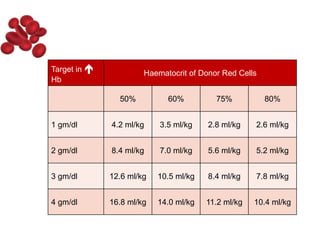
Target in 
Hb
Haematocrit of Donor Red Cells
50% 60% 75% 80%
1 gm/dl 4.2 ml/kg 3.5 ml/kg 2.8 ml/kg 2.6 ml/kg
2 gm/dl 8.4 ml/kg 7.0 ml/kg 5.6 ml/kg 5.2 ml/kg
3 gm/dl 12.6 ml/kg 10.5 ml/kg 8.4 ml/kg 7.8 ml/kg
4 gm/dl 16.8 ml/kg 14.0 ml/kg 11.2 ml/kg 10.4 ml/kg
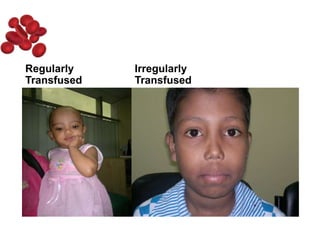
Regularly
Transfused
Irregularly
Transfused
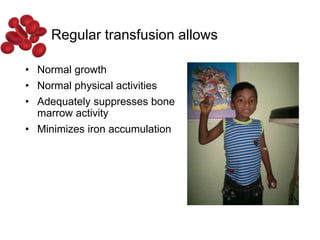
• Normal growth
• Normal physical activities
• Adequately suppresses bone
marrow activity
• Minimizes iron accumulation
Regular transfusion allows
Diet and supplementation
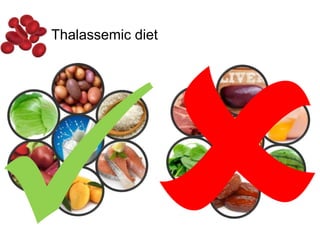
• High iron contained food should be avoided.
• Diet which decreases iron absorption such as milk &
milk products should be taken adequately
• Folic acid
• Zinc
• Vit. D, Vit. E
Thalassemic diet
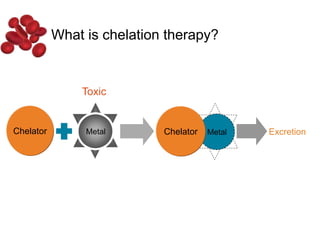
CHELATION THERAPY
Chelator MetalChelator
Toxic
ExcretionMetal
What is chelation therapy?
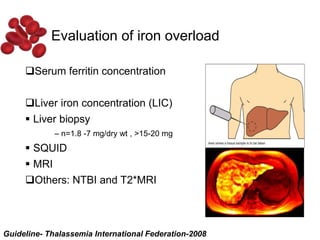
Evaluation of iron overload
Serum ferritin concentration
Liver iron concentration (LIC)
 Liver biopsy
– n=1.8 -7 mg/dry wt , >15-20 mg
 SQUID
 MRI
Others: NTBI and T2*MRI
Guideline- Thalassemia International Federation-2008
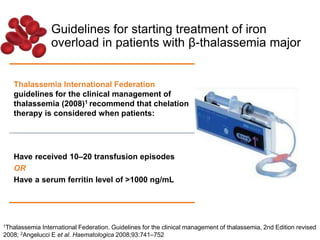
Guidelines for starting treatment of iron
overload in patients with β-thalassemia major
Thalassemia International Federation
guidelines for the clinical management of
thalassemia (2008)1 recommend that chelation
therapy is considered when patients:
Have received 10–20 transfusion episodes
OR
Have a serum ferritin level of >1000 ng/mL
1Thalassemia International Federation. Guidelines for the clinical management of thalassemia, 2nd Edition revised
2008; 2Angelucci E et al. Haematologica 2008;93:741–752
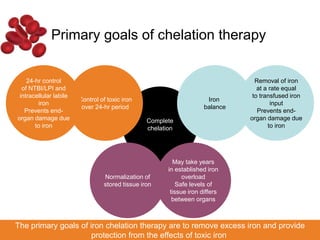
Primary goals of chelation therapy
Complete
chelation
The primary goals of iron chelation therapy are to remove excess iron and provide
protection from the effects of toxic iron
Iron
balance
Removal of iron
at a rate equal
to transfused iron
input
Prevents end-
organ damage due
to iron
Normalization of
stored tissue iron
May take years
in established iron
overload
Safe levels of
tissue iron differs
between organs
Control of toxic iron
over 24-hr period
24-hr control
of NTBI/LPI and
intracellular labile
iron
Prevents end-
organ damage due
to iron
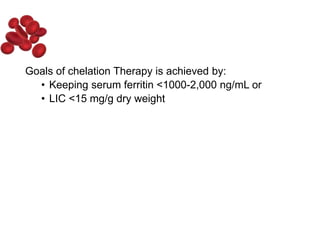
Goals of chelation Therapy is achieved by:
• Keeping serum ferritin <1000-2,000 ng/mL or
• LIC <15 mg/g dry weight
Iron chelating agents
• Desferrioxamine (DFO)
• Deferiprone
• Deferasirox
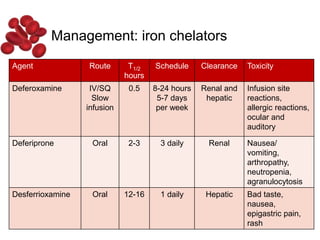
Management: iron chelators
Agent Route T1/2
hours
Schedule Clearance Toxicity
Deferoxamine IV/SQ
Slow
infusion
0.5 8-24 hours
5-7 days
per week
Renal and
hepatic
Infusion site
reactions,
allergic reactions,
ocular and
auditory
Deferiprone Oral 2-3 3 daily Renal Nausea/
vomiting,
arthropathy,
neutropenia,
agranulocytosis
Desferrioxamine Oral 12-16 1 daily Hepatic Bad taste,
nausea,
epigastric pain,
rash
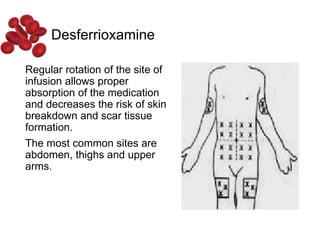
Desferrioxamine
Regular rotation of the site of
infusion allows proper
absorption of the medication
and decreases the risk of skin
breakdown and scar tissue
formation.
The most common sites are
abdomen, thighs and upper
arms.
Deferioxamine……contd
Intensive chelation with Desferrioxamine
– continuous 24-hourly infusions IV or
SC.
Indications:
a) Persistently high serum ferritin;
b) LIC > 15 mg/g dry weight;
c) Significant heart disease, and;
d) Prior to pregnancy or bone marrow
transplantation
Dose: 50 mg/kg/day (up to 60
mg/kg/day)
In-dwelling catheters: danger of
infection and thrombosis
Fetal Hb Induction
Induction of fetal hemoglobin
Hb F enhancement
• Hydroxyurea
• Myelaran
• Butyrate derivatives
• Erythropoietin
• 5-Azacytadine
• Increasing the synthesis of fetal hemoglobin can help
to alleviate anaemia and thereby improve the clinical
status of patients with thalassemia intermedia.
• Agents including cytosine arabinoside and hydroxyurea
may alter the pattern of erythropoiesis and increase
the expression of alpha-chain genes.
• Erythropoietin has been shown to be effective, with a
possible additive effect in combination with
hydroxyurea.
• Butyrate are a further experimental category, still
unlicensed and with difficult intake.
SPLENECTOMY
Deferred as long as possible. At least till 5-6 yrs age.
Indications:
• Massive splenomegaly causing mechanical
discomfort
• Blood requirements >200-220 ml/kg/year
• Hypersplenism
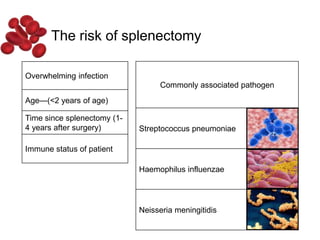
The risk of splenectomy
Overwhelming infection
Age—(<2 years of age)
Time since splenectomy (1-
4 years after surgery)
Immune status of patient
Commonly associated pathogen
Streptococcus pneumoniae
Haemophilus influenzae
Neisseria meningitidis
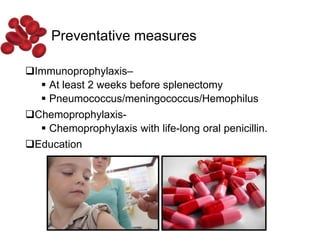
Preventative measures
Immunoprophylaxis–
 At least 2 weeks before splenectomy
 Pneumococcus/meningococcus/Hemophilus
Chemoprophylaxis-
 Chemoprophylaxis with life-long oral penicillin.
Education
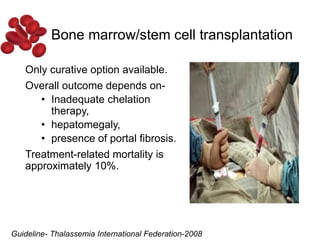
Only curative option available.
Overall outcome depends on-
• Inadequate chelation
therapy,
• hepatomegaly,
• presence of portal fibrosis.
Treatment-related mortality is
approximately 10%.
Bone marrow/stem cell transplantation
Guideline- Thalassemia International Federation-2008
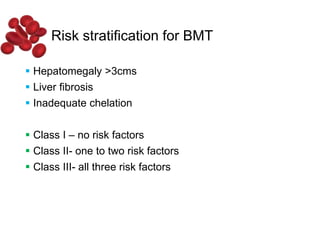
Risk stratification for BMT
 Hepatomegaly >3cms
 Liver fibrosis
 Inadequate chelation
 Class I – no risk factors
 Class II- one to two risk factors
 Class III- all three risk factors
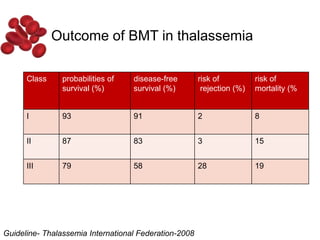
Outcome of BMT in thalassemia
Guideline- Thalassemia International Federation-2008
Class probabilities of
survival (%)
disease-free
survival (%)
risk of
rejection (%)
risk of
mortality (%
I 93 91 2 8
II 87 83 3 15
III 79 58 28 19
B. Curative treatment in thalassemia
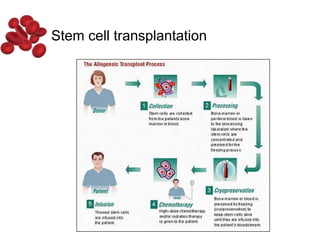
• Stem cell transplantation
• Gene therapy
Stem cell transplantation?
Stem cell transplantation
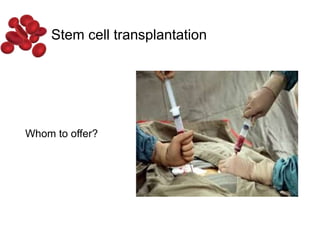
Whom to offer?
Stem cell transplantation
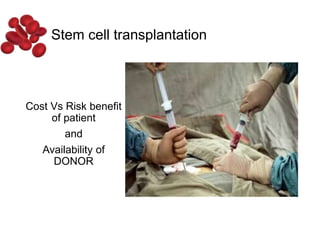
Cost Vs Risk benefit
of patient
and
Availability of
DONOR
Stem cell transplantation
Gene therapy
Gene therapy
• Insertion of normal globin genes into marrow stem cell
may ultimately cure Thalassemia .
• Globin gene transfer in autologous CD34+cells is
beginning to be evaluated
• As per FDA recommendation, the current study is
restricted to adults. Paediatric patients will be included
at a later date after reviewing safety and efficacy data
obtained in adults.
Guidelines for the Management of transfusion dependent Thalassemia,3rd
Role of surgery in thalassemia
• Cholelithiasis – Cholecystectomy
• Choledocholithiasis – Choledocholithotomy
• Cirrhosis (due to iron overload) – Liver biopsy and liver
transplantation
• Leg ulcer – Surgical dressing
• Pathological fracture – Surgical correction
• Spinal cord compression - Laminectomy
Follow up
Follow up
Monthly:
• Complete blood count
• Complete blood chemistry (including liver function
tests, BUN, creatinine) if taking deferasirox
• Record transfusion volume.
Follow up
Every 3 months:
• Measurement of height and weight
• Measurement of ferritin (trends in ferritin used to adjust
chelation);
• Complete blood chemistry, including liver function tests
Follow up
Every 6 months:
• Complete physical examination including Tanner
staging,
• Monitor growth and development
• Dental examination
Follow up
Every year:
• Cardiac function – echocardiograph, ECG, Holter
monitor (as indicated)
• Endocrine function (TFTs, PTH, FSH/LH, fasting
glucose, testosterone/estradiol, FSH, LH, IGF-1,
Vitamin D levels)
• Ophthalmological examination and auditory acuity
• Viral serologies (HAV, HBV panel, HCV (or if HCV1,
quantitative HCV RNA PCR), HIV)
• Bone densitometry
• Ongoing psychosocial support.
Follow up
Every 2 years:
• Evaluation of tissue iron burden
• Liver iron measurement – R2 MRI, SQUID, or biopsy
• T2* MRI measurement of cardiac iron (age .10 years).
C. Prevention and control
 Career detection/Screening
 Genetic counseling
 Prenatal diagnosis
 Health education
Screening
• RBC indices (MCV, MCH, MCHC)
• NESTROFT
• HbA2
Career detection/screening
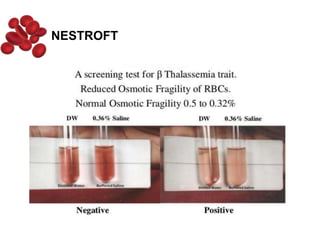
Mass screening: NESTROFT (Necked Eye Single Tube
Red Cell Osmotic Fragility Test)
• Very cheap and easy to perform require small
amount of blood
• Based on principle that Thalassemic red cell resists
hypotonic solution more than that of normal person
• Give positive result on NESTROFT
• Sensitivity 90-98% and specificity 85-90%
NESTROFT
Career detection/screening
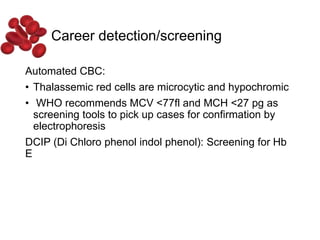
Automated CBC:
• Thalassemic red cells are microcytic and hypochromic
• WHO recommends MCV <77fl and MCH <27 pg as
screening tools to pick up cases for confirmation by
electrophoresis
DCIP (Di Chloro phenol indol phenol): Screening for Hb
E
Genetic counseling
• Index case parents and relatives.
• Antenatal visits of pregnant mothers.
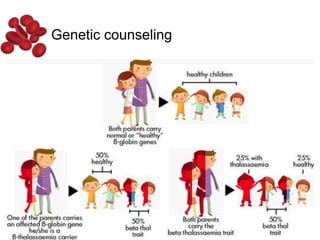
Genetic counseling
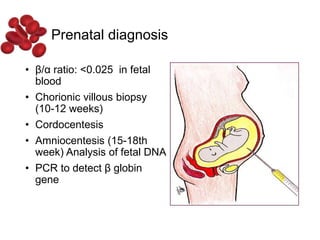
• β/α ratio: <0.025 in fetal
blood
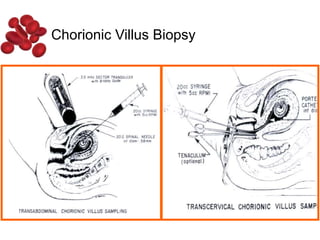
• Chorionic villous biopsy
(10-12 weeks)
• Cordocentesis
• Amniocentesis (15-18th
week) Analysis of fetal DNA
• PCR to detect β globin
gene
Prenatal diagnosis
Chorionic Villus Biopsy
Health education/awareness
• Knowledge of genetic nature of thalassemia
• Transmission of the disease
• Ways to avoid to have further child with the disease
• Aware about economic burden to the family and govt.
Prognosis
Thalassemia major-life expectancy:
• Without regular transfusion - Less than 10 years
• With regular transfusion and no or poor iron chelation -
Less than 25 years
• With regular transfusion and good iron chelation - 40
years, or longer?
The commonest cause of death is iron overload
Conclusion
• Management needs extensive hands
• Prevention program is rudimentary
• Awareness about thalassemia is though increasing still
very much lacking
• Manpower is developing-good news
• Thalassemia center dedicated to children to be
established
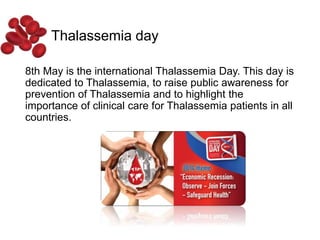
Thalassemia day
8th May is the international Thalassemia Day. This day is
dedicated to Thalassemia, to raise public awareness for
prevention of Thalassemia and to highlight the
importance of clinical care for Thalassemia patients in all
countries.
Thank You

Thalassemia

  • 1.
    WELCOME TO SEMINAR Dr. AyshaSabiha Dr. Maimuna Sayeed Dr. Sharmin Akter Luna Residents (Phase-A)
  • 2.
     Halima, a11 years old girl of consanguineous parents presented with complaints of not growing well, gradual pallor & abdominal distension for 7 years.  On examination she was severely pale, facial dysmorphism & hepatosplenomegaly were present. She had history of repeated blood transfusion. Case Scinerio
  • 3.
  • 4.
  • 5.
    Introduction The term “Thalassemia”refers to a genetic disorder of hemoglobin synthesis characterized by a lack or decreased synthesis of one or more of the four Globin chains causing excessive breakdown of RBC. "Thalassemia" is a Greek term derived from “Thalassa”, which means "the sea" and “Emia” means "related to blood."
  • 6.
    World: • Beta thalassemiatrait - 8% of population • More than - 100 million carrier • Hb E - 53 millions Bangladesh: • Beta thalassemia trait- 4.1% • Hb E trait - 6.1% • Hb E Beta thalassemia- 10.2% (Source: DSH Thalassemia center) Incidence
  • 8.
  • 9.
    Normal hemoglobin component Hbtype Name Components Adult A α2β2 A2 α2δ2 Fetal F α2γ2 Embryonic Portland ξ2γ2 Gower 1 ξ2ε2 Gower 2 α2ε2
  • 10.
  • 11.
    • α Thalassemia •β Thalassemia Types of thalassemia
  • 12.
  • 13.
  • 14.
    Chromosome 16 defect 21 2 1 2 2 1 2 1 2 1 2 1 2 1 2 1 Normal Hb One α gene deletion silent carrier Two α gene deletions- α-Thal. Minor Four α gene deletions Hydrops fetalis or also called: Erythroblastosis Fetalis. Three α gene deletions Hb-H disease
  • 15.
    CLINICAL PRESENTATION Variants ofalpha thalassemia Signs &Symptoms Silent carrier Asymptomatic Trait Asymptomatic Hb H disease Moderate to severe hemolytic anemia Modest degree of ineffective erythropoiesis Splenomegaly Variable bone changes Hb Bart's Born with massive generalized edema, usually fatal
  • 16.
    Diagnosis of α-Thalassemia CBC: •Silent Carrier: no microcytosis , no anaemia. • α-Thalassemia trait: microcytosis, hypochromia, mild anaemia. • Hb H disease: variable severity of anaemia & hemolysis. PBF: Hb H inclusion body (brilliant cresyl blue) in Hb H disease.
  • 17.
    Hb electrophoresis – HbH: • (2-40%) Hb H • others Hb A • Hb F & Hb A2 Hb Bart's: • (80-90%) Bart's, • no Hb A, Hb F, Hb A2 Diagnosis of α-thalassemia
  • 18.
    Treatment of α-thalassemia •Silent carrier & trait: do not require treatment. • Hb H disease: usually does not require regular transfusions. But, with intercurrent illnesses, patient may require transfusion .
  • 19.
  • 20.
    With a mutationon one of the 2 beta globin genes , a carrier is formed with lower protein production but enough hemoglobin Without a mutation enough hemoglobin No carrier With one mutation less hemoglobin Beta thalassemia carrier but less hemoglobin Slight anemia With two mutation No beta globin Beta thalassemia major pt with severe anemia Gene from father Gene from mother Chromosome 11 gene defects
  • 21.
    Clinical syndrome GenotypeSign & symptom Minor /  + or / ° Asymptomatic Intermedia  + / + Variable degree of severity Major  + /° or °/° - Present within 1 year of age - Severe anemia - Growth retardation - Organomegaly - Skeletal deformities -Transfusion require within 2 year Variants of β-thalassemia
  • 22.
    An absence ordeficiency of β- chain synthesis of adult HbAg Pathophysiology of β-thalassemia β Chain synthesis Hb-A α , γ and δ chain Hb A = α2β2
  • 23.
  • 24.
    An approach tothalassemia • Severe Anemia • Thalassemic facies • Hepatosplenomegaly • Growth retardation, etc • Symptoms of anemia • +ve family history • H/0 blood transfusion • FTT
  • 25.
    Thalassemia Major Child withno transfusion or inadequate transfusion Child with regular blood transfusion but no chelation Child with regular blood transfusion & chelation Leads natural course of disease, may die within 5 yrs of age Manifestation of iron overload at the end of 1st decade May enter into normal puberty & have normal life expectancy Clinical features
  • 26.
    Natural course General features Weakness GradualPallor Fatigue Dyspnoea on exertion Poor appetite Palpitation Poor growth Features of marrow expansion
  • 27.
  • 28.
    Features of ironoverload Cirrhosis Diabetes Infertility Pituitary failure Hypothyroidism Arrythmia Heart failure Dark skin Liver Heart Endocrine organs
  • 29.
    Hb E β-Thalassemia •Most prevalent thalassemia variant in Southeast Asia & Bangladesh. • Double heterozygous state. • Lysine substitutes glutamic acid in 26th position. • Divided into mild, moderate & severe form with clinical features varying from thalassemia intermedia to thalassemia major
  • 30.
    Types Sign &symptom Mild Hb E β Thalassemia Asymptomatic , Hb :9 -12 gm/ dl , require no treatment . Moderately severe Hb E β Thalassemia Majority of patient are in this group, Hb : 6 -7 gm/dl , resemble Thalassemia intermedia. Severe Hb E β - Thalassemia Clinical manifestation resemble Thalassemia major (severe anaemia, growth retardation, hepatosplenomegaly, skeletal deformities). Hb: 4-5 gm/dl , treated as thalassemia major. Variants of Hb E β-thalassemia
  • 31.
    Complications of thalassemia A.Excessive erythropoiesis B. Iron overload C. Chronic hemolysis D. Hypercoagulable disease E. Infection F. Treatment of related complications
  • 32.
    Facial changes: • Maxillaryover growth • Malocclusion of teeth • Frontal bossing • Chronic sinusitis • Impaired hearing A. Excess erythropoiesis
  • 33.
    • Medullary expansion– cortical thinning, risk of fracture, osteopenia, osteoporosis, back ache. • Vertebral expansion lead to spinal cord compression – neurological manifestations. Bone Changes
  • 34.
  • 35.
    Endocrine failure: • Shortstature • Delayed puberty • Estrogen/ testosterone deficiency • Diabetes mellitus • Hypoparathyroidism B. Iron Overload
  • 36.
    B. Iron overload Cardiacinvolvement: • Cardiomyopathy • Pericarditis • Arrhythmia • CCF
  • 37.
  • 38.
    C. Chronic hemolysis •Gallstone 50-70% by around 15 years.
  • 39.
    D. Hypercoagulable disease Impairedplatelet function Deep venous thrombosis Elevated endothelial adhesion protein level Pulmonary embolism Activation of coagulation cascade by damage RBC Cerebral ischemia
  • 40.
    E. Infection • Anemia •Iron overload – Yersinia, Klebsiella • Hypersplenism • Splenectomy – Pneumococci, Meningococci, Hemophilus influenzae • Transfusion related – HBV, HCV, HIV etc.
  • 41.
    F. Complications dueto blood transfusion • Acute hemolytic reactions • Delayed transfusion reaction • Autoimmune hemolytic anemia • Febrile transfusion reaction • Allergic reaction • Transfusion related acute lung injury (TRALI) • Graft versus host disease (GVHD) • Volume overload • Transfusion of disease – HAV, HBV, HIV
  • 42.
    Causes of deathin thalassemia • Congestive heart failure • Arrhythmia • Sepsis due to increase susceptibility to infection • Multiple organ failure due to hemochromatosis
  • 43.
  • 44.
    Investigations CBC: • Hb level- Depends on severity – β-thalassemia minor: 10-13 gm/dl – β-thalassemia intermedia: 7-10 gm/dl – β-thalassemia major: 3-6 gm/dl • TC/DC– normal / increased / decreased • Platelet- normal / decreased • RBC Indices- MCV, MCH, MCHC are low • RDW- Normal or raised • Reticulocyte count- Increased(5-10%) PBF: Microcytic hypochromic cells with marked anisocytosis, poikilocytosis and other abnormal cells.
  • 45.
    Abnormal RBCs inPBF 1. Target cell 2. Tear drop cell 3. Elliptocyte 4. Hypochromic 5. Microcyte
  • 46.
  • 47.
  • 48.
  • 49.
    Investigations • Osmotic fragility:Decrease • Iron Profile:  S. Iron & ferritin- Increased  TIBC- Decreased  High % saturation of transferrin • S. bilirubin (indirect): Increased
  • 50.
    Hb electrophoresis Hb NORMALMAJOR MINOR INTERMEDIATE Hb F <1% 90-98% 1-5 % Variable Hb A 97% Absent 90-95% Variable Hb A2 1-3% Variable 3.5-7% >3.5%
  • 51.
  • 52.
    Hb electrophoresis ofhomozygous β° thalassemia
  • 53.
    • Widened diploic spaces •Hair-on-end appearance • Thinning of cortex X-ray Skull
  • 54.
    • Rectangular appearance •Medullary portion of bone is widened • Bony cortex thinned out • Coarse trabecular pattern in medulla X-ray of hand
  • 55.
    Investigations • DNA analysis: Determinespecific defect at molecular DNA level. • HPLC (High Performance Liquid Chromatography): Identify & quantify large number of abnormal Hb.
  • 56.
    Normal 10% (33) β thalassemiatrait 44% (145) homozygous β thalassemia 5% (18) Hb E β Thalassemia 16% (52) Hb E talassemia trait 21% (71) Hb E disease 2% (5) β-Thalassemia major 2% (7) Unknown 0% (1) Patient diagnose as different variety of thalassemia by DNA analysis in BSMMU during the period of Sept 2007 to Aug 2016 (Total=332)
  • 57.
    Diagnosing Thalassemia Full medicaland family history, CBC and RBC indices and PBF Low MCV (< 80fl) ± Low MCH (< 27pg) Other cause of anemia? Serum ferritin ≤12 ng/ml Consider iron deficiency anemia Adequate iron supplement for 3 months Hb electrophoresis and HPLC Improved Not improved Hb A2 variable Hb F > 90-98% Hb A2 ≥ 4% Hb F ≤ 0.1-5% Hb A2 > 4% Hb F variable Hb A2 < 4% Hb F < 1% + Other normal Hb variant ß-Thalassemia major ß-Thalassemia minor ß-Thalassemia intermedia 𝛼-Thalassemia Hb S, Hb E, Hb C and others DNA analysis for 𝛼-globin ß-globin chain mutation Serum ferritin >12 ng/ml Microcytosis, Hypochromia, Target cells ± inclusion bodies (Hb H)
  • 58.
    To see complications •Liver function test • Thyroid function test • FSH, LH, Testosterone, Estradiol • Blood Sugar • Bone profile • Ca, Phosphate, PTH • Liver Iron Concentration (LIC): T2 MRI, Liver Biopsy • Cardiac Iron Measurement by: T2 MRI
  • 59.
    • Bright areasrepresent high iron concentration. • Dark areas represent low iron concentration. Monitoring iron overload by MRI
  • 60.
  • 61.
  • 62.
    A. Supportive management •Multi-disciplinary approach • Focus on each patient’s clinical course Transfusion Iron Chelation Fetal Hb Induction Splenectomy
  • 63.
    Objectives of supportivemanagement • Maintenance of growth and development • Correction of anemia • Prevention of iron overload • Treatment of complications • Counseling and Prevention
  • 64.
  • 65.
    Whom to transfuse? Confirmeddiagnosis of thalassemia major • Laboratory criteria: • Hb < 7gm/dl on 2 occasions > 2 weeks apart or • Hb > 7gm/dl with: • Facial changes • Poor growth • Fractures • Extramedullary hematopoiesis
  • 66.
    Important issues beforestarting transfusion • Blood grouping: – ABO and Rh(D) compatibility checked – Extended red cell antigen typing at least C, c, E, e and Kell. • Screening of donor blood for HBV, HCV, HIV, Syphilis, Malaria. • Avoidance of transfusion first-degree relative donors. • Quality, adequacy and safety of blood
  • 67.
    Transfusion protocol To maintainpre transfusion Hb >9–9.5 gm/dl. • Typical programs: • Transfusion of 10–15 cc/kg of packed Leuko- depleted red cells • Lifelong regular blood transfusions, every 2–5 weeks
  • 68.
    A higher pre-transfusionhemoglobin level of 11-12 gm/dl for patients with: • Heart disease or other medical conditions • Patients who do not achieve adequate suppression of bone marrow activity at lower Hb level.
  • 69.
    Blood products fortransfusion • Packed red cell • Leukocyte reduced red cell • Washed red cell • Neocyte
  • 70.
    Target in  Hb Haematocritof Donor Red Cells 50% 60% 75% 80% 1 gm/dl 4.2 ml/kg 3.5 ml/kg 2.8 ml/kg 2.6 ml/kg 2 gm/dl 8.4 ml/kg 7.0 ml/kg 5.6 ml/kg 5.2 ml/kg 3 gm/dl 12.6 ml/kg 10.5 ml/kg 8.4 ml/kg 7.8 ml/kg 4 gm/dl 16.8 ml/kg 14.0 ml/kg 11.2 ml/kg 10.4 ml/kg
  • 71.
  • 72.
    • Normal growth •Normal physical activities • Adequately suppresses bone marrow activity • Minimizes iron accumulation Regular transfusion allows
  • 73.
    Diet and supplementation •High iron contained food should be avoided. • Diet which decreases iron absorption such as milk & milk products should be taken adequately • Folic acid • Zinc • Vit. D, Vit. E
  • 74.
  • 75.
  • 76.
  • 77.
    Evaluation of ironoverload Serum ferritin concentration Liver iron concentration (LIC)  Liver biopsy – n=1.8 -7 mg/dry wt , >15-20 mg  SQUID  MRI Others: NTBI and T2*MRI Guideline- Thalassemia International Federation-2008
  • 78.
    Guidelines for startingtreatment of iron overload in patients with β-thalassemia major Thalassemia International Federation guidelines for the clinical management of thalassemia (2008)1 recommend that chelation therapy is considered when patients: Have received 10–20 transfusion episodes OR Have a serum ferritin level of >1000 ng/mL 1Thalassemia International Federation. Guidelines for the clinical management of thalassemia, 2nd Edition revised 2008; 2Angelucci E et al. Haematologica 2008;93:741–752
  • 79.
    Primary goals ofchelation therapy Complete chelation The primary goals of iron chelation therapy are to remove excess iron and provide protection from the effects of toxic iron Iron balance Removal of iron at a rate equal to transfused iron input Prevents end- organ damage due to iron Normalization of stored tissue iron May take years in established iron overload Safe levels of tissue iron differs between organs Control of toxic iron over 24-hr period 24-hr control of NTBI/LPI and intracellular labile iron Prevents end- organ damage due to iron
  • 80.
    Goals of chelationTherapy is achieved by: • Keeping serum ferritin <1000-2,000 ng/mL or • LIC <15 mg/g dry weight
  • 81.
    Iron chelating agents •Desferrioxamine (DFO) • Deferiprone • Deferasirox
  • 82.
    Management: iron chelators AgentRoute T1/2 hours Schedule Clearance Toxicity Deferoxamine IV/SQ Slow infusion 0.5 8-24 hours 5-7 days per week Renal and hepatic Infusion site reactions, allergic reactions, ocular and auditory Deferiprone Oral 2-3 3 daily Renal Nausea/ vomiting, arthropathy, neutropenia, agranulocytosis Desferrioxamine Oral 12-16 1 daily Hepatic Bad taste, nausea, epigastric pain, rash
  • 83.
    Desferrioxamine Regular rotation ofthe site of infusion allows proper absorption of the medication and decreases the risk of skin breakdown and scar tissue formation. The most common sites are abdomen, thighs and upper arms.
  • 84.
    Deferioxamine……contd Intensive chelation withDesferrioxamine – continuous 24-hourly infusions IV or SC. Indications: a) Persistently high serum ferritin; b) LIC > 15 mg/g dry weight; c) Significant heart disease, and; d) Prior to pregnancy or bone marrow transplantation Dose: 50 mg/kg/day (up to 60 mg/kg/day) In-dwelling catheters: danger of infection and thrombosis
  • 85.
  • 86.
    Induction of fetalhemoglobin Hb F enhancement • Hydroxyurea • Myelaran • Butyrate derivatives • Erythropoietin • 5-Azacytadine
  • 87.
    • Increasing thesynthesis of fetal hemoglobin can help to alleviate anaemia and thereby improve the clinical status of patients with thalassemia intermedia. • Agents including cytosine arabinoside and hydroxyurea may alter the pattern of erythropoiesis and increase the expression of alpha-chain genes.
  • 88.
    • Erythropoietin hasbeen shown to be effective, with a possible additive effect in combination with hydroxyurea. • Butyrate are a further experimental category, still unlicensed and with difficult intake.
  • 89.
  • 90.
    Deferred as longas possible. At least till 5-6 yrs age. Indications: • Massive splenomegaly causing mechanical discomfort • Blood requirements >200-220 ml/kg/year • Hypersplenism
  • 91.
    The risk ofsplenectomy Overwhelming infection Age—(<2 years of age) Time since splenectomy (1- 4 years after surgery) Immune status of patient Commonly associated pathogen Streptococcus pneumoniae Haemophilus influenzae Neisseria meningitidis
  • 92.
    Preventative measures Immunoprophylaxis–  Atleast 2 weeks before splenectomy  Pneumococcus/meningococcus/Hemophilus Chemoprophylaxis-  Chemoprophylaxis with life-long oral penicillin. Education
  • 93.
    Only curative optionavailable. Overall outcome depends on- • Inadequate chelation therapy, • hepatomegaly, • presence of portal fibrosis. Treatment-related mortality is approximately 10%. Bone marrow/stem cell transplantation Guideline- Thalassemia International Federation-2008
  • 94.
    Risk stratification forBMT  Hepatomegaly >3cms  Liver fibrosis  Inadequate chelation  Class I – no risk factors  Class II- one to two risk factors  Class III- all three risk factors
  • 95.
    Outcome of BMTin thalassemia Guideline- Thalassemia International Federation-2008 Class probabilities of survival (%) disease-free survival (%) risk of rejection (%) risk of mortality (% I 93 91 2 8 II 87 83 3 15 III 79 58 28 19
  • 96.
    B. Curative treatmentin thalassemia • Stem cell transplantation • Gene therapy
  • 97.
  • 98.
  • 99.
    Whom to offer? Stemcell transplantation
  • 100.
    Cost Vs Riskbenefit of patient and Availability of DONOR Stem cell transplantation
  • 101.
  • 102.
    Gene therapy • Insertionof normal globin genes into marrow stem cell may ultimately cure Thalassemia . • Globin gene transfer in autologous CD34+cells is beginning to be evaluated • As per FDA recommendation, the current study is restricted to adults. Paediatric patients will be included at a later date after reviewing safety and efficacy data obtained in adults. Guidelines for the Management of transfusion dependent Thalassemia,3rd
  • 103.
    Role of surgeryin thalassemia • Cholelithiasis – Cholecystectomy • Choledocholithiasis – Choledocholithotomy • Cirrhosis (due to iron overload) – Liver biopsy and liver transplantation • Leg ulcer – Surgical dressing • Pathological fracture – Surgical correction • Spinal cord compression - Laminectomy
  • 104.
  • 105.
    Follow up Monthly: • Completeblood count • Complete blood chemistry (including liver function tests, BUN, creatinine) if taking deferasirox • Record transfusion volume.
  • 106.
    Follow up Every 3months: • Measurement of height and weight • Measurement of ferritin (trends in ferritin used to adjust chelation); • Complete blood chemistry, including liver function tests
  • 107.
    Follow up Every 6months: • Complete physical examination including Tanner staging, • Monitor growth and development • Dental examination
  • 108.
    Follow up Every year: •Cardiac function – echocardiograph, ECG, Holter monitor (as indicated) • Endocrine function (TFTs, PTH, FSH/LH, fasting glucose, testosterone/estradiol, FSH, LH, IGF-1, Vitamin D levels) • Ophthalmological examination and auditory acuity • Viral serologies (HAV, HBV panel, HCV (or if HCV1, quantitative HCV RNA PCR), HIV) • Bone densitometry • Ongoing psychosocial support.
  • 109.
    Follow up Every 2years: • Evaluation of tissue iron burden • Liver iron measurement – R2 MRI, SQUID, or biopsy • T2* MRI measurement of cardiac iron (age .10 years).
  • 110.
    C. Prevention andcontrol  Career detection/Screening  Genetic counseling  Prenatal diagnosis  Health education
  • 111.
    Screening • RBC indices(MCV, MCH, MCHC) • NESTROFT • HbA2
  • 112.
    Career detection/screening Mass screening:NESTROFT (Necked Eye Single Tube Red Cell Osmotic Fragility Test) • Very cheap and easy to perform require small amount of blood • Based on principle that Thalassemic red cell resists hypotonic solution more than that of normal person • Give positive result on NESTROFT • Sensitivity 90-98% and specificity 85-90%
  • 113.
  • 114.
    Career detection/screening Automated CBC: •Thalassemic red cells are microcytic and hypochromic • WHO recommends MCV <77fl and MCH <27 pg as screening tools to pick up cases for confirmation by electrophoresis DCIP (Di Chloro phenol indol phenol): Screening for Hb E
  • 115.
    Genetic counseling • Indexcase parents and relatives. • Antenatal visits of pregnant mothers.
  • 116.
  • 117.
    • β/α ratio:<0.025 in fetal blood • Chorionic villous biopsy (10-12 weeks) • Cordocentesis • Amniocentesis (15-18th week) Analysis of fetal DNA • PCR to detect β globin gene Prenatal diagnosis
  • 118.
  • 119.
    Health education/awareness • Knowledgeof genetic nature of thalassemia • Transmission of the disease • Ways to avoid to have further child with the disease • Aware about economic burden to the family and govt.
  • 120.
  • 121.
    Thalassemia major-life expectancy: •Without regular transfusion - Less than 10 years • With regular transfusion and no or poor iron chelation - Less than 25 years • With regular transfusion and good iron chelation - 40 years, or longer? The commonest cause of death is iron overload
  • 122.
    Conclusion • Management needsextensive hands • Prevention program is rudimentary • Awareness about thalassemia is though increasing still very much lacking • Manpower is developing-good news • Thalassemia center dedicated to children to be established
  • 123.
    Thalassemia day 8th Mayis the international Thalassemia Day. This day is dedicated to Thalassemia, to raise public awareness for prevention of Thalassemia and to highlight the importance of clinical care for Thalassemia patients in all countries.
  • 124.

Editor's Notes

  • #9 - in utero embryonic hemoglobin's switch to HbF. - Postnatal when HbF is switched
  • #76 – Non-invasive – Accuracy in iron overload questionable
  • #77 Chelation therapy involves the use of a drug that is capable of binding with a metal in the body to form what is called a chelate. By doing so, the metal loses its toxic effect, or physiological activity, and is then more readily removed from the body. Chelation therapy is generally reserved for the forms of iron overload in which phlebotomy cannot mobilize iron stores adequately or cannot be tolerated because of concurrent anemia.
  • #78 – Non-invasive – Accuracy in iron overload questionable
  • #79 In thalassemia major, guidelines recommend initiating chelation therapy as soon as transfusions have deposited enough iron to cause tissue damage. Current practice is to start after first 10–20 transfusions or when the serum ferritin level is >1000 ng/mL If chelation therapy with DFO is commenced in pediatric patients before 3 years of age, monitoring of growth and bone development and use of a reduced DFO dose is recommended. Reference Thalassemia International Federation. Guidelines for the clinical management of thalassemia, 2nd Edition revised 2008.
  • #80 The primary goals of chelation therapy are: To remove iron from the entire body at a rate that is at least equal to the rate of iron intake from blood transfusions. This helps to prevent end-organ damage due to excess iron levels To provide constant, 24-hour protection from the harmful effects of toxic NTBI/LPI, which helps to prevent further tissue damage To reduce stored tissue iron levels, which may take years in established iron overload.
  • #94 HSC trans using bm/umb cord bld/ mobilised peripheral bld as a source of sc has been performed in numerous pts with thal.
  • #100 HSC trans using bm/umb cord bld/ mobilised peripheral bld as a source of sc has been performed in numerous pts with thal.
  • #101 HSC trans using bm/umb cord bld/ mobilised peripheral bld as a source of sc has been performed in numerous pts with thal.
  • #103 The goal of this therapy is thus to achieve transfusion independence without incurring the risks of bone marrow transplantation from a suboptimally matched donor. For patients who lack an HLA-matched donor and thus have a higher risk of mortality following allogeneic HSC transplantation, globin gene transfer in autologous stem cells offers the prospect of a curative stem cell-based therapy.