HAFIZ M WASEEM UNIVERSITY OF
EDUCATION LAHORE
UNIVERSITY OF EDUCATION
LMC LAHORE
Presentation On:
Beta thalassemia
Subject :
Hematology
Contents
 Introduction
 Beta thalassemia
 Epidemiology
 Types
 Major
 Intermedia
 Minor
 Diagnosis
 Nutrition
 Genetic Counseling
 Conclusion
 References
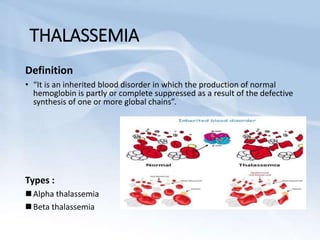
THALASSEMIA
Definition
• “It is an inherited blood disorder in which the production of normal
hemoglobin is partly or complete suppressed as a result of the defective
synthesis of one or more global chains”.
Types :
 Alpha thalassemia
 Beta thalassemia
Beta thalassemia
Definition:
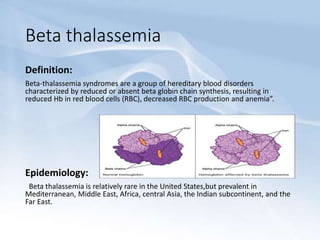
Beta-thalassemia syndromes are a group of hereditary blood disorders
characterized by reduced or absent beta globin chain synthesis, resulting in
reduced Hb in red blood cells (RBC), decreased RBC production and anemia”.
Epidemiology:
Beta thalassemia is relatively rare in the United States,but prevalent in
Mediterranean, Middle East, Africa, central Asia, the Indian subcontinent, and the
Far East.
Beta-thalassemia’s can be classified into three types:
• Thalassemia major
• Thalassemia intermedia
• Thalassemia minor
Thalassemia Major:
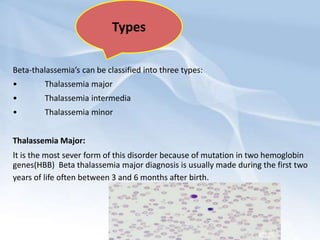
It is the most sever form of this disorder because of mutation in two hemoglobin
genes(HBB) Beta thalassemia major diagnosis is usually made during the first two
years of life often between 3 and 6 months after birth.
Types
Symptoms :
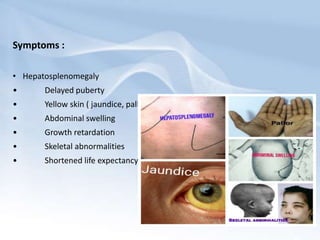
• Hepatosplenomegaly
• Delayed puberty
• Yellow skin ( jaundice, pallor)
• Abdominal swelling
• Growth retardation
• Skeletal abnormalities
• Shortened life expectancy
Treatment :
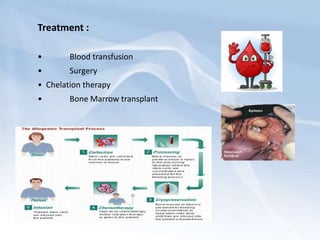
• Blood transfusion
• Surgery
• Chelation therapy
• Bone Marrow transplant
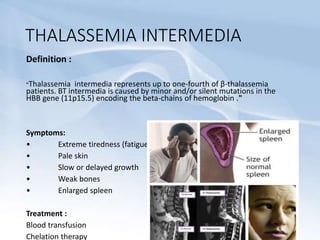
THALASSEMIA INTERMEDIA
Definition :
"Thalassemia intermedia represents up to one-fourth of β-thalassemia
patients. BT intermedia is caused by minor and/or silent mutations in the
HBB gene (11p15.5) encoding the beta-chains of hemoglobin ."
Symptoms:
• Extreme tiredness (fatigue)
• Pale skin
• Slow or delayed growth
• Weak bones
• Enlarged spleen
Treatment :
Blood transfusion
Chelation therapy
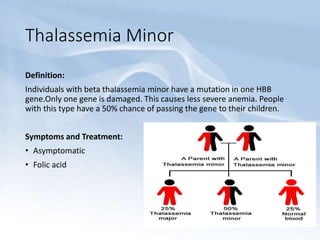
Thalassemia Minor
Definition:
Individuals with beta thalassemia minor have a mutation in one HBB
gene.Only one gene is damaged. This causes less severe anemia. People
with this type have a 50% chance of passing the gene to their children.
Symptoms and Treatment:
• Asymptomatic
• Folic acid
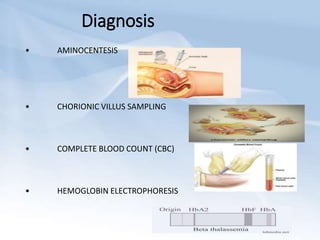
Diagnosis
• AMINOCENTESIS
• CHORIONIC VILLUS SAMPLING
• COMPLETE BLOOD COUNT (CBC)
• HEMOGLOBIN ELECTROPHORESIS
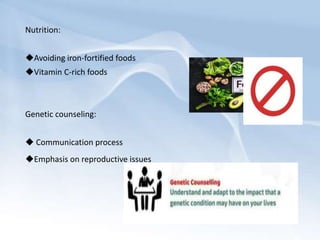
Nutrition:
Avoiding iron-fortified foods
Vitamin C-rich foods
Genetic counseling:
 Communication process
Emphasis on reproductive issues
• www.ncbi.nlm.nih.gov
• www.webmd.com
• rarediseases.info.nih.gov
• medlineplus.gov
• www.hopkinsmedicine.org
• www.kidshealth.org
Beta thalassemia

Beta thalassemia

  • 2.
    HAFIZ M WASEEMUNIVERSITY OF EDUCATION LAHORE
  • 3.
    UNIVERSITY OF EDUCATION LMCLAHORE Presentation On: Beta thalassemia Subject : Hematology
  • 4.
    Contents  Introduction  Betathalassemia  Epidemiology  Types  Major  Intermedia  Minor  Diagnosis  Nutrition  Genetic Counseling  Conclusion  References
  • 5.
    THALASSEMIA Definition • “It isan inherited blood disorder in which the production of normal hemoglobin is partly or complete suppressed as a result of the defective synthesis of one or more global chains”. Types :  Alpha thalassemia  Beta thalassemia
  • 6.
    Beta thalassemia Definition: Beta-thalassemia syndromesare a group of hereditary blood disorders characterized by reduced or absent beta globin chain synthesis, resulting in reduced Hb in red blood cells (RBC), decreased RBC production and anemia”. Epidemiology: Beta thalassemia is relatively rare in the United States,but prevalent in Mediterranean, Middle East, Africa, central Asia, the Indian subcontinent, and the Far East.
  • 7.
    Beta-thalassemia’s can beclassified into three types: • Thalassemia major • Thalassemia intermedia • Thalassemia minor Thalassemia Major: It is the most sever form of this disorder because of mutation in two hemoglobin genes(HBB) Beta thalassemia major diagnosis is usually made during the first two years of life often between 3 and 6 months after birth. Types
  • 8.
    Symptoms : • Hepatosplenomegaly •Delayed puberty • Yellow skin ( jaundice, pallor) • Abdominal swelling • Growth retardation • Skeletal abnormalities • Shortened life expectancy
  • 9.
    Treatment : • Bloodtransfusion • Surgery • Chelation therapy • Bone Marrow transplant
  • 10.
    THALASSEMIA INTERMEDIA Definition : "Thalassemiaintermedia represents up to one-fourth of β-thalassemia patients. BT intermedia is caused by minor and/or silent mutations in the HBB gene (11p15.5) encoding the beta-chains of hemoglobin ." Symptoms: • Extreme tiredness (fatigue) • Pale skin • Slow or delayed growth • Weak bones • Enlarged spleen Treatment : Blood transfusion Chelation therapy
  • 11.
    Thalassemia Minor Definition: Individuals withbeta thalassemia minor have a mutation in one HBB gene.Only one gene is damaged. This causes less severe anemia. People with this type have a 50% chance of passing the gene to their children. Symptoms and Treatment: • Asymptomatic • Folic acid
  • 12.
    Diagnosis • AMINOCENTESIS • CHORIONICVILLUS SAMPLING • COMPLETE BLOOD COUNT (CBC) • HEMOGLOBIN ELECTROPHORESIS
  • 13.
    Nutrition: Avoiding iron-fortified foods VitaminC-rich foods Genetic counseling:  Communication process Emphasis on reproductive issues
  • 14.
    • www.ncbi.nlm.nih.gov • www.webmd.com •rarediseases.info.nih.gov • medlineplus.gov • www.hopkinsmedicine.org • www.kidshealth.org