Congenital
Cytomegalovirus
Infection
Dr. Maimuna Sayeed
Phase B (year 4)
Paediatric Gastroenterology & Nutrition
BSMMU, Dhaka
Introduction
• Congenital cytomegalovirus (CMV) infection is
common worldwide.
• It is one of the leading cause of non-hereditary
sensorineural hearing loss (SNHL) and can cause
other long-term neuro-developmental disabilities,
including cerebral palsy, intellectual disability, vision
impairment, and seizures.
CMV infection in newborns and
immunocompromised children
Ranges
• Asymptomatic or mild
disease in
immunologically
normal hosts
• Severe and potentially
life-threatening disease
in
immunocompromised
children.
CMV VIRUS
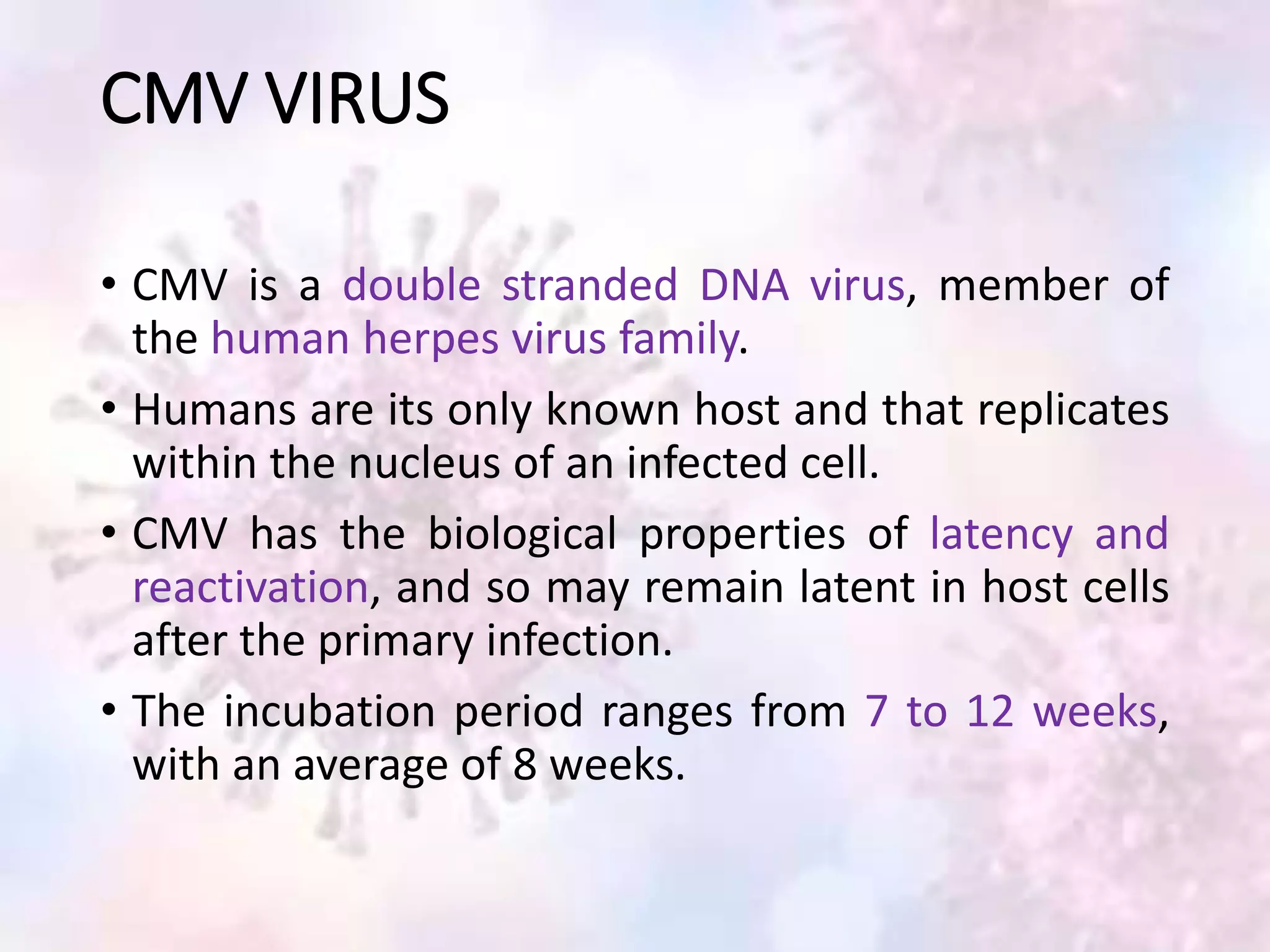
• CMV is a double stranded DNA virus, member of
the human herpes virus family.
• Humans are its only known host and that replicates
within the nucleus of an infected cell.
• CMV has the biological properties of latency and
reactivation, and so may remain latent in host cells
after the primary infection.
• The incubation period ranges from 7 to 12 weeks,
with an average of 8 weeks.
EPIDEMIOLOGY
• In developed countries, CMV seroprevalence in
women of reproductive age ranges from 50 to 85%.
• In developing countries the seroprevalence approximates
100%.
• Incidence of congenital CMV infection in developed
countries is 0.6% to 0.7% of all live births.
Transmission
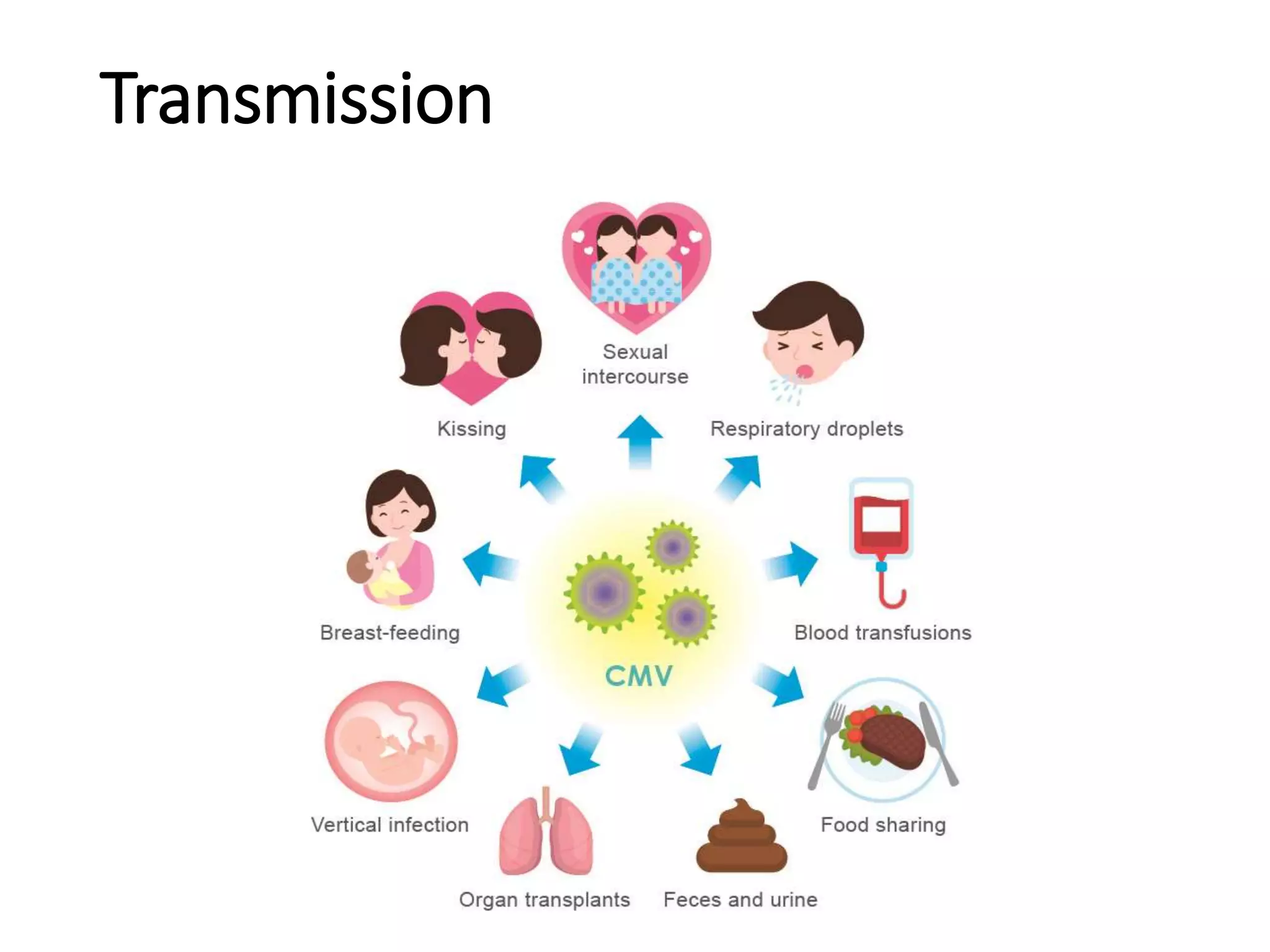
Horizontal transmission-
• Contact with infected saliva and urine
• Blood transfusion
• Organ donation
• Sexual contact
Vertical transmission-
• Ante-partum:
Newborns may be acquired congenitally through
trans-placental transmission.
• Intra-partum:
Contaminated blood and genital secretions during
delivery
• Post-partum:
Via breast milk after delivery.
TERMINOLOGY
• The term "symptomatic" refers to infants with one
or more symptoms at birth.
• The term "asymptomatic" refers to infants with no
apparent symptoms at birth, although some of
these infants may develop hearing loss or subtle
symptoms later in life.
• The term "asymptomatic with isolated hearing
loss" refers to infants with isolated hearing loss at
birth but no other symptoms.
CLINICAL
MANIFESTATIONS
• In utero — The fetus may be silently infected or
manifest CMV disease in utero.
Symptomatic neonate
• Small size for
gestational age
• Microcephaly
• Jaundice at birth
• Hepatosplenomegaly
• Petechiae
• Hemolytic anemia
• Pneumonia
• Chorioretinitis
• Sensorineural hearing
loss
• Lethargy and/or
hypotonia
• Poor suck
• Seizures
Less common findings:
• Ascites
• Enterocolitis
• Myocarditis
• Cardiomyopathy
• Ventricular
trabeculations
Rare /reports:
Endocrinopathies-
Grave's disease
Diabetes insipidus
Renal disease-
Nephrotic syndrome
Life-threatening disease
Approximately 8 to 10 percent of newborns with
symptomatic congenital CMV infection have severe,
life-threatening disease.
Risk for mortality
• Premature infants and
• Infants with primary immune disorders of T cells or
natural killer cells
CMV Hepatitis
Clinical features:
• Asymptomatic
• Prolonged unexplained fever
• Malaise
• Prominent cervical lymphadenopathy
• Mild hepatomegaly
• Splenomegaly
• Overt jaundice (rare)
Liver function test abnormalities are characterized by
• Aspartate aminotransferase,
• Alanine aminotransferase and (usually <3 folds elevated)
• Bilirubin- normal or only mild-to-moderately elevated.
Liver biopsy reveal-
• Giant cell transformation
• Presence of large intracellular inclusion bodies in bile duct
epithelium , occasionally in hepatocyte or kupffer cells and
intracytoplasmic inclusion bodies in hepatocytes
• Bile stasis, inflammation, fibrosis and bile duct
proliferation
CMV Colitis
• Gastrointestinal involvement with CMV is
uncommon in immunocompetent hosts, while it
can cause significant morbidity and mortality in
immunocompromised host
• CMV colitis is due to the reactivation of a latent
infection in immunosuppressed patients
The clinical manifestation of CMV colitis is associated with
• low-grade fever,
• weight loss,
• anorexia,
• malaise,
• abdominal pain,
• Watery diarrhea,
• Hematochezia,
• Extensive mucosal hemorrhage and perforation related to
CMV infection can be life-threatening complications
DIAGNOSTIC APPROACH
Clinical suspicion —
Congenital CMV should be suspected in the following
clinical scenarios:
Newborns with signs and symptoms consistent
with congenital CMV disease.
• Microcephaly
• Small for gestational age (SGA)
• Thrombocytopenia
• Hepatosplenomegaly
• Jaundice or direct hyperbilirubinaemia at birth
Newborns with abnormal neuroimaging consistent
with CMV.
• Periventricular calcification
• Lenticulostriate vasculopathy
• White matter disease
• Ventriculomegaly
• Migrational abnormalities (polymicrogyria)
• Periventricular leukomalacia
Newborns born to mothers with known or
suspected CMV infection during pregnancy.
• Maternal seroconversion during pregnancy
• Presumptive maternal primary CMV infection (CMV IgG
and IgM positive)
• A mononucleosis like illness during pregnancy
Newborns who have documented sensorineural
hearing loss (SNHL).
Immune-compromised newborns.
Approach to testing
• Laboratory diagnosis of congenital CMV infection is
accomplished by isolation or molecular detection of
CMV from urine or saliva samples collected within
the first three weeks of life.
Interpretation/diagnosis
Virologically-proven congenital CMV infection can
be diagnosed on the basis of any of the following:
• Detection of CMV via viral culture in urine or saliva
samples obtained within the first three weeks of
life.
• Detection of CMV via shell vial assay in urine or
saliva samples obtained within the first three weeks
of life, with a positive confirmatory test (either viral
culture or PCR).
• Detection of CMV via PCR in urine, saliva, or blood
samples obtained within the first three weeks of
life, confirmed on repeat testing.
• Detection of CMV via PCR in the newborn screening
dried blood spot, with a positive confirmatory test
(either viral culture or PCR) if the infant is less than
three weeks old.
Possible congenital CMV infection –A diagnosis of
"possible" congenital CMV infection may be made if
all of the following criteria are met:
• One or more signs or symptoms of congenital CMV.
• Other conditions that cause these abnormalities
have been excluded.
• CMV is detected in urine or saliva samples (via viral
culture, shell vial assay, or PCR) or CMV IgG
antibody is detected in the blood after the first
three weeks of life, up to one year of age.
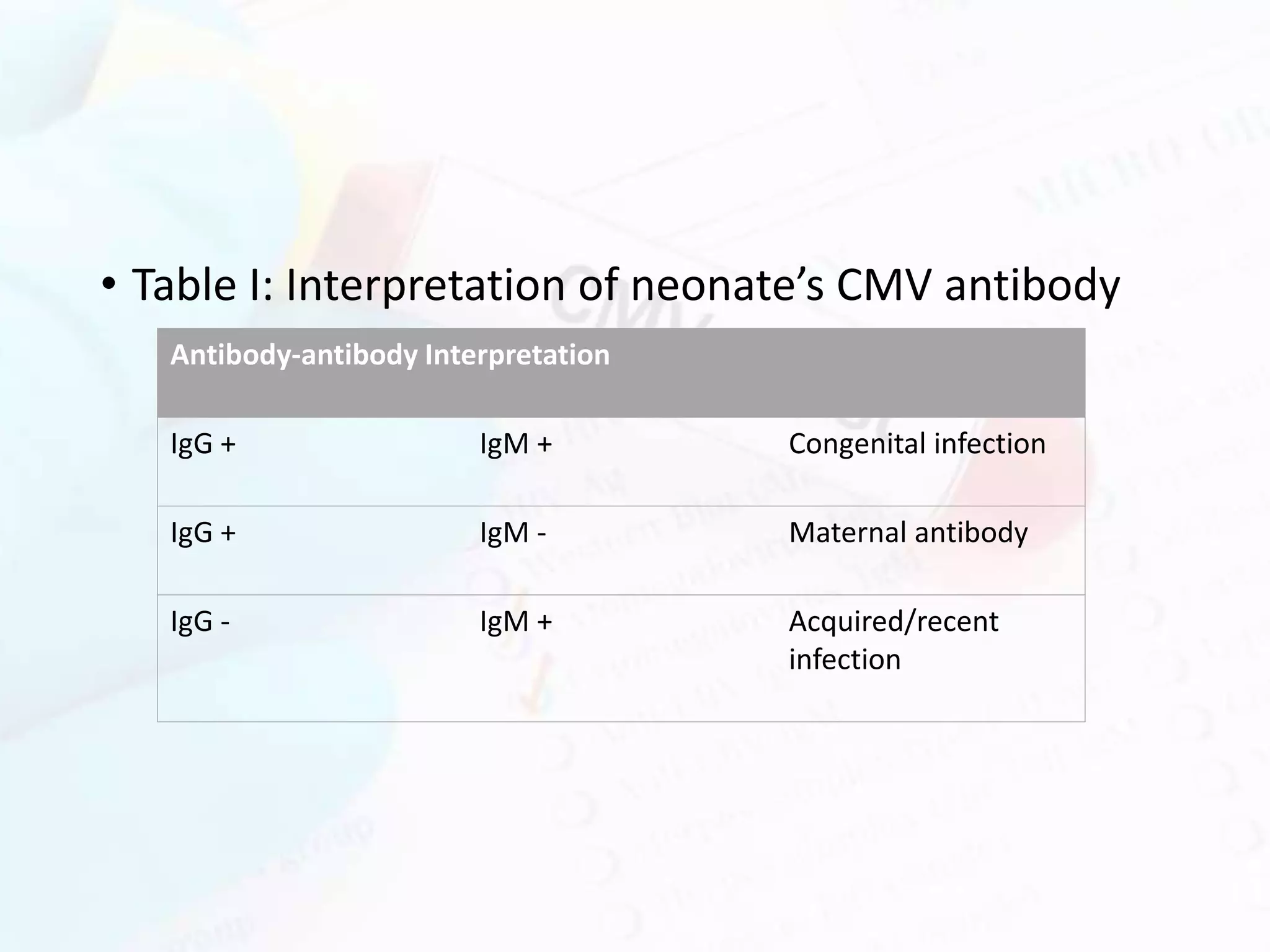
• Table I: Interpretation of neonate’s CMV antibody
Antibody-antibody Interpretation
IgG + IgM + Congenital infection
IgG + IgM - Maternal antibody
IgG - IgM + Acquired/recent
infection
POST-DIAGNOSIS EVALUATION
• Infants with virologically-confirmed congenital
cytomegalovirus (CMV) infection should be
evaluated for evidence of organ involvement. And
do baseline tests prior starting antiviral therapy.
• A thorough physical, and neurologic and neuro-
developmental examination, including:
• Measurements of weight
• Length
• Head circumference (to detect microcephaly).
Laboratory testing
CBC
Hemoglobin ↓
DC-Neutrophil
Lymphocyte
↓
↓ or ↑
Platelet ↓
Blood film Hemolytic anaemia/
Leukomoid reaction
Liver function test
ALT ↑
S. Bilirubin – direct and indirect ↑
CSF protein ↑
Renal function test
BUN
S. creatinine
• Neuroimaging-
Ultrasonography of brain, computed tomography
(CT) or magnetic resonance imaging (MRI)
Findings:
 Periventricular calcification
 Lenticulostriate vasculopathy
 White matter disease
 Ventriculomegaly
 Migrational abnormalities (e.g. focal polymicrogyria,
pachygyria, lissencephaly)
 Periventricular leukomalacia and cystic abnormalities
CT MRI
Advantage:
• more sensitive in detecting
ventriculomegaly or
calcifications
Advantage:
• more sensitive in detecting
structural abnormalities.
Disadvantage:
• It exposes the infant to
ionizing radiation
Disadvantage:
• Infant may require
sedation/ anesthesia
• Longer procedure
• Hearing evaluation
• Ophthalmology evaluation
• CMV DNAemia by quantitative polymerase chain
reaction (PCR) to establish baseline level of viremia
Management
Supportive measures
For the symptomatic neonate with severe or life-
threatening disease may include:
• Provision of oxygen and mechanical ventilator
support
• Fluid maintenance
• Control of seizures
• Transfusion of platelets and other blood products
• Antimicrobial treatment for secondary bacterial
infections
• Nutritional support
Specific treatment
Antiviral drugs
First line drugs-
• Ganciclovir
• Valganciclovir
Alternative choice-
• Foscarnet
• Cidofovir
Whom to treat
• Symptomatic infection— infants with virologically-
confirmed congenital CMV and at least one end-
organ symptom.
• Primary immunodeficiency — Antiviral therapy is
also provided to infants with primary
immunodeficiency, regardless of the degree of
symptoms.
• Asymptomatic infection with isolated hearing loss
NOT generally initiate antiviral therapy in the
following circumstances because there is insufficient
evidence of benefit to outweigh the potential risks:
• In utero – Maternal antiviral therapy for prevention
or treatment of fetal CMV is generally not
recommended.
• Asymptomatic newborns with normal hearing
Timing —
• Antiviral therapy should be initiated as soon as
virological testing is confirmed.
• The effectiveness of antiviral therapy in congenital
CMV disease have found a benefit when treatment
is initiated within the first 30 days of life.
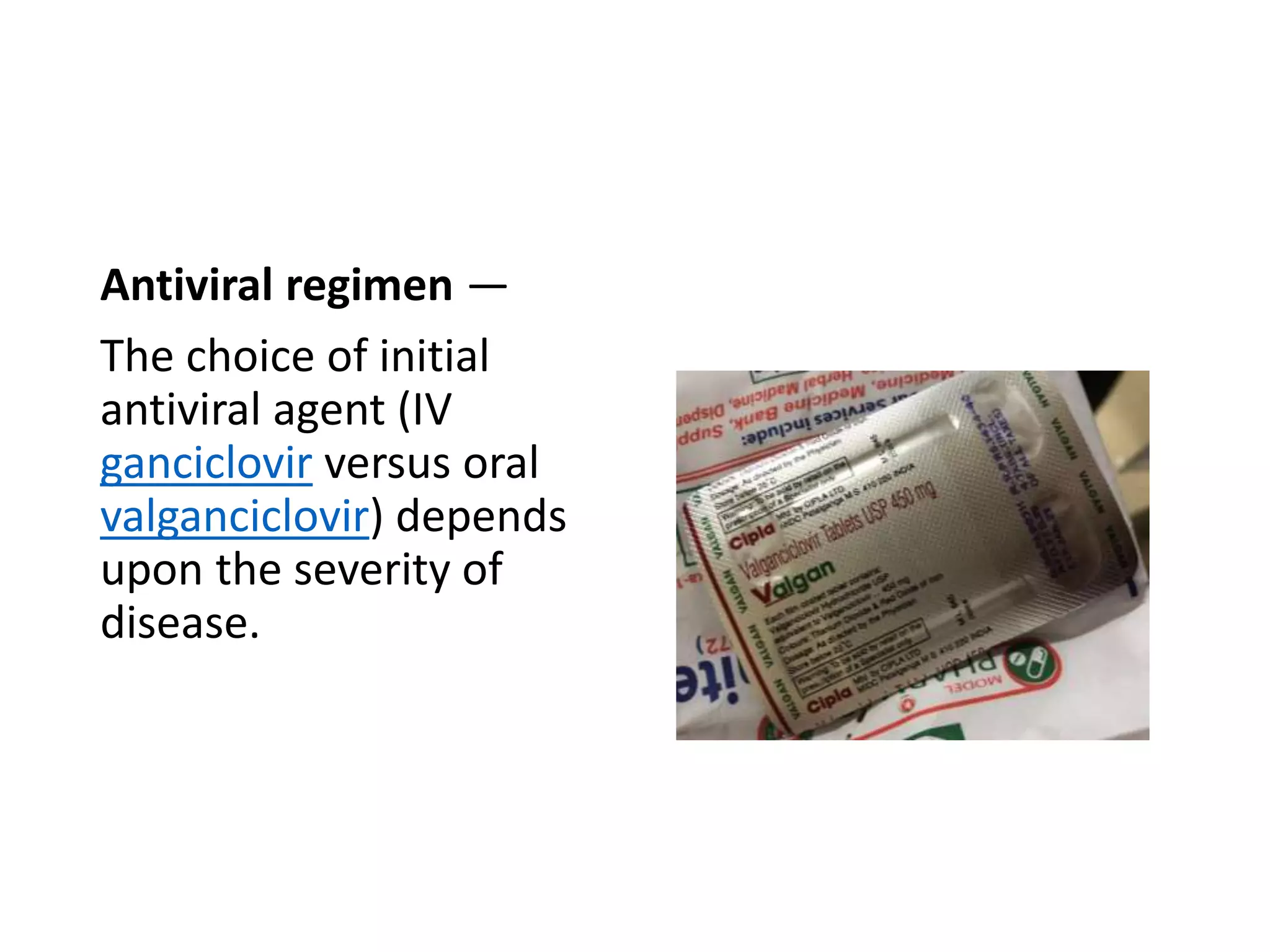
Antiviral regimen —
The choice of initial
antiviral agent (IV
ganciclovir versus oral
valganciclovir) depends
upon the severity of
disease.
Ganciclovir
Dose:
6 mg/kg per dose administered intravenously every
12 hours
Route: IV
Duration: two to six weeks
Infants may be transitioned to oral valganciclovir if
clinically stable and able to take oral medications,
usually after two to six weeks.
• Viral sepsis-like
syndrome
• Pneumonitis
• Myocarditis
• Severe hepatitis
• Enterocolitis
• Severe and refractory
thrombocytopenia
• Sight-threatening retinitis
• Severe neurologic disease
• Underlying primary
immune disorder (e.g.,
severe combined
immunodeficiency [SCID])
regardless of degree of
symptoms
Indication:
Life-threatening disease —with any of the following:
Valganciclovir
Dose:
16 mg/kg per dose administered orally every 12
hours
The dose should be increased with infant weight gain
to maintain a dose of 16 mg/kg per dose.
Route: Oral
Duration: 6months
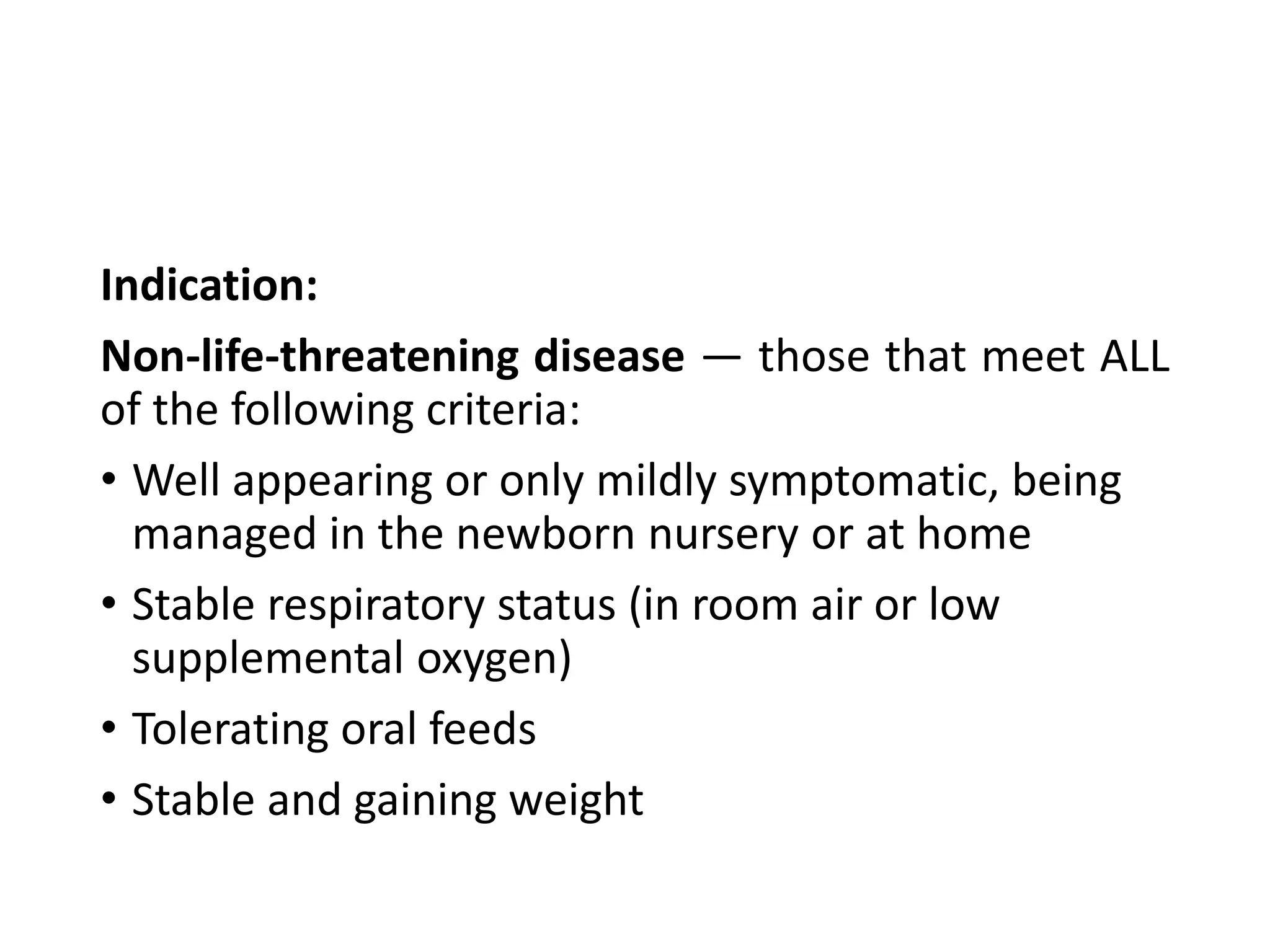
Indication:
Non-life-threatening disease — those that meet ALL
of the following criteria:
• Well appearing or only mildly symptomatic, being
managed in the newborn nursery or at home
• Stable respiratory status (in room air or low
supplemental oxygen)
• Tolerating oral feeds
• Stable and gaining weight
• These infants generally lack severe end-organ
involvement.
• Examples of non-life-threatening disease include
• microcephaly or intracranial calcifications without
seizures or encephalopathy;
• jaundice or hepatosplenomegaly without severe
hepatitis or refractory thrombocytopenia;
• and isolated hearing loss.
Adverse effects
associated with ganciclovir and valganciclovir treatment
include:
• Neutropenia (ANC falls below 500/microL)
It is rarely severe and usually resolves with holding the
antiviral for one to seven days .
Following discontinuation of therapy, the ANC is
monitored two to three times per week, and once it has
recovered to >1000/microL, antiviral therapy is
reinstituted at the previous dose.
Treatment discontinuation may be necessary if
neutropenia recurs.
• Thrombocytopenia (platelets <50,000 cells/microL)
Worsening thrombocytopenia during antiviral
therapy while CMV DNAemia levels are declining
suggests drug-induced thrombocytopenia.
• Hepatotoxicity
Drugs need to be discontinued if transaminases rise
to >250 int. units/L with no alternative cause.
Transaminase levels should then be monitored
weekly and when they decline, antiviral therapy can
be restarted.
• Nephrotoxicity
The dose of ganciclovir and valganciclovir should be
adjusted in renal failure.
• IV catheter events
Extravasation of the intravenous ganciclovir solution
may produce local reaction, ulcers, and scarring.
Monitoring
Parameters Schedule
CBC Weekly for 6 weeks→ every 2-
4weeks
LFT
aspartate aminotransferase,
alanine aminotransferase,
total and direct bilirubin
Weekly initially→ monthly
RFT
BUN and
creatinine
Weekly initially→ 3 monthly
Treatment response — can be assessed by
monitoring clinical symptoms and level of viremia.
• Clinical symptoms are monitored with:
oRegular general physical examination
oNeurologic examination
oHearing evaluation every three to six months
oEye exam every three to six months; more frequent
evaluations are required in infants with chorioretinitis
• Level of viremia is measured with quantitative CMV
DNA PCR (CMV DNAemia) in whole blood or
plasma.
Treatment failure — Evidence of treatment failure
includes any of the following:
• Progressive end-organ disease despite adequate
treatment.
• Rising CMV DNAemia levels after two weeks of
treatment.
• Sustained increase in CMV DNAemia levels after an
initial decline.
Alternative antiviral agents
These agents may be used in select cases if there is-
• Suspected or confirmed ganciclovir-resistance
• Significant toxicity is encountered during ganciclovir
or valganciclovir therapy.
Foscarnet
Dose:
60 mg/kg per dose administered intravenously every
eight hours for two to three weeks
Followed by maintenance therapy at a dose of 90
mg/kg per dose once daily for two to three weeks.
Route : IV
Toxicity:
• Renal insufficiency and
• Electrolyte derangements
ohypocalcemia or hypercalcemia,
ometabolic acidosis,
ohyper-/hypophosphatemia,
ohypokalemia,
ohypomagnesemia, and
ohyponatremia
Monitoring at least twice weekly:
• BUN,
• S. creatinine, and
• Serum electrolytes
• S. calcium,
• S. magnesium, and
• S. phosphorus levels
Cidofovir
Dose:
• 5 mg/kg per dose administered intravenously every
seven days for two weeks, then every other week
for an additional four weeks.
• An alternative dosing regimen of 1 mg/kg per dose
three times per week has also been used
Route : IV
Toxicity:
• renal and
• metabolic adverse effects,
• neutropenia and
• hepatotoxicity.
Monitoring:
• serum BUN
• creatinine
• calcium
• magnesium
• phosphorous
• uric acid levels
• urine protein measurement
• liver function tests and
• complete blood count with differential.
Special circumstances
Chorioretinitis
• In addition to treatment with IV ganciclovir ,infants
require consultation with a pediatric ophthalmologist
or retinal specialist.
• Monitoring of the retinal lesions every 7 to 10 days is
recommended.
• For infants with severe sight-threatening CMV-
associated chorioretinitis, intravitreal antiviral
therapy may be required.
OUTCOME
Late sequelae of symptomatic congenital CMV included:
• Hearing loss
• Intellectual disability [IQ <70]
• Microcephaly Strabismus
• Dental disease
• Seizures
• Cortical visual impairment
• Chorioretinitis
• Cerebral palsy
• Death after the newborn period
LONG-TERM FOLLOW-UP
All children with congenital CMV infection (including
those who are symptomatic at birth and those who are
asymptomatic), should be followed throughout
childhood and into adulthood for evidence of long-term
effects of CMV.
• Hearing loss
Hearing evaluations are recommended every three to six
months during the first three years of life, and annually
thereafter until at least 18 years of age
Hearing aids may be needed and if progression to
profound hearing loss occurs, cochlear implantation may
be indicated.
• Central nervous system manifestations
Central nervous system (CNS) manifestations
(intellectual disability, cerebral palsy, and seizures)
may require special education services and speech,
language, occupational, and/or physical therapy
• Eye disease
Chorioretinitis, retinopathy, optic atrophy, and
strabismus require specialized management.
• Dental disease
Congenital CMV is associated with hypoplasia and
hypo-calcification of tooth enamel, affecting mainly
primary dentition. Regular dental visits are an
important component .
• Liver disease
Chronic hepatitis as a result of congenital CMV
disease is uncommon. Abnormal liver function tests
usually resolve during the first few weeks of life.
Hepatomegaly usually resolves by three months.
• Infants with congenital CMV and persistent liver
dysfunction or persistent direct hyperbilirubinemia
should be evaluated for biliary atresia or alpha 1-
antitrypsin deficiency, since CMV and another
diagnosis affecting liver function may coexist in the
same infant, and present a diagnostic challenge
PREVENTION
Prevention of neonatal transmission — Preventive
measures to reduce transmission of CMV to
newborns include:
• Use of CMV-seronegative or leukocyte-reduced
blood for extremely preterm infants, which
essentially eliminates the risk of transfusion-related
CMV infection
• Treatment of maternal breast milk by
freezing/thawing or pasteurization.
Personal protective measures to reduce the risk of
family transmission of the virus can be instituted in
pregnant women or those trying to become
pregnant, especially those women who are CMV
seronegative
• Avoiding kissing young toddlers and children on or
near the mouth
• Not sharing eating or drinking utensils, drinks, or
food with toddlers or young children
• Careful handwashing or using
gloves after wiping noses,
drool, and changing diapers.
• Avoiding intimate contact
during the communicable
period with a sexual partner if
the partner has documented
CMV mononucleosis.
• Blood products and organ donors — Blood
products given to newborns (especially preterm
infants), pregnant women, and immuno-
compromised patients should be from CMV-
seronegative donors or leuko-reduced.
• Prophylaxis — Passive immunoprophylaxis with
intravenous immune globulin or CMV
hyperimmune globulin may prevent acquisition of
serious CMV disease in hematopoietic stem cell
and solid organ transplant recipients at high risk for
acquiring CMV disease.
• Vaccines — A variety of experimental CMV vaccines
have been evaluated in clinical trials; however,
none are licensed.
References
• UpToDate
• Liver disease in children –by Frederick J. Suchy,
Ronald J. Sokol, William F. Balistreri
• Walker’s pediatric gastrointestinal disease
• Nakase H, Herfarth H: Cytomegalovirus Colitis,
Cytomegalovirus Hepatitis and Systemic
Cytomegalovirus Infection: Common Features and
Differences. Inflamm Intest Dis 2016;1:15-23. doi:
10.1159/000443198
Congenital cytomegalovirus infection

Congenital cytomegalovirus infection

  • 1.
    Congenital Cytomegalovirus Infection Dr. Maimuna Sayeed PhaseB (year 4) Paediatric Gastroenterology & Nutrition BSMMU, Dhaka
  • 2.
    Introduction • Congenital cytomegalovirus(CMV) infection is common worldwide. • It is one of the leading cause of non-hereditary sensorineural hearing loss (SNHL) and can cause other long-term neuro-developmental disabilities, including cerebral palsy, intellectual disability, vision impairment, and seizures.
  • 3.
    CMV infection innewborns and immunocompromised children Ranges • Asymptomatic or mild disease in immunologically normal hosts • Severe and potentially life-threatening disease in immunocompromised children.
  • 4.
    CMV VIRUS • CMVis a double stranded DNA virus, member of the human herpes virus family. • Humans are its only known host and that replicates within the nucleus of an infected cell. • CMV has the biological properties of latency and reactivation, and so may remain latent in host cells after the primary infection. • The incubation period ranges from 7 to 12 weeks, with an average of 8 weeks.
  • 5.
    EPIDEMIOLOGY • In developedcountries, CMV seroprevalence in women of reproductive age ranges from 50 to 85%. • In developing countries the seroprevalence approximates 100%. • Incidence of congenital CMV infection in developed countries is 0.6% to 0.7% of all live births.
  • 6.
  • 7.
    Horizontal transmission- • Contactwith infected saliva and urine • Blood transfusion • Organ donation • Sexual contact
  • 8.
    Vertical transmission- • Ante-partum: Newbornsmay be acquired congenitally through trans-placental transmission. • Intra-partum: Contaminated blood and genital secretions during delivery • Post-partum: Via breast milk after delivery.
  • 9.
    TERMINOLOGY • The term"symptomatic" refers to infants with one or more symptoms at birth. • The term "asymptomatic" refers to infants with no apparent symptoms at birth, although some of these infants may develop hearing loss or subtle symptoms later in life. • The term "asymptomatic with isolated hearing loss" refers to infants with isolated hearing loss at birth but no other symptoms.
  • 10.
  • 11.
    • In utero— The fetus may be silently infected or manifest CMV disease in utero.
  • 12.
    Symptomatic neonate • Smallsize for gestational age • Microcephaly • Jaundice at birth • Hepatosplenomegaly • Petechiae • Hemolytic anemia • Pneumonia
  • 13.
    • Chorioretinitis • Sensorineuralhearing loss • Lethargy and/or hypotonia • Poor suck • Seizures
  • 14.
    Less common findings: •Ascites • Enterocolitis • Myocarditis • Cardiomyopathy • Ventricular trabeculations Rare /reports: Endocrinopathies- Grave's disease Diabetes insipidus Renal disease- Nephrotic syndrome
  • 15.
    Life-threatening disease Approximately 8to 10 percent of newborns with symptomatic congenital CMV infection have severe, life-threatening disease. Risk for mortality • Premature infants and • Infants with primary immune disorders of T cells or natural killer cells
  • 16.
    CMV Hepatitis Clinical features: •Asymptomatic • Prolonged unexplained fever • Malaise • Prominent cervical lymphadenopathy • Mild hepatomegaly • Splenomegaly • Overt jaundice (rare)
  • 17.
    Liver function testabnormalities are characterized by • Aspartate aminotransferase, • Alanine aminotransferase and (usually <3 folds elevated) • Bilirubin- normal or only mild-to-moderately elevated. Liver biopsy reveal- • Giant cell transformation • Presence of large intracellular inclusion bodies in bile duct epithelium , occasionally in hepatocyte or kupffer cells and intracytoplasmic inclusion bodies in hepatocytes • Bile stasis, inflammation, fibrosis and bile duct proliferation
  • 18.
    CMV Colitis • Gastrointestinalinvolvement with CMV is uncommon in immunocompetent hosts, while it can cause significant morbidity and mortality in immunocompromised host • CMV colitis is due to the reactivation of a latent infection in immunosuppressed patients
  • 19.
    The clinical manifestationof CMV colitis is associated with • low-grade fever, • weight loss, • anorexia, • malaise, • abdominal pain, • Watery diarrhea, • Hematochezia, • Extensive mucosal hemorrhage and perforation related to CMV infection can be life-threatening complications
  • 20.
  • 21.
    Clinical suspicion — CongenitalCMV should be suspected in the following clinical scenarios: Newborns with signs and symptoms consistent with congenital CMV disease. • Microcephaly • Small for gestational age (SGA) • Thrombocytopenia • Hepatosplenomegaly • Jaundice or direct hyperbilirubinaemia at birth
  • 22.
    Newborns with abnormalneuroimaging consistent with CMV. • Periventricular calcification • Lenticulostriate vasculopathy • White matter disease • Ventriculomegaly • Migrational abnormalities (polymicrogyria) • Periventricular leukomalacia
  • 23.
    Newborns born tomothers with known or suspected CMV infection during pregnancy. • Maternal seroconversion during pregnancy • Presumptive maternal primary CMV infection (CMV IgG and IgM positive) • A mononucleosis like illness during pregnancy Newborns who have documented sensorineural hearing loss (SNHL). Immune-compromised newborns.
  • 24.
    Approach to testing •Laboratory diagnosis of congenital CMV infection is accomplished by isolation or molecular detection of CMV from urine or saliva samples collected within the first three weeks of life.
  • 25.
  • 26.
    Virologically-proven congenital CMVinfection can be diagnosed on the basis of any of the following: • Detection of CMV via viral culture in urine or saliva samples obtained within the first three weeks of life. • Detection of CMV via shell vial assay in urine or saliva samples obtained within the first three weeks of life, with a positive confirmatory test (either viral culture or PCR).
  • 27.
    • Detection ofCMV via PCR in urine, saliva, or blood samples obtained within the first three weeks of life, confirmed on repeat testing. • Detection of CMV via PCR in the newborn screening dried blood spot, with a positive confirmatory test (either viral culture or PCR) if the infant is less than three weeks old.
  • 28.
    Possible congenital CMVinfection –A diagnosis of "possible" congenital CMV infection may be made if all of the following criteria are met: • One or more signs or symptoms of congenital CMV. • Other conditions that cause these abnormalities have been excluded. • CMV is detected in urine or saliva samples (via viral culture, shell vial assay, or PCR) or CMV IgG antibody is detected in the blood after the first three weeks of life, up to one year of age.
  • 29.
    • Table I:Interpretation of neonate’s CMV antibody Antibody-antibody Interpretation IgG + IgM + Congenital infection IgG + IgM - Maternal antibody IgG - IgM + Acquired/recent infection
  • 30.
    POST-DIAGNOSIS EVALUATION • Infantswith virologically-confirmed congenital cytomegalovirus (CMV) infection should be evaluated for evidence of organ involvement. And do baseline tests prior starting antiviral therapy. • A thorough physical, and neurologic and neuro- developmental examination, including: • Measurements of weight • Length • Head circumference (to detect microcephaly).
  • 31.
    Laboratory testing CBC Hemoglobin ↓ DC-Neutrophil Lymphocyte ↓ ↓or ↑ Platelet ↓ Blood film Hemolytic anaemia/ Leukomoid reaction Liver function test ALT ↑ S. Bilirubin – direct and indirect ↑ CSF protein ↑ Renal function test BUN S. creatinine
  • 32.
    • Neuroimaging- Ultrasonography ofbrain, computed tomography (CT) or magnetic resonance imaging (MRI) Findings:  Periventricular calcification  Lenticulostriate vasculopathy  White matter disease  Ventriculomegaly  Migrational abnormalities (e.g. focal polymicrogyria, pachygyria, lissencephaly)  Periventricular leukomalacia and cystic abnormalities
  • 33.
    CT MRI Advantage: • moresensitive in detecting ventriculomegaly or calcifications Advantage: • more sensitive in detecting structural abnormalities. Disadvantage: • It exposes the infant to ionizing radiation Disadvantage: • Infant may require sedation/ anesthesia • Longer procedure
  • 34.
    • Hearing evaluation •Ophthalmology evaluation • CMV DNAemia by quantitative polymerase chain reaction (PCR) to establish baseline level of viremia
  • 36.
  • 37.
    Supportive measures For thesymptomatic neonate with severe or life- threatening disease may include: • Provision of oxygen and mechanical ventilator support • Fluid maintenance • Control of seizures • Transfusion of platelets and other blood products • Antimicrobial treatment for secondary bacterial infections • Nutritional support
  • 38.
    Specific treatment Antiviral drugs Firstline drugs- • Ganciclovir • Valganciclovir Alternative choice- • Foscarnet • Cidofovir
  • 39.
    Whom to treat •Symptomatic infection— infants with virologically- confirmed congenital CMV and at least one end- organ symptom. • Primary immunodeficiency — Antiviral therapy is also provided to infants with primary immunodeficiency, regardless of the degree of symptoms. • Asymptomatic infection with isolated hearing loss
  • 40.
    NOT generally initiateantiviral therapy in the following circumstances because there is insufficient evidence of benefit to outweigh the potential risks: • In utero – Maternal antiviral therapy for prevention or treatment of fetal CMV is generally not recommended. • Asymptomatic newborns with normal hearing
  • 41.
    Timing — • Antiviraltherapy should be initiated as soon as virological testing is confirmed. • The effectiveness of antiviral therapy in congenital CMV disease have found a benefit when treatment is initiated within the first 30 days of life.
  • 42.
    Antiviral regimen — Thechoice of initial antiviral agent (IV ganciclovir versus oral valganciclovir) depends upon the severity of disease.
  • 43.
    Ganciclovir Dose: 6 mg/kg perdose administered intravenously every 12 hours Route: IV Duration: two to six weeks Infants may be transitioned to oral valganciclovir if clinically stable and able to take oral medications, usually after two to six weeks.
  • 44.
    • Viral sepsis-like syndrome •Pneumonitis • Myocarditis • Severe hepatitis • Enterocolitis • Severe and refractory thrombocytopenia • Sight-threatening retinitis • Severe neurologic disease • Underlying primary immune disorder (e.g., severe combined immunodeficiency [SCID]) regardless of degree of symptoms Indication: Life-threatening disease —with any of the following:
  • 45.
    Valganciclovir Dose: 16 mg/kg perdose administered orally every 12 hours The dose should be increased with infant weight gain to maintain a dose of 16 mg/kg per dose. Route: Oral Duration: 6months
  • 46.
    Indication: Non-life-threatening disease —those that meet ALL of the following criteria: • Well appearing or only mildly symptomatic, being managed in the newborn nursery or at home • Stable respiratory status (in room air or low supplemental oxygen) • Tolerating oral feeds • Stable and gaining weight
  • 47.
    • These infantsgenerally lack severe end-organ involvement. • Examples of non-life-threatening disease include • microcephaly or intracranial calcifications without seizures or encephalopathy; • jaundice or hepatosplenomegaly without severe hepatitis or refractory thrombocytopenia; • and isolated hearing loss.
  • 48.
    Adverse effects associated withganciclovir and valganciclovir treatment include: • Neutropenia (ANC falls below 500/microL) It is rarely severe and usually resolves with holding the antiviral for one to seven days . Following discontinuation of therapy, the ANC is monitored two to three times per week, and once it has recovered to >1000/microL, antiviral therapy is reinstituted at the previous dose. Treatment discontinuation may be necessary if neutropenia recurs.
  • 49.
    • Thrombocytopenia (platelets<50,000 cells/microL) Worsening thrombocytopenia during antiviral therapy while CMV DNAemia levels are declining suggests drug-induced thrombocytopenia. • Hepatotoxicity Drugs need to be discontinued if transaminases rise to >250 int. units/L with no alternative cause. Transaminase levels should then be monitored weekly and when they decline, antiviral therapy can be restarted.
  • 50.
    • Nephrotoxicity The doseof ganciclovir and valganciclovir should be adjusted in renal failure. • IV catheter events Extravasation of the intravenous ganciclovir solution may produce local reaction, ulcers, and scarring.
  • 51.
    Monitoring Parameters Schedule CBC Weeklyfor 6 weeks→ every 2- 4weeks LFT aspartate aminotransferase, alanine aminotransferase, total and direct bilirubin Weekly initially→ monthly RFT BUN and creatinine Weekly initially→ 3 monthly
  • 52.
    Treatment response —can be assessed by monitoring clinical symptoms and level of viremia. • Clinical symptoms are monitored with: oRegular general physical examination oNeurologic examination oHearing evaluation every three to six months oEye exam every three to six months; more frequent evaluations are required in infants with chorioretinitis • Level of viremia is measured with quantitative CMV DNA PCR (CMV DNAemia) in whole blood or plasma.
  • 53.
    Treatment failure —Evidence of treatment failure includes any of the following: • Progressive end-organ disease despite adequate treatment. • Rising CMV DNAemia levels after two weeks of treatment. • Sustained increase in CMV DNAemia levels after an initial decline.
  • 54.
    Alternative antiviral agents Theseagents may be used in select cases if there is- • Suspected or confirmed ganciclovir-resistance • Significant toxicity is encountered during ganciclovir or valganciclovir therapy.
  • 55.
    Foscarnet Dose: 60 mg/kg perdose administered intravenously every eight hours for two to three weeks Followed by maintenance therapy at a dose of 90 mg/kg per dose once daily for two to three weeks. Route : IV
  • 56.
    Toxicity: • Renal insufficiencyand • Electrolyte derangements ohypocalcemia or hypercalcemia, ometabolic acidosis, ohyper-/hypophosphatemia, ohypokalemia, ohypomagnesemia, and ohyponatremia
  • 57.
    Monitoring at leasttwice weekly: • BUN, • S. creatinine, and • Serum electrolytes • S. calcium, • S. magnesium, and • S. phosphorus levels
  • 58.
    Cidofovir Dose: • 5 mg/kgper dose administered intravenously every seven days for two weeks, then every other week for an additional four weeks. • An alternative dosing regimen of 1 mg/kg per dose three times per week has also been used Route : IV
  • 59.
    Toxicity: • renal and •metabolic adverse effects, • neutropenia and • hepatotoxicity.
  • 60.
    Monitoring: • serum BUN •creatinine • calcium • magnesium • phosphorous • uric acid levels • urine protein measurement • liver function tests and • complete blood count with differential.
  • 62.
    Special circumstances Chorioretinitis • Inaddition to treatment with IV ganciclovir ,infants require consultation with a pediatric ophthalmologist or retinal specialist. • Monitoring of the retinal lesions every 7 to 10 days is recommended. • For infants with severe sight-threatening CMV- associated chorioretinitis, intravitreal antiviral therapy may be required.
  • 63.
  • 64.
    Late sequelae ofsymptomatic congenital CMV included: • Hearing loss • Intellectual disability [IQ <70] • Microcephaly Strabismus • Dental disease • Seizures • Cortical visual impairment • Chorioretinitis • Cerebral palsy • Death after the newborn period
  • 65.
  • 66.
    All children withcongenital CMV infection (including those who are symptomatic at birth and those who are asymptomatic), should be followed throughout childhood and into adulthood for evidence of long-term effects of CMV. • Hearing loss Hearing evaluations are recommended every three to six months during the first three years of life, and annually thereafter until at least 18 years of age Hearing aids may be needed and if progression to profound hearing loss occurs, cochlear implantation may be indicated.
  • 67.
    • Central nervoussystem manifestations Central nervous system (CNS) manifestations (intellectual disability, cerebral palsy, and seizures) may require special education services and speech, language, occupational, and/or physical therapy • Eye disease Chorioretinitis, retinopathy, optic atrophy, and strabismus require specialized management.
  • 68.
    • Dental disease CongenitalCMV is associated with hypoplasia and hypo-calcification of tooth enamel, affecting mainly primary dentition. Regular dental visits are an important component . • Liver disease Chronic hepatitis as a result of congenital CMV disease is uncommon. Abnormal liver function tests usually resolve during the first few weeks of life. Hepatomegaly usually resolves by three months.
  • 69.
    • Infants withcongenital CMV and persistent liver dysfunction or persistent direct hyperbilirubinemia should be evaluated for biliary atresia or alpha 1- antitrypsin deficiency, since CMV and another diagnosis affecting liver function may coexist in the same infant, and present a diagnostic challenge
  • 70.
  • 71.
    Prevention of neonataltransmission — Preventive measures to reduce transmission of CMV to newborns include: • Use of CMV-seronegative or leukocyte-reduced blood for extremely preterm infants, which essentially eliminates the risk of transfusion-related CMV infection • Treatment of maternal breast milk by freezing/thawing or pasteurization.
  • 72.
    Personal protective measuresto reduce the risk of family transmission of the virus can be instituted in pregnant women or those trying to become pregnant, especially those women who are CMV seronegative • Avoiding kissing young toddlers and children on or near the mouth • Not sharing eating or drinking utensils, drinks, or food with toddlers or young children
  • 73.
    • Careful handwashingor using gloves after wiping noses, drool, and changing diapers. • Avoiding intimate contact during the communicable period with a sexual partner if the partner has documented CMV mononucleosis.
  • 74.
    • Blood productsand organ donors — Blood products given to newborns (especially preterm infants), pregnant women, and immuno- compromised patients should be from CMV- seronegative donors or leuko-reduced.
  • 75.
    • Prophylaxis —Passive immunoprophylaxis with intravenous immune globulin or CMV hyperimmune globulin may prevent acquisition of serious CMV disease in hematopoietic stem cell and solid organ transplant recipients at high risk for acquiring CMV disease.
  • 76.
    • Vaccines —A variety of experimental CMV vaccines have been evaluated in clinical trials; however, none are licensed.
  • 77.
    References • UpToDate • Liverdisease in children –by Frederick J. Suchy, Ronald J. Sokol, William F. Balistreri • Walker’s pediatric gastrointestinal disease • Nakase H, Herfarth H: Cytomegalovirus Colitis, Cytomegalovirus Hepatitis and Systemic Cytomegalovirus Infection: Common Features and Differences. Inflamm Intest Dis 2016;1:15-23. doi: 10.1159/000443198