Testing Your Knowledge
About CRAAP
What is the CRAAP Test?
The CRAAP Test is a list of
questions to help you evaluate the
information you find.
Depending on your situation or
need, different criteria will be
more or less important.
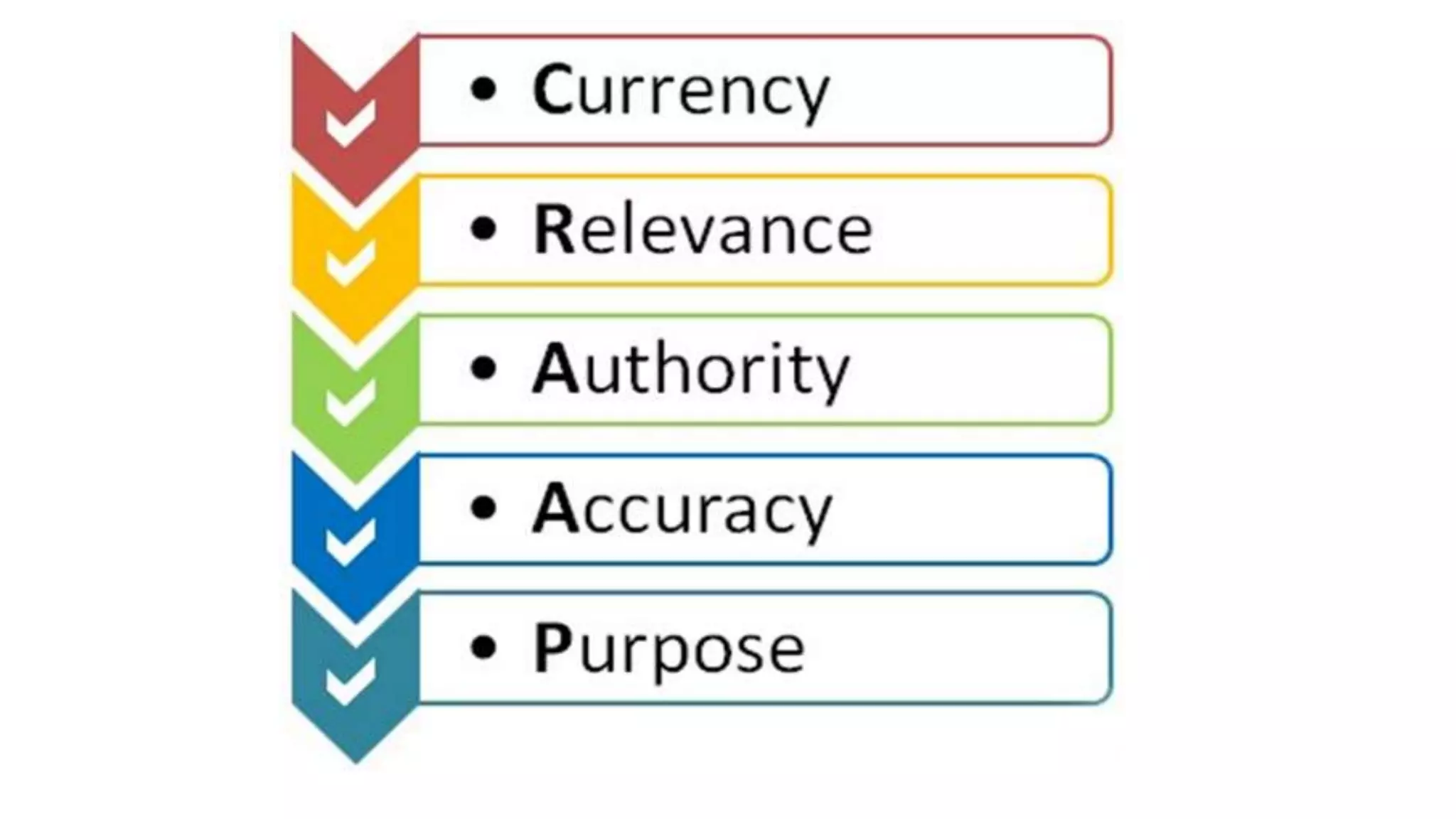
Currency
Currency (Timeliness): The timeliness of the information; how
current it is
• When was the information published or posted?
• Has the information been revised or updated?
• Is the information current or out-of-date for your topic?
• Are the links functional?
Relevance
Relevance (Coverage of the topic): The significance of the
information for your needs
• Does the information relate to your topic or answer your
question?
• Who is the intended audience?
• Is the information at an appropriate level?
• Have you looked at a variety of sources before determining
this is one you will use?
• Would you be comfortable citing this source in your research
paper?
Authority
Authority: The source of the information
• Who is the author/publisher/source/sponsor?
• What are the author’s credentials or organizational
affiliation?
• Is the author qualified to write on this subject?
• Is there contact information, such as a publisher or email
address?
• Does the URL reveal anything about the author or source?
oFor example: .com, .edu, .gov, .org, .net
Accuracy
Accuracy: The reliability, truthfulness, and correctness of the
content
• Where does the information come from?
• Is the information supported by evidence?
• Has the information been reviewed or referred?
• Can you verify any of the information in another source or
from personal knowledge?
• Does the language or tone seem unbiased and free from
emotion?
• Are there spelling, grammar, or typographical errors?
Purpose
Purpose: The reason the information exists
• What is the purpose of the information? Is it to inform,
teach, sell, entertain, or persuade?
• Do the authors/sponsors make their intentions or purpose
clear?
• Is the information fact, opinion, informed opinion, or
propaganda/fake news?
• Does the point of view appear objective and impartial?
• Are there political, ideological, cultural, religious,
institutional, or personal biases?
Conclusion:
Currency (Timeliness): The timeliness of the information; how
current it is
Relevance (Coverage of the topic): The significance of the
information for your needs
Authority: The source of the information
Accuracy: The reliability, truthfulness, and correctness of the
content
Purpose: The reason the information exists
Elizabeth D. Bradsher, MEd, MLIS
Director of Learning Resource Center
elizabeth.bradsher@cv.edu
334-291-4979
Information provided by:
The Meriam Library, California State University, Chico
Rubric provided by:
The Ron E. Lewis Library, Lamar State University

Testing your knowledge about craap

  • 1.
  • 2.
    What is theCRAAP Test?
  • 3.
    The CRAAP Testis a list of questions to help you evaluate the information you find. Depending on your situation or need, different criteria will be more or less important.
  • 5.
    Currency Currency (Timeliness): Thetimeliness of the information; how current it is • When was the information published or posted? • Has the information been revised or updated? • Is the information current or out-of-date for your topic? • Are the links functional?
  • 6.
    Relevance Relevance (Coverage ofthe topic): The significance of the information for your needs • Does the information relate to your topic or answer your question? • Who is the intended audience? • Is the information at an appropriate level? • Have you looked at a variety of sources before determining this is one you will use? • Would you be comfortable citing this source in your research paper?
  • 7.
    Authority Authority: The sourceof the information • Who is the author/publisher/source/sponsor? • What are the author’s credentials or organizational affiliation? • Is the author qualified to write on this subject? • Is there contact information, such as a publisher or email address? • Does the URL reveal anything about the author or source? oFor example: .com, .edu, .gov, .org, .net
  • 8.
    Accuracy Accuracy: The reliability,truthfulness, and correctness of the content • Where does the information come from? • Is the information supported by evidence? • Has the information been reviewed or referred? • Can you verify any of the information in another source or from personal knowledge? • Does the language or tone seem unbiased and free from emotion? • Are there spelling, grammar, or typographical errors?
  • 9.
    Purpose Purpose: The reasonthe information exists • What is the purpose of the information? Is it to inform, teach, sell, entertain, or persuade? • Do the authors/sponsors make their intentions or purpose clear? • Is the information fact, opinion, informed opinion, or propaganda/fake news? • Does the point of view appear objective and impartial? • Are there political, ideological, cultural, religious, institutional, or personal biases?
  • 10.
    Conclusion: Currency (Timeliness): Thetimeliness of the information; how current it is Relevance (Coverage of the topic): The significance of the information for your needs Authority: The source of the information Accuracy: The reliability, truthfulness, and correctness of the content Purpose: The reason the information exists
  • 11.
    Elizabeth D. Bradsher,MEd, MLIS Director of Learning Resource Center elizabeth.bradsher@cv.edu 334-291-4979 Information provided by: The Meriam Library, California State University, Chico Rubric provided by: The Ron E. Lewis Library, Lamar State University