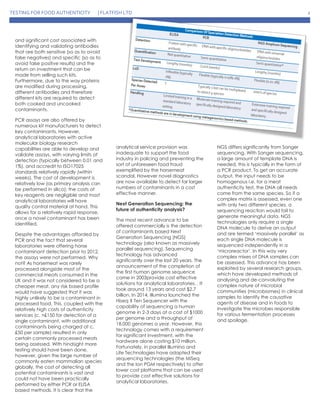
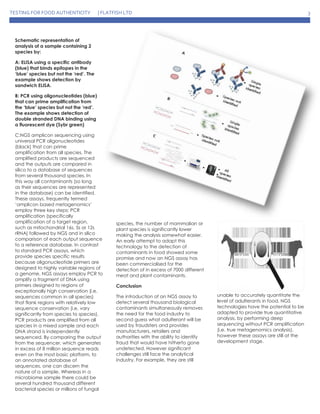
This document discusses food authenticity testing and the issues with current testing methods. It introduces next generation sequencing (NGS) as a new method for food authenticity testing. NGS allows for the simultaneous detection of thousands of potential food contaminants in a single test, overcoming limitations of current polymerase chain reaction (PCR) and enzyme-linked immunosorbent assay (ELISA) methods. NGS involves amplifying DNA from all species in a mixed sample, sequencing the amplified products, and comparing the sequences to a reference database to identify contaminants. While a major improvement, NGS also has limitations, such as an inability to currently quantify contamination levels.