Download to read offline
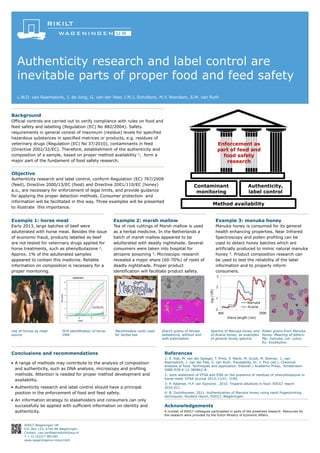
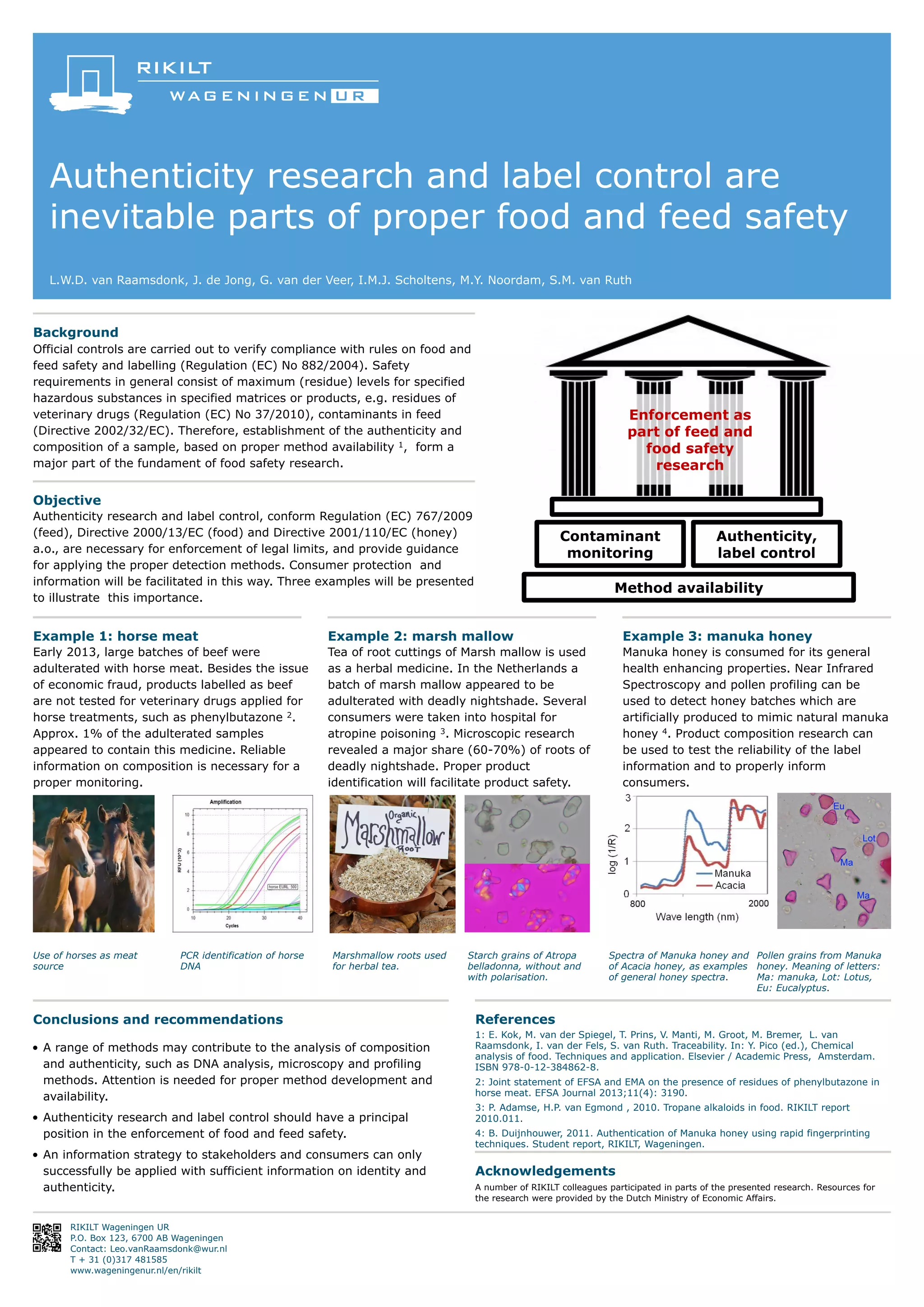

Authenticity research and label control are important parts of food and feed safety enforcement. Three examples are provided to illustrate this. First, horse meat was found adulterated in beef products in 2013, which posed food safety issues as horse meat may contain drugs not tested for in beef. Second, marsh mallow herbal tea was found to contain deadly nightshade, hospitalizing consumers. Proper identification is needed for product safety. Third, spectroscopy and pollen profiling can detect artificially produced manuka honey labeled as natural, protecting consumers. A range of analytical methods contribute to analyzing composition and authenticity for enforcing food and feed safety laws and informing consumers.


