

MICROENCAPSULATION

FACULTY GUIDE:          PRESENTED BY:
DR. MARYAM SARWAT           ANSH DEV
                         A4513309001
“ Micro encapsulation is at crossroads
of art, science and technology. The
right choice between process and
chemistry, defining the processing
conditions and parameters at a wide
range of machines, is possible only for
those with a sound scientific
background, combined with a long
time experience of trial and error.”
• It is the process of enclosing a core material inside a
  miniature capsule called microcapsules
• It is a physic-chemical process, total surface area determines
  most of the time the wall thickness and as such the resistance
  of the micro capsule in its final application.
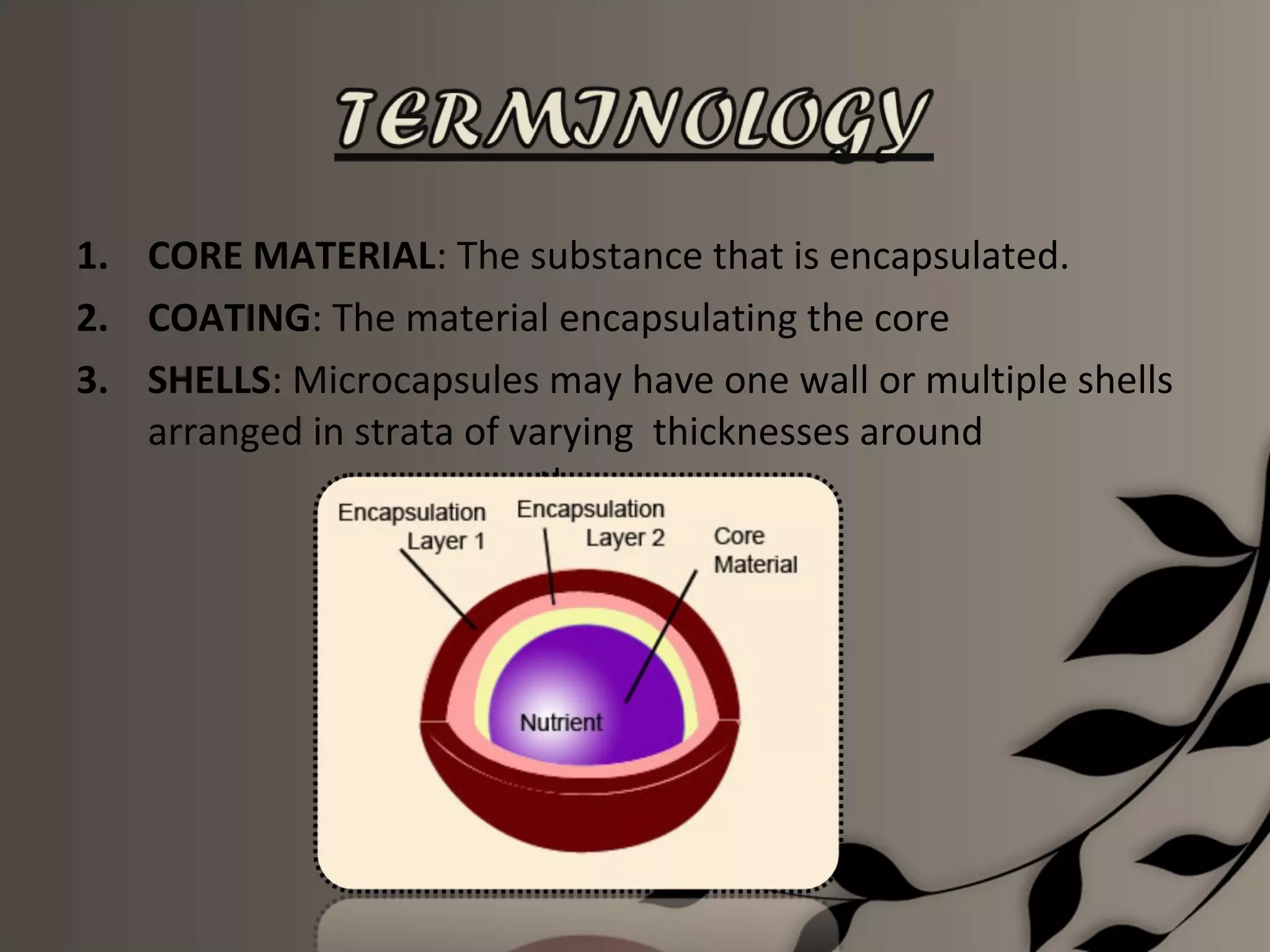
1. CORE MATERIAL: The substance that is encapsulated.
2. COATING: The material encapsulating the core
3. SHELLS: Microcapsules may have one wall or multiple shells
   arranged in strata of varying thicknesses around
                           the core.
• In some cases
 to isolate the core from its surroundings
 isolating vitamins from the deteriorating effects of oxygen
 retarding evaporation of a volatile core
 improving the handling properties of a sticky material
 isolating a reactive core from chemical attack
• Others
 not to isolate the core completely but to control the rate at
  which it leaves the microcapsule
 increasing the selectivity of
  an adsorption or extraction process
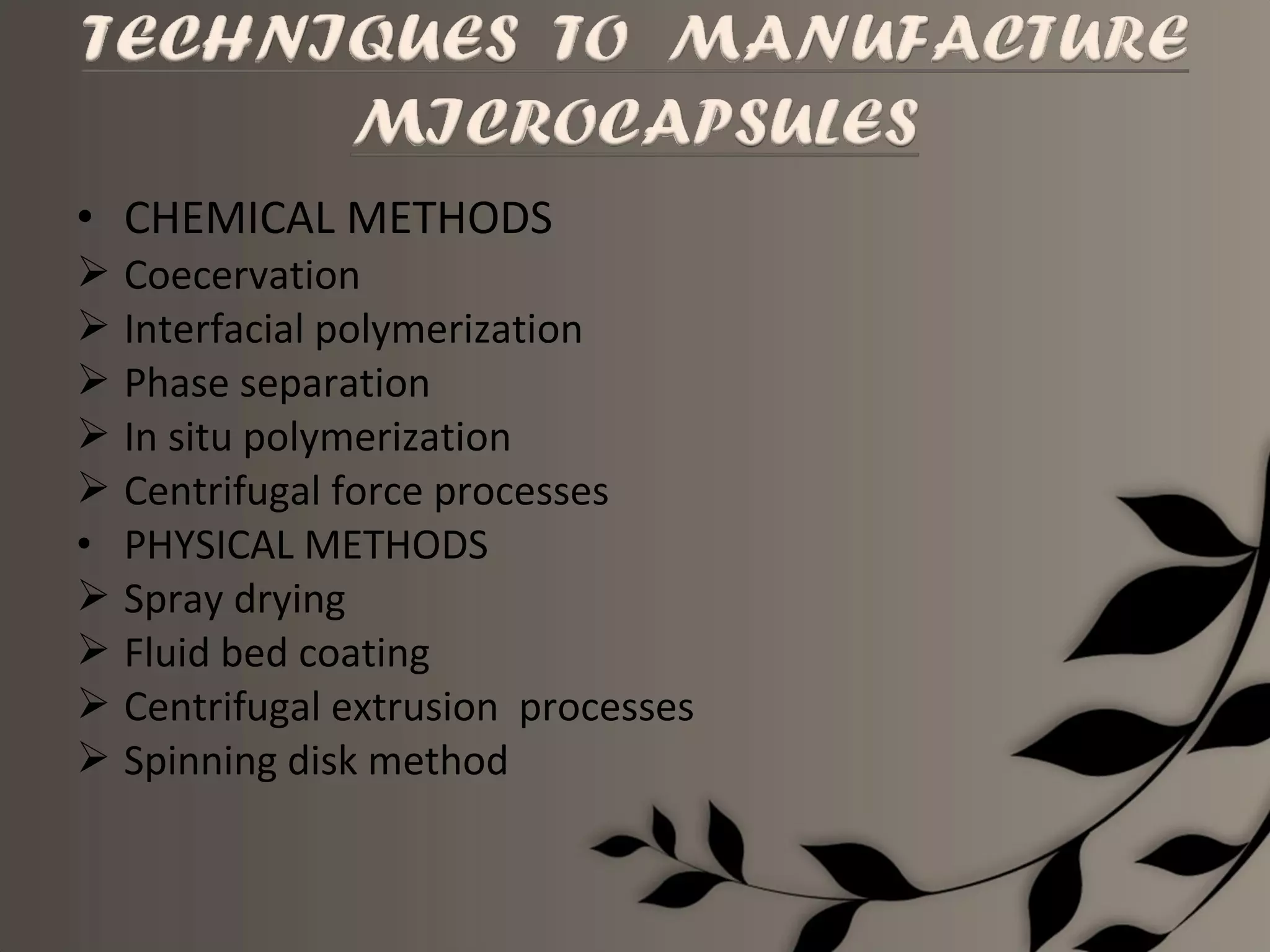
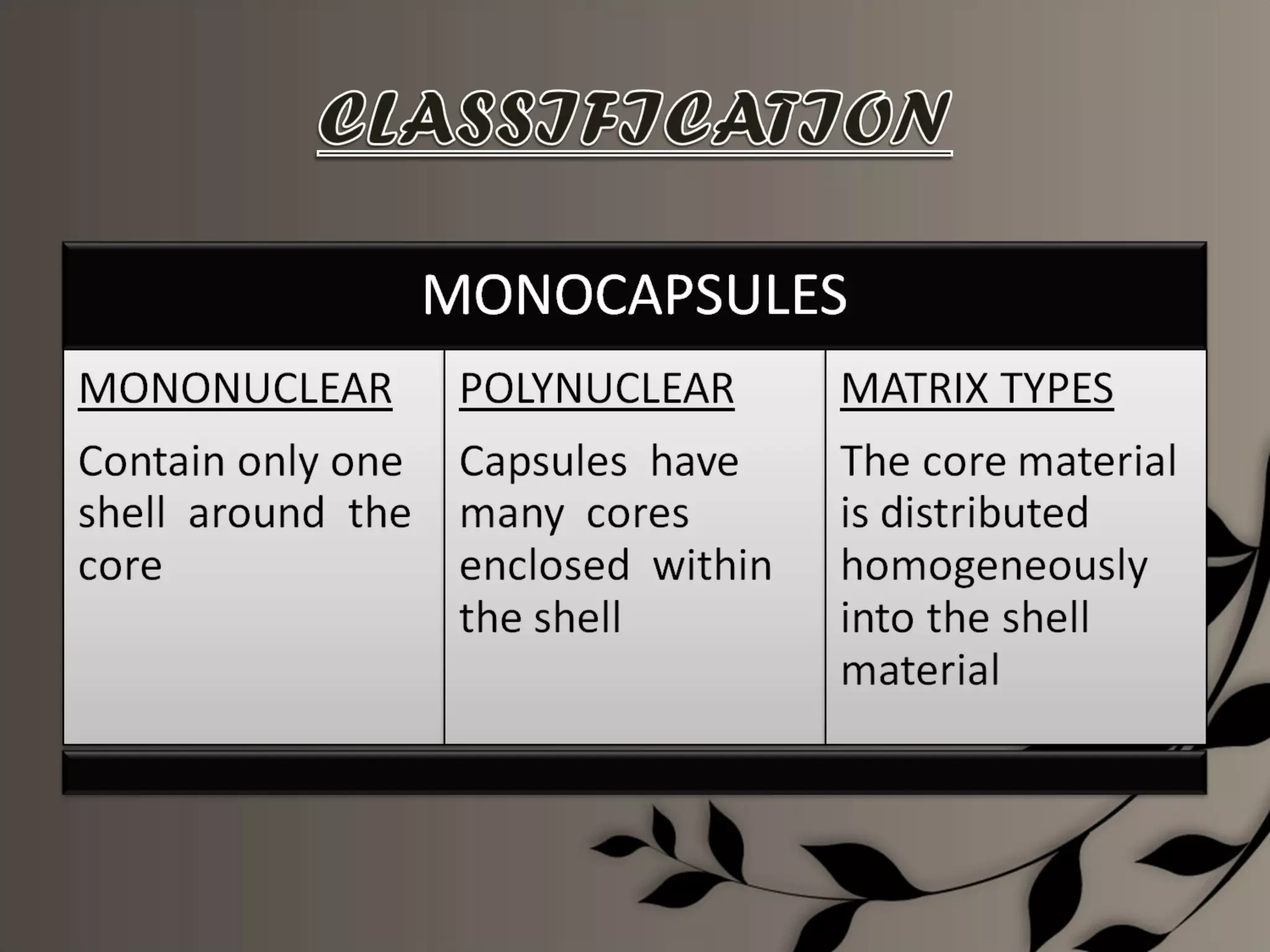
• CHEMICAL METHODS
 Coecervation
 Interfacial polymerization
 Phase separation
 In situ polymerization
 Centrifugal force processes
• PHYSICAL METHODS
 Spray drying
 Fluid bed coating
 Centrifugal extrusion processes
 Spinning disk method
APPLICATION :
 Capsules for carbonless paper and for many other
  applications are produced
STEPS
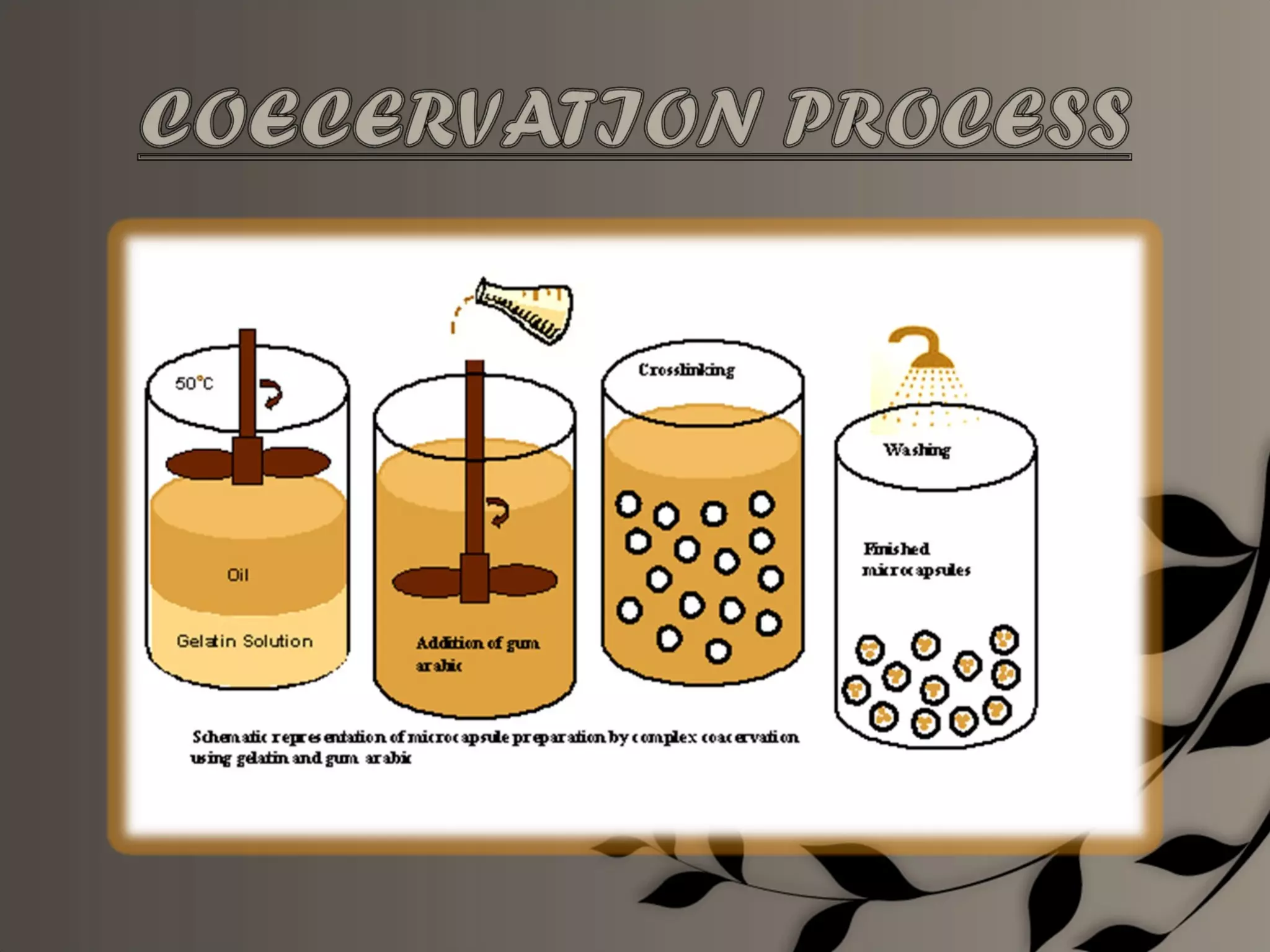
1. takes advantage of the reaction of aqueous
   solutions of cationic and anionic polymers such as gelatin
   and gum arabic.
2. polymers form a concentrated phase called the
   complex coacervate. The coacervate exists in
   equilibrium with a dilute supernatant phase.
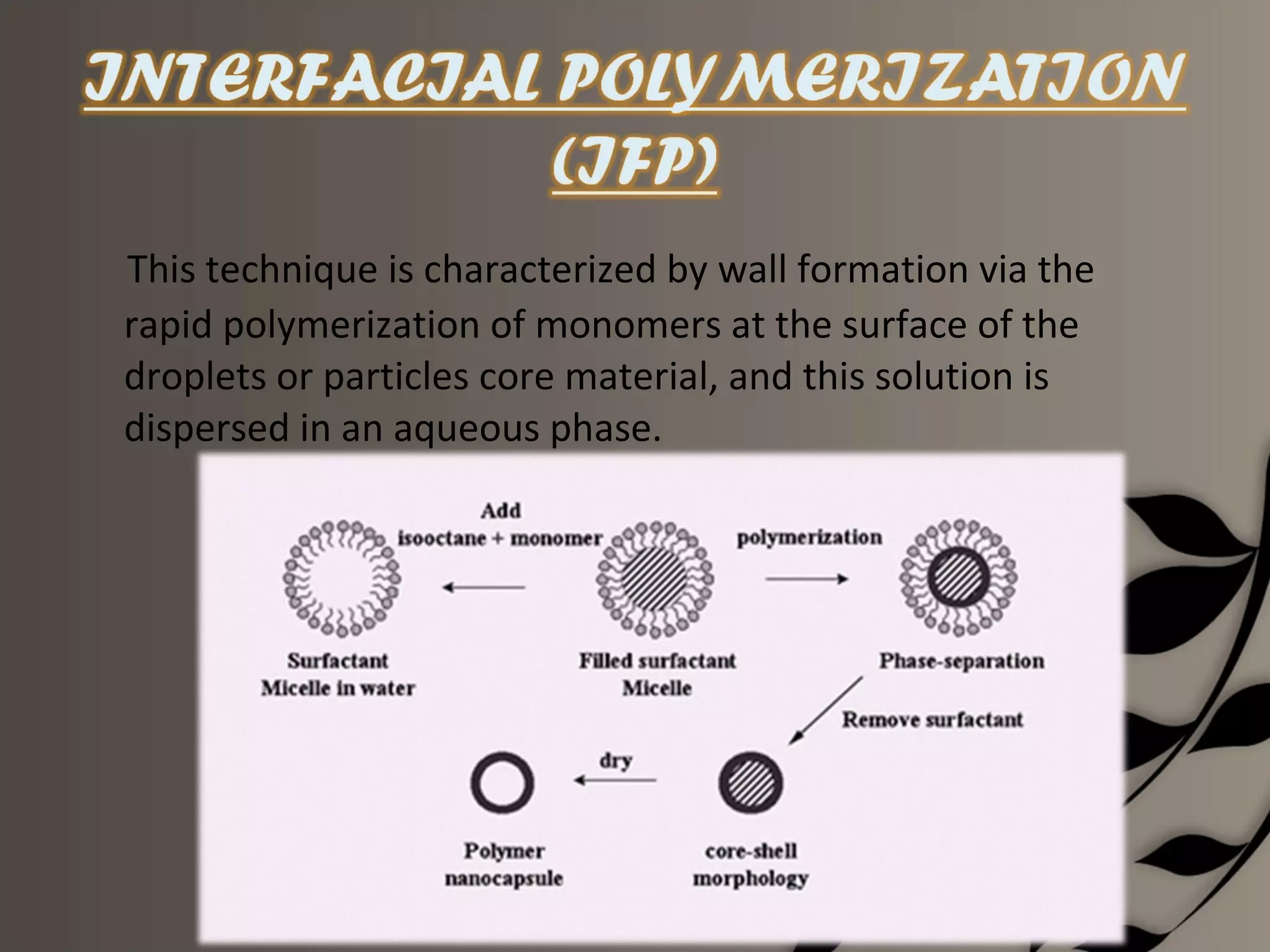
This technique is characterized by wall formation via the
rapid polymerization of monomers at the surface of the
droplets or particles core material, and this solution is
dispersed in an aqueous phase.
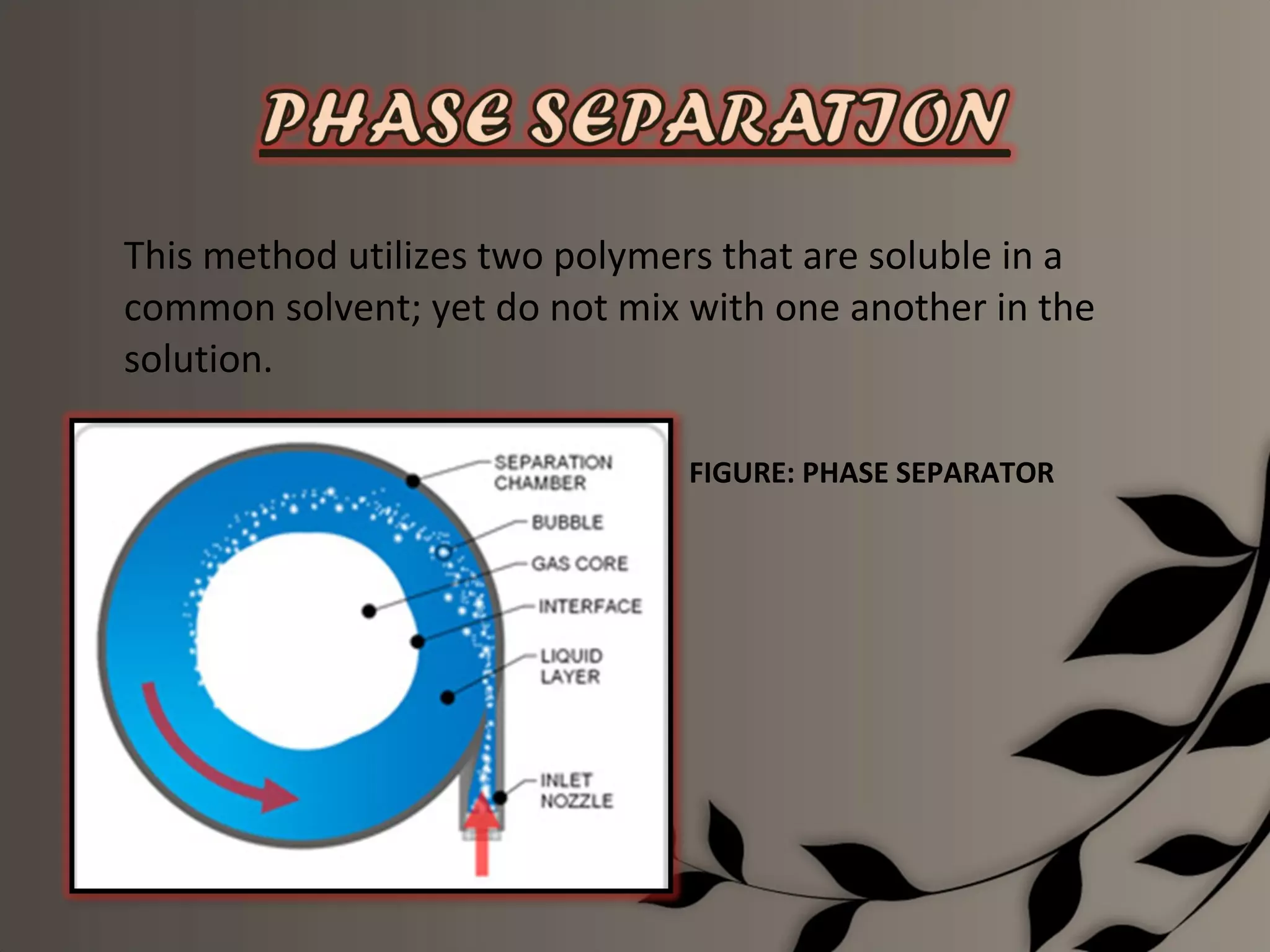
This method utilizes two polymers that are soluble in a
common solvent; yet do not mix with one another in the
solution.

                               FIGURE: PHASE SEPARATOR
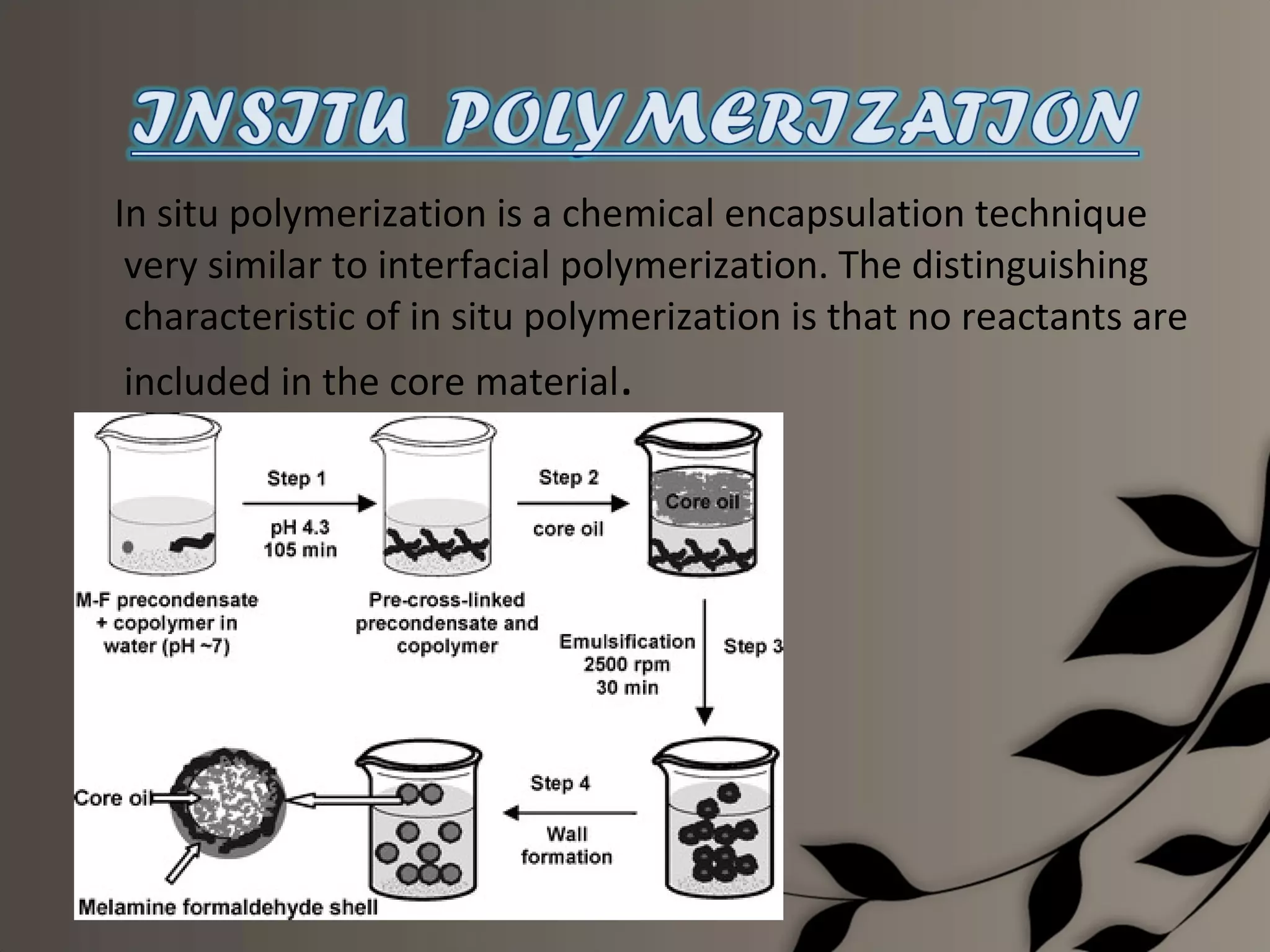
In situ polymerization is a chemical encapsulation technique
 very similar to interfacial polymerization. The distinguishing
 characteristic of in situ polymerization is that no reactants are
included in the core material.
 Centrifugal force processes were developed
 in the 1940s to encapsulate fish oils and
 vitamins, protecting them from oxidation.
 This techniques is common for both chemical
 and physical techniques.
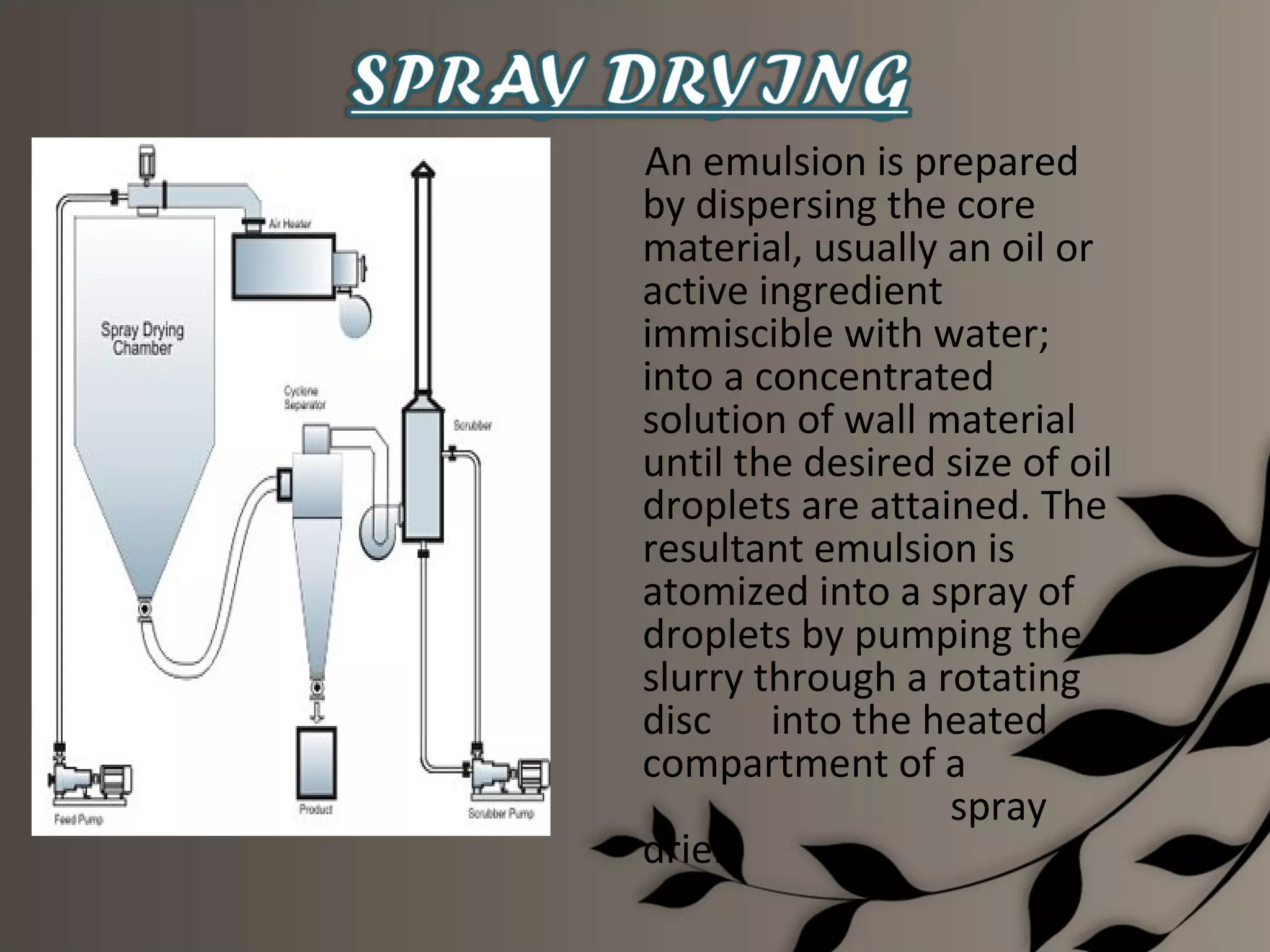
An emulsion is prepared
by dispersing the core
material, usually an oil or
active ingredient
immiscible with water;
into a concentrated
solution of wall material
until the desired size of oil
droplets are attained. The
resultant emulsion is
atomized into a spray of
droplets by pumping the
slurry through a rotating
disc into the heated
compartment of a
                  spray
drier.
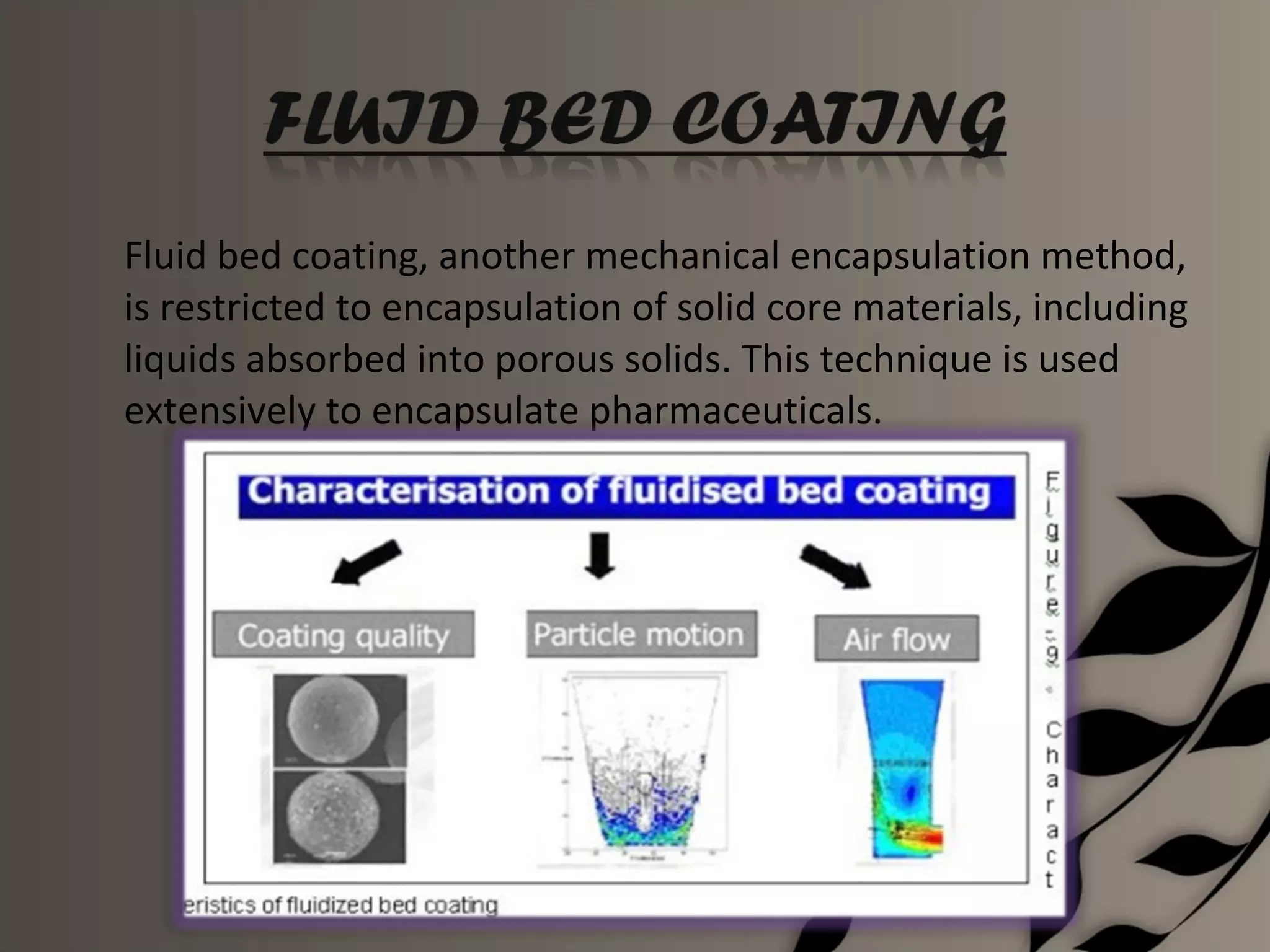
Fluid bed coating, another mechanical encapsulation method,
is restricted to encapsulation of solid core materials, including
liquids absorbed into porous solids. This technique is used
extensively to encapsulate pharmaceuticals.
The internal phase is dispersed into the liquid wall
material and the mixture is advanced onto a turning
disk. Droplets of pure shell material are thrown off of
the rim of the disk along with discrete particles of
core material enclosed in a skin of shell material.
After having been solidified by cooling, the
microcapsules are collected separately from the
particles of shell material.
• Microorganism and enzyme immobilization
• Protection against UV, heat, oxidation, acids, bases
  (e.g. colorants and vitamins).
• Improved shelf life due to preventing degradative
  reactions (dehydration, oxidation)
• Masking of taste or odours.
• Improved processing, texture and less wastage
      of ingredients.
• Handling liquids as solids
• Enhance visual aspect and marketing
  concept.
• Microencapsulation is the packaging of small
  droplets of liquid or particles with a thin film.
• The lowest particle size of microcapsules is 1µm
  and the largest size is 1mm.
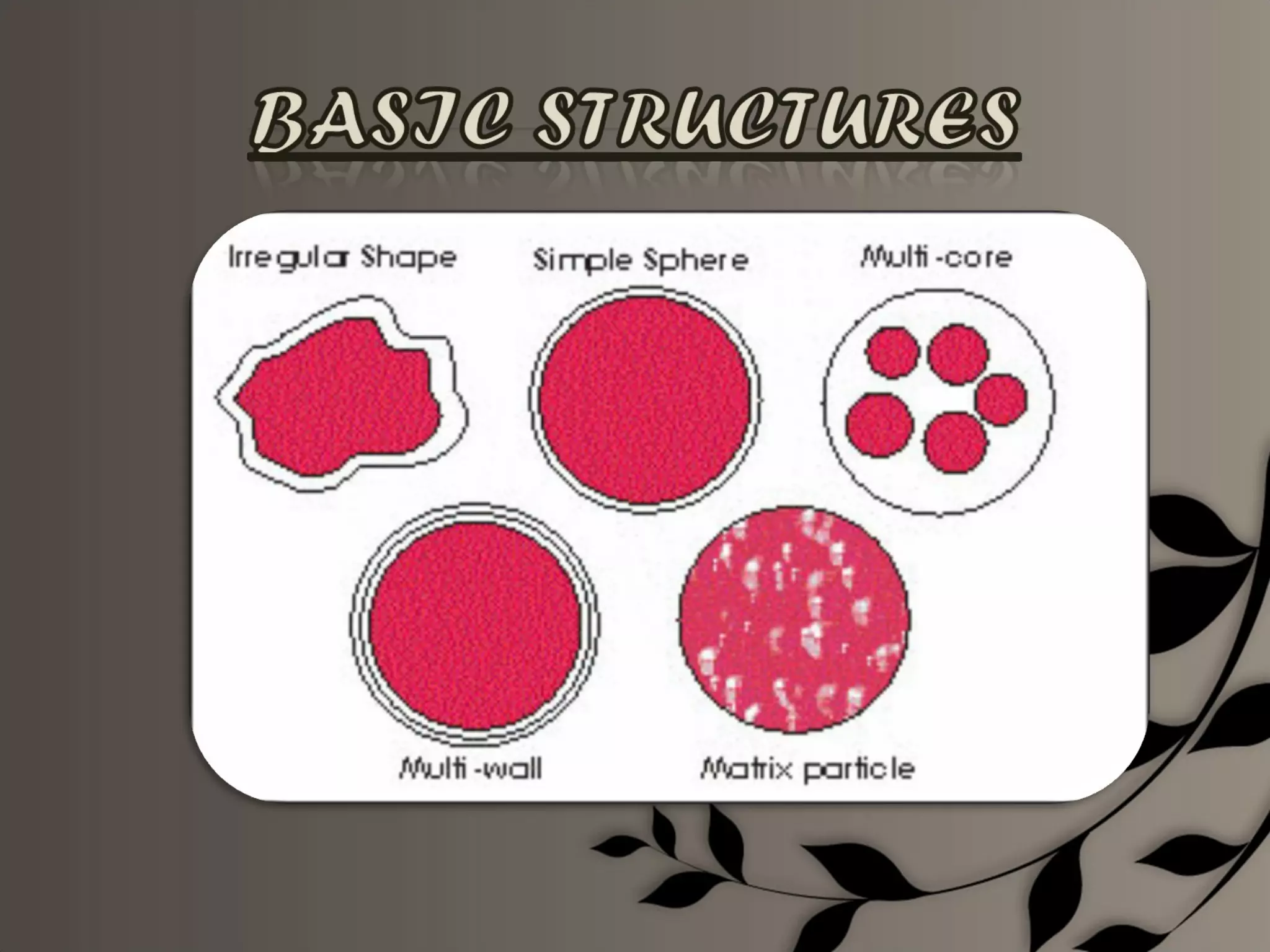
• Microcapsules consist of a core and a wall (or
  shell). The configuration of the core can be a
  spherical or irregular particle, liquid-phase
  suspended solid, solid matrix, dispersed
  solid and aggregates of solids or liquid
  forms.
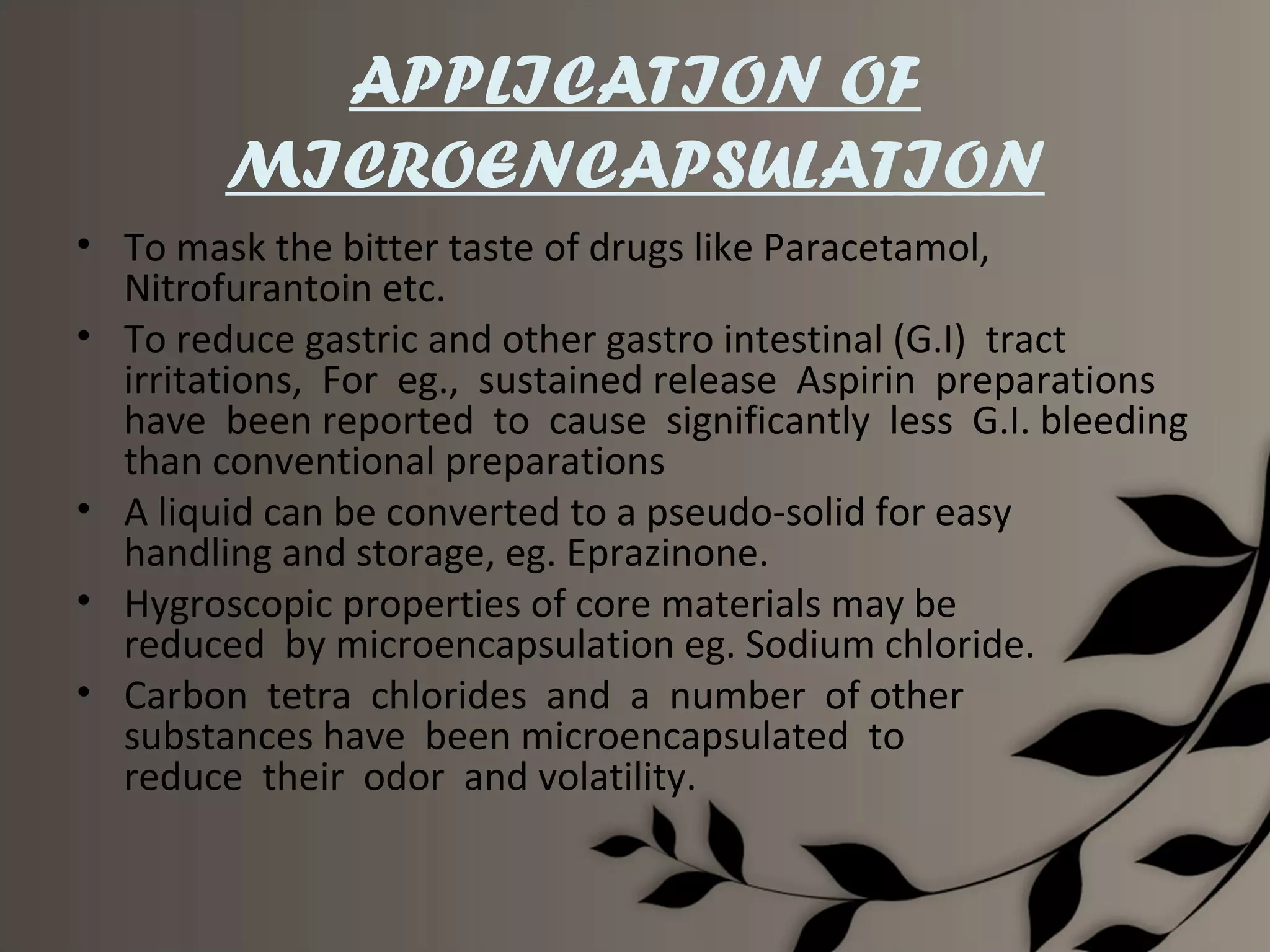
APPLICATION OF
        MICROENCAPSULATION
• To mask the bitter taste of drugs like Paracetamol,
  Nitrofurantoin etc.
• To reduce gastric and other gastro intestinal (G.I) tract
  irritations, For eg., sustained release Aspirin preparations
  have been reported to cause significantly less G.I. bleeding
  than conventional preparations
• A liquid can be converted to a pseudo-solid for easy
  handling and storage, eg. Eprazinone.
• Hygroscopic properties of core materials may be
  reduced by microencapsulation eg. Sodium chloride.
• Carbon tetra chlorides and a number of other
  substances have been microencapsulated to
  reduce their odor and volatility.
CONCLUSION
Microencapsulation system offers potential
advantages over conventional drug delivery
systems and also established as unique carrier
systems for many pharmaceuticals (targeted drug
delivery systems). Although significant advances
have been made in the field of
microencapsulation, still many challenges
  need to be rectified during the appropriate
selection of core materials, coating materials
      and process techniques.
Term paper ppt1-Microencapsulation

Term paper ppt1-Microencapsulation

  • 1.
    MICROENCAPSULATION FACULTY GUIDE: PRESENTED BY: DR. MARYAM SARWAT ANSH DEV A4513309001
  • 2.
    “ Micro encapsulationis at crossroads of art, science and technology. The right choice between process and chemistry, defining the processing conditions and parameters at a wide range of machines, is possible only for those with a sound scientific background, combined with a long time experience of trial and error.”
  • 3.
    • It isthe process of enclosing a core material inside a miniature capsule called microcapsules • It is a physic-chemical process, total surface area determines most of the time the wall thickness and as such the resistance of the micro capsule in its final application.
  • 4.
    1. CORE MATERIAL:The substance that is encapsulated. 2. COATING: The material encapsulating the core 3. SHELLS: Microcapsules may have one wall or multiple shells arranged in strata of varying thicknesses around the core.
  • 6.
    • In somecases  to isolate the core from its surroundings  isolating vitamins from the deteriorating effects of oxygen  retarding evaporation of a volatile core  improving the handling properties of a sticky material  isolating a reactive core from chemical attack • Others  not to isolate the core completely but to control the rate at which it leaves the microcapsule  increasing the selectivity of an adsorption or extraction process
  • 7.
    • CHEMICAL METHODS Coecervation  Interfacial polymerization  Phase separation  In situ polymerization  Centrifugal force processes • PHYSICAL METHODS  Spray drying  Fluid bed coating  Centrifugal extrusion processes  Spinning disk method
  • 8.
    APPLICATION : Capsulesfor carbonless paper and for many other applications are produced STEPS 1. takes advantage of the reaction of aqueous solutions of cationic and anionic polymers such as gelatin and gum arabic. 2. polymers form a concentrated phase called the complex coacervate. The coacervate exists in equilibrium with a dilute supernatant phase.
  • 10.
    This technique ischaracterized by wall formation via the rapid polymerization of monomers at the surface of the droplets or particles core material, and this solution is dispersed in an aqueous phase.
  • 11.
    This method utilizestwo polymers that are soluble in a common solvent; yet do not mix with one another in the solution. FIGURE: PHASE SEPARATOR
  • 12.
    In situ polymerizationis a chemical encapsulation technique very similar to interfacial polymerization. The distinguishing characteristic of in situ polymerization is that no reactants are included in the core material.
  • 13.
     Centrifugal forceprocesses were developed in the 1940s to encapsulate fish oils and vitamins, protecting them from oxidation.  This techniques is common for both chemical and physical techniques.
  • 14.
    An emulsion isprepared by dispersing the core material, usually an oil or active ingredient immiscible with water; into a concentrated solution of wall material until the desired size of oil droplets are attained. The resultant emulsion is atomized into a spray of droplets by pumping the slurry through a rotating disc into the heated compartment of a spray drier.
  • 15.
    Fluid bed coating,another mechanical encapsulation method, is restricted to encapsulation of solid core materials, including liquids absorbed into porous solids. This technique is used extensively to encapsulate pharmaceuticals.
  • 16.
    The internal phaseis dispersed into the liquid wall material and the mixture is advanced onto a turning disk. Droplets of pure shell material are thrown off of the rim of the disk along with discrete particles of core material enclosed in a skin of shell material. After having been solidified by cooling, the microcapsules are collected separately from the particles of shell material.
  • 17.
    • Microorganism andenzyme immobilization • Protection against UV, heat, oxidation, acids, bases (e.g. colorants and vitamins). • Improved shelf life due to preventing degradative reactions (dehydration, oxidation) • Masking of taste or odours. • Improved processing, texture and less wastage of ingredients. • Handling liquids as solids • Enhance visual aspect and marketing concept.
  • 18.
    • Microencapsulation isthe packaging of small droplets of liquid or particles with a thin film. • The lowest particle size of microcapsules is 1µm and the largest size is 1mm. • Microcapsules consist of a core and a wall (or shell). The configuration of the core can be a spherical or irregular particle, liquid-phase suspended solid, solid matrix, dispersed solid and aggregates of solids or liquid forms.
  • 20.
    APPLICATION OF MICROENCAPSULATION • To mask the bitter taste of drugs like Paracetamol, Nitrofurantoin etc. • To reduce gastric and other gastro intestinal (G.I) tract irritations, For eg., sustained release Aspirin preparations have been reported to cause significantly less G.I. bleeding than conventional preparations • A liquid can be converted to a pseudo-solid for easy handling and storage, eg. Eprazinone. • Hygroscopic properties of core materials may be reduced by microencapsulation eg. Sodium chloride. • Carbon tetra chlorides and a number of other substances have been microencapsulated to reduce their odor and volatility.
  • 21.
    CONCLUSION Microencapsulation system offerspotential advantages over conventional drug delivery systems and also established as unique carrier systems for many pharmaceuticals (targeted drug delivery systems). Although significant advances have been made in the field of microencapsulation, still many challenges need to be rectified during the appropriate selection of core materials, coating materials and process techniques.