Shri Sadashivrao Patil Shikshan Sanstha’s
SMT. KISHORITAI BHOYAR COLLEGE OF
PHARMACY, KAMPTEE
Presenter:
Deepak Thakre
M.Pharm 1st year
Industrial Pharmacy
Department
Guided By:
Dr.Nishant Awandekar sir
HOD Industrial Pharmacy
Department
Topic: Solubility and Importance
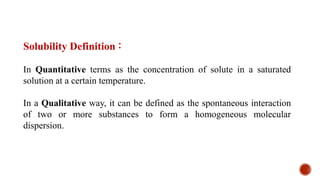
Solubility Definition :
In Quantitative terms as the concentration of solute in a saturated
solution at a certain temperature.
In a Qualitative way, it can be defined as the spontaneous interaction
of two or more substances to form a homogeneous molecular
dispersion.
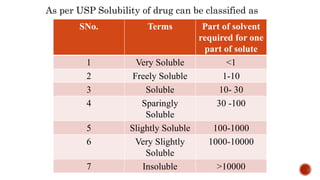
As per USP Solubility of drug can be classified as
SNo. Terms Part of solvent
required for one
part of solute
1 Very Soluble <1
2 Freely Soluble 1-10
3 Soluble 10- 30
4 Sparingly
Soluble
30 -100
5 Slightly Soluble 100-1000
6 Very Slightly
Soluble
1000-10000
7 Insoluble >10000
Solubility is an intrinsic material property that can be altered only by
chemical modification of the molecule.
In contrast to this, dissolution is an extrinsic material property that can be
influenced by various chemical, physical, or crystallographic means such as
complexation, particle size, surface properties, solid-state modification, or
solubilisation enhancing formulation strategies.
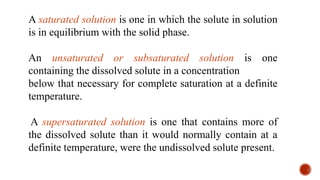
A saturated solution is one in which the solute in solution
is in equilibrium with the solid phase.
An unsaturated or subsaturated solution is one
containing the dissolved solute in a concentration
below that necessary for complete saturation at a definite
temperature.
A supersaturated solution is one that contains more of
the dissolved solute than it would normally contain at a
definite temperature, were the undissolved solute present.
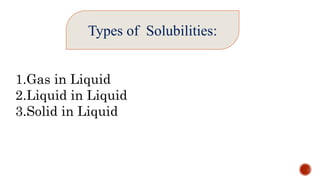
Types of Solubilities:
1.Gas in Liquid
2.Liquid in Liquid
3.Solid in Liquid
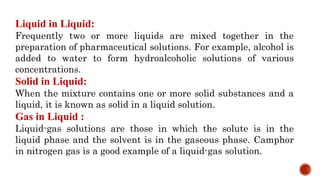
Liquid in Liquid:
Frequently two or more liquids are mixed together in the
preparation of pharmaceutical solutions. For example, alcohol is
added to water to form hydroalcoholic solutions of various
concentrations.
Solid in Liquid:
When the mixture contains one or more solid substances and a
liquid, it is known as solid in a liquid solution.
Gas in Liquid :
Liquid-gas solutions are those in which the solute is in the
liquid phase and the solvent is in the gaseous phase. Camphor
in nitrogen gas is a good example of a liquid-gas solution.
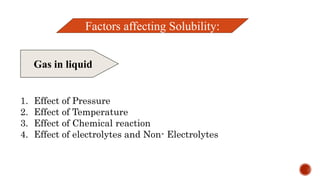
Factors affecting Solubility:
1. Effect of Pressure
2. Effect of Temperature
3. Effect of Chemical reaction
4. Effect of electrolytes and Non- Electrolytes
Gas in liquid
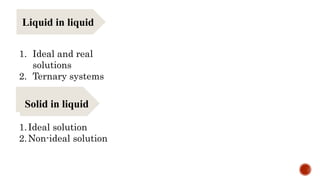
Liquid in liquid
1. Ideal and real
solutions
2. Ternary systems
Solid in liquid
1.Ideal solution
2.Non-ideal solution
Solid in liquid
1. Temperature
2. Molecular structure
3. Particle size
4. Nature of solvent and cosolvent
5. PH
6. Combined effect of solvent and pH Common ion effect
7. Effect of indifferent electrolyte
8. Effect of non-electrolytes
9. Effect of complex formation
10.Effect of solubilizing agents
Factors Affecting Solubility of Solids in Liquids:
Importance of Solubility:
Solubility is crucial in pharmaceutical science for several reasons:
Drug Absorption: Solubility affects the drug’s ability to dissolve in bodily
fluids for absorption. If a drug isn’t soluble, its bioavailability decreases,
impacting its effectiveness.
Formulation Development: Solubility helps in formulating drugs into various
dosage forms like tablets, capsules, or injections, ensuring the drug can
dissolve and be absorbed as intended.
Dosage Accuracy: Proper solubility ensures accurate dosing, as the amount of
drug available for absorption is directly related to its solubility in the body.
Stability and Shelf Life: Understanding solubility helps in determining the
stability and shelf life of a drug, guiding proper storage conditions.
Enhanced Drug Development: Drugs with improved solubility profiles might
have better efficacy, leading to enhanced therapeutic outcomes and reduced
side effects.
Bioavailability: Solubility impacts the drug’s bioavailability, which refers to
the amount of drug that reaches the systemic circulation and is available to
produce a therapeutic effect.
Other Importance :
1. Select the best solvent for a drug or a mixture of drugs.
2. Overcome problems arising during preparation of
pharmaceutical solutions.
3. Have information about the structure and
intermolecular forces of the drug.
4. Many drugs are formulated as solutions, or added as
powder or solution forms to liquids.
5. Drugs with low aqueous solubility often present
problems related to their formulation and bioavailability
• Martin’s Physical Pharmacy and Pharmaceutical
Sciences, Sixth Edition
• Physical Pharmacy book by Dr. S.P. Agrawal.
Reference:

Solubility and its Importance.pptx

  • 1.
    Shri Sadashivrao PatilShikshan Sanstha’s SMT. KISHORITAI BHOYAR COLLEGE OF PHARMACY, KAMPTEE Presenter: Deepak Thakre M.Pharm 1st year Industrial Pharmacy Department Guided By: Dr.Nishant Awandekar sir HOD Industrial Pharmacy Department Topic: Solubility and Importance
  • 2.
    Solubility Definition : InQuantitative terms as the concentration of solute in a saturated solution at a certain temperature. In a Qualitative way, it can be defined as the spontaneous interaction of two or more substances to form a homogeneous molecular dispersion.
  • 3.
    As per USPSolubility of drug can be classified as SNo. Terms Part of solvent required for one part of solute 1 Very Soluble <1 2 Freely Soluble 1-10 3 Soluble 10- 30 4 Sparingly Soluble 30 -100 5 Slightly Soluble 100-1000 6 Very Slightly Soluble 1000-10000 7 Insoluble >10000
  • 4.
    Solubility is anintrinsic material property that can be altered only by chemical modification of the molecule. In contrast to this, dissolution is an extrinsic material property that can be influenced by various chemical, physical, or crystallographic means such as complexation, particle size, surface properties, solid-state modification, or solubilisation enhancing formulation strategies.
  • 6.
    A saturated solutionis one in which the solute in solution is in equilibrium with the solid phase. An unsaturated or subsaturated solution is one containing the dissolved solute in a concentration below that necessary for complete saturation at a definite temperature. A supersaturated solution is one that contains more of the dissolved solute than it would normally contain at a definite temperature, were the undissolved solute present.
  • 7.
    Types of Solubilities: 1.Gasin Liquid 2.Liquid in Liquid 3.Solid in Liquid
  • 8.
    Liquid in Liquid: Frequentlytwo or more liquids are mixed together in the preparation of pharmaceutical solutions. For example, alcohol is added to water to form hydroalcoholic solutions of various concentrations. Solid in Liquid: When the mixture contains one or more solid substances and a liquid, it is known as solid in a liquid solution. Gas in Liquid : Liquid-gas solutions are those in which the solute is in the liquid phase and the solvent is in the gaseous phase. Camphor in nitrogen gas is a good example of a liquid-gas solution.
  • 9.
    Factors affecting Solubility: 1.Effect of Pressure 2. Effect of Temperature 3. Effect of Chemical reaction 4. Effect of electrolytes and Non- Electrolytes Gas in liquid
  • 10.
    Liquid in liquid 1.Ideal and real solutions 2. Ternary systems Solid in liquid 1.Ideal solution 2.Non-ideal solution Solid in liquid
  • 11.
    1. Temperature 2. Molecularstructure 3. Particle size 4. Nature of solvent and cosolvent 5. PH 6. Combined effect of solvent and pH Common ion effect 7. Effect of indifferent electrolyte 8. Effect of non-electrolytes 9. Effect of complex formation 10.Effect of solubilizing agents Factors Affecting Solubility of Solids in Liquids:
  • 12.
  • 13.
    Solubility is crucialin pharmaceutical science for several reasons: Drug Absorption: Solubility affects the drug’s ability to dissolve in bodily fluids for absorption. If a drug isn’t soluble, its bioavailability decreases, impacting its effectiveness. Formulation Development: Solubility helps in formulating drugs into various dosage forms like tablets, capsules, or injections, ensuring the drug can dissolve and be absorbed as intended. Dosage Accuracy: Proper solubility ensures accurate dosing, as the amount of drug available for absorption is directly related to its solubility in the body.
  • 14.
    Stability and ShelfLife: Understanding solubility helps in determining the stability and shelf life of a drug, guiding proper storage conditions. Enhanced Drug Development: Drugs with improved solubility profiles might have better efficacy, leading to enhanced therapeutic outcomes and reduced side effects. Bioavailability: Solubility impacts the drug’s bioavailability, which refers to the amount of drug that reaches the systemic circulation and is available to produce a therapeutic effect.
  • 15.
    Other Importance : 1.Select the best solvent for a drug or a mixture of drugs. 2. Overcome problems arising during preparation of pharmaceutical solutions. 3. Have information about the structure and intermolecular forces of the drug. 4. Many drugs are formulated as solutions, or added as powder or solution forms to liquids. 5. Drugs with low aqueous solubility often present problems related to their formulation and bioavailability
  • 16.
    • Martin’s PhysicalPharmacy and Pharmaceutical Sciences, Sixth Edition • Physical Pharmacy book by Dr. S.P. Agrawal. Reference: