Tangible 
Media 
Prepared By : Akash Rehan 
07410102711
Basic Concept 
• It describe the concept of shape transmission, and 
propose interaction techniques to manipulate remote 
physical objects and physical renderings of shared 
digital content. 
• Interaction techniques for manipulation of remote 
physical objects and shared, physically rendered, 
digital models. 
• Interaction techniques that leverage physical 
computer mediation to amplify user capabilities in 
remote operation. 
• A technical software and hardware platform, which 
enables synchronous physical interaction for remote 
users, physical objects, and shape deformation
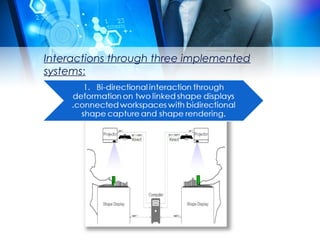
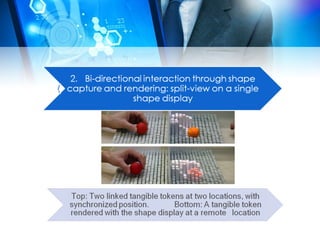
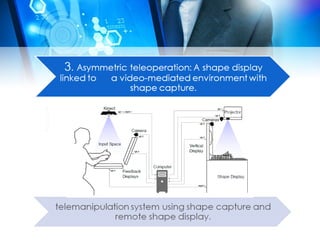
Interactions through three implemented 
systems:
Working 
Technical implementation comes under 
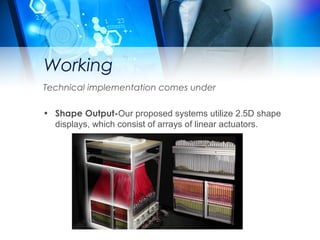
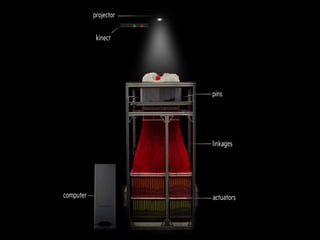
• Shape Output-Our proposed systems utilize 2.5D shape 
displays, which consist of arrays of linear actuators.
• Tracking People and Objects With a Depth Camera 
We track objects and gestures with a depth camera 
(firstgeneration Microsoft Kinect, 640480@30 Hz). The 8- 
bit depth image is cropped, scaled and thresholded 
to fit to the size of the interaction area and after that 
normalized 
• Latency and Manipulating Objects 
The latency is between 150 and 200 ms, depending on the 
amount and direction of travel for the pins. The latency is 
caused by a number of factors, such as the latency of the 
depth camera, depth image processing, communication 
bus, motor speed, and the camera and video latency for 
displaying to the remote user.
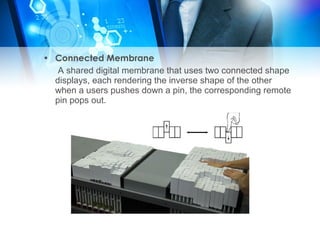
• Connected Membrane 
A shared digital membrane that uses two connected shape 
displays, each rendering the inverse shape of the other 
when a users pushes down a pin, the corresponding remote 
pin pops out.
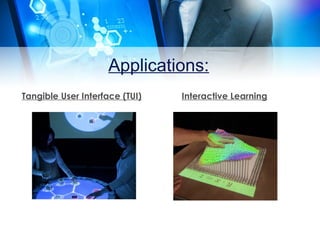
Applications: 
Tangible User Interface (TUI) Interactive Learning
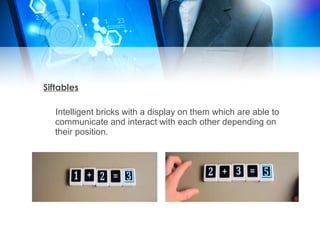
Siftables 
Intelligent bricks with a display on them which are able to 
communicate and interact with each other depending on 
their position.
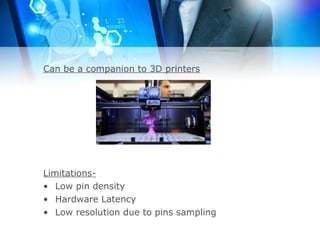
Can be a companion to 3D printers 
Limitations- 
• Low pin density 
• Hardware Latency 
• Low resolution due to pins sampling
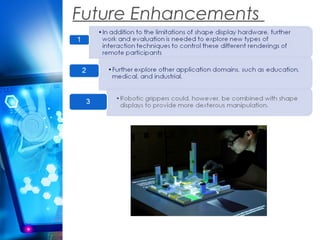
Future Enhancements
References

Tangible media ppt

  • 1.
    Tangible Media PreparedBy : Akash Rehan 07410102711
  • 2.
    Basic Concept •It describe the concept of shape transmission, and propose interaction techniques to manipulate remote physical objects and physical renderings of shared digital content. • Interaction techniques for manipulation of remote physical objects and shared, physically rendered, digital models. • Interaction techniques that leverage physical computer mediation to amplify user capabilities in remote operation. • A technical software and hardware platform, which enables synchronous physical interaction for remote users, physical objects, and shape deformation
  • 4.
    Interactions through threeimplemented systems:
  • 7.
    Working Technical implementationcomes under • Shape Output-Our proposed systems utilize 2.5D shape displays, which consist of arrays of linear actuators.
  • 8.
    • Tracking Peopleand Objects With a Depth Camera We track objects and gestures with a depth camera (firstgeneration Microsoft Kinect, 640480@30 Hz). The 8- bit depth image is cropped, scaled and thresholded to fit to the size of the interaction area and after that normalized • Latency and Manipulating Objects The latency is between 150 and 200 ms, depending on the amount and direction of travel for the pins. The latency is caused by a number of factors, such as the latency of the depth camera, depth image processing, communication bus, motor speed, and the camera and video latency for displaying to the remote user.
  • 9.
    • Connected Membrane A shared digital membrane that uses two connected shape displays, each rendering the inverse shape of the other when a users pushes down a pin, the corresponding remote pin pops out.
  • 11.
    Applications: Tangible UserInterface (TUI) Interactive Learning
  • 12.
    Siftables Intelligent brickswith a display on them which are able to communicate and interact with each other depending on their position.
  • 13.
    Can be acompanion to 3D printers Limitations- • Low pin density • Hardware Latency • Low resolution due to pins sampling
  • 14.
  • 15.