Introduction of Android
Auto
Architecture and rationales
Shamelessly by Zaicheng.Qi@Harman.com
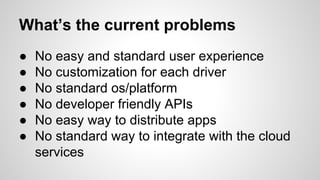
What’s the current problems
● No easy and standard user experience
● No customization for each driver
● No standard os/platform
● No developer friendly APIs
● No easy way to distribute apps
● No standard way to integrate with the cloud
services
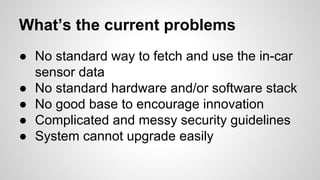
What’s the current problems
● No standard way to fetch and use the in-car
sensor data
● No standard hardware and/or software stack
● No good base to encourage innovation
● Complicated and messy security guidelines
● System cannot upgrade easily
History of Android Auto
● Navistep with Audi in 2005
○ Integrate Google maps in Audi cars
● Navicast in 2010
○ Prototype and explore the way to implement the
solution
● Android Auto in 2014
○ Preview of Android Auto announced at Google IO
2014
Why Android Auto
● Solves the user and developer problems
○ Customised and easy to use UX
○ Friendly and proven Android platform
● Solves the vendor and producer problems
○ Unified software stack
○ Unified protocol to communicate with in-car IVI
○ Qualified and rapid production
○ Safe to play with Android Auto
● Realistic and progressively
Why Android Auto
● Unified platform with differentiations
○ Different phone/tablet apps
○ Different branding/logo and features on the cast
screen
● Easy to integrate and ship
○ Implement the Android Auto Link protocol on the in-
car IVI system(Android/QNX/Linux/Windows)
○ Android phone/tablet with Android Auto services
Hardware of Android Auto
● Audio device in the car
● Display in the car
● Usb/other connectivity device in the car
● Bluetooth device in the car
● Input devices(buttons and sticks, etc) in the
car
● Sensor networks in the car
Hardware of Android Auto
● Android device with Android L or later
● Android device with Android auto service
○ Android auto service comes with Google play
service
Software on Android phone/tablet
● Android auto service(source)
● Google play service
● Third party apps which implement the
Android auto features
● Android auto sdk
Software on in-car IVI system
● Android auto service lib(target)
● Implement the android auto hal lib
○ Adapt input
○ Adapt audio device control
○ Adapt bluetooth
○ Adapt sensor data if possible
○ Adapt display
The bridge - Android auto link
● Build map between in-car devices and
Android device
○ Android < input > in-car controllers
○ Android < sensor data > in-car sensor gateway
○ Android < audio > in-car stereo audio devices
○ Android < video > in-car IVI display
○ Android < bluetooth > in-car bt connectivity
Rationales - why it works
● Realistic
○ Never get into the mud of problems
○ Don’t try to solve the big problem
○ Fill the most important needs
● Simple
○ The idea behind is very simple
● Open
○ Combine the classic IVI manufacturers with the new
phone manufacturers
Rationales - why it works
● Share
○ Share value with the partners
○ Over 40 partners joined OAA to push Android Auto
● Courage
○ Invest strategically
Taste of the preview APIs
● Notifications
○ Phone notifications will be mirrored on the in-car
display
● Messages
○ Selected messages will be mirrored on the in-car
display
● Media
○ The framework skeletons the Media applications on
the in-car display, the UX is controlled
So what?
● The emerge of Android Auto and iOS
Carplay
○ Be ready for the change
○ Join the crowd and do it better to get us a better
position
○ Reconsider the future product architectures, make
Android Auto and Carplay a good feature of our
product
Let’s talk about China
● No google play services means no Android
Auto source implementation
● Are we allowed to implement a compatible
Android Auto service for the Chinese
phones/tablets
● Cooperate with the internet companies,
Baidu/Xiaomi, but no Tencent/Alibaba
Let’s talk about China
● Will the Android Auto Link protocol be open
sourced?
● What’s the business model of working with
Google Android Auto?
Resources
● Android Auto Developers
● Android Auto
● OAA
● Google IO 14 Android Auto
● Google IO 14 Android Auto Under the hood
天下大势,浩浩荡荡
顺之者昌,逆之者亡

Introduction of Android Auto

  • 1.
    Introduction of Android Auto Architectureand rationales Shamelessly by Zaicheng.Qi@Harman.com
  • 2.
    What’s the currentproblems ● No easy and standard user experience ● No customization for each driver ● No standard os/platform ● No developer friendly APIs ● No easy way to distribute apps ● No standard way to integrate with the cloud services
  • 3.
    What’s the currentproblems ● No standard way to fetch and use the in-car sensor data ● No standard hardware and/or software stack ● No good base to encourage innovation ● Complicated and messy security guidelines ● System cannot upgrade easily
  • 4.
    History of AndroidAuto ● Navistep with Audi in 2005 ○ Integrate Google maps in Audi cars ● Navicast in 2010 ○ Prototype and explore the way to implement the solution ● Android Auto in 2014 ○ Preview of Android Auto announced at Google IO 2014
  • 5.
    Why Android Auto ●Solves the user and developer problems ○ Customised and easy to use UX ○ Friendly and proven Android platform ● Solves the vendor and producer problems ○ Unified software stack ○ Unified protocol to communicate with in-car IVI ○ Qualified and rapid production ○ Safe to play with Android Auto ● Realistic and progressively
  • 6.
    Why Android Auto ●Unified platform with differentiations ○ Different phone/tablet apps ○ Different branding/logo and features on the cast screen ● Easy to integrate and ship ○ Implement the Android Auto Link protocol on the in- car IVI system(Android/QNX/Linux/Windows) ○ Android phone/tablet with Android Auto services
  • 7.
    Hardware of AndroidAuto ● Audio device in the car ● Display in the car ● Usb/other connectivity device in the car ● Bluetooth device in the car ● Input devices(buttons and sticks, etc) in the car ● Sensor networks in the car
  • 8.
    Hardware of AndroidAuto ● Android device with Android L or later ● Android device with Android auto service ○ Android auto service comes with Google play service
  • 9.
    Software on Androidphone/tablet ● Android auto service(source) ● Google play service ● Third party apps which implement the Android auto features ● Android auto sdk
  • 10.
    Software on in-carIVI system ● Android auto service lib(target) ● Implement the android auto hal lib ○ Adapt input ○ Adapt audio device control ○ Adapt bluetooth ○ Adapt sensor data if possible ○ Adapt display
  • 11.
    The bridge -Android auto link ● Build map between in-car devices and Android device ○ Android < input > in-car controllers ○ Android < sensor data > in-car sensor gateway ○ Android < audio > in-car stereo audio devices ○ Android < video > in-car IVI display ○ Android < bluetooth > in-car bt connectivity
  • 12.
    Rationales - whyit works ● Realistic ○ Never get into the mud of problems ○ Don’t try to solve the big problem ○ Fill the most important needs ● Simple ○ The idea behind is very simple ● Open ○ Combine the classic IVI manufacturers with the new phone manufacturers
  • 13.
    Rationales - whyit works ● Share ○ Share value with the partners ○ Over 40 partners joined OAA to push Android Auto ● Courage ○ Invest strategically
  • 14.
    Taste of thepreview APIs ● Notifications ○ Phone notifications will be mirrored on the in-car display ● Messages ○ Selected messages will be mirrored on the in-car display ● Media ○ The framework skeletons the Media applications on the in-car display, the UX is controlled
  • 15.
    So what? ● Theemerge of Android Auto and iOS Carplay ○ Be ready for the change ○ Join the crowd and do it better to get us a better position ○ Reconsider the future product architectures, make Android Auto and Carplay a good feature of our product
  • 16.
    Let’s talk aboutChina ● No google play services means no Android Auto source implementation ● Are we allowed to implement a compatible Android Auto service for the Chinese phones/tablets ● Cooperate with the internet companies, Baidu/Xiaomi, but no Tencent/Alibaba
  • 17.
    Let’s talk aboutChina ● Will the Android Auto Link protocol be open sourced? ● What’s the business model of working with Google Android Auto?
  • 18.
    Resources ● Android AutoDevelopers ● Android Auto ● OAA ● Google IO 14 Android Auto ● Google IO 14 Android Auto Under the hood
  • 19.