





HCD Research, established in 1991, specializes in qualitative and quantitative communications research, employing traditional and internet-based methodologies. The document details their eye-tracking studies aimed at optimizing advertising effectiveness by analyzing gaze patterns and fixation times, which inform layout improvements for better message retention. Results indicate significant improvements in communication efficiency for the brand name 'Magic Face' before and after ad revisions.
Who is HCDResearch? Established in 1991; Located in Flemington, New Jersey Qualitative Research – Traditional and Internet Based Methodologies Quantitative Research – Use of Internet to Collect Data Since 1996 Focus on Communications Research
3.
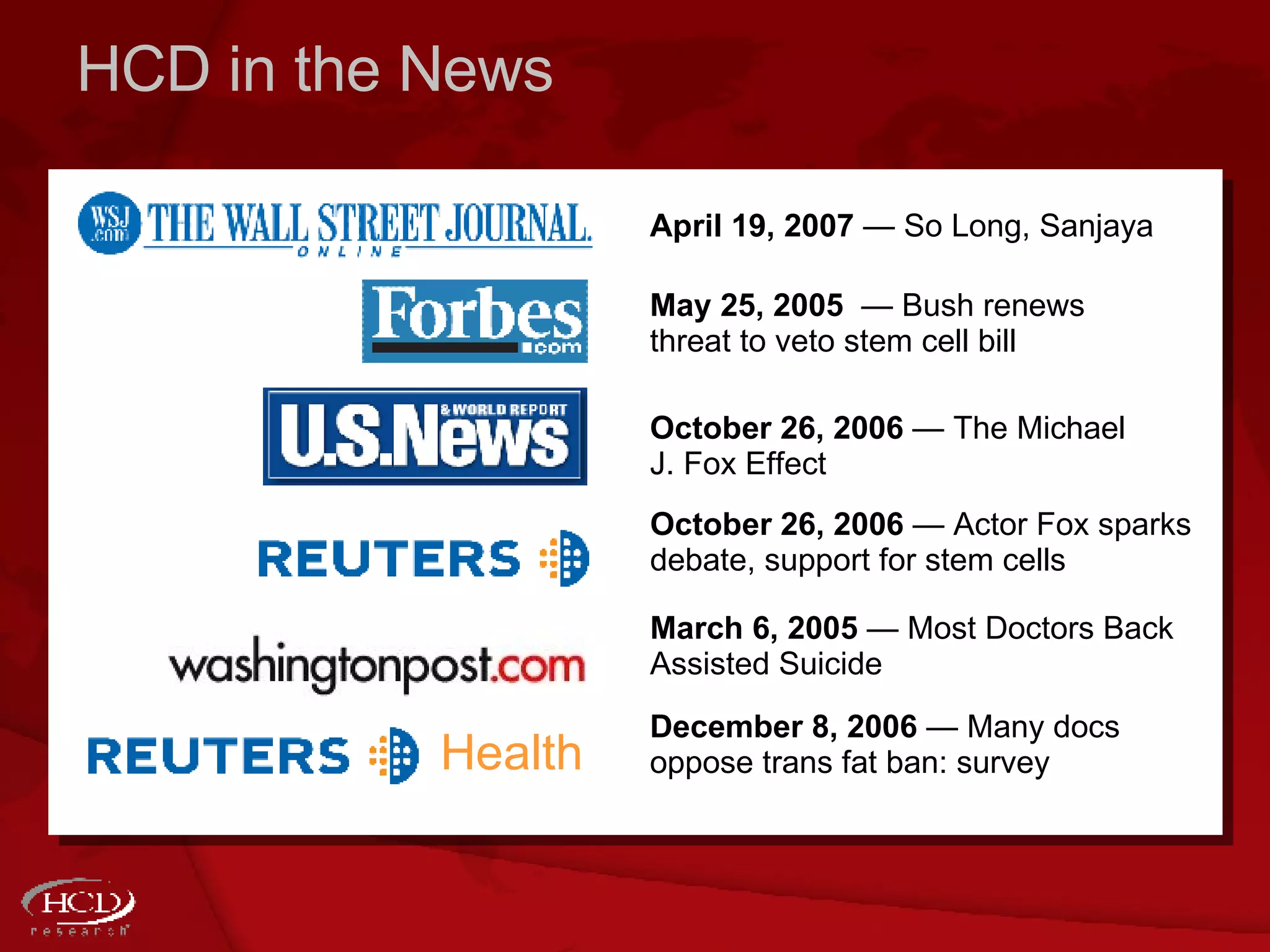
HCD in theNews Health December 8, 2006 — Many docs oppose trans fat ban: survey May 25, 2005 — Bush renews threat to veto stem cell bill October 26, 2006 — The Michael J. Fox Effect October 26, 2006 — Actor Fox sparks debate, support for stem cells March 6, 2005 — Most Doctors Back Assisted Suicide April 19, 2007 — So Long, Sanjaya
Core Services QuantitativeInternet Research Message Development and Testing Campaign Concept Testing Journal Ad and Sales Aid Testing Post-Launch Tracking and Effectiveness Sales Force Effectiveness/Message Recall New Product/Market Assessment Market Segmentation/Patient Profiling Awareness/Trial/Usage Studies Other Custom Research Web-Based Qualitative Research Tele-Web Discussion Groups Web-Assisted One-on-One Interviews Traditional Research Face-to-Face Interviews Check Studies
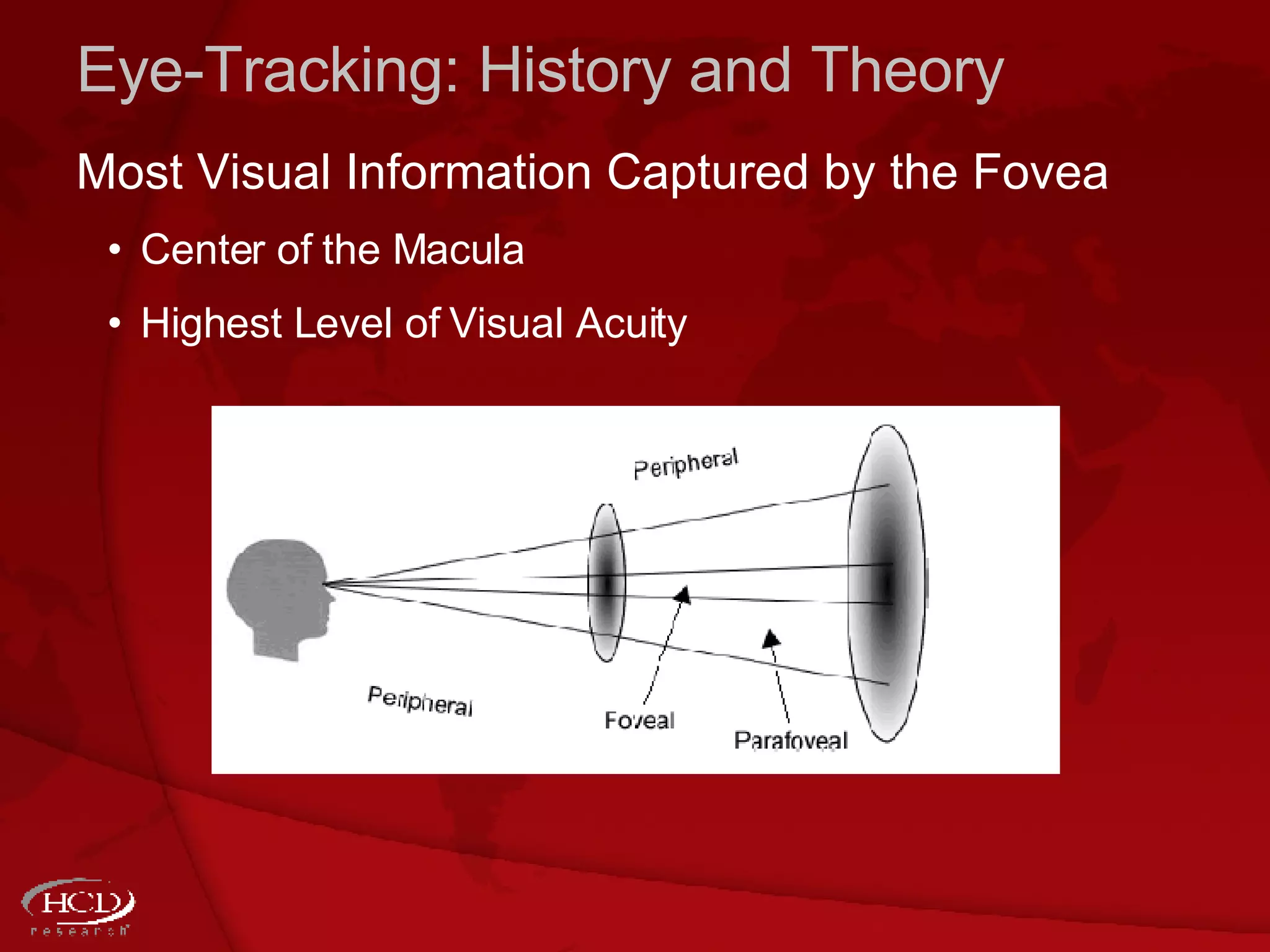
Eye-Tracking: History andTheory Most Visual Information Captured by the Fovea Center of the Macula Highest Level of Visual Acuity
8.
Eye-Tracking: History andTheory Fixations of 200-300ms Required to Process Information World Perceived Through Series of Successive Fixations Technology Must Determine Location of Eye Fixations
9.
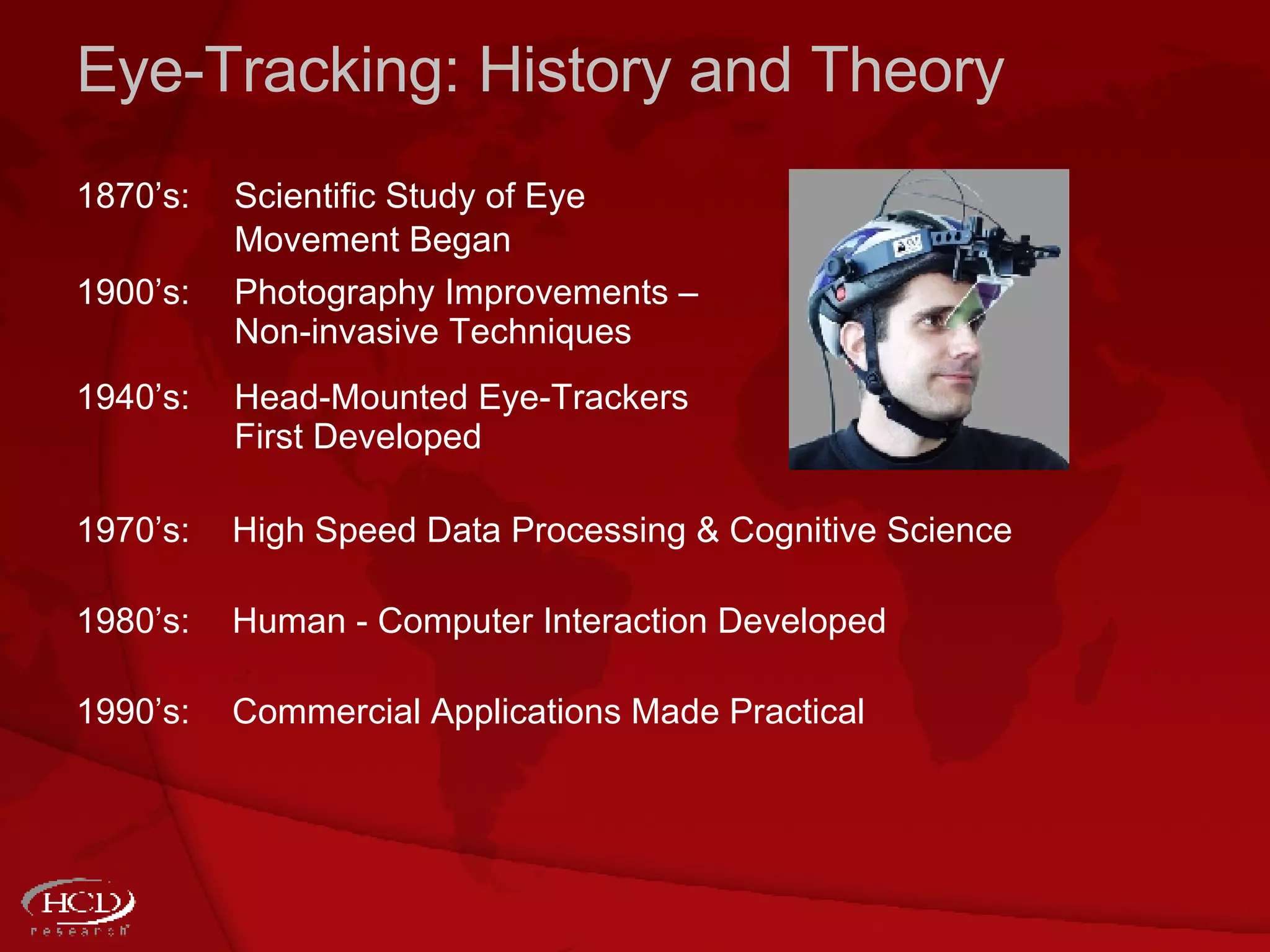
Eye-Tracking: History andTheory 1870’s: Scientific Study of Eye Movement Began 1900’s: Photography Improvements – Non-invasive Techniques 1940’s: Head-Mounted Eye-Trackers First Developed 1970’s: High Speed Data Processing & Cognitive Science 1980’s: Human - Computer Interaction Developed 1990’s: Commercial Applications Made Practical
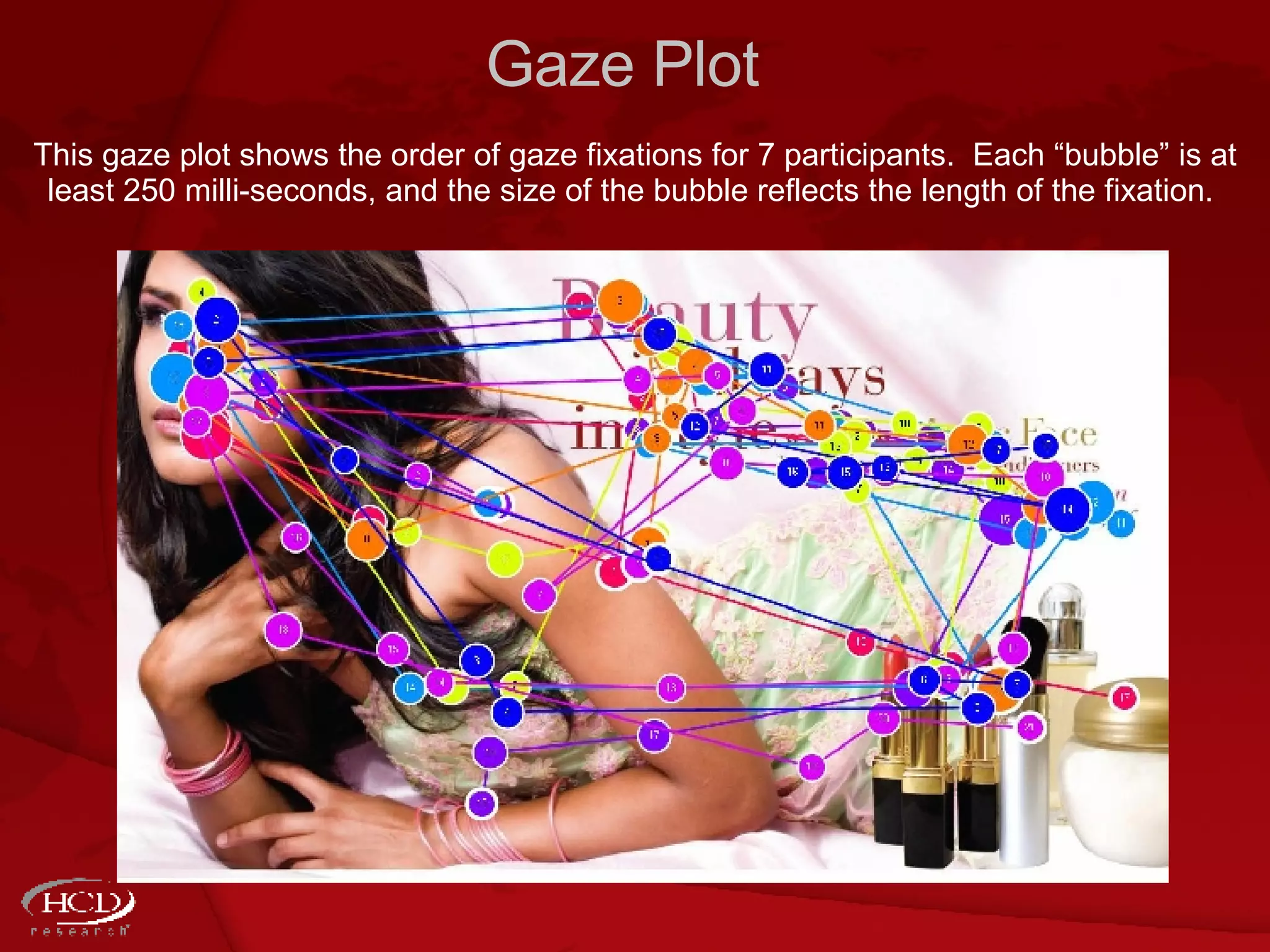
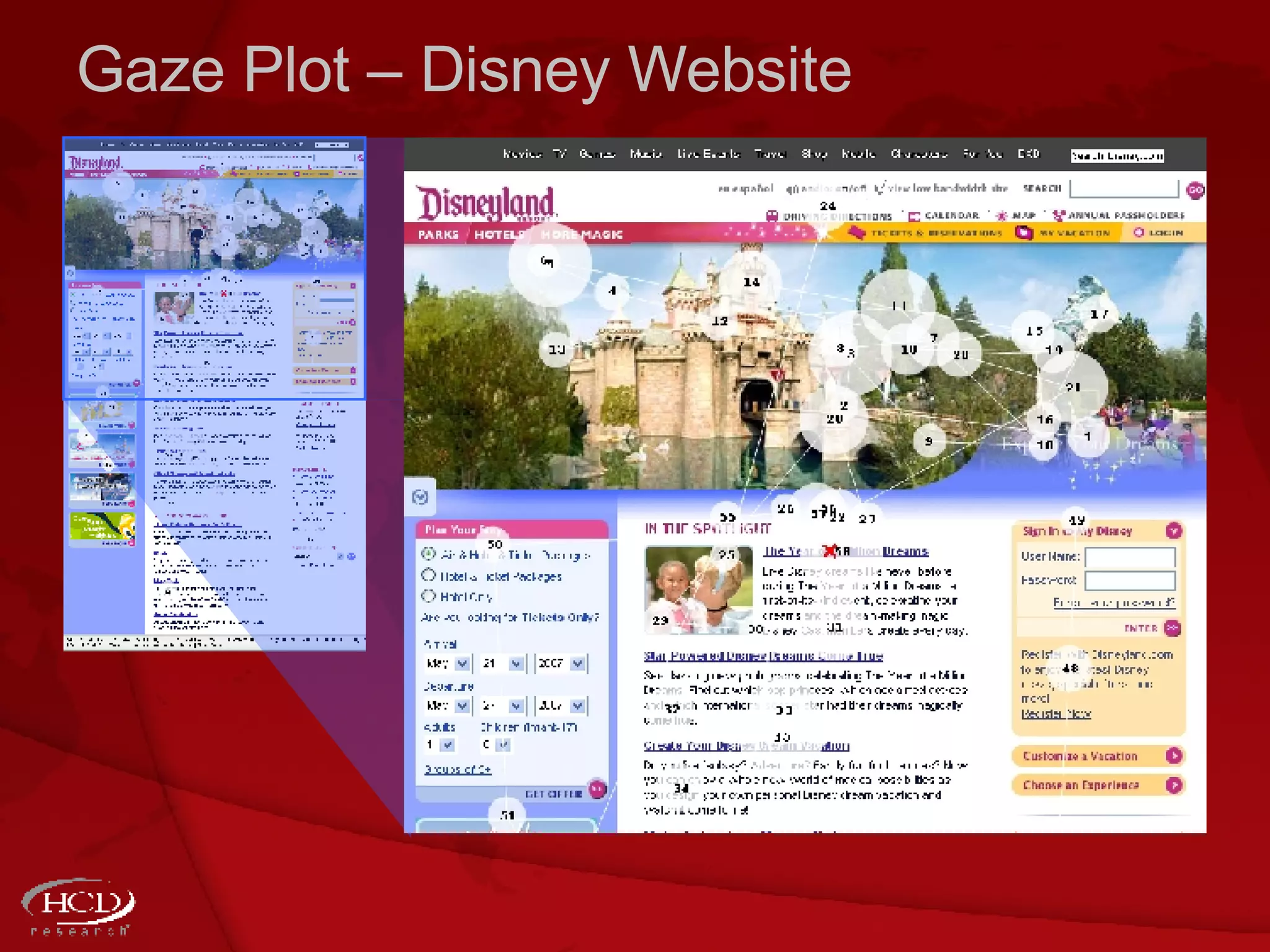
Gaze Plot Thisgaze plot shows the order of gaze fixations for 7 participants. Each “bubble” is at least 250 milli-seconds, and the size of the bubble reflects the length of the fixation.
14.
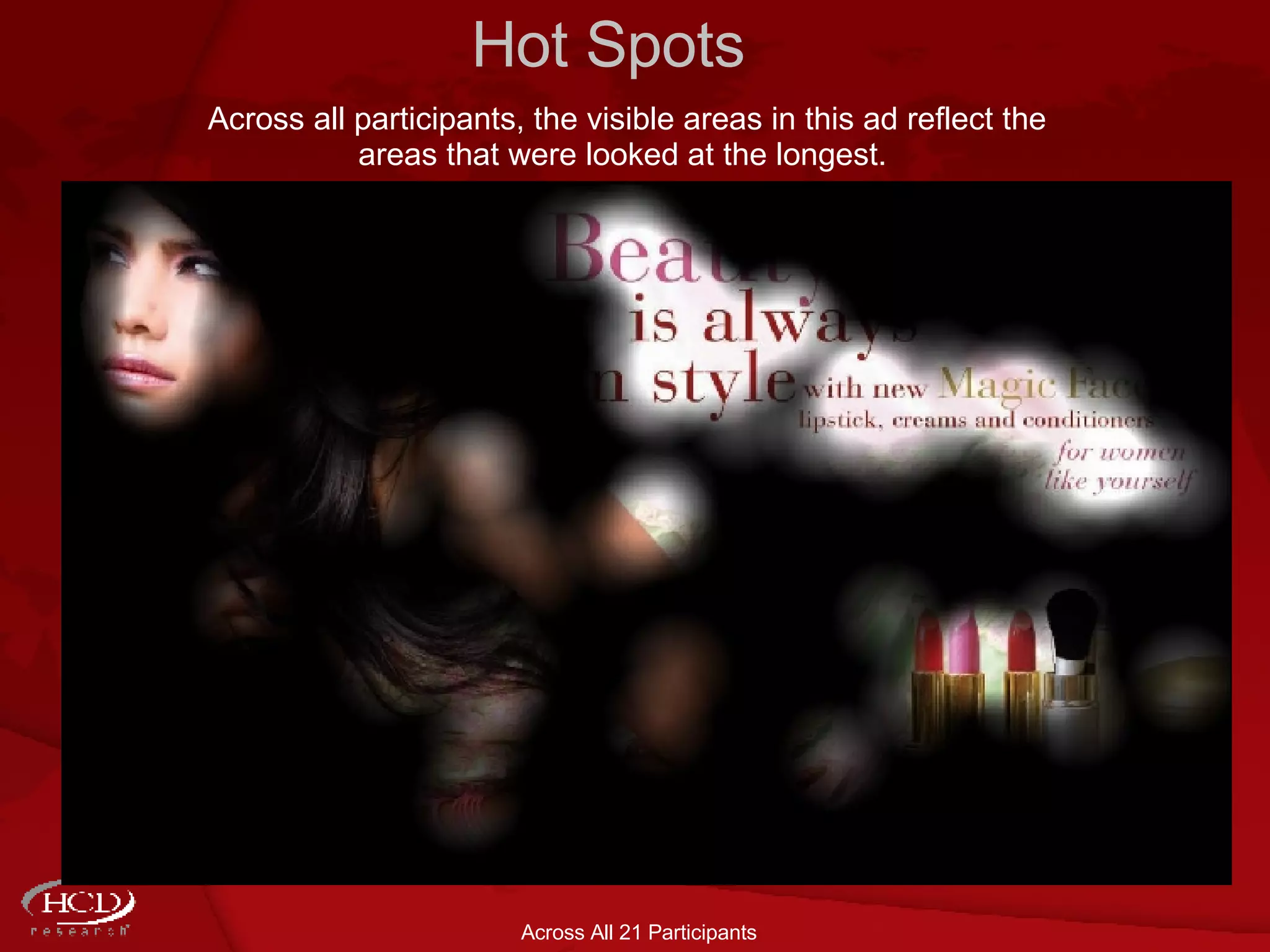
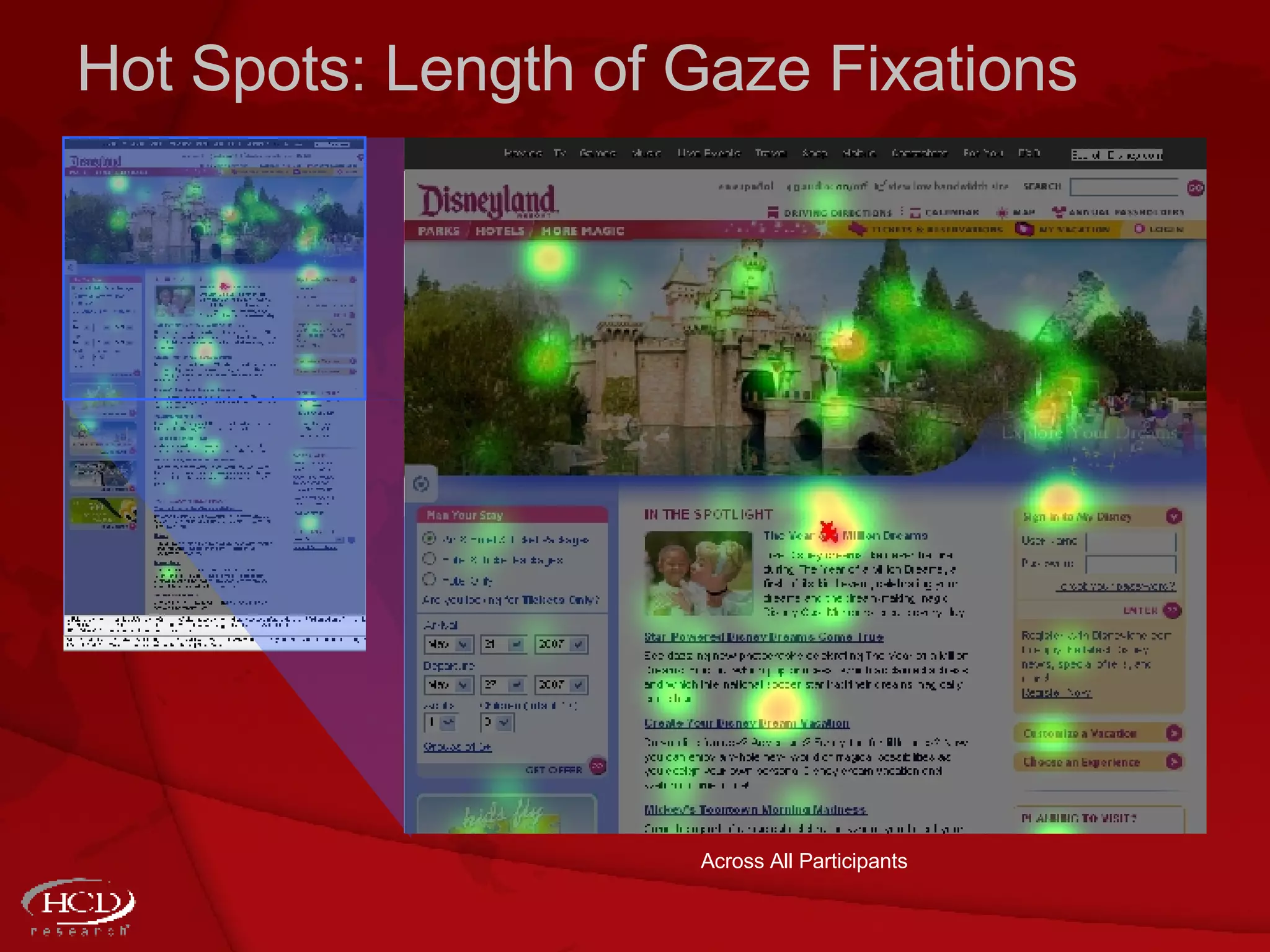
Hot Spots AcrossAll 21 Participants Across all participants, the visible areas in this ad reflect the areas that were looked at the longest.
15.
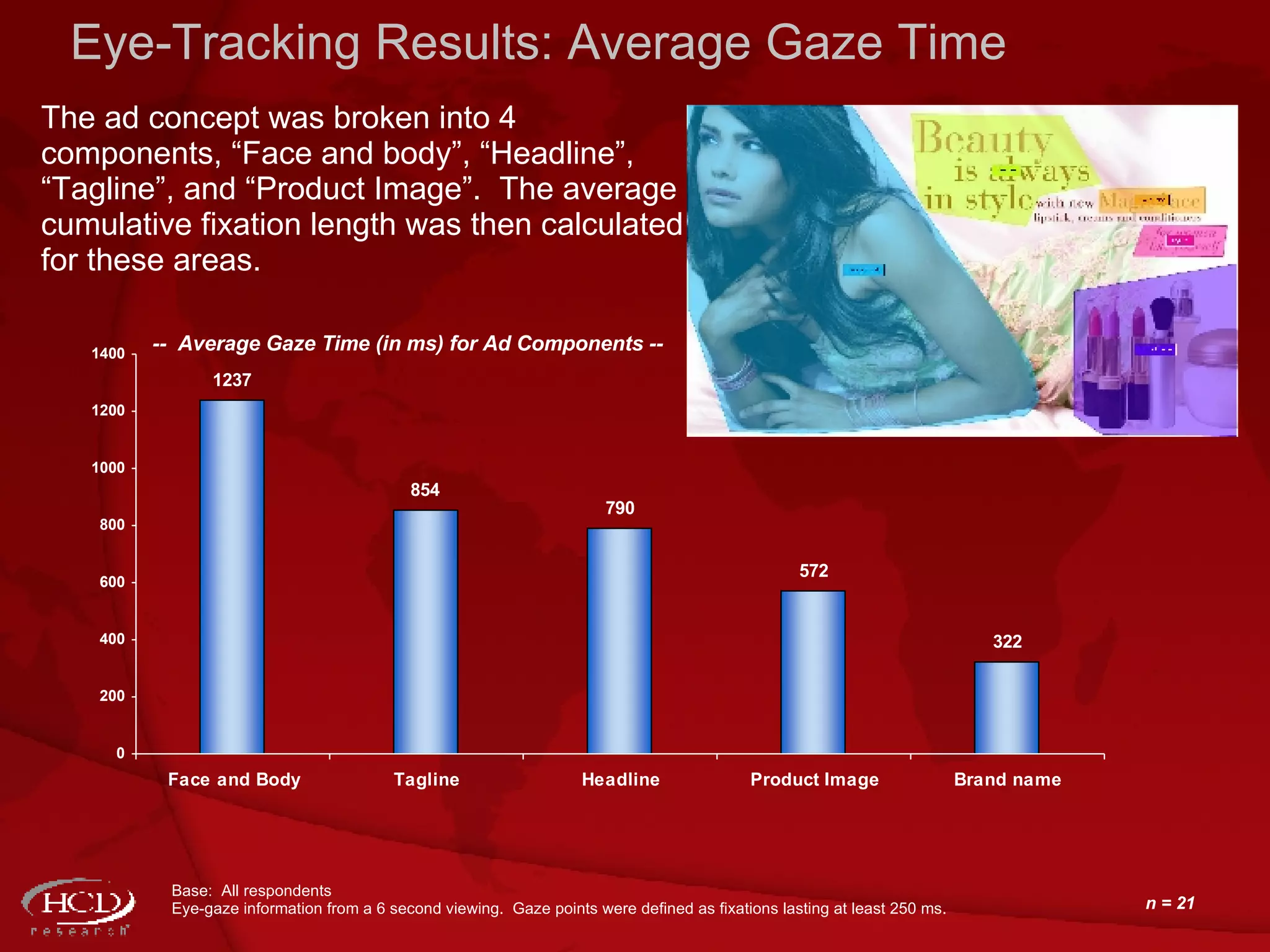
Eye-Tracking Results: AverageGaze Time -- Average Gaze Time (in ms) for Ad Components -- Base: All respondents Eye-gaze information from a 6 second viewing. Gaze points were defined as fixations lasting at least 250 ms. n = 21 The ad concept was broken into 4 components, “Face and body”, “Headline”, “Tagline”, and “Product Image”. The average cumulative fixation length was then calculated for these areas.
16.
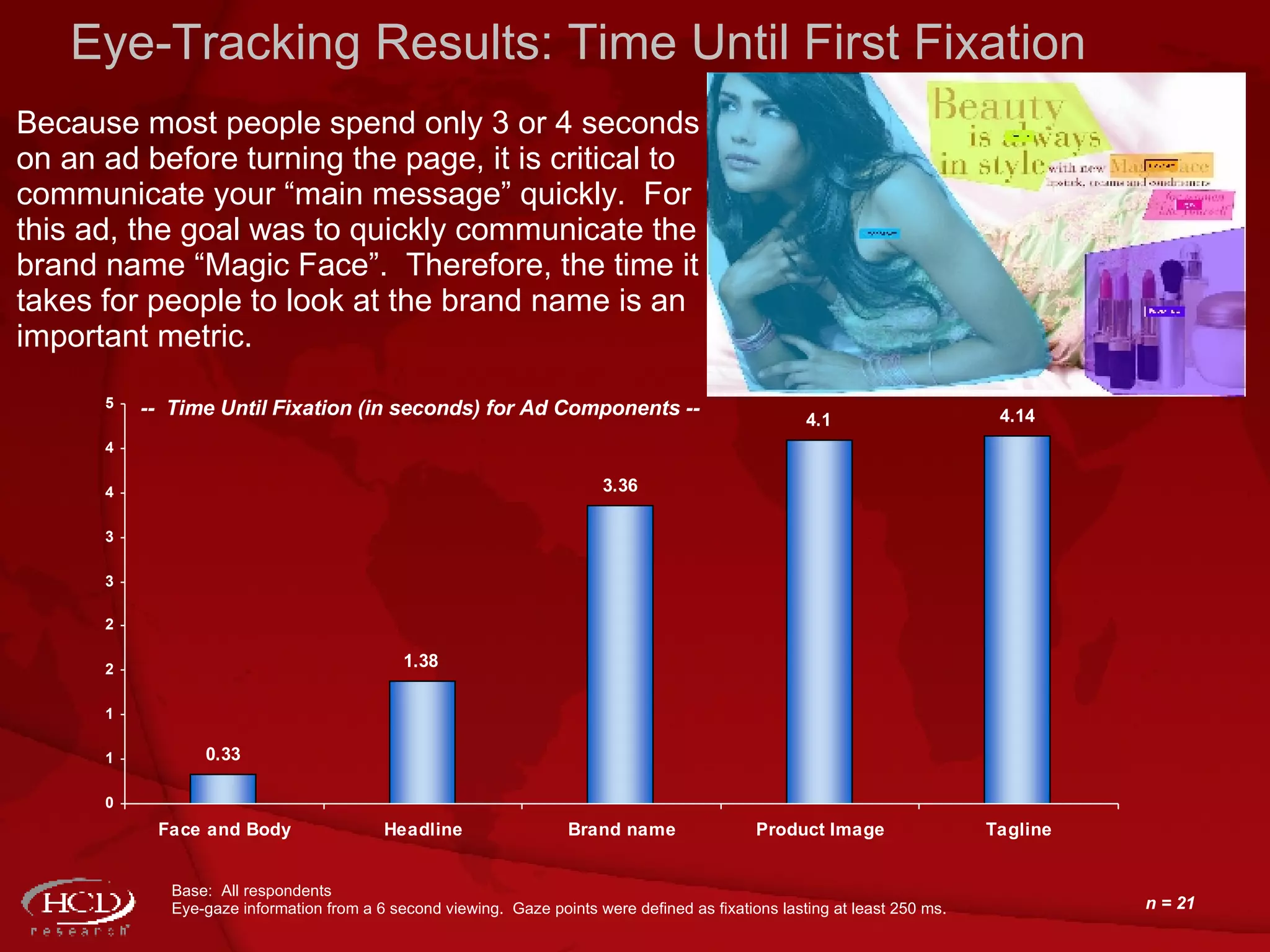
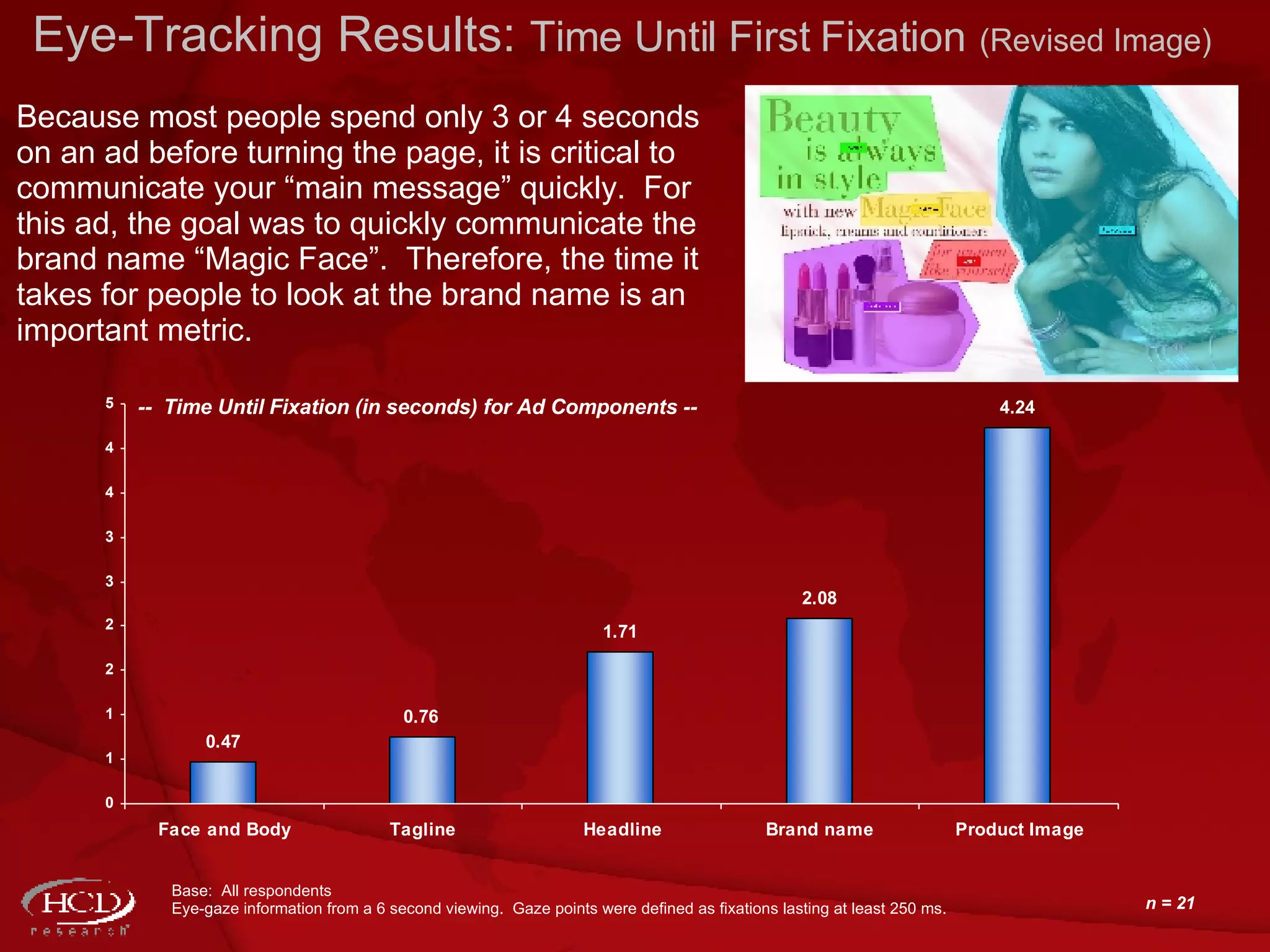
Eye-Tracking Results: TimeUntil First Fixation -- Time Until Fixation (in seconds) for Ad Components -- Base: All respondents Eye-gaze information from a 6 second viewing. Gaze points were defined as fixations lasting at least 250 ms. n = 21 Because most people spend only 3 or 4 seconds on an ad before turning the page, it is critical to communicate your “main message” quickly. For this ad, the goal was to quickly communicate the brand name “Magic Face”. Therefore, the time it takes for people to look at the brand name is an important metric.
17.
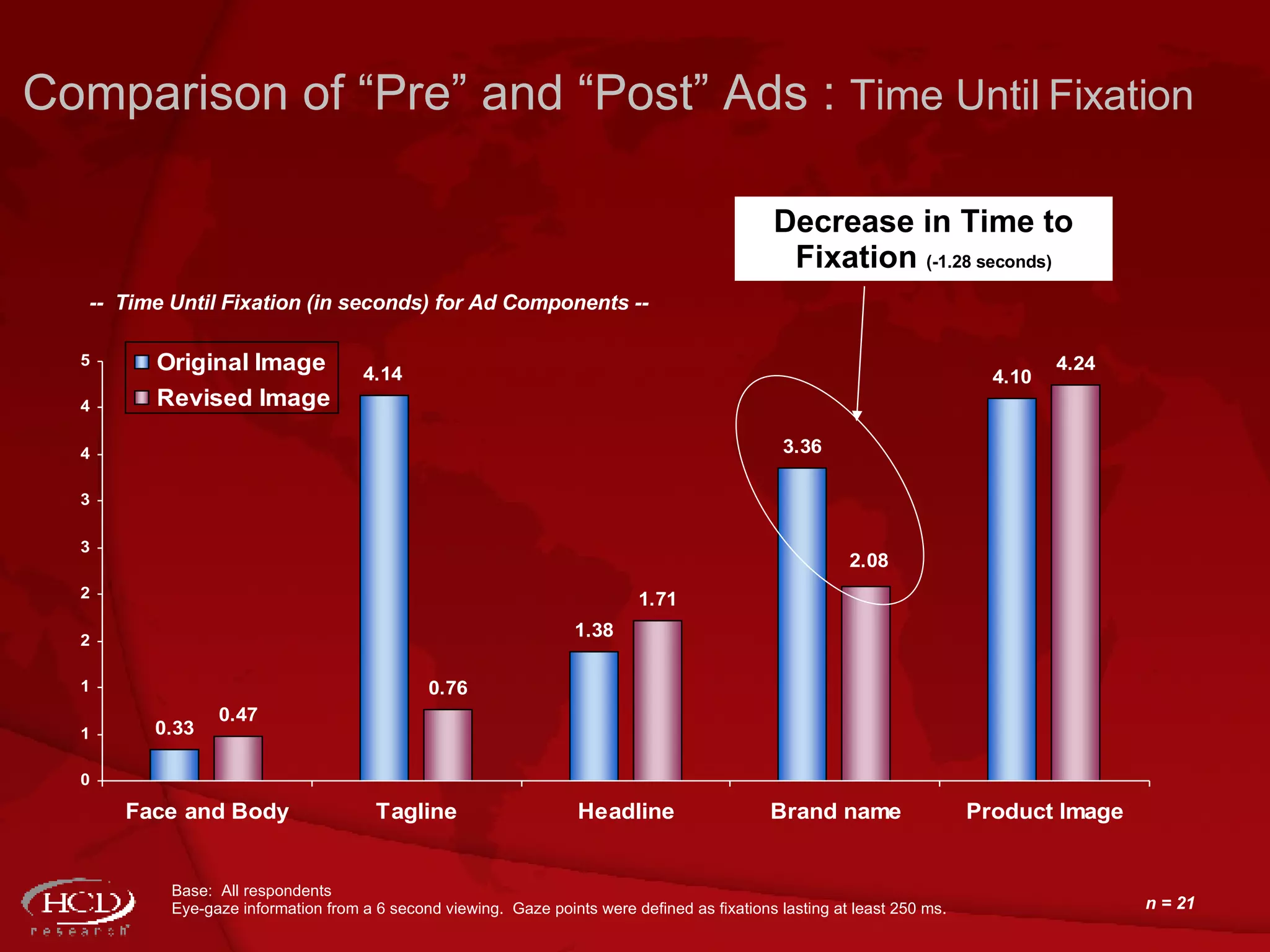
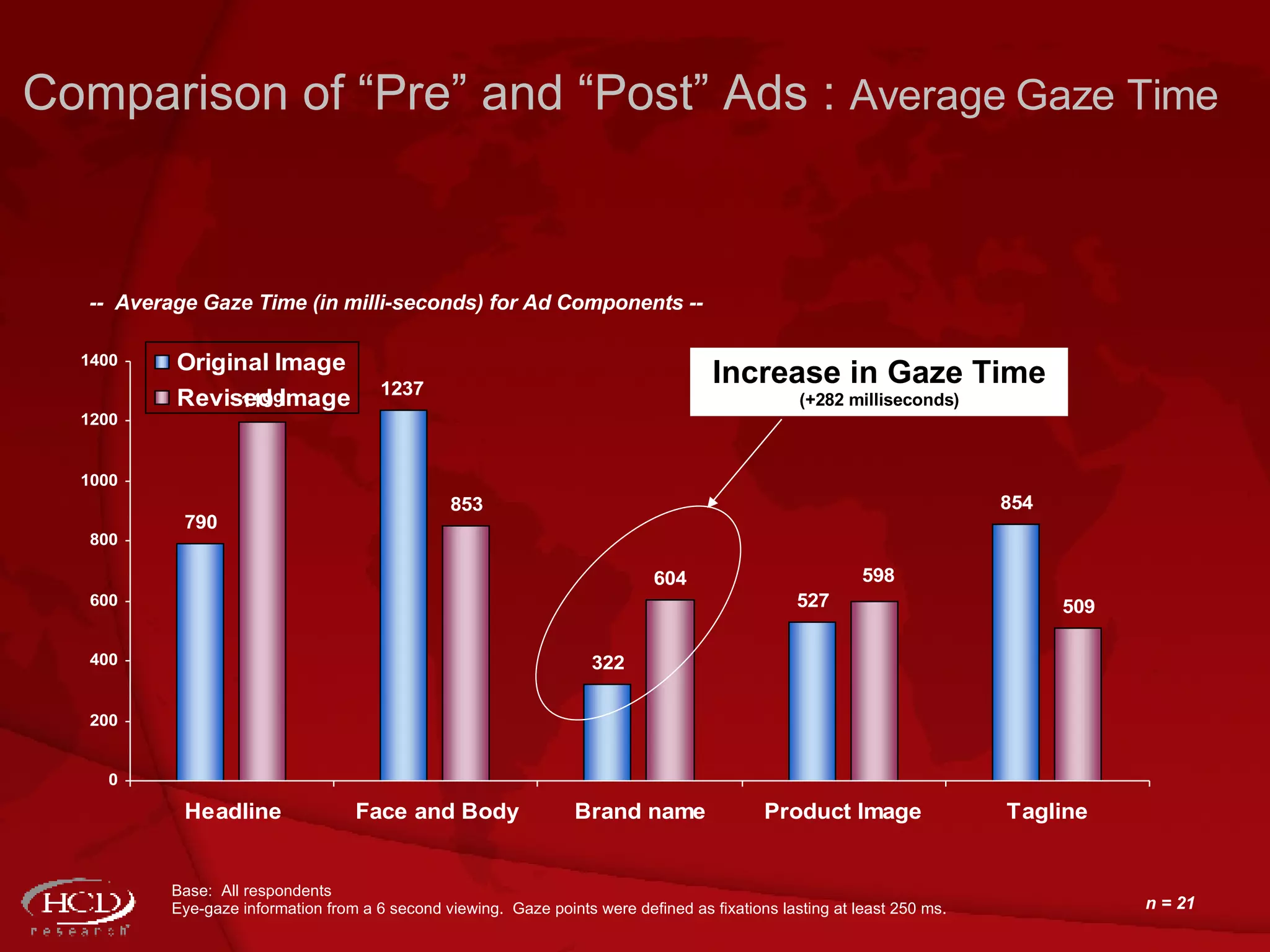
Recommendations Made toImprove Communication of the Brand Name “Magic Face” Improving the retention of a particular part element within an ad is deceptively simple… you want to place your “main message” close to where people are naturally looking. It’s part science, and part creative collaboration with the creative/design team. Through extensive research, we have shown that the longer an element is looked at, the more likely it is to be remembered. Generally, we need to look at something for at least 250 milliseconds before we begin to cognitively process that we saw something. With this understanding, we can make improvements to the layout of ads/web-pages by assessing, in our example, how long people are looking at the brand name (the longer the better) and how long it takes for people to first look at the brand name (the less time the better). Changes were made to the ad to improve the performance of both attributes.
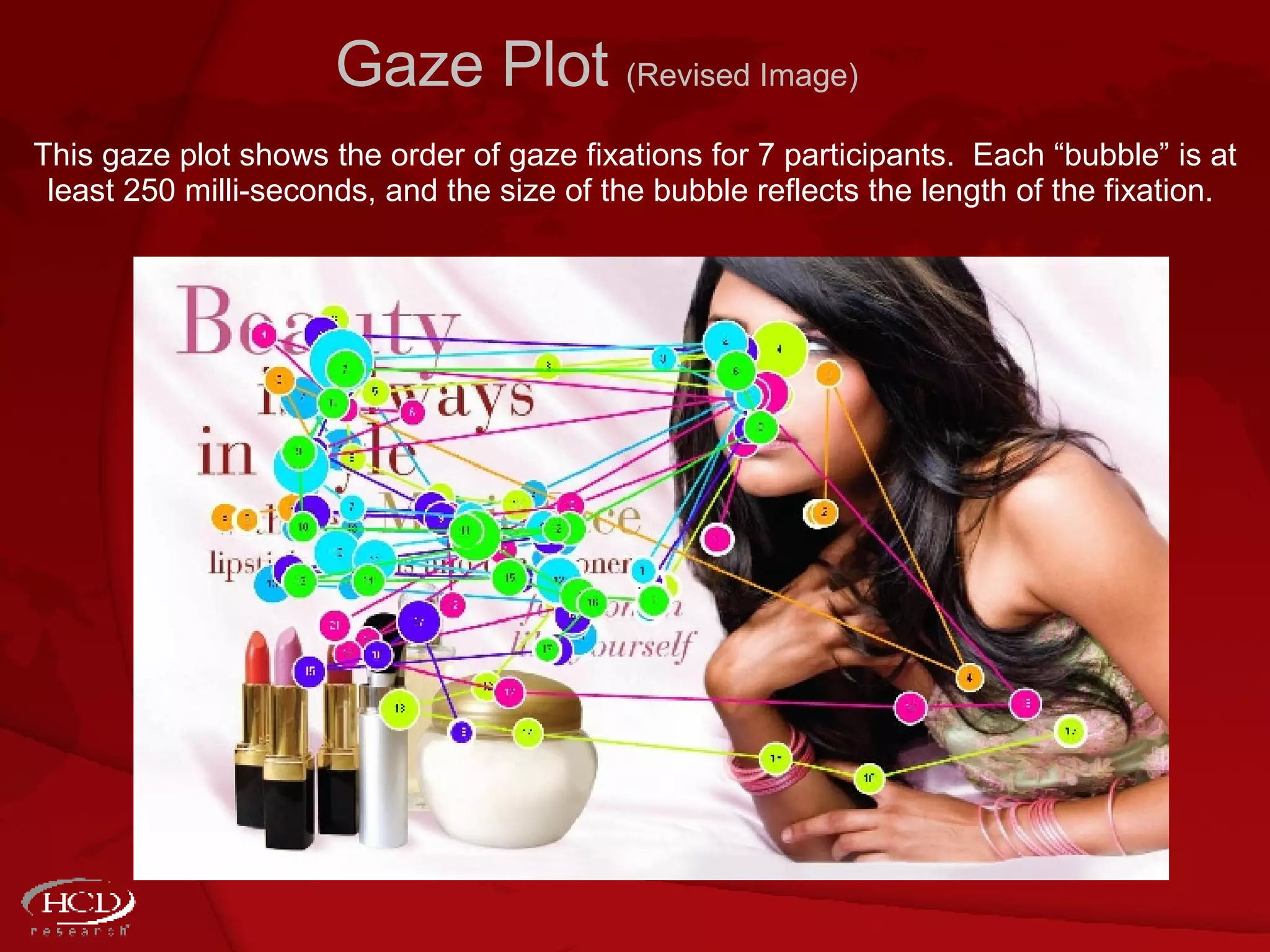
Gaze Plot (Revised Image) This gaze plot shows the order of gaze fixations for 7 participants. Each “bubble” is at least 250 milli-seconds, and the size of the bubble reflects the length of the fixation.
20.
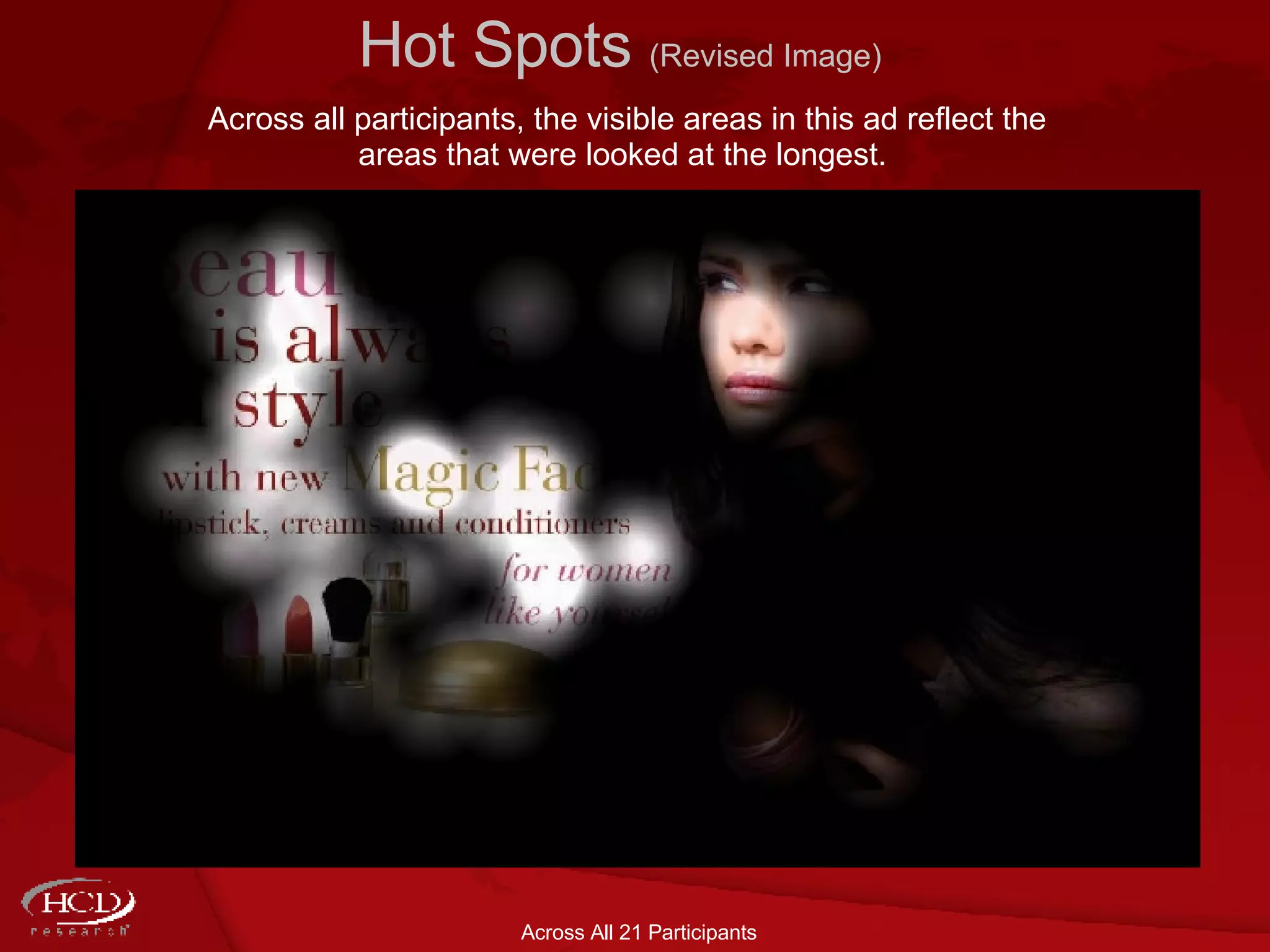
Hot Spots (Revised Image) Across All 21 Participants Across all participants, the visible areas in this ad reflect the areas that were looked at the longest.
21.
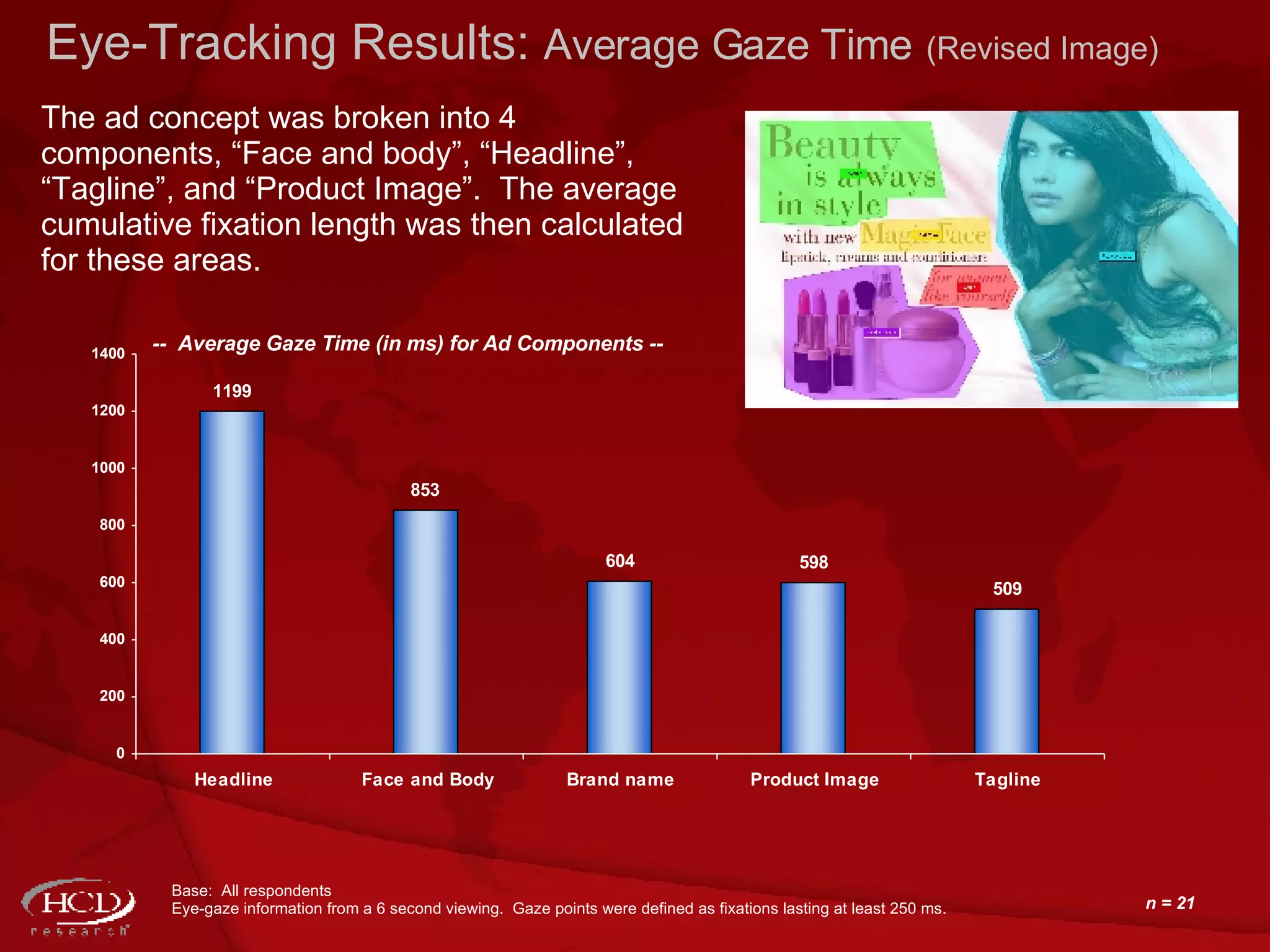
Eye-Tracking Results: Average Gaze Time (Revised Image) -- Average Gaze Time (in ms) for Ad Components -- Base: All respondents Eye-gaze information from a 6 second viewing. Gaze points were defined as fixations lasting at least 250 ms. n = 21 The ad concept was broken into 4 components, “Face and body”, “Headline”, “Tagline”, and “Product Image”. The average cumulative fixation length was then calculated for these areas.
22.
Eye-Tracking Results: Time Until First Fixation (Revised Image) -- Time Until Fixation (in seconds) for Ad Components -- Base: All respondents Eye-gaze information from a 6 second viewing. Gaze points were defined as fixations lasting at least 250 ms. n = 21 Because most people spend only 3 or 4 seconds on an ad before turning the page, it is critical to communicate your “main message” quickly. For this ad, the goal was to quickly communicate the brand name “Magic Face”. Therefore, the time it takes for people to look at the brand name is an important metric.
23.
-- TimeUntil Fixation (in seconds) for Ad Components -- Base: All respondents Eye-gaze information from a 6 second viewing. Gaze points were defined as fixations lasting at least 250 ms. n = 21 Comparison of “Pre” and “Post” Ads : Time Until Fixation Decrease in Time to Fixation (-1.28 seconds)
24.
Base: Allrespondents Eye-gaze information from a 6 second viewing. Gaze points were defined as fixations lasting at least 250 ms. n = 21 Comparison of “Pre” and “Post” Ads : Average Gaze Time -- Average Gaze Time (in milli-seconds) for Ad Components -- Increase in Gaze Time (+282 milliseconds)