Dr. Ishan Y. Pandya (PhD, Biotechnology)
E-mail: genomes.world37@gmail.com
Senior Faculty and Academic Head,
Guide: NEET Medical to CSIR-NET Competitive Exams, and
KVPY-IISC Exam
 Oncogene
 Discovery of proto oncogene
 Oncogenes in Humans
 Identification of oncogenes
 Mechanism of oncogene activation
 Oncogenic products
A gene whose presence can trigger the
development of cancer by two ways :
i.By cancer causing viruses.
ii.By mutation of normal cellular gene.
Cancer causing mutation occur mostly in somatic
cells not in germ-line cells.
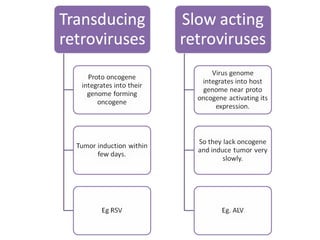
 Most commonly they are retroviruses that
cause cancer in a variety of animal species
including humans.
Eg. Htlv-1 that causes t-cell leukemia,
 Hiv causing aids.
 Viral oncogene was first defined by Peyton
Rous In 1911 in rous sarcoma virus ( rsv) that
transforms chicken embryo fibroblast in culture
and induces large sarcomas.
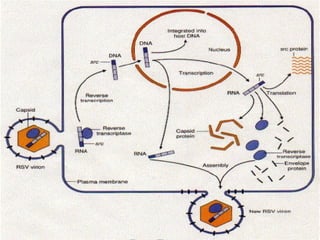
 Its RNA genome is reverse transcribed into DNA
which gets incorporated into the host cell genome.
 It contains specific genetic information
responsible for transformation of infected cells.
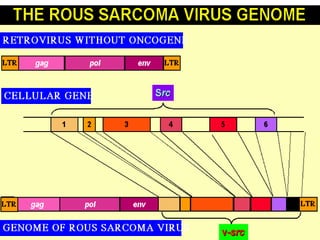
 Peter Bogt and Steven Mavtin found out that a
single gene is responsible for RSV to induce tumor.
 This gene is src/v-src since it causes sarcoma.
 This src gene encodes a 60kd protein tyrosine
kinase. So RSV genome despite of gag, pol, env,
Ltr has src gene too. This protein has the ability,
in its active state, to phosphorylate certain
target proteins (motif dependent manner), so
the protein is called Tyrosine Protein Kinase
(TPK).
 The v-src gene carried by the virus is a truncated
gene where the sequences for 19 amino acids at the
carboxyl end are deleted.
 In few other cases where the cell that is infected with
S40 or its related DNA viruses, the T-antigen produced
by the viral genome binds to the C-terminal region of
the src; this makes the normal src to be active all the
time. When the src is continuously active it
phosphorylates many of its targets and the cell gets
transformed for the cell cycle events get deranged to
proliferation without control.
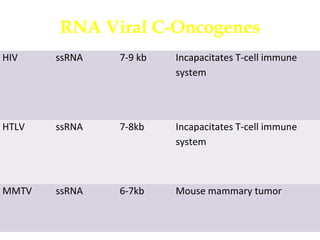
HIV ssRNA 7-9 kb Incapacitates T-cell immune
system
HTLV ssRNA 7-8kb Incapacitates T-cell immune
system
MMTV ssRNA 6-7kb Mouse mammary tumor
RNA Viral C-Oncogenes
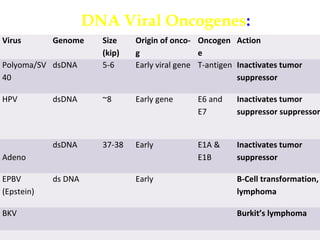
Virus Genome Size
(kip)
Origin of onco-
g
Oncogen
e
Action
Polyoma/SV
40
dsDNA 5-6 Early viral gene T-antigen Inactivates tumor
suppressor
HPV dsDNA ~8 Early gene E6 and
E7
Inactivates tumor
suppressor suppressor
Adeno
dsDNA 37-38 Early E1A &
E1B
Inactivates tumor
suppressor
EPBV
(Epstein)
ds DNA Early B-Cell transformation,
lymphoma
BKV Burkit’s lymphoma
DNA Viral Oncogenes:
By isolation of abelson leukemia virus more than
150 mice were infected with a non transforming
virus containing only gag, pol and env genes
required for replication.
One of these mice developed a lymphoma from
which a new highly oncogenic virus (which now
contained an oncogene abl) was isolated.
This proves that retroviral oncogene are derived
from genes of the host cell which occasionally
becomes incorporated into viral genome yielding

an oncogenic virus.
So we can say that normal cells contain genes
that are closely related to retroviral oncogene.
This was showed by Varmus and Michael Bishop
by an experiment which is as follows:
 Reverse transcriptase was used to
synthesize a radioactive cDNA probe of short
single stranded DNA fragments
complementary to entire genomic RNA of
RSV.
 This probe was then hybridised to RNA
isolated from transformation defective deletion
mutant.
 Fragments of cDNA that were
complementary to the viral replication genes
hybridised to transformation defective RSV
 But the fragment complementary to src were
unable to hybridize which was isolated to
provide a specific probe for src oncogene
sequence and was used to detect related DNA
sequence in normal cells.
 Strikingly src cDNA hybridised extensivelyto
normal chicken DNA as well as DNA of avian
species.
 So retroviral oncogene originated from
cellular genes that got incorporated into viral
genome.
 These normal cellular genes are called as
PROTO-ONCOGENES.
 They are important cell regulatory genes,
encoding proteins that function in the signal
transduction pathway controlling normal cell
proliferation designated as c- src.
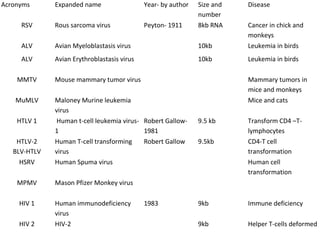
Acronyms Expanded name Year- by author Size and
number
Disease
RSV Rous sarcoma virus Peyton- 1911 8kb RNA Cancer in chick and
monkeys
ALV Avian Myeloblastasis virus 10kb Leukemia in birds
ALV Avian Erythroblastasis virus 10kb Leukemia in birds
MMTV Mouse mammary tumor virus Mammary tumors in
mice and monkeys
MuMLV Maloney Murine leukemia
virus
Mice and cats
HTLV 1 Human t-cell leukemia virus-
1
Robert Gallow-
1981
9.5 kb Transform CD4 –T-
lymphocytes
HTLV-2
BLV-HTLV
Human T-cell transforming
virus
Robert Gallow 9.5kb CD4-T cell
transformation
HSRV Human Spuma virus Human cell
transformation
MPMV Mason Pfizer Monkey virus
HIV 1 Human immunodeficiency
virus
1983 9kb Immune deficiency
HIV 2 HIV-2 9kb Helper T-cells deformed
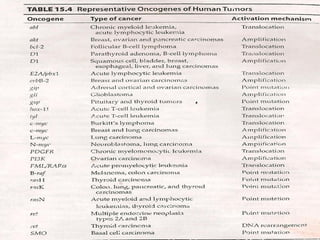
 DNA of human bladder carcinoma was
found to induce transformation of recipient
mouse cells in culture indicating that human
tumor contained biologically active cellular
oncogene.
 First human oncogene identified in gene
transfer assays was human homolog of ras H
oncogene of Harvey sarcoma virus.
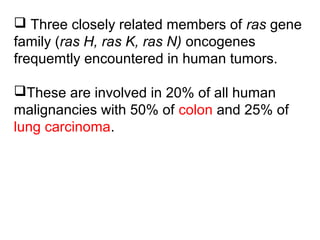
 Three closely related members of ras gene
family (ras H, ras K, ras N) oncogenes
frequemtly encountered in human tumors.
These are involved in 20% of all human
malignancies with 50% of colon and 25% of
lung carcinoma.
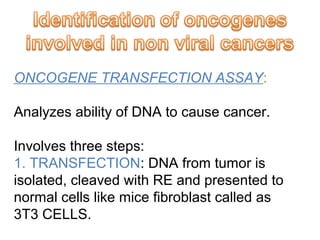
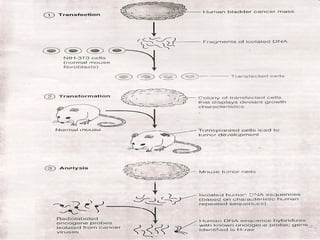
ONCOGENE TRANSFECTION ASSAY:
Analyzes ability of DNA to cause cancer.
Involves three steps:
1. TRANSFECTION: DNA from tumor is
isolated, cleaved with RE and presented to
normal cells like mice fibroblast called as
3T3 CELLS.
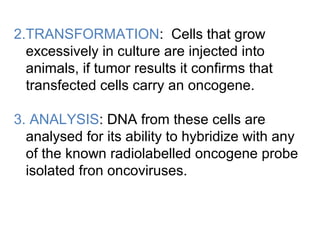
2.TRANSFORMATION: Cells that grow
excessively in culture are injected into
animals, if tumor results it confirms that
transfected cells carry an oncogene.
3. ANALYSIS: DNA from these cells are
analysed for its ability to hybridize with any
of the known radiolabelled oncogene probe
isolated fron oncoviruses.
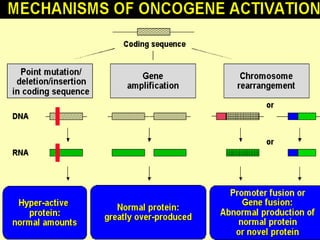
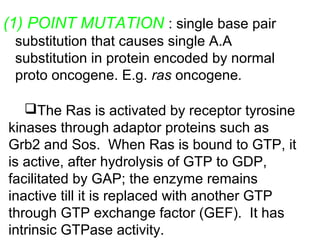
(1) POINT MUTATION : single base pair
substitution that causes single A.A
substitution in protein encoded by normal
proto oncogene. E.g. ras oncogene.
The Ras is activated by receptor tyrosine
kinases through adaptor proteins such as
Grb2 and Sos. When Ras is bound to GTP, it
is active, after hydrolysis of GTP to GDP,
facilitated by GAP; the enzyme remains
inactive till it is replaced with another GTP
through GTP exchange factor (GEF). It has
intrinsic GTPase activity.
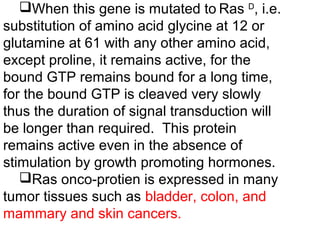
When this gene is mutated to Ras D
, i.e.
substitution of amino acid glycine at 12 or
glutamine at 61 with any other amino acid,
except proline, it remains active, for the
bound GTP remains bound for a long time,
for the bound GTP is cleaved very slowly
thus the duration of signal transduction will
be longer than required. This protein
remains active even in the absence of
stimulation by growth promoting hormones.
Ras onco-protien is expressed in many
tumor tissues such as bladder, colon, and
mammary and skin cancers.
(2) GENE AMPLIFICATION :
number of copies of particular proto oncogene
increases i.e. overproduction of normal
genes
 E.g. amplification of c-myc proto oncogene
leads to excessive production of Myc protein
causing neuroblastoma.myc gene encodes
protein that regulate transition from G1-S
phase.
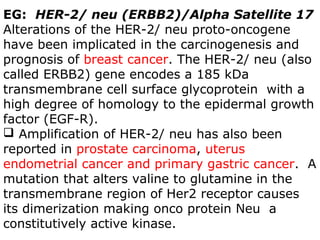
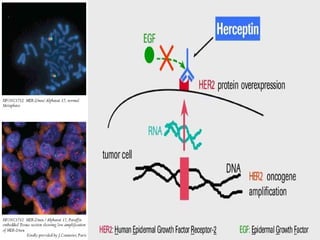
EG: HER-2/ neu (ERBB2)/Alpha Satellite 17
Alterations of the HER-2/ neu proto-oncogene
have been implicated in the carcinogenesis and
prognosis of breast cancer. The HER-2/ neu (also
called ERBB2) gene encodes a 185 kDa
transmembrane cell surface glycoprotein with a
high degree of homology to the epidermal growth
factor (EGF-R).
 Amplification of HER-2/ neu has also been
reported in prostate carcinoma, uterus
endometrial cancer and primary gastric cancer. A
mutation that alters valine to glutamine in the
transmembrane region of Her2 receptor causes
its dimerization making onco protein Neu a
constitutively active kinase.
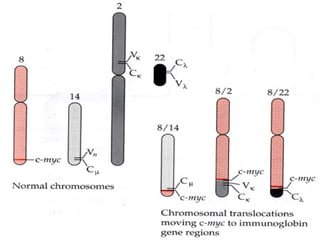
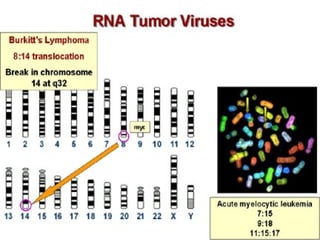
(3) CHROMOSOMAL TRANSLOCATION :
portion of one chromosome is physically
removed and joined to another.eg. All
Burkitt’s lymphomas have translocations of
fragment of chromosome 8 having c - myc
gene to one of the immunoglobulin gene
loci which resides on chromosome 2,14
and 22 resulting in abnormal c-myc
expression.
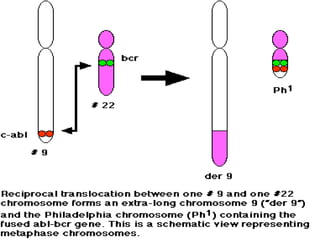
(2) translocation of abl proto oncogene from
chromosome 9 to chromosome 22 results
in fusion of abl with a gene called bcr
resulting in production of Bcr/Abl fusion
protein in which normal amino terminus
has been replaced by Bcr amino acid
sequences that leads to unregulated
activity of Abl protein tyrosine kinase
resulting in chronic myeloid leukemia.
 sis oncogene carried by simian sarcoma
virus codes for an altered form of polypeptide
subunit of the growth factor PDGF i.e. platelet
derived growth factor present in blood.
 Its over expression leads to development of
brain tumors (gliomas)
 Trk gene: Mutation due to abnormal translocation,
the extra cellular domain of the protein is replaced with
the N-terminal part of non-muscle Tropomyosin forming
coiled coils at the extracellular domain and lead to
dimerization at its cytosolic side. Normally the dimer
receptor is activated by the nerve growth factors
(neurotrophins), and the activation leads to dimerization
at cytosolic level and activation of the receptors RTK. In
this mutation the receptor is constitutively activated with
out the stimulus by NGH.
eg. Ras protein:
 One pathway is mutation in GTPase activating
enzyme (GAP). Individuals with Neurofibromatosis
have inherited single mutant of NF1 allele.
 Further mutations leads to the development of
benign NF tumors in sheath cells that surround
Nerves.
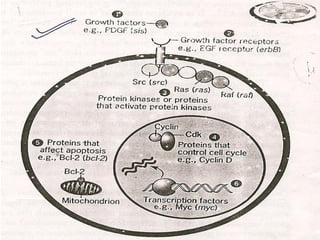
 Receptor tyrosine kinase (RTK) pathway of signal
transduction starts from the mitogenic ligand binding
to the receptor
 The activated receptor then activates Ras
through adaptor proteins such as Grb2 and
Sos, which in turn activate Ras.
 The signal transduction pathway continues
from Ras to Raf to Mek to Mapk and MaPkk
and so on, ultimately nuclear factors, one such
factor is NF1 and its family of proteins.
 When the are activated they enter into the
nucleus and activate hundreds of genes
among them some are cell cycle progression
protein genes.
 Several transcription factors (TFs) act as oncogenic
proteins.
 Eg. proto-onco genes such as Rel (a member of
NFkB family of genes), Jun and Fos (hetero- dimeric
enhancer binding proteins), erb -A (a nuclear localized
receptor cum transcription factor of Thyroxin and other
hormone family member), myc, and myb code for
transcriptional factors and they are expressed at early
stages of mitogen activation of cells in Go stage and
they are involved in a cascade of events in cell cycle.
On the contrary if they are activated inappropriately they
can cause cell cycle go haywire.
 Transcription factors activate
genes coding for Cdk and cyclin
molecules that govern checkpoints.
Eg Cdk4 that gets amplified in
sarcomas.
 Eg CYCD1 over expressed in
breast cancers.
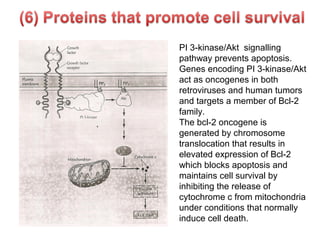
PI 3-kinase/Akt signalling
pathway prevents apoptosis.
Genes encoding PI 3-kinase/Akt
act as oncogenes in both
retroviruses and human tumors
and targets a member of Bcl-2
family.
The bcl-2 oncogene is
generated by chromosome
translocation that results in
elevated expression of Bcl-2
which blocks apoptosis and
maintains cell survival by
inhibiting the release of
cytochrome c from mitochondria
under conditions that normally
induce cell death.
 Essential Cell Biology By Alberts
 Essential Cell Biology By Hopkin
 Cell And Molecular Biology By Gerald
Karp
 Molecular Cell Biology By Lodish And
Berk

Oncogene activation

  • 1.
    Dr. Ishan Y.Pandya (PhD, Biotechnology) E-mail: genomes.world37@gmail.com Senior Faculty and Academic Head, Guide: NEET Medical to CSIR-NET Competitive Exams, and KVPY-IISC Exam
  • 2.
     Oncogene  Discoveryof proto oncogene  Oncogenes in Humans  Identification of oncogenes  Mechanism of oncogene activation  Oncogenic products
  • 3.
    A gene whosepresence can trigger the development of cancer by two ways : i.By cancer causing viruses. ii.By mutation of normal cellular gene. Cancer causing mutation occur mostly in somatic cells not in germ-line cells.
  • 4.
     Most commonlythey are retroviruses that cause cancer in a variety of animal species including humans. Eg. Htlv-1 that causes t-cell leukemia,  Hiv causing aids.
  • 5.
     Viral oncogenewas first defined by Peyton Rous In 1911 in rous sarcoma virus ( rsv) that transforms chicken embryo fibroblast in culture and induces large sarcomas.  Its RNA genome is reverse transcribed into DNA which gets incorporated into the host cell genome.  It contains specific genetic information responsible for transformation of infected cells.
  • 6.
     Peter Bogtand Steven Mavtin found out that a single gene is responsible for RSV to induce tumor.  This gene is src/v-src since it causes sarcoma.  This src gene encodes a 60kd protein tyrosine kinase. So RSV genome despite of gag, pol, env, Ltr has src gene too. This protein has the ability, in its active state, to phosphorylate certain target proteins (motif dependent manner), so the protein is called Tyrosine Protein Kinase (TPK).
  • 7.
     The v-srcgene carried by the virus is a truncated gene where the sequences for 19 amino acids at the carboxyl end are deleted.  In few other cases where the cell that is infected with S40 or its related DNA viruses, the T-antigen produced by the viral genome binds to the C-terminal region of the src; this makes the normal src to be active all the time. When the src is continuously active it phosphorylates many of its targets and the cell gets transformed for the cell cycle events get deranged to proliferation without control.
  • 10.
    HIV ssRNA 7-9kb Incapacitates T-cell immune system HTLV ssRNA 7-8kb Incapacitates T-cell immune system MMTV ssRNA 6-7kb Mouse mammary tumor RNA Viral C-Oncogenes
  • 11.
    Virus Genome Size (kip) Originof onco- g Oncogen e Action Polyoma/SV 40 dsDNA 5-6 Early viral gene T-antigen Inactivates tumor suppressor HPV dsDNA ~8 Early gene E6 and E7 Inactivates tumor suppressor suppressor Adeno dsDNA 37-38 Early E1A & E1B Inactivates tumor suppressor EPBV (Epstein) ds DNA Early B-Cell transformation, lymphoma BKV Burkit’s lymphoma DNA Viral Oncogenes:
  • 12.
    By isolation ofabelson leukemia virus more than 150 mice were infected with a non transforming virus containing only gag, pol and env genes required for replication. One of these mice developed a lymphoma from which a new highly oncogenic virus (which now contained an oncogene abl) was isolated.
  • 13.
    This proves thatretroviral oncogene are derived from genes of the host cell which occasionally becomes incorporated into viral genome yielding an oncogenic virus. So we can say that normal cells contain genes that are closely related to retroviral oncogene. This was showed by Varmus and Michael Bishop by an experiment which is as follows:
  • 14.
     Reverse transcriptasewas used to synthesize a radioactive cDNA probe of short single stranded DNA fragments complementary to entire genomic RNA of RSV.  This probe was then hybridised to RNA isolated from transformation defective deletion mutant.  Fragments of cDNA that were complementary to the viral replication genes hybridised to transformation defective RSV
  • 15.
     But thefragment complementary to src were unable to hybridize which was isolated to provide a specific probe for src oncogene sequence and was used to detect related DNA sequence in normal cells.  Strikingly src cDNA hybridised extensivelyto normal chicken DNA as well as DNA of avian species.  So retroviral oncogene originated from cellular genes that got incorporated into viral genome.
  • 16.
     These normalcellular genes are called as PROTO-ONCOGENES.  They are important cell regulatory genes, encoding proteins that function in the signal transduction pathway controlling normal cell proliferation designated as c- src.
  • 18.
    Acronyms Expanded nameYear- by author Size and number Disease RSV Rous sarcoma virus Peyton- 1911 8kb RNA Cancer in chick and monkeys ALV Avian Myeloblastasis virus 10kb Leukemia in birds ALV Avian Erythroblastasis virus 10kb Leukemia in birds MMTV Mouse mammary tumor virus Mammary tumors in mice and monkeys MuMLV Maloney Murine leukemia virus Mice and cats HTLV 1 Human t-cell leukemia virus- 1 Robert Gallow- 1981 9.5 kb Transform CD4 –T- lymphocytes HTLV-2 BLV-HTLV Human T-cell transforming virus Robert Gallow 9.5kb CD4-T cell transformation HSRV Human Spuma virus Human cell transformation MPMV Mason Pfizer Monkey virus HIV 1 Human immunodeficiency virus 1983 9kb Immune deficiency HIV 2 HIV-2 9kb Helper T-cells deformed
  • 19.
     DNA ofhuman bladder carcinoma was found to induce transformation of recipient mouse cells in culture indicating that human tumor contained biologically active cellular oncogene.  First human oncogene identified in gene transfer assays was human homolog of ras H oncogene of Harvey sarcoma virus.
  • 20.
     Three closelyrelated members of ras gene family (ras H, ras K, ras N) oncogenes frequemtly encountered in human tumors. These are involved in 20% of all human malignancies with 50% of colon and 25% of lung carcinoma.
  • 22.
    ONCOGENE TRANSFECTION ASSAY: Analyzesability of DNA to cause cancer. Involves three steps: 1. TRANSFECTION: DNA from tumor is isolated, cleaved with RE and presented to normal cells like mice fibroblast called as 3T3 CELLS.
  • 23.
    2.TRANSFORMATION: Cells thatgrow excessively in culture are injected into animals, if tumor results it confirms that transfected cells carry an oncogene. 3. ANALYSIS: DNA from these cells are analysed for its ability to hybridize with any of the known radiolabelled oncogene probe isolated fron oncoviruses.
  • 26.
    (1) POINT MUTATION: single base pair substitution that causes single A.A substitution in protein encoded by normal proto oncogene. E.g. ras oncogene. The Ras is activated by receptor tyrosine kinases through adaptor proteins such as Grb2 and Sos. When Ras is bound to GTP, it is active, after hydrolysis of GTP to GDP, facilitated by GAP; the enzyme remains inactive till it is replaced with another GTP through GTP exchange factor (GEF). It has intrinsic GTPase activity.
  • 27.
    When this geneis mutated to Ras D , i.e. substitution of amino acid glycine at 12 or glutamine at 61 with any other amino acid, except proline, it remains active, for the bound GTP remains bound for a long time, for the bound GTP is cleaved very slowly thus the duration of signal transduction will be longer than required. This protein remains active even in the absence of stimulation by growth promoting hormones. Ras onco-protien is expressed in many tumor tissues such as bladder, colon, and mammary and skin cancers.
  • 28.
    (2) GENE AMPLIFICATION: number of copies of particular proto oncogene increases i.e. overproduction of normal genes  E.g. amplification of c-myc proto oncogene leads to excessive production of Myc protein causing neuroblastoma.myc gene encodes protein that regulate transition from G1-S phase.
  • 29.
    EG: HER-2/ neu(ERBB2)/Alpha Satellite 17 Alterations of the HER-2/ neu proto-oncogene have been implicated in the carcinogenesis and prognosis of breast cancer. The HER-2/ neu (also called ERBB2) gene encodes a 185 kDa transmembrane cell surface glycoprotein with a high degree of homology to the epidermal growth factor (EGF-R).  Amplification of HER-2/ neu has also been reported in prostate carcinoma, uterus endometrial cancer and primary gastric cancer. A mutation that alters valine to glutamine in the transmembrane region of Her2 receptor causes its dimerization making onco protein Neu a constitutively active kinase.
  • 31.
    (3) CHROMOSOMAL TRANSLOCATION: portion of one chromosome is physically removed and joined to another.eg. All Burkitt’s lymphomas have translocations of fragment of chromosome 8 having c - myc gene to one of the immunoglobulin gene loci which resides on chromosome 2,14 and 22 resulting in abnormal c-myc expression.
  • 34.
    (2) translocation ofabl proto oncogene from chromosome 9 to chromosome 22 results in fusion of abl with a gene called bcr resulting in production of Bcr/Abl fusion protein in which normal amino terminus has been replaced by Bcr amino acid sequences that leads to unregulated activity of Abl protein tyrosine kinase resulting in chronic myeloid leukemia.
  • 37.
     sis oncogenecarried by simian sarcoma virus codes for an altered form of polypeptide subunit of the growth factor PDGF i.e. platelet derived growth factor present in blood.  Its over expression leads to development of brain tumors (gliomas)
  • 38.
     Trk gene:Mutation due to abnormal translocation, the extra cellular domain of the protein is replaced with the N-terminal part of non-muscle Tropomyosin forming coiled coils at the extracellular domain and lead to dimerization at its cytosolic side. Normally the dimer receptor is activated by the nerve growth factors (neurotrophins), and the activation leads to dimerization at cytosolic level and activation of the receptors RTK. In this mutation the receptor is constitutively activated with out the stimulus by NGH.
  • 39.
    eg. Ras protein: One pathway is mutation in GTPase activating enzyme (GAP). Individuals with Neurofibromatosis have inherited single mutant of NF1 allele.  Further mutations leads to the development of benign NF tumors in sheath cells that surround Nerves.  Receptor tyrosine kinase (RTK) pathway of signal transduction starts from the mitogenic ligand binding to the receptor
  • 40.
     The activatedreceptor then activates Ras through adaptor proteins such as Grb2 and Sos, which in turn activate Ras.  The signal transduction pathway continues from Ras to Raf to Mek to Mapk and MaPkk and so on, ultimately nuclear factors, one such factor is NF1 and its family of proteins.  When the are activated they enter into the nucleus and activate hundreds of genes among them some are cell cycle progression protein genes.
  • 41.
     Several transcriptionfactors (TFs) act as oncogenic proteins.  Eg. proto-onco genes such as Rel (a member of NFkB family of genes), Jun and Fos (hetero- dimeric enhancer binding proteins), erb -A (a nuclear localized receptor cum transcription factor of Thyroxin and other hormone family member), myc, and myb code for transcriptional factors and they are expressed at early stages of mitogen activation of cells in Go stage and they are involved in a cascade of events in cell cycle. On the contrary if they are activated inappropriately they can cause cell cycle go haywire.
  • 42.
     Transcription factorsactivate genes coding for Cdk and cyclin molecules that govern checkpoints. Eg Cdk4 that gets amplified in sarcomas.  Eg CYCD1 over expressed in breast cancers.
  • 43.
    PI 3-kinase/Akt signalling pathwayprevents apoptosis. Genes encoding PI 3-kinase/Akt act as oncogenes in both retroviruses and human tumors and targets a member of Bcl-2 family. The bcl-2 oncogene is generated by chromosome translocation that results in elevated expression of Bcl-2 which blocks apoptosis and maintains cell survival by inhibiting the release of cytochrome c from mitochondria under conditions that normally induce cell death.
  • 45.
     Essential CellBiology By Alberts  Essential Cell Biology By Hopkin  Cell And Molecular Biology By Gerald Karp  Molecular Cell Biology By Lodish And Berk