KNOWLEDGE APPROACH By RIDHO HUDAYANA IN THE NESTLE’s KEJAYAN FACTORY
TEAMS DEFINED Is A Small Member of People With Complementary Skills common Purpose, and Mutual Accountability
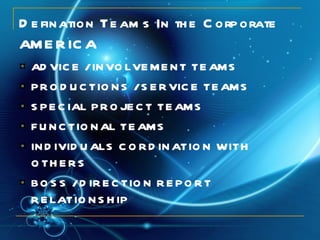
Defination Teams In the Corporate AMERICA ADVICE / INVOLVEMENT TEAMS PRODUCTIONS / SERVICE TEAMS SPECIAL PROJECT TEAMS FUNCTIONAL TEAMS  INDIVIDUALS CORDINATION WITH OTHERS BOSS / DIRECTION REPORT RELATIONSHIP
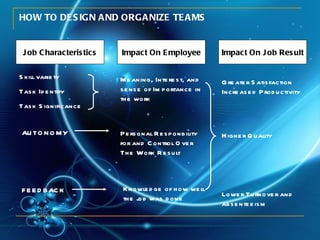
HOW TO DESIGN AND ORGANIZE TEAMS Job Characteristics Impact On Employee Impact On Job Result Skill variety Task Identify Task Significance AUTONOMY FEEDBACK  Meaning, Interest, and sense of Importance in the work Personal Responbility for and Control Over The Work Result Knowledge of how well the job was done Greater Satisfaction Increased Productivity Higher Quality Lower Turnover and absenteeism
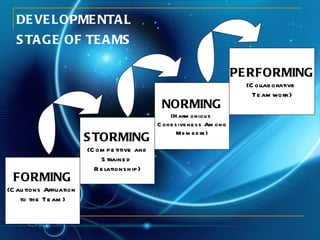
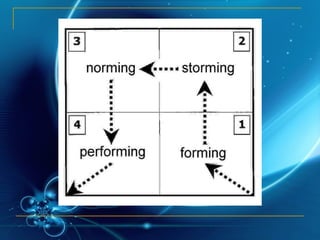
DEVELOPMENTAL STAGE OF TEAMS   FORMING (Cautions Affiliation  to the Team) STORMING (Competitive and Strained  Relationship) NORMING (Harmonious  Cohesiveness Among Members) PERFORMING (Collaborative  Teamwork)
Ā 
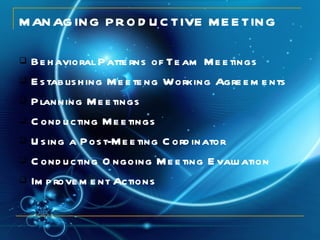
MANAGING PRODUCTIVE MEETING Behavioral Patterns of Team Meetings Establishing Meeteng Working Agreements Planning Meetings  Conducting Meetings Using a Post-Meeting Cordinator Conducting Ongoing Meeting Evaluation Improvement Actions
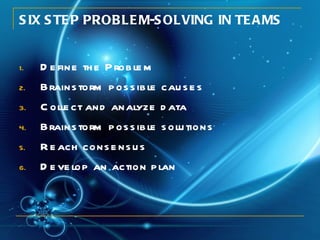
SIX STEP PROBLEM-SOLVING IN TEAMS Define the Problem Brainstorm possible causes Collect and analyze data Brainstorm possible solutions  Reach consensus Develop an action plan
TOTAL PERFORMANCE TEAM Total Performance :What’s Accomplished + How the team member goes about accomplishing goals and expectations
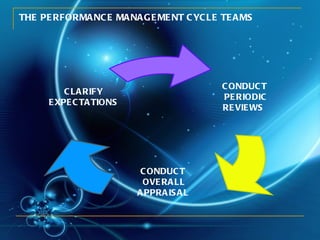
THE PERFORMANCE MANAGEMENT CYCLE TEAMS CONDUCT PERIODIC REVIEWS   CONDUCT  OVERALL APPRAISAL   CLARIFY EXPECTATIONS
TEAM LEADHERSHIP Keep acommon purpose Build commitment and confidence of each member and the team as a whole Develop a solid mix and level of skills---technical, functional, interpersonal, and teamwork skills Manage relationship with the rest of the organization Create opportunities for the team and the team member  Do real work
BEHAVIOR MODEL OF TEAM LEADERSHIP PATTERNS   Getting things done, action oriented and results-driven team leaders develop missions,and;  Building team relationships, by promoting open communication, sharing resources
HOW TO APPLIED THIS KNOWLEDGE IN THE NESTLE’S KEJAYAN FACTORY? By Interview By Observation By Asessment By Documentations By Learning By Doing
SEKIAN DAN TERIMA KASIH

Teamwork

  • 1.
    KNOWLEDGE APPROACH ByRIDHO HUDAYANA IN THE NESTLE’s KEJAYAN FACTORY
  • 2.
    TEAMS DEFINED IsA Small Member of People With Complementary Skills common Purpose, and Mutual Accountability
  • 3.
    Defination Teams Inthe Corporate AMERICA ADVICE / INVOLVEMENT TEAMS PRODUCTIONS / SERVICE TEAMS SPECIAL PROJECT TEAMS FUNCTIONAL TEAMS INDIVIDUALS CORDINATION WITH OTHERS BOSS / DIRECTION REPORT RELATIONSHIP
  • 4.
    HOW TO DESIGNAND ORGANIZE TEAMS Job Characteristics Impact On Employee Impact On Job Result Skill variety Task Identify Task Significance AUTONOMY FEEDBACK Meaning, Interest, and sense of Importance in the work Personal Responbility for and Control Over The Work Result Knowledge of how well the job was done Greater Satisfaction Increased Productivity Higher Quality Lower Turnover and absenteeism
  • 5.
    DEVELOPMENTAL STAGE OFTEAMS FORMING (Cautions Affiliation to the Team) STORMING (Competitive and Strained Relationship) NORMING (Harmonious Cohesiveness Among Members) PERFORMING (Collaborative Teamwork)
  • 6.
  • 7.
    MANAGING PRODUCTIVE MEETINGBehavioral Patterns of Team Meetings Establishing Meeteng Working Agreements Planning Meetings Conducting Meetings Using a Post-Meeting Cordinator Conducting Ongoing Meeting Evaluation Improvement Actions
  • 8.
    SIX STEP PROBLEM-SOLVINGIN TEAMS Define the Problem Brainstorm possible causes Collect and analyze data Brainstorm possible solutions Reach consensus Develop an action plan
  • 9.
    TOTAL PERFORMANCE TEAMTotal Performance :What’s Accomplished + How the team member goes about accomplishing goals and expectations
  • 10.
    THE PERFORMANCE MANAGEMENTCYCLE TEAMS CONDUCT PERIODIC REVIEWS CONDUCT OVERALL APPRAISAL CLARIFY EXPECTATIONS
  • 11.
    TEAM LEADHERSHIP Keepacommon purpose Build commitment and confidence of each member and the team as a whole Develop a solid mix and level of skills---technical, functional, interpersonal, and teamwork skills Manage relationship with the rest of the organization Create opportunities for the team and the team member Do real work
  • 12.
    BEHAVIOR MODEL OFTEAM LEADERSHIP PATTERNS Getting things done, action oriented and results-driven team leaders develop missions,and; Building team relationships, by promoting open communication, sharing resources
  • 13.
    HOW TO APPLIEDTHIS KNOWLEDGE IN THE NESTLE’S KEJAYAN FACTORY? By Interview By Observation By Asessment By Documentations By Learning By Doing
  • 14.